Michael Mann’s “Blackhat” – A harbinger of doom for spy cinema

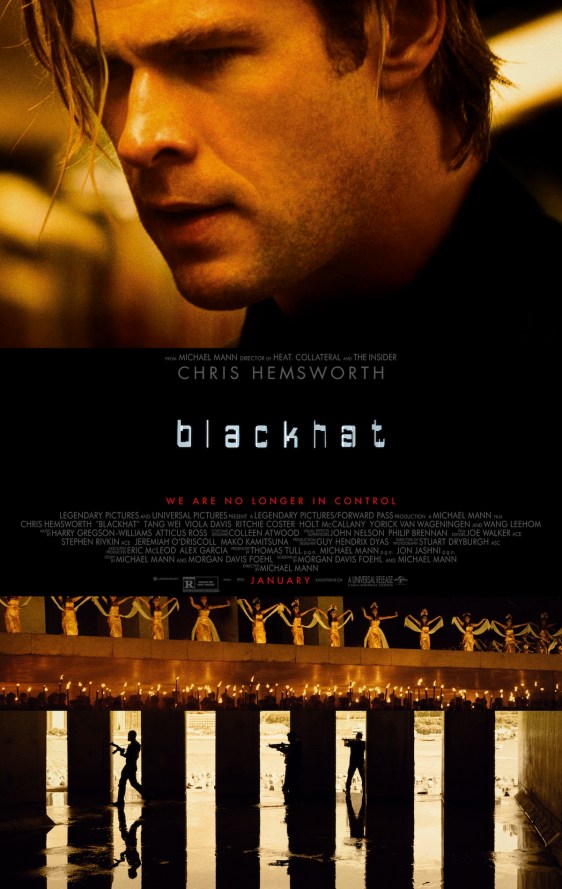
Poster for "Blackhat"

I must admit, when the FilmWonk Podcast reconvened after the New Year to review Inherent Vice, and I found myself uttering phrases like “trenchant statement on post-war masculinity,” I was a bit concerned that the wondrous, cinematic wasteland that is the first month of the year might fail to deliver its full measure of seasonal stupidity. Vice may have been a holdover from an awards-qualifying run in NY and LA, but it is still a January release, and January releases are supposed to be dumb and terrible.

On that count, Michael Mann‘s Blackhat did not disappoint – it is incredibly stupid at times. But what was truly baffling about this film was just how much it got right. Out of the gate, its treatment of 21st century hacking was pretty much spot-on. Screenwriter Morgan Davis Foehl uses many real tricks – undiscovered (zero-day) exploits that abuse the autorun features of USB thumbdrives, attacks targeting industrial control systems that have the capability to both physically destroy their mechanized targets, and hide any sign of their malicious activity from safety monitoring software until the destruction can’t be stopped. All of these things are real (even if they tend to operate a bit more slowly and less publicly in real life) – and the irony of duplicating Stuxnet as a cinematic attack on both the US and China was not lost on me. And the film also remembers the best old tricks. Social engineering is by far the most resilient hack – the easiest way to get into a system in an unauthorized fashion is to convince a silly, flawed, Mark-1 human being to let you in.

But for all that it got right technologically, this film was an utter failure as a coherent piece of cinema. It attempted to apply a 20th century espionage formula to a 21st century technological crisis. As criminal superhacker Nicholas Hathaway (Chris Hemsworth) and his network engineer-cum-Bond girl, Lien Chen (Wei Tang), jaunt across the globe through multiple countries, physically chasing after a hacker who quite realistically operates from a single location behind seven proxies, my mind was abruptly drawn to the abysmal 2014 comedy, Sex Tape. Like that film, Blackhat never escapes the nonsensical logic of physically chasing errant data around the real world. But it might have worked, if only its every attempt to depict a realistic human interaction or relationship hadn’t fallen so flat.

Bless these actors, they tried hard to make this weak material work. Viola Davis steals the movie in several scenes as FBI supervisor Carol Barrett, but is criminally underused, and the film’s few attempts at humanizing her – as well as US Marshal Jessup (Holt McCallany) – were clunky in the moment, and embarrassing in retrospect. Even Hemsworth and Tang try their best to make their contrived romance succeed, and a few times, their half-decent chemistry almost makes it happen. But the worst thing about this romance is that it could easily have been buoyed with a single line of dialogue. Hathaway’s old friend from MIT, Chinese military cyber-commando Dawai Chen (Leehom Wang), is Lien’s brother, and is solely responsible for getting the two of them involved in the film. Rather than saddle Tang with awkward meet-cute lines, it would’ve been a simple enough matter to simply give the two of them some prior relationship. But the film seems content to let Hemsworth’s abs do the talking when it comes to the plausibility of their torrid affair, then proceeds to take it far too seriously.
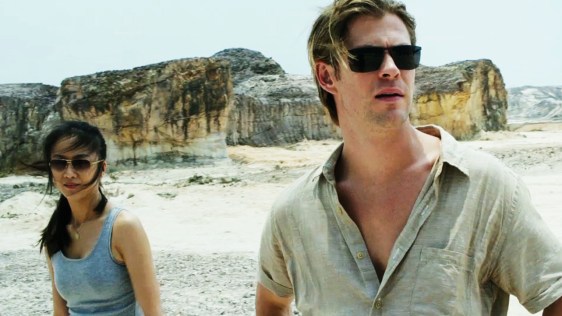
Still from "Blackhat"

In fact, the film’s self-seriousness really becomes a problem as it becomes bizarrely, graphically violent. There are some well-choreographed sequences of hand-to-hand combat and marvelously staged gunfights in this film, each more out of place than the last. Hathaway inexplicably morphs from imprisoned hacker to improvisational super-soldier in minutes, dispatching enemies with chairs and tables, handguns, and prison-fu with alarming speed and capability. Meanwhile, Lien changes from a network engineer (who does zero network engineering) to a bizarre fantasy construct that’s equal parts spy, nurse, and helpless arm-candy. Bond meets girl. And the tone is obscene.

In keeping with Mann’s devotion to every advance in digital cinema, this really is a gorgeous film, even if it does little to justify the majority of its scenery. At one point, the power-couple takes a trip to Middle-of-Nowhere, Malaysia to solve the villain’s master plan. I won’t spoil it here, but I will say that it was a breathtaking location, their presence was superfluous, and the ensuing dialogue provoked audible laughter in my auditorium. And what’s more, the film bizarrely jumps to the duo sifting through code and financial records in a hotel room moments later, redundantly solving the mystery in a much more realistic manner. The grand finale continues the film’s descent into ultraviolent madness. We know what the bad guys are up to – time to go kill them. And if the laughter in the previous scene wasn’t audible enough, it certainly resonated as Hemsworth donned his prisonesque arsenal – sharpened screwdrivers concealed about his person, and torso armor composed of magazines and duct tape. I wish I were making this up, and if the film didn’t devolve into a level of Assassin’s Creed (with inexplicably unresponsive AI from the crowd NPCs), I might have credited it with a bit of self-awareness.

But Blackhat – Hathaway – is no hero. And its awkward, genre-straddling attempts to merge globetrotting spycraft with virtual warfare do not bode well for the genre as a whole. You can’t have a Western with automobiles, and you can’t have a Bond film with realistic hackers and semi-realistic violence. Might be best to stick with the magical Skyfall nonsense next time.

FilmWonk rating: 3 out of 10
FilmWonk Podcast – Episode #62 – “Unbroken” (dir. Angelina Jolie), “Foxcatcher” (dir. Bennett Miller)

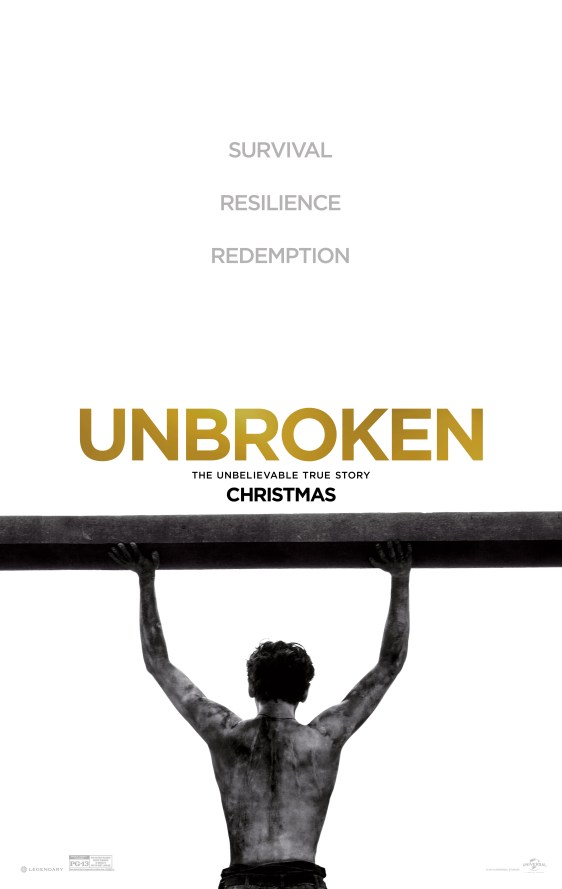
Poster for "Unbroken"

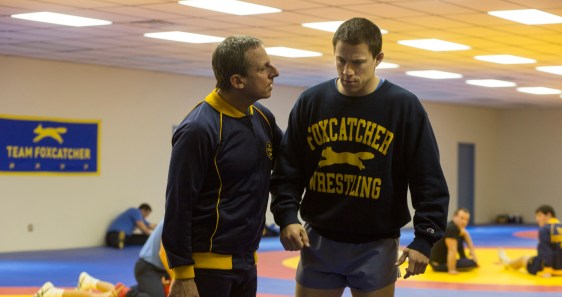
Tomorrow, our intrepid podcasters Glenn and Daniel venture to an actual theater to check out The Interview. But we don’t expect we’ll have nearly as much to say as we did about two end-of-the-year awards contenders. First, we experience our first Angelina Jolie-directed film, the WWII survival drama, Unbroken. Then we venture into a refreshingly dark and complex take on the sports genre, Foxcatcher, featuring a terrifying and transformative performance from Steve Carell. Strap in and enjoy this holiday double-header – we certainly did! (57:44)

May contain NSFW language.

Still from "Foxcatcher"

FilmWonk rating (Unbroken): 4 out of 10
FilmWonk rating (Foxcatcher): Daniel – 10/10, Glenn – 9/10

Show notes:

  • [02:27] Review: Unbroken
  • [13:31] Spoilers: Unbroken
  • [26:35] Review: Foxcatcher
  • [39:45] Spoilers: Foxcatcher
  • [56:09] Holiday blooper. We’re not proud.
  • Music for tonight’s episode is the track “Miracles” by Coldplay, from the soundtrack to Unbroken, followed by “Fame” by David Bowie, from the Foxcatcher soundtrack.
  • We referred to Kate Winslet‘s delightful self-parody on Extras. You can watch her scenes in full here, and the part where she talks about her motivation for making an award-worthy film starts at 03:19.
  • As Daniel noted, the future of wrestling at the Olympics is somewhat in doubt. Under new cost-cutting rules, the IOC has adopted a system where 25 “core sports” would continue indefinitely at future Olympics – but “non-core” sports would be selected on a year-by-year basis. Wrestling was originally a core sport, but after the 2012 Olympics in London, the IOC voted to make wrestling a non-core sport. In September 2013, wrestling won the bid as a non-core sport, so it will appear in the 2020 Summer Olympics.
  • Mark Schultz did indeed go on to fight at UFC 9.

Listen above, or download: Unbroken, Foxcatcher (right-click, save as, or click/tap to play on a non-flash browser)

Foxcatcher, Unbroken, Angelina Jolie, Steve Carell, Jack O’Connell, Miyavi, Domhnall Gleeson, Movies, Podcast

FilmWonk Podcast – Episode #61 – “Wild” (dir. Jean-Marc Vallée)

Poster for "Wild"

This week on the podcast, Glenn and Daniel tackle the latest emotional journey from Oprah‘s Book Club, Wild, featuring the Pacific Crest Trail hike of memoirist Cheryl Strayed (Reese Witherspoon), as rendered by the director of last year’s triumphant Dallas Buyers Club. The result is a mixed bag of triumphant trail experiences and an uneven backstory – we liked, but didn’t love it. (26:58)

May contain NSFW language.

FilmWonk rating: 6 out of 10

Show notes:

  • Music for tonight’s episode is a pair of Simon and Garfunkel songs from the film’s soundtrack, “El Condor Pasa (If I Could)” and “Homeward Bound“.
  • Minor correction: Nick Hornby wrote the novel for About a Boy, but not the screenplay for the film.
  • As promised, I fact-checked the Hollywood age shenanigans, and it turns out they were even worse than we thought. We can pardon the film somewhat, given its reliance on flashbacks, but as of this writing, Laura Dern is 47, and Reese Witherspoon is 38. That’s a 9-year age difference between mother and daughter.
  • As we mentioned, Cheryl Strayed‘s memoir, Wild: From Lost to Found on the Pacific Crest Trail, was published in 2012, roughly 17 years after her hike. Interestingly, the book’s publication led to Strayed finding her long-lost half-sister.

Listen above, or download: Wild (right-click, save as, or click/tap to play on a non-flash browser)

FilmWonk Podcast – Episode #60 – “Force Majeure” (dir. Ruben Östlund)

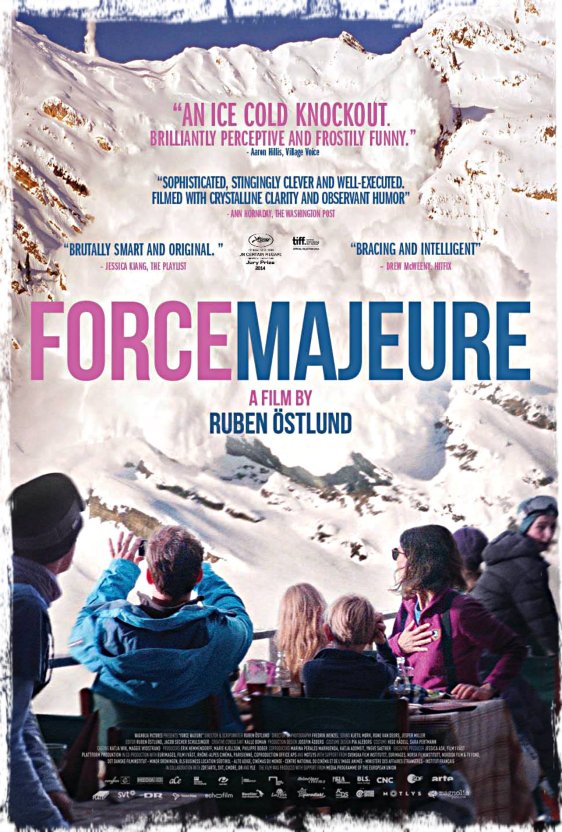
Poster for "Force Majeure"

This week on the podcast, Glenn and Daniel tackle a wondrous dilemma of heroism, masculinity, and unexpectedly hilarious drone flying in Force Majeure, a Swedish family dramedy set in a ski resort in the French Alps. Note that our review contains spoilers for Julia Loktev‘s 2012 film, The Loneliest Planet, for reasons that should quickly become clear (45:00).

May contain NSFW language.

FilmWonk rating: 8 out of 10

Show notes:

  • Music for tonight’s episode is Antonio Vivaldi‘s “Summer” (from “The Four Seasons”), as performed live by Norwegian soloist Mari Silje Samuelsen.
  • Check out the film’s excellent trailer here:
  • The MS Estonia is indeed a well-known maritime disaster in Sweden. This large ferry boat was crossing the Baltic Sea from Talinn, Estonia to Stockholm in 1994, and capsized and ultimately sank in a storm. Of the 900+ passengers aboard, only 138 survived, most of whom were young, strong males. About 650 of the passengers were estimated to have been trapped in the ship when it sank.
  • On the subject of Tomas bringing along his iPhone when he runs away, a story from Seattle comes to mind, wherein an armed robber points a gun into the face of a bus passenger who is staring at his phone. In an instant, the passenger shoves the gun away, then springs out of his seat to shove the robber away down the aisle. As he gets up to shove with one hand, he can clearly be seen to put his phone away in his pocket with the other. This is a perfect example of someone “acting on instinct” – an instinct that, in this moment, included the familiar muscle memory of holstering his phone. You can see the entire incident on video here.

Listen above, or download: Force Majeure (right-click, save as, or click/tap to play on a non-flash browser)

Gregg Araki’s “White Bird in a Blizzard” – An enigmatic coming of age.

Poster for "White Bird in a Blizzard"

In our podcast review of Divergent, co-host Daniel commented that Shailene Woodley could probably play a high school girl forever. For that particular film, neither of us meant this as a compliment. Following her fascinating but nonetheless sidelined role in The Spectacular Now, I was quite curious to see what Woodley would make of a solo lead in a film that is equal parts stylized mystery and erotic bildungsroman. White Bird in a Blizzard is adapted from a novel (by author Laura Kasischke), and as is often the case with such things, it relies heavily on voiceover, and occasionally gets a bit too far up its own ass with literary metaphors. But that’s the last dismissive thing I’ll say about this film, because after 10-15 minutes of this, I was completely sold on both Woodley’s casting and on the premise of the film itself.

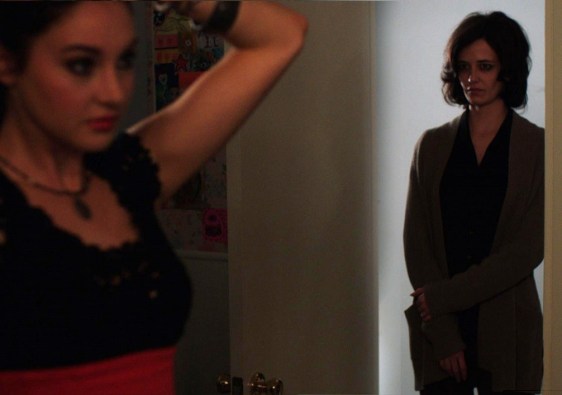
The film begins with the introduction of Kat Connor (Woodley), whose mother Eve (Eva Green) disappears without a trace. Christopher Meloni plays Kat’s beleagured father Brock, and we learn through flashbacks just how little regard her parents had for each other. The production design during these sequences can best be regarded as a dystopian mash-up of Mad Men and The Stepford Wives. Eve is unsatisfied both domestically and sexually, and Kat (then at age 8, played by Ava Acres) is disturbingly aware of the minutiae of her parents’ sex life, or lack thereof – her mother’s nightly solo trips to bed, unsatisfied, and her father’s none-too-secret locked stash of Hustler mags in the basement. After Eve vanishes (when Kat is 17), the flashbacks spend much less time on her discontented marriage with Brock, and far more time on her relationship with her daughter. Kat’s teenage sexual awakening is fully on display in this film, and the film strikes an interesting balance between her various boundary-prodding dalliances and her mother’s competitive attitude about her youth and beauty.

Still from "White Bird in a Blizzard"

Green is much closer in age to the younger version of the character, and yet seems to sell the middle-aged, despondent version far more through her performance than through any sort of age makeup. As she vamps around the screen – frequently with a glass of wine in hand – she stares creepily at Kat and tells her just how closely she resembles her younger self. This character is Betty Draper in one moment, and channeling the best of Helena Bonham Carter in the next – it’s really quite an impressive balancing act. Given that all of these flashbacks seem to be taking place in Kat’s memory (sometimes literally, as she recounts them to Angela Bassett as her therapist), it’s hard to shake the feeling that Kat is an unreliable narrator. That these are merely her last interactions with her mother as best she can distantly recall them – a bitter recollection of a half-remembered ghost.

Shiloh Fernandez gives a nice turn as Phil, the boy next door (and Kat’s not-too-serious boyfriend). As Kat puts it, he reminds her a great deal of her father – scratch the surface, and you just find more surface. This is perhaps why she meanders elsewhere over the course of the film, seducing 40-something Detective Scieziesciez (Thomas Jane), who is assigned to her mother’s case. The film’s treatment of their erotic interaction is nothing short of masterful. At this point in the film, it’s unclear whether Kat has yet turned 18 (she mentioned previously that she was a few weeks away), and the police detective more than twice her age clearly knows that he’s toeing – and then leaping across – a dubious ethical line. The resulting encounter strikes a frankly miraculous balance – a pair of consenting adults who prod the edges of an improbable power dynamic until they emerge as equals. This becomes one of the most tense and fascinating relationships in the film, and it could never have done so without such a tonally perfect opening scene.

Much like Ellar Coltrane‘s central character in Boyhood, it is a single youth – Kat – whose development is fully on display in this film. And no matter what’s happening in the background, the film only works if we care about this character throughout the film. Woodley is aloof at times, but only when it seems appropriate – when her character can’t be bothered to deal with the chaotic and painful changes in her life. At no point in the film does Kat feel unaffected by either her mother’s disappearance (despite her protestations to the contrary) or any of the linked events, and this makes for a nice, slow-burn mystery as she decides just how much she really wants to know the truth. This film blends mystery into a coming-of-age drama most effectively – and in a way I’ve never seen before. The mystery is ever-present, but impressively restrained to make room for the rest of the cast to get on with their lives.

FilmWonk rating: 8 out of 10

FilmWonk Podcast – Episode #56 – “The Equalizer” (dir. Antoine Fuqua)

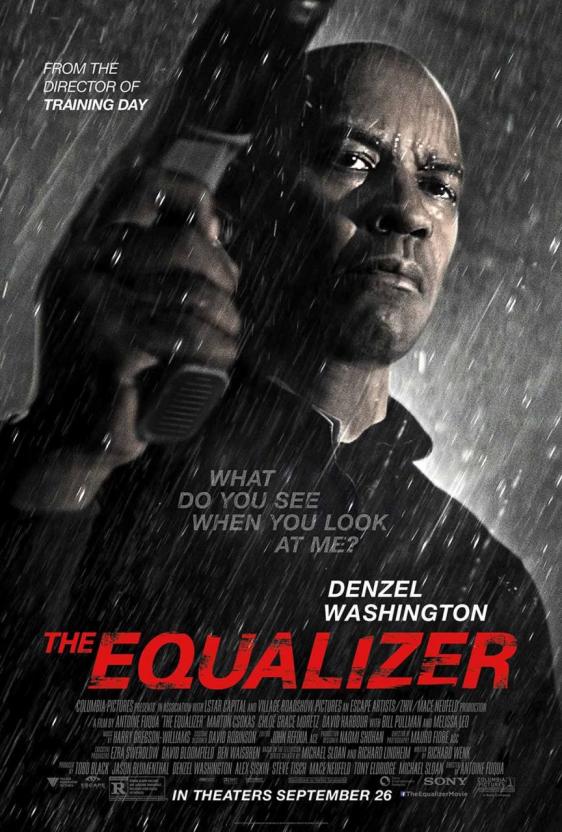
Poster for "The Equalizer"

This week on the podcast, Glenn and Daniel witness the reunion of Denzel Washington with Training Day director Antoine Fuqua – as well as a return to general badassdom – in The Equalizer. This will be the second film in as many weeks we end up comparing to Taken, and this time, it may not be to the film’s advantage (28:52).

May contain NSFW language.

FilmWonk rating: 5.5 out of 10

Show notes:

  • Music for tonight’s episode is “Sixteen” by The Heavy, from the film’s soundtrack.
  • The Philadelphia diner painting we referred to is Nighthawks, by Edward Hopper.
  • We referred to the 2000 John Singleton film Shaft, starring Samuel L. Jackson. Check out a Showtime featurette here – gives a good sense of the film.
  • We discussed the slow-motion fights in the 2009 Guy Ritchie version of Sherlock Holmes – check that out here (slow-mo begins at about 1:30).
  • Brace yourself, because we’re about to get our CinemaSins on here. One of the various improvised weapons we see McCall use in the film is a powder-actuated nail gun – i.e. a nail gun that uses gunpowder as its mechanism of propulsion to shoot construction nails. We correctly noted that this is the equivalent of a 22-caliber bullet (in fact, in some cases, actual .22 Short cartridges – minus the bullets – are used to power the mechanism). We found several videos testing the lethality of nail guns at a distance, including one from Mythbusters, and another fairly robust (albeit windy) test from YouTuber pilgrimfarmer. While these videos definitively show that a nail gun powered by compressed air is not an effective distance weapon, we were unable to find a video that demonstrated the same limitation for a powder-actuated tool. And one consistent factor for any type of nail gun is that the safety catch prevents the gun from firing unless it is pressed against a surface – a mechanism that can be easily bypassed by the user, but doesn’t allow for the cool one-handed shooting that McCall pulls off in the film. Don’t try this at home, kids. We’re professional podcasters.
  • With apologies to Ronda Rousey – Glenn’s just not an MMA guy. But he knows who Gina Carano is!

Listen above, or download: The Equalizer (right-click, save as, or click/tap to play on a non-flash browser)

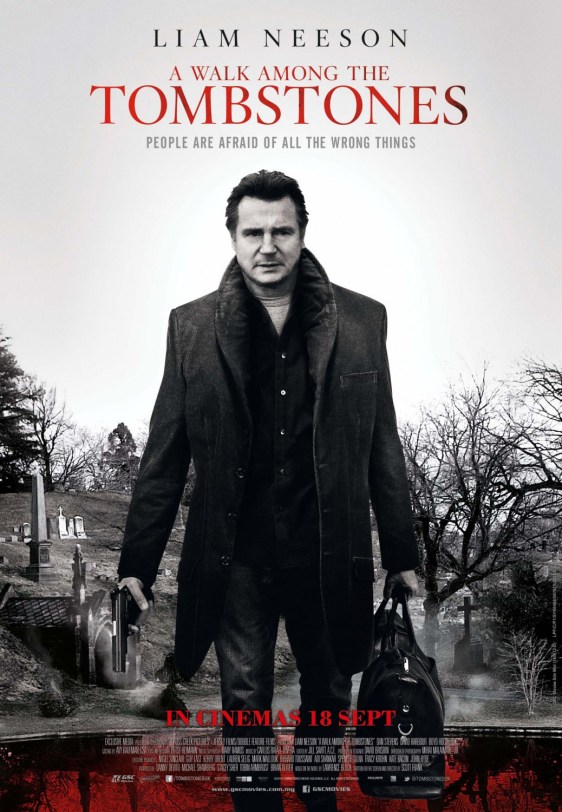
FilmWonk Podcast – Episode #55 – “A Walk Among the Tombstones” (dir. Scott Frank)

Poster for "A Walk Among the Tombstones"

This week on the podcast, Glenn and Daniel take a leisurely stroll through a pretty well-executed genre exercise by writer/director Scott Frank (The Lookout). (41:39).

May contain NSFW language.

FilmWonk rating: 7 out of 10

Show notes:

  • Music for tonight’s episode is Nouela‘s cover of “Black Hole Sun“, from the film’s trailer.
  • Joining us for this week’s episode is Seattle artist Jason B., who will happily sell you a delightful pop-art print (or a mug) of Daniel’s mug here. Check out his other artwork and blog over at Catastrophic Shift. "Office Crazed" by Jason Busse
  • The two detective characters that were name-dropped in the film were Sam Spade and Philip Marlowe (created by Raymond Chandler, whom we mistakenly mentioned instead).
  • The last (and only other) film in which we saw Brian “Astro” Bradley was Earth to Echocheck out our podcast review here.
  • We referred to a recent Cracked article about a convicted drug smuggler, now out of prison, who is now a professional speaker – that was this one, from Brian O’Dea. But we actually mixed in a detail from this article (from an anonymous writer), about how drug dealers are often not the people you expect.
  • We referred to the lackluster success rate of Alcoholics Anonymous – for reference, check out this NPR interview with Dr. Lance Dodes, who claims that AA’s success rate is as low as 5-10%.

Listen above, or download: A Walk Among the Tombstones (right-click, save as, or click/tap to play on a non-flash browser)

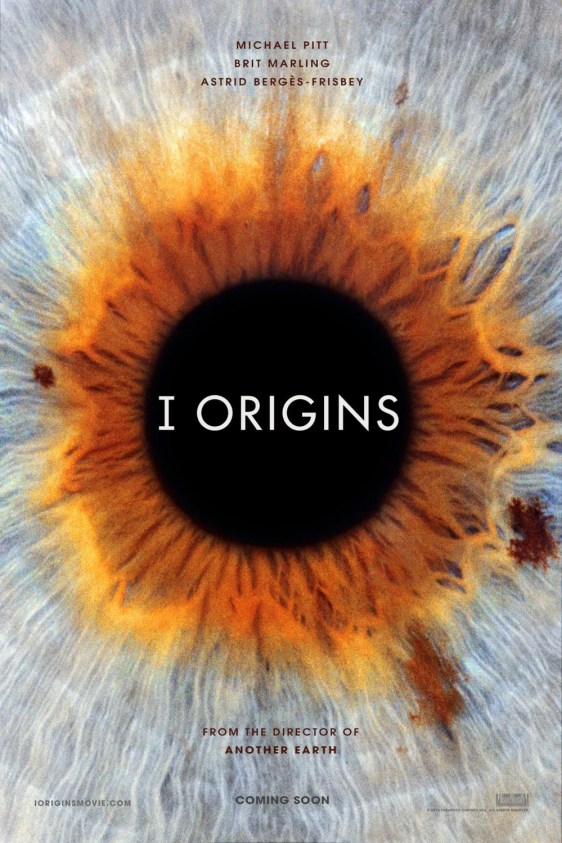
Mike Cahill’s “I Origins” – A faithful rendition of the scientific method

Poster for

Editor’s note: You can also check out our in-depth discussion of I Origins on the FilmWonk Podcast.

I worry that some people will come away from I Origins believing that it has abandoned its post in the apocalyptic battle between science and religion – that after spending easily half the film with atheistic scientist Dr. Ian Gray (Michael Pitt) fastidiously attempting to model each of the evolutionary steps in the development of the human eye, the film veers off into more conventional territory. That by delving into the supernatural, the film strips away its ambitions and becomes yet another Hollywood-kumbaya tale of how we should probably all just get along and believe what we want. But based on the evidence presented in the film, this couldn’t be further from the truth.

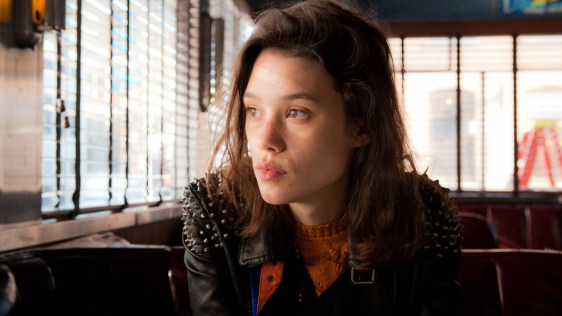
In the film’s opening scene, Ian meets Sofi (Àstrid Bergès-Frisbey), a model with whom he strikes up an immediate connection (i.e. they have sex in a house-party bathroom 30 seconds after meeting each other). To the film’s audience, they merely have chemistry. But to Sofi, they are driven by destiny. She believes that they knew each other in a past life, and that their improbable meet-cute is proof-positive of their supernatural connection. Like all manic pixies, she swoops away before Ian can get her name, and when they subsequently meet for real and strike up a whirlwind romance, one thing is clear – these two are deliciously, recklessly in love with one another, almost to the point of absurdity, given Ian’s care and attention to detail when it comes to his scientific pursuits.

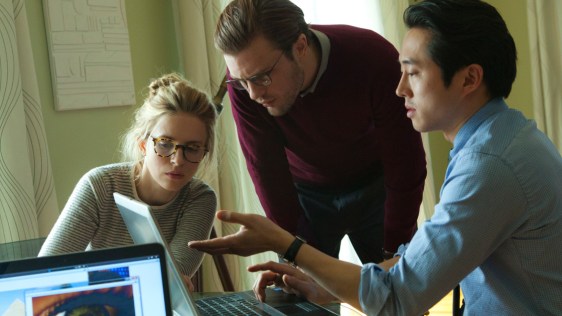
His study is molecular biology, with a focus on the evolution of the human eye. His lab assistant Karen (Brit Marling) and fellow researcher Kenny (Steven Yeun) seek to fill in the gaps in scientific understanding of the evolution of the human eye, in order to silence one of the most prominent rallying cries of intelligent design – the notion of irreducible complexity. As the idea goes, certain structures, such as the human eye, are so biologically complex that they could not have evolved on their own from simpler structures without the guiding hand of an intelligent designer. There’s plenty more to read on this subject, but the film offers a fascinating treatment of the issue. Karen proffers that the human eye clearly did evolve, so the gaps are irrelevant – why waste time trying to fill them in? Ian counters by explaining that the gaps matter precisely because they’re being used to shoot scientifically inaccurate holes in evolution. The film distills the essence of scientific understanding into this simple back-and-forth. Why do we need to fill in the gaps? Because they’re there, and because we think we can.

Karen takes this ball and runs with it, trying to find an extant animal species that does not possess the ability or organs for the sense of sight, but possesses a particular gene that indicates that it could develop the trait. With 400,000+ sightless species to choose from, this is truly a needle-in-haystack pursuit, but Karen and Ian believe that if this species exists, they could genetically engineer an eye from scratch by forcing each of the incremental mutations to happen one at a time. Force the animal first to sense the presence of light, then its intensity, then its direction, and so on – until you have something like an earthworm with a human eye. These are the two competing forces that drive the first half of the film – there’s Ian’s romance with Sofi, driven by love (and, in Sofi’s case, by faith as well). And then there’s his drive to explain some of the deepest mysteries of the origins of life.

Still from

“Why do you work so hard to disprove God?” asks Sofi. “Disprove him?” replies Ian, “Who said that anyone has proven him?” Sofi’s perspective is underdeveloped and underplayed, and I’d say this is easily the film’s biggest weakness. It became evident as the film went on that this was likely a deliberate choice on Cahill’s part (Karen gets a bit marginalized as well) but I still found myself wishing for more. The film’s second half leans more heavily on Ian’s cataloguing of individual iris patterns. That is to say, he compulsively photographs people’s eyes whenever he meets them – it’s just a thing he does. And this is when the film begins to dip more heavily into the raging inferno of science vs. faith. I can’t speak at length on this subject without spoiling the film’s brilliant and mostly unpredictable second half, so I’ll just say two things.

First, Brit Marling, even for her medium-sized part in this film, continues to offer one of the most compelling screen presences I’ve seen.  I’ve enjoyed her performances in both films I’ve liked and disliked (including Mike Cahill’s last, Another Earth). Karen is actively driving the team’s research for much of the film, which is interesting, but many of Marling’s best moments come later in the film. There’s a difficult and awkward scene between Ian and Karen late in the film that was absolutely pitch-perfect. Both characters put their humanity on display in a manner that was completely unexpected. This scene was raw, real, and I can’t imagine any other pair of actors pulling it off so well.

Still from

Second, this film directly addresses a point raised in the recent Ken Ham/Bill Nye debate on creationism. Just like most of Hollywood’s attempts to mingle science and faith, I personally found this debate to be a waste of time – a protracted exercise in feckless back-patting for either side. But there were two very telling answers to a question from the audience. The question, in broad strokes, was this: “What, if anything, could change your position on this issue?” You can view their answers in full in this video, but here’s an approximation. For Creationist Ken Ham, the answer was essentially “Nothing could change my mind. I’m a Christian.” For Science Guy Bill Nye, the answer was… “A single piece of evidence.”

That’s the scientific process in a nutshell – we find a piece of evidence that contradicts prior theories, so we test on and develop new ones. I Origins sets itself apart from other half-hearted Hollywood dalliances in science and religion by presenting scientists who really act like scientists. In the face of an anomaly that challenges their prior understanding, their reaction is…let’s do more science. This is a superlative point made in a subtle enough manner that I’m genuinely concerned about the audience taking the wrong idea away from the film. But all I can say is where the evidence took me personally on this film. It was a gripping, fascinating, and deeply affecting film, and it succeeded in exploring some complex and cutting-edge issues in a manner that felt consistently human and relatable. It is a stunning piece of near-future sci-fi, and easily one of the finest films of the year.

FilmWonk rating: 8.5 out of 10

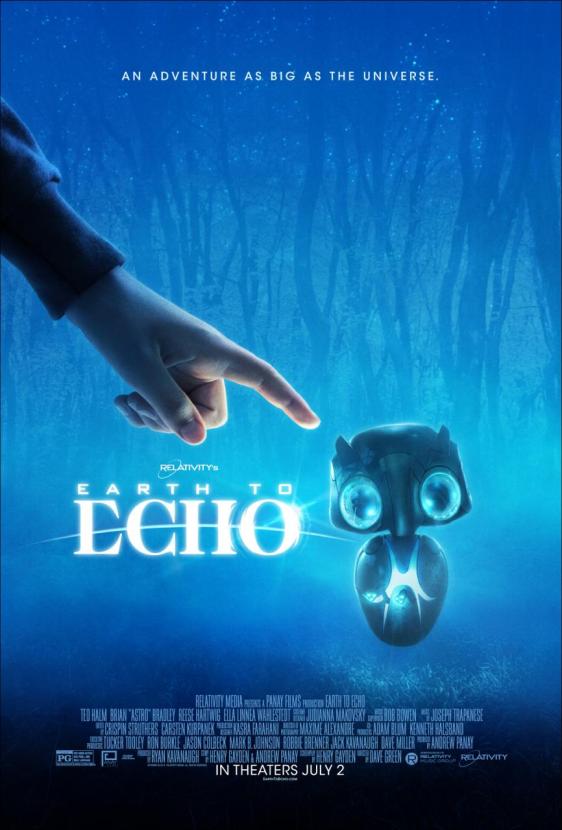
FilmWonk Podcast – Episode #52 – “Earth to Echo” (dir. Dave Green)

Poster for "Earth to Echo"

This week on the podcast, Glenn and Daniel take on a found-footage tribute to E.T. with Earth to Echo. With bitter (albeit well-casted) memories of J.J. Abrams’ Super 8 firmly in our heads, this film had a great deal of baggage to overcome. Did it manage to turn nostalgia into a film worth watching on its own merits? Find out below (28:48).

May contain NSFW language.

FilmWonk rating: 7 out of 10

Show notes:

  • Music for tonight’s episode is the track “21 Flights” by Heavy English, from the film’s soundtrack.

Listen above, or download: Earth to Echo (right-click, save as, or click/tap to play on a non-flash browser)

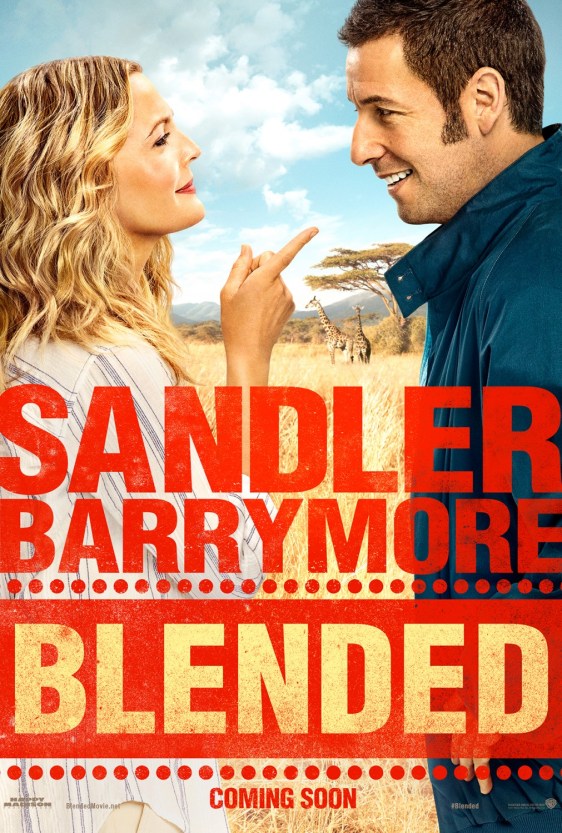
FilmWonk Podcast – Episode #48 – “Blended” (dir. Frank Coraci)

Poster for

This week on the podcast, Glenn and Daniel take a break from their SIFF coverage to revisit some old cinematic friends from their teenage years, Adam Sandler and Drew Barrymore, who regroup for a zany family rom-com set in South Africa. Sure. Why not?

Several reasons, as it turns out (24:56).

May contain NSFW language.

FilmWonk rating: 4 out of 10

Show notes:

  • Music for tonight’s episode includes the track “Hasa Diga Eebowai“, from the original cast recording of “Book of Mormon: The Musical”, and “Hakuna Matata” from “The Lion King”.
  • We speculated about the security arrangements at Sun City, and apparently it does have armed guards (who engaged in a shootout with heavily armed casino robbers in 2010). I’m sure they’re at least as well-armed as Disneyland must be. A 2005 review in The Independent referred to Sun City as “South Africa-lite“, which was pretty much our assessment as well.
  • Correction: Sandler’s age as of this writing is 47, not 50.

Listen above, or download: Blended (right-click, save as, or click/tap to play on a non-flash browser)