“Circle” (#SIFF2015 review) – The allegory of the grave

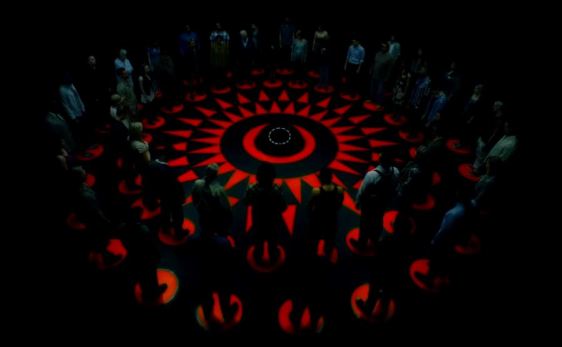
Many high-concept horror films have striven for the strong, minimalistic dissection of the value of a human life that is on display in Circle. And yet all of them, whether Saws or Purges, have gotten lost in the weeds either going for audience-pleasing gore or on-the-nose class warfare. Circle, from web-series directors Aaron Hann and Mario Miscione, is the apotheosis of the concept – placing 50 participants in a room and murdering one of them every two minutes with a simple bolt of CGI lightning. The body is immediately shuffled from the room by an unseen force, and the remaining participants are momentarily insulated from the horrific truth and consequences of their predicament. With simple (and completely secretive) motions of their hands and fingers, they are choosing the next person who will die.

What makes Circle so clever is its subtle and incisive satire of the political process. At its highest levels, politics delineates who should hold absolute power over life and death. Even in the real world, a vote for a chief executive is a vote for someone who will kill others on your behalf. Circle renders this concept with a staggering level of immediacy, and through a filter of lightning-paced direct democracy.

Who should live? Me.
Who should die? Somebody else.

Circle-still

Several of the participants engage in credible and well-acted politicking, and the two-minute timeframe between deaths propels these scenes along at an impressive pace. Anyone who wants to sell the group on a particular victim, talk others into sacrificing themselves, or engage in scapegoating or coalition-building has mere moments in which to do it. Anyone cross-examining or contradicting others has even less time. And others simply stay quiet, avoiding notice while remaining complicit in each outcome.
And at all times, the speechifying in this film about whose life is valuable and why is tinged with a layer of jet-black irony – because these are all murderers, debating which of them most deserves to keep on murdering. And if there’s one thing this film makes clear, it’s that the best politician isn’t necessarily the one who has enjoyed the greatest past success, nor even the one who is speaking most eloquently, obnoxiously, or vehemently. In a two-minute news cycle, a single scandal or misstatement or misunderstanding of the tenor of the room can end your political career in an instant – or carry it forward in an indefensible manner.

One man devises an impromptu moral condemnation of a married lesbian whose wife and daughter wait at home. Both of them play this scene brilliantly, and its outcome says as much and more about the filmmakers as about the political climate in which the film was made. Every piece of scapegoating or moralizing that appears in this film does so for a clear and obvious reason – it works. For someone. We all may be wrongdoers, but as long as that other guy, over there, is worse than we are – we’re justified in slaughtering him in preemptive self-defense. Several of the participants strive to be decent throughout. And yet, everyone in this film is despicable, made so by their circumstances, in-group biases, and basest survival instincts. Shame on them and all of us for playing out an allegory that’s so real and unforgiving.

Oh, and the film is occasionally quite funny. Don’t know if I made that clear.

FilmWonk rating: 8.5 out of 10

Circle is playing once more at #SIFF2015, on Friday May 29th at 1:15PM. As of this writing, tickets are still available.

FilmWonk Podcast – Episode #72 – “Avengers: Age of Ultron” (dir. Joss Whedon)

This week on the podcast, Glenn and Daniel return to the Avengers saga – Glenn with his prior 8/10 review, and Daniel with his persistent refusal to get sucked into Marvel’s comic web. Can our heroes ever come to an understanding about the true appeal of comic book films, and more importantly, will Marvel ever learn how to handle a girl-superhero? Stay tuned. Same Bat-time, same Bat-channel. Or whatever Marvel’s equivalent may be (55:46).

Sorry Cap, this show will contain NSFW language.
Additionally, it will contain spoilers for all of Marvel’s previous films, including (specifically) Captain America: The Winter Soldier.

FilmWonk rating: 8/10 (Glenn), 5/10 (Daniel)

Show notes:

Listen above, or download: Avengers: Age of Ultron (right-click, save as, or click/tap to play on a non-flash browser)

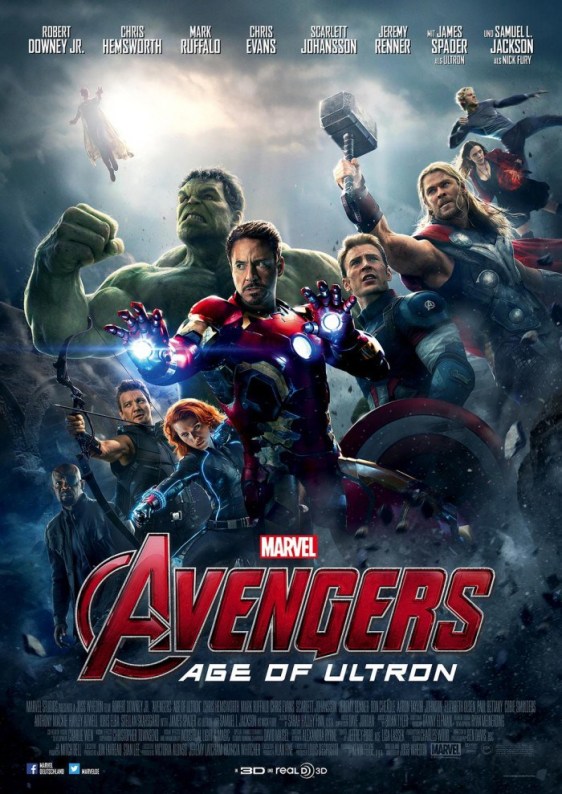
Joss Whedon’s “Avengers: Age of Ultron” – The end of their beginning

Riddle me this, fellow consumers. How do Marvel and Disney succeed in creating a shared cinematic (and television) universe that simultaneously feels huge, developing, and lived-in, but doesn’t constantly fall prey to trying to one-up itself? Or, to put it directly – how many times can the earth as we know it be brought to near destruction without making it all feel repetitive and insubstantial? This question first occurred to me while watching Thor: The Dark World – a film that somehow managed to take the near-rending of our entire dimension and turn it into a rather small-scale and oddly comedic affair in London. Making its stories feel large without derailing the larger narrative has always been Marvel’s moving target, and as we approach the end of Phase Two (or whatever they’re calling it now), we check in once again with the Avengers and see how well it all assembles.

And the answer turns out to be – pretty darn well. We begin by watching the Avengers charge through an Eastern European forest, a super-powered Band of Brothers sequence, with the camera zipping around to showcase each member’s power in rapid succession. As they invade a HYDRA compound guarded by tanks and soldiers (and a few living Chitauri?), all of the speed and kinetic fun of that extended tracking shot from the Battle of New York is immediately brought to life. Dispensing with any prelude of putting the team back together, we instantly see the Avengers as a fine-tuned team of unstoppable demigods. The Hulk (Mark Ruffalo) smashes, and has developed an oddly symbiotic near-romance with Black Widow (Scarlett Johansson). As this budding relationship played out, I found myself forced to reevaluate ScarJo’s flirtatious war-buddy rapport with aggressively asexual super-soldier Captain America (Chris Evans) in his most recent film, chalking up their camaraderie less to romantic chemistry, and more to their collective spy antics and dismantling of S.H.I.E.L.D.. In the end, I suppose this new relationship works, not necessarily because of any spark between Ruffalo and Johansson, but because it builds nicely upon the sense of imminent dread around Hulk’s powers that started between these very same actors in the first Avengers. Dr. Banner is, once again, the man standing between the monster and rest of the team, and Natasha is suddenly the only one who can control and comfort him once he has transformed. Marvel has walked a tricky line with Johansson’s character, relegating her at once to token leather-clad kicking female, and stacking on additional layers of femme fatale, comforting mother, and potential lover on top of it all. As erstwhile-Agent Maria Hill (Cobie Smulders) jokingly asks Thor (Chris Hemsworth) and Stark (Robert Downey, Jr.) where their respective ladies are at (before disappearing – per usual – for nearly the rest of the film), one can’t help but wonder if Marvel will ever get around to answering that question themselves. Perhaps soon.

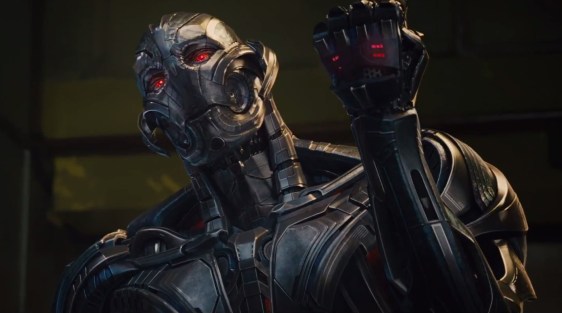
Ultron himself – speaking with all of the inhuman menace that James Spader can muster – is an outstanding villain. He embodies and subverts a number of comic tropes, from the villain who wouldn’t exist if not for the hero (see also: the entire Mission: Impossible series) to the sentient A.I. who “decided our fate in a microsecond”. This has almost become a running joke in futurist discussions of artificial intelligence. As soon as we create it, it will decide it no longer needs us. But Ultron takes this a step further by injecting this trope with some personality. Ultron is created as an operating system for a team of autonomous peacekeeping robots (the “Iron Legion”, the first version of which we saw Stark roll out in Iron Man 3), but becomes something much more. He hoovers up the entire internet over Stark Tower’s bitchin’ fiber and comes to the immediate conclusion that the greatest threat to world peace is humanity itself. He resents his creator (Stark), his existence, and the mere presumption that anyone would try to stop him. And all of this hatred is embodied in a towering robotic package that any individual Avenger is barely a match for. And destroying Ultron’s body isn’t enough, because he exists in the Cloud – and he’s always got a spare avatar in reserve. From a practical standpoint, this means that we get to see each of the super-powered Avengers in a one-on-one bout with him. While you can hardly expect Hawkeye (Jeremy Renner) to put down the bow and box with a giant robot, Captain America is certainly up for the challenge, and their bus-smashing brawl is certainly one of the most entertaining and brutal in the film.
I also must respect the film for its change of venue. Rather than head to that self-important standby of New York City, much of the action takes place in the vicinity of a fictitious European city (country?) called Sokovia. As Maria Hill describes it, “It’s nowhere special, but it’s on the way to everywhere special” – and as a result, it has a rough and war-torn history. This is ripe narrative territory for several reasons. First, it’s a living embodiment of Stark’s sins, as many of his own weapons have apparently been used against the city over the years. And second, in a curious (and explicitly noted) parallel to Captain America’s origin story, two of the city’s inhabitants, Wanda and Pietro Maximoff (Elizabeth Olsen and Aaron Taylor-Johnson) volunteer to be a part of HYDRA’s experiments in order to defend their country against its myriad invaders. In the process, they become Quicksilver and the Scarlet Witch, two characters whose origins in this film aren’t half as complicated as their copyright status in the real world [apparently they’re Magneto’s kids?], but whose motivations are utterly fascinating. The two of them become ruthless acolytes of Ultron, giddy in their determination to destroy the Avengers. And even as these motivations are prodded apart over the course of the film, Olsen and Taylor-Johnson’s performances lend them a sad sense of depth. Like the Avengers, they started with no particular desire to be a part of this collective brawl, nor are their motivations particularly monstrous, even if they’re certainly capable of monstrous acts. The citizens of Sokovia become representational figures in this film – the Avengers realize that they owe them a better defense and evacuation than they gave to the New Yorkers in the first film, and the Maximoffs realize that Ultron cares little for their survival. The story becomes a well-earned campaign of hearts and minds, and the Maximoffs somehow become the heart of the film.

Not all of the film’s character diversions succeeded, however. There comes a moment where Stark dons the suit that I had previously dubbed “the Iron Fat-Kid” in order to fight an out-of-control Hulk, smashing through the streets of Johannesburg. This fight felt like the self-indulgent child of the Stark vs. Cap vs. Thor bout from the first act of The Avengers – pure fan-service that did little more than needlessly extend the length of the film. Banner was enough of a tortured soul after he “broke Harlem” (referenced in the previous film, so we know it’s canon!), and he didn’t need another tedious swath of destruction to hammer that point home.

But I’ll end with some that worked. Hawkeye has always been the most seemingly superfluous member of the troupe, but he not only gets a believable family (led by Linda Cardellini) to fight for, but he delivers one of the film’s most hilariously impassioned battle speeches. He calls out the absurdity of his inclusion on the Avengers team, and manages to simultaneously earn his place in a way that I never saw coming. And finally, while I can’t speak too much about Paul Bettany‘s work in the film, the relationship between JARVIS and Stark has been one of the strongest and longest-running in the MCU, and it comes to a thoroughly satisfying conclusion here.

What Avengers: Age of Ultron does best is to deliver a persistent sense that it’s building toward something greater. The team will expand and contract, but always continue – and the universe along with it. Greater threats will emerge – or finally break loose from post-credits hell. And whether Whedon is done directing for Marvel or not – as Bryan Singer can attest, it’s easy to get dragged back in – he has brought to life a vast and lasting mythology that will color the landscape of blockbuster cinema for decades to come.

FilmWonk rating: 8 out of 10

FilmWonk Podcast – Episode #71 – “True Story” (dir. Rupert Goold)

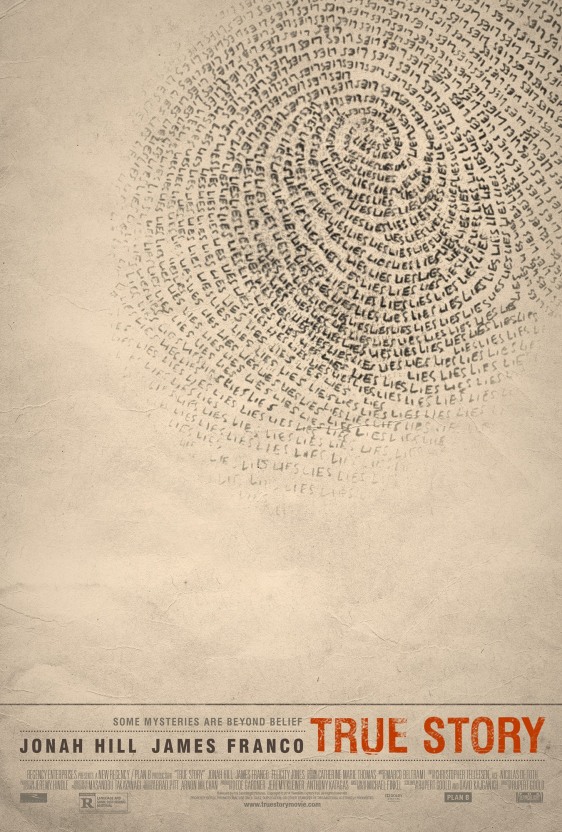
Poster for "True Story"

This week on the podcast, Glenn and Daniel learn more about the mystery of Christian Longo and Michael Finkel than they ever wanted to. Enjoy the intense and inexplicable bromance that ensues as we reflect on whether or not strong performances from James Franco and Jonah Hill can redeem such a deeply uncomfortable film (29:20).

May contain NSFW language.

FilmWonk rating: 6 out of 10

Show notes:

  • Music for tonight’s episode is…the movie’s trailer. Not much soundtrack to be had in this film.
  • Bart Layton‘s 2012 documentary, The Impostor, is a movie we’d recommend over this one (in fact, we did!) – and it is indeed on Netflix streaming as of this writing.
  • Apropos of nothing, here’s a link to Rob Cantor‘s performance of “Shia LaBeouf” Live. As we said… it’s delightful, and will change your life.

Listen above, or download: True Story (right-click, save as, or click/tap to play on a non-flash browser)

FilmWonk Podcast – Episode #70 – “Furious 7” (dir. James Wan)

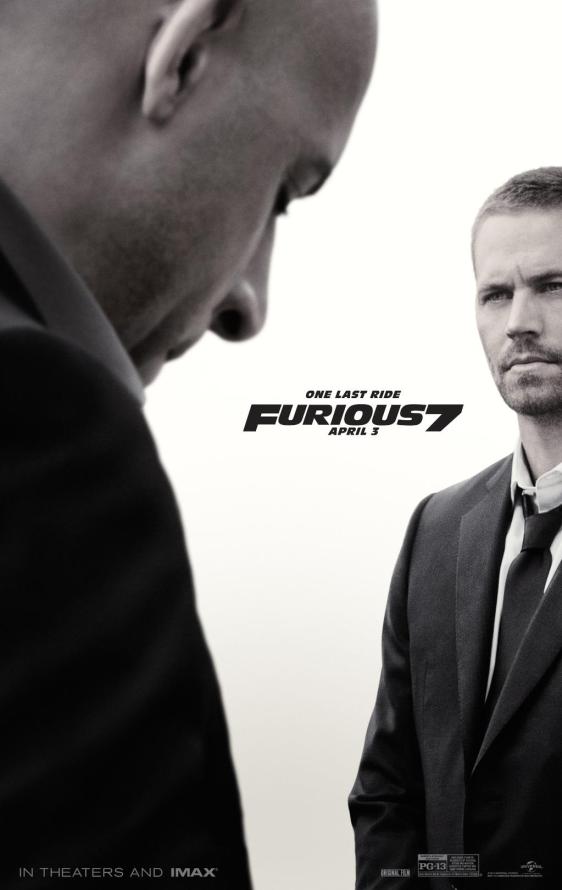
Poster for "Furious 7"
This week on the podcast, Glenn and Daniel bid a fast and furious farewell to both Paul Walker and Justin Lin, bid a mostly positive hello to James Wan, and ponder the future of Hollywood’s biggest, dumbest action franchise that we just can’t get enough of (36:25).

May contain NSFW language.

FilmWonk rating: 7.5 out of 10

Show notes:

  • Music for tonight’s episode is the film’s opening theme song, “Ride Out” by Kid Ink, Tyga, Wale, YG, and Rich Homie Quan.
  • CORRECTION (kinda): We referred, slightly critically, to the “artifice” of the cars-dropping-from-planes sequence. To be clear, whenever we actually see the actors in the cars, it’s clearly fake, composited from green-screen footage shot elsewhere. So this critique still seems fair, even if that’s also been true of many of the simpler street racing stunts throughout the franchise. But, as one of our astute listeners pointed out, the stunt team actually did jump cars with skydiving cameramen out of airplanes to get the footage. Check out the (pretty awesome) behind-the-scenes featurette here.
  • CORRECTION: Not for the first or last time, I mixed up the names of Luke Evans and Lucas Black. I regret nothing.
  • We referred to a video from The Onion that featured “the 5-year-old screenwriter of ‘Fast Five'” – it’s well worth a look. And Chris Morgan has actually written the last five Fast and Furious scripts – everything from “Tokyo Drift” on.
  • Um, it seems we didn’t mention Kurt Russell at all on this podcast. Just an observation.

Listen above, or download: Furious 7 (right-click, save as, or click/tap to play on a non-flash browser)

FilmWonk Podcast – Episode #69 – “Chappie” (dir. Neill Blomkamp)

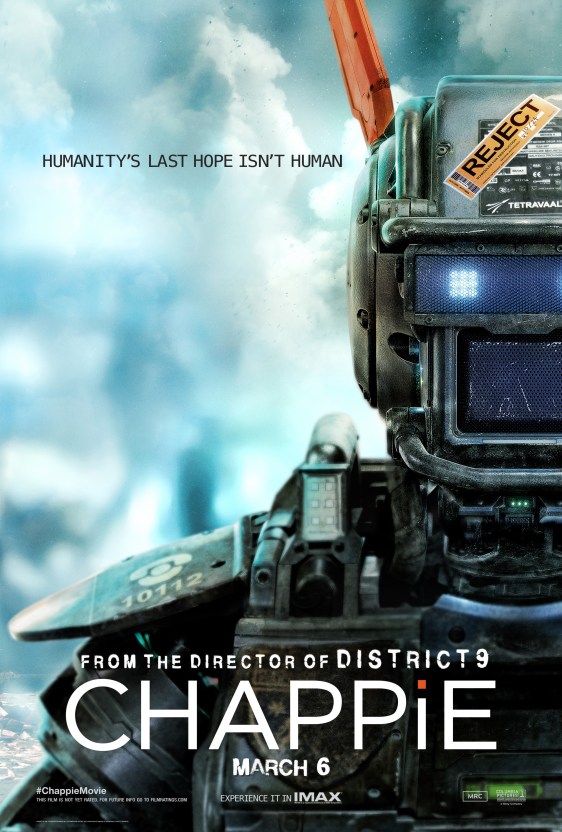
Poster for "Chappie"

This week, Glenn and Daniel learn that Chappie‘s got stories, that the members of Die Antwoord aren’t half-bad actors, and that Neill Blomkamp isn’t done impressing us, despite his sophomore misstep (50:51).

May contain NSFW language.

FilmWonk rating: 7.5 out of 10

Show notes:

  • Music for tonight’s episode is “I Fink U Freeky” by Die Antwoord. The video is well worth a look – I was first exposed to it at the OneReel Film Festival in 2013, at which point I commented, “Meth is a hell of a drug.” That opinion is unchanged – but I’ve since developed a pretty high opinion of Yolandi and Ninja‘s skill with theatricality.
  • R20,000,000 ZAR (South African rand) = $1.6 million USD (US dollars). Not a small sum in any case.
  • CORRECTION: Meredith Woerner from io9 referred to this as “a bad movie“, not “a dumb movie”. Our bad.

Listen above, or download: Chappie (right-click, save as, or click/tap to play on a non-flash browser)

Chappie, Neill Blomkamp, Sharlto Copley, Hugh Jackman, Dev Patel, Ninja, Yo-Landi Visser, Die Antwoord, Sigourney Weaver

FilmWonk Podcast – Episode #68 – “The Lazarus Effect” (dir. David Gelb) (spoiler-edition)

Poster for "The Lazarus Effect"

This week, Glenn wishes The Lazarus Effect would’ve just let him rest in peace, while Daniel offers a tepid, contrarian defense, and spoils The Ring for some reason (19:33).

May contain NSFW language.

FilmWonk rating: 5.5/10 (Daniel); 2.5/10 (Glenn)

Show notes:

  • Music for tonight’s episode is “Wake Me Up Before You Go-Go” by Wham!, which is better than the movie deserves. I also just noticed George Michael and Andrew Ridgeley are wearing a “CHOOSE LIFE” t-shirt in the video, which is apropos.
  • The horror flick from 2013 that I plugged was indeed Sinister, not Insidious – although they do share a producer. Another fine horror flick I didn’t think of was last year’s Oculus.
  • We mention one our early podcast review of Frozen (the Adam Green horror film, not the Disney film) – check that out here.
  • We were actually drinking Four Roses Single Barrel Kentucky bourbon. Solid. They didn’t pay us for the plug; we just like bourbon.

Listen above, or download: The Lazarus Effect (right-click, save as, or click/tap to play on a non-flash browser)

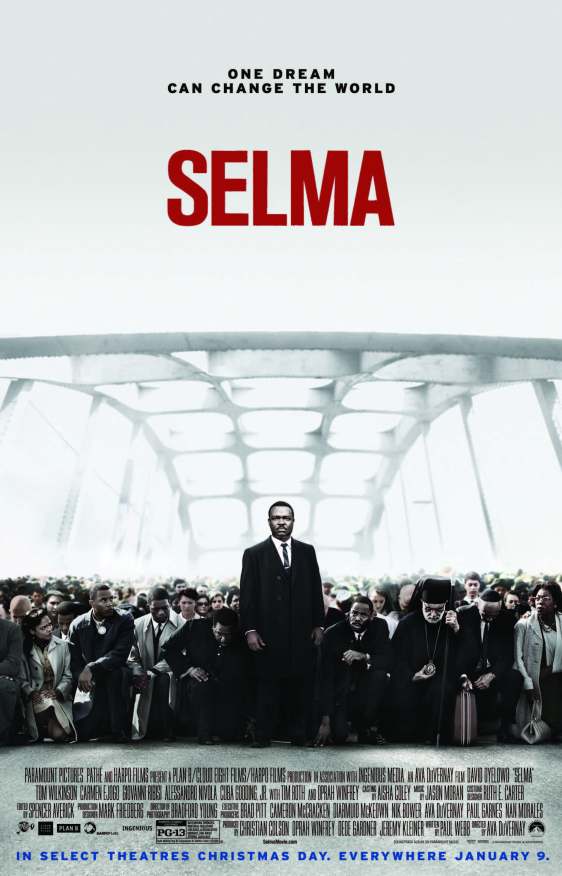
FilmWonk Podcast – Episode #67 – “Selma” (dir. Ava DuVernay)

Poster for "Selma"

Just in time for the Oscars, Glenn and Daniel take a deep dive into history with Selma, a powerful, dramatic film that gets into uncommon depth on some complex historical issues. Not every speechifying moment of this film landed for us, but all in all, it’s both an artistic triumph and fodder for a fascinating discussion (54:25).

May contain NSFW language.

FilmWonk rating: 8 out of 10
Show notes:

  • Music for tonight’s episode is the track “Glory” (by Common and John Legend), from the film’s end credits – a choice we had mixed feelings about in the film, but that is no less powerful for it.
  • The 1965 church bombing depicted in the film occurred at the 16th Street Baptist Church in Birmingham, Alabama. The bombing killed four young black girls and injured 22 others. Although the FBI quickly identified the four co-conspirator Klansmen they believed responsible for the bombing, the first of them, Robert Edward Chambliss, was not charged and convicted until 1977. Two other co-conspirators were charged and convicted much later, in 2001 and 2002 respectively, with Thomas Edwin Blanton, Jr. sentenced to life with the possibility of parole (he remains in an Alabama penitentiary at the age of 84 as of this writing), and Bobby Frank Cherry sent to prison for life, where he died in 2004. The fourth alleged co-conspirator, Herman Frank Cash, died in 1994 and was never charged with the crime.
  • We didn’t do a full review of Lincoln, but the film did make it into Glenn’s Top 10 Films of 2012 – read that entry here.
  • Carmen Ejogo also played Coretta Scott King in the 2001 film Boycott, about the Montgomery Bus Boycott of 1955-56, which took place ten years before the events of this film. Not only did this make Ejogo almost perfectly age-appropriate for this role in both films, but she received King’s blessing for the portrayal prior to the 2001 film (and prior to King’s death in 2006).
  • CORRECTION: The Fifteenth Amendment to the US Constitution, which guarantees citizens the right to vote regardless of the person’s “race, color, or previous condition of servitude”, was ratified in 1870 – even earlier than we stated. By the time the Voting Rights Act was passed in 1965, the laws that it struck down had been suppressing the African-American vote for nearly a century after the amendment was ratified.
  • CORRECTION: Jimmie Lee Jackson died in the hospital 8 days after being shot, not a day later as we said. We also mistakenly stated that his killer, former Alabama State Police Corporal James Bonard Fowler had died in 2010 – this is incorrect; Fowler is 81 years old and still alive as of this writing. We were perhaps thinking of Sheriff Jim Clark, who died in 2007.
  • CORRECTION: We mistakenly identified Archbishop Iakovos as a Jewish official; he was actually a Greek Orthodox Primate (the head of the Greek Orthodox Archdiocese of North and South America), and he did indeed march at the head of the line, hand-in-hand with MLK during the final Selma-Montomery march, as captured in this photo, which appeared in LIFE Magazine. We regret the error.
  • Daniel mentioned that then-Alabama Governor George Wallace ran “one of the most racist campaigns in modern southern political history” – this is actually a quote from former President Jimmy Carter, referring to Wallace’s second campaign for Governor of Alabama in 1970. Primary sources were hard to come by online, but this book does corroborate the story that Wallace supporters posted several racist ads on his behalf, an example of which is available here, for those with historical interest. In his later years, Wallace publicly recanted his racist beliefs, and asked for the forgiveness of African-Americans – one of the only opposition figures featured in this film who did so.

Listen above, or download: Selma (right-click, save as, or click/tap to play on a non-flash browser)

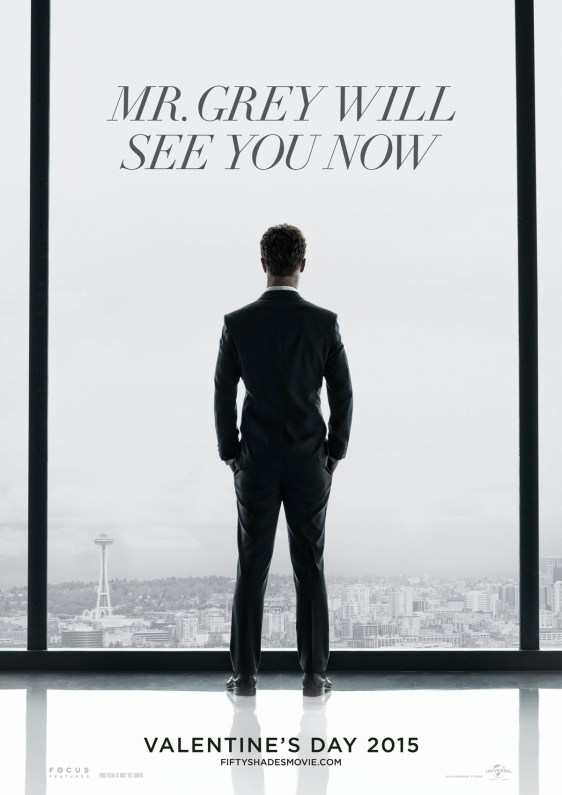
FilmWonk Podcast – Episode #66 – “Fifty Shades of Grey” (dir. Sam Taylor-Johnson)

Poster for "Fifty Shades of Grey" movie

This week, Glenn and Daniel watch Fifty Shades of Grey, and find it wanting. Wish there was more to it (27:09).

This episode will unquestionably contain NSFW language.

FilmWonk rating: 2 out of 10

Show notes:

  • Music for tonight’s episode is Beyoncé‘s remix of “Crazy in Love” from the film’s soundtrack.
  • For some reason, this episode includes spoilers for the 2002 film Identity. Thanks, Daniel.

Listen above, or download: Fifty Shades of Grey (right-click, save as, or click/tap to play on a non-flash browser)

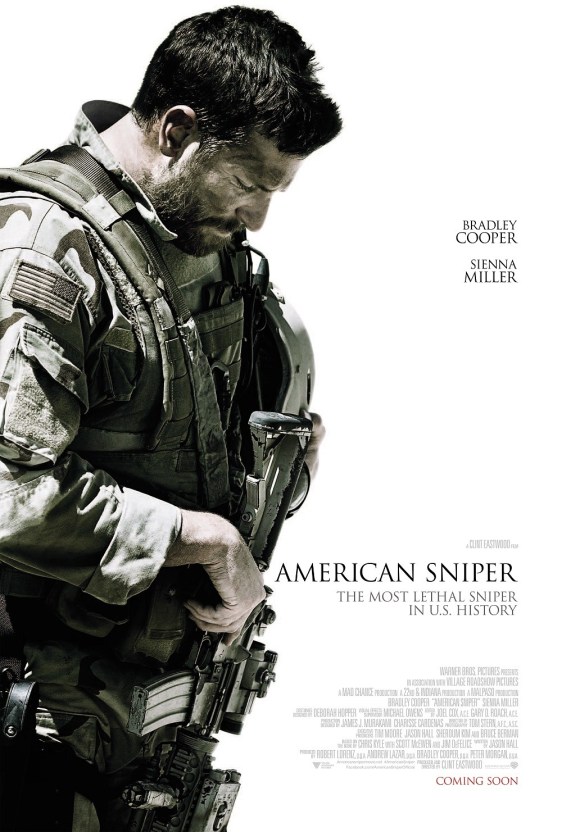
FilmWonk Podcast – Episode #65 – “American Sniper” (dir. Clint Eastwood)

Poster for "American Sniper"

This week on the podcast, Glenn and Daniel take on the challenge and controversy of American Sniper, the tale of SEAL Sniper Chris Kyle (Bradley Cooper), and a film that is equal parts Iraq war diary and a powerful cultural artifact. And while the film only superficially reminded us of Act of Valor, much like that film, we were quite surprised which side we came down on (38:57).

May contain NSFW language.

FilmWonk rating: 8 out of 10

Show notes:

  • Music for tonight’s episode is the track, “Full of Sound and Fury“, by Dean Valentine, from the film’s trailer.
  • We mentioned a few films by way of comparison – check out our podcast review of Act of Valor, as well as one of the earliest reviews on the site, for 2009’s The Hurt Locker.
  • CORRECTION: We briefly misstated Chris Kyle’s unofficial kill record as being “over 350”. According to multiple sources (as well as the film itself), the US Navy credits Kyle with 160 confirmed kills – meaning kills that were confirmed by a witness. The larger figure is 255 claimed/unconfirmed kills, with a few other sources listing vaguely higher numbers (“more than twice that”).

Listen above, or download: American Sniper (right-click, save as, or click/tap to play on a non-flash browser)