Seattle’s One-Reel Film Festival 2013 – Saturday Roundup

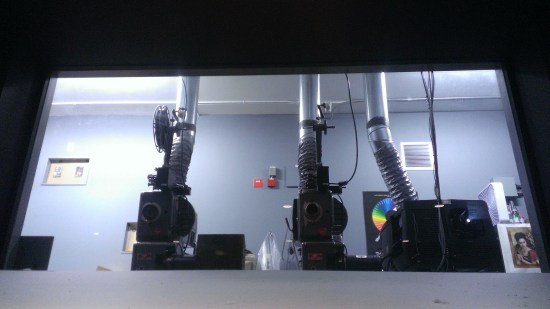
SIFF Film Center projection room

The One-Reel Film Festival is part of Seattle’s renowned Bumbershoot music and arts festival. Throughout the weekend, I’ve had the opportunity to see short films from all over the world, some of which can be viewed online (I’ve included links below where applicable). The films were arranged into blocks of around an hour apiece, which I’ve arranged in presentation order below. Bold text means I enjoyed the film, and an asterisk (*) means it was my favorite film of that block. Skip to the bottom for a list of all the films that can be viewed online.

Click here for Sunday’s films
Click here for Monday’s films


Films4Families #1
  1. The Collector’s Gift (Director: Ryan Kravetz, USA, 9 minutes)

    This film imagines a Darwinian voyage wherein a single eccentric scientist seeks to collect and catalog every element on the periodic table. A young girl discovers the fruits of his labor shortly after his demise. The animation is elaborate, but uneven – some of the motion looks downright anomalous, particularly when characters are jumping through the air. But all in all, the production value of this USC student film is quite high, and it is a fun and elaborate world that has been imagined here. What’s more, it presents quite a positive message about the value of scientific discovery to the progress of the human race. And as the icing on the cake, the film managed to carry off these themes without a single line of dialogue in the entire film. And it didn’t give me time to ponder the potential danger of a tiny glass bottle of uranium.

    More info here.

  2. Sweetly Broken (Director: Chung Lam, Czech Republic, 6 minutes)

    It is an unfortunate artifact of my love of short film that I’ve seen several versions of this idea already. Two inamimate objects (in this case, wooden marionettes) fall in love, causing trouble for their owners. The soundtrack featured some interesting plucky chords, but I was mostly just waiting for it to be over. Blame Pixar for ruining this one for me twice over – first (kinda) with paper airplanes, then much worse with umbrellas.

    More info here.

  3. Uski Baarish (Director: Archana Phadke, India, 5 minutes)

    A delightful tale of a brother and his little sister hanging out. They navigate the streets of an unnamed Indian city and partake in a hobby involving dangerous-looking spinning tops (that suspiciously resemble lawn darts), homemade umbrella making, and some good-natured sibling roughhousing. This is a cute and personal tale, although it makes a few bizarre musical choices. Cutting elaborately between vaguely U2-like guitar themes and classical violin was a bit jarring, but none of it was too distracting.

    More info here.

  4. The Window (Director: Camille Müller, Switzerland, 5 minutes)

    Alternated between pencil sketch and watercolor. Ostensibly, this is a tale that takes place inside the illustrated pages of a children’s book – which, itself, contains an illustrated children’s book. There’s really not much else to it – this is a simple tale of two kids fending off some older bullies. Perhaps suitable for very small audiences.

    Trailer here.

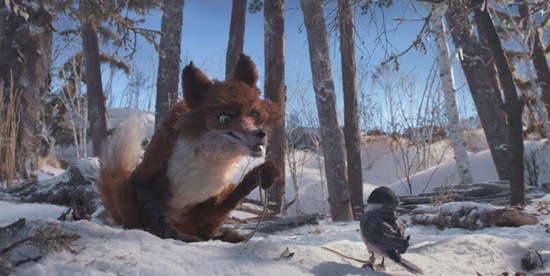
  5. Fox and the Chickadee* (Director: Evan DeRushie, Canada, 8 minutes)

    A brilliant reimagining of the “Frog and the Scorpion” fable (which I thought was from Aesop, but apparently has more complicated origins), wherein a clever little chickadee negotiates with a vicious (British) fox. Easily the best animation in the bunch, and apparently mastering one style – stop motion with felt and fur, in the vein of The Fantastic Mr. Fox – wasn’t enough. The film also features a sequence made entirely of precision-crafted 2D paper dolls. Both styles are brought beautifully to life, and the story is quite a clever (and delightfully dark) twist on the classic tale.

    More info and trailer here.

  6. Macropolis (Director: Joel Simon, UK, 7 minutes)

    Shot during the 2012 London Olympics, this film features a pair of claymation dolls navigating the crowded and bustling city. As the dolls move along precisely, one frame at a time, the bustling metropolis of London continues at full speed in the background. The film takes on a curious meta aspect as the audience wonders whether the various people and vehicles (who are pervasive, albeit for an instant at a time) interfered substantially with the film production. The sidewalks and streets look as full as can be, and one can only imagine the dire effects of an errant boot or wheel upon one of these cute little dolls. As for their journey, it’s pretty much Toy Story. Very cute.

    More info and trailer here.


Music Video Madness
  1. Fanfare for Marching Band (Director: Daniele Wilmouth, USA, 16 minutes)

    Is there such a thing as marching band propaganda? This film posits the existence of the elusive “quiet-playing” marching band. The music feels unrealistically subdued throughout the film, and the volume peaks sufficiently by the end that it must have been a deliberate choice. The formula is, in short, “public space + marching band = fun”. But I’ll hazard a guess that most of the grocery shoppers or attending train passengers would’ve preferred the performance ended in fewer than 16 minutes. This film had its moments, but I definitely grew tired of it with more than half of its runtime remaining, which left me plenty of time to ponder just how deafening that phalanx of trombones would be inside of a grocery store produce section.

    More info here.

  2. Upon Your Shoulders (Director: Ben Rapson, USA, 6 minutes)

    I don’t envy the husband’s acting task. Set to a song that is 90% choral requiem, this video features a man agonizing over his impending fatherhood. His acting style, featuring broad facial movements (à la Jim Carrey or Ed Helms) seems better suited to comedy than drama. And yet, as his backstory (which is necessarily conveyed without dialogue) becomes apparent, it actually works rather well here. This is a sad story, well told.

    More info here.

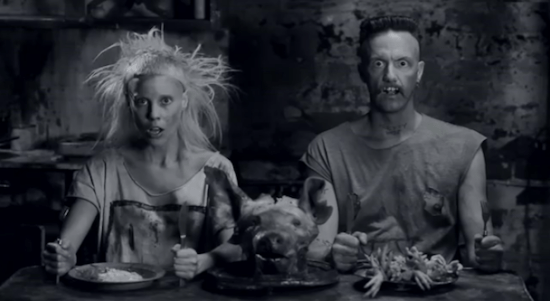
  3. I Fink U Freeky* (Director: Roger Ballen, South Africa, 4 minutes)

    Meth is a hell of a drug. This is one of the most aggressively terrifying and creeptastic music videos I’ve ever seen – and yet the single most jarring shot was a lingering logo on a pair of Beats headphones (which promptly get smashed by a brick). Product placement of any kind (if that’s indeed what this was) felt more out of place in this bizarre video than the woman beating a dead lion or being crawled upon by a dozen giant rats.

    Watch online here (NSFW).

  4. Listen Up (If the World is Going to Hell) (Director: Nicholas Junke, USA, 4 minutes)

    A generic 80s ballad plays over a couple gleefully competing to the death for a pair of rubber-headed animals. What you see is what you get.

    Watch online here.

  5. Killer Mike–Reagan (Director: Harry Teitelman/Daniel Garcia, USA, 5 minutes)

    An angry animated video for an angry song. This song is conspiratorial, anti-capitalist, anti-government, anti-prison, and above all anti-Reagan. These are good rhymes, well delivered – and that’s all I really ask for in my anti-establishment hip-hop. The murderous cartoon robot was just a bonus.

    Watch online here.

  6. Dog is Dead–Teenage Daughter (Director: Jordan Bahat, USA, 4 minutes)

    This video, of a girl on a driving range, is fine. The song? Also fine. But it’s pretty telling that at the end of this block of films, I couldn’t remember a single thing about it.

    Watch online here.

  7. Kithkin–Fallen Giants (Director: Ben Anderson/Sawyer Purman, USA, 5 minutes)

    Flashlight tag in the woods. Much like Pacific Rim, this film took on a deliberately difficult lighting challenge. Unlike Pacific Rim, it pulled it off well from start to finish. And the song is enjoyable. If you want more specifics on that, talk to a music critic.

    Watch online here.


Tales of Science Fiction

  1. AnimA (Director: Scott Mannion, Australia, 14 minutes)

    Somehow, this film exists as an even more depressing rendition of Eternal Sunshine of the Spotless Mind (this will not be the last time this weekend that I mention this film). A man shares memories with his dead wife and son as he struggles with his grief. The film makes use of some gorgeous stellar imagery and time lapse, but the technology is a fairly elaborate and unnecessary metaphor for the grieving process. We don’t get to know the man (ostensibly the only real character) terribly well, apart from his grief and scientifically motivated detachment from his former family. This is a sad tale, but it feels more like an exercise in speculative technology than a complete story.

    More info here.

  2. Tears of Steel (Director: Ian Hubert, Netherlands, 12 minutes)

    This is the bright, sunny, relentlessly cheerful robot apocalypse that says, in no uncertain terms, that hell hath no fury like that of an ex-girlfriend who has turned into a 50-foot cyborg and taken over the world. This film is quite fun, very well made, and yet still slightly cheap looking. Basically, it’s a solid episode of Doctor Who. It fetishizes the end of mankind like so many omnipresent bits of creature fiction (whether zombie, vampire, or robot), but demonstrates a modicum of self-awareness about its sheen of coolness. Something about a soldier on the front lines against Skynet pausing from his robot sniping to take a swig from his mango juicebox told me that this film knew exactly what tone it was going for – outrageous fun, and nothing less*.

    And remarkably, you can download it in up to 4K HD quality for free.

    *In retrospect, this may have just been a branding shout-out to the Mango Open Movie Project. But I choose to stick with my original read.

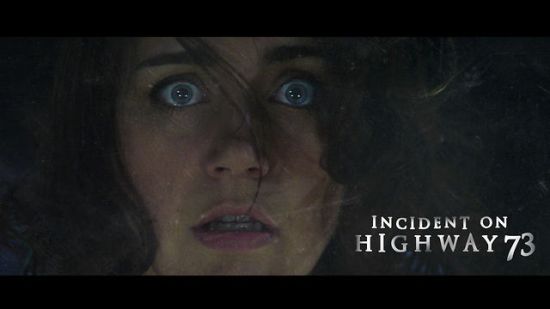
  3. Incident on Highway 73* (Director: Brian Thompson, USA, 27 minutes)

    A photographer and her fiancé drive along an old deserted highway on the way to her parents’ house for Christmas. This film is extremely judicious with its tension, sometimes making use of something as simple as the crack between an open car hood to heighten the scene. The couple is well acted, and the dialogue feels very naturalistic. This feels like the first act to an excellent horror film, which is often all you get in short-form cinema. But the characters and environment are rich enough that nothing about this film feels lacking.

    More info here.


Best of SIFF 2013: Jury Award Winners
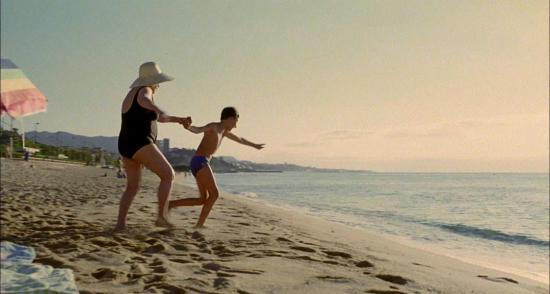

  1. Woody (Director: Stuart Bowen, Australia, 10 minutes)

    A uniquely styled, pristinely animated film about a wooden doll (named Woody) who has failed to achieve his dream of being a concert pianist. This is the nth dialog-free short that I’ve seen today, and it still managed to convey a great deal without dialogue. And naturally, it featured a lovely and elegant score of classical piano music.

    More info and trailer here.

  2. Keep A Modest Head (Director: Deco Dawson, Canada, 19 minutes)

    A mostly non-narrative series of mixed media potrayals of French (or possibly Quebecois?) surrealist Jean Benoît, set to recorded monologues from the artist himself. Apparently Benoît was quite the lothario, freely spinning tales of his adolescent sexual exploits (including some rather dangerous climbs on the snowy Paris rooftops). There is an interesting blend of animation and real-life footage here, but its lack of structure (likely owing to its subject) didn’t hold my attention especially well.

    More info here.

  3. My Right Eye (Apple of My Eye)* (Director: Josecho de Linares, Spain, 13 minutes)

    Grandparents. They love us, and they leave us. Of course, they’d probably say the same thing about the grandkids. This film is an absolutely beautiful love story between a 20-something man and his ailing grandma, rendered as much in guilt as it is in love. We can’t see our elders as much as we’d like. We have responsibilities – things we must do. We also have lives – things we want to do. This film doesn’t let the young man off the hook for how long he goes between visits, but it does give him a chance to tell his loving grandmother goodbye. For some audience members, this may seem like wish fulfillment, or a message of love spoken too late. But for others, it may be a reminder to value your loved ones while they’re still around.

    Watch online here.


    Quick List: All of the films that are available online


    A note on “NSFW”… Suffice to say, I saw a lot of films this weekend. The ones that I specifically remember containing adult content, I’ve marked as Not Safe For Work. However, outside of the “Films4Families” block, I can’t guarantee that the others will be entirely appropriate. Viewer discretion is advised.

Neill Blomkamp’s “Elysium” – Fakery in lieu of satire

Poster for "Elysium"

In the distant future, Earth is a polluted, overpopulated wasteland, no longer capable of supporting human life. A privileged few have managed to escape into the only place left for them – outer space. But something is amiss. Humanity is stagnant – out of balance. All of its resources benefit a privileged few. But soon, a lone hero will venture forth from his ruined home planet to save humanity from itself. And that hero…is a cute little robot named Wall-E.

I made the profound mistake of rewatching District 9 the day before seeing Elysium. The former, Neill Blomkamp‘s 2009 feature film debut, posits an alternate present-day in which aliens landed 20 years ago, and now exist in a beleaguered slum in South Africa. District 9 revels in cynicism, and does so quite effectively. As a viewer, I patted myself on the back in smug self-assurance that – yes, that’s exactly how terribly that situation would play out. In fact, it would probably be a lot worse. Elysium posits a similarly broken and unjust world, but does so in a manner that feels completely derivative (see Wall-E) and isn’t particularly effective at world-building or satire. The viewer must either accept Elysium as a straightforward piece of populist propaganda – without an ounce of self-awareness – or simply enjoy it as a film in which Mecha-Matt Damon blows a few things up. I tried to enjoy the film on one of these levels, but found each of them to be lacking.

Many of the film’s action beats felt like pale shadows of things I had already seen in District 9. This included a few identical weapons, but let’s face it, rail guns are cool enough to include twice. Unfortunately, in several cases, the action direction and cinematography have gotten noticeably worse. The moment Damon put on his cyborg exosuit, all of his fights turned into fast-cutting, incomprehensible blurs. Whatever blend of physical and virtual effects was in play here, it clearly didn’t work well enough that they felt comfortable showing it for more than a half-second at a time.

Much of the world building of the earthbound slum (or slumbound earth) worked fine, and some of it even approached decent satire. The overwhelming reliance on automated law enforcement (including a hilarious parole droid) definitely hits a few familiar notes for American audiences. The problem is that the satire is basically non-existent on Elysium – the titular space platform. There is no allegory in place here. Elysium is America, or at least the most wealthy Americans. And this isn’t the future – this might as well be now. This attitude is readily apparent from the film itself (and the director has confirmed as much himself), and it might have even succeeded as a passable allegory if not for the one crucial detail- the most alluring amenity of Elysium is a medical bed in every home that effectively and instantaneously cures any disease or injury. You read that correctly. The MacGuffin in this science fiction film…is a magical healing bed that grants immortality.

elysium-jodie-foster-photo

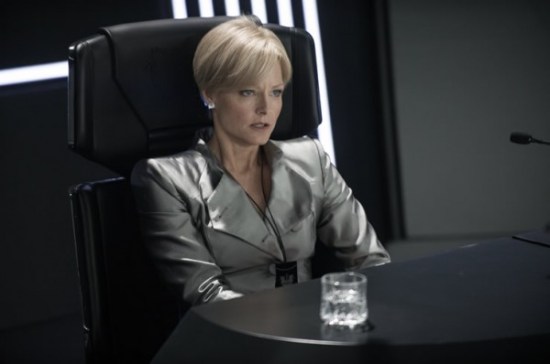
That’s it, folks. That’s when I checked out of this movie. Because if you’re the person who is withholding the magical healing bed from the rest of the world, you are evil, you are irredeemable, and you are utterly boring. Saddling strong performers like Jodie Foster and William Fichtner with such one-note villainy feels like a waste, despite both of their passable performances. And the less said about Sharlto Copley the better. He plays a neat (if slightly incomprehensible) psychopath, but he feels like a bearded retread of David James‘ psychopathic soldier from District 9. He likes killing, he’s good at it, and he’s in gleeful service of a corrupt regime. If the regime itself had been a bit more believable, I might have enjoyed this performance a lot more. Copley is clearly having a good deal of fun with it.

Elysium should have worked as a concept. There was much about this world that made me intrigued, made me curious… I wanted to know more about how the government of this place operated. I wanted to know more about its relationship with Earth. The platform clearly possesses either the military might or political capital to exert force on the planet below (at one time locking down the airspace of Los Angeles through sheer force of will). There is enough implied substance here that the film could easily have built out that relationship further, peppering in the small details that would have made it a credible world. Science fiction (or at least its marketing) used to be about making the audience “believe” something. You’ll believe a man can fly. You’ll believe a spaceship can fly to Mars. As a film intended to make me believe in an orbital platform for the super-rich, the film was a total failure. All it really made me believe in was a world broken so badly that the film’s pretense of a happy ending provoked nothing but a mirthless chuckle.

FilmWonk rating: 3 out of 10

FilmWonk Podcast – Episode #36 – “Pacific Rim” (dir. Guillermo del Toro)

Poster for "Pacific Rim"

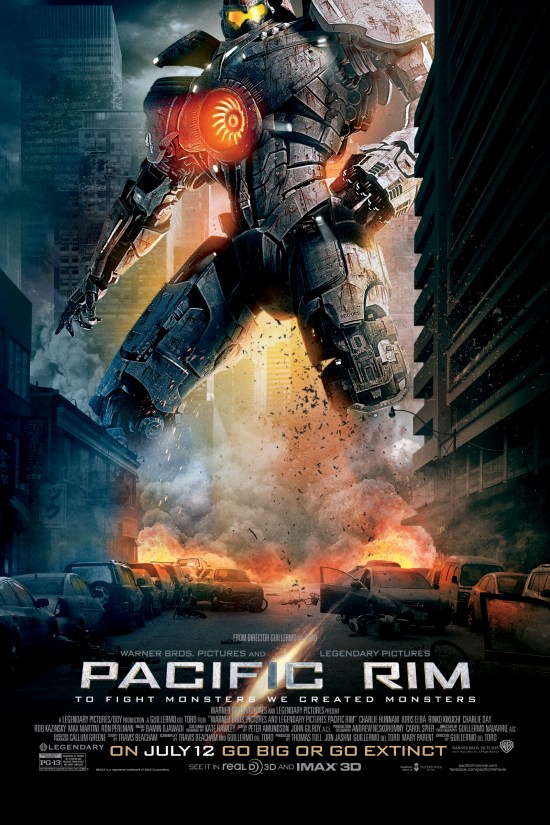
This week on the podcast, Glenn and Daniel go big and get goofy with Guillermo del Toro‘s Pacific Rim, the latest entry in the fairly saturated market of world-ending, giant-robot smashing, quasi-superhero films. Is this film big, loud, and earnest enough to set itself apart? Listen below and find out (36:29).

May contain some NSFW language.

FilmWonk rating: 7 out of 10

Show notes:

  • Burn Gorman was born in Hollywood to British parents, and moved to London when he was seven years old. Make of his accent what you will.
  • The music for this film was done by Ramin Djawadi, best known for composing opening title themes and original music for TV (Prison Break, Game of Thrones, and others). And a correction – we spoke on the podcast of brass and major chords, but a review of the soundtrack reminded us that Pacific Rim‘s score consisted primarily of strings – both synth/orchestral and rock-and-roll guitar. Quite rousing upon review.
  • Music for this episode comes from the eponymous opening track to the film’s score.
  • We recorded this episode prior to the film’s #3 debut at the box office…and we’re sad to say, we called it. But now seems like a good time to evoke the powerful fiscal ambiguity of Edward Jay Epstein‘s The Hollywood Economist, and say…who knows. It may be profitable eventually.
  • If you want to see how the sausage is made, stick around after the end music to hear a bit of starting difficulty we had with this episode.

Listen above, or download: Pacific Rim (right-click, save as, or click/tap to play on a non-flash browser)

FilmWonk Podcast – Episode #35 – “The Bling Ring” (dir. Sofia Coppola)

Poster for "The Bling Ring"

This week on the podcast, Glenn and Daniel find out how the other half lives, when the other half is a bunch of bored, extremely wealthy teenage criminals. If there’s one thing our intrepid heroes love, it’s a pleasant surprise, and Sofia Coppola‘s audacious examination of celebrity worship dovetailing into grand larceny definitely qualifies (36:39).

May contain some NSFW language.

FilmWonk rating: 7.5 out of 10

Show notes:

  • Music for this episode comes from the film’s soundtrack, including the tracks “Bad Girls” by M.I.A., and “Gucci Bag” by Reema Major.
  • We refer to an episode of the Slate Lexicon Valley podcast, an absolute must for language nerds. Check out the episode, which is entitled “Undocumented Illegals“.
  • In case you’re curious which film we were planning to see before the cell phone incident, I won’t promote it by mentioning its title here (and I’ve redacted it from the podcast), but the offending studio was Fox Searchlight.
  • The real-life players and criminal proceedings surrounding the Bling Ring are summarized on Wikipedia.

Listen above, or download: The Bling Ring (right-click, save as, or click/tap to play on a non-flash browser)

FilmWonk Podcast – Episode #34 – “Man of Steel” (dir. Zack Snyder)

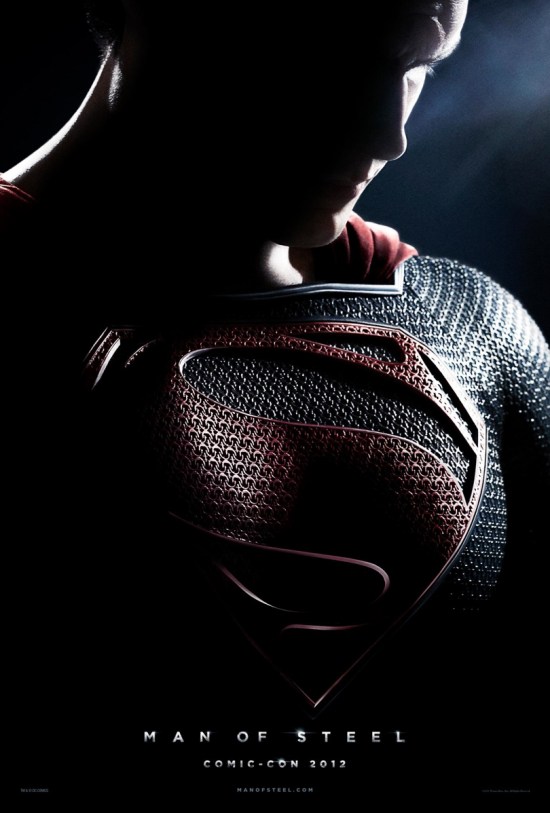
This week on the podcast, Glenn and Daniel dive back into the rough-and-tumble world of Zack Snyder and Superman – two characters whose prior installments have given us a healthy dose of skepticism. Can the stewardship of Christopher Nolan bring all the brooding angst and box-office domination that this franchise needs? Find out after the jump (45:48).

May contain some NSFW language.

FilmWonk rating: 5 out of 10

Show notes:

  • Music for this episode is the rather ironically-titled “What Are You Going to Do When You Are Not Saving the World?“, from Hans Zimmer’s enjoyable and epic score.
  • Pa Kent’s first name is Jonathan. I don’t believe this was ever mentioned in the film.
  • Adam Quigley‘s “Antisocial Commentary” defense of Sucker Punch can be found on here on YouTube.
  • The good folks at BuzzFeed hired a consulting firm to estimate the costs and casualties – both direct and indirect – of Superman and Zod’s fight at the end of the film. The results: 129,000 dead, minimum. I misstated a couple of these figures on the podcast, so be sure to check it out for all the details.

Listen above, or download: Man of Steel (right-click, save as, or click/tap to play on a non-flash browser)

SIFF Review: “Celestial Wives of the Meadow Mari” (dir. Aleksey Fedorchenko)

Still from "Celestial Wives of the Meadow Mari"

Warning: As has become SIFF tradition, this review was typed and posted after midnight. The copy-editing and coherence may be a bit more lax than usual.

The Mari are an ethnic and religious group living primarily in a Russian republic 700 kilometers east of Moscow. And prior to learning of this movie, I had no idea they existed. Celestial Wives of the Meadow Mari could be seen as little more than a series of disconnected vignettes, but I found it to be a master class in short-form storytelling. The film uses the lens of 22 women, all of whose names begin with the letter “O” (and please don’t quiz me on them – even with 2 years of Russian under my belt, these names were utterly unfamiliar to me) to explore the customs, culture, attitudes, cuisine, and pastimes of the Meadow Mari. And did I mention that the Mari worship trees? Animism, paganism, naturism… There are elements of all sorts of nature-imbued faiths at work here, and a healthy measure of mystery, sorcery, gods, and demons. And did I mention this is not a documentary? Each of these stories is a work of fiction.

And it is in its treatment of fiction that the film absolutely shines. There is a quote, often attributed to Ernest Hemingway, that is allegedly the shortest novel ever written: For sale: baby shoes, never worn. This is the sort of densely poignant short-form storytelling that the film embraces. While the stories vary in length from around 2-7 minutes, some of the shorter ones are also some of the most powerful. In one segment, a bride and her friends are bathing in a creek on the eve of her wedding. At the top of the overlooking ravine, a lone girl leans against a guard rail – fully clothed, and whistling with a leaf. As the merry, naked romp continues down below, the groom-to-be approaches the guard rail from off-screen. He attempts to touch the hand of the odd girl out, and she responds with a simple “Don’t”, and resumes her whistling. Each of these stories has a beginning, middle, and end – even if we don’t see all of the pieces on-screen. This is not to say that I found the film completely coherent – there were a great many inexplicable moments and eccentricities that I couldn’t explain, due to my complete lack of knowledge of this entire people. And yet, there was never a moment that I found myself doubting that there was a reason for everything I was seeing on-screen – which had the effect of keeping me completely engaged throughout the film.

Still from "Celestial Wives of the Meadow Mari"

While we’re on the subject of films that take place in Russia, the filmmakers of A Good Day to Die Hard should pay particular attention to this point: if I can’t explain why any of the characters are doing what they’re doing for the majority of your film, it’s a huge potential problem. But Celestial Wives presents the perfect solution – an ensemble cast of characters who always know why they’re doing what they’re doing, and do a magnificent job of conveying that certainty to the audience. The Mari women are strong and powerful creatures, and they take center stage in this film. Their primary ambition is marriage and family, and yet it is clear that they sit in a position of particular power and reverence in this community. And what’s more, they are incredibly sex-positive and open in discussing their sexuality, which leads to a multitude of interesting moments. The film mingles desire and seduction with the group’s nature-focused religion (and sorcery) in ways that are alternately poignant, hilarious, disturbing, and at all times incredibly invigorating. One segment, in which a group of young women perform a ritual (seemingly) to both honor the dead and ensure that they find good husbands, they are interrupted by a group of…well, they appear to be young men…who slap a pig hock onto the table and say, without preamble, “Let’s play hoof.” I won’t say what “hoof” entails, but suffice to say, it is one of the most bizarre and hilarious sequences I have ever seen put to film.

Still from "Celestial Wives of the Meadow Mari"

How can I possibly discuss this film further? Since each of these segments tells a complete story that is nonetheless a part of a coherent whole, I find myself unable to even discuss my favorite segments without entirely spoiling them. To put it simply, this film is exhilarating – and prone to moments of staggering poignancy. While there were certainly some segments that I enjoyed more than others, there was not a single one that I found boring. The film’s open approach to sexuality raises a myriad of fascinating questions over the course of the film’s runtime, to say nothing of the role of this culture that has somehow managed to remain a band apart (culturally and religiously) for so many centuries despite being surrounded at all times by conflicting ideologies. And I know you. You might be bringing a few of those ideologies to the table yourself. You might not be eager to check out a film with not one, not two, but 22 strong female characters. But that’s okay. Well, it’s really not okay… But I can assure you that the cast also includes the fine, upstanding gentlemen below.

FilmWonk rating: 9 out of 10

Still from "Celestial Wives of the Meadow Mari"

SIFF Roundup: “Blackfish”, “The Kings of Summer”

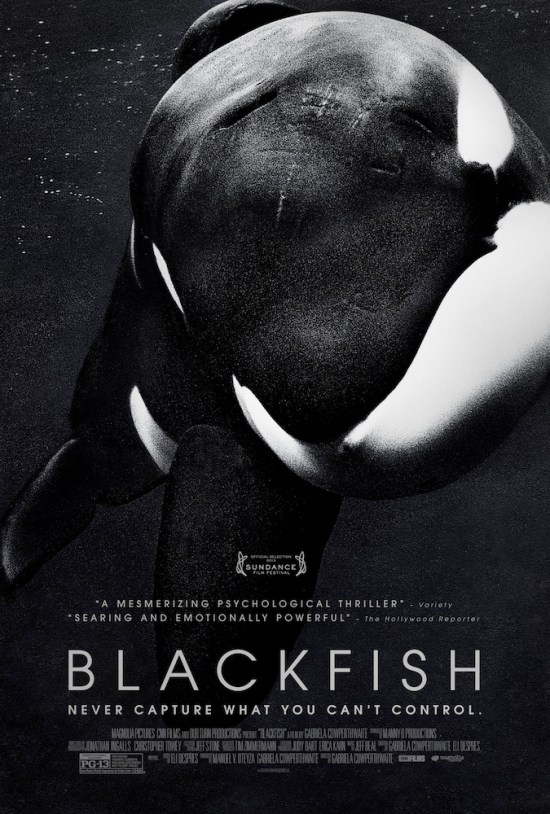
Poster for "Blackfish"

“I can’t imagine a society that values marine mammals as we do…without parks like SeaWorld.”


This quote, from an interview with a former SeaWorld trainer, appears in the latter half of Blackfish, and it is to the documentary’s credit that it doesn’t belabor or even call attention to the bitter irony that this one line so perfectly encapsulates. The film is ostensibly a hit piece on SeaWorld, centering around a captive orca named Tilikum who killed an experienced trainer named Dawn Brancheau in 2010, increasing his career body count to three. It expands upon the company’s allegedly dubious safety record when it comes to protecting those under its purview – animals and trainers alike. The film does moralize about the ethics of keeping captive intelligent animals in a glorified circus, but these moments are few and far between compared to the film’s pragmatism about keeping and interacting with orcas safely.

The film’s central argument seems to be this: If killer whales are potentially lethal, as their moniker would seem to imply, and if they are used to miles of unobstructed ocean territory in which to roam and settle their disputes, they cannot be practically held in captivity with any measure of safety. The moral implications of this point are broached throughout the film, but with an impressive level of subtlety. As a whole, the film is stridently opposed to the practice of keeping captive orcas, but it never feels like it’s making that argument directly. It simply presents the circumstances surrounding SeaWorld’s business and show-biz glamorization of their beloved Shamu(s), and leaves the audience members to reach this conclusion on their own.

The myriad former SeaWorld trainers in the film could come off quite negatively, but they really never feel like perpetrators so much as victims of their own affections and former naïveté. They readily admit that they swallowed and parroted the company line without question, sometimes quite disturbingly (such as when they told parkgoers the laughably false line that orcas live longer in captivity). By and large, the film strikes an effective balance in its tone. If writer/director Gabriela Cowperthwaite had set out to make a film that was morally opposed to keeping captive orcas, she might attract a small audience of like-minded folks who would scream their agreement and continue their previous practice of not going to SeaWorld. This was the problem with 2009’s The Cove, and one of the reasons it had little effect on the Taiji dolphin slaughter (which, as of this writing, continues every spring). It was a film for like-minded people – those who saw no reason for the wanton abuse of marine mammals they saw before them, but could see no means of halting it. While Blackfish might not be a “message film” per se, it is couched in a message of practicality, and guaranteed a wide distribution (the film will be showing on CNN later this year). What’s more, the film’s call-to-action couldn’t possibly be more simple: Don’t go to SeaWorld. Don’t spend your money. As messages go, at least it’s practical.

FilmWonk rating: 8 out of 10

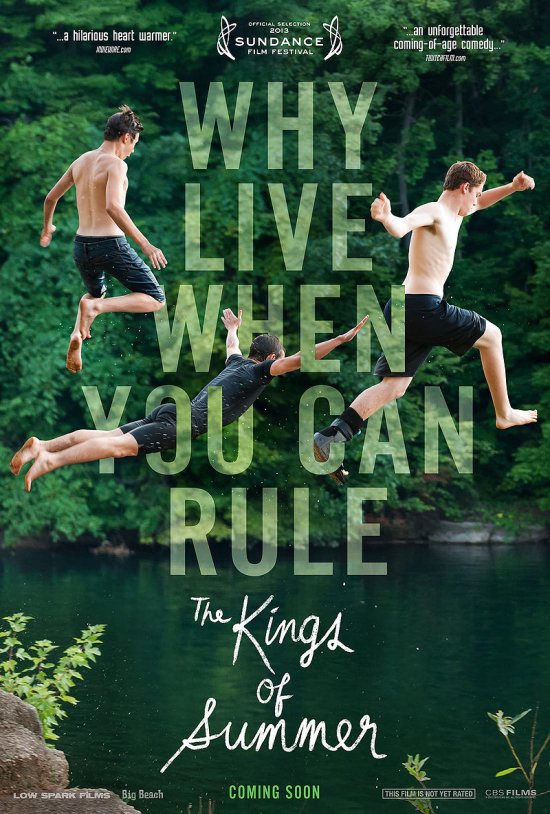
Poster for "The Kings of Summer"

If Wes Anderson‘s Moonrise Kingdom took place in the real world, and were populated with real people, it might look something like The Kings of Summer. The film focuses on a trio of boys who decide to run away and build a makeshift cabin in the woods. Joe Toy (Nick Robinson) seeks to escape the drudgery of playing Monopoly with his surly widower father (Nick Offerman), while his best friend Patrick (Gabriel Basso) just can’t stand his own parents’ (Megan Mullaly and Mark Evan Jackson) enthusiastic and merciless mockery of him- a condition that somehow results in breakouts of actual hives. Also along for the ride is an extraordinarily weird kid, Biaggio (Moises Arias), who might just be the film’s strongest comic performer even if not all of his bizarre non sequiturs land perfectly.

This film would minimally have been a satisfying comedy buffet, with a cast that includes all of the above, along with a fantastic array of supporting performers such as Alison Brie, Mary Lynn Rajskub, and Kumail Nanjiani – but it managed to be something substantially more impressive- a taut, mostly well-drawn tale of teen friendship and rebellion.

The boys indulge in the kinds of backwoods shenanigans that seem, for lack of a better word, utterly real. A boy in the woods, even when he’s playing at becoming a man, will run, jump, climb, swing, chop, pile up, push over, set aflame, and dive into every last rock, tree, or watery delight that the woods have to offer; snakes and mosquitos be damned. In one of the film’s most amusing scenes (which also plays over the opening credits) the boys come across a long drain pipeline and proceed to bang out an impressive rhythm on it with branches. And why? Not because the camera was floating majestically around them, or because the film was desperately seeking some metaphorical catharsis – but because banging on a pipe is fun. For now. And when it stops being fun, we’ll go do something else.

The film depicts some relationships quite strongly while neglecting others. Much of the father-son dynamic is left for the viewer to guess at due to the fairly limited screentime between father and son, but Offerman brings the same stolid hilarity (and occasional vulnerability) that he renders so reliably each week on Parks and Recreation. While the precise source of Robinson’s angst remains a complex mystery throughout the film (despite several proximate causes to choose from), the film manages to draw some credible parallels between father and son. To put it bluntly, they both have the capacity to be miserable, life-sucking bastards. While Offerman’s performance is strong, it is Robinson who manages to impress, proving the rare teenage (or maybe 20-something) actor who can pull off a complex, occasionally solitary lead performance.

Perhaps the film’s biggest weakness is teen love interest Kelly, who feels underwritten despite a passable performance by Erin Moriarty. While she succeeds as a source of conflict between the two friends, we glean very little of what she really wants out of the situation, and the character seems to have precious little agency of her own. Nonetheless, the conflict does feel credible, particularly in its resolution – or rather the light tapering in hostilities that feels far more true-to-life than some dramatic, emotional exchange would have been. These are teenage boys. A sentimental exchange of middle fingers is really the closest thing to a tearful hug that we can hope for.

FilmWonk rating: 7 out of 10

SIFF Roundup: “We Steal Secrets”, “Stories We Tell” (Updated)

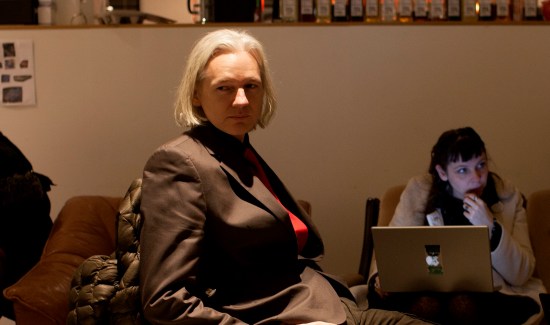
Still from "We Steal Secrets: The Story of WikiLeaks"
We Steal Secrets: The Story of WikiLeaks
Directed by Alex Gibney (documentary)

Prolific documentarian Alex Gibney (Enron: The Smartest Guys in the Room, Client 9: The Rise and Fall of Eliot Spitzer) is an adept interviewer, but he confronts a serious challenge when it comes to tackling the career and cult of personality of WikiLeaks founder Julian Assange, as well as alleged whistleblower PFC Bradley Manning. The film ends (as of March 2013, an end-credits crawl informs us) with both of its subjects locked in a room for an indeterminate length of time – Manning locked in the Marine Corps brig in Quantico, VA, and Assange in sequestered asylum at the Ecuadorian embassy in London. We Steal Secrets makes no claim of access to either of its principal subjects (although Gibney claims to have met with Assange on an estate in the English countryside, wherein he declined to appear in the film), but relies instead on the swath of publicly available material on both men.

Consequently, the film could be little more than a shallow, pop-journalistic chronicle of these events, but it succeeds in challenging much of the conventional wisdom surrounding the case. Julian Assange was indeed a thorn in the sides of several governments, as well as a crusader for free speech and free information. And yet, he is also an accused sex criminal who has declined to answer the official accusations against him. These events dovetailed into a level of paranoia that I (and Gibney, and many others) found quite alluring when they first came to light – surely the accusations were nothing more than an attempt to embarrass or discredit a man who had stepped on the wrong toes. But Gibney argues quite convincingly that that the internet hivemind’s opposition to Assange’s extradition or prosecution has little to do with the facts of the case, but rather with Assange’s cult of personality. Assange can be nothing more or less than a total guardian of free speech and information – a paragon, or nothing at all. The Internet, in all its subtlety, is unable to accept anything in-between. Nor is it willing to accept the conceptual utility of WikiLeaks as a tool for forcibly open democracy without a man like Assange – who dresses and talks like a James Bond villain – as its charismatic leader.

All of these contradictions come to a head in We Steal Secrets, whose title tells us a good deal more about ourselves as Americans and internet users than it does about WikiLeaks. Gibney focuses on the human side of whistleblowing – specifically, the chat logs between Manning and hacker Adrian Lamo. Manning comes off in a sympathetic, if not precisely admirable light. The secure dropboxing of confidential files becomes the desperate outreach of a lonely, tortured soul in the desert who just can’t come to grips with what he is experiencing – to say nothing of who he is. And for much of the film’s runtime, an uninitiated viewer would have no idea who the source of these chat logs might be, since they appear on-screen with simple, text-based flourishes and distant typing sounds. Manning’s musings become a lone voice in the darkness with no clear provenance. Editor Andy Grieve keeps the pace moving nicely (and makes one particularly haunting montage use of Lady Gaga’s “Telephone”). The film is 130 minutes long, but remains quite gripping throughout. Gibney manages to ask a great many provocative questions of several powerful individuals involved (including the thoroughly candid retired general Michael Hayden, ex-director of both the CIA and the NSA), which mixes nicely with a wealth of archive footage of Assange. Despite his lofty goals, the grudging consensus seems to be that WikiLeaks did little more than embarrass the countries involved. With this film, Gibney may have only accomplished the same for Assange himself, but this still makes an effective chronicle of a story that is very much still in progress.

FilmWonk rating: 7 out of 10

Update (2013-05-23): WikiLeaks has posted a complete transcript of the film, annotated with their own comments and rebuttals. You can read it here.


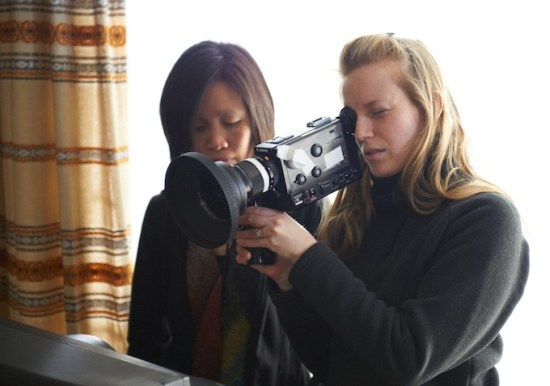
Still from "Stories We Tell"
Stories We Tell
Directed by Sarah Polley (documentary)

Actress and writer/director Sarah Polley is no stranger to putting personal stories on film – her 2011 drama Take This Waltz examines a crumbling marriage (focusing on a housewife played by Michelle Williams). While that fictitious story was undeniably put to film in the wake of Polley’s own divorce, the viewer is left to speculate about the extent to which Polley’s own experience may have informed her screenwriting. Not so with Stories We Tell. In this documentary, Polley brings an intensely personal story to life starring her entire extended family, and the narrative is structured in such a way that would practically prevent Polley from coloring it exclusively with her own perspective. This is a meta-narrative, in which we cut back and forth between Polley’s father (the captivating Michael Polley) sitting in a recording booth reading a prepared third-person account of his life experience, and being interviewed (in first-person) to react to the very same events. The contrast between these two perspectives (each from the same man with varying levels of preparation) is utterly fascinating, and becomes even more so when mixed with the other storytellers. These include Polley’s siblings, relatives, and various old friends of her now-deceased mother, whose life and children are the film’s principal subjects.

The mystery of Diane Polley (Sarah’s mother) is at the core of this film. With this woman dead and gone, all that her loved ones have left are their own memories and perspectives – and the narratives that they construct from them. The film gets at the heart of storytelling as a technique for making sense of the world, and does so in a manner that is utterly free from reproach. The Polley family never once struck me as self-obsessed or navel-gazing individuals. Not only are they a captivating bunch, but they also demonstrate a healthy measure of humility when it comes to rendering this intensely personal (and potentially humiliating) story. You really get the feeling watching the film that if this documentary were to be viewed by no one else except for the individuals involved, they would all be okay with that. This is one of the most earnest personal testaments that I’ve seen since 2008’s Dear Zachary, a film which served a much more subdued and heart-wrenching narrative than what is on display here. The saddest part of this story is that Diane is not around to answer these questions herself, and yet the stories that remain behind feel just as important and vivacious in her absence. This film is nothing short of a masterpiece – hilarious and heartfelt, and brilliantly blurring the lines between documentary and reenactment. It is an act of courage and personal conviction, delivered with an admirable measure of humility.

It’s only in the film’s final act that it shows its hand a bit, and some viewers may find the “making of itself” portion of the documentary to be a bit tedious. For a film nerd like me, it did nothing to diminish the experience, since it only served to further elucidate the precise nature and value of good storytelling. To illuminate how this documentary reluctantly came together only served to add additional weight and consequence to the story. Even as the film’s principal subjects debate who was the most fitting person to render these events into a narrative, it becomes ironically clear that this story ceased to be their exclusive property the moment they decided to tell it. The genie is out of the bottle, but the world is better off for it.

FilmWonk rating: 9 out of 10

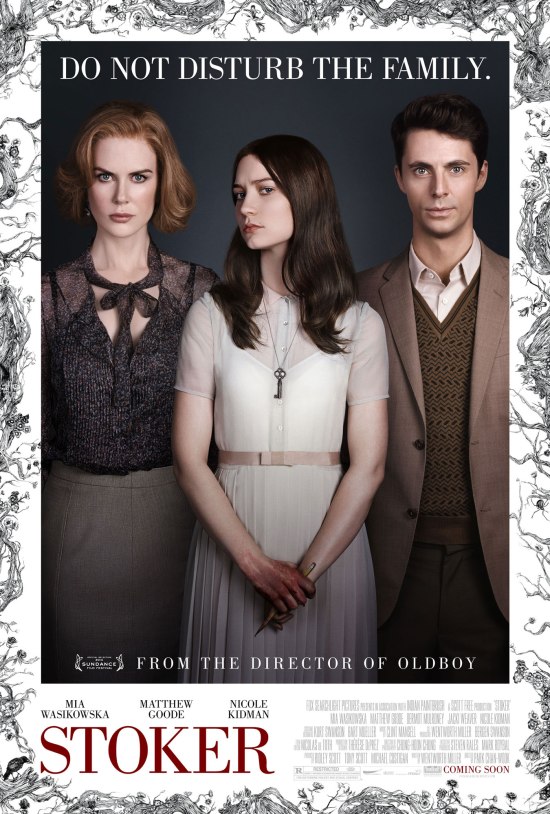
FilmWonk Podcast – Episode #33 – “Stoker” (dir. Park Chan-wook)

Poster for "Stoker"

This week on the podcast, Glenn and Daniel take a dour and disturbing journey into director Park Chan-wook‘s first English-language film, starring Mia Wasikowska, Matthew Goode, and Nicole Kidman. Can this bizarre, gothic fairytale rise to the levels of disturbing sophistication of Park’s beloved Vengeance trilogy? Listen below and find out! (34:48)

May contain some NSFW language.

FilmWonk rating: 7.5 out of 10

Show notes:

  • Music for this episode is the track “Uncle Charlie”, from Clint Mansell‘s original score.
  • Minor correction: When this film was shooting (September 2011), Wasikowska was 21 years old.

Listen above, or download: Stoker (right-click, save as, or click/tap to play on a non-flash browser)

Sam Raimi’s “Oz the Great and Powerful” – A cynical prestige

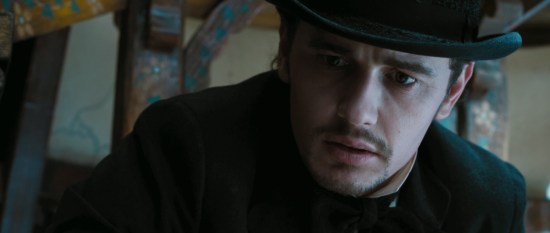
Sam Raimi has pulled off some kind of trick with this film, but it may not have quite been the one he was going for. He presents a reluctant hero-cum-charlatan in Oz (James Franco), a Kansas illusionist who has thus far used his charm and trickery to hoodwink simple country folk in the film’s 4:3 black-and-white cold opening. For the crowds, he performs tricks for a pittance of coins. For the many ladies who pass through his sphere, he spins fantastical tales of mystery and nobility, all in the hopes of stealing a kiss. The results of his pickup artistry remain the stuff of PG ambiguity, but it forms a rather crucial plot point in the film when he meets the witch Theodora (Mila Kunis) upon arrival in the fantastical land of Oz. He plies her affections with the same tricks and tales that work so well on wide-eyed farmer’s daughters, and yet is unknowingly bolstered by two supporting factors. First, the people of this land believe him to be their salvation – the great man of prophecy who will deliver them from the Wicked Witch.

But it is the second factor from which he benefits the most. Witches are fearsome things. They are not used to being approached, and they are not accustomed to anything but reverence twinged with fear. This is true for all three of the witches we meet in this film, whether it is the sullen and enigmatic Theodora (Kunis), the stern and calculating Evanora (Rachel Weisz), or the ethereal but intimidating Glinda (Michelle Williams). Each of the trio is transformed in turn by their encounters by Oz, and yet Oz himself never seems to be a deliberate architect of these transformations. He bumbles through, never quite knowing what effects his actions may have, but always capable of acts of genuine goodheartedness. This is a man who can tenderly patch up the broken legs of a little girl made of china (voiced by Joey King) immediately following a Scrooge McDuck-worthy plunge into a vast chamber of gold, giddy at the possibility of tricking the people of Oz into gifting it to him. His acts of goodness may spring from shallow motivations – ambiguous concerns about the unearned trappings of power – but they are good nonetheless.

Unfortunately, the film’s most important relationship – that of Oz and the Wicked Witch – is also the least developed. The actress (whose identity I will withhold for the sake of spoilers here) is utterly captivating in her initial presence, and yet becomes broadly cartoonish the moment her true malevolence springs forth. Everything about this final characterization – whether voice, physicality, or makeup – feels just a bit off. The result is a villain who feels like a fraction of the threat that she was intended to be. Oz’s inexorable (albeit temporary) triumph over the witch – while cleverly scripted and executed (making particularly good use of the Emerald City’s vast fields of opium precursor) – feels like a shallow victory. He caps the engagement with a feel-good decree about how the people of Oz shall henceforth be “free”. What were they before? They seemed relatively free under both regimes. But what’s more, Oz is indirectly responsible for what the witch becomes, and only accepts a fraction of that responsibility – and that amount, arguably for the sake of public appearances.

But I can’t help but think these are all deliberate choices. We’re invited behind the curtain to pay attention to the man therein, and what we find is a character who is towering and capable, but actually pretty unworthy of admiration. And yet, Franco’s performance manages to make him captivating nonetheless. Oz the Great and Powerful has a good deal of cynicism surrounding the tropes of a hero – perhaps Raimi’s response to the diminishing creative returns of the Spider-Man franchise. At its best and worst, it oddly evokes the original ShrekZach Braff even voices a loudmouthed companion that’s just a single letter away from being called Donkey. This may not be the hero we expected. He may even be a bit off-putting at first. But he’s the one we’re getting, and we’d better try and make it worth nonetheless.

The film is also quite beautiful. You may blame my still-fresh memory of Life of Pi for not mentioning that sooner. While the visuals in that film felt like an essential component of its appeal (making the Rhythm and Hues fiasco that much more depressing), they feel a bit more like expensive set dressing in this film. The look of Oz is distinctive – nicely separating itself from the influence of its Alice in Wonderland producers. But Franco’s disinterested reaction to the film’s wondrous world seems like it ought to detract from the visual appeal a bit. After all, if Oz is unimpressed, why should I be? But this attitude – likely an accidental byproduct of filming Franco at length upon greenscreen – only served to reinforce my fascination with Oz as a character. He’s not bothered by winged monkeys, humongous lilies, or towering bejeweled cityscapes. His concerns seem so human and mundane – money, power, and women, with only the occasional break for friendship and nobility.

In the end, that’s the film’s greatest trick. Oz shouldn’t be all that likable – but he is.

FilmWonk rating: 6 out of 10