Seattle’s One-Reel Film Festival 2014 – Sunday Roundup

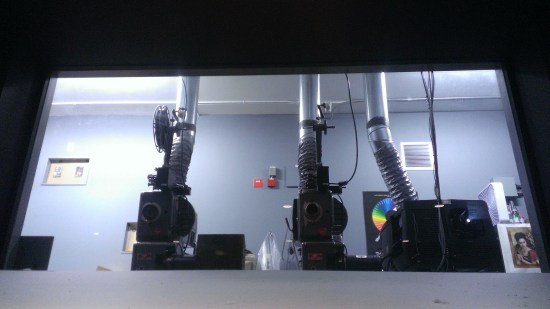
SIFF Film Center projection room

The One-Reel Film Festival is part of Seattle’s renowned Bumbershoot music and arts festival. Throughout the weekend, I’ve had the opportunity to see short films from all over the world, some of which can be viewed online (I’ve included links below where applicable). The films were arranged into blocks of around an hour apiece, which I’ve arranged in presentation order below. Bold text means I enjoyed the film, and an asterisk (*) means it was my favorite film of that block. Skip to the bottom for a list of all the films that can be viewed online.

Click here for Saturday’s films
Click here for Monday’s films


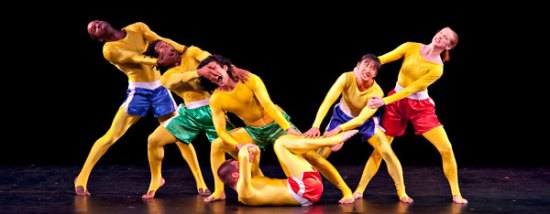
Dance, Dance, Dance
Still from

  1. Bookin’ (Director: John Kirkscey, USA, 19 minutes)

    This film features two pairs of dancers exploring the evolution and future of a 30-year-old Memphis hip-hop dance style, gangster-walk, which has now become a much more refined style called “jookin'”, a beat-conscious fluid series of movements that much more closely resemble classical ballet to my untrained eye. There’s lots of standing on tip-toes (“getting on point”), smooth motions of toes and feet sliding along the floor, skillful spins, etc. The other pair, classical ballet dancers from New York, try to fuse jookin’ with ballet into a new style, which the group collectively dubs “Bookin’”. It’s a fascinating project, and we get some beautifully shot sequences of each style separately, but the biggest issue with this film was that I wanted more of the dancers together. It was perhaps a mistake to film this documentary entirely on the first day the dancers met, because they unfortunately acted like two pairs of strangers. They didn’t talk to each other much during the explanatory interstitial chats, and many of the choreographed dance sequences featured one dancer standing stock-still while the other performed. It was, to borrow one of their own lines, each dancer doing their own thing. The music (written by the director) is a fascinating blend of cello and hip-hop beats, and ultimately, the combined dance did come together pretty impressively. But I’m really not sure the dancers ever did.

    More info and trailer here.

  2. ME – Story of a Performance (Director: Jopsu Ramu, Finland/Japan/Estonia, 8 minutes)

    This is a fractured, self-indulgent mess of a dance film. The dancer (Johanna Nuutinen) can twist and writhe and contort her body into some very tricky and precise shapes, which would’ve been interesting to watch if the film weren’t so interested in showing off the various particle features in Adobe After Effects instead – or blurring and contrasting the white-clad dancer out of existence into the snow or fog of the background. This film is visually unpleasant to watch, and the music was constantly stopping and starting. The result can hardly be called dance, so much as a series of aborted and distracted maneuvers.

    More info and trailer here.

  3. Globe Trot (Director: Mitchell Rose, USA, 5 minutes)

    Reminiscent of the “Where the Hell is Matt” series, this video features a variety of different dancers (of all ages, races, sexes, and body types) performing the same choreographed dance around the world. All of the scenery is gorgeous and iconic (because of course it is), and there’s something exhilarating about watching one dancer begin a move in front of the Grand Canyon, and another complete it in front of St. Basil’s Cathedral in Moscow. This film was crowdsourced from 50 filmmakers around the world, so the variations in camera quality and cinematography style feel a bit odd – but this is a fun concept and execution nonetheless.

    More info, and watch the film here.

  4. Reflejos (Director: Jordan Jay Colvard/Carla María Negrete Martinez/Alisa Chanelle Dickinson, USA, 5 minutes)

    There’s something simultaneously aggressive, erotic, and sad on display in this film, with dancers shot in extreme closeup as they move around alternately in bed and in a park (Volunteer Park in Seattle?). A few of the movements feel reminiscent of “victim-control” stage combat techniques, with dancers grabbing each other by a scruff of hair, or with an arm around the torso, and the “victim” writhing back and forth from the simulated attack. And then the film would cut seamlessly back to a pair of women in their underwear precisely rolling around in a bedroom – together, then separately, and back again. The resulting message is not precise or coherent, but it is an undeniably fascinating performance, both in terms of choreography and cinematography.

    Watch it here (borderline NSFW).

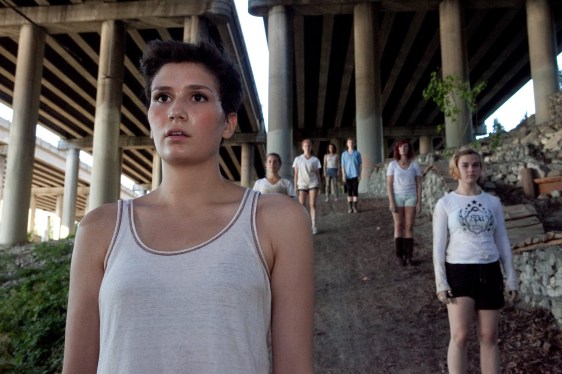
  5. Beneath Our Own Immensity* (Director: Alia Swersky, USA, 10 minutes)

    Fascinating journey of a dance troupe under a complex series of freeway overpasses (seemingly, the north end of Seattle’s Ship Canal Bridge). The dancers begin as distinct entities, finding movement and performing complex stunts amid a field of hillside detritus – fencing sections, construction debris, etc. The music begins quite simply, relying heavily on the overhead rumble of traffic, then blends in other sounds – flowing water, billowing wind and dust, and eventually, the dancers seem to become one with the debris itself. They become mired in mud and dust, and their movements gradually begin to meld with the debris itself. A particularly intimate sequence features a man and woman hanging from a section of wooden fencing from various twists and contorted positions, then gradually sliding back down to earth, rolling over each other’s bodies, their movements always fluid and deliberate. And then the dance gets aggressive and loud as the ambient road and debris noise picks up. Exhilarating and well-shot.

    Watch it here.


Love…In the Afternoon

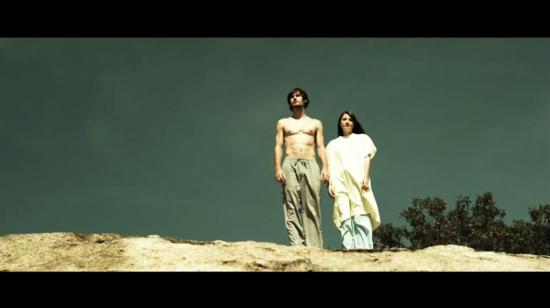
Still from

  1. The Crumb of It (Director: T.J. Misny, USA, 15 minutes)

    This film is beautifully acted, and deeply uncomfortable. A comedienne (Jocelin Donahue) and a pastry chef (Chioke Nassor) debate whether it’s possible to be in a relationship with someone who hates your greatest creative passion – he is tepid about her comedy, and she gets violently ill and terrified at the sight or taste of cake. There’s some deep insecurity (and, perhaps, manic depression) on display here, and the resulting relationship feels raw, intense, and authentic. This is part of a Kickstarter series of three shorts (titled Intimate Semaphores) intended to showcase female performers in meatier roles than mainstream projects tend to offer. This film did that in spades – Donahue’s performance is effective and deeply unnerving, and certainly made me curious to check out the others in the series.

    Watch it online here.

  2. Listening Is an Act of Love (Director: The Rauch Brothers, USA, 23 minutes)

    I’ll be blunt – I liked this film much more than I expected from the outset. It’s possible it spent too much time explaining the value of storytelling (literally as if to a child – the filmmaker’s nephew), when after years of exposure to This American Life, The Tobolowsky Files, and Risk!, I’m pretty well versed in that already. But I suppose I wasn’t the target audience for the first segment, and I’m sure some people have to be convinced of the project’s value. The film makes its pitch effectively before jumping into a series of deeply touching personal stories, rendered in the Rauch Brothers‘ Flintstones/Jetsons-cum-Flash style of animation.

    Watch it (and many other animated short stories) here.

  3. Life’s a Bitch* (Director: Francois Jaros, Canada (Québec), 6 minutes)

    A “romance procedural”, featuring a man dealing with the aftermath of a breakup. It hits many expected beats, but the storytelling method consists of shots that never exceed 1-2 seconds in length, and the result is a punctuated and highly amusing account of the next couple of months (or years?) of this man’s life (and, some might argue, downward romantic spiral). Quite charming.

    More info and subscription-based viewing here.


SIFF Fly Films 2014
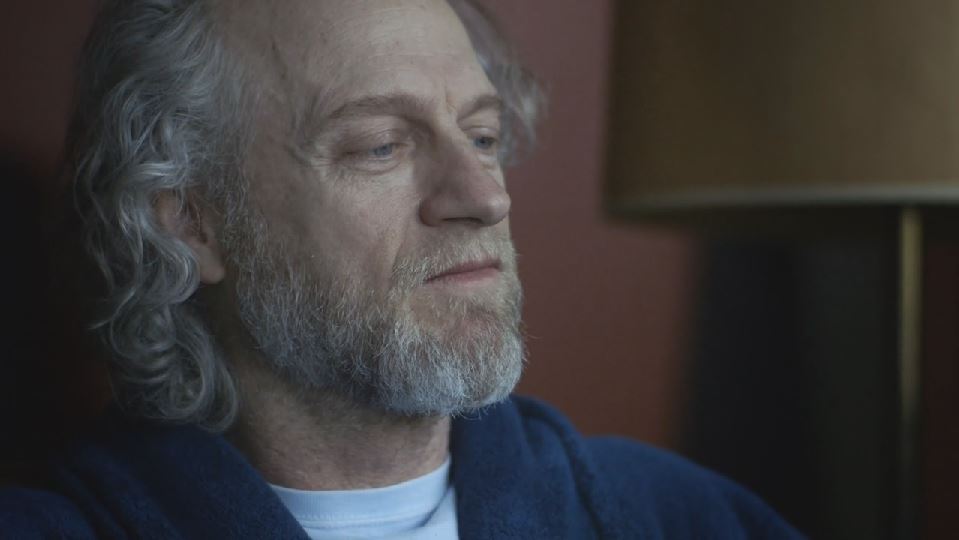
This year, the Seattle International Film Festival (SIFF) challenged five local production companies to create a love letter to Seattle in a compilation affectionately titled, ‘Seattle, I Love You’.

  1. Sea Folk (Director: Morgan Henry and Josh Hayward, USA, 8 minutes)

    A loving non-narrative digital tribute to Seattle shipping and boating life – from the gorgeous opening drone (or helicopter?) shot of the city to the various individual boaters, to the “day-in-the-life” sequences aboard the SFD fire boat or the various Coast Guard cutters, as well as the passage of Puget Sound aboard the Washington State Ferries, each shot lovingly renders the unified aquatic world of Elliot Bay, Lake Union, and Puget Sound into something truly wondrous and otherworldly that completely envelops the city proper. The final shot, a first person view of one of Seattle’s vast car ferries returning to port, captures something so quintessentially Seattlelite – the grand feeling of knowing that you’ve seen true beauty and made it home.

    Watch it here.

  2. Fresh Pair (Director: Norma Straw, USA, 8 minutes)

    A mildly amusing look at running in Green Lake and the various weirdos you will encounter and eavesdrop on. These scenes felt just a bit too thoroughly staged, and the acting wasn’t great – the film never quite shakes the feeling that it is a Movie About Seattle rather than an actual story that happens to take place here.

    More info here.

  3. Open Mouth (Director: Randy Walker, USA, 8 minutes)

    Attempt #1: I wish I could properly evaluate this one, but the primary vocal track was not working. But the filmmakers, to their credit, gave a wonderful live rendition from their seats in the audience. Attempt #2: Success! A cute little family slice of life. The amusing awkwardness of old couples vs. teenage couples kissing is contrasted to great effect, even as a teenage boy improbably invites his parents along for his first date at the ice rink.

    Watch it here.

  4. Hannah & Otto (Director: Chris Volckmann, USA, 8 minutes)

    A cute Seattle love story – a pair of retail drones find themselves on a romantic collision course following a meet-cute in the bike lane. Well-shot, and a nice piano score.

    More info here.

  5. Secret* (Director: Tony Fulgham, USA, 8 minutes)

    Secret definitely shares some common themes with Open Mouth, in its contrast between older and younger couples, but is rendered as a drama rather than a family comedy. The various interactions between the older couple are almost entirely wordless, but reveal a level of comfort, both with their own lives, as well as their relationship, that is apparent in even cursory observation. They each have their own interests – he with his electronics and jazz, and she with her complex wire crafts – but they still enjoy a great many quiet moments together. This is contrasted sharply with the young lady next door, who is in an ailing long-term relationship with her live-in boyfriend of two years. When these unlikely neighbors finally meet, their interaction is brief and to the point, sharing a love of music and delivering some impressively subtle exposition about their respective levels of contentment with life. If the Seattle Freeze is a stereotype, this is a platonic ideal of the Friendly Seattleite. Then the old couple wordlessly squeezes hands in a quiet and comfortable moment, because for them, it’s just another nice day together.

    More info and trailer here (hey, this guy also directed the delightful SIFF 2014 trailer!).


Best of the Northwest
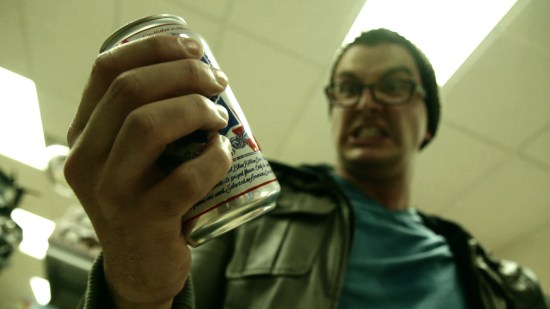
Still from

  1. The New West (Director: Peter Edlund, USA, 15 minutes)

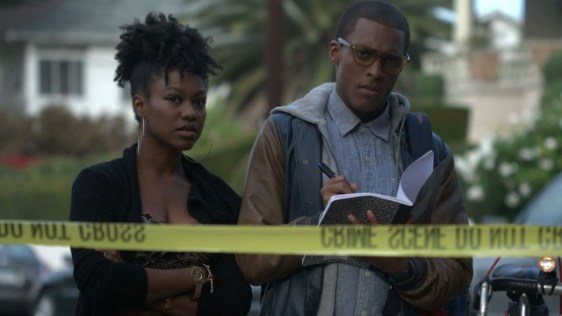
    I love, love, love a noir detective story in a high school, and even as this film uses a familiar formula, it still feels aggressively modern and unpredictable. Like Straight Down Low below, this film borrows heavily from Brick, maintaining an entirely dramatic tone as it explores a dark and simple crime tale, well-told.

    More info here.

  2. The Bath* (Director: Mark Lundsten, USA, 25 minutes)

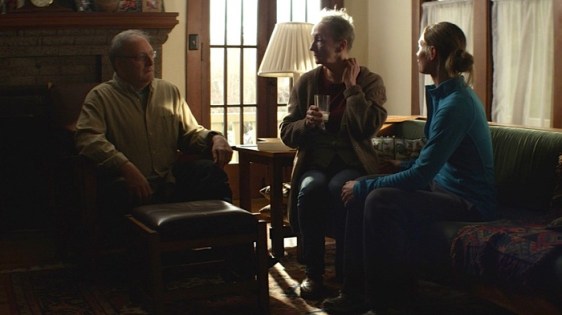
    Every tragedy is the same. And every tragedy is unique. In this depiction of a family dealing with an elderly woman (Kathleen Chalfant) with Alzheimer’s, every subtle touch feels completely authentic. Cheyenne Casebier‘s performance as Anna, the woman’s daughter, is especially strong, as she struggles in her simultaneous role as caregiver to a teenage daughter, and as guardian of her ailing parents. At its heart, this is a depiction of the inevitable end of Alzheimer’s, wherein its victims eventually have to leave home and receive professional care until their dying day.

    More info, trailer, and rent or purchase the film here (film is NSFW).

  3. Clarity (Director: Donald Saunderson, USA, 7 minutes)

    A man rides the train each day fantasizing about talking to a girl – indeed, imagines entire conversations with her (voiced over by the girl in question). The gradual, deepening sadness of this film is when it becomes apparent that the conversations are not flashforwards to a romance yet to come, but mere daydreams of a romance that will never be. There’s a fine line between having a “rich inner life” and being a dejected loner, and as the film pretty clearly spells out, that’s no way to live.

    More info here.


Films4Adults #2
  1. Aban + Khorshid (Director: Darwin Serink, USA, 13 minutes)

    This is a devastating story of a same-sex couple who is dragged off to death row in a country where their romance is illegal. The film cuts back and forth between the couple recording some sweet romantic banter on video, made even more heartbreaking after the first cut to their neighboring jail cells, as their every sweet moment on video is surely used as evidence for their conviction. This film ends exactly as it must, exactly as it still does in 7 countries even today, in 2014. The is a bit fantastical, in that it imagines that a country in which this couple’s love is a capital crime would permit that couple to comfort each other by sitting in neighboring prison cells before their execution. But even for its jailhouse confabulations that only the dead can truly bear witness to, this film speaks the truth. And it’s a story that must be told until its practice is lost to history.

    More info and trailer here.

  2. H7N3 (Director: Iris K. Shim, USA, 11 minutes)

    It may be that I spent the past week trying to destroy humanity with a designer malady in Plague Inc, but this film about a family dealing with a contagious little girl was a very effective drama for me, despite its seemingly played-out subject matter. A government doctor making house calls is already an alarmingly unfamiliar site, and C.S. Lee‘s strong performance as he struggles between his humanity and his professional obligations is a sight to see, especially after previously only seeing him as the goofy Vince Masuka on Dexter.

    More info and trailer here.

  3. White Night (Director: Sabrina Sarabi, Germany, 21 minutes)

    Fuck this movie, and its boring and ill-established pretense of wordless superior meaning in sexual humiliation and rape that springs forth inorganically out of a couple’s bedroom malaise. In the film’s final shot, the couple lies in bed not looking at each other, looking slight and pissed off. And that’s the one emotion I personally experienced by the film’s end.

    More info here.

  4. Straight Down Low* (Director: Zach Wechter, USA, 25 minutes)

    It’s a good sign for a short film’s worldbuilding chops when 5 minutes in, I’m not only on board with its Shakespearean-twinged, gangland premise, but I would happily watch an entire TV series based on it. I love a high school detective story, and Shamar Sanders‘ “The Student” is as instantly charming and captivating a detective character as Joseph Gordon-Levitt in Brick, or Kristen Bell in Veronica Mars. In fact, the film borrows a few character elements directly from Brick, even if its overall aesthetic is more like a higher-stakes, non-musical West Side Story. I’ll stop talking now so you can watch it.

    Watch it here (NSFW).

  5. EFFED! (Director: Renny Maslow, USA, 19 minutes)

    Another One-Reel, another refreshing new genre mashup. In this case, a post-apocalyptic buddy comedy featuring two guys riding a tandem bike in the middle of nowhere. Like Zombieland before it, this film has a very sweet and optimistic streak underneath its cynicism, finding great humor in the idea that people who rob and squabble with each other for resources in an anarchist wasteland can still, on occasion, be decent to each other. And it’s hilarious.

    Watch it here (NSFW).


Quick List: All of the films that are available online

A note on “NSFW”… Suffice to say, I saw a lot of films this weekend. The ones that I specifically remember containing adult content, I’ve marked as Not Safe For Work. However, outside of the “Films4Families” block, I can’t guarantee that the others will be entirely appropriate. Viewer discretion is advised.

SIFF Roundup: “Healing”, “Night Moves” (#SIFF2014)

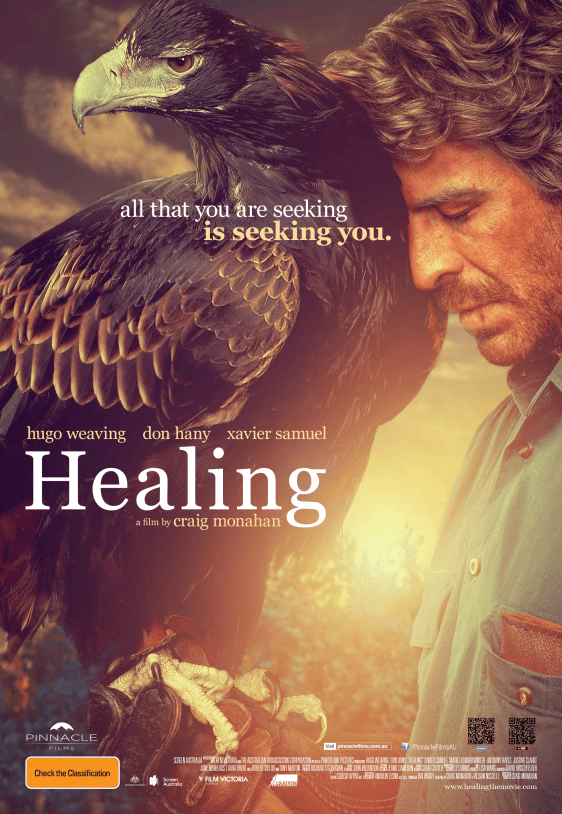
Poster for
Healing
Directed by Craig Monahan, written by Monahan and Alison Nisselle

As an American, I found two unfamiliar things at work in Healing. The first is the character of prison guard Matt Perry, played by Hugo Weaving. This is the first non-elven character I’ve seen Weaving play that could be called “nice,” and the first of any kind with his native Aussie accent. The second is an unfamiliar narrative – that of the “nice prison film”. The film takes place at an Aussie minimum security prison that’s also a working outback farm (although it’s unclear what, if anything, is grown or raised there). Not only is it low-security, but it’s apparently designed to prepare inmates for release and reintroduction into society. We learn that inmates must have had a spotless behavioral record for four years at harsher facilities to qualify, and that any missteps can get them sent right back. The Brown Mile, if you will.

But this film isn’t interested in the harsh realities of the Aussie prison system, such as they might be. Instead, it features a variety of inmates whose crimes range all the way up to manslaughter and murder, and the committed guards and social workers who are clearly interested in helping them adjust to their impending freedom. I haven’t even reached the on-the-nose metaphor of raptor rehabilitation that’s at the center of this film, and already, it seems like an incredibly rosy picture of prison life. But then, the only comparison I can make is to other prison films (and MSNBC exposés), which (at least in the US) seem committed to delivering an entertaining and lurid level of menace and violence. This picture of prison life as a torturous crucible which only prepares criminals for further criminality is the only version that seems credible, even if the only data I have to back it up is the occasional well-publicized abuse. Healing made me realize one inescapable truth – prison movies tend to be depressing. And there’s certainly room in cinema for an upbeat prison story, even if, as Red might say, prison is no fairy-tale world.

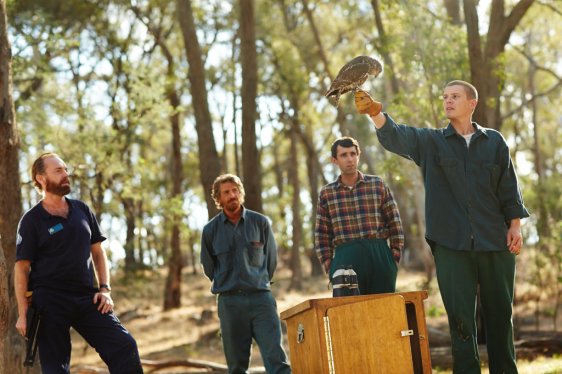
The film centers around Viktor Khadem (Don Hany), an Iranian man in prison for a murder 16 years prior. When Perry leads Viktor’s work detail out to the fenceline, they come across an injured wedge-tailed eagle that has become entangled in the barbed wire – apparently a common occurrence. When the local bird sanctuary is unable to help, Perry puts the inmates to work building a makeshift aviary, and assigns each of them a wounded bird to look after. Naturally, Viktor is assigned the eagle, whom he names Yasmine. Indeed, each of the inmates ends up being assigned a bird that is a remarkable match for their personality – the stoic and solitary Viktor gets the eagle, a more skittish inmate receives a shy owl, and so forth.

Still from

This all sounds very neat and tidy, and that’s because it is. I had to fight my cynicism at every step of the way initially, before it became clear that the film was aware that not all of these inmates can be “fixed” so neatly. One inmate is targeted for mistreatment by his fellow inmates because he was convicted of the accidental (drug-induced) killing of his own child – at least, we hear that’s what’s happening to him, even if we never see much of it onscreen. Another of the inmates, Warren (Anthony Hayes), is clearly running a jailhouse criminal enterprise of some sort. And he’s really the least believable part of the film. The guards are clearly aware of his malfeasance and do very little to stop it, leaving the character seemingly only present to provoke unwarranted conflict. Given how easily the character is dispensed with in the third act, he could easily have been cut from the film entirely. The resulting film would be just as progressive and slight, but wouldn’t spend nearly as much time on a narrative dead-end.

Hany’s performance is stellar as Viktor proceeds to rehabilitate Yasmine – a powerful raptor seemingly named after his late wife, who died while he was in prison. He also delivers some serviceable emotional moments as he attempts to salvage his relationship with his son, although these scenes feel a bit rushed relative to their intended weight. Weaving makes for a stern, but forgiving authority figure, dealing with similar issues of loss and regret to many of the inmates, even if his issues remain vague and take a backseat to those in his charge. Xavier Samuel and Mark Leonard Winter add some interesting depth to the supporting inmates, even if we know rather little about them. Every bit of praise I have for this film comes with strings attached, and when it comes down to it, this film does feel a bit like a progressive after-school special. It’s extremely slight, but it’s also just…very nice. The outback scenery and raptors look gorgeous, and the film dabbles in a few headier issues than its simple and optimistic premise would require.

At the end of the day, gaze upon the cloying image in the poster above, and accept that what you see is exactly what you get with this film. If you can bring yourself to be inspired by it, you’ll do fine.

FilmWonk rating: 6 out of 10


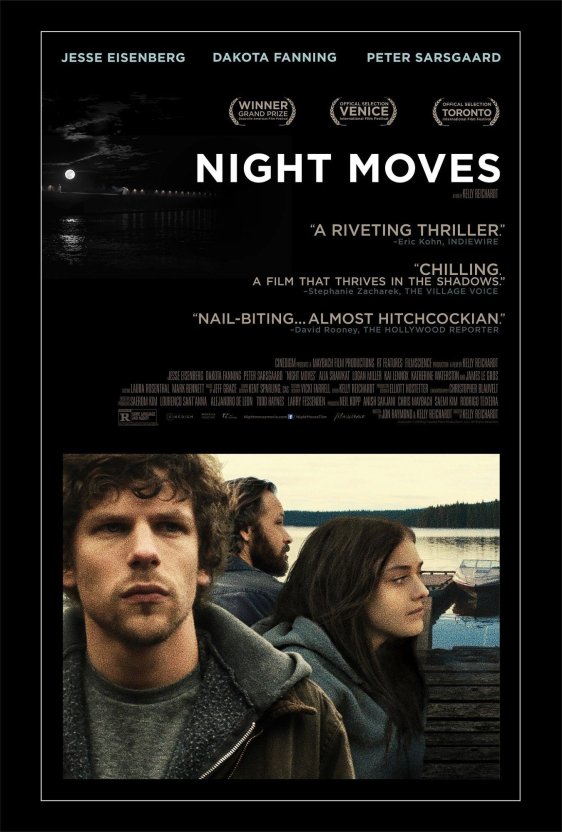
Poster for
Night Moves
Directed by Kelly Reichardt, written by Reichardt and Jonathan Raymond

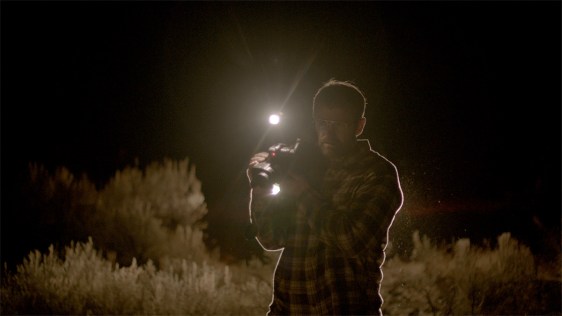
Night Moves – a film centering around an environmental extremist plot to blow up an Oregon dam – is a marvelous and understated thriller, so in the interests of preserving suspense, this review will be light on plot details. The film centers around a couple (who may or may not be romantically involved?), Josh (Jesse Eisenberg) and Dena (Dakota Fanning), who team up with an ex-Marine, Harmon (Peter Sarsgaard) to assist with their explosive plot. Much of the suspense revolves Reichardt’s meticulous depiction of the actual process – how they plan to physically build a bomb and transport it to the site without getting caught. Gone are the days of Fight Club obfuscating bomb recipes in order to protect the public – this film could easily function as a how-to guide for crafting a compact fertilizer bomb, even if it makes it clear that the substances required are controlled for bulk purchase.

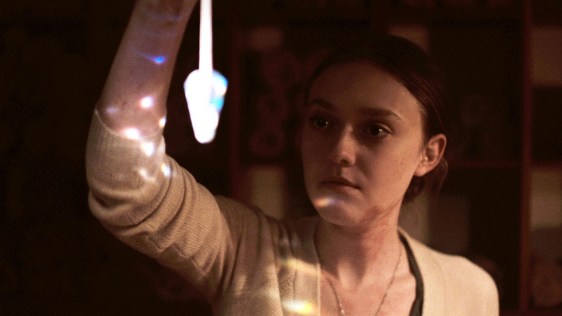
In fact, it is this detail that leads to one of the film’s finest scenes, in which Dena is sent into a farm and feed store, under the auspices of an unassuming local farm girl, to purchase what should rightfully be regarded as a suspicious quantity of ammonium nitrate. Dakota Fanning is unquestionably the MVP of this trio, portraying Dena as an idealistic rich girl who seems quite capable of the extreme actions she’s pursuing, but is ultimately just reveling in the process without really considering the consequences. And as the full scope and implications of the plan become clear during the course of the film, Fanning plays Dena’s gradual breakdown in a remarkably understated manner. Never overplaying it, but never underestimating the psychological toll that such a plan would take upon a person. Eisenberg and Sarsgaard are also strong, but we certainly end up knowing the least about them overall. The audience is forced to infer much of their character from their actions and reactions over the course of the film – always showing, but never telling.

Still - Dakota Fanning in

In his memoir, retired FBI profiler John Douglas once related a conversation he had about his work (classifying serial killers). He was asked if, knowing all that he knew about offenders and law enforcement, could he get away with murder? His answer, after a brief pause to consider all of the implications, was no. His “post-offense behavior” would certainly give him away. This is a tense film, and its tension continues even as the third act obfuscates any sense of where the plot might be headed. Some viewers might consider this third of the film to be a bit meandering, and while there were certainly moments where I felt this way, the film’s thought-provoking ending certainly justified its ambiguous diversions. It’s impossible to know exactly how you’ll behave following an act of criminality that is unprecedented in your life. And really, that’s what makes this final act interesting. The characters no longer have a plan. They’re just reacting to what they’ve become.

FilmWonk rating: 8 out of 10

FilmWonk Podcast – Episode #49 – “Age of Uprising”, “Fish & Cat”, ” Remote Control” (#SIFF2014)

Poster for "Fish & Cat"

This week on the podcast, Glenn and Daniel return to the Seattle International Film Festival to take on a trio of international selections. They start in 16th century feudal France, to watch Mads Mikkelsen lead a shockingly boring peasant uprising, then head over to Iran to watch some of the most technically and narratively innovative filmmaking they’ve seen this year, and finish up on the rooftops of Ulaanbaatar, Mongolia. We keep the spoilers light in this episode, and at least one of these films – seemingly shot in a continuous two-hour take, is well worth seeking out (37:26).

May contain NSFW language.

FilmWonk ratings:

  • Age of Uprising: The Legend of Michael Kohlhaas: 3/10
  • Fish & Cat: 9/10
  • Remote Control: 6/10

Show notes:

  • (00:00): Age of Uprising: The Legend of Michael Kohlhaas
  • (11:46): Fish & Cat
  • (28:30): Remote Control
  • Due to the accelerated production schedule for our SIFF reviews and relative obscurity of these films, there is no music in tonight’s episode.
  • Apologies in advance for all name pronunciations. We think we did well with the French, okay with the Iranians, and terrible with the Mongolians. If anyone knows for sure, shoot us an email.
  • Read more about the awesome sport of kite fighting here.
  • The cinematographer behind Fish & Cat, Mahmoud Kalari, also shot the brilliant Iranian film A Separation, which we reviewed on the podcast, and highly recommend.
  • CORRECTION: We mentioned the party-rewind sequence from the 2002 film, The Rules of Attraction, but mistakenly referred to the character of Sean Bateman (James Van Der Beek) as a younger version of Patrick Bateman (Christian Bale) from American Psycho – the two characters are actually brothers. The sequence we mentioned is not available on YouTube, but the film also featured an innovative use of split-screen and motion-control rig technology – that sequence is available here.
  • We mentioned our upcoming SIFF screening of Alex of Venice, which is neither Italian nor French, but rather is an American film directed by and starring Chris Messina (alongside Mary Elizabeth Winstead as the title character). This film is Messina’s directorial debut, and as far as we know, it takes place in the United States.

Listen above, or download: SIFF International Roundup (right-click, save as, or click/tap to play on a non-flash browser)

FilmWonk Podcast – Episode #48 – “Blended” (dir. Frank Coraci)

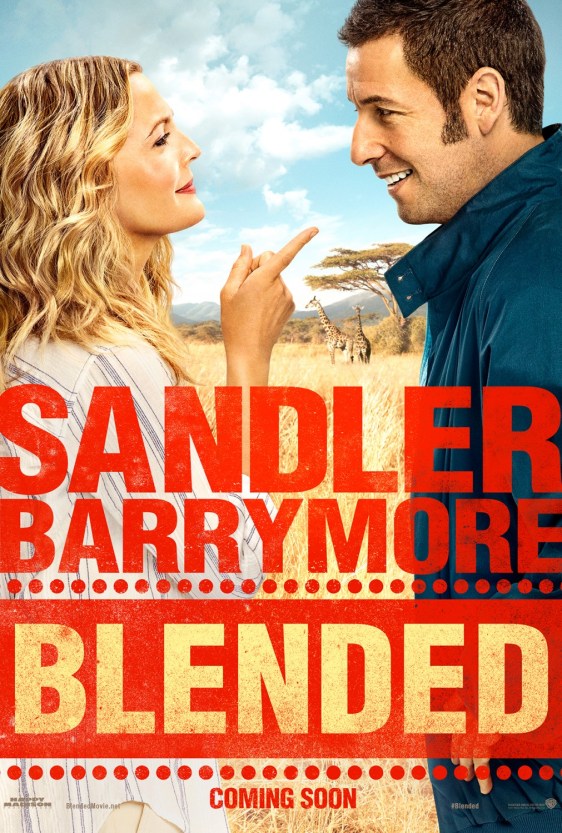
Poster for

This week on the podcast, Glenn and Daniel take a break from their SIFF coverage to revisit some old cinematic friends from their teenage years, Adam Sandler and Drew Barrymore, who regroup for a zany family rom-com set in South Africa. Sure. Why not?

Several reasons, as it turns out (24:56).

May contain NSFW language.

FilmWonk rating: 4 out of 10

Show notes:

  • Music for tonight’s episode includes the track “Hasa Diga Eebowai“, from the original cast recording of “Book of Mormon: The Musical”, and “Hakuna Matata” from “The Lion King”.
  • We speculated about the security arrangements at Sun City, and apparently it does have armed guards (who engaged in a shootout with heavily armed casino robbers in 2010). I’m sure they’re at least as well-armed as Disneyland must be. A 2005 review in The Independent referred to Sun City as “South Africa-lite“, which was pretty much our assessment as well.
  • Correction: Sandler’s age as of this writing is 47, not 50.

Listen above, or download: Blended (right-click, save as, or click/tap to play on a non-flash browser)

SIFF Roundup: “The Case Against 8”, “Desert Cathedral”, “In Order of Disappearance”

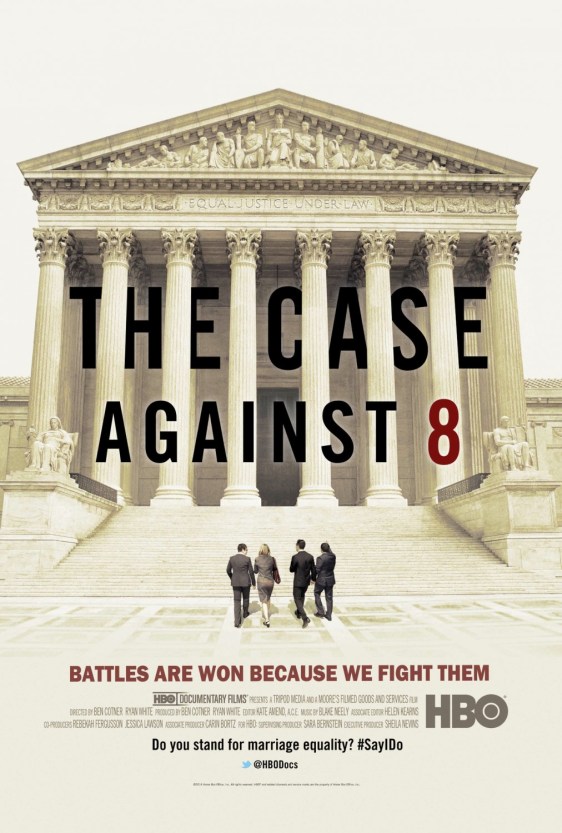
Poster for "The Case Against 8"
The Case Against 8
Directed by Ben Cotner and Ryan White (documentary)

The Case Against 8 is a riveting chronicle of the court battle following the 2008 passage of California’s Proposition 8, which legally defined marriage as a one-man-one-woman institution in the state. The story spans nearly five years, starting from the November 2008 election, and ending with the 2013 Supreme Court double-whammy court decisions which invalidated the federal Defense of Marriage Act and effectively terminated Proposition 8. Just a warning for the approximately 46% of you who statistically might oppose same-sex marriage at this point…this film makes no pretense of “equal time for both sides”. It focuses entirely on the behind-the-scenes legal maneuvering of the opponents of Prop 8 (and supporters of marriage equality). So don’t go into this film expecting a fair and balanced hearing on whether or not same-sex couples should be allowed to get married. The film simply takes this point as a given, and chronicles the legal and constitutional battle that ensued.

First and foremost, The Case Against 8 is a stunningly executed legal and political procedural. Speaking as someone who has been mainlining episodes of The Good Wife for the past year or so, I was definitely the target audience for all of the judicial details. In order for this lawsuit to go forward, a number of things had to be executed perfectly. The right set of plaintiffs had to be recruited – two same-sex couples – one male-male, one female-female. Both submitted to being investigated to track down any dirt that might damage the lawsuit in the court of public opinion. And most interestingly, both couples submitted to becoming media personalities. The lawyers are equally fascinating – the unlikely team-up of conservative Ted Olson and liberal David Boies, best known for being opposite sides of the 2000 Supreme Court case Bush v. Gore (a fact that the film points out in great detail), and the film provides a staggering degree of access behind-the-scenes as they prepare for their legal fight. I can’t overstate how much I came away admiring Olson and Boies both for the fight they took on, and for the legal and practical risk they took by allowing cameras behind the scenes during ongoing litigation. And for the public-facing aspect of the case, their clashing politics and personal friendship serve effectively to project the idea that same-sex marriage should not be a partisan issue.

Interlaced with the procedural details, this film is a deeply affecting personal drama. The two couples – Paul Katami and Jeffrey Zarrillo, and Kristin Perry and Sandra Stier – are forced into the difficult position of having to defend the merits of their respective relationships in open court. Both couples – especially Perry and Stier – provide a staggering degree of access into their families and homes, which in the case of the latter couple, includes their four sons. The film highlights the staggering contrast between an ordinary family trying to live and provide for their children, and the dystopian nightmare of Perry and Stier receiving a government letter in the mail explaining that their 2004 marriage had been legally invalidated. As a fellow who has been married for nearly two years now, I found this moment deeply disturbing – and the couple’s courage and steadfastness in the face of such a societal betrayal was inspiring to say the least.

I try not to be overtly political when discussing film, but I expect my own politics on this issue should be fairly obvious by this point. When I got married in 2012, I shifted from being merely okay with same-sex marriage to being actively interested in making it happen. I phone-banked for the campaign for Washington’s Referendum 74 that same year, and was elated to see it pass. That’s the positive spin. Here’s the sad fact that precedes it – back in 2004, when Kristin and Sandy first married in San Francisco, I opposed their legal right to do so. Given the shift in public perspective on this issue over the past decade (which the film also highlights), I can’t imagine that my story is unique. But it also illustrates the value of a film like this in putting a public face on those who are still being denied their freedom to marry. And that’s the third great strength of The Case Against 8 – it is a stunningly effective treatise on the purpose and value of marriage. It is an affirmation of American family values. It is, I daresay, a bastion of conservative ideals in the 21st century. And that’s exactly what this issue needed.

FilmWonk rating: 9 out of 10

The Case Against 8 is being distributed by HBO Films. It will have a limited theatrical release on June 6th and premiere on HBO on June 23rd. 


Still from "Desert Cathedral"
Desert Cathedral
Written and directed by Travis Gutiérrez Senger

Desert Cathedral is a deeply sad film, owing not only to its subject matter, but to the choices that it makes between fantasy and reality. The film is based on the true story of a real estate developer who left behind his wife and child and disappeared into the Southwestern desert in 1992. Peter Collins (Lee Tergesen) makes his suicidal intentions clear by way of a trail of VHS-taped breadcrumbs recorded as he takes this impromptu roadtrip – he quits his job and drives off into the desert to find a suitable place to die.

The most obviously fantastical note is that of private investigator Durin Palouse (Chaske Spencer), hired by Collins’ wife Annah (Petra Wright) to track him down. This character caught me off-guard, first because I realized this is one of very few non-Caucasian hard-boiled detectives I’ve ever seen (a racial casting bias that hadn’t occurred to me until this film) – and second, because his voice is a near perfect ringer for the Southern drawl of Matthew McConaughey. Spencer gives a fine performance, but the character never quite feels like more than a construct. In the later acts of the film, we learn a few personal details about him, but due to his incognito role, it’s never quite clear which details are real and which are not. Spencer and Tergesen’s interactions are interesting, but they struck me as the most overtly fictitious parts of the film – frantic, retroactive attempts to rewrite history and pull Collins back from the brink of a terrible, sad, and ultimately selfish decision.

Tergesen’s own performance, however, is nicely layered. The film never attempts to ennoble Collins’ suicidal intentions, but neither does it shy away from them. At times, he seems right on the verge of giving the whole thing up and heading back home to rejoin his family and face his demons. He takes diversions to drink, drive, light off fireworks, take in a pretty desert vista, and, most tellingly, reveal (on video) a few more details of the problems that drove him to his decision. The result is a film that falls somewhere between mystery, tragedy, and travelogue, with a sufficiently interesting character at the center of it.

It turns out I’ve seen director Travis Gutiérrez Senger‘s prior short film, White Lines and the Fever: The Death of DJ Junebug, which was a verité postmortem on a drug-dealing hip-hop DJ. Junebug and Collins aren’t perfect analogues, but they certainly both succeeded in making me sympathize with them more than I initially expected. The film’s soundtrack provides a nice mix of dour, atmospheric country and blues, as well as simple, mood-setting acoustic pieces – reminiscent of composer Nathan Johnson‘s understated work in Brick. Atop Senger’s mostly effective handling of the subject matter, the cinematography – with what appears to be central/eastern Washington State standing in for the California and Nevada deserts – is gorgeous.

FilmWonk rating: 7 out of 10


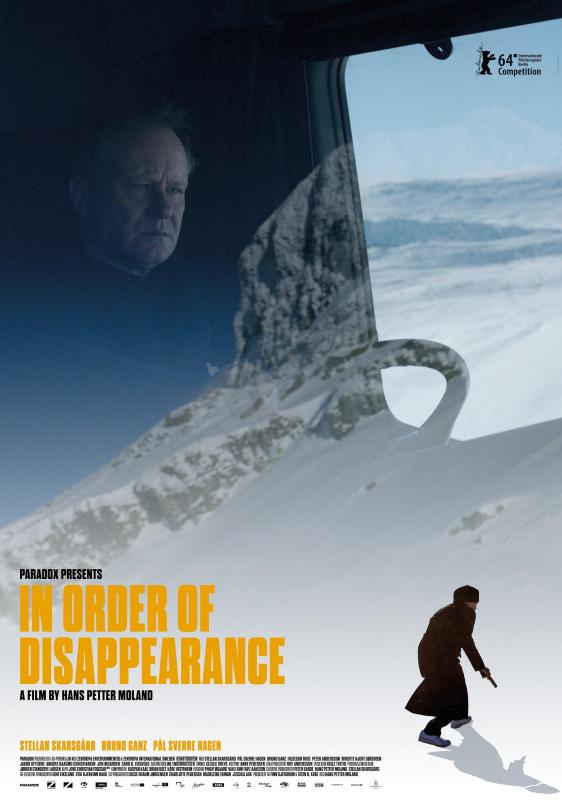
Poster for "In Order of Disappearance"


In Order of Disappearance
Directed by Hans Petter Moland, written by Kim Fupz Aakeson

I’ll be brief, because there’s not a lot to say about this movie – if you want to see Stellan Skarsgård as Nils Dickman, a snowplow driver on a Norse-bound mafioso revenge-killing spree, this is the film for you. This film is darkly hilarious, brutal, and absolutely riddled with the cheapness of human life. The comparisons to Fargo (my second-to-least favorite Coen Bros film) are warranted. The lead villains are effective and memorable, including an eccentric vegan known as “The Count” (Pål Sverre Hagen), and an old-school Serbian just called Papa (Bruno Ganz). The Count is clearly the most dangerous wildcard of the bunch, while Papa, also out for revenge after a fashion, actually ends up striking some interesting parallels with Dickman himself. The bloody shootout at the film’s end is obligatory (and nothing special, heavy equipment notwithstanding), but this film was an entertaining ride nonetheless.

Oh, and in case you’re wondering – Dickman is a funny name in Norwegian too.

FilmWonk rating: 6.5 out of 10

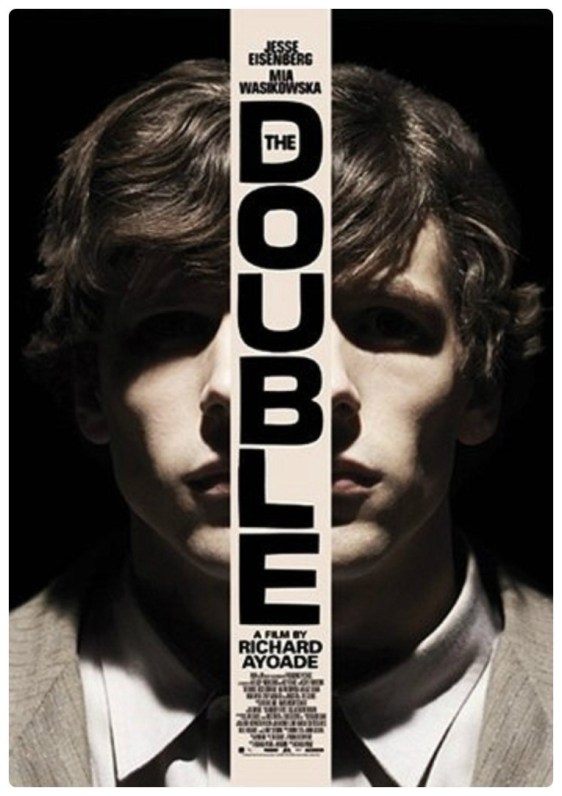
FilmWonk Podcast – Episode #47 – “The Double” (dir. Richard Ayoade) (SIFF)

Poster for "The Double"

This week on the podcast, Glenn and Daniel bring the first of many live dispatches from the 40th annual Seattle International Film Festival, starting with Richard Ayoade‘s new film, The Double, starring Jesse Eisenberg, Mia Wasikowska, and Wallace Shawn. (15:10).

May contain NSFW language.

FilmWonk rating: 5.5 out of 10

Show notes:

  • It’s festival time! That means we’ll be seeing a lot of films and our SIFF dispatches will be recorded and posted quickly – which unfortunately means the audio quality will be just a bit less polished than usual.

Listen above, or download: The Double (right-click, save as, or click/tap to play on a non-flash browser)

Seattle’s One-Reel Film Festival 2013 – Monday (Bonus Segment)

SIFF Film Center projection room

The One-Reel Film Festival is part of Seattle’s renowned Bumbershoot music and arts festival. Throughout the weekend, I’ve had the opportunity to see short films from all over the world, some of which can be viewed online (I’ve included links below where applicable). The films were arranged into blocks of around an hour apiece, which I’ve arranged in presentation order below. Bold text means I enjoyed the film, and an asterisk (*) means it was my favorite film of that block. Skip to the bottom for a list of all the films that can be viewed online.

Click here for Saturday’s films
Click here for Sunday’s films


Films4Adults: Thrill Me


  1. Birding (Director: Max Cantor, USA, 16 minutes)

    Note to Hollywood: do more “rear window” scenarios. No, I don’t mean you should transparently rip off the entire story of Hitchcock’s masterpiece, but rather – give us a story that effectively utilizes the panopticon monstrosity of a high-rise city apartment building to great narrative and cinematic effect. Birding is exactly the sort of short that I was looking for in this category. It features David (Alan Fox) and Ada (Lizzy Fraser), a newly engaged couple about to head out for the weekend to go bird-watching with Ada’s father. David becomes fascinated with a woman in an opposite apartment, and begins watching her with his newly acquired bird-watching binoculars. This incredibly simple setup works in large part because the couple’s acting and dialogue is stellar. They establish a credible relationship in a short space of time. If the film had failed at this one crucial task, it would’ve rendered the awkward final act entirely ineffectual. And this act is admittedly a bit off. The dialogue, strong up until that point, becomes awkward and uneven, as does Fox’s performance. The film seems to be building toward an obvious and excruciating ending that it mercifully avoids, and everything remains askew for just long enough to make it seem like a deliberate and effective choice.

    And that is ultimately what this short is about – choices. The mundane choices of our daily lives are far more frequent than the sort that might have far-reaching and life-changing consequences, but this film effectively shines a light on one that can seemingly erupt out of nowhere. No matter how important the choice may be, you’re still the same person you were before you had to make it, and you would do well to remember that.

    More info and trailer here.

  2. Midnight City (Director: Luis Ventura, Switzerland, 14 minutes)

    Midnight City is an incredibly goofy and trashy genre exercise that takes place in a brothel during an unspecified “old-timey gangster period”. I’ve certainly enjoyed such pulp before, but this one was almost intolerable. There was a severe gulf in acting caliber between the female lead (Lucinda Farrelle, who wasn’t half bad) and the two male supporting characters. Male #1, the john (Alex Rendall) bore an uncanny physical resemblance to Ben Affleck, but gave a performance that was almost as grating as Reindeer Games. And Male #2 (Alan Thorpe) was boring and forgettable as the club “Daddy” – although I’m not sure any actor could have redeemed such terrible dialogue. You have to be pretty bad at being a creepy pimp to make me long for the squirm-inducing talents of Oscar Isaac in Sucker Punch (a performance I loved, but never wish to see again). This wasn’t good (or stylistically consistent) enough to be Sin City, not bad enough to be The Room, nor pretentious enough to be Sucker Punch. But very nearly dumb enough for that last one.

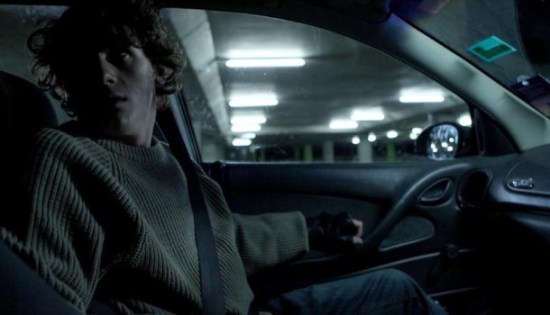
  3. Spine* (Director: Sophie Miller, Australia, 11 minutes)

    What would happen to my culturally constructed and reinforced notions of masculinity and power if I were suddenly rendered paralyzed? How would my image of myself in a romantic relationship have to change as I suddenly must be taken care of all the time? And how would all of these tenuous notions avail me in a life-and-death situation that I was just as unlikely to face before my injury?

    Spine forces the audience to confront all of these questions in a matter of minutes. There were so many subtle touches that grant a view into the inner life of the quadriplegic protagonist Nick (Lucas Pittaway). There was a brief flashback to he and his girlfriend Chloe (Sara West) making out – an expression of affection that is highly physical for both parties, and has now left them both behind. In a lesser film, this sort of flashback would have lingered and hammered the point into oblivion, but here, it was just a nice, subtle moment, in a film that makes a nice, subtle point.

    West is also given some nice material to work with as she runs into an old friend working in a liquor store where she has stopped to get Nick some beer. Chloe clearly maintains a strong affection for her boyfriend, but also feels the burden of their new existence together. Even as Nick’s arc is coming together in the carpark below, each stolen moment in the liquor store reveals more about her own struggle. And it all fits together quite well.

    This experience feels authentic, even as I mercifully lack the life experience to validate its authenticity for myself. This is an unfortunate, but credible situation – and a story quite worth telling.

    More info here.

  4. Penny Dreadful (Director: Shane Atkinson, USA, 18 minutes)

    This film reminded me aggressively of both Tarantino and his acolytes – and I mean that in the best way possible. There are few things more hilarious than the kidnapping of a child gone awry (*chuckle*), and this film milks every bit of dark comedy from the situation. Both man and girl were brilliantly cast. The easy comparison for Oona Laurence‘s character here is Hit-Girl from Kick-Ass, but I actually found this character far more believable. She’s not a cartoon psychopath; just a troubled and precocious little girl with a bit of an f’d-up sense of humor. This film was an absolute delight, and I don’t dare say more.

    More info and trailer here.

    Watch it here.

  5. A Pretty Funny Story (Director: Evan Morgan, Canada, 19 minutes)

    This is a bad story for bad people to enjoy. It begins with a couple glancing through the window at their neighbor, who is indulging in a bit of goofy solo dancing. They laugh at him for a moment before they’re caught watching…and then everything goes to a bit of a dark place. This film is hilarious, awkward, mean-spirited, and unrelenting. And I loved it – I’ll direct you back to Sentence #1 for my conclusion.

    More info (and the first three minutes) here; buy it here.

  6. Voice Over (Director: Martin Rosete, Spain, 10 minutes)

    A narrator tells a series of increasingly dire life-and-death situations, all in the second-person starring you, the audience member. Each of the sequences features the main character (you) about to die in increasingly horrific ways, whether in a space suit on an alien planet, or strapped to a sinking boat underwater. Each of these sequences is rendered with absolute precision (and gorgeous visuals, particularly for the alien planet), and yet each one has a bit of a fanciful quality. The narrator keeps cursing his poor memory and correcting himself, lending each story both the urgency of imminent death and the endearing hilarity of somebody’s dad telling a poorly strung narrative. The heartwarming side of this film hits like a ton of bricks, and yet feels like it was always inevitable.

    Watch online here.


Best of the Northwest

  1. The Next Step (Director: Mel Eslyn, USA, 7 minutes)

    A couple meets a stranger (Kevin Seal) in a coffee bar to discuss their next step in the relationship. And that’s really all I’ll say. This is a 7-minute film featuring a single joke – meaning it has basically the same formula as a modern episode of South Park – but it only needs to keep the joke going for a third as long. By and large, it works. The couple is delightfully awkward, with the enthusiastic Nancy (Alycia Delmore) and the uncomfortable (and slightly henpecked) Glen (Evan Mosher) making an effective on-screen pair. The film keeps you guessing nicely, complete with a wonderfully creepy interaction between the stranger and the coffee-shop manager, as well as a so-subtle-I-may-have-imagined-it reference to Clerks. Funny stuff.

    More info here.

  2. Decimation* (Director: Wade Jackson, USA, 30 minutes)

    Like any film featuring American actors set in a foreign country, there is something slightly askew about Decimation, at least until your brain has time to adjust. Much criticism was heaped upon Bryan Singer’s Valkyrie for not even attempting German accents for its English-speaking cast of Wehrmacht soldiers. But I tend to think that affecting a foreign accent is more of a gamble than a guaranteed win. Perhaps Enemy at the Gates (which receives a nice shout-out in this film) handled it best for an American audience, opting for the generic stand-in British accent for all of its Russian characters. Decimation, a film about a group of World War II Russian solders accused of cowardice, opted for accent fakery (with bits of actual Russian sprinkled in), and I don’t think it does the film any great service. The acting quality here is quite solid all around, but the accent work is variable, and my three years of Russian language made it difficult to separate the two as the film began. But before too long, I was absorbed enough in the story and cast that this detail ceased to bother me.

    The strongest performer is certainly Roy Stanton, who plays Prisoner One, the unofficial leader of the group. The titular practice of “Decimation” refers not to the complete obliteration of a group, as it has come to mean, but rather the destruction of just one tenth of it to enforce discipline – in this case, a single soldier selected by Prisoner One for execution. He could even choose himself if he wished, but whichever man is chosen must be executed by the other members of the group. This practice featured prominently in a vignette in Max Brooks’ novel World War Z (also in Russia), and apparently there is a documented instance of it happening among Russians in World War II. But I give this film immense credit for using the practice as an effective metaphor for the unrelenting bleakness and indifference of warfare.

    If you’re lucky, you won’t be in a war. If you’re luckier, you won’t be in a war in the Soviet Red Army. And if you’re luckier still, you won’t duck or hide in the face of enemy fire while a commissar is watching your back. Enforcing both the virtue of patriotism and the shame of cowardice was deemed essential in a war in which over 20 million Russian soldiers and civilians died. We get to see this struggle of ideology vs. survival play out in the face of pure, indifferent chance. Differentiating ten characters in the space of a 30-minute short must have been a daunting task, and the film does a marvelous job. Each character, whether the suspected Cossack, the Eastern Orthodox priest, or the doggedly patriotic teenager, gets his moment to shine. Making me care about each of these characters was essential; otherwise I would have a nice, long list of unimportant extras that I’d be happy to see up against the wall in the end. There were certainly a few who received very little screentime, but not one that seemed superfluous.

    I’ve referred to a few short films from this weekend as a “solid first act”, but I think this may be the only “solid third act” that I saw. The film jumps effortlessly from one moment of character-loaded tension to the next, mostly justifying it with the acting, but never completely earning it with the setup. Even a few plot details are unclear from the start. I initially identified the prison commandant (Michael Patten) as one of the worst accent offenders (sounding more German than Russian), only to see him identified as “The German” in the end credits. How did a German come to work in a Soviet prison camp? We never know…but it must be a hell of a story. Despite this fundamental problem with putting feature-length complexity into a short film, none of these unknown details prevented me from feeling every moment of shock, sadness, and horror by the film’s end. And apart from that, the film is very well made. The score is dramatic and catchy – albeit slightly repetitive – but it never once commits the cardinal sin of pushing past the justified emotional content of the scene. The production design is budget-impeccable, featuring authentic weapons and real-looking uniforms*. In addition to the score, the sound mix features the slightly mocking twitter of birds just outside the cell, giving the constant [and false] impression that happiness and freedom are just a window-climb away. Very effective.

    Bottom line – this movie is unrelentingly bleak, features some very strong performances, and is greater than the sum of its high-concept parts. For a 30-minute war film, I couldn’t have asked for more.

    *Confession: I really don’t know if the uniforms were accurate, although they helped significantly with character differentiation. But the weapons (notably the PPSh and the Mosin-Nagant rifle) certainly looked legit. I spotted at least one German MP-40 rifle, but given that the Russians frequently had to deal with weapon and ammo shortages, I’m happy to justify that by assuming it was a captured item.

    More info and trailers here.


Quick List: All of the films that are available online:


Seattle’s One-Reel Film Festival 2013 – Sunday Roundup

SIFF Film Center projection room

The One-Reel Film Festival is part of Seattle’s renowned Bumbershoot music and arts festival. Throughout the weekend, I’ve had the opportunity to see short films from all over the world, some of which can be viewed online (I’ve included links below where applicable). The films were arranged into blocks of around an hour apiece, which I’ve arranged in presentation order below. Bold text means I enjoyed the film, and an asterisk (*) means it was my favorite film of that block. Skip to the bottom for a list of all the films that can be viewed online.

Click here for Saturday’s films
Click here for Monday’s films


Films4Families #2

  1. Snap (Director: Thomas G. Murphy, Belgium, 6 minutes)

    There’s nothing new under the sea, but this is enjoyable nonetheless. The film is equal parts Kung Fu Panda and Looney Tunes. An underwater gremlin learns to hunt in a different way with the help of…an underwater frog. It’s zany, and a bit forgettable, but fun for a moment.

    Trailer here.

  2. The Mole at the Sea (Director: Anna Kadykova, Russia, 5 minutes)

    Crowded beaches are not fun. This is the point the film ably makes, and it does so with a sea of grotesque humanity (or at least human-looking animals). The animation is unique, and quite a throwback – it falls somewhere between 1960s Charlie Brown specials and JoeCartoon. The mole is frankly adorable, and watching him “swim” around through the sand to find an enjoyable spot on the beach is most entertaining.

    Watch online here.

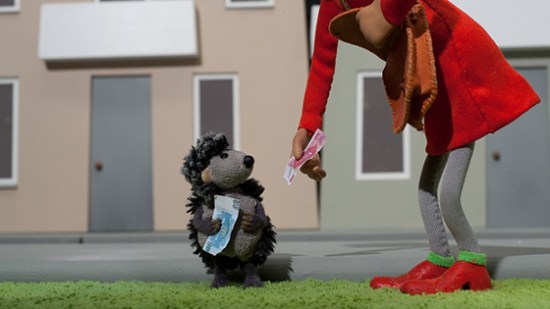
  3. Hedgehogs and the City* (Director: Evalds Lacis, Latvia, 10 minutes)

    This delightfully subversive stuffed animal stop-motion begins as Over the Hedge, wherein an animal habitat is taken over by human development. Then it becomes…something else entirely. According to the film’s environmental and consumerist satire, the best recourse for an eclectic collection of animals (including a drunken moose) is to rise to the top of the food chain in a new way. Great fun.

    More info and teaser here.

  4. Hannah and the Moon (Director: Kate Charter, UK, 6 minutes)

    Now that’s more like it. Like yesterday’s “The Window”, this film takes place inside the pages of a children’s book – but the pencil-drawn animation is gorgeous and elaborate, and the simple story is nonetheless deeply affecting. This is the tale of a lonely girl whose mother is too busy to talk, so she talks to the moon instead. The book’s narration is revealed one word at a time (making this almost a “Reading Rainbow” exercise for younger audience members) as Hannah navigates the world. Sometimes words follow her climbing the stairs, or fly through the air – and sometimes, they literally leap off the page.

    More info here, trailer here.

  5. The Goat Herder and His Lots and Lots and Lots of Goats (Director: Will Rose, UK, 7 minutes)

    If Nintendo’s Mario character were reimagined as a goatherder, rendered in silhouette at magic hour, it might look something like this. This beautiful 2D platformer short is very video-gamey (seemingly on purpose), and even contains a twist that will be familiar to modern gamers, wherein the player’s efforts are rendered unnecessary. Quite fun – and the goats rhythmic chomping was very catchy.

    Watch online here.

  6. Blue (Director: Asia Lancaster/Katelyn Bianchini/Rena Cheng, USA, 8 minutes)

    A bright blue balloon is terrified of being popped by humans. This film gets occasionally elaborate with the limited visual tools at its disposal, but the animation is incredibly simplistic, and its human characters look downright grotesque. Given the balloons’ quite reasonable fears during the first half of this film, this uncanny valley look makes sense, but given the emotional connection the film attempts to cultivate with a young boy by the end, I can’t help but think that it was not deliberate. The film’s end credits sequence contained a jarringly upbeat song – easily one of the most obnoxious sunshine pop ballads this side of Cloudy With a Chance of Meatballs. Not a wise choice for tonal consistency when the film’s last scene takes place in a cemetery full of mourners.

    More info here.


Dance, Dance, Dance

  1. Ballet (Director: Sajid Dilawar/Gunja Bose, India, 2 minutes)

    It’s hard to impress me with “Dance of the Sugar Plum Fairies”, if only because I’ve seen it so many different ways. But this elegant and simplistic animation managed to do so once again. The faux film-grain and sepia tones evoke a prototypical film projection, and the effect is a captivating study in movement.

    Watch online here.

  2. Still Moving: Pilobolus at Forty* (Director: Jeffrey Ruoff, USA, 38 minutes)

    A creative endeavor – particularly one that began as a collaborative project between college students – is lucky to last a few years, much less four decades. This modern dance company’s story is remarkable, and yet familiar to me personally, as the company’s history, ideology, and public classes feel very much like an improvised theatre company that I’m involved with. The medium is unique, but the message is quite similar.

    The company’s style features choreographed dance routines with human bodies initially walking in unison, but then meshing and wrapping together into unique shapes and transformations – often with limited clothing. All in all, the company’s longevity seems best attributed to its extreme adaptability. The film features a 2010 collaborative mixed media performance with a comic book artist, wherein the dancers perform in silhouette behind a rear projection screen, interacting with the changing graphics in real time. For a ragtag band of 1970s Dartmouth students, this seems a significant evolution of the company’s style.

    The only thing that gives me pause about this film is that it is functionally an advertisement for the company, as well as a memorial piece for the company’s late co-founder (who is featured in the film, and has passed away recently as of the film’s release). On the face of it, it is unlikely that this is an unbiased, “warts and all” portrayal of the company’s history. Several of the company’s founders have also left since its inception, and it was clearly in a period of transition and uncertainty when the film was made. But what I can’t argue with is the unique and valuable artistic endeavor that is on display here. Pilobolus is a thriving arts company, and on that level they have my respect. The film acknowledges that losing one of its co-founders will be the next great challenge to the organization’s survival – surely to be followed by other departures as the years go on. But like the bovine dungborne fungus for which it is named (I bullshit you not), this company seems adaptable. And messy.

    More info and trailer here.
    Watch 26 members of Pilobolus squeeze into a Mini Cooper here.


Love…In the Afternoon

  1. Side Effects* (Director: Traven Rice, USA, 20 minutes)

    This film is quite riveting, even if it’s a bit difficult to discern its intention. It functions as a dark and somewhat demented version of Eternal Sunshine of the Spotless Mind, wherein the film’s central love story may be little more than a construction in the main character’s mind. Alena (Carla Quevedo, The Secret in Their Eyes) is part of a drug trial whose side effects include a series of lucid (and narratively connected) dreams, complete with a Hot Dream Guy on the beach. Her love interest (Robert Beitzel) is a bit of a cypher, mainly because we never see him speak. Their communication in the dream is solely in the form of voiceover dialogue (some of which was made while pretending to breathe underwater, which must’ve been a bitch of an acting challenge). This doesn’t especially diminish the effectiveness of their romance, but it does make it almost entirely dependent on Quevedo’s performance.

    Alena spends the majority of the film in the Saw-like environment of a windowless hospital room as frigid medical personnel administer dose after dose of unknown medications. It’s all very unpleasant, and Quevedo does an admirable job of both conveying Alena’s inner plight and eliciting audience sympathy. I almost wish the film had not relied on Alena’s letters home to expose her inner turmoil – the actress was doing a fine job on her own, and the letters (which receive no response) do little but add to the film’s already ever-present paranoia.

    All in all, the ending is a little obvious, but it reveals just enough about the intended purpose of the drug trial without making every detail clear. This may well just be mad science at work, or it could just as easily be a deleted scene from the first act of Inception. Whatever is going on here, it brings more than enough intrigue to the table, and one bravura performance.

    More info here.

  2. Taboulé (Director: Richard Garcia, Spain, 4 minutes)

    Modern technology has done a wonderful job of creating “trust opportunities” for couples – this film tackles the conversation that ensues when a man asks his boyfriend (for no reason whatsoever) to share his mobile PIN. They hang out on a rooftop together, and debate the ever-changing definition of trust. Simple and sweet.

    Trailer here.

  3. A Little Something on the Side (Director: Stephen Tobolowsky, USA, 14 minutes)

    Stephen Tobolowsky had a triple heart bypass last year (something he has been quite open about on his storytelling podcast). I don’t know whether knowing that in advance made me enjoy this film more, but it certainly didn’t hurt. The film plays a delightful bait-and-switch with a very obvious joke, taking “this isn’t what it looks like” to absurd new heights, and having a great deal of fun with its bad behavior. Most enjoyable.

    More info here, Twitter here.

  4. Dream Girl (Director: Tulica Singh, USA, 6 minutes)

    It’s become easier for my mind to drift further away from heteronormativity the more of these tales of something-other-than-straight romance I see. On the face of it, this isn’t merely a low-budget, reasonably well produced tale of unrequited love – primarily, it just made me ponder the social engineering task that is recognizing viable romantic partners who happen to share your sexual orientation. As a straight male (recalling my single days), it was easy for me to take for granted that if a lady doesn’t respond to my advances, it was likely because she didn’t find me specifically attractive, not my entire sex. Laura, the dreamer, is forced to contend with the possibility that the girl of her dreams not only doesn’t know she exists (or at least doesn’t know her name), but that she might never be interested in her romantically. If that situation is half as difficult to parse as my gendered pronoun use in the previous sentence, I don’t envy her task.

    More info here.


Best of SIFF – Audience Award Winners

  1. Spooners (Director: Bryan Horch, USA, 14 minutes)

    This film’s thesis seems to be that progressive acceptance of same-sex marriage has reached the point where it can be hilariously grating to the actual couples. In a world where same-sex marriage (as of this writing) is still illegal in 37 states, this filmmaker still manages to find comedy in the suspiciously well-timed corporate acceptance of former social taboos. The majority of the film takes place inside a mattress store called “Drowzy’s”, featuring a “smart bed” that is just a little too happy to see its first gay couple shopping for a mattress. Corporations are amoral entities, and calling attention to their propensity for becoming socially liberal as soon as the market dictates is spot-on satire. The crowd of white liberals crowing about how they’ve heard terms like “bear” and “otter” on NPR is just the icing on the cake. That’s tolerance in a nutshell. Most people are well-meaning, nice, and just a little bit full of shit. Well done, sirs.

    Watch online here.

  2. Malaria (Director: Edson Shundl Oda, Brazil, 6 minutes)

    A well-executed gimmick requires a story that would be compelling even without it. This story, of a man hiring a mercenary to kill Death, certainly qualifies. The story is told in what I can vaguely refer to as a motion comic, but featuring human hands turning over each gorgeous pencil-drawn and shaded frame, and a knife-blade sliding in to reveal each line of dialogue. This technique is augmented with physical effects as we hear the scene play out in [Portugese] voiceover. It’s a clever premise, and the technique makes it visually captivating.

    Watch online here.

  3. Fora (Director: Ayuub Kasasa Mago, Rwanda, 7 minutes)

    A conundrum for an American film critic: How do I judge an up-and-coming third-world film production without being patronizing or mean, or tolerating mediocrity? If you have an answer, you’re a better person than me. This is the only Rwandan film I’ve ever seen, so I have no qualitative basis for comparison. But on the face of it, the story is not terribly compelling and the filmmaking technique is pretty rudimentary. But while these are not trained actors (and it shows), they are decent filmmakers with the tools at their disposal. The lighting and cinematography are solid in both the indoor (fairly dim) home, as well as the Kigali city overlooks. This is a simple tale of brotherly love and forgiveness featuring what might be an actual father and son pairing (two of them have the same last name). It’s an old, simple story, which resonates a bit. But is it good? Hell if I know.

    More info here.

  4. Good Karma $1 (Director: Jason Berger/Amy Laslett, USA, 15 minutes)

    In this documentary, a pair of ad executives attempt to find the most successful slogans for the homeless to use on cardboard panhandling signs. These guys are no Don Draper, but they are slick and chock full of wistful, vaguely inspiring, mildly pretentious ideas. The client to whom they must present their ideas is a homeless man with dreadlocks (a wonderful character unto himself) who rightfully thrashes them, saying the men have clearly never been homeless. And if this film were merely pretentious and well-meaning, it might have been grating. But it carries a sense of optimism about the spirit of generosity that is genuinely contagious. If you give a homeless man a dollar, sure- he might buy a beer with it. But you’ve still made him happy, and were you really guaranteed anything more than that once the money changed hands?

    Trailer here.

  5. Noodle Fish* (Director: Jin-man Kim, South Korea, 10 minutes)

    Noodle Fish features the fruitless existential musings of fish in the sea speculating about the air-world above the waterline. In its own rite, this would be a smart piece of existential satire- but this film takes it a step further with some of the most brilliant and unconventional stop motion animation this side of Don Hertzfeldt. The entire story is rendered in noodle flour. Depressions and sculptures, fish, seaweed, sand, and waves…made of noodle flour. The film is 10 minutes long, and it boggles the mind to think how long it must have taken to produce. The technique is absolutely flawless, and is every bit as brilliant a piece of film craftsmanship that a smart script like this deserves. And man is it funny.

    Update: Watch it in full here!


Films4Adults: Neither Here Nor There


  1. Presence Required (Director: Maria Gordillon, Spain, 12 minutes)

    A couple experiences empty nest syndrome when their household ghost Sebastian goes missing. What this film brilliantly captures is the magical realism of everyone having the same skewed sense of morality. In this world, death is not the least bit tragic, and no house is complete without a ghoul to call its own. The actors convey this warped reality brilliantly as they painstakingly interview potential replacements.

    Trailer here.

  2. No Beers for Bradley (Director: Julian Doan, USA, 10 minutes)

    Speaking of a skewed sense of morality, here’s a demented fairy tale about a drunken rampage, told as a bedtime storybook to a precocious little boy dying of ebola. This film is a mean drunk. It is definitely being offensive and gory just for the sake of it (much like one of last year’s selections), which works just fine as long as everyone is entirely committed to the bit. And everyone is – even the little nosebleeding kid.

    Trailer here.

  3. Dosa Hunt (Director: Amrit Singh, USA, 22 minutes)

    Seven friends – six Indians and one Mexican – hunt around New York City for a South Indian crepe dish called dosa, set to an enjoyable soundtrack from their various bands (they are all members of the indie music scene, including Vampire Weekend, Yeasayer, Das Racist, and others).

    I could utter some very pretentious phrases about this film. “Primer on Indian-American culture” definitely came to mind. The film does a solid job of making the point that what we call “Indian food” in the US (ditto Chinese food, Mexican food, etc.) is really from one small area of India, and there is plenty of other food from elsewhere in such a huge country that individual countrymen might have never tried. It’s a point that seems pretty obvious (how many regional dishes are there in the US?), but the film makes it well.

    Unfortunately, the other pretentious phrase that came to mind was “Meandering foodie tour”. I was mildly entertained by this (and felt like tracking down some dosa afterward), but the pacing and structure felt entirely too loose. Certain threads led nowhere – we see them shop at an Indian grocery for ingredients and a pan to make their own dosa. They buy the stuff, but they never actually go through with the cooking. The myriad detours and delays on the hunt seemed to be more entertaining to the group themselves than anyone watching. And don’t get me wrong; that sense of fun was mildly infectious. If you watch a group having fun, you can’t help but feel like you’re having fun as well. But it probably could’ve been done in half the time.

    More info and trailer here.

  4. Five Years* (Director: Durier Ryan, USA, 14 minutes)

    Pop quiz, hotshot. Is it racist for me to find it jarring to see a teenage Justin Bieber-looking kid getting out of jail on probation? Is there any combination of appearance-based adjectives that I can string together which won’t normatively imply that an attractive, white delinquent is somehow…unusual? Whatever combination of prejudices led me to this conclusion, I did not find this character intimidating in the least, and I think that might be what makes him so effective. We never find out his crime (although he does tell us it’s none of our fucking business), but we do know he is wearing an alcohol-monitoring ankle bracelet, he’s not allowed to drive, and he’s not allowed to leave Brooklyn. And naturally, the very day that he gets out of jail, every one of these constraints is challenged, and he is forced to make some very grown-up (and possibly very stupid) decisions about what’s right and wrong in his life.

    This is a solid dramatic film. Like The Wire before it, it sets up a captivating world on the streets in a short space of time, and makes you feel the weight of the characters’ histories in every interaction before you really get to know any of them. The casting of this film was spot-on, especially that of the lead.

    More info here. Some of the director’s other films here.

  5. Magma (Director: Pawel Masiona, Poland, 30 minutes)

    This film made me twitchy with anticipation, and not in a good way. It chronicles the existential dread and creeping insanity of a furniture salesman at the dawn of middle age. At least, I’m pretty sure that’s what’s going on here. From the way the sets get rearranged and the music gets extra plunky at the end, there may have been a twist ending so subtle that I completely missed it. At all times, this film seems to be building to something. The main character seems deeply tortured by his existence, and there seems to be a distinct reason why. That reason is never revealed. If conveying the neverending chore that is this man’s existence was the sole objective of this film, then I say to the filmmaker, bravo.

    More info here.


Quick List: All of the films that are available online:


Seattle’s One-Reel Film Festival 2013 – Saturday Roundup

SIFF Film Center projection room

The One-Reel Film Festival is part of Seattle’s renowned Bumbershoot music and arts festival. Throughout the weekend, I’ve had the opportunity to see short films from all over the world, some of which can be viewed online (I’ve included links below where applicable). The films were arranged into blocks of around an hour apiece, which I’ve arranged in presentation order below. Bold text means I enjoyed the film, and an asterisk (*) means it was my favorite film of that block. Skip to the bottom for a list of all the films that can be viewed online.

Click here for Sunday’s films
Click here for Monday’s films


Films4Families #1

  1. The Collector’s Gift (Director: Ryan Kravetz, USA, 9 minutes)

    This film imagines a Darwinian voyage wherein a single eccentric scientist seeks to collect and catalog every element on the periodic table. A young girl discovers the fruits of his labor shortly after his demise. The animation is elaborate, but uneven – some of the motion looks downright anomalous, particularly when characters are jumping through the air. But all in all, the production value of this USC student film is quite high, and it is a fun and elaborate world that has been imagined here. What’s more, it presents quite a positive message about the value of scientific discovery to the progress of the human race. And as the icing on the cake, the film managed to carry off these themes without a single line of dialogue in the entire film. And it didn’t give me time to ponder the potential danger of a tiny glass bottle of uranium.

    More info here.

  2. Sweetly Broken (Director: Chung Lam, Czech Republic, 6 minutes)

    It is an unfortunate artifact of my love of short film that I’ve seen several versions of this idea already. Two inamimate objects (in this case, wooden marionettes) fall in love, causing trouble for their owners. The soundtrack featured some interesting plucky chords, but I was mostly just waiting for it to be over. Blame Pixar for ruining this one for me twice over – first (kinda) with paper airplanes, then much worse with umbrellas.

    More info here.

  3. Uski Baarish (Director: Archana Phadke, India, 5 minutes)

    A delightful tale of a brother and his little sister hanging out. They navigate the streets of an unnamed Indian city and partake in a hobby involving dangerous-looking spinning tops (that suspiciously resemble lawn darts), homemade umbrella making, and some good-natured sibling roughhousing. This is a cute and personal tale, although it makes a few bizarre musical choices. Cutting elaborately between vaguely U2-like guitar themes and classical violin was a bit jarring, but none of it was too distracting.

    More info here.

  4. The Window (Director: Camille Müller, Switzerland, 5 minutes)

    Alternated between pencil sketch and watercolor. Ostensibly, this is a tale that takes place inside the illustrated pages of a children’s book – which, itself, contains an illustrated children’s book. There’s really not much else to it – this is a simple tale of two kids fending off some older bullies. Perhaps suitable for very small audiences.

    Trailer here.

  5. Fox and the Chickadee* (Director: Evan DeRushie, Canada, 8 minutes)

    A brilliant reimagining of the “Frog and the Scorpion” fable (which I thought was from Aesop, but apparently has more complicated origins), wherein a clever little chickadee negotiates with a vicious (British) fox. Easily the best animation in the bunch, and apparently mastering one style – stop motion with felt and fur, in the vein of The Fantastic Mr. Fox – wasn’t enough. The film also features a sequence made entirely of precision-crafted 2D paper dolls. Both styles are brought beautifully to life, and the story is quite a clever (and delightfully dark) twist on the classic tale.

    More info and trailer here.

  6. Macropolis (Director: Joel Simon, UK, 7 minutes)

    Shot during the 2012 London Olympics, this film features a pair of claymation dolls navigating the crowded and bustling city. As the dolls move along precisely, one frame at a time, the bustling metropolis of London continues at full speed in the background. The film takes on a curious meta aspect as the audience wonders whether the various people and vehicles (who are pervasive, albeit for an instant at a time) interfered substantially with the film production. The sidewalks and streets look as full as can be, and one can only imagine the dire effects of an errant boot or wheel upon one of these cute little dolls. As for their journey, it’s pretty much Toy Story. Very cute.

    More info and trailer here.


Music Video Madness

  1. Fanfare for Marching Band (Director: Daniele Wilmouth, USA, 16 minutes)

    Is there such a thing as marching band propaganda? This film posits the existence of the elusive “quiet-playing” marching band. The music feels unrealistically subdued throughout the film, and the volume peaks sufficiently by the end that it must have been a deliberate choice. The formula is, in short, “public space + marching band = fun”. But I’ll hazard a guess that most of the grocery shoppers or attending train passengers would’ve preferred the performance ended in fewer than 16 minutes. This film had its moments, but I definitely grew tired of it with more than half of its runtime remaining, which left me plenty of time to ponder just how deafening that phalanx of trombones would be inside of a grocery store produce section.

    More info here.

  2. Upon Your Shoulders (Director: Ben Rapson, USA, 6 minutes)

    I don’t envy the husband’s acting task. Set to a song that is 90% choral requiem, this video features a man agonizing over his impending fatherhood. His acting style, featuring broad facial movements (à la Jim Carrey or Ed Helms) seems better suited to comedy than drama. And yet, as his backstory (which is necessarily conveyed without dialogue) becomes apparent, it actually works rather well here. This is a sad story, well told.

    More info here.

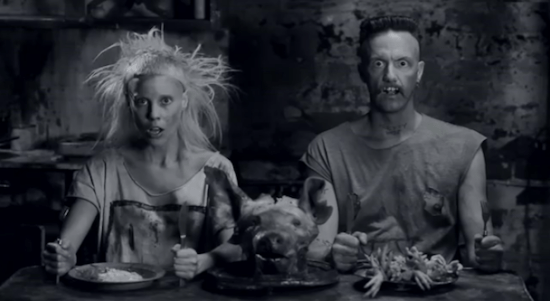
  3. I Fink U Freeky* (Director: Roger Ballen, South Africa, 4 minutes)

    Meth is a hell of a drug. This is one of the most aggressively terrifying and creeptastic music videos I’ve ever seen – and yet the single most jarring shot was a lingering logo on a pair of Beats headphones (which promptly get smashed by a brick). Product placement of any kind (if that’s indeed what this was) felt more out of place in this bizarre video than the woman beating a dead lion or being crawled upon by a dozen giant rats.

    Watch online here (NSFW).

  4. Listen Up (If the World is Going to Hell) (Director: Nicholas Junke, USA, 4 minutes)

    A generic 80s ballad plays over a couple gleefully competing to the death for a pair of rubber-headed animals. What you see is what you get.

    Watch online here.

  5. Killer Mike–Reagan (Director: Harry Teitelman/Daniel Garcia, USA, 5 minutes)

    An angry animated video for an angry song. This song is conspiratorial, anti-capitalist, anti-government, anti-prison, and above all anti-Reagan. These are good rhymes, well delivered – and that’s all I really ask for in my anti-establishment hip-hop. The murderous cartoon robot was just a bonus.

    Watch online here.

  6. Dog is Dead–Teenage Daughter (Director: Jordan Bahat, USA, 4 minutes)

    This video, of a girl on a driving range, is fine. The song? Also fine. But it’s pretty telling that at the end of this block of films, I couldn’t remember a single thing about it.

    Watch online here.

  7. Kithkin–Fallen Giants (Director: Ben Anderson/Sawyer Purman, USA, 5 minutes)

    Flashlight tag in the woods. Much like Pacific Rim, this film took on a deliberately difficult lighting challenge. Unlike Pacific Rim, it pulled it off well from start to finish. And the song is enjoyable. If you want more specifics on that, talk to a music critic.

    Watch online here.


Tales of Science Fiction

  1. AnimA (Director: Scott Mannion, Australia, 14 minutes)

    Somehow, this film exists as an even more depressing rendition of Eternal Sunshine of the Spotless Mind (this will not be the last time this weekend that I mention this film). A man shares memories with his dead wife and son as he struggles with his grief. The film makes use of some gorgeous stellar imagery and time lapse, but the technology is a fairly elaborate and unnecessary metaphor for the grieving process. We don’t get to know the man (ostensibly the only real character) terribly well, apart from his grief and scientifically motivated detachment from his former family. This is a sad tale, but it feels more like an exercise in speculative technology than a complete story.

    More info here.

  2. Tears of Steel (Director: Ian Hubert, Netherlands, 12 minutes)

    This is the bright, sunny, relentlessly cheerful robot apocalypse that says, in no uncertain terms, that hell hath no fury like that of an ex-girlfriend who has turned into a 50-foot cyborg and taken over the world. This film is quite fun, very well made, and yet still slightly cheap looking. Basically, it’s a solid episode of Doctor Who. It fetishizes the end of mankind like so many omnipresent bits of creature fiction (whether zombie, vampire, or robot), but demonstrates a modicum of self-awareness about its sheen of coolness. Something about a soldier on the front lines against Skynet pausing from his robot sniping to take a swig from his mango juicebox told me that this film knew exactly what tone it was going for – outrageous fun, and nothing less*.

    And remarkably, you can download it in up to 4K HD quality for free.

    *In retrospect, this may have just been a branding shout-out to the Mango Open Movie Project. But I choose to stick with my original read.

  3. Incident on Highway 73* (Director: Brian Thompson, USA, 27 minutes)

    A photographer and her fiancé drive along an old deserted highway on the way to her parents’ house for Christmas. This film is extremely judicious with its tension, sometimes making use of something as simple as the crack between an open car hood to heighten the scene. The couple is well acted, and the dialogue feels very naturalistic. This feels like the first act to an excellent horror film, which is often all you get in short-form cinema. But the characters and environment are rich enough that nothing about this film feels lacking.

    More info here.


Best of SIFF 2013: Jury Award Winners


  1. Woody (Director: Stuart Bowen, Australia, 10 minutes)

    A uniquely styled, pristinely animated film about a wooden doll (named Woody) who has failed to achieve his dream of being a concert pianist. This is the nth dialog-free short that I’ve seen today, and it still managed to convey a great deal without dialogue. And naturally, it featured a lovely and elegant score of classical piano music.

    More info and trailer here.

  2. Keep A Modest Head (Director: Deco Dawson, Canada, 19 minutes)

    A mostly non-narrative series of mixed media potrayals of French (or possibly Quebecois?) surrealist Jean Benoît, set to recorded monologues from the artist himself. Apparently Benoît was quite the lothario, freely spinning tales of his adolescent sexual exploits (including some rather dangerous climbs on the snowy Paris rooftops). There is an interesting blend of animation and real-life footage here, but its lack of structure (likely owing to its subject) didn’t hold my attention especially well.

    More info here.

  3. My Right Eye (Apple of My Eye)* (Director: Josecho de Linares, Spain, 13 minutes)

    Grandparents. They love us, and they leave us. Of course, they’d probably say the same thing about the grandkids. This film is an absolutely beautiful love story between a 20-something man and his ailing grandma, rendered as much in guilt as it is in love. We can’t see our elders as much as we’d like. We have responsibilities – things we must do. We also have lives – things we want to do. This film doesn’t let the young man off the hook for how long he goes between visits, but it does give him a chance to tell his loving grandmother goodbye. For some audience members, this may seem like wish fulfillment, or a message of love spoken too late. But for others, it may be a reminder to value your loved ones while they’re still around.

    Watch online here.


    Quick List: All of the films that are available online


    A note on “NSFW”… Suffice to say, I saw a lot of films this weekend. The ones that I specifically remember containing adult content, I’ve marked as Not Safe For Work. However, outside of the “Films4Families” block, I can’t guarantee that the others will be entirely appropriate. Viewer discretion is advised.

SIFF Review: “Celestial Wives of the Meadow Mari” (dir. Aleksey Fedorchenko)

Still from "Celestial Wives of the Meadow Mari"

Warning: As has become SIFF tradition, this review was typed and posted after midnight. The copy-editing and coherence may be a bit more lax than usual.

The Mari are an ethnic and religious group living primarily in a Russian republic 700 kilometers east of Moscow. And prior to learning of this movie, I had no idea they existed. Celestial Wives of the Meadow Mari could be seen as little more than a series of disconnected vignettes, but I found it to be a master class in short-form storytelling. The film uses the lens of 22 women, all of whose names begin with the letter “O” (and please don’t quiz me on them – even with 2 years of Russian under my belt, these names were utterly unfamiliar to me) to explore the customs, culture, attitudes, cuisine, and pastimes of the Meadow Mari. And did I mention that the Mari worship trees? Animism, paganism, naturism… There are elements of all sorts of nature-imbued faiths at work here, and a healthy measure of mystery, sorcery, gods, and demons. And did I mention this is not a documentary? Each of these stories is a work of fiction.

And it is in its treatment of fiction that the film absolutely shines. There is a quote, often attributed to Ernest Hemingway, that is allegedly the shortest novel ever written: For sale: baby shoes, never worn. This is the sort of densely poignant short-form storytelling that the film embraces. While the stories vary in length from around 2-7 minutes, some of the shorter ones are also some of the most powerful. In one segment, a bride and her friends are bathing in a creek on the eve of her wedding. At the top of the overlooking ravine, a lone girl leans against a guard rail – fully clothed, and whistling with a leaf. As the merry, naked romp continues down below, the groom-to-be approaches the guard rail from off-screen. He attempts to touch the hand of the odd girl out, and she responds with a simple “Don’t”, and resumes her whistling. Each of these stories has a beginning, middle, and end – even if we don’t see all of the pieces on-screen. This is not to say that I found the film completely coherent – there were a great many inexplicable moments and eccentricities that I couldn’t explain, due to my complete lack of knowledge of this entire people. And yet, there was never a moment that I found myself doubting that there was a reason for everything I was seeing on-screen – which had the effect of keeping me completely engaged throughout the film.

Still from "Celestial Wives of the Meadow Mari"

While we’re on the subject of films that take place in Russia, the filmmakers of A Good Day to Die Hard should pay particular attention to this point: if I can’t explain why any of the characters are doing what they’re doing for the majority of your film, it’s a huge potential problem. But Celestial Wives presents the perfect solution – an ensemble cast of characters who always know why they’re doing what they’re doing, and do a magnificent job of conveying that certainty to the audience. The Mari women are strong and powerful creatures, and they take center stage in this film. Their primary ambition is marriage and family, and yet it is clear that they sit in a position of particular power and reverence in this community. And what’s more, they are incredibly sex-positive and open in discussing their sexuality, which leads to a multitude of interesting moments. The film mingles desire and seduction with the group’s nature-focused religion (and sorcery) in ways that are alternately poignant, hilarious, disturbing, and at all times incredibly invigorating. One segment, in which a group of young women perform a ritual (seemingly) to both honor the dead and ensure that they find good husbands, they are interrupted by a group of…well, they appear to be young men…who slap a pig hock onto the table and say, without preamble, “Let’s play hoof.” I won’t say what “hoof” entails, but suffice to say, it is one of the most bizarre and hilarious sequences I have ever seen put to film.

Still from "Celestial Wives of the Meadow Mari"

How can I possibly discuss this film further? Since each of these segments tells a complete story that is nonetheless a part of a coherent whole, I find myself unable to even discuss my favorite segments without entirely spoiling them. To put it simply, this film is exhilarating – and prone to moments of staggering poignancy. While there were certainly some segments that I enjoyed more than others, there was not a single one that I found boring. The film’s open approach to sexuality raises a myriad of fascinating questions over the course of the film’s runtime, to say nothing of the role of this culture that has somehow managed to remain a band apart (culturally and religiously) for so many centuries despite being surrounded at all times by conflicting ideologies. And I know you. You might be bringing a few of those ideologies to the table yourself. You might not be eager to check out a film with not one, not two, but 22 strong female characters. But that’s okay. Well, it’s really not okay… But I can assure you that the cast also includes the fine, upstanding gentlemen below.

FilmWonk rating: 9 out of 10

Still from "Celestial Wives of the Meadow Mari"