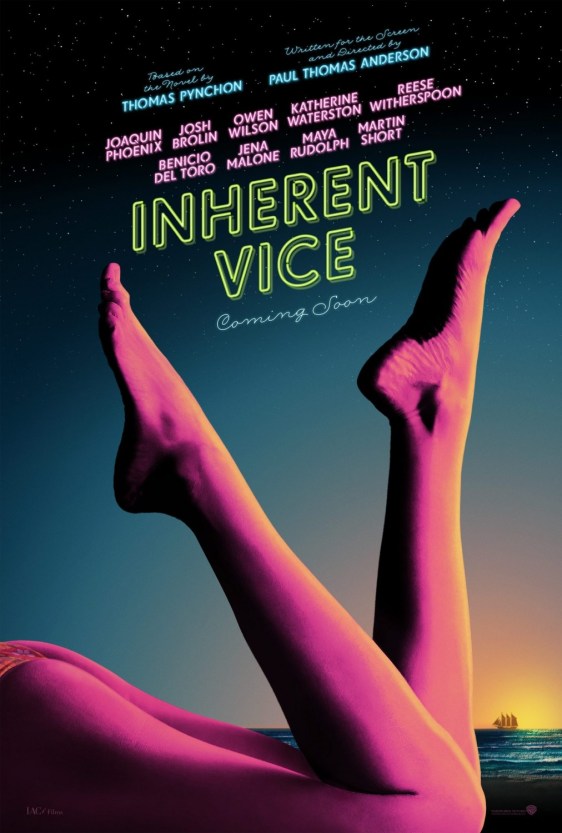
FilmWonk Podcast – Episode #64 – “Inherent Vice” (dir. Paul Thomas Anderson)

Poster for "Inherent 55Vice"

Glenn and Daniel start off the New Year right with a borderline unhealthy dose of Paul Thomas Anderson‘s Inherent Vice. We both identified this film early-on as a hippie-infused shaggy-dog detective story, but surprisingly, only one of us found this delightful. (33:59).

May contain NSFW language.

FilmWonk rating: 7.5/10 (Glenn); 5/10 (Daniel)

Show notes:

  • Music for tonight’s episode is Sam Cooke‘s original track, “(What A) Wonderful World“, as well as “Never My Love” by The Association, both from the film’s soundtrack.
  • The film mentions a [fictitious] blacklisted actor – in the film, this actor is played by real-life actor Jack Kelly, who was never blacklisted in real life. The film shows Kelly’s alter ego in a real-life 1962 anti-communist propaganda short film, Red Nightmare. You can watch this 28-minute film in its entirety on YouTube – the scene featured in the film begins at 18:31.
  • The term “inherent vice” is obliquely explained in the film as “whatever can’t be avoided” in the context of insurance – glass breaking, chocolate melting, etc. But the term originates from library and archival science, referring to the material constraints of preservation activities. For example, cellulose acetate film will degrade over time due to chemical instability.
  • Check out our review of Anderson’s previous film, The Master.
  • In the genre of “drug-addled protagonist goes on a confusing detective odyssey”, there was one bit of comedy that came to mind, but didn’t come up on the podcast. And that was a wonderful recurring sketch from That Mitchell and Webb Look, known as “The Surprising Adventures of Sir Digby Chicken Caesar”. You can find all of these sketches on YouTube – check out the first one here.

Listen above, or download: Inherent Vice (right-click, save as, or click/tap to play on a non-flash browser)

FilmWonk Podcast – Episode #63 – “The Interview” (dir. Seth Rogen/Evan Goldberg) (bonus episode)

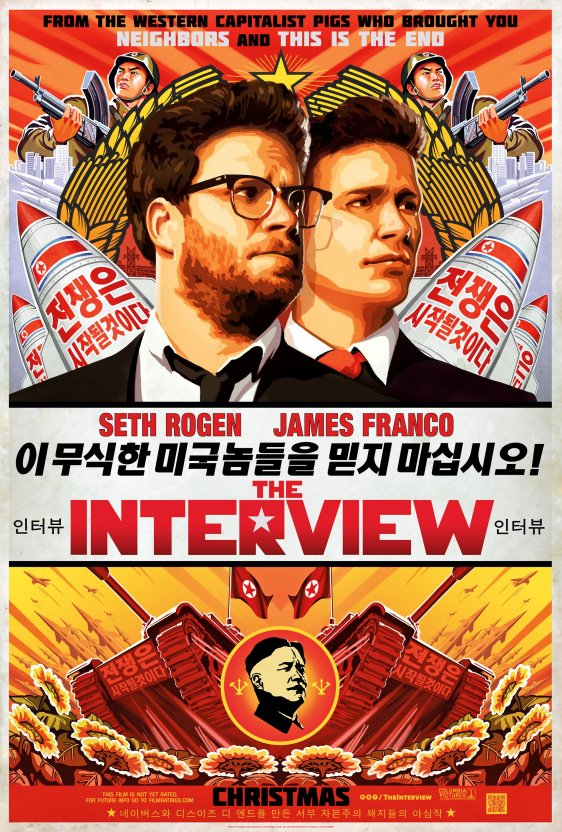
Poster for

Glenn and Daniel just couldn’t resist shooting their mouths off in the face of two regimes – both Kim and Rogen/Goldberg. Tune in for this special end-of-the-year bonus episode as we discuss The Interview, the Sony hack, the DPRK regime, and whether it was really all worth it. You already know the answer, but it’s a fun conversation nonetheless (24:55).

May contain NSFW language.

FilmWonk rating: N/A out of 10

Show notes:

  • Music for tonight’s episode is Katy Perry‘s “Firework”. Duh.
  • You can find metsuken‘s comment in the Asian-American subreddit – we only discussed a portion of it, but it’s a good read overall.

Listen above, or download: The Interview (right-click, save as, or click/tap to play on a non-flash browser)

FilmWonk Podcast – Episode #62 – “Unbroken” (dir. Angelina Jolie), “Foxcatcher” (dir. Bennett Miller)

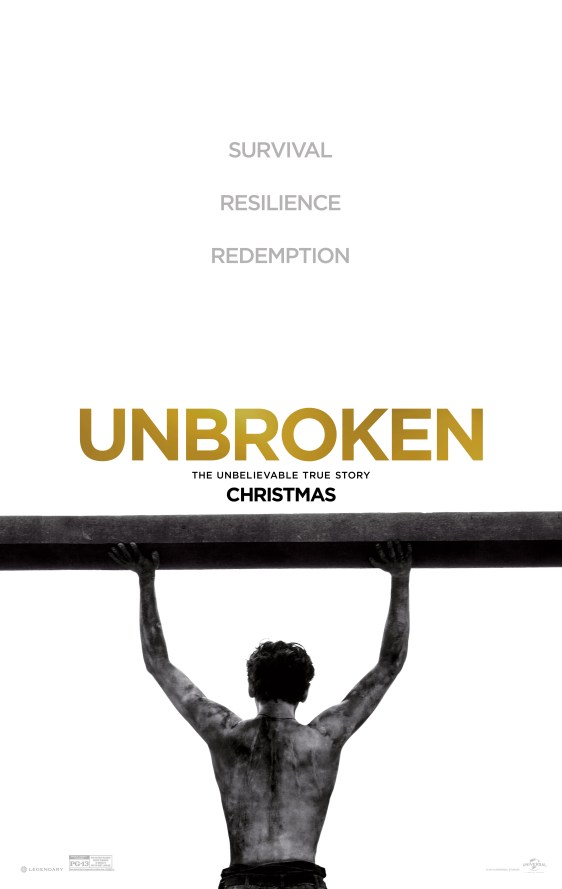
Poster for "Unbroken"

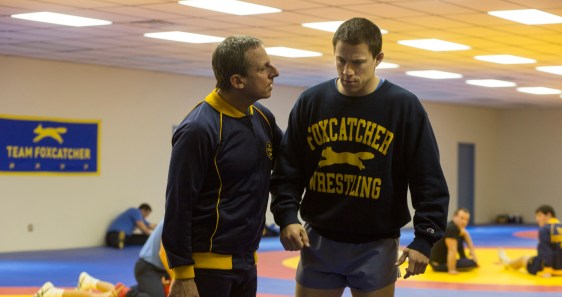
Tomorrow, our intrepid podcasters Glenn and Daniel venture to an actual theater to check out The Interview. But we don’t expect we’ll have nearly as much to say as we did about two end-of-the-year awards contenders. First, we experience our first Angelina Jolie-directed film, the WWII survival drama, Unbroken. Then we venture into a refreshingly dark and complex take on the sports genre, Foxcatcher, featuring a terrifying and transformative performance from Steve Carell. Strap in and enjoy this holiday double-header – we certainly did! (57:44)

May contain NSFW language.

Still from "Foxcatcher"

FilmWonk rating (Unbroken): 4 out of 10
FilmWonk rating (Foxcatcher): Daniel – 10/10, Glenn – 9/10

Show notes:

  • [02:27] Review: Unbroken
  • [13:31] Spoilers: Unbroken
  • [26:35] Review: Foxcatcher
  • [39:45] Spoilers: Foxcatcher
  • [56:09] Holiday blooper. We’re not proud.
  • Music for tonight’s episode is the track “Miracles” by Coldplay, from the soundtrack to Unbroken, followed by “Fame” by David Bowie, from the Foxcatcher soundtrack.
  • We referred to Kate Winslet‘s delightful self-parody on Extras. You can watch her scenes in full here, and the part where she talks about her motivation for making an award-worthy film starts at 03:19.
  • As Daniel noted, the future of wrestling at the Olympics is somewhat in doubt. Under new cost-cutting rules, the IOC has adopted a system where 25 “core sports” would continue indefinitely at future Olympics – but “non-core” sports would be selected on a year-by-year basis. Wrestling was originally a core sport, but after the 2012 Olympics in London, the IOC voted to make wrestling a non-core sport. In September 2013, wrestling won the bid as a non-core sport, so it will appear in the 2020 Summer Olympics.
  • Mark Schultz did indeed go on to fight at UFC 9.

Listen above, or download: Unbroken, Foxcatcher (right-click, save as, or click/tap to play on a non-flash browser)

Foxcatcher, Unbroken, Angelina Jolie, Steve Carell, Jack O’Connell, Miyavi, Domhnall Gleeson, Movies, Podcast

Peter Jackson’s “The Hobbit: The Battle of the Five Armies” – Send in the eagles, it’s finally done.

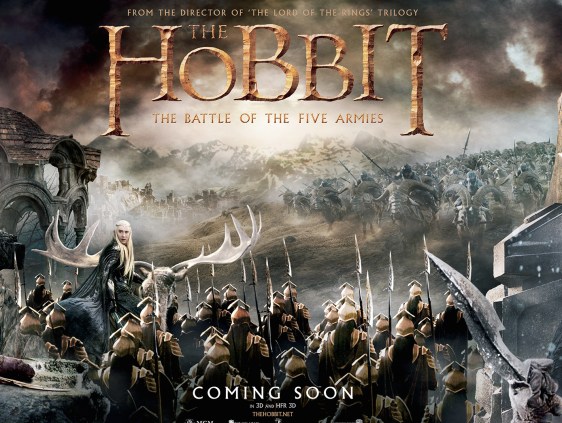
Poster for "The Hobbit: The Battle of the Five Armies"

Naming the five armies involved in the final Hobbit film is a bit like naming the five factions of Divergent. Or, for that matter, the thirteen dwarves in this film. There are probably certain superfans who can manage it with minimal Wikipedia breaks, but the film itself does very little to establish the importance of every last one of them. At the end of The Desolation of Smaug, the battle for the mountain of gold is…still very much in progress, and really only gets settled when Bard the Bowman (Lucas Black) takes down the dragon Smaug (Benedict Cumberbatch) with a gargantuan steel arrow – but only after it incinerates his entire town. The refugees of Laketown are the closest this film offers to a group whose motives remain pure throughout the film. They’ve had their home destroyed through no fault of their own, and they’re really just trying to survive, and claim the portion of the treasure that was promised to them. Since…they will likely freeze and starve to death without it. And so it is that Bard, newly crowned dragonslayer and sorta-king of the Laketown remnant, attempts to negotiate with Thorin Oakenshield (Richard Armitage), who guards the mountain and its gold with nothing more than a band of dwarves and a titular Hobbit, Bilbo (Martin Freeman).

For reasons that are vague and ill-justified (“dragon-sickness”?), Thorin has turned into a bit of a heartless miser in the roughly 20 minutes of movie-time that have passed since the end of the second film. He refuses to turn over the gold to anyone (“Not…one…single…piece.”), and has no sympathy for the town that was destroyed due to his own actions, despite their skillful dispatch of the gigantic flaming hurdle in the way of his massive pile of shiny things. Oh, and for some reason, Bilbo is concealing the Arkenstone, a glowing object of undefinable purpose, in his coat pocket next to the One Ring. Thorin wants the stone badly, and suspects everyone around him of stealing it (it’s not paranoia if you’ve got a burglar in your employ). According to Balin (Ken Stott), the stone might make Thorin’s madness better, or worse, but no one bothers to mention what purpose the stone is actually meant to serve, even if I recall some vague bluster about “uniting the dwarves” from the first film.

In case it’s unclear, I flat-out hated the first hour of TBOTFA. Whether we’re talking about Thranduil the elf-king (Lee Pace), who shows up on mooseback with an army to reclaim a different set of shiny things from inside the mountain, Alfrid (Ryan Gage), a human with far too much screentime for his sniveling motivations, or the dwarf army (led by Billy Connolly) who shows up to defend the treasure, not a single character’s motives were admirable or sympathetic here. This is a resource war, and not a terribly interesting one. Any time a character began bloviating about his birthright or promises or honor, my eyes quickly glazed over. Really, the only honest antagonists were the two Orc armies, led by Azog the Defiler (Manu Bennett) – whom I could’ve sworn was already killed by Thorin in the first film – and Bolg (John Tui), his son.

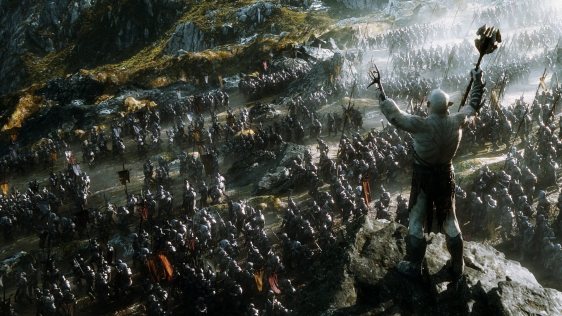
Still from "The Hobbit: The Battle of the Five Armies"

There were moments in the original Lord of the Rings trilogy where hordes of unnamed (and mostly CGI) characters were battling it out for our amusement. But it was always intercut with characters that we cared about, and it never felt as empty or small as it did here. This is a battle that is ostensibly as grand as Pelennor Fields, but it kept all of the main characters shuffled off into lesser side action, mostly atop the nearby Ravenhill. And ironically, while this had the inadvertent effect of rendering the large-scale battle sequences incredibly tedious, it actually made the side-combat rather compelling. Dwarf commandos storm the orc leadership atop a mountain, Bilbo sneaks off to warn them of incoming trouble, and a series of thoroughly entertaining boss fights and intermittently tender moments ensue. This sequence encapsulates what few elements worked about this film, even during the thoroughly dysfunctional first hour. When characters are acting for sympathetic reasons, then all the pristinely-rendered action starts to have meaning once again. The elf-maiden Tauriel (Evangeline Lilly) hastens to save her beloved dwarf Kili (Aidan Turner) from an incoming orc-horde. Legolas (Orlando Bloom) assists Tauriel despite knowing that his own affection for her is unrequited. Bilbo maintains his friendship for Thorin despite their earlier falling-out. Even Bard, who does very little of consequence after killing the dragon, is seeking only to save his family and townspeople.

When this film worked, it was entirely due to the strong performances and relatable motivations of its characters. But it is unquestionably the weakest entry in the Hobbit trilogy, remaining as dense and bloated and inconsequential as ever. By the time the Eagles – those perennial closers – showed up to dispatch the secondary orc army just as they had barely shuffled onto the field in the distance, I started to wonder if even Peter Jackson had lost interest in this lame skirmish. And when a dying character belched forth the film’s moral, of the importance of valuing home and family over gold, it was all but confirmed. Enjoy our gold, Hollywood, even if you got less of it than the first time around. You’ve milked this story for all it’s worth and then some. And while we got some pretty solid cinema technology out of it (48fps 3D is still a marvel), it was wrapped in a languorous, incomprehensible spectacle that seems less likely to stand the test of time than Avatar.

FilmWonk rating: 4 out of 10

FilmWonk Podcast – Episode #61 – “Wild” (dir. Jean-Marc Vallée)

Poster for "Wild"

This week on the podcast, Glenn and Daniel tackle the latest emotional journey from Oprah‘s Book Club, Wild, featuring the Pacific Crest Trail hike of memoirist Cheryl Strayed (Reese Witherspoon), as rendered by the director of last year’s triumphant Dallas Buyers Club. The result is a mixed bag of triumphant trail experiences and an uneven backstory – we liked, but didn’t love it. (26:58)

May contain NSFW language.

FilmWonk rating: 6 out of 10

Show notes:

  • Music for tonight’s episode is a pair of Simon and Garfunkel songs from the film’s soundtrack, “El Condor Pasa (If I Could)” and “Homeward Bound“.
  • Minor correction: Nick Hornby wrote the novel for About a Boy, but not the screenplay for the film.
  • As promised, I fact-checked the Hollywood age shenanigans, and it turns out they were even worse than we thought. We can pardon the film somewhat, given its reliance on flashbacks, but as of this writing, Laura Dern is 47, and Reese Witherspoon is 38. That’s a 9-year age difference between mother and daughter.
  • As we mentioned, Cheryl Strayed‘s memoir, Wild: From Lost to Found on the Pacific Crest Trail, was published in 2012, roughly 17 years after her hike. Interestingly, the book’s publication led to Strayed finding her long-lost half-sister.

Listen above, or download: Wild (right-click, save as, or click/tap to play on a non-flash browser)

FilmWonk Podcast – Episode #60 – “Force Majeure” (dir. Ruben Östlund)

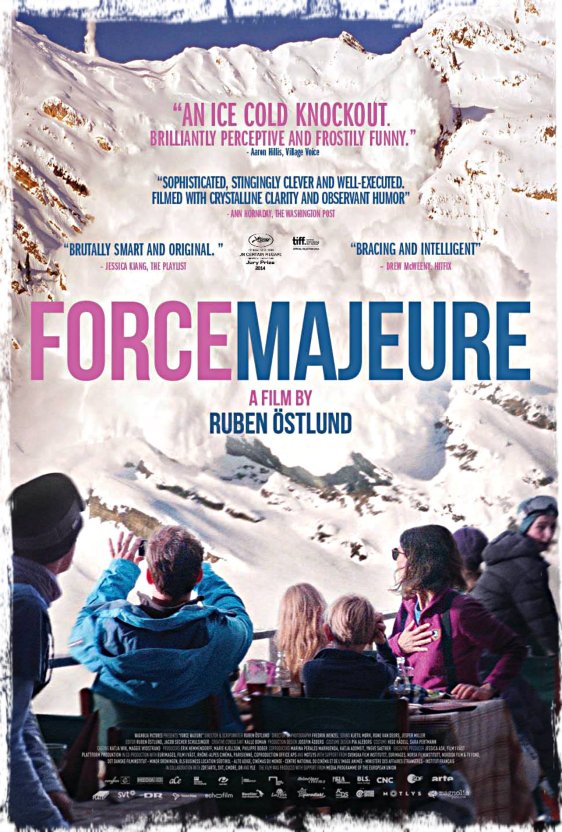
Poster for "Force Majeure"

This week on the podcast, Glenn and Daniel tackle a wondrous dilemma of heroism, masculinity, and unexpectedly hilarious drone flying in Force Majeure, a Swedish family dramedy set in a ski resort in the French Alps. Note that our review contains spoilers for Julia Loktev‘s 2012 film, The Loneliest Planet, for reasons that should quickly become clear (45:00).

May contain NSFW language.

FilmWonk rating: 8 out of 10

Show notes:

  • Music for tonight’s episode is Antonio Vivaldi‘s “Summer” (from “The Four Seasons”), as performed live by Norwegian soloist Mari Silje Samuelsen.
  • Check out the film’s excellent trailer here:
  • The MS Estonia is indeed a well-known maritime disaster in Sweden. This large ferry boat was crossing the Baltic Sea from Talinn, Estonia to Stockholm in 1994, and capsized and ultimately sank in a storm. Of the 900+ passengers aboard, only 138 survived, most of whom were young, strong males. About 650 of the passengers were estimated to have been trapped in the ship when it sank.
  • On the subject of Tomas bringing along his iPhone when he runs away, a story from Seattle comes to mind, wherein an armed robber points a gun into the face of a bus passenger who is staring at his phone. In an instant, the passenger shoves the gun away, then springs out of his seat to shove the robber away down the aisle. As he gets up to shove with one hand, he can clearly be seen to put his phone away in his pocket with the other. This is a perfect example of someone “acting on instinct” – an instinct that, in this moment, included the familiar muscle memory of holstering his phone. You can see the entire incident on video here.

Listen above, or download: Force Majeure (right-click, save as, or click/tap to play on a non-flash browser)

FilmWonk Podcast – Episode #59 – “Citizenfour” (dir. Laura Poitras)

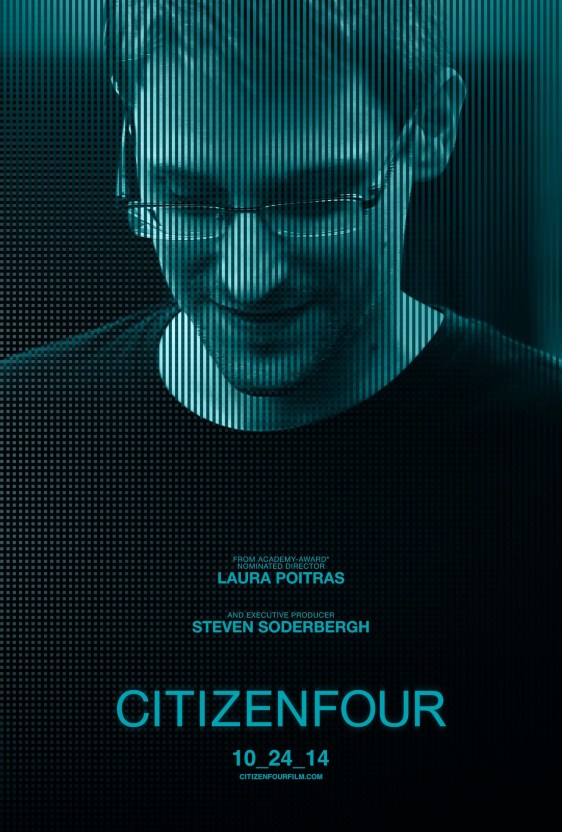
Poster for "Citizenfour"

This week on the podcast, [redacted] and [redacted] tiptoe across the line of national security as we assess the curious case of Edward Snowden, and the rather slow documentary that was made of it (28:56).

May contain NSFW language.

FilmWonk rating: 5 out of 10

Show notes:

  • Music for tonight’s episode is two spy-friendly tracks. First is “Operation Dinner Out (Rothrock Remix)“, by Harry Gregson-Williams, from the original soundtrack to Tony Scott‘s Spy Game. And finally, there’s the perennial Bourne end-credits track, “Extreme Ways” by Moby.
  • Joseph Gordon-Levitt will indeed play Snowden in Oliver Stone‘s next film (source).
  • Stay tuned at the end for our soundcheck, which should be taken as satire only. Seriously. We don’t joke around about our jokes.
  • Correction: Alex Gibney‘s We Steal Secrets is only 16 minutes longer than Citizenfour.

Listen above, or download: Citizenfour (right-click, save as, or click/tap to play on a non-flash browser)

Christopher Nolan’s “Interstellar” – The fault is human, but the stars deliver

Poster for

The first thirty minutes of Christopher Nolan‘s Interstellar are downright oppressive. They depict an earth saturated in dust storms and failing corn crops, struggling against agricultural blight to feed a starving and dwindling population. And the film conveys all of the details of this new reality with some unsubtle, but effective touches, including a school curriculum that now teaches that the Apollo program was merely a brilliant hoax perpetrated by 20th century propagandists in order to bankrupt the Soviet Union with futile dreams of progress beyond the stars. My only depressing note of incredulity at this detail was that even in our real-life, present-day world, with all of its vast resources and promise, we can already conjure plenty of excuses not to extend mankind’s reach into space – it’s hard to imagine that such propaganda would be necessary in a world in such dire straits. As a stark contrast to most other end-of-the-world disaster films, mankind soldiers on, but purely to maintain the status quo for just a bit longer. There is no Bruce Willis wrangling to save the world by nuking something – at least as far as the public is concerned. The remaining population is an agrarian “caretaker generation” – a designation that this film unambiguously condemns. Proverbial deck-chair wranglers on the Titanic.

This necessary, claustrophobic environment is broken up when astronauts Cooper (Matthew McConaughey), Amelia Brand (Anne Hathaway), Doyle (Wes Bentley) and Romilly (David Gyasi) leave Earth aboard the starship Endurance in a last-ditch attempt to save the human race. Their trip is designated “Plan B” in two ways – first, a series of previous missions have already been sent to find habitable planets, and the Endurance has been sent to find any survivors. And second, because Professor Brand (Michael Caine), a NASA scientist (and Amelia’s father), believes he can crack an equation that will allow the human race to conquer gravity – a necessary hurdle in order to evacuate the remaining population and enough materiel to support them. Structurally, this film closely resembles Danny Boyle‘s Sunshine, and in many ways, the characterization and interpersonal dynamics are inferior in comparison. Once the mission begins, Brand, Doyle, and Romilly are pretty ill-defined presences, and at one point, the crew engages in an important – but surprisingly puerile – debate over which potentially habitable world the ship should head for, made so by the out-of-nowhere revelation that Brand is in love with one of the previous astronauts, Dr. Edmund, who may still be alive on his planet. Edmund never feels like much more than an off-screen instrument for generating conflict, and it leads to Hathaway delivering a preposterous speech about love potentially being a force that transcends space-time. Transcending space-time is a rather crucial concept as the film goes on, and to introduce it in such a clunky manner nearly derailed it. And despite any dramatic irony eventually provoked by Brand’s speech, the concept never feels earned or justifiable, and did some serious damage to the character’s credibility in the process.
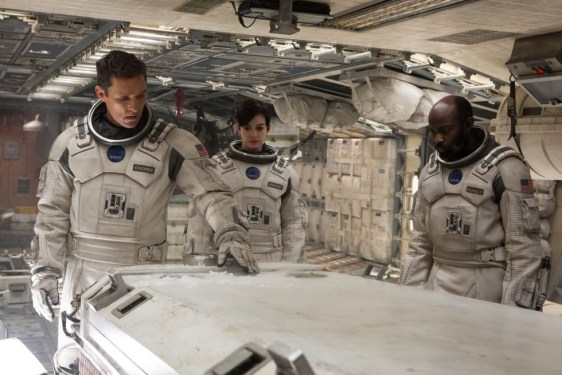
Still from

Nonetheless, the various “alternate Earths” are a real sci-fi treat. While they don’t stray too far from the Star Wars/Avatar convention of a single, vast ecosystem per planet, they incorporate several details that are both visually and conceptually stunning. One planet is so close to an adjacent black hole that time dilation becomes a factor, and each hour spent on its surface will translate to seven years passing back on Earth. Given the stakes involved for these characters, both at the personal level and for the entire human race, the film makes superlative use of this concept. Where the Nolans’ temporal manipulations in Inception served only to heighten the physical action, they serve in a similar way to heighten the emotional action in Interstellar, forcing its characters to feel the weight of years in an instant, and McConaughey’s performance particularly shines in this moment.

Back on Earth, Cooper’s daughter Murph (played as a child by Mackenzie Foy, and as an adult by Jessica Chastain) weighs the impact of years upon herself, as she is forced to deal with the unresolved conflict she and her father began when she was just 10 years old. Is Cooper coming back? Did he ever intend to? And regardless of his intent, is there any hope of him coming back? Much of the film’s plot hinges on her collaboration with Professor Brand on “Plan A”, to crack the theory of gravity so the remaining people can evacuate the earth – and the continuing influence of Cooper’s childhood betrayal hangs over the film throughout. More on this below.

Interstellar is, in many ways, one of the most ambitious sci-fi films ever made, containing all the style and visual splendor of sillier films like Prometheus, but with a substantially smarter script and some convincing exploration of the big ideas of sci-fi to back it up. A better comparison is 2001: A Space Odyssey, from which it takes a few obvious visual and thematic cues. Its use of practical effects and models provides a great sense of realism to the scenes set in space, from the rotating ring ship to a magnificent column-based robot named TARS (voice of Bill Irwin), whose “humor setting” allows him to land one of the film’s best zingers during take-off. The film never quite transcends its reliance on characters that aren’t nearly as well-drawn as the actors playing them, but it is still a must-see space opera for the 21st century.

Still from


***


Spoiler warning from this point on.

***


So what, then, do we make of the third-act appearance of Matt Damon as haggard, solitary astronaut Dr. Mann – the architect (and apparently sole survivor) of the previous missions? Like a similar third-act revelation in Sunshine, Dr. Mann is more concept than character, although Damon successfully imbues him with some complex psychology in a short space of time. If each of the astronauts is a sacrificial lamb for mankind, Dr. Mann is surely Judas, derailing and misdirecting the mission in order to save his own skin. He opted into a life of selflessness, but then found himself unable to follow through on it. Shame on him, for he is us – his name is even “Mann” (*sigh*). As much I enjoyed Damon’s brief performance, this is some pretty weak material, and ends far too quickly to have as much of an impact as the film’s five-dimensional mind-fuck of an ending.

Indeed, there is a multi-layered, Terminator-style “future creates the past” temporal paradox at work here. Future-humans save their predecessors from extinction by creating the singularity and a reality for Cooper to interact with, and future-Cooper ensures that past-Cooper will end up exactly where he is – in an indescribably beautiful nether-space – a five-dimensional reality rendered in three dimensions, conceptually explained earlier in the film, when astronaut Brand speculates that fifth-dimensional beings might be able to descend a canyon to visit the past, or climb a mountain to visit the future. There are a few curious details here. There’s the obvious question of why the future-humans can’t simply explain their plan to Cooper (perhaps transcendent fifth-dimensional beings no longer speak 21st century American English), but I actually found it more fascinating that Cooper’s first inclination is to try to change the past and prevent his younger self from leaving his daughter back on Earth in the first place. It’s unclear if he is doing this because the mission has gone so thoroughly awry, or if, like Dr. Mann, he has simply lost all will to continue, and will do anything to undo his mistakes, even at the cost of all mankind. McConaughey plays with this ambiguity nicely, even as Cooper quickly realizes this is futile, and instead switches tactics to making sure that the past proceeds exactly as it did. He gives young Murph the location of the the NASA remnant, setting the film’s events in motion in the first place. Yeah, I didn’t mention the “gravity ghost” earlier – sue me. Pretty hard to discuss it without spoilery context. This becomes a predestination paradox – the fifth-dimensional reality allows Cooper to view and influence the past, but he doesn’t seem to be able to change events substantially except to nudge them into proceeding exactly as they did the first time. As the sequence goes on, it’s fascinating to ponder what would have happened if Cooper had simply done nothing upon entering the nether-space. Did he even have that choice? Would he have simply floated there forever?

The film also ends with a grand sense of possibility – and a big question – what became of Brand? When Cooper is rescued aboard “Cooper Station”, a vast cylindrical habitat that was constructed, launched, and sent to the edge of the singularity in the ensuing 60 years since Cooper’s disappearance (thanks, time dilation!), his daughter (now played by Ellen Burstyn) sends him away from her deathbed (and many children and grandchildren) to head through the wormhole and find Brand, who is surely waiting for him. The cheeriest possible read on this ending – which I daresay is supported by dialogue from the film – is that Cooper and Brand were in the time dilation field around the black hole for exactly the same amount of relative time, causing another 60 years to pass on Earth while the same (smaller) amount of time passed for each of them. Cooper took his timeline-altering dive into the singularity – and Brand landed on Edmund’s planet – at exactly the same point in history relative to Earth. And inside the singularity, Cooper existed outside of space and time, so he emerged without any additional time passing.

I’m laying all of this out for two reasons. First, because I suspect that many will regard Interstellar‘s final ambiguity with the same kind of Nolan-induced side-eye as Inception‘s spinning top, prompting endless debate and nerd-rage, and I’m eager to get my own interpretation on the record now. But the second reason is because it is only such a smart and well-drawn piece of sci-fi that can invite this kind of reflection. Interstellar may make a few missteps on the human side, but it is a smart, timely, and internally consistent space opera. And it’s absolutely gorgeous on film.


Spoilers over.


FilmWonk rating: 7.5 out of 10
FilmWonk Podcast – Episode #58 – “Birdman” (dir. Alejandro González Iñárritu)

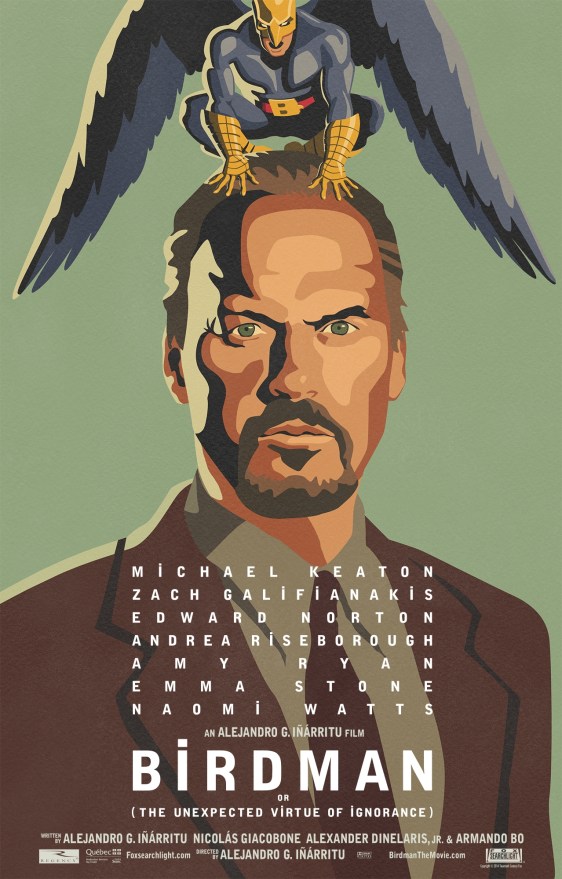
Poster for

This week on the podcast, Glenn and Daniel tackle Alejandro González Iñárritu‘s welcome and unexpected triumph of dark comedy, Birdman. Explore a creative, single-shot world in which art imitates life imitating art, we slightly overuse the word “outstanding,” and a tour de force cast and cinematographer deliver one solid performance and well-staged scene after another (39:15).

May contain NSFW language.

FilmWonk rating: 9 out of 10

Show notes:

  • Music for tonight’s episode includes The Animals’ classic, “Don’t Let Me Be Misunderstood”. A cover of this song performed by Brent Smith appears in the film’s excellent trailer, but that version is unfortunately unavailable.
  • Raymond Carver‘s What We Talk About When We Talk About Love is indeed a real short-story, published in 1981.
  • We referred to a recent episode of the Cracked Podcast – check it out here, and David Wong‘s vaguely self-helpy article that preceded it.
  • In case my non sequitur about Ed Norton’s bird-hair didn’t make sense, here’s a rundown of the random place my mind went.
  • In the final act of Ratatouille, the late, great Peter O’Toole delivers a monologue as the surly food critic Anton Ego. The speech – made of equal parts truth and self-indulgence – is almost an inverted “The Reason You Suck” speech, and goes as follows:

    “In many ways, the work of a critic is easy. We risk very little, yet enjoy a position over those who offer up their work and their selves to our judgment. We thrive on negative criticism, which is fun to write and to read. But the bitter truth we critics must face, is that in the grand scheme of things, the average piece of junk is probably more meaningful than our criticism designating it so.”

Listen above, or download: Birdman (right-click, save as, or click/tap to play on a non-flash browser)

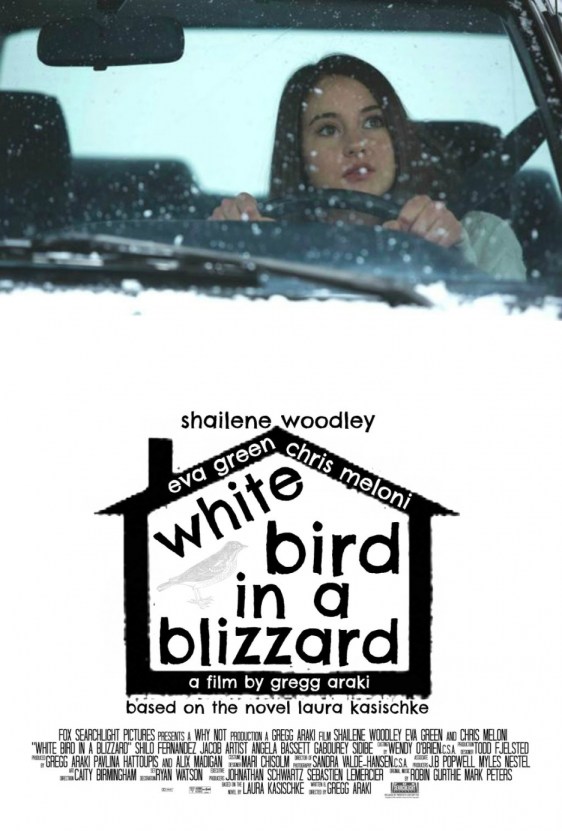
Gregg Araki’s “White Bird in a Blizzard” – An enigmatic coming of age.

Poster for "White Bird in a Blizzard"

In our podcast review of Divergent, co-host Daniel commented that Shailene Woodley could probably play a high school girl forever. For that particular film, neither of us meant this as a compliment. Following her fascinating but nonetheless sidelined role in The Spectacular Now, I was quite curious to see what Woodley would make of a solo lead in a film that is equal parts stylized mystery and erotic bildungsroman. White Bird in a Blizzard is adapted from a novel (by author Laura Kasischke), and as is often the case with such things, it relies heavily on voiceover, and occasionally gets a bit too far up its own ass with literary metaphors. But that’s the last dismissive thing I’ll say about this film, because after 10-15 minutes of this, I was completely sold on both Woodley’s casting and on the premise of the film itself.

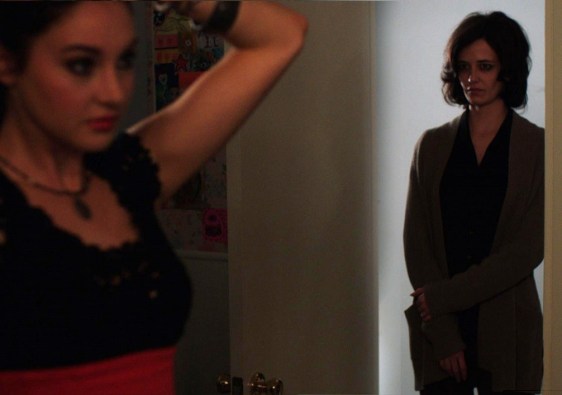
The film begins with the introduction of Kat Connor (Woodley), whose mother Eve (Eva Green) disappears without a trace. Christopher Meloni plays Kat’s beleagured father Brock, and we learn through flashbacks just how little regard her parents had for each other. The production design during these sequences can best be regarded as a dystopian mash-up of Mad Men and The Stepford Wives. Eve is unsatisfied both domestically and sexually, and Kat (then at age 8, played by Ava Acres) is disturbingly aware of the minutiae of her parents’ sex life, or lack thereof – her mother’s nightly solo trips to bed, unsatisfied, and her father’s none-too-secret locked stash of Hustler mags in the basement. After Eve vanishes (when Kat is 17), the flashbacks spend much less time on her discontented marriage with Brock, and far more time on her relationship with her daughter. Kat’s teenage sexual awakening is fully on display in this film, and the film strikes an interesting balance between her various boundary-prodding dalliances and her mother’s competitive attitude about her youth and beauty.

Still from "White Bird in a Blizzard"

Green is much closer in age to the younger version of the character, and yet seems to sell the middle-aged, despondent version far more through her performance than through any sort of age makeup. As she vamps around the screen – frequently with a glass of wine in hand – she stares creepily at Kat and tells her just how closely she resembles her younger self. This character is Betty Draper in one moment, and channeling the best of Helena Bonham Carter in the next – it’s really quite an impressive balancing act. Given that all of these flashbacks seem to be taking place in Kat’s memory (sometimes literally, as she recounts them to Angela Bassett as her therapist), it’s hard to shake the feeling that Kat is an unreliable narrator. That these are merely her last interactions with her mother as best she can distantly recall them – a bitter recollection of a half-remembered ghost.

Shiloh Fernandez gives a nice turn as Phil, the boy next door (and Kat’s not-too-serious boyfriend). As Kat puts it, he reminds her a great deal of her father – scratch the surface, and you just find more surface. This is perhaps why she meanders elsewhere over the course of the film, seducing 40-something Detective Scieziesciez (Thomas Jane), who is assigned to her mother’s case. The film’s treatment of their erotic interaction is nothing short of masterful. At this point in the film, it’s unclear whether Kat has yet turned 18 (she mentioned previously that she was a few weeks away), and the police detective more than twice her age clearly knows that he’s toeing – and then leaping across – a dubious ethical line. The resulting encounter strikes a frankly miraculous balance – a pair of consenting adults who prod the edges of an improbable power dynamic until they emerge as equals. This becomes one of the most tense and fascinating relationships in the film, and it could never have done so without such a tonally perfect opening scene.

Much like Ellar Coltrane‘s central character in Boyhood, it is a single youth – Kat – whose development is fully on display in this film. And no matter what’s happening in the background, the film only works if we care about this character throughout the film. Woodley is aloof at times, but only when it seems appropriate – when her character can’t be bothered to deal with the chaotic and painful changes in her life. At no point in the film does Kat feel unaffected by either her mother’s disappearance (despite her protestations to the contrary) or any of the linked events, and this makes for a nice, slow-burn mystery as she decides just how much she really wants to know the truth. This film blends mystery into a coming-of-age drama most effectively – and in a way I’ve never seen before. The mystery is ever-present, but impressively restrained to make room for the rest of the cast to get on with their lives.

FilmWonk rating: 8 out of 10