FilmWonk Podcast – Episode #32 – “Warm Bodies” (dir. Jonathan Levine)

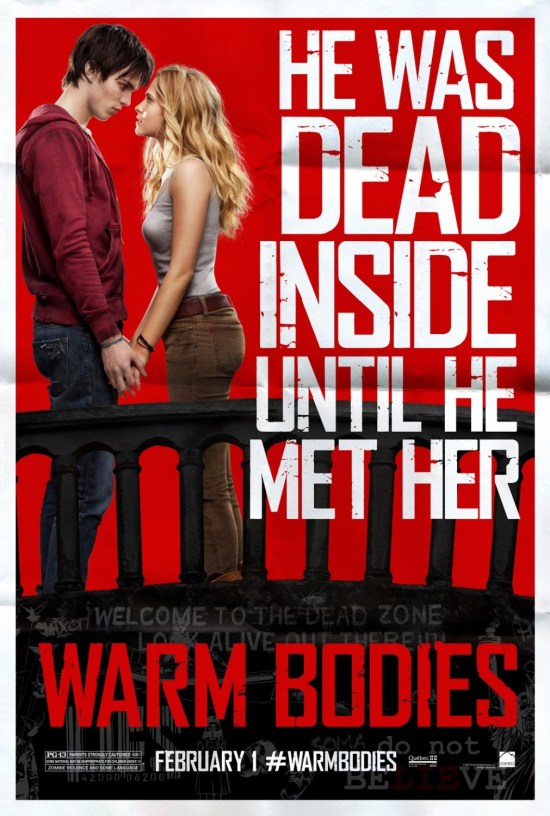
Poster for "Warm Bodies"

This week on the podcast, Glenn and Daniel check out the latest bizarre genre blend from writer/director Jonathan Levine, Warm Bodies. Can Nicholas Hoult leverage all of his acting prowess from the second series of Skins as a disaffected romantic zombie? Can Rob Corddry exhibit some alarmingly effective dramatic work with less than a dozen words of dialogue? Can a truly disgusting romantic premise wildly succeed? Find out below! (25:31)

May contain some NSFW language.

FilmWonk rating: 5 out of 10

Show notes:

  • Music for tonight’s episode comes from the Warm Bodies soundtrack, including Bob Dylan’s “Shelter From the Storm” and M83’s “Midnight City“.
  • The zombie augmented-reality running game that Daniel referred to was called Zombies, Run!.

Listen above, or download: Warm Bodies (right-click, save as, or click/tap to play on a non-flash browser)

FilmWonk Podcast – Episode #31 – “Zero Dark Thirty” (dir. Kathryn Bigelow)

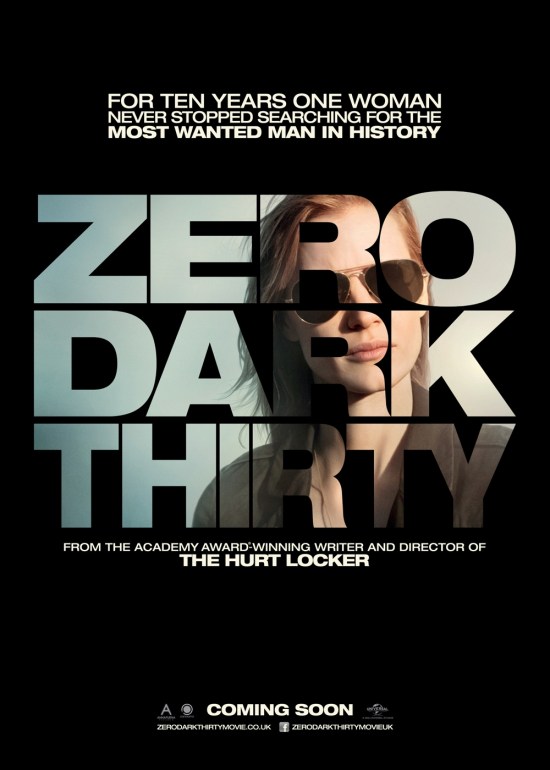
Poster for "Zero Dark Thirty"

This week on the podcast, Glenn and Daniel take an understandably spoiler-filled look at director Kathryn Bigelow and screenwriter Mark Boal‘s triumphant followup to The Hurt Locker, featuring a performance from Jessica Chastain that makes or breaks the film to an exceptional degree. (30:45)

May contain some NSFW language.

FilmWonk rating: 9 out of 10

Show notes:

  • Music for this episode is the track “Flight to Compound“, from Alexandre Desplat‘s score.
  • The European Court of Human Rights does consider sleep deprivation to be “a practice of inhuman and degrading treatment” (and thus a violation of the European Convention on Human Rights), but not precisely torture, as it does not “occasion suffering of the particular intensity and cruelty implied by the word torture”. According to memos released by the CIA, sleep deprivation is a technique that was used in post-9/11 detainee interrogations, and whether or not it constitutes torture is still controversial.
  • We refer back to our podcast of Act of Valor from last year. Check it out!
  • As promised, I did look into whether or not the audio recordings of 911 calls from September 11th were genuine or reenactments produced for the film. I have been unable to find definitive word on this (I’m sure the director’s commentary on the DVD will settle the issue eventually), but in the course of searching, I found many 9/11 recordings and transcripts that were as disturbing or more so than the ones featured at the beginning of Zero Dark Thirty. I will not link to them here, and I would encourage you not to seek them out.

Listen above, or download: Zero Dark Thirty (right-click, save as, or click/tap to play on a non-flash browser)

2012 Glennies (Top 10 Films of 2012)

#11: The Five-Year Engagement
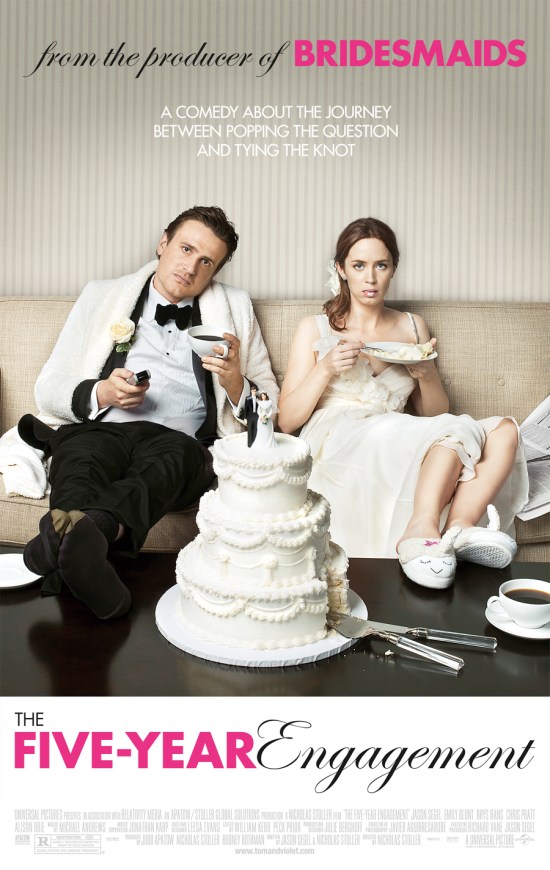
Poster for "The Five-Year Engagement"

Directed by Nicholas Stoller, written by Nicholas Stoller and Jason Segel

Per usual, I’m cheating a bit with my Top 10 and placing a film in the #11 slot that simply begged to be included. What started as a simple numbering error in 2009 has become a means for me to include a film that spoke to me personally in a significant way – to split hairs between the films that are somehow, empirically “the best” (a dubious distinction) vs. simply being the ones I enjoyed or identified with the most. While this is certainly one of the more well-made romantic comedies I’ve seen (almost reaching the level of Nicholas Stoller and Jason Segel‘s previous collaboration, Forgetting Sarah Marshall), the film also benefited from perfect timing. As it happens, I saw it two weeks prior to my wedding, when both my future-wife and I were taking a well-deserved night off from wedding planning (and incidentally, each other’s company). Planning a wedding is a stressful affair, and as happy as you end up on the day, at a certain point you just need to take a break from it all.

And it was on this level that The Five-Year-Engagement spoke to me directly. The film sits firmly in the camp that while everyone probably has someone who can be called the love of their life, it is supremely naive to assume that the person will be 100% perfect for you. Or even close to it. What happens between Segel and Emily Blunt is solid chemistry and believable romance. But it’s not a fairy tale, even if it gets a bit silly in its pursuit of a fairytale ending. Their relationship feels incredibly true-to-life, bumps and all. While Forgetting was primarily about the allure of moving on after a bad relationship, Five-Year is about finding happiness with the closest thing to your soul mate that you can manage. As perspectives on love go, this could come off as incredibly cynical. But Segel manages to bring the same staggering amount of heart and earnestness that he’s done over and over again in his acting roles. Actor and film alike both wear their heart on their sleeve, and the result is both endearing and hilarious.

#10: The Raid: Redemption
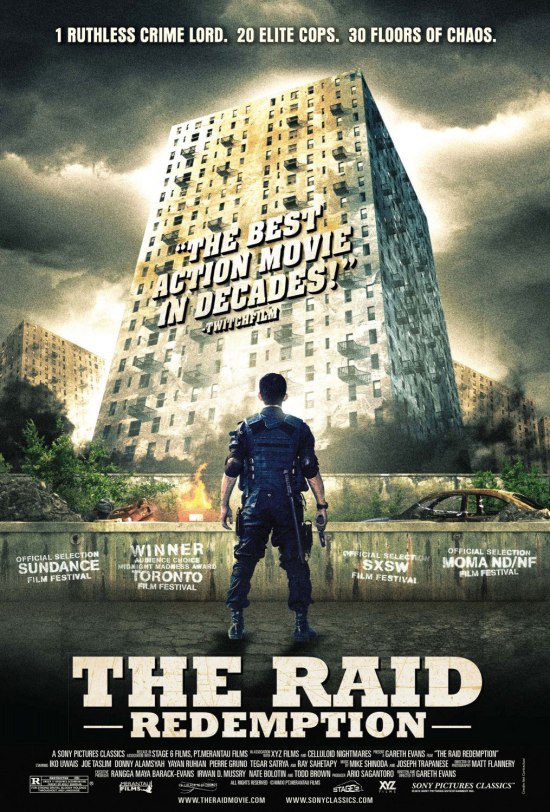
Poster for "The Raid: Redemption"

Written and directed by Gareth Evans

Congratulations, Gareth Evans, you may have ruined me for other action films. I’m not going to summarize the plot here. See the poster above for an adequate summary. In fact, the plot bears a staggering – and apparently coincidental – similarity to this year’s Dredd, and story is hardly the film’s biggest selling point anyway. This film contains the most intense, balls-to-the-wall martial arts action I have ever seen in a theater. It is immaculately shot, intensely paced, and doesn’t lose steam for an instant.

#9: Bernie
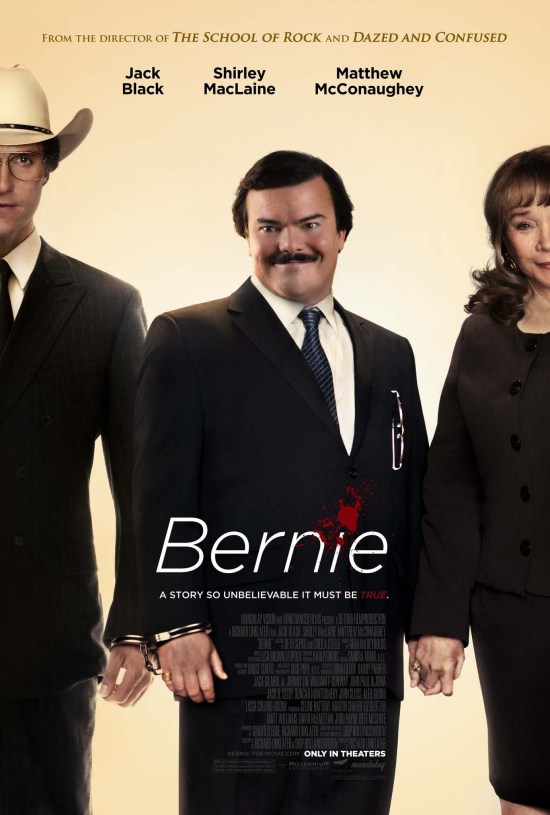
Poster for "Bernie"

Directed by Richard Linklater, screenplay by Richard Linklater and Skip Hollandsworth, based on the article by Skip Hollandsworth

Jack Black gives a bravura comedic performance as mortician’s assistant Bernie Tiede, in this true-life tale of an incident in a small-town in Texas. Because it is based on a true story, Bernie makes the bold choice to reveal very early on in the film that something dire, if not lethal, has happened to both Bernie and wealthy widow Marjorie Nugent (Shirley MacLaine), using its most persistently hilarious storytelling device: on-camera interviews with the “townspeople”, who constantly refer to the two of them in the past tense. The film sits somewhere between The Office and Best in Show with its sense of realism. This is not the first time I’ve seen this method, but in a straight-laced drama like Frost/Nixon, the technique was a complete distraction, whereas in a dark comedy and portrait of small-town life like Bernie, it actually works rather well. The film abandons its pseudo-documentary format whenever the storytelling requires it, and yet the constant cross-cutting to supposedly real-life townspeople reveals the extent to which they are all involved in each other’s personal business. They gossip constantly about community, church, sex, money, and every combination thereof, and the resulting town feels very lived-in. When the crime finally happens, the townspeople are aghast. Bernie brilliantly portrays the cognitive dissonance that occurs when someone you like has done a bad, bad thing to someone you don’t like. The relationship between Bernie and Marjorie is wonderfully complex and twisted, and what ends up happening between them mingles somewhere between family drama, legal thriller, and hilarious dark comedy.

As of this writing, Bernie is available on Netflix streaming. Check it out today!

#8: The Cabin in the Woods
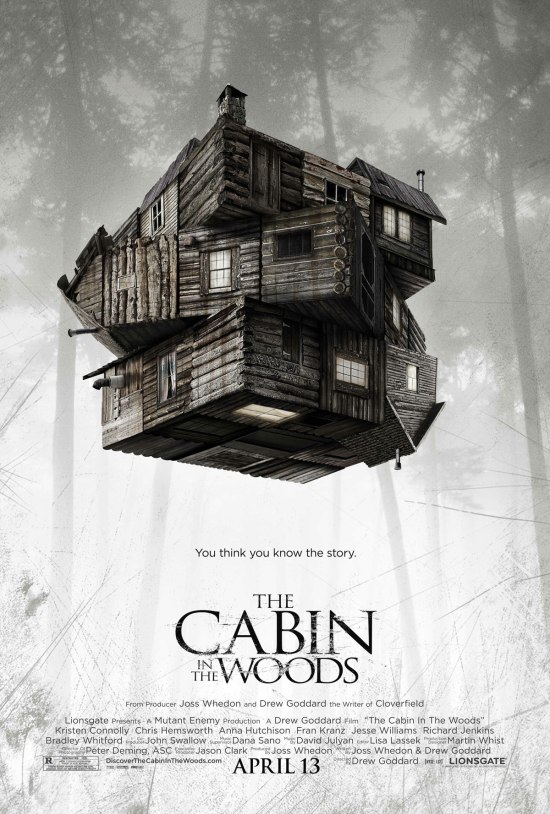
Poster for "The Cabin in the Woods"

Directed by Drew Goddard, written by Drew Goddard and Joss Whedon

The Cabin in the Woods might well have succeeded as a straight-laced horror film, if only because it features an ensemble of intelligent, likable, and persistently sympathetic characters (played by age-appropriate actors), which already puts it about ten steps ahead of your average backwoods slaughterfest. But Joss Whedon and Drew Goddard take it a step further, placing the entire film into an elaborate Skinner Box whose carefully controlled circumstances manage to elevate the stakes beyond the mere survival of this merry band. On the off-chance you don’t yet know the central premise of this film, I won’t spoil it for you here, but suffice to say, all is not what it seems, and the film’s puppetstrings are pulled brilliantly by Richard Jenkins and Bradley Whitford. This film exists in a wonderfully dark-comic grey zone, simultaneously reveling in the slaughter that it perpetrates while slowing down just enough to call the audience out for liking it quite so much. This is a film for horror fans who don’t mind seeing the worst parts of their beloved genre dragged to the surface for ritual slaughter. The horror standard has been driven inexorably upward by this film, and while there was at least one other solid contender this year, it has yet to be unseated.

#7: Lincoln
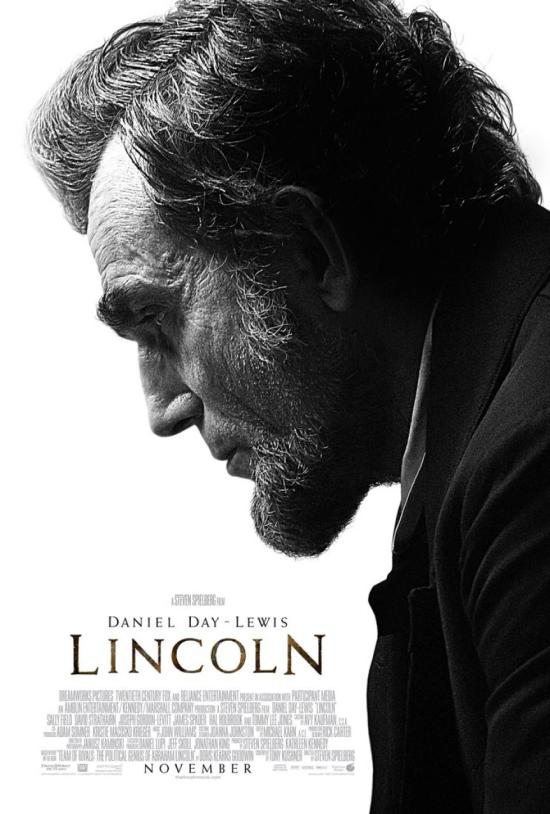
Poster for "Lincoln"

Directed by Steven Spielberg, screenplay by Tony Kushner, based in part on the book by Doris Kearns Goodwin

Politics! That’s what this film delivers, and that should tell you in a word whether you’ll enjoy it or not. There is a scene in this film in which the indispensable Daniel Day-Lewis sits in a chair as President Abraham Lincoln and explains, in detail, exactly what a legal, political, and constitutional clusterbomb the Emancipation Proclamation really was. Freeing all the slaves in the rebelling Confederate states by executive order was an unprecedented act in muddy legal waters, and it is precisely these waters that the film wades into as it explores the backdoor dealings behind the passage of the 13th Amendment in 1865. The specter of the amendment’s passage, the end of the Civil War, and Lincoln’s imminent assassination hang over the film at all times, and it is to the film’s storytelling credit that it manages to present these three events as the high-stakes historical standoff that they really were. Despite the audience knowing full-well how the political fight will be resolved, it’s clear at all times that any of these three events has the potential to derail the others. In Spielberg and Kushner’s vision of history, it could only have happened precisely the way that it did, because anything less would have been disastrous for the nation.

To serve this predestined vision of history, the film lionizes Lincoln to an almost absurd degree, and the illustrious executive is constantly interrupting scenes with quaint little anecdotes about his lawyering past that bear some oblique relevance to the present conflict. He is essentially a Christ figure, always ready with a parable or pearl of wisdom to sate the hungry masses – and ready to be sacrificed for the sins of his beloved Union. I’m at a loss to explain why this works so well. It should have been incredibly heavy-handed, but Day-Lewis’ magnificent performance keeps it grounded in the historical circumstances at all times. Lincoln was neither a flawless politician nor a flawless man, and Lincoln never tries to convince us otherwise. The film is also bolstered by a magnificent ensemble cast. I could end this description by naming at least a dozen outstanding supporting players, but I’ll just mention the strongest here: Tommy Lee Jones gives his finest performance in years as the staunch and ailing abolitionist Thaddeus Stevens.

#6: Looper
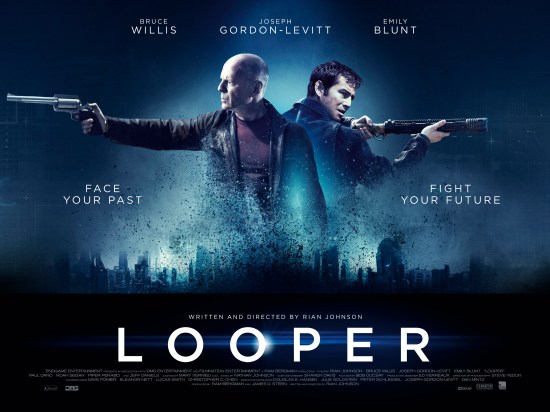
Poster for "Looper"

Written and directed by Rian Johnson

Rian Johnson’s Looper sets up a complex (and paradoxical) time travel story in which older and younger versions of the same character (played by Joseph Gordon-Levitt and Bruce Willis) are out to kill each other. Well, kinda. It’s wonderfully elaborate, and it makes just enough sense to comprise the most polished entry in this genre since the Terminator franchise. It also features a brilliantly transformative performance from Gordon-Levitt, who takes his impression of Willis to a staggering degree of authenticity.

From my review:

The film sets up a clever time travel mechanic wherein Future Joe – whose mere presence is altering his own timeline – doesn’t know the outcome of every situation involving his younger self, but he does remember it once it happens. It’s an action-oriented version of Marty McFly fading away from a photograph, and the film explains it with just the right amount of technobabble and disturbing imagery, punctuated by Willis telling his younger self (and perhaps the logic centers of the audience’s brains) to kindly shut the fuck up and stop wasting time slogging through the murky waters of time travel.

This bit of hand waving makes for an extremely haunting and effective ending, as we’re left to consider the full and lasting impact of Future Joe’s presence in this timeline. Looper dares to present us with high personal stakes for both versions of its protagonist, set them in opposition to each other, then force us to consider whether the future of this despicable person should be saved.

#5: Moonrise Kingdom
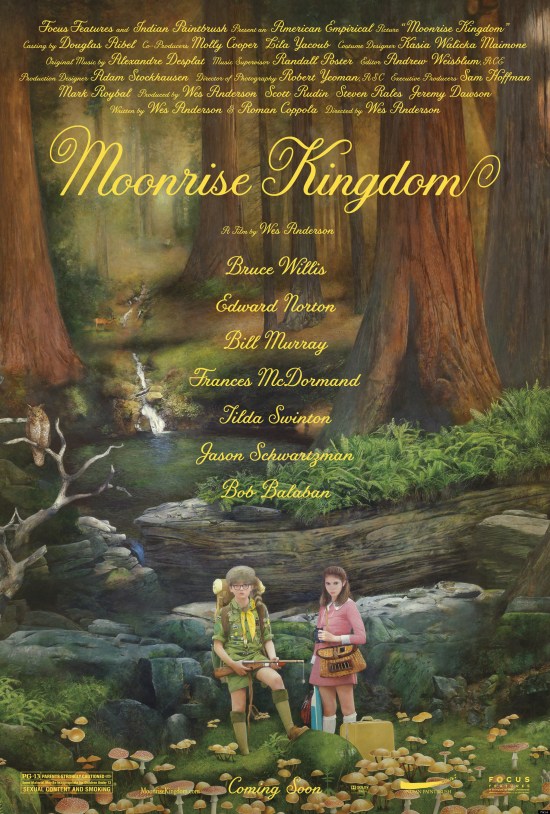
Poster for "Moonrise Kingdom"

Directed by Wes Anderson, screenplay by Wes Anderson and Roman Coppola

From my review:

Moonrise Kingdom is a triumphant return to form for Wes Anderson (along with co-writer Roman Coppola), meticulously crafting a rich and memorable world in the fictitious island of New Penzance off the Atlantic Coast. The film takes a bit of time to find its footing, owing to the bizarrely precocious dialogue of its young, first-time leads. But as their chaste and cordial romp gets into full swing, the two actors somehow find an accord. These kids are determined to skip ahead to grownup life, bidding farewell to their erstwhile families and making a life for themselves in the wilderness. They are the embodiment of “us against the world”, even if their oppressive world is like something from the mind of Roald Dahl or J.K. Rowling.

This film is a sweet and nostalgic chronicle of the wondrous worlds that we create in childhood, and even manages to delve into the dire consequences of growing up, without ever losing a bit of its charm.

#4: Seven Psychopaths
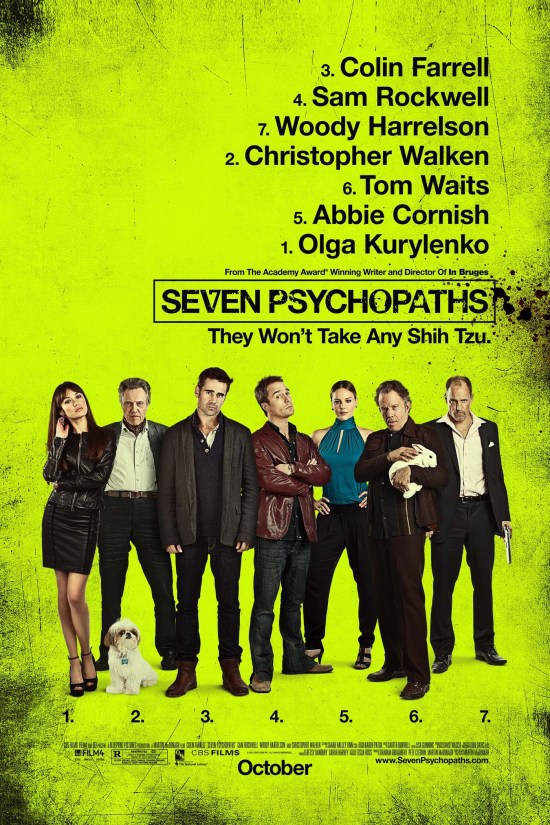
Poster for "Seven Psychopaths"
Written and directed by Martin McDonagh

I could summarize the plot here, as I often do, but here’s what you need to know. This is the film in which Martin McDonagh thoroughly beat Quentin Tarantino at his own game this year. Seven Psychopaths is pure, bloody-minded, un-PC, hilarious filmmaking, and manages to deconstruct and reflect upon the genre much better than a vapid bloodbath like Django Unchained could manage.

From my review:

Seven Psychopaths seizes on the fundamental truth of storytelling that no idea is completely original. You may think it came from a serendipitous muse that squirted it into your brain from the collective unconscious, but we are the inexorable products of our surroundings, our culture, and most importantly, our stories. Stories we’ve been told, stories we’ve forgotten, and stories we’ve subsequently retold and passed off as our own work. This is a bloody-minded Adaptation. Hugo without the whimsy. It is sickeningly self-aware, and could have felt like a lesser parody of either of those films if not for such a perfect ensemble cast.

#3: Life of Pi
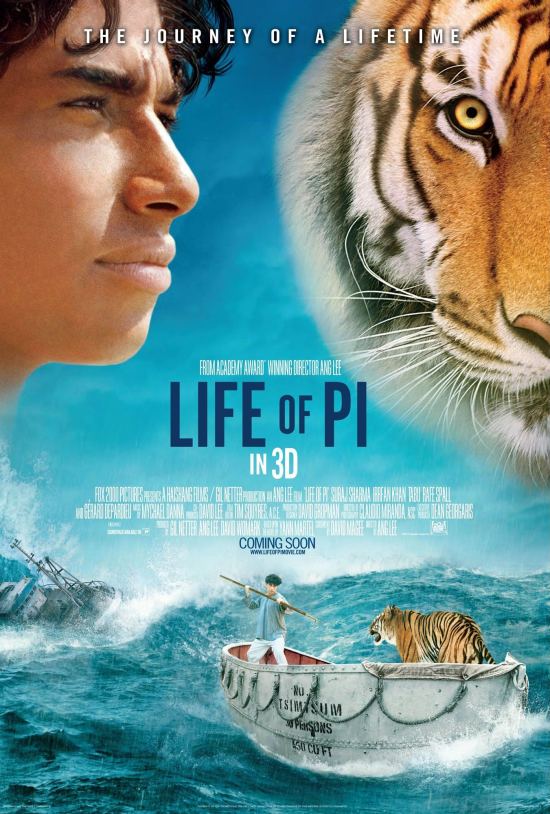
Poster for "Life of Pi"

Directed by Ang Lee, screenplay by David Magee, based on the novel by Yann Martel

Pi Patel (played for most of the film by Suraj Sharma) is a fascinating character, but even more fascinating is how much time the film spends setting up his backstory. The first 20 minutes of Life of Pi are as much of a visual feast as the rest of the film, and yet they feature little more than a series of extended dialogue scenes as we get to know Pi and his family, and more importantly, his various thoughts on religion. Pi dabbles in a variety of faiths, and this character setup pays off marvelously when the film abruptly becomes a one-man show after the first act. Once Pi is stranded on a raft in the South Pacific with a Bengal tiger (I relish the absurdity of those words!), Life of Pi becomes a taut survival thriller, but remains a fascinating character piece. Whether emoting opposite a CGI tiger or trying to defeat the elements and survive, Sharma – who has no prior credits on IMDb – is equal to the task, demonstrating the proficiency of a much more experienced actor (specifically, Tom Hanks in Cast Away). The film tackles a variety of themes with impressive clarity, and unlike my #1 film below, Life of Pi‘s treatment of religion is essential to its appeal. While I tend to think that the film’s liberal, inclusivist take on religion is unlikely to win many converts, it still makes Pi a fascinating and sympathetic character. At times, he seems naive – likely to be disappointed by the imperfect world in which he lives. And yet, by the film’s end, the grownup Pi (played brilliantly by Irrfan Khan) seems far more savvy and wise than the average religious dilettante. The effectiveness of the film’s ending lies in its ability to be interpreted in a variety of ways, with each viewer’s individual experiences and beliefs informing their perception of it. And theists and atheists alike will certainly have a take on one of the film’s most absurdly poignant questions: Can a Bengal tiger named Richard Parker possibly be your friend?

Beyond the absurdity of the film’s premise lies an earnestness and zeal that is so often lacking in the cynical cinematic world we live in these days. Life of Pi is excited to explore the world it inhabits, and every visual detail (including some of the best 3D that I’ve seen since Avatar) bears this out.

Listen to me and Daniel discuss this film on the podcast:
FilmWonk Podcast – Episode #29 – “Life of Pi” (dir. Ang Lee)

#2: The Imposter
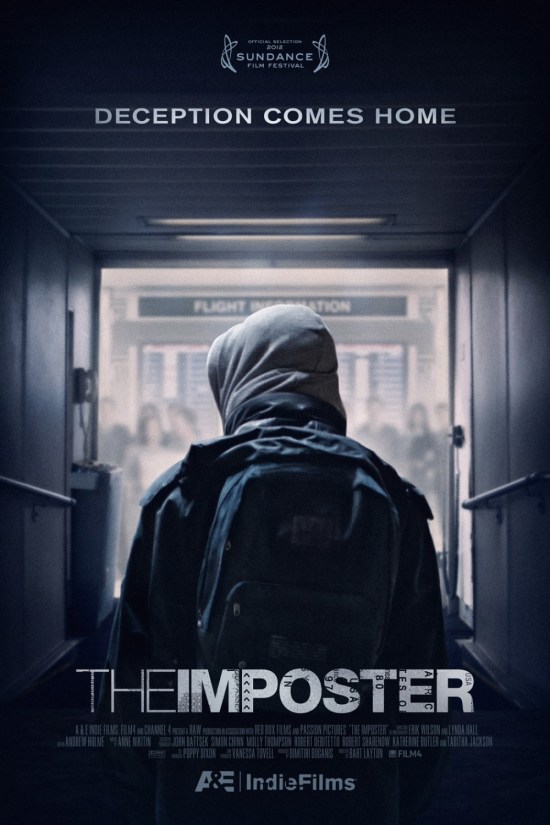
Poster for "The Imposter"

Directed by Bart Layton

I don’t dare reveal too much about The Imposter. But you will not find a more shadowy or charismatic figure this year than Frédéric Bourdin, con-artist extraordinaire, whose machinations comprise the bulk of this documentary. The film cross-cuts between interviews and impeccable reenactments (similarly to Man on Wire), and leaves you constantly wondering what’s going to happen next – or indeed, how we’re even seeing these interviews. What really happened with Bourdin and this small-town Texas family? All I can offer you is my absolute certainty that you will find it much more engaging if you don’t know the full facts in advance. Don’t Google this one. Don’t let anyone jokingly spoil it for you. Like Catfish, you’re better off seeing this magnificent documentary before its subject ends up on CNN.

Listen to me and Daniel discuss this film on the podcast:
FilmWonk Podcast – Episode #22 – “Safety Not Guaranteed” (dir. Colin Trevorrow), “The Imposter” (dir. Bart Layton) (SIFF)

#1: Cloud Atlas
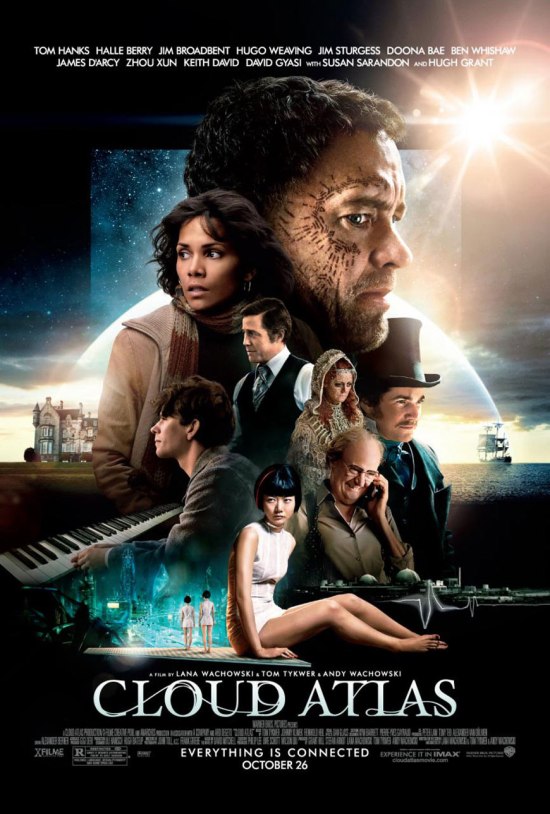
Poster for "Cloud Atlas"

Written for the screen and directed by Tom Tykwer, Andy Wachowski, and Lana Wachowski, based on the novel by David Mitchell

Cloud Atlas has been the subject of much contention (even on our very own podcast), but dammit if any other film stuck with me as thoroughly as this one did. I saw it twice back in October, and haven’t stopped thinking of it or intermittently listening to Tom Tykwer‘s magnificent score since. You can listen to our podcast for detail on just how thoroughly this film resonated with me, but the gist is this: you don’t need to buy into the film’s relatively simple religious or metaphysical message in order to appreciate the intensely interconnected narrative that is at work here. Basically, you can take the religious aspects or leave them. The most poignant and effective connections between these characters are narrative and thematic above all else. These six parallel storylines are woven precisely in an epic that spans multiple centuries. This film’s ambition is surely to be admired, but only because it delivers so thoroughly on its promise. It’s a tour de force of editing, with editor Alexander Berner brilliantly cross-cutting and completing shots even with hundreds of years and completely different visual styles separating them. A character might begin to turn in one time period, and another character (perhaps – but not always – the same actor) will complete that turn without interruption. An escape sequence in the 22nd Century darts back and forth with a slave leaping through a ship’s sails in the 19th, and at all times, the same level of intensity is maintained, whether it is high or low from moment to moment. By the end, none of the characters (except perhaps that of Tom Hanks in the 1970s) feels shortchanged in the least. In an achievement rarely matched in parallel storytelling, every last character in the film’s sprawling and incestuous cast list is given adequate screentime to establish an emotional connection with the audience.

Even the film’s most batty choices, such as the devilish (and apparently disembodied) Hugo Weaving in the distant future only serve to amp up the stakes. The film even goes so far as to craft a language – a tricky “future-speak” that has enough respect for its audience to force them to pay close attention – even in the very first shot of the film, featuring a grizzled future-Hanks that probably made some viewers wonder if their theater’s sound system was malfunctioning.

And yes, most of the race and age makeup in this film is intolerably bad. But still I marvel that such an elaborate and visually magnificent film managed to emerge from outside of the studio system. This is by far the biggest indie film I’ve ever seen. Despite a few missteps, which I counted as minimal compared to its triumphs, I spent the entire film rapt with attention, respected as an audience member, and exhilarated by the outcome. Whether you’re looking for romance, adventure, sci-fi action, or a thoughtful message, this cinematic feast has something to offer you. While I will readily admit that Cloud Atlas is not for everyone, I look forward to defending this masterpiece for years to come.

Listen to me and Daniel discuss the film on the podcast:
FilmWonk Podcast – Episode #27 – “Cloud Atlas” (dir. The Wachowskis and Tom Tykwer)

Honorable Mentions:

  • Argo (directed by Ben Affleck, screenplay by Chris Terrio, based on an article by Joshuah Bearman)
  • Compliance (written and directed by Craig Zobel)
  • Silver Linings Playbook (written for the screen and directed by David O. Russell, novel by Matthew Quick)
  • Killer Joe (directed by William Friedkin, screenplay by Tracy Letts based on his play)
  • Les Misérables (directed by Tom Hooper, screenplay/book/lyrics/novel by a lot of people)
  • Sound of My Voice (directed by Zal Batmanglij, written by Zal Batmanglij and Brit Marling)
  • The Avengers (written for the screen and directed by Joss Whedon, story by Zak Penn and Joss Whedon, comic book and characters by Stan Lee, Jack Kirby, and Joe Simon)
  • Fat Kid Rules the World (directed by Matthew Lillard, screenplay by Michael M.B. Galvin and Peter Speakman, based on the novel by K.L. Going)
  • Beasts of the Southern Wild (directed by Benh Zeitlin, screenplay by Benh Zeitlin and Lucy Alibar, based on a play by Lucy Alibar)
  • Promised Land (directed by Gus Van Sant, screenplay by Matt Damon and John Krasinski, story by Dave Eggers)
FilmWonk Podcast – Episode #30 – “Promised Land” (dir. Gus Van Sant), “Django Unchained” (dir. Quentin Tarantino)

Poster for "Django Unchained"

This week on the podcast, Glenn and Daniel take on a surprising double-header. First comes Promised Land, a reunion between Matt Damon and Gus Van Sant (Good Will Hunting), along with newcomer John Krasinski (from “The Office”), featuring salesmen trying to convince a small town to let them drill for natural gas in their backyards (a process known as fracking). Then comes Django Unchained, an escaped-slave revenge romp from Quentin Tarantino starring Jamie Foxx, Christoph Waltz, and Leonardo DiCaprio. The biggest surprise? After declaring Inglourious Basterds the FilmWonk favorite of 2009, we had a very different experience with Tarantino’s latest (1:09:22).

May contain some NSFW language.

FilmWonk rating (Promised Land): 7.5/10
FilmWonk rating (Django Unchained): 4/10

Show notes:

  • (0:00) Review: Promised Land
  • (13:06) Spoilers: Promised Land
  • (26:00) Review: Django Unchained
  • (46:01) Spoilers: Django Unchained
  • Music for this episode comes from Luis Bacalov‘s original theme song to the 1966 Sergio Corbucci film Django, which also appears in Tarantino’s film.
  • While we certainly don’t attempt to settle the fracking issue on this podcast, you can read more about it here.
  • CORRECTION (from Glenn): Upon reflection, I must retract my comment about Spike Lee. While he did attack Django Unchained for depicting slavery in the context of a spaghetti western, and has criticized Tarantino about his use of racial epithets previously (NSFW), he has not (to our knowledge) ever stated that Tarantino’s race is a factor in his ability to make a film about slavery. Read his exact position (in brief) on Twitter. We apologize for the error.
  • While Glenn adored Inglourious Basterds, Daniel was definitely not a fan. Revise history in his presence at your own peril!

Listen above, or download: Promised Land/Django Unchained (right-click, save as, or click/tap to play on a non-flash browser).

Peter Jackson’s “The Hobbit: An Unexpected Journey” – A bloated and beleaguered adventure

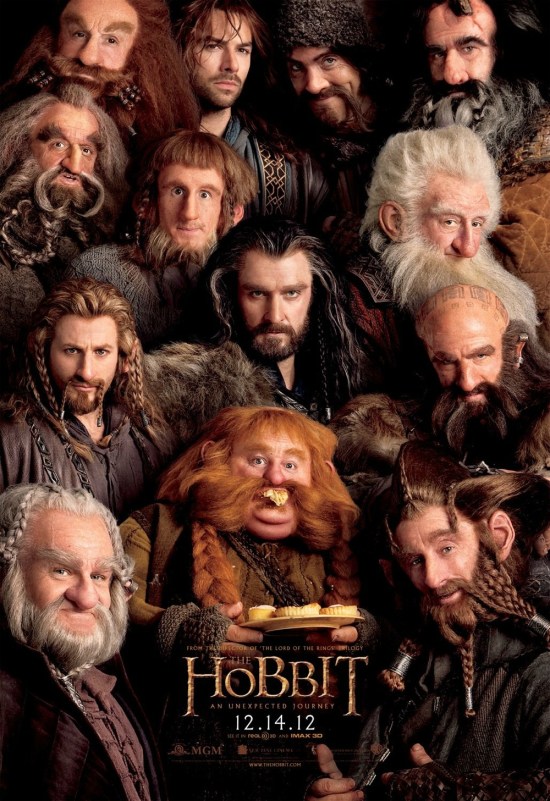
Poster for "The Hobbit: An Unexpected Journey"

Why does this film exist? As the line between art and commerce grows increasingly blurred with the unchallenged rise of franchise filmmaking, it’s certainly a fair question. Of course, on the heels of a billion-dollar franchise like Lord of the Rings, a second trip to the well was a virtual certainty. I ask this question not out of some naive sense of entitlement for artistry to emerge from the studio system, but rather as a self-contained quibble with the film itself. As I watched a nearly shot-for-shot remake of a sequence from 2001’s The Fellowship of the Ring, featuring hobbits Bilbo (Ian Holm) and Frodo Baggins (Elijah Wood) – looking 11 years older as actors, but inexplicably younger as characters – I found myself wondering what exactly was the point of this protracted exercise in nostalgia. The film is saddled in equal measure with sequences that simultaneously pad the runtime and remind the audience of the horrific fate that awaits Middle Earth in the trilogy we’ve already seen. And yet, it was only as I got to know the younger version of Bilbo (Martin Freeman) that my skepticism and apathy began to fade a bit. For it is Freeman’s light touch and sympathetic performance, as well as the film’s characterization of Bilbo, that allows it to pass as a standalone adventure story. Even as it frequently seeks to undermine itself by adhering to self-referential bits of fan-service.

To cultivate audience sympathy with a reluctant hero is a daunting task. In this very same weekend, I saw Rise of the Guardians, an unfortunate misstep from Dreamworks Animation that mingled brilliant visuals and a strong supporting cast with an utterly unsympathetic protagonist. The Hobbit was saddled with a similar burden – to allow Bilbo Baggins to initially be the most useless and reluctant member of a party of dwarven warriors who all ostensibly have personal reasons for being there. The wizard Gandalf (Ian McKellan), who seems just a bit more capable now than in his twilight years, imposes upon Bilbo’s hospitality relentlessly (in a sequence that is nearly interminable), and insists upon the hobbit’s value to the endeavor. And yet, the wizard compels him to join by appealing simultaneously to his boredom and racial guilt, rather than any specific contribution he might make. And what is their noble quest? This band is setting off to reclaim their stolen homeland, yes, but also to recover the massive bounty of gold – mined through dubious labor practices under a monarchic regime – that is cached within. They are initially no better than a band of pirates at eliciting audience sympathy, and are just as minimally characterized. And yet gradually, Bilbo comes to truly believe in their quest, and when he finally explains his motivation for sticking with this diminutive baker’s dozen, I found that my own interest level had risen similarly.

Martin Freeman in "The Hobbit: An Unexpected Journey"

Dwarf leader Thorin Oakenshield (Richard Armitage) is given a nice, meaty revenge tale to work with, and acquits himself well on-screen. But the other dwarves are given scarcely more characterization than Snow White could muster, with their attributes reduced to simple, one-word descriptions. Thinking back to how effectively Jackson’s previous trilogy managed to characterize a nine-member ensemble and myriad supporting characters, I can’t help but wonder whether nine was simply the breaking point. Apart from plump gourmand Bombur (Stephen Hunter) and ancient, genial Balin (Ken Stott), I could hardly tell you a single one of these dwarves’ unique strengths or contributions to the party. We hear that some of them are farmers, merchants, and miners, but I would task anyone to point out which is which, without the aid of Wikipedia or the IMDb. I’ll admit, my memory of the novel (which I read when I was 12) is faint, but if any such differentiation was present in the source material, it hardly makes an appearance in the film.

But speaking of appearances, I must address the film’s 48 frame-per-second 3D presentation, if only because I ended up quite unexpectedly enjoying it. Yes, every bit of rapid motion looks jerky and anomalous, but I found myself asking whether it really looked bad to my eyes, or whether it simply looked unfamiliar. After about 10 minutes of staring into what looked suspiciously like British TV, I found that my brain had adjusted completely to the illusion, and these events – and the gorgeous cinematography that captured them – were simply a window that I was gazing through. Apart from the occasional wandering audience member in the foreground, the illusion was never broken for me throughout the film, and I found that it worked hand-in-hand with the obvious advances that Jackson’s Weta Digital FX shop has made in rendering all-CGI characters in the past decade. Whether I was gazing upon an overlong cameo from Gollum (Andy Serkis) or a grotesquely blubberous Goblin King (Barry Humphries), I felt an overwhelming sense of being there, in the presence of these entirely real creations. While not all of The Hobbit‘s technical virtuosity serves to the story’s benefit (I still don’t quite understand the point of those brawling mountains), it is certainly one of its great strengths.

Bilbo asks Gandalf a simple question at the outset of the film. “Can you promise that I will come back?” The wizard answers no, and yet the audience is capable at all times of answering yes. The film is at its best when it allows Freeman to emphasize Bilbo’s personal stakes through his performance and characterization, rather than reminding us that a far greater threat – and a certain safe return – loom in the hobbit’s narrative future. Likewise, the dwarves (aided a bit by flashback) manage to eventually present their quest as a noble endeavor, worthy of story and song. And as long as they can carry it to a swift completion, they may manage to give this series of films a real raison d’être. But as it stands, the film just meanders from setpiece to meaningless setpiece with no room to breathe in-between. The quest never picks up any steam, and the party seems more like an ambling family R.V. that can’t make decent time because Dad insists on stopping off for a family photo in front of the Great Big Lawn Chair off Route 6. They may eventually reach their destination, but they might find the journey was scarcely worth it. And when Grandpa is a wizard capable of summoning air support with the slightest effort, you can’t help but wonder whether hiking across every mountaintop was really worth it.

And that, ladies and gentlemen, is what a strained metaphor looks like.

FilmWonk rating: 5 out of 10

FilmWonk Podcast – Episode #29 – “Life of Pi” (dir. Ang Lee)

Poster for "Life of Pi"

This week on the podcast, Glenn and Daniel bask in the unfilmable visual splendor and existential complexity of Life of Pi, the new film that proves that director Ang Lee is not a man to be tied down in a single genre (32:45).

May contain some NSFW language.

FilmWonk rating: 8/10

Show notes:

  • Music for this episode comes from Mychael Danna’s score for the film (track “The Second Story“).
  • We compare this film to both Avatar and Cloud Atlas – check out our word on those films as well!
  • Point of interest – Piscine Molotor is a real swimming complex…but it’s no longer open.

Listen above, or download: Life of Pi (right-click, save as, or click/tap to play on a non-flash browser).

Ben Lewin’s “The Sessions” – A frank foray into human sexuality

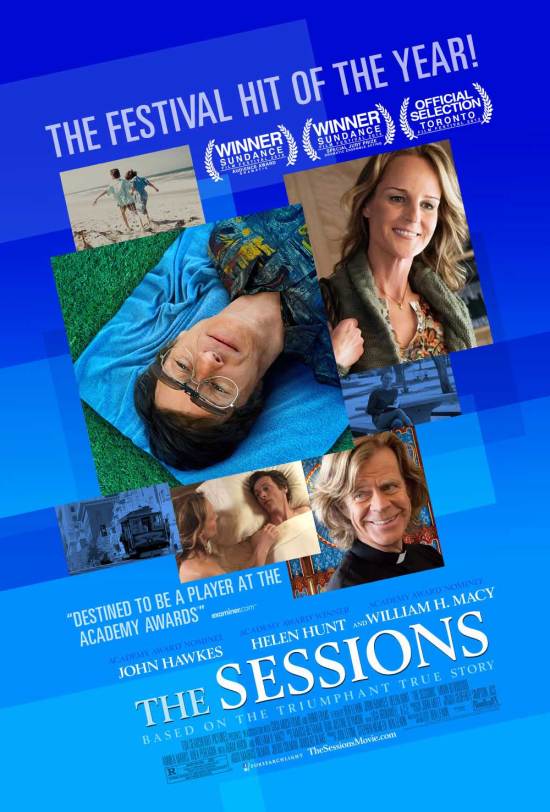
Poster for "The Sessions"

Following a bout of childhood polio, Mark O’Brien (John Hawkes) lived his life alternating between a gurney and an iron lung. Minus a brief and terrifying stint on a motorized, mirror-laden contraption, he depended on others at all times for physical movement, and yet accomplished a great deal. He earned an English degree from UC Berkeley and became a journalist, activist, and poet. And through this poetry came the rather obvious truth that even someone with such a severe disability can still live a rich emotional and intellectual life. Such is the inspiring, eloquent, and entirely likable personage that we meet at the outset of The Sessions. Which makes it ever more interesting that this film glosses over all of the above in the first five minutes and focuses instead on O’Brien’s thirtysomething quest to lose his virginity with the assistance of a sexual surrogate named Cheryl (Helen Hunt).

The real-life O’Brien (who passed away in 1999) once admonished others not to call him courageous. “Saying a disabled person is courageous,” he declared, “is like saying that a black person has natural rhythm.” This film’s treatment of O’Brien’s life and pursuit of sexuality seems to take this lesson to heart. He exhibits courage, to be sure, but also embarrassment, shame, uncertainty, and terror, often mingled with wildly varying degrees of ecstasy. The film offers an incredibly true-to-life and universal exploration of one’s initial foray into sexuality, awkwardness and all. It uses O’Brien’s disability as a lens for his particular perspective rather than a facile and patronizing metaphor for the human condition, like so many lesser films on the subject.

Hawkes’ take on the character is simply marvelous, contrasting physical vulnerability with brazen and shameless honesty. There’s definitely more telling than showing with Hawkes’ character – with a screenplay based on O’Brien’s 1990 article, the film relies heavily on voiceover. And existing in a world of MPAA ratings, it also relies on O’Brien graphically recounting his unseen sessions with Cheryl after the fact, by way of conversations with the probably-fictitious Father Brendan (William H. Macy). Despite infusing O’Brien with a convincing measure of spirituality, the film doesn’t seem particularly interested in taking an in-depth look at the complex relationship between religion and sexuality. A late scene between Cheryl and a synagogue official had far more resonance in its discussion of the nervousness of young [naked] Jewish brides-to-be than any of the scenes between O’Brien and his priest. Hawkes and Macy make believable on-screen friends, but the Father’s religious cognitive dissonance really only played out on Macy’s face and never in the script itself. As amusing as it is to hear a priest suggest that Jesus Christ will give O’Brien “a free pass” for his plan, it all feels just a bit too tongue-in-cheek and cartoonish.

At various other points in the film, we see O’Brien recounting his sessions with his understandably curious friends and caregivers (including a nice turn by Moon Bloodgood), all of whom can identify on some level with what he is doing. Each of the scenes with Father Brendan could have been replaced by an equally frank conversation with just about any of his other acquaintances (or perhaps even Macy himself in another guise) and taken very little out of the film.

Still from "The Sessions"

Despite this significant structural problem, the film has a great number of impressive scenes between Hawkes and Hunt during the titular sessions. Cheryl, a married soccer mom in her private life, is quite a believable character. She has the air of an experienced practitioner, but has clearly never worked with such a severely disabled client. She gets visibly flustered as she starts to realize the full extent of O’Brien’s needs (after accidentally bending his fingers the wrong way!). And yet, her dictated notes reveal just how consummately professional she is, discussing O’Brien’s progress and feelings in practical and psychological terms even as her human compassion remains a factor. Her marriage is also fascinating, with a husband (Adam Arkin) who isn’t threatened by his wife having sex with her clients, but gets quite chafed when one of them mails her a heartfelt poem. Hunt’s brilliantly multifaceted performance as well as her evolving interactions with Hawkes quite effectively demonstrate all the negotiations and compromises that enter the mix with sex and emotion. By the time the two are able to converse comfortably despite being two naked near-strangers in bed, it becomes clear just how adaptable human interaction can be.

In fact, the film’s examination of sexual surrogacy offers a curious counterpoint to the debate over the legal status of prostitution. Legally speaking, Cheryl is definitely in the world’s oldest profession, and yet the film goes out of the way to point out the myriad differences between herself and a conventional lady of the evening. She isn’t interested in repeat business- in fact, a self-imposed guideline prohibits it beyond a specific number of sessions. All she is interested in is helping her clients discover their preferences, limitations, and capabilities, using her own body to guide the position, performance, and sensation of the client’s body. In this sense, she fits into a role none-too-dissimilar from a physical or speech therapist. While most people can work out these personal factors with a romantic partner (whether or not they ever try to), it does seem a bit naive to assume that everyone is capable of doing so. On the other hand, we’re certainly seeing the best possible version of sexual surrogacy in this film, and the profession as a whole seems rife for potential abuse, both of its patients and practitioners.

But the fact that the film is willing to provoke these questions is certainly its greatest strength. In a world of slutshaming, date rape, sex trafficking, death penalties for homosexuality, and ecstasy laced with Viagra, it’s easy to forget that sex is not the dark, shameful, and scandalous thing that it so often seems. It is the one thing that binds us all together. We all have attitudes and morals, preferences and predilections. We all have a relationship with sex, regardless of how that relationship is expressed. And in the case of individuals like Mark O’Brien, that relationship was only limited by what his body was physically capable of expressing. The mind – and penis – were as willing as ever. This depiction, however close or divergent it might be from real life, manages to tackle a serious subject with a great deal of levity and humanity. Per his wishes, I won’t call O’Brien courageous. But The Sessions certainly tries to be.

FilmWonk rating: 7 out of 10

FilmWonk Podcast – Episode #28 – “The Twilight Saga: Breaking Dawn – Part 2” (dir. Bill Condon)

This week on the podcast, Glenn and Daniel are joined by returning guest/fiancee Sarah, who will help weigh in on the final chapter of the glorious Twilight Saga. Will love conquer all? Will a werewolf win the capricious heart of a newborn child? Will Michael Sheen once again prove that he best understands what sort of movie he’s in? Listen below and find out! (48:07)

May contain some NSFW language.

FilmWonk rating: 4/10 (but we actually rather enjoyed it!), 6/10 (Sarah)

Show notes:

  • We had an issue with the audio quality in this episode – it was recorded near a computer whose fan was a bit loud. It sounded quiet when we were recording in person, but was picked up significantly due to the placement and angle of the microphone. I’ve applied several noise filters that have eliminated most of the sound, but it will still be faintly audible throughout the episode. Sorry for the issue, and enjoy the show!
  • Music for this episode is Christina Perri’s “A Thousand Years“, from the soundtrack to Breaking Dawn: Part 1 (another version appears in the soundtrack to this film).
  • Read the review in which I first became a Kristen Stewart apologist – also the first review ever on this blog! (Adventureland)
  • For my only other word on Twilight, you can also check out my review of Chris WeitzNew Moon.

Listen above, or download: The Twilight Saga: Breaking Dawn – Part 2 (right-click, save as, or click/tap to play on a non-flash browser).

Quick double review: Julia Loktev’s “The Loneliest Planet”

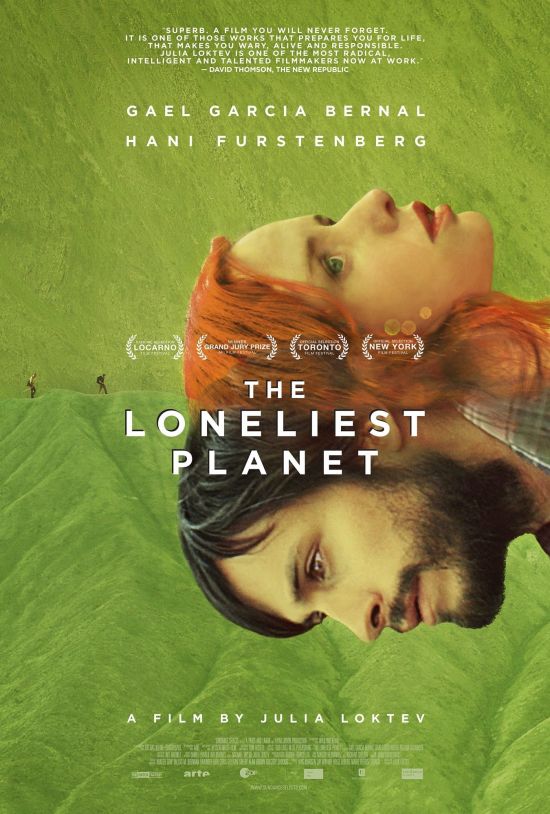
Poster for "The Loneliest Planet"

Daniel and I recently saw the new film from writer/director Julie Loktev, The Loneliest Planet. The film features an engaged couple, Alex (Gael García Bernal) and Nica (Hani Furstenberg), who are backpacking through the Caucasus Mountains, when something significant and spoilery happens, that Changes Everything™. What follows are our unfiltered thoughts on the film.

Daniel:
The Loneliest Planet is described as a thriller, which is about the biggest bunch of crap I have ever heard. This meandering, pointless tale about two uninteresting travelers is not only grating to the audience; it’s insulting. Long, directionless shots of repetitive Georgian landscapes are coupled with minimal dialogue, next to zero context, and horrendously boring characters. The big event which “changes everything ” was actually a laugh moment. Instead of exploring what this means for the couple, we get more walking (now with body language cues!) and one of the longest most irritating scenes I can remember (featuring a campfire song). Minimalism can certainly work for you, but you need some dialogue, subtitles if other languages are present (the tour guide is difficult to understand-not that it mattered), and character development to tell a story. At the end this is a 5-10 minute short that is elongated to a maddening length. Avoid.

Glenn:
My esteemed colleague detested this film only slightly more than I did. I will grant that idea of a couple’s relationship quietly breaking down thanks to a single, horrendous misstep is a fascinating one. I will even grant that depicting this encroaching gulf between them with minimal dialogue, particularly in the presence of a total stranger on vacation, also seems realistic. Anyone who has been to an uncomfortably silent dinner engagement between a pair of estranged hosts can certainly testify to this. The problem with this film is that we’re given next to no information about these characters. We don’t know who they are, how long they’ve been together, why they’re on this trip, or most importantly, what they mean to each other. They might have dated for years, or met last week in El Salvador (one of the many places Nica brags about visiting) – and knowing just a bit of this information might have provided a bit more perspective for “the big event”. While there are a few scenes that give us a modicum of backstory for these characters, they tended to be overlong in all the wrong ways. An early scene of unsubtitled dialogue with some Georgian villagers goes on for nearly a full minute past the point of telling us that A, these characters don’t speak the language, and B, they’re adventurous enough to be okay with this.

And that’s really the most frequent vice this film indulges in. It uses a rich tapestry of cinematography to show the couple (and their guide) trudging across the gorgeous mountain landscape, but each of these shots lasts longer than it needs to (even after I had finished studying every detail of the frame as I would a painting), and utilizes a score that comes off as increasingly repetitive – much like the landscape itself. In the end, the film doesn’t reveal much about relationships in general, because it reveals next to nothing about the relationship at its center. There is a skeleton of a character study here (with a decent performance from Furstenberg at the heart of it), but it is wrapped up in such a meager helping of character, dialogue, or story, that the resulting work comes off as hollow, insubstantial, and utterly boring.

FilmWonk rating: 2 out of 10

FilmWonk Podcast – Episode #27 – “Cloud Atlas” (dir. The Wachowskis and Tom Tykwer)

Poster for "Cloud Atlas"

This week on the podcast, Glenn and Daniel explore the sprawling epic from Tom Tykwer and The Wachowskis, Cloud Atlas, based on the novel by David Mitchell. And while everything might be connected, only one of us connected with this film – tune in below to find out why! (55:03)

May contain some NSFW language.

FilmWonk rating: 9/10 (Glenn), 4/10 (Daniel)

Show notes:

  • The sequences in Cloud Atlas are named and directed as follows:

    • The Pacific Journal of Adam Ewing (Directed by Andy and Lana Wachowski)

    • Letters from Zedelghem (Directed by Tom Tykwer)

    • Half-Lives: The First Luisa Rey Mystery (Directed by Tom Tykwer)

    • The Ghastly Ordeal of Timothy Cavendish (Directed by Tom Tykwer)

    • An Orison of Sonmi-451 (Directed by Andy and Lana Wachowski)

    • Sloosha’s Crossin’ an’ Ev’rythin’ After (Directed by Andy and Lana Wachowski)

  • CORRECTION: I mistakenly stated that The Wachowskis and Tom Tykwer were directors of photography on this film – they were not. The film’s cinematographers were Frank Griebe (who likely worked with Tom Tykwer, based on his filmography) and John Toll.
  • Music for this episode comes from the film’s magnificent, sprawling score, written by director Tykwer, Johnny Klimek, Reinhold Heil, with assistance from Gene Pritsker and Gabriel Mournsey on various tracks.

Listen above, or download: Cloud Atlas (right-click, save as, or click/tap to play on a non-flash browser).