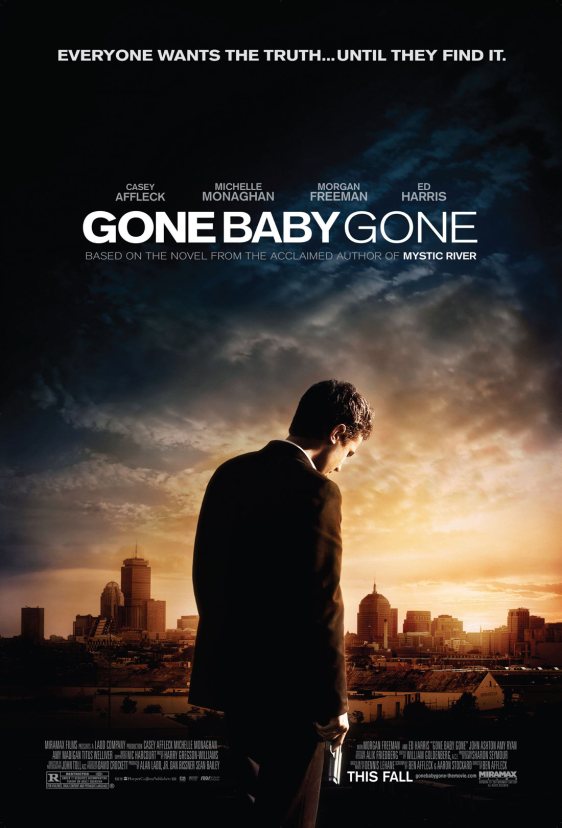
Ben Affleck’s “Gone Baby Gone” (presented by 10 Years Ago: Films in Retrospective)

Poster for

This review originally appeared as a guest post on 10 Years Ago: Films in Retrospective, a film site in which editor Marcus Gorman and various contributors revisit a movie on the week of its tenth anniversary. This retro review will be a bit more free-form, recappy, and profanity-laden than usual. Further, it contains candid discussion of kidnapping, child abuse, and sexual assault as it pertains to the film’s subject matter. 

I always believed it was the things you don’t choose that makes you who you are. Your city, your neighborhood, your family. People here take pride in these things, like it was something they’d accomplished. The bodies around their souls, the cities wrapped around those. I lived on this block my whole life; most of these people have. When your job is to find people who are missing, it helps to know where they started. I find the people who started in the cracks and then fell through. This city can be hard. When I was young, I asked my priest how you could get to heaven and still protect yourself from all the evil in the world. He told me what God said to His children. “You are sheep among wolves. Be wise as serpents, yet innocent as doves.”

Opening voice-over is hit-or-miss with me, but this is the second 10YA film and review that I’ve began with that clause, so it’s as solid a framing device as any. Or at least better than what I feel obliged to start with, in light of the past few weeks. Gone Baby Gone is a film that I remember fondly. It’s a compelling detective story with a provocative ending, it launched the surprisingly laudable directing career of Ben Affleck, and it helped to launch the lead-acting career of his younger brother Casey (which includes one of my favorite films of this year). It continued a long collaboration between the elder Affleck and Miramax, the production company co-founded by the ignominious [alleged] sexual predator Harvey Weinstein and his brother Bob (who had already departed for The Weinstein Company by 2005, and had no involvement with this film). Meanwhile, Casey Affleck was sued in 2010 for alleged abuses of his female co-workers on and off set (the suits were settled under terms of confidentiality), Weinstein has been revealed to be a rapacious creature on par with Bill Cosby or Donald Trump, and a litany of actors and producers (including Ben Affleck) have lined up left and right to excoriate Weinstein out of one side of their mouth, and grouse unconvincingly that they didn’t know a thing about it out of the other.

These 10YA retrospective reviews are meant to showcase how my thinking on a film has changed since I first saw it a decade ago, and one belief has certainly not changed: Art must stand on its own. It’s the inanimate product of a thousand decisions by a thousand people. While I still occasionally nod to my auteurist leanings by referring to a film as the possession of its director (as I’ve done in the headline above), I recognize that it neither exists in a cultural void, nor is the product of a single voice. I can’t judge art retroactively by the artists that created it, no matter what happens afterward – although it’s a fine argument for expanding the pool of artists. That said, all of this sucks. My awakening to the hardships of sexism, discrimination, harassment, and assault that women are categorically more likely to face is older than the past few weeks, but its latest hashtag iteration (#MeToo) is a grim reminder. I still believe that art must stand on its own, but it is equally true that art can have a cruel human cost that taints it in retrospect. And I’d be lying if I said that this feeling of disappointment wasn’t on my mind while re-watching this film. I’ve been writing about film for over a decade, and right now, Hollywood and its margins give me an icky feeling, just as surely as the casual outspoken racism, sexism, and homophobia of older films. Society will move on, and some of these people – who either did wrong, or knew about it – will have their misdeeds ignored, or experience tepid, PR-friendly redemption narratives, or win Oscars (some already have). And we’ll be judged by history accordingly. Now on with the film.
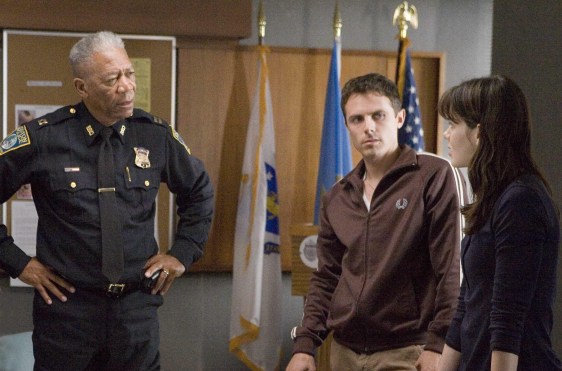
The missing little girl is Amanda McCready (Madeline O’Brien), and she’s understandably not present for much of the film. She is stolen from her bedroom in a dank apartment ill-maintained by her mother Helene (Amy Ryan), and as we begin the film, her disappearance is a known quantity, and Lionel and Bea (Titus Welliver and Amy Madigan), Helene’s brother and sister-in-law, are in the market for a pair of detectives to supplement the police investigation. There’s no love lost in this family – Helene openly mocks Bea for her infertility, and Bea refers to her as an abomination. “Helene has emotional problems,” says Lionel. “It’s not that, Lionel… She’s a cunt,” says Bea. Ryan is simply marvelous as Helene, flitting between disinterested party girl, casual Boston racist, and broken, prideful parent with incredible ease. Her television career runs the gamut from The Wire to The Office, and all of her range is on display here. Helene is…not a charmer. And her unreliability and unfitness as a mother is essential to the film’s ending.

The detective couple is Patrick Kenzie (Affleck) and Angie Gennaro (Michelle Monaghan). If I might rave about Monaghan for a moment, this is an actress who spent much of the 2000s in do-nothing love-interest roles, and is frankly a talented enough performer to deserve better. This film, along with Kiss Kiss Bang Bang, is one of the few opportunities she’s had to do something interesting on-screen. Angie and Patrick have several private chats about how to proceed over the course of the film, and her reluctance to take on the case is key. She’s a skilled detective who doesn’t want to take on a missing kid – not because she’s afraid they won’t find her, but because she’s afraid they will – either dead in a ditch, sexually abused, or both. As police captain Jack Doyle (Morgan Freeman) – whose backstory includes a murdered child of his own – puts it, “I don’t care who does it. I just want it done.” In light of the film’s ending, it’s hard to make sense of these initial reactions as each character joins the investigation, but the film does thoroughly sell the notion that anyone who willingly investigates a kidnapping is performing an important duty, but also welcoming abject horror into their life.

Patrick and Angie head for a local haunt and interrogate some barflies, who quickly reveal that Helene was not across the street for a quick sandwich when her daughter was taken, but rather pounding rails of coke and getting busy with her boyfriend Skinny Ray in the bathroom. This is where we first learn of a violent Haitian drug lord named “Cheese” Jean-Baptiste (Edi Gathegi), for whom Helene is occasionally employed as a drug mule. Then it gets nasty, words are exchanged, all of the barflies get aggressive and start threatening the pair with violence and sexual violence respectively. Patrick pulls a gun, and they leave to meet their fellow investigators assigned by Captain Doyle: Sgt. Detective Remy Bressant (Ed Harris) and Detective Nick Poole (John Ashton), who introduce a possible suspect, convicted pedophile Corwin Earle (Matthew Maher), who’s known to hang out with a couple of cokeheads. Not much to go on – and Remy and Patrick have great fun throwing barbs at each other. “You got something to contribute, be my guest,” says Remy, “Otherwise, you can go back to your Harry Potter book.” At which point Patrick gives up the goods on Cheese, and they go to interrogate Helene (after briefly pausing to hand off the pedophile info to a shady acquaintance, played by Boston MC Slaine). 
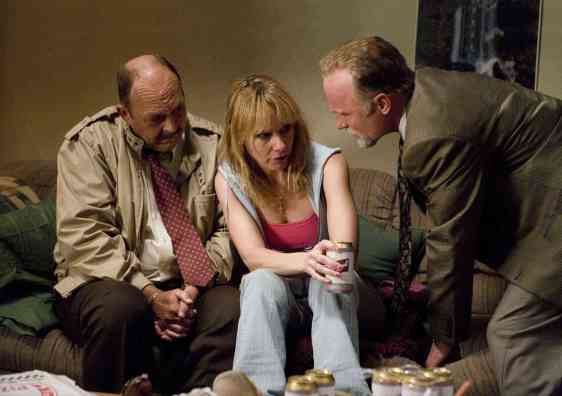
This is all an odd sort of mash-up between a police and private investigation (which seems to be author Dennis Lehane‘s specialty). Helene is confessing to multiple felonies in the course of this, and Remy vacillates between mocking her obvious half-truths (“No. It don’t ‘sound familiar’, Helene. He’s a violent, sociopathic, Haitian criminal named ‘Cheese’. Either you know him or you don’t.”), and demanding whether she even gives a fuck about her kid. This is all terribly convincing, perhaps because both Remy and Lionel already know where Amanda is at this point, and their disapproval of Helene’s lifestyle is the one sincere detail of the scene. Regardless, it plays brilliantly. Helene confesses that she and Skinny Ray conspired to steal drug money from Cheese (under cover of the police busting their contact and seizing the drugs), which makes all of the investigators in the room presume aloud that Cheese kidnapped Amanda for ransom. They all drive over to have a chat with Skinny Ray.

Helene rides with Patrick and Angie, and they bond over some casual “faggot” talk about a mutual high school acquaintance. This is how blue-collar Boston talks. Got it. Helene is still not taking this particularly seriously, but she does lay out her self-inflicted dilemma: She couldn’t just call Cheese and confess to ripping him off, and she couldn’t just tell the cops that she ran drugs. Amanda disappeared, and she had no recourse but to report the disappearance and hope for the best. She also reveals that she hid the money. From everyone, including poor Skinny Ray, whom they find tortured and shot to death. And this is when Helene finally loses her shit. As soon as she sees Ray, it suddenly becomes real for her. She knows Cheese must’ve taken Amanda. She knows it’s her fault. She remembers that when she left Amanda alone at bedtime, the last thing the child said was that she was hungry. Helene wonders whether they fed her – begs Patrick to tell her that her daughter isn’t still hungry. I was prepared here – this is the part of the film that I expected to bother me more, as one of the things I’ve done in the past decade is have a child of my own. And it’s fair to say, I did find these scenes (and the whole concept of a kidnapped child) a bit more upsetting than I did the first time. But…not as much as I expected to. Perhaps because this time through, I knew Amanda wasn’t in any real peril, and perhaps because she’s little more than an offscreen MacGuffin for most of the film. Helene’s emotions are real (and Ryan renders them brilliantly), but she’s such a selfish and unfit parent whose feelings are so fleeting that I had a hard time internalizing them. Sure, she wants her kid to be fed, warm, and safe – and these are feelings I can relate to. But she didn’t bother to feel them until a half-day past the coke wearing off, and I assume another quick bump will sort that out. The team digs up the money (which was buried in the backyard, 20 feet from where Ray was being tortured – poor bastard), and makes a gameplan. Remy and Nick acknowledge that if this is a kidnap for ransom, they have to bring in the FBI. Patrick and Angie volunteer that they can do what the cops cannot: negotiate with Cheese for a clean swap – the money for Amanda (no one seems overly concerned with avenging Skinny Ray). So off they go.
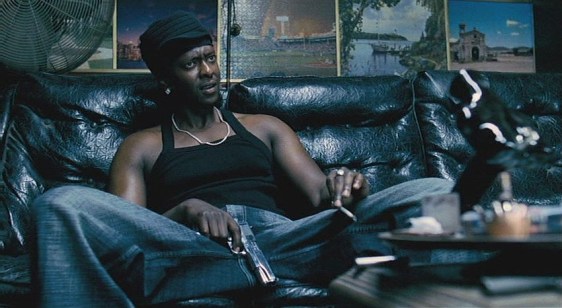
Gathegi plays a marvelous cartoon gangster in this scene. This is an actor I’ve seen pop up all over TV and the occasional film over the past decade, and he’s always a pleasure. He plays up the Cheese shtick for a bit, declaring that, “Bitches love the cheddar.” I turn to my wife and ask, “Do bitches love the cheddar?” She considers a moment, and says, “Yes.” Good. That’s why I always keep a loaf of Lucerne Sharp in the fridge – as true a decade ago as now. Meanwhile, back on the screen, Cheese is not happy. If we believe the Haitian, not only did he have no idea he’d been robbed, he doesn’t know anything about a kidnapped girl, and is offended by the suggestion that he’d ever mess with a child. He pulls a gun, demands that Patrick lift his shirt to reveal any wires, demands the same of Angie a bit more aggressively, says the title of the movie aloud, and insists that he’s not involved. Patrick stares him down and issues an extremely elaborate threat to ruin Cheese’s life and business if he’s lying. Cheese points the gun in his face and offers to get “discourteous” if they should ever return. Patrick doesn’t blink. Man this scene is great.

The cops don’t buy it, and start surveillance on Cheese, who promptly calls into the police station offering to make the trade – Amanda for the money. Captain Doyle has a transcript of this call, and is pissssssed that his officers have involved him in an illegal ransom exchange without his knowledge or consent. And he agrees to make the deal anyway – nice and quiet. At this point, Angie is the voice of reason in the room, asking whether keeping the deal quiet is better for Amanda…or better for them. Doyle promptly shuts her down with the my child was murdered card, which is…admittedly a pretty good card. He insists he cares as much about Amanda as anyone in the room, and believes that this is the best way to keep her safe. Freeman…sells this deception well. We don’t learn until later that the whole point of this farce at the quarry is to fake Amanda’s death and throw Patrick and Angie permanently off the trail, but Doyle is speaking the truth when he says he believes this is what’s best for Amanda. And so it plays out. We see a gorgeous flyover of the flooded quarry at sundown. Then cut to darkness. They take their positions on opposite sides, in accordance with Cheese’s “instructions”, and all hell breaks loose. Shots are fired in the distance, and Patrick and Angie run around to the scene to find Cheese dead on the ground. There’s a splash – someone or something went into the water. All of the dudes stand around dumbfounded, and Angie jumps the fuck off the cliff into the water to rescue the girl. It’s downplayed, but this is an awesome and quite dangerous piece of heroics. Angie is the one who didn’t want to find a dead child, and she’s the first to leap for that possibility – good on her. But it’s all for nothing. We cut to Angie in a hospital bed, where Patrick tells her that divers are searching the quarry. Nothing is found – Amanda is presumed dead, and Angie blames herself. Captain Doyle takes official responsibility, loses half his pension, and retires. Helene gets a death certificate and a donated casket, and life goes on. I honestly can’t recall how I felt watching this a decade ago. I asked my wife afterward how she felt at this point, and it all seemed familiar: Hopeless. Aimless. Disappointed. Unsure how there could still be 40 minutes left in the film.
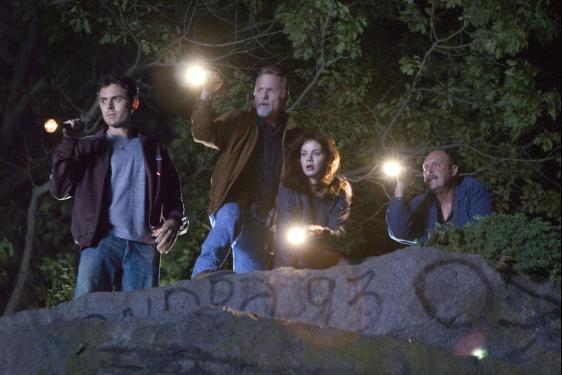
Two months pass, and a boy has gone missing. I’m going to TL;DW this sequence: Patrick’s contact tells him he’s located the pedophile from earlier, Corwin Earle. Remy and Nick show up for backup, an extremely well-staged shoot-out ensues, and Patrick enters Earle’s upstairs room to find him whining on the floor that “it was an accident”. A series of horrific montage shots: the missing boy is dead in the bathtub, Patrick vomits, Earle begs for his life, and Patrick executes him on the spot with a shot to the back of the head. I don’t want to write any more about this, because frankly, this is the part that disturbed me more as a parent. I’m with Angie on this. I know that a dead child is a necessary plot element in this film. I know that murdered children exist in real life. But I don’t want to see it. I don’t want my lizard brain to become terrified of every stranger and dark alley, when the people I know, and who have a pre-existing relationship with my kid, are statistically more likely to kidnap or harm him – and the overall risk of such an event is extremely low compared to more mundane harms. I know that. But I also know that I don’t want to ponder that scenario, because I’ll want to lock my child indoors and hold him in my arms and never let him go. As I recall my reaction from a decade ago, I was as baffled and disturbed by this sequence as my wife was this time. She said afterward that she was wondering what the point of all this would be – just an extended Law & Order: SVU episode? And then, finally, it all comes together.

In the next scene, Remy – whose partner Nick was fatally shot – drunkenly comforts Patrick about the summary execution. I haven’t said much about Ed Harris, but he also gives a fine performance in this film. In the fundamental conflict at play in this film, he represents the side of vigilantism, and he argues his case well. Many years earlier, he and his soon-to-be-dead partner received a snitch tip from Skinny Ray about a minor criminal, and they raided his house. And in that house, they found a disgusting hovel with pair of strung-out criminals, but no drugs – and an abused, neglected child in an immaculate bedroom who just wants to tell Remy all about how he’s learned his multiplication tables.
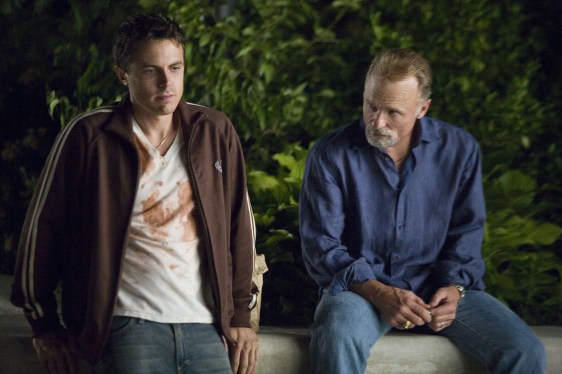
“You’re worried what’s Catholic? Kids forgive. Kids don’t judge. Kids turn the other cheek. And what do they get for it? So I went back out there, I put an ounce of heroin on the living room floor, and I sent the father on a ride. Seven-to-nine.”
“That was the right thing?”
“FUCKIN’ A. You’ve gotta take a side. You molest a child, you beat a child, you’re not on my side. If you see me coming, you’d better run, because I’m gonna lay you the fuck down! … Easy.”
“It don’t feel easy.”

This exchange, right here, is what this film is all about. It’s imperfect, grandiose, and both of these men have violated the principles that they claim to believe in. It describes the War on Drugs in myopic, moralistic, clash-of-civilizations style terms, and I’ll be honest – a decade ago, despite leaning college-libertarian at the time, I probably would’ve taken this at face value. Jack Bauer spent a decade popularizing torture in the War on Terror. These guys – along with every cop flick since the 1980s – justified vigilantism in the name of a war on a convenient other – “drug-people”, who aren’t like us regular, law-abiding citizens. It’s only the reluctance, and the moral complexity of the film’s ending, that makes this a better treatment of this issue than most. Because we know now what comes of fighting a war the way that Remy describes. More war. Mass imprisonment. An ouroboros of societal decay. And at the same time – you ask me what I’d like to do with someone who harms a child (which the film is keen to associate with the war on drugs, not entirely unfairly), my lizard brain says the same thing as Remy: Lay him the fuck out. It’s not a rule to run a functional civilization with, but it’s sure as hell satisfying. But more importantly, it causes Patrick to realize that Remy has been lying to him – he pretended not to know Skinny Ray during the investigation, but the dead man had been snitching to him for a decade.
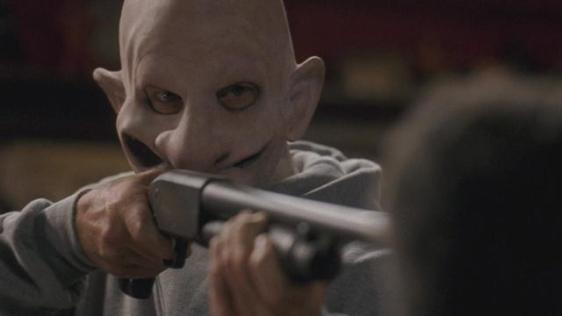
This isn’t the last great scene in the film – there’s a tense moment back at the Fillmore bar, where Patrick confronts Lionel about his involvement with Amanda’s disappearance, Remy shows up in a mask to stop Lionel from telling him the truth under cover of a fake armed robbery (and the movie makes almost no effort to hide his identity from us), leading to a shootout and chase in which Remy dies on a rooftop proclaiming that he loves children. The exposition of this conspiracy (between Lionel, Remy, Nick, and Captain Doyle – without the knowledge of Bea, who hired the two detectives) feels a bit rushed, but is probably one of the tightest and most coherent reveals this side of Gone GirlIt’s a great sequence, but as I often say of falling action, I don’t have much more to say about it. At this point, I was just waiting for the consequences. Patrick and Angie wind their way down a wooded lane and arrive at the home of the retired Captain Doyle, only to find Amanda McCready, alive and well, where she has been the whole time.

And Patrick faces another choice between law and vigilantism. Does he do his duty, telling his client that he’s found her missing niece, and send Captain Doyle and the surviving conspirators to prison? Or does he leave her there? Angie’s answer is clear – leave that child where she is, in that safe, affluent house where a nice couple makes her sandwiches. I do wish the conversation between Patrick and Angie had been a bit longer – all that we gleaned of Angie’s point of view was that she was so glad to see Amanda alive that she was willing to do anything to see her safe. She warns Patrick that she’ll hate him, he does the stoic detective thing and calls the cops, Angie leaves him, and that’s that. All the conspirators go to prison, and we cut to Patrick visiting Amanda and Helene on any given Friday, with Helene about to go out for the evening. And Patrick realizes that Helene is still a terrible mother, and by making this choice, he has essentially volunteered to be Amanda’s babysitter until adulthood. This is a fine ending – it seems to be a marginally less disturbing version of a village raising a child than the conspiracy of Amanda’s relatives and the police to steal her away. Kids forgive. Kids turn the other cheek. But they still need meals and blankets and hugs and rides to school, and once a grownup – any grownup – has decided to take on that responsibility, they have a duty to keep it up for as long as the kid needs them.
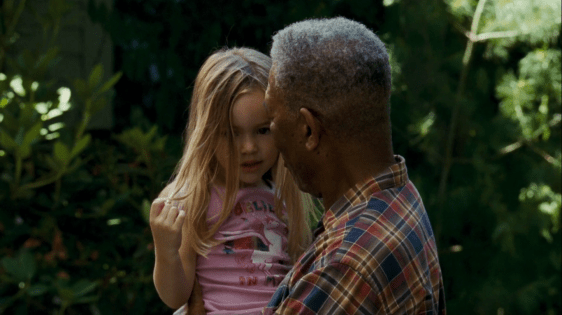
But let’s talk some more about that moral choice. When Patrick arrives at Doyle’s house, he has to decide whether to continue – and become an accomplice to – Amanda’s abduction. While this dilemma prodded my incredulity a bit, I was willing to accept it on its own narrative terms, because it’s fundamentally the same question about vigilantism that he and Remy had discussed regarding the shooting of a criminal or planting of evidence. It’s about going outside the law to pursue your own definition of justice. The state holds a monopoly on deprivation of civil liberties for a reason (whether we’re talking about executions or forced forfeiture of children), and while our system of social services is an imperfect, underfunded mess that’s rife with abuses and due process violations of its own, it’s hard to imagine a situation where carrying out a life-long extrajudicial disappearance ends well. Not even a state could do this – I mean, it’s literally a crime against humanity for a reason. Amanda may well need to be taken away from her mother – at least one of the anecdotes was of Helene leaving her in a hot car and nearly killing her. But denying a mother closure on her child’s fate is a cruel and unusual punishment. That’s not my opinion – it’s legal fact, even as applied to a mother as execrable as Helene. For a film that strove for some ambitious moral complexity, I’m inclined to think that making Amanda a 5-year-old was a misstep. This is a girl that’s old enough to remember her former life. When we see her at Doyle’s, she seems to be treated well – but when you really think about what she’d have to look forward to in this scenario, she would be a phantom, hiding her true name and face in public, and only living half a life.

This ending forcibly called to mind the story of Elizabeth Smart, who was abducted as a teenager in 2002, forcibly “married” to a religious extremist (who horrifically abused and raped her over the course of nine months), until she was found on a public street with him and an accomplice. I don’t imagine that Doyle and his wife would dream of hurting Amanda – but I have to believe that the mere act of plucking her away from reality is still an act of abuse. Morgan Freeman was 70 years old when this film was made. Did Doyle expect to hide this girl from the world until his mid-80s, when she presumably found her true identity on Google or while applying for student loans? How would she even go to school? Have friends? What would she say to any of them about her upbringing? How long could this charade really last without some serious brainwashing of Amanda to keep it all nice and quiet? A “happy” ending for this story seemed implausible to me even in 2007, which is perhaps why the film doesn’t dwell on it – in 2017, when mass surveillance is a known quantity, and even children’s toys are spying on them, it’s hard to imagine a film even attempting that version. The audience simply wouldn’t accept it. Unless Doyle means the child harm, he simply couldn’t keep her a secret forever. If I were in Patrick’s place, I think I’d have a hard time living with either outcome, especially if Helene continues her reliable track record of being a terrible mother – but at least in this version, he can stop by every once in a while, call Amanda by her real name, and let her know that someone cares about her. And perhaps that’s enough.

FilmWonk rating: 8 out of 10
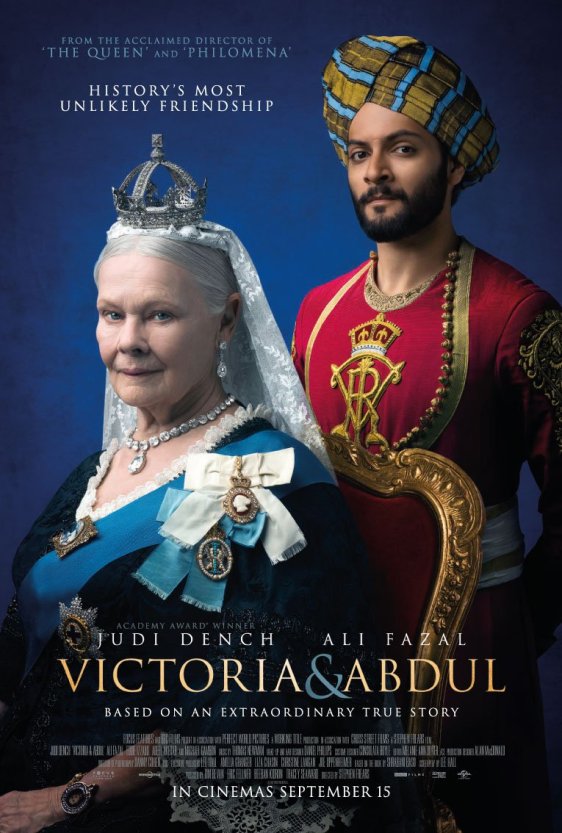
FilmWonk Podcast – Episode #119 – “Victoria & Abdul” (dir. Stephen Frears), “Blood Leaves Its Trail” (dir. Iffat Fatima) (#Tasveer)

Poster for "Victoria & Abdul"

In this week’s podcast, Glenn and Daniel check out a documentary from the upcoming 2017 Tasveer South Asian Film Festival, followed by an untold historical tale of royal friendship (43:18).

May contain NSFW language.


Blood Leaves Its Trail will be playing at the 2017 Tasveer South Asian Film Festival on Monday, Oct. 9th at UW Bothell. Tickets are available here.

FilmWonk rating (Blood Leaves Its Trail): 6 out of 10
FilmWonk rating (Victoria & Abdul): 7/10 (Glenn), 8/10 (Daniel)

Show notes:

  • [00:29] Review: Blood Leaves Its Trail
  • [15:21] Review: Victoria & Abdul
  • Music for this episode is the tracks, “Munshi Mania” and “Victoria & Abdul” from the original score to Victoria & Abdul, by Thomas Newman.
  • We did review The King’s Speech on the podcast, all the way back in Episode 8, in 2011 – but Daniel actually was around for that one. The lone episode without a Daniel is Episode 10, wherein Glenn and guest Nick reviewed Thor. Different sorts of thrones and powers in that film.
  • The story of how journalist and author Shrabani Basu uncovered the story of the Munshi is a pretty fascinating one – check it out at The Telegraph here.
  • Daniel notes correctly that the “royal assent” is still the [largely ceremonial] last step of a bill before it becomes law, after it passes both houses of Parliament. Assent has not been withheld since 1707 by Queen Anne, which means that in the entirety of Queen Victoria’s reign, she did not veto a single bill.
  • CORRECTION: The Suez Canal opened in 1869, so it actually was operational by the time of this film’s events, and made for a shorter journey between India and England that did not require a trip around the Cape of Good Hope.

Listen above, or download: Victoria & Abdul, Blood Leaves Its Trail (right-click, save as, or click/tap to play on a non-flash browser)

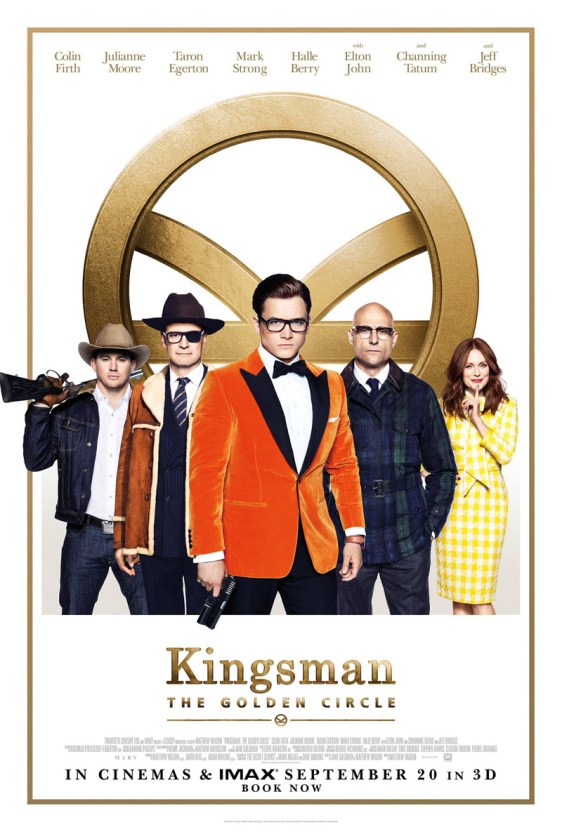
FilmWonk Podcast – Episode #118 – “Kingsman: The Golden Circle” (dir. Matthew Vaughn)

Poster for "Kingsman: The Golden Circle"

In this week’s podcast, Glenn and Daniel dive into a second chapter in a silly spy saga that doubles down on every one of the first film’s impulses, for weal or woe: the elegant masculine paradigm, the awesomely kinetic and well-shot fights, the ridiculous Dr. Evil-caliber villainy, and the shoddy, one-dimensional female characters saddled with menial tasks in place of depth. Come see where we landed on the only spy film this year that is, and we quote, “Longer than f*cking Dunkirk“. (38:12).

May contain NSFW language.

FilmWonk rating: 6 out of 10

Show notes:

  • Music for this episode is the tracks “My Generation (“Battle Royale” Remix)” by The Who, as remixed by Apashe, from the film’s second trailer. We might’ve used “My Way“, but that vile fuckhead Joe Arpaio has forever sullied it for us.

Listen above, or download: Kingsman: The Golden Circle (right-click, save as, or click/tap to play on a non-flash browser)

“mother!” (dir. Darren Aronofsky) – Hell is other people and also you

After watching Darren Aronofsky‘s complete filmography, if there was any remaining doubt in my mind that he takes a perverse satisfaction in mentally torturing his characters, it’s gone now. Characters aren’t real. They can’t feel anything except what an author feels on their behalf, so to watch their ordeal rendered through the visual, auditory, and acting talents of others is ideally an insider’s look at what the author was experiencing when they wrote it. And if all of these disparate players do that original vision justice, perhaps the audience will understand what it’s like to be that grand auteur – and in so doing, better understand themselves. All of that presumes that art is both forthcoming and self-aware, and this is not always the case. Sometimes, art says as much and more about the time and society in which it is created than about the author’s own proclivities (this is how we come to enjoy light propaganda like American Sniper). Or perhaps the author doesn’t know themselves as well as they think – and their creation is a lens through which to glimpse the truth of that creator, whether or not he understands it himself. I’ll never really know, but I’ve seen enough of Aronofsky’s work to believe I have the measure of the man. Darren Aronofsky is the destroyer of worlds. But with mother!, he is venturing firmly into Lars von Trier territory, destroying a world that I’m not certain was worth creating in the first place.

His latest victim is Grace, a woman played by his real-life romantic partner, Jennifer Lawrence, who is married to a much older, critically acclaimed poet, Eli (Javier Bardem). The couple lives in Eli’s childhood home, which was previously gutted by fire, and which Grace has been expertly renovating ever since the couple got together, while Eli struggles to overcome his writer’s block and write more poetry. His previous work is acclaimed enough to have granted them a comfortable life, but he has long been unable to produce anything new – whether at the writing desk or in the bedroom. Their house is in the middle of an oddly pixelated field and woods, seemingly without a road nearby, and we never see Grace venture past the front porch. The couple’s lackadaisical home life is upended by the arrival of a mysterious unnamed couple, played by Ed Harris and Michelle Pfeiffer. Harris initially arrives with a story that he had mistaken the house for a B&B, and Eli generously offers to let him stay the night. Even as this initial pretext falls away, this will be the first of many times that Eli displays inordinate generosity toward strangers at his wife’s expense (and without even discussing the matter), and it’s honestly one of the most difficult aspects of this film to explain to people who haven’t seen it. Couples routinely disagree, and sometimes make commitments that the other must live up to even if they’d prefer not to. It can be a source of tension, and hopefully the couple works it out. That’s the mundane stuff of family dramedy. This wasn’t that. This was a shared, grandiose delusion of every character in this film besides Grace that everything about this situation is just fine, even as it quickly and destructively escalates. More people arrive, more damage is done, more items are shared, and Grace is persistently the only one reacting like a human being, pushing back, asking questions, and acting genuinely baffled that people are treating her so poorly. She’s not Marge Simpson, dealing with a comedic buffoon. She’s Skyler White, dealing with a sociopath. Her reaction is correct, and everyone else’s is wrong.

After watching how thoroughly Lawrence’s character was abused in Passengers, a film which seemed completely unaware of the reality it was creating and which strove to be a conventional romance, I was nervous going into this one. But Aronofsky’s hand is most deft here when it comes to his treatment of Grace as a character, and Lawrence’s performance is about the only thing that makes the film bearable. Almost without exception, every frame centers on Grace, and the camera floats within just a few feet of Lawrence. This is a mix of over-the-shoulder and in-her-face, creating a cinematic POV that invites the audience to become complicit in its invasiveness. As the viewer, you’re standing too close, facing the wrong way in a stuffy elevator, and the movie is happy to let you linger there. And Lawrence nails this character, even as I struggled with how much to sympathize with Grace as the film goes on. She seizes whatever petty control that she can as her husband laughs and smiles and hikes and drinks and chats with the new arrivals. She grits her teeth and tries her best to ignore Pfeiffer’s character getting day-drunk, interrupting her work, and asking invasive, leading questions about her sex life and plans to have children. She stares back at each fresh outrage, tilts her head, and politely pushes back – even as Lawrence’s beleaguered eyes and increasingly steely voice demand to know why any of this is happening. And the script hands Grace a few fleeting moments of agency in the first act. Harris’ character continuously tries to smoke in the house despite Grace’s admonitions, and she seizes an opportunity as Harris vomits in the bathroom from too much whiskey, shoving his Zippo lighter off the back of a dresser where it won’t be found. After she resolves to throw the couple out once and for all (and Eli is uncharacteristically occupied for a moment), she hurtles their wet laundry – abandoned in the washer for her to finish – onto the floor. These moments sound petty as I summarize them, and this is one of the other things that is hard to explain about this film. Every scene seeks to make Grace bleed from a thousand cuts while whistling a happy tune and saying everything is alright. These minuscule victories are some of the only cathartic moments that the film has to offer, offering meager hints of the inevitable scream that must issue from her mouth before the film is over, if we’re ever to feel anything besides pity for this wretched creature: None of this is okay, and all of these assholes need to leave, now.

Pfeiffer is positively wicked in these scenes, nailing the perfect balance of passive aggression and personal invasion. She’s here to stay at your house for precisely as long as she’d like, and she’d really appreciate it if you’d stop being such an entitled bitch about it, thank you very much. I’m borrowing a bit of the film’s language here, but honestly, it was hard not to think of Lawrence’s own experiences with the public’s invasiveness as I watched what happened to her character (particularly in the third act). And this is where mother! left me torn as to whether it was all worth it, and what it was all for. The film fully embraces its dreamlike storytelling – time lurches forward imprecisely, scenes mash into each other, and the world becomes a living nightmare as Eli gleefully deals with the consequences of his renewed fame and public appreciation. Kristen Wiig briefly appears as Eli’s publisher, in possibly the most disturbing work she has ever done. And as the whole repulsive spectacle unfolded, I lost the thread of precisely what this film was trying to say about the cost of creativity.

It seemed to be dancing on the cusp of three ideas:

  1. Creators must constantly share of themselves to the adoring masses, and in so doing, lose themselves.
  2. The public should probably stop acting like a pack of entitled cannibals and make something of their own.
  3. Creators have a destructive effect on their loved ones, with the fictional worlds that they create inevitably coming from the sublimation, neglect, and destruction of their real lives.

These ideas are all over the place, and for much of the film’s third-act Saturnalia, I found myself wondering whether this was an exercise in self-awareness or egotism on Aronofsky’s part. I haven’t said much about Bardem’s performance here, and that’s for two reasons. First is that Bardem succeeded in making Eli both delightful and repulsive to me – a figure who can conjure up the finest words to promote, justify, and reinforce the most despicable acts that the world has to offer. Second is that I don’t really know how much of an avatar Eli is meant to be for Aronofsky himself. Much of the film’s conflict is over whether or not this couple really cares about each other, as Eli’s persistent neglect of Grace in favor of a gang of strangers is repeatedly justified on the grounds that the experience might help him create more art. Talking with these people, Eli argues, is better than talking to her, because at least they’ve got something novel to say. This is Grace’s lot in this film – not merely the put-upon wife who grapples with her husband’s ingratitude and straying affections, but also a flagging muse, cast against her will as a man’s source of creative light, useless and thrown away as soon as that light has faded. And it doesn’t fade with a wimper. I found myself simultaneously reveling in the film’s excesses and wanting to warn others not to expose themselves to it for the sake of their sanity. This isn’t the best rumination on creativity I’ve seen – not even the best this year. And even while Aronofsky is at the top of his technical craft, I still can’t answer definitively whether his latest exercise in creating, enslaving, and agonizing an innocent woman was really worth it.

FilmWonk rating: 5 out of 10

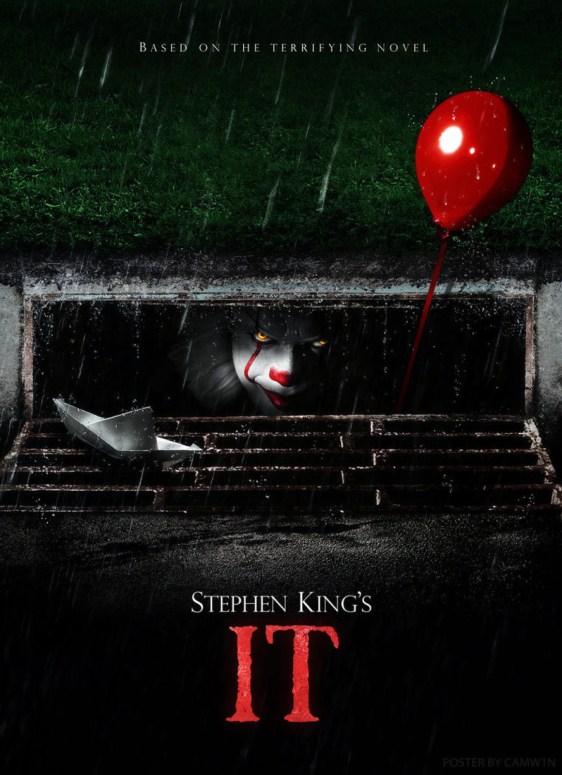
FilmWonk Podcast – Episode #117 – “It” (dir. Andrés Muschietti)

Poster for "It" (2017 film)

In this week’s podcast, Glenn and Daniel conquer their well-earned fears of a half-hearted Stephen King adaptation and venture down to the sewer with all their friends, and it’s quite fun. Because everything floats down there. EVERYTHING (36:52).

May contain NSFW language.

FilmWonk rating: 8 out of 10
Show notes:

  • Music for this episode is the tracks “Six Different Ways” by The Cure, and “Pennywise’s Tower” composed by Benjamin Wallfisch, from the film’s soundtrack and score.
  • The sci-fi short story we referenced, “The Jaunt”, is quite good. While you can find the full text online with minimal googling, I would highly recommend picking up a copy of Skeleton Crew, as the entire short story collection is pretty enjoyable (and also contains the short story version of The Mist). On the podcast, I did confuse it with Different Seasons (which contains the source novellas for The Shawshank Redemption, Stand By Me, and Apt Pupil, which is also worth a read.
  • Curiously, a 2015 io9 article reported that Muschetti would be directing a feature film version of The Jaunt, but it appears to be in development hell. It does seem like the sort of movie that would take…longer than you think.

Listen above, or download: It (right-click, save as, or click/tap to play on a non-flash browser)

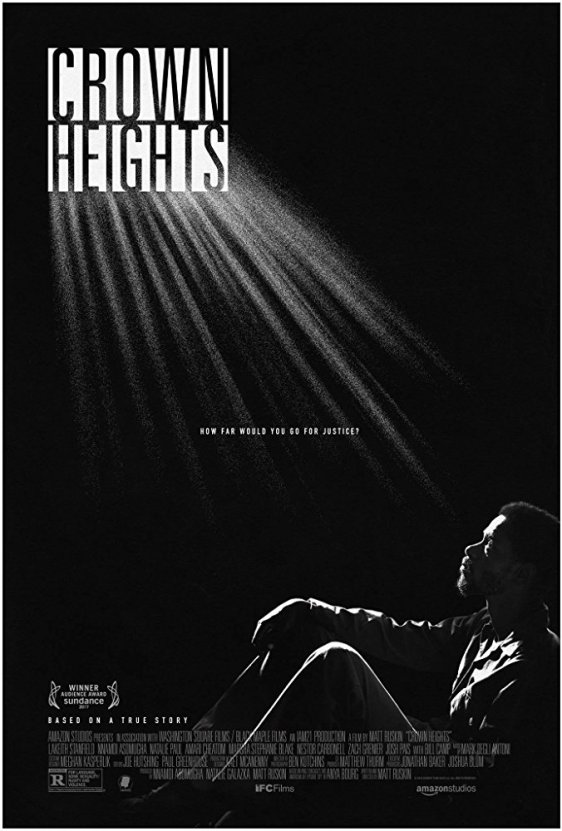
FilmWonk Podcast – Episode #116 – “Crown Heights” (dir. Matt Ruskin)

Poster for "Crown Heights"

In this week’s podcast, Glenn and Daniel take in a tale of justice for a man wrongly convicted that greatly exceeded their expectations – both in storytelling, and in the acting prowess of former NFL star Nnamdi Asomugha – a set of words that we never expected to say aloud (39:12).

May contain NSFW language.

FilmWonk rating: 7 out of 10

Show notes:

  • Music for this episode is the tracks “The Message” by Grandmaster Flash and the Furious Five, and “River” by Leon Bridges, from the film’s soundtrack.
  • You can check out the episode of This American Life that the film was based on here.
  • You just got Nnamdi’d.
  • We correctly summarized the current legal state of Adnan Syed‘s case – as of this writing, he is still in prison, awaiting a new trial that was ordered back in July 2016, and was denied bail back in December.
  • CORRECTION: We referred to Colin being sentenced for murder despite not being ID’d as the shooter as a form of legal fiction – this was intended to be a reference to the felony murder rule (which is either a form of legal fiction or strict liability depending on your perspective), but it’s not really applicable to this case, as Warner was not convicted under this rule – he was wrongly convicted on a standard second-degree murder charge.
  • The New York State Board of Parole is indeed composed of political appointees – up to 19 members appointed by the Governor and approved by the State Senate for a six-year term. Each parole hearing is overseen by a panel of 2-3 members.

Listen above, or download: Crown Heights (right-click, save as, or click/tap to play on a non-flash browser)

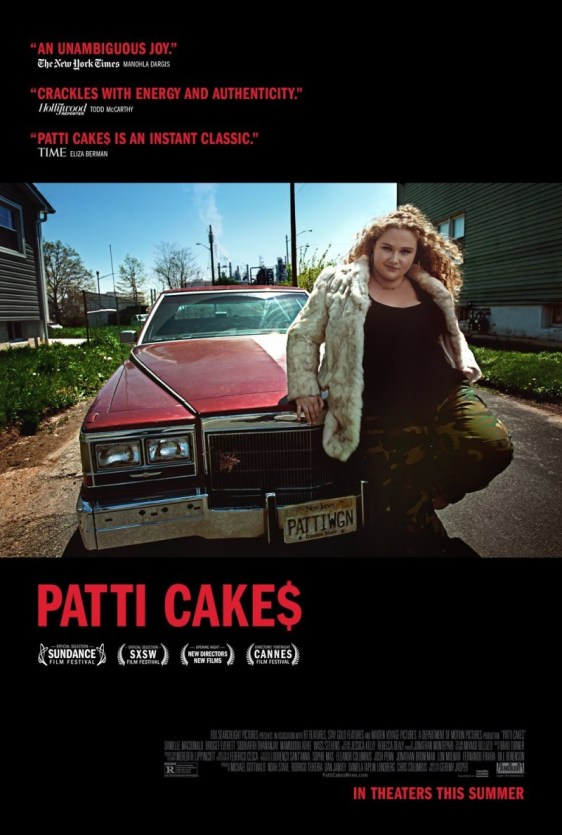
FilmWonk Podcast – Episode #115 – “Patti Cake$” (dir. Geremy Jasper), “The Trip to Spain” (dir. Michael Winterbottom)

Poster for "Patti Cake$"

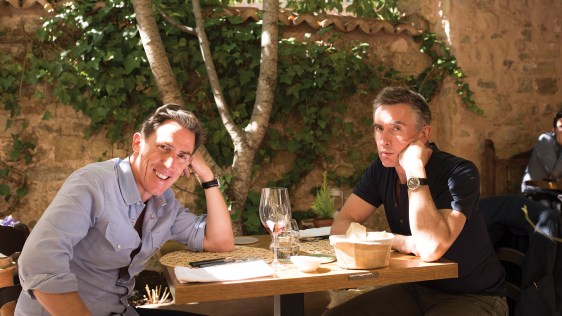
In this week’s podcast, Glenn and Daniel refer to The Trip to Spain as “Entourage-lite”, in what is inexplicably a positive review, as Steve Coogan and Rob Brydon take in their third pastoral outing of visual, culinary, and improvised comedic indulgence. And then they check out Patti Cake$, the most delightful and original coming-of-age tale we’ve seen since Dope, featuring an unlikely hero (Danielle Macdonald) and her gang of misfits trying to make it in the New Jersey rap scene. This was a fun week. Join us for it! (29:51)

May contain NSFW language.

Still from "The Trip to Spain"

FilmWonk rating (The Trip to Spain): 6 out of 10
FilmWonk rating (Patti Cake$): 8 out of 10

Show notes:

  • [00:36] Review: The Trip to Spain
  • [10:53] Review: Patti Cake$
  • Music for this episode is the track, “PBNJ” and “Tuff Love“, as performed by the cast of Patti Cake$.
  • Seriously, I know none of you saw Philomena. And it is quite good. Check it out before it leaves Netflix this month.

Listen above, or download: Patti Cake$, The Trip to Spain (right-click, save as, or click/tap to play on a non-flash browser)

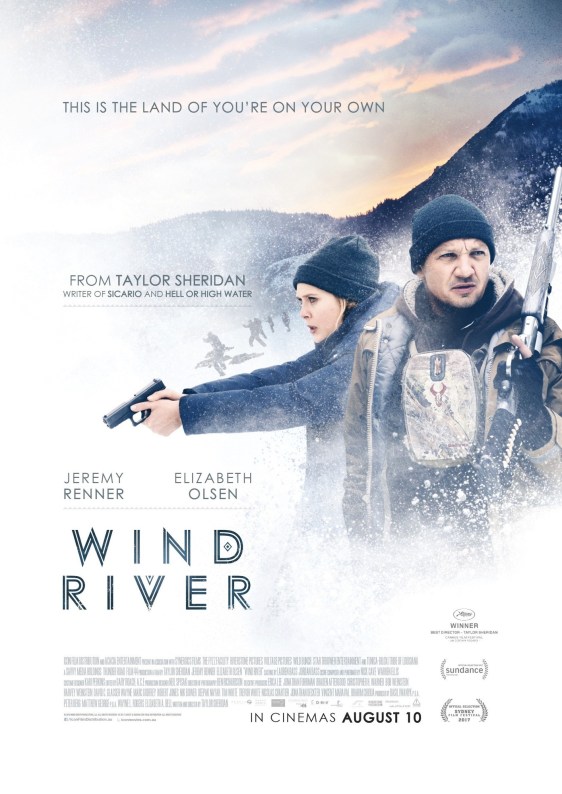
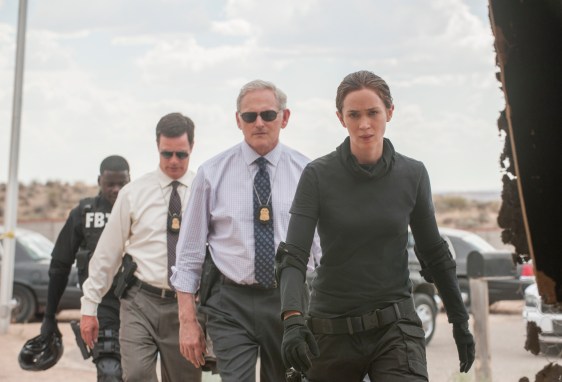
FilmWonk Podcast – Episode #114 – “Wind River” (dir. Taylor Sheridan), “Sicario” (dir. Denis Villeneuve)

In this week’s podcast, Glenn and Daniel a contentious ride into Taylor Sheridan‘s directorial debut (Update: nope!), Wind River, as well as a trip down memory lane in Sheridan’s prior filmography, including Denis Villeneuve outstanding 2015 drug war drama,
Sicario (43:01).

May contain NSFW language.

FilmWonk rating (Sicario): 8 out of 10
FilmWonk rating (Wind River): 6.5/10 (Glenn), 3/10 (Daniel)

Show notes:

  • [00:33] Review: Sicario
  • [08:23] Review: Wind River
  • [24:00] Spoilers: Wind River
  • Music for this episode is the track, “Convoy“, from the Sicario score by Jóhann Jóhannsson, and the track, “Bad News“, from the Wind River score by Nick Cave and Warren Ellis.
  • CORRECTION: In our discussion of Sicario, we referred to a report from a few months ago by the International Institute for Strategic Studies that named the Mexican drug war the second-deadliest conflict in the world in 2016. The Institute has since cited a methodological flaw in this calculation, and issued a retraction, although they still expect the conflict to be in the top ten. The Mexican government released its own response as well.
  • As out-of-touch, big city film critics, we were admittedly rather ignorant if an agency of US Fish and Wildlife Services existed to cull predator species. The answer is emphatically yes – it’s called…Wildlife Services. Its deeds are outlined in this NatGeo article:

    “Since 2000, the agency has killed at least two million mammals and 15 million birds. Although it’s main focus is predator control in the West, Wildlife Services also does things like bird control nationwide at airports to prevent crashes and feral pig control in the South.”

  • We referred to a Kroll Show sketch called “Dead Girl Town“. Click and enjoy.
  • Graham Greene wasn’t on Dr. Quinn, Medicine Woman, but he was in Dances With Wolves, in which he was nominated for an Academy Award.

Listen above, or download: Wind River, Sicario (right-click, save as, or click/tap to play on a non-flash browser)

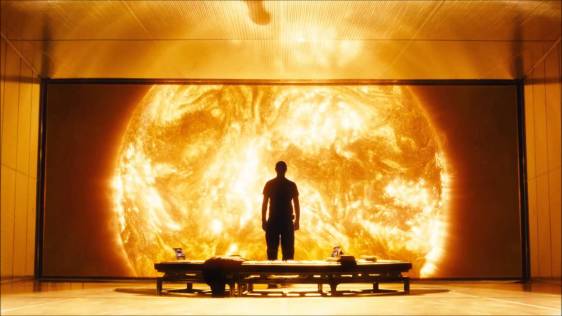
Danny Boyle’s “Sunshine” (presented by 10 Years Ago: Films in Retrospective)

This review originally appeared as a guest post on 10 Years Ago: Films in Retrospective, a film site in which editor Marcus Gorman and various contributors revisit a movie on the week of its tenth anniversary. This retro review will be a bit more free-form, recappy, and profanity-laden than usual.

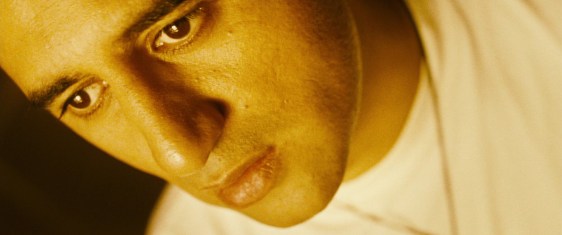
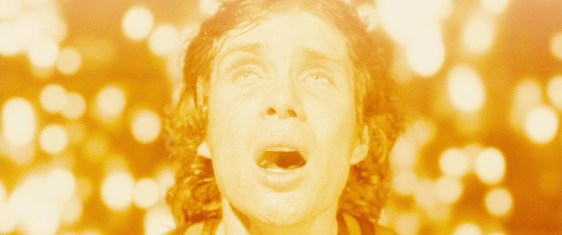
Our sun is dying. Mankind faces extinction. Seven years ago, the Icarus project sent a mission to restart the sun, but that mission was lost before it reached the star. Sixteen months ago, I, Robert Capa (Cillian Murphy), and a crew of seven, left Earth frozen in a solar winter.
Our payload: a stellar bomb with a mass equivalent to Manhattan Island.
Our purpose: to create a star within a star.
Eight astronauts strapped to the back of a bomb. My bomb.
Welcome to the Icarus II.

Opening voice-over is hit-or-miss with me, as are on-the-nose ship metaphors. Naming your solar rescue mission Icarus seems problematic, especially for a second attempt. I suppose we could’ve revived Apollo (a literal sun-god) for this, but the first Apollo mission…erm…died in a fire, so I guess there’d be trouble either way. In any case, it seems branding wasn’t a major priority – we don’t actually see much of Earth in this “solar winter”, but the planet seems to have unified, at least to the point of mining and transporting all of Earth’s fissile material (including, presumably, all of the nuclear weapons), so assuming Dr. Capa (Cillian Murphy)’s second attempt to save the dying sun manages to succeed, Earth might be a bit more peaceful than before. Or at least return to conventional warfare.

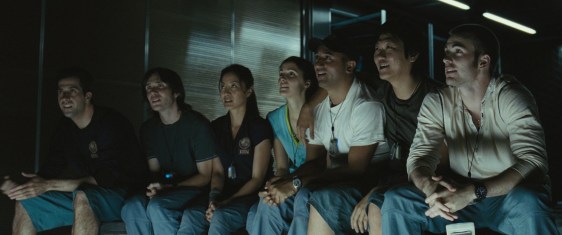
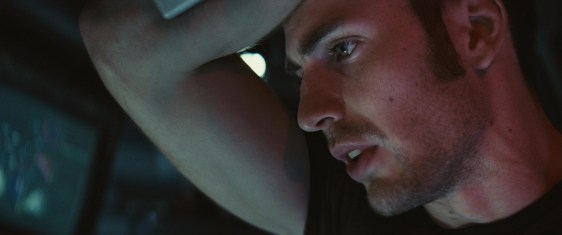
I first saw Sunshine in theaters on a friend’s recommendation. She assured me it was “two thirds character-based indie sci-fi, one third aggressive slasher flick”. This is largely accurate on its face – in fact, the movie has a handful of plot beats in common with Event Horizon, the Doctor Who episode “42”, and even Aliens if I’m playing a bit loose with it. “The first group went missing so now you have to complete their mission and grapple with the [unknown] problem they failed to solve” is a solid adventure trope, and imbuing it with world-ending stakes and psychological torment definitely sets this film up for success – that, plus its powerhouse cast. Besides Murphy, the crew includes Rose Byrne, Hiroyuki Sanada, Michelle Yeoh, Chris Evans, Cliff Curtis, and Benedict Wong. Most of them have gone on to bigger and better genre projects, and they really do have a chance to shine here. And of course there’s Mark Strong, who generally gets a more comprehensible voice than this, but has made a career of playing equally creepy villains. The key takeaway here is that I went into this film knowing that it would eventually turn horrific, and that tension may have compromised my objectivity when it came to evaluating the movie’s world-ending stakes. Nonetheless, Capa’s opening voice-over spells it out concisely enough – this is Earth’s last, best shot, and if it fails, the species is done – and this cast (Evans and Curtis in particular) does a stellar job of letting those stakes inform their every action and character beat, even as the slasher elements gradually appear.

The screenplay, written by Alex Garland (Never Let Me Go, Ex Machina), begins at just the right moment, right when Icarus II is about to enter the “dead zone” – an area in which the sun’s electromagnetic field is so powerful that they will be unable to send transmissions back to Earth. So they get one final round of messages home, and then it’s radio silence for two years. I don’t know if this dead zone is based in fact, but the movie does get one other detail right that I didn’t know when I first saw the film – flying into the sun from the Earth is really hard – actually harder than leaving the Solar System! That’s to say, if you point a rocket directly at the sun and fire it off, you’ll just keep missing it, because the rocket begins by orbiting the sun at the same relative velocity as the Earth (30km/sec). So you need to fly very, very fast in the opposite direction along the orbital plane (or do something much cooler and more difficult to slow yourself down) before you’ll be able to fly toward the sun in any meaningful way. MinutePhysics on YouTube tells the tale better, so I’d encourage you to check them out. But the key takeaway is that this rocket had to expend a massive quantity of fuel to make it to the sun, and we briefly see a photo of the crew which confirms that it nailed this (record-fast) velocity at some point. What’s my point in bringing this up? This movie is not a scientific documentary (its scientific advisor is quite explicit on this point, and is happy to hand-wave things like artificial gravity), but it at least seems interested in science, and that was something I very much appreciated while watching it. Like Moon and Interstellar after it, this movie gets enough details right for me to believe that it respects the audience’s intelligence, and doesn’t toss away science for mindless peril like so many others.

Back to the imminent comms blackout – Capa and Mace (Evans) have a bit of a brawl. I like this moment, not because I think a fistfight on a spaceship is particularly professional, but because this is over a legitimately unsolvable issue. Capa took a bit too long to send his message, and now Mace won’t be able to talk to his family for two more years (or perhaps ever again). It’s more than just an accident – it’s a wound, and it won’t heal. There will be more of these. These astronauts, collectively, are the most distant humans in history from the rest of humanity, and this moment exemplifies that loneliness. The ship’s pilot, Cassie (Byrne), is not having it, and promptly calls the entire crew in to deal with the “excess of manliness breaking out in the Comm center”. Before too long, Mace is baring his soul with the ship’s doctor and shrink, Searle (Curtis), then basking on the holodeck grinning into a simulation of crashing waves on a boardwalk. We’re just now starting to understand the full psychological effect of long-term close quarters space travel and isolation, and virtual reality has been proposed as a means of mitigating its effects. 2007 was the year of the first iPhone, and portable computing power is finally starting to reach the point where VR could make a serious comeback. And by allowing the astronauts to feel like they’re outside of a confined space, perhaps their minds will forget their cramped quarters and intractable quarrels for a while.

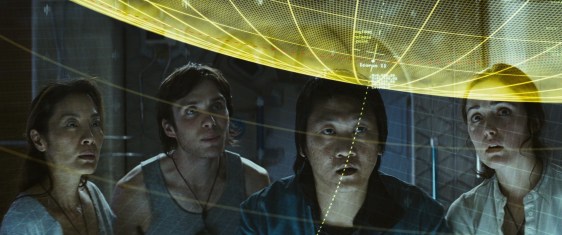
And then the trouble really starts. Harvey (Troy Garity), the ship’s comms officer and XO, informs the crew that they’ve received a transmission from Icarus I. Apparently the previous ship survived, and is floating in orbit of the sun like Russell’s teapot, cloaked in the dead zone, just waiting for a ship to get close enough to hear their distress call. Trey (Wong) says – pending some very complicated math – that they could adjust their course and intercept with Icarus I. Mace, the consummate rationalist, immediately shuts down the idea. This is one of my favorite scenes in the movie. Mace is, of course, correct – they have one bomb, and one chance, to save humanity. So literally nothing else matters – not the other ship, not its crew, and not any of them. Searle chimes in to agree, but with a dangerous caveat: it may be worth it to retrieve the second bomb. Everything about the bomb is theoretical, and even with an ingenious physicist like Capa aboard, they still don’t know, can’t know, if it will work. So they have to decide whether or not the potential benefit of a second bomb is worth the danger of trying to retrieve it. This is a movie. We know the answer they’re going to choose. But I must emphasize, this is the moment where I really believed this was a crew of professionals. Mace may be correct in his assessment of the mission’s objectives and stakes, but it’s not his call. Captain Kaneda (Sanada) says it’s not his call either. There won’t be a vote, like some of them clamor for. The most qualified person will decide on the best course of action. “Shit,” says Capa, realizing who that means. Putting Mace and Capa on opposite sides of this debate, right after they’ve just had an irrational brawl, was an inspired choice, particularly since there is no perfectly correct answer to this question – they just have to make a choice. And so they go.

After a minor miscalculation, the ship is in peril. Two of them have to go outside to repair the heat shield, and the butcher’s bill is heavy. I won’t dwell on this sequence for too long, but suffice to say, it is one of the most tense and thrilling sequences in the entire film, is the first of several appearances of John Murphy‘s outstanding Adagio in D Minor (which would go on to appear in Kick-Ass and innumerable other projects). As the crew deals with the fallout of this minor arithmetic hiccup, they do so in gigantic gold spacesuits on a massive, James Bond-sized setpiece, and the sun’s imminent rise hangs ominously just over the ship’s tiny horizon, with the fate of the ship (and thus, the entire species) at stake. It is awe-inspiring, as is the battle of wills between Cassie, Mace, and the ship’s computer over whether or not to let the captain die for the sake of the mission. These are some smart, tense thrills, and I felt the same way watching this as I did watching Ryan Stone re-enter the Earth’s atmosphere in Gravity – that astronauts are the closest thing we have to superheroes in real life, strapped to a nuclear-powered chariot hurtling through the heavens. Ideally, with the utmost safety and professionalism. But it’s still glorious.

I’m starting to sound a bit like Searle here, who – in addition to semi-religiously hanging out in the ship’s forward observation room and subjecting himself to higher and higher brightness levels recreationally – seems to be starting an internal sun-worshiping cult of sorts. As Kaneda is facing his imminent demise on the prow of the ship’s heatshield, Searle demands to know what he sees. Curtis plays this character with remarkable stability, and this fleeting, creepy moment almost feels like him indulging his hobby. But it’s a moment that comes back to mind as we meet Captain Pinbacker (Strong) later on in the film. Searle is tapped with maintaining the entire crew’s mental health, and he seems to be casually creating his own god. The rest of the crew should probably be a bit more concerned about this. But they have bigger problems at the moment. Not only is the captain dead, but the entire botany bay is destroyed, sapping the ship’s oxygen. They now have no choice but to rendezvous with Icarus I.

Cassie and Capa have a moment in the payload room, which appears to be a massive cube. Cassie thinks they’re going to die. Capa describes how he thinks the bomb will go off, in semi-poetic terms. He’s not scared. She is. I’ll say here, Byrne does an admirable job with Cassie, even though she’s a fairly limited character (and naming your resident doomsayer Cassandra sounds like more of that on-the-nose naming that Garland is so fond of). But the friendship between Cassie and Capa is one of the film’s only reasonably fleshed-out relationships, and it’s probably for the best that they didn’t take it any further into space romance territory. Really not the movie for that.

I’m going to skip ahead a bit on the recap, because the scenes of exploring Icarus I and discovering the fate of its crew (minus Pinbacker) are genuinely tense and well-staged, and lead to another moment of tense pragmatism. The ship’s airlock mysteriously explodes, and they have no means of getting the four of them back to Icarus II. And this is the moment when Harvey, the comms officer, XO, and least mission-critical person on the ship, reveals himself to be a selfish coward, demanding the only spacesuit for himself. Mace has already volunteered Capa for that slot, because he knows the physicist is more important than any of them. Searle finally solves the situation by volunteering to stay behind and die. He doesn’t do this out of suicidal nobility – it’s just that someone has to stay behind and cycle the airlock from inside, and he knows Harvey (the next least important person) can’t be trusted to do the job. So Searle does his duty, waiting in the sun room to literally meet his maker (if we’re being poetic about our parent star), while his three colleagues are blasted out of the airlock: Capa in a spacesuit, the rest in open vacuum, wrapped in shipboard insulation. My only objection to this scene (apart from being the most direct ripoff of Event Horizon) was that it was a bit narratively tidy – the movie still needed Capa and Mace, so they got to live. But it’s not like an exploding airlock has a sense of justice or practicality, and the conventional hero (Mace) surviving rather than the briefly selfish jerk (who floats away and dies horribly) was pure dumb luck – one of the only times the movie indulges in such contrivance.

Mace gives a post-mortem. He concludes that the ship’s airlock could only have been destroyed by sabotage, and the only possible saboteur is Trey, who at last word, was on suicide watch, blaming himself for Kaneda’s death. And there’s more, chimes in Corazon (Yeoh), who was responsible for the now-extinct oxygen garden. If Trey dies, they’re down to four breathers, and they have enough oxygen to make it to the sun and complete their mission. And so…we get the next scene of hyperrationality. These scenes hammer away at my psyche every time I watch the film, and as I watch these scientists coldly calculate the costs and benefits of murdering their colleague, I can’t help but think this alienation of their humanity is one of the film’s most important themes. Save the world, the movie asks? Sure. But it’ll cost you all the best parts of yourself. Mace volunteers to do the deed himself, but insists on a unanimous decision. “Kill him,” says Capa. But Cassie refuses. “You’re saying you need my vote, and I’m saying you can’t have it.” Their own mini-Circle has failed to reach a consensus, and Mace treks off to murder Trey anyway. But he quickly finds that Trey has beaten him to it, with a scalpel from the infirmary. Mace takes a moment to blame Capa for Trey’s death, and literally smear blood onto his hands, and then they have another feckless brawl while the women look on in disgust. And this is where Mace officially got on my nerves. I still like the sum of this character, but he is just as much of an emotional creature as the rest of them, and the film’s insistence on his rationality strains when he continuously engages in petty bickering, especially over the corpse of a man he was about to murder himself. He may be more reliable than someone like Harvey, but he’s not much better in the end. But as much as the character manages to put me off by the end, Evans’ performance is outstanding, and I can see why he was tapped for Snowpiercer after playing this character. His hyperrationality and stoicism were inflated to villainous excess in that film. He may have eventually become the cheery and optimistic Steve Rogers, but between those two films, I’ll never forget what Evans is capable of.

And finally, we have a showdown with Pinbacker, who was responsible for the airlock sabotage and has made it onto Icarus II. It’s a well-done thriller sequence (resulting in two more cool deaths), but I can’t help but wonder at this point what kind of film this might have been without Melanoma Man (props to Daniel for this) as the final twist. Pinbacker represents the worst excesses of mankind’s failure, monologuing about our foolishness in the face of annihilation by God. My final verdict on Pinbacker is that he was good, but not essential. Humanity could be destroyed by an asteroid or a gamma ray burst in the blink of an eye, and the collapse of our sole lifegiving star is on the same level. The Great Filter is terrifying enough without carefully-vetted professional humans bringing irrationality and quasireligious nihilism to the party. Humanity may bring its own demons to bear on its extinction, but it strikes me as unlikely that those demons will be quite so literal. But I may be trying to thread an impossible needle here. My main complaint about Europa Report was that watching competent professionals do their jobs well – even if that job is something that would utterly capture my imagination in real life – is pretty boring. Sunshine gets this balance right, whichever side it lands on.

Once the cinematic terror is sorted, it’s time for the surviving crew to fall into the sun, and that’s when things get a bit magical and weird. Earlier in the film, when Capa and Cassie were discussing the prospect of changing course, Capa explains, “Between the boosters and the gravity of the sun the velocity of the payload will get so great that space and time will become smeared together and everything will distort. Everything will be unquantifiable.” This is as close as we ever get to an explanation for the film’s ending, and you know what? It works. Humanity’s best scientist and smartest computer both can’t say what the subjective experience of falling into the sun strapped to a giant bomb approaching relativistic speeds will be like. Time dilation kicks in, and perhaps there’s room for a conscious being to experience its own annihilation in the elongated space within an instant. Either way, Murphy’s score is playing its heart out, Capa’s voiceover kicks back on, and the film is over. An ever-so-slight brightening of the sun over a snowy Sydney, Australia reveals that the crew succeeded, eight minutes after the crew becomes stardust. This isn’t an ending that belabors itself or grasps for meaning. This tale of salvation is big enough on its own, even after a decade and plenty more to compare it to.

FilmWonk rating: 8 out of 10
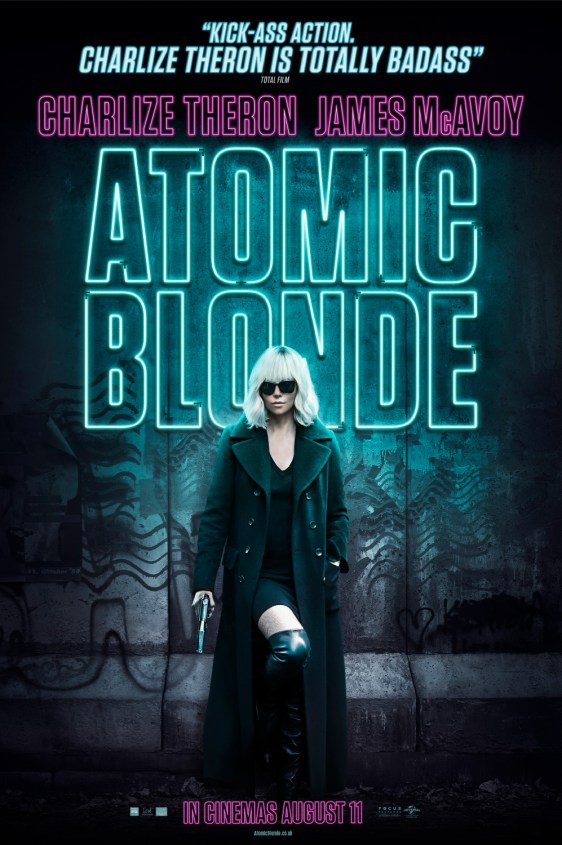
FilmWonk Podcast – Episode #113 – “Atomic Blonde” (dir. David Leitch)

Poster for "Atomic Blonde"

In this week’s podcast, Glenn and Daniel have a grand ol’ spy romp with Charlize Theron. It’s not complicated, but it is fun – and it succeeds on soundtrack where Baby Driver failed with us (22:20).

May contain NSFW language.

FilmWonk rating: 7.5 out of 10

Show notes:

  • Music for this episode is the tracks “Major Tom (Völlig Losgelöst)” by Peter Schilling, and a new, dour version of “99 Luftballons” by Kaleida, from the film’s soundtrack.
  • CORRECTION: We lamented Theron’s relative lack of starring roles – of course, she was the sole lead in Æon Flux and Monster, the latter to great critical acclaim.

Listen above, or download: Atomic Blonde (right-click, save as, or click/tap to play on a non-flash browser)