FilmWonk Podcast – Episode #20 – ‘The Avengers’ (dir. Joss Whedon) (bonus spoiler episode)

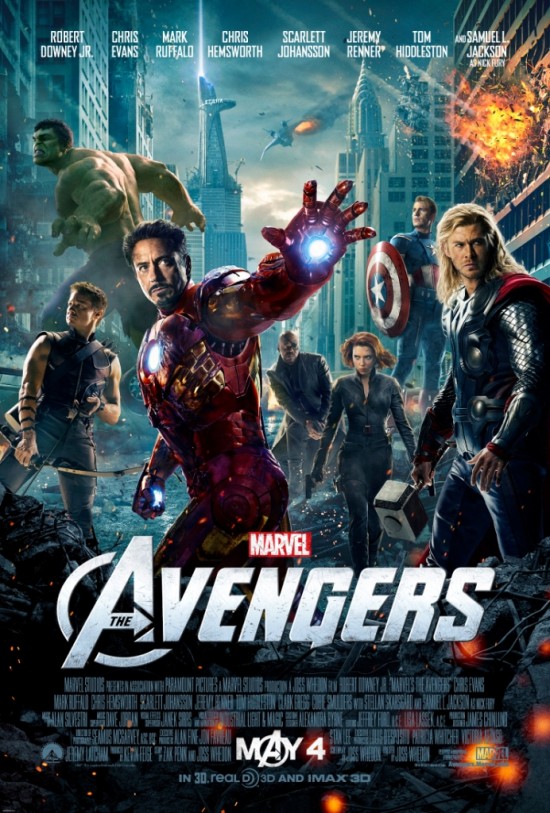
Poster for "The Avengers"

This podcast contains spoilers for The Avengers and The Dark Knight. This week on the podcast, Glenn, Daniel, and special guest Sarah get together for a spoilery second look at Marvel’s The Avengers. While Glenn still stands by his 8/10 review, Daniel has other opinions, and if there’s one thing we love at the FilmWonk Podcast, it’s sowing discord. Find out if these three heroes can unite and save the cinematic world below!

May contain NSFW language.

FilmWonk rating: 8/10 (Glenn), 5/10 (Daniel)

Show notes:

  • This episode was meant as a quick one-off, so it will unfortunately be a bit less polished than our usual episodes. Although my phone has a surprisingly good microphone!
  • Correction: A dutiful listener has pointed out that one of my supposed “continuity errors” is flat-out wrong. Stark and Banner get into the convertible, while Rogers takes off on the motorcycle. Mea culpa! Chalk it up to identical wardrobes and viewer fatigue.

Listen above, or download: The Avengers (right-click, save as).

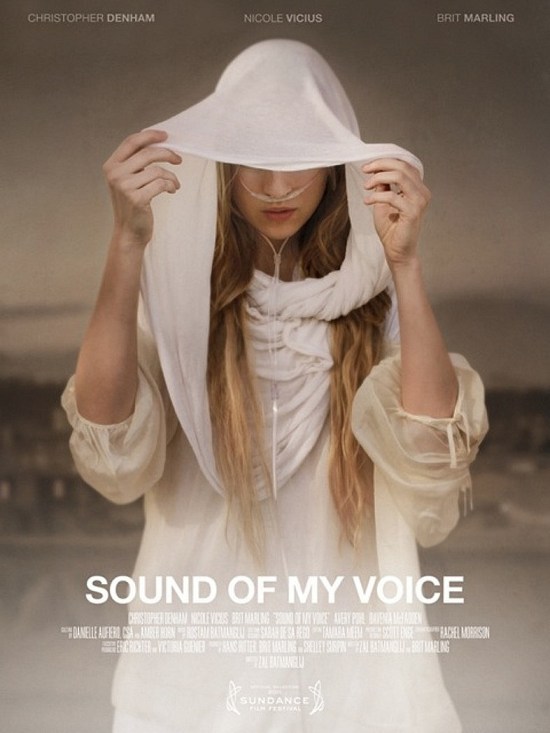
Zal Batmanglij’s “Sound of My Voice” – A subdued, but effective thriller

Poster for "Sound of My Voice"

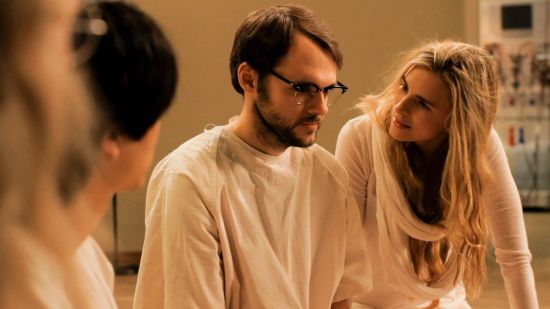
Brit Marling may be one of my favorite voices in indie sci-fi, and I say that even as someone who was not a fan of her well-intentioned flop Another Earth. Marling’s performance was very nearly the saving grace of that film, and is surely one of the best reasons to see her latest outing (with director Zal Batmanglij), Sound of My Voice. Marling plays a secluded cult leader, Maggie, who claims to be a time traveler from the year 2054. Peter Aitken (Christopher Denham) and Lorna Michaelson (Nicole Vicius) are a couple working tirelessly to infiltrate the cult, hoping to use hidden cameras to capture Maggie’s persona on film, and expose her for the fraud that she surely must be.

“I’m not petty,” Maggie says in one scene, “I don’t really care if people believe me.” Marling plays the charismatic cult leader as a master manipulator – exuding vulnerability and menace in equal measure. Bits of sincere, self-aware dialogue seem perfectly crafted to reinforce her story. In fact, the film uses Maggie’s story effectively as a subtle framework to explain the cult mentality. There is a dark, secret future, she explains, and only a select few will survive it. You’re special. You must be, or you wouldn’t believe my story. You wouldn’t have passed all of our little tests. You wouldn’t be committed to our group forever. The group’s trust in Maggie’s Terminator-ish future fable acts as a kind of glue to bind them all together. Many details, such as that Maggie grows all of her own food because she’s allergic to all of the toxins in our time period, would work as effectively for a plain old vegan commune as a futurist cult – and yet they add to her credibility without requiring her to produce a shred of actual evidence. These mythological elements are bolstered further by a series of elaborate security rituals – the cult members strip naked and scrub themselves off before being transported blind to the meeting place, and are not admitted until they perform a complex “secret handshake”.

Still from "Sound of My Voice"

In addition to this well-established group dynamic, the film functions brilliantly as a paranoid thriller. Denham’s performance is impressive, increasing the tense atmosphere in the room with the slightest glance or twinge of the eye, and what’s more, Peter is a particularly well-drawn character. Many films would set up documentary filmmakers without any thought to their [presumably noble] inner lives – this film made some bold choices, and they pay off nicely as Peter is forced to blend truth and lies in order to maintain his cover. While his backstory is established by way of a rather clunky voice-over at the beginning, it still functions as convincing reasoning for why he is so desperate to expose Maggie.

The film doesn’t live or die on the veracity of Maggie’s story (which by its very nature cannot be proven conclusively), but rather on whether or not this well-intentioned couple will be exposed. And unfortunately, the weak link in that chain is Lorna. This is due in part to Nicole Vicius’ performance, which isn’t stellar – but it is also due to the writing of the character. The film reveals (using the same clunky voiceover method) that Lorna was a teen party girl, trying every kind of drug and burning out before she reached college-age. Which is a fine backstory, but it may as well have been absent, for all it matters as the film goes on. Lorna’s reason for participating in this deception is never established beyond the couple’s relationship, and while the two actors have decent romantic chemistry, it is Denham who completely carries the tense scenes in which the couple debates their next move. As the film goes on, Vicius is sidelined and forced to take on the boring role of the jealous girlfriend, competing ineffectually with Denham and Marling’s far more interesting dynamic.

Much of the film’s ending seems contingent on the various bits of weirdness that get introduced over the course of it. A creepy dude named Klaus (Richard Wharton) hangs around the whole time, and may or may not be the real power behind the group. An unidentified woman crawls around her hotel room searching for bugs. A little girl stacks black Legos in her room (while her dad does…something…with his laptop). This ending worked for me in much the same way as Richard Kelly’s 2001 film Donnie Darko, wherein all of those strange moments seemed deliberate rather than haphazard. When so many films are rightfully accused of “weirdness for weirdness’ sake”, it’s refreshing to see a film that can be weird in a way that feels bold and calculated. Even the last audible line of the film adds to the mystery.

FilmWonk rating: 7.5 out of 10

FilmWonk Podcast – Episode #19: “Titanic” (dir. James Cameron), Avatar, and the State of 3D Cinema

Poster for "Titanic"

This week on the podcast, Glenn and Daniel never let go of James Cameron’s 1997 romantic sea epic, Titanic. Can a romance founded on chemistry, infidelity, and bad dialogue possibly stand the test of time? Find out below! Additionally, you’ll hear our windswept heroes expound on Avatar and the lamentable state of 3D cinema (50:19).

May contain NSFW language.

FilmWonk rating: 8/10 (Glenn), 9/10 (Daniel)

Show notes:

  • Music for this episode comes from James Horner’s soundtrack sequel Back to Titanic, including the tracks “Titanic Suite” and I Salonisti’s arrangement of “Nearer My God to Thee”, which they play in the film.
  • Daniel called it – the old couple below decks that we see holding each other in bed as the water rises around them are indeed Isidor and Ida Straus (the co-owner of Macy’s Department Stores and his wife). There was a deleted scene in which Ida refuses to board the lifeboat without her husband.
  • Per Daniel’s recommendation, check out Encyclopedia Titanica, a fantastic trove of knowledge for all things Titanic.

Listen above, or download: Titanic (right-click, save as).

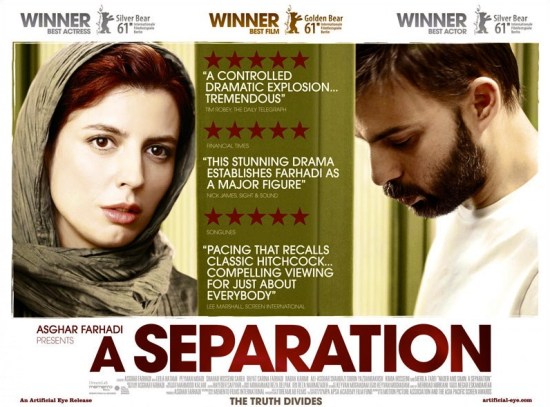
FilmWonk Podcast – Episode #18: “A Separation” (dir. Asghar Farhadi)

Poster for "A Separation"

This week on the podcast, Glenn and Daniel review last year’s Academy Award winner for Best Foreign Film (and nominee for Best Original Screenplay), A Separation. This complex and riveting film is one part legal thriller, two parts family drama, and three parts tense moral ambiguity – listen to us try to unpack its various dimensions below (while also trying feebly to remember the name of Iran’s currency!) (40:34).

May contain NSFW language.

FilmWonk rating: 9/10

Show notes:

  • Music for this episode comes from Sattar Oraki’s original score for the film.
  • This episode contains vague spoilers for the 2003 film Confidence.
  • Sarina Farhadi, who plays Termeh, is indeed the daughter of writer/director Asghar Farhadi.
  • In case our profound (and admitted) ignorance didn’t make this clear, the Iranian unit of currency is neither the ducat (which is European) nor the shekel (which is…Hebrew, whoops) – it’s the rial, named for a currency that originated in Portugal.

Listen above, or download: A Separation (right-click, save as).

2011 Glennies, Part 3: Best Actor/Actress

Best Actress

#5: Michelle Williams – Marilyn Monroe, My Week With Marilyn

Michelle Williams in "My Week With Marilyn"
Warning: This write-up will be chock full of backhanded compliments.

With a deeply flawed script and unlikable lead character, the core performances from Michelle Williams and Kenneth Branaugh are basically the only reasons to see this film – and it is a testament to the strength of these performances that the film is actually quite worth seeing. Williams brings a complex vulnerability to the titular icon that I found simultaneously appealing and fascinating, despite not having any previous knowledge of Marilyn Monroe besides her well-known (and highly sexualized) cult of personality. The film relies pretty heavily on the unspoken understanding that Marilyn Monroe is a figure of unquestionable appeal, but Williams’ performance manages to sell this appeal to a much greater extent than the film’s script and story ever does. She presents a difficult, tortured, and uncertain actress in the thrall of a surly acting teacher and under near-instantaneous hostility with her new film’s intense and egotistical director. While her relationship with Branaugh’s character is never much more affecting or complex than a sitcom clash, her romance with Colin Clark owes all of its poignancy to Williams’ performance and chemistry with co-star Eddie Redmayne, whose uneven turn might otherwise have ruined the film.

#4: Rooney Mara – Lisbeth Salander, The Girl With the Dragon Tattoo

Rooney Mara in "The Girl With the Dragon Tattoo"
As I mentioned on our “Ladies’ Night” podcast, I was wary about seeing Rooney Mara in this role, because the only other performance I knew her for was The Social Network, in which she is, for lack of a better description, nice and normal-looking. These were both red flags for ruthless cyberpunk heroine Lisbeth Salander, but Mara completely acquitted herself in this role. The highest praise I can give to this performance is that I didn’t once think of Noomi Rapace while watching it. Mara’s performance is both fearless and original, bringing a tender edge to a character that is subject to some rather horrific abuse and dubious sexualization over the course of the film.

Listen to me and Daniel discuss the film in-depth:
FilmWonk Podcast – Episode #15: “The Girl With the Dragon Tattoo”, “Young Adult”

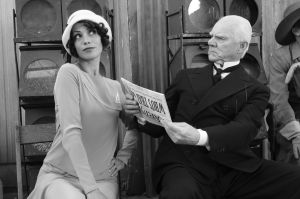
#3: Bérénice Bejo – Peppy Miller, The Artist

Bérénice Bejo in "The Artist"
What can I say? I’m a sucker for actresses playing actresses, and Bejo is a total charmer as up-and-coming talkie actress Peppy Miller. Her chemistry with Dujardin is impressive (even with the film’s silent format to muddy the critical waters), and I found their relationship appealing even as a long-term friendship, despite the film’s half-hearted attempts to paint it as a romance. To see these two friends deal with their competing careers amid the inexorable fall of silent cinema is the heart of this film’s appeal, and is surely the most affecting element of a film that could have been slight and insubstantial otherwise. Bejo’s performance served an essential role, challenging the obstinate artist George Valentin with both the new cinematic medium and the actress’ undeniable charisma within it.

#2: Kristen Wiig – Annie Walker, Bridesmaids

Kristen Wiig in "Bridesmaids"
My description of this performance may skew toward the non-specific (I haven’t seen seen this film since theaters), but I can say this with total certainty: Kristen Wiig is a star. Cinema is dreadfully short on believable depictions of female friendship, and Wiig manages to craft several solid (and starkly contrasting) rapports with co-stars Maya Rudolph, Rose Byrne, and Melissa McCarthy. Her “anti-chemistry” with Byrne is particularly impressive, leading to some of the most striking moments of comedic tension in the film. This is a complicated mess of a character (although not quite as much so as my #1), and surely one of Wiig’s finest creations.

#1: Charlize Theron – Mavis Gary, Young Adult

Charlize Theron in "Young Adult"
Speaking of messes, Mavis Gary is the most fascinating trainwreck of a character I saw this year (and she had some serious competition from Mel Gibson). If there is a female equivalent of a manchild, this is surely it – Gary is nothing short of a delusional and self-destructive alcoholic, and Theron managed to bring a wickedly black sense of humor to the character. Her ruthless give-and-take banter with an equally strong and sarcastic Patton Oswalt is an absolute wonder. This is a character that should be utterly unsympathetic, and yet by the end, she completely drew me in, even as the character learns very, very little from her experience.

Listen to me and Daniel discuss the film in-depth:
FilmWonk Podcast – Episode #15: “The Girl With the Dragon Tattoo”, “Young Adult”

Honorable Mentions:

  • Rinko Kikuchi as Naoko in Norwegian Wood
  • Atsuko Okatsuka as Atsuko in Littlerock
  • Mia Wasikowska as Jane Eyre in Jane Eyre

Best Actor

#5: Jean Dujardin – George Valentin, The Artist

Jean Dujardin in "The Artist"
From my review:

Jean Dujardin is forced to convey a great deal of emotional nuance through Valentin’s slightest glance or gesture, and the film resorts to techniques and shots that, in any other film, would have seemed incredibly manipulative. There’s a scene late in the film when Valentin confronts a room full of his old belongings, covered in sheets. As the music swells, he dramatically rips down every sheet, revealing the vestiges of his former success, finally staring heartbroken at a prized full-body portrait of himself in a tuxedo. His tears come forth, and Ludovic Bource’s score swells to overpowering heights, just as it does in many other scenes. But somehow, the tense crescendos of music that punctuate this film manage to craft a believable emotional arc of their own, even lacking the additional tones of a wailing, tormented man’s voice. The score supplements the visible emotion and physicality of Dujardin’s performance. These scenes worked, and in this medium, they seemed entirely appropriate.

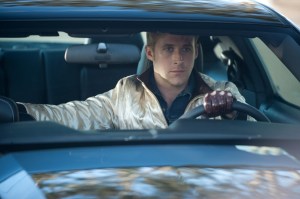
#4: Ryan Gosling – Driver, Drive

Ryan Gosling in "Drive"
It would be easy to say that Gosling is doing very little in this performance (and many people have), but this understated performance is exactly what the taciturn unnamed driver needed in this film. The driver is a vision of restrained and intense masculinity, seeing himself as equal parts valiant knight and unattached mercenary. As this veneer starts to crack over the course of the film, the stakes of the story rise palpably. This is completely Gosling’s film, and his overpowering chemistry with Carey Mulligan led to one of the most bizarre and operatic romantic beats I’ve ever seen on film.

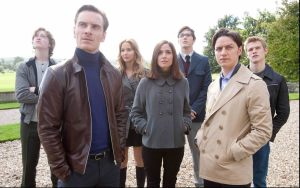
#3: Michael Fassbender/James McAvoy – Erik Lehnsherr/Charles Xavier, X-Men: First Class

Michael Fassbender and James McAvoy in "X-Men: First Class"
Each of these performances is individually strong, with Fassbender’s intense and ruthless physicality contrasting nicely with McAvoy’s poise, charm, and control. But what makes this film work is the relationship between the two – the yin and yang that is so central to both the development of Magneto as a character and the film’s powerful climactic moment. This is an intense and complex relationship – utterly unmatched on screen this year, and it owes heavily to both actors’ performances. More on their individual performances in my review.

#2: Mel Gibson – Walter Black, The Beaver

Mel Gibson in "The Beaver"
From my review:

This performance may be hard to write about, but it was even harder to watch. The beaver persona strikes a comedic note at first, but these beats seem increasingly out of place as the film descends further and further into Walter’s insanity. Whenever Walter is forced to speak in his own voice (without the jaunty British accent), Gibson conveys such intractable discomfort and crippling hopelessness with every syllable that you wonder how Walter has managed to stave off suicide thusfar. His mere existence is a punishing chore. At the beginning of the film, I wondered if I would be able to judge this film without pondering Gibson’s real-life persona. By the end, I forgot Gibson entirely and found myself nearly weeping for the increasingly pitiful creature that is Walter Black. This performance may be unpleasant to watch, but it is certainly one of Gibson’s finest.

#1: Joseph Gordon-Levitt – Adam, 50/50

Joseph Gordon-Levitt in "50/50"
There is a precarious balance of tone at work in this film. Adam is a young man who has been struck with cancer, and a performance that hits too many hopeless notes would have easily driven audiences screaming from this film. Gordon-Levitt’s comedic performance is nothing short of remarkable, engaging in both credible friendly banter with co-star Seth Rogen and bringing a constant barrage of levity that the film sorely needed to avoid falling into crippling hopelessness. And yet, when the character is forced to confront the fragility of his present existence, Gordon-Levitt delivered once again. Adam’s confrontation with mortality is one of the most powerful and resonating aspects of this film, and Gordon-Levitt brought an intensity to the struggle that I haven’t seen since Andrew Garfield in Never Let Me Go. He is sympathetic, memorable, and hilarious, and to hit all of these beats in a single performance is an astounding achievement.

Listen to me and Daniel discuss the film in-depth:
FilmWonk Podcast – Episode #13: Jonathan Levine’s “50/50”

Honorable Mentions:

  • Super-duper-honorable mention: Michael Shannon as Curtis in Take Shelter (saw it too late to qualify)
  • Patton Oswalt as Matt Freehauf in Young Adult
  • Ed Helms as Tim Lippe in Cedar Rapids
  • Ewan McGregor as Oliver Fields in Beginners
  • Michael Fassbender as Brandon Sullivan in Shame


2011 Glennies, Part 1: Best Picture (Top 10 Films of 2011)
2011 Glennies, Part 2: Best Supporting Actor/Actress
2011 Glennies, Part 3: Best Actor/Actress

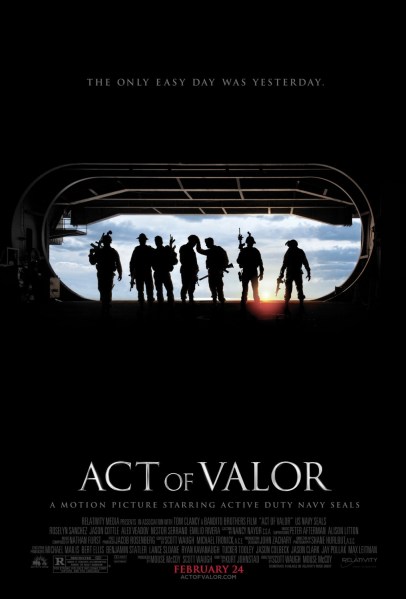
FilmWonk Podcast – Episode #17: “Act of Valor” (dir. Mike McCoy, Scott Waugh)

Poster for "Act of Valor"

This week on the podcast, Glenn and Daniel dial down the cynicism just a bit and ruminate on the nature of patriotism, warrior culture, and propaganda as a neutral descriptor in their discussion of Act of Valor, a new action film featuring real-life US Navy SEALs. (32:33)

May contain NSFW language. Act of Valor will be in theaters this Friday, February 24th.

FilmWonk rating: 7/10

Show notes:

  • “Sing your death song and die like a hero going home.”
    We mention this rather poignant quote/poem by Tecumseh, which makes a truncated appearance in the film’s voiceover. It can be read in its entirety here.
  • I briefly (and halfheartedly) tried to source some music from Nathan Furst’s original score for the film, but much like the score itself, I lost interest in my search rather quickly. As such, this week’s music comes from Hans Zimmer’s original score for The Rock, which seems apropos for this film.
  • We refer to an interrogation scene that takes place halfway through the film, and due to the secrecy surrounding the SEAL cast of this film, we were unsure about the cast and scripting of this scene. The answers, according to The Washington Post: Yep, he’s a real SEAL, and the scene was entirely improvised. Bravo, sir.

Listen above, or download: Act of Valor (right-click, save as).

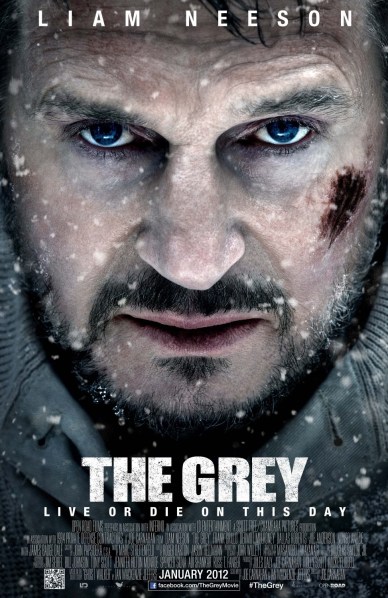
FilmWonk Podcast – Episode #16: “The Grey” (dir. Joe Carnahan)

This week on the podcast, Glenn and Daniel venture into the Alaskan wilderness into a harrowing (and possibly overrated) tale of survival and wolf-punching. If the film’s trailer is any indication, that is. Which it isn’t. (25:35)

May contain NSFW language.

FilmWonk rating: 4/10 (Glenn), 3/10 (Daniel)

Show notes:

  • We refer to the famous line, “Once more unto the breach, dear friends”, which is indeed from Henry V.
  • It’s Ottway, not Ottman. Get it right, dudes.
  • With apologies to Bob Ducca, stick around at the end for a list of movie title mashups.

Listen above, or download: The Grey (right-click, save as).

2011 Glennies, Part 2: Best Supporting Actor/Actress

Best Supporting Actor

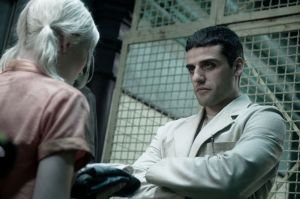
#5: Oscar Isaac – Blue Jones, Sucker Punch

Oscar Isaac in "Sucker Punch"
Let it never be said that I hold a mean grudge… I hated virtually everything about this film, including the character of Blue Jones, but this will be one of the few awards where I enforce the nebulous distinction between “the best” and “my favorite” (David Chen posted a great discussion with IFC’s Matt Singer on this topic). Every moment of screen time with villainous burlesque magnate (or possibly psych ward attendant) Blue Jones made me physically uncomfortable. All of the male characters in this film are deplorable predators, but Isaac’s performance brought this one to life in a disturbingly memorable way. Every one of his line readings made my skin crawl, and that is certainly what the villain of such an overwhelmingly fetishistic comic farce needed. I would sooner rewatch Peter Jackson’s The Lovely Bones than ever revisit this performance, but it was undeniably one of the best of the year.

Honorable mention: He also gave a solid supporting turn in Drive.

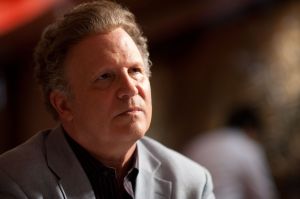
#4: Albert Brooks – Bernie Rose, Drive

Albert Brooks in "Drive"
Now that’s more like it – here’s a villainous performance I would gladly revisit. Albert Brooks demonstrates an alarming vicious streak in this film, which would be brilliant even if I didn’t know him primarily as a comic actor.

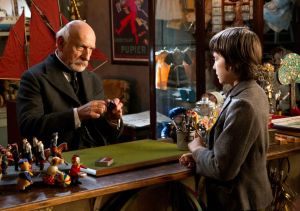
#3: Ben Kingsley – Papa Georges, Hugo

Ben Kingsley in "Hugo"
There is a solid ensemble cast at work in Hugo, but Ben Kingsley certainly does the heavy lifting. Insofar as this film is primarily about the burden of a forgotten artist, Kingsley manages to elevate even the more cookie-cutter moments surrounding the revelation of his true identity. From my review:

Kingsley’s performance is marvelous, delivering just the right blend of sadness and intrigue. This is a bitter and ancient soul, but his bitterness is richly layered enough to suggest that it is the product of having lived too much rather than too little. This is a man who had everything and lost it; not a man who regrets what he failed to achieve.

#2: Kenneth Branagh – Sir Laurence Olivier, My Week with Marilyn

Kenneth Branagh in "My Week With Marilyn"
This is basically an actor’s dream role, getting to simultaneously ham it up as a beloved cinematic mainstay, and portray him in his prime as a director. If I were a bit more cynical, I might think that Branagh was exorcising some of his own directorial frustration into this performance, but watching him butt heads with Michelle Williams is entertaining regardless of its source. While Olivier’s relationship with Marilyn Monroe is actually one of the less developed aspects of the film, Branagh plays up Olivier’s confrontationalism and dismay to brilliant comedic effect.

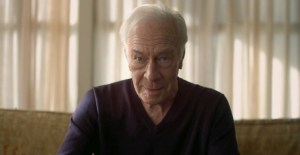
#1: Christopher Plummer – Hal Fields, Beginners

Christopher Plummer in "Beginners"
Beginners failed to crack my Top 10 for one simple reason… It wasn’t primarily about Hal Fields. Writer/director Mike Mills based this film loosely on the story of his own father coming out as gay following the death of his wife, and just a few years before his own death, and Plummer’s performance succeeds because he treats a genuinely fascinating character with an overwhelming degree of affection. His chemistry with Ewan McGregor (who plays his son, the Mike Mills surrogate) is stellar, and helps to elevate the less interesting material that McGregor has to work with. Even as the film gets just a little bit bogged down in its own quirkiness, Plummer remains the heart of it, portraying an old man who is exploring his new life with all the fervor and enthusiasm of a much younger man. His portrayal feels entirely authentic, and derives all of its comic effect from the character’s inherent sweetness and earnestness.

Honorable Mentions:

  • Ryan Gosling as Jacob Palmer in Crazy, Stupid, Love.
  • Kevin Spacey, Jeremy Irons, and Paul Bettany as a trio of ruthless financiers in Margin Call
  • Seth Rogen as Kyle in 50/50
  • Michael Parks as Abin Cooper in Red State
  • Colin Farrell as Jerry in Fright Night

Best Supporting Actress

#5: Emma Stone – Hannah, Crazy, Stupid, Love.

Emma Stone in Crazy, Stupid, Love.
Crazy, Stupid, Love. was a surprisingly enjoyable film, taking a fairly conventional romantic comedy premise and amping it up with a masterful sense of humor and charm. And one of the biggest charmers was surely Emma Stone, who is quickly becoming one of my favorite comic actresses (she also had an amusing minor role in Friends With Benefits this year). She plays nicely with co-star Ryan Gosling (who just barely missed out on my list above) both in terms of chemistry and comedic timing, and manages to shine despite her limited screentime.

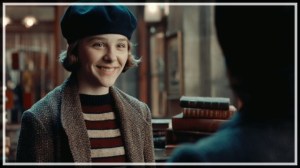
#4: Chloë Grace Moretz – Isabelle, Hugo

Chloë Grace Moretz in "Hugo"
“Don’t you like books?!”

Chloe Moretz’s reading of this line clinched this as one of my favorite performances of the year. Moretz brought such a sense of joy and adventure to the character that she managed to set herself apart from similarly bookish heroines (such as Hermione Granger) without crossing the well-trod line of irritation that such characters often stumble into. She is, to a large extent, the heart of this film, lighting up the screen with enthusiasm in her every scene, and making an excellent foil for Asa Butterfield and Ben Kingsley’s more somber and subdued roles.

#3: Jodie Foster – Meredith Black, The Beaver

Jodie Foster in "The Beaver"
This film didn’t work as a whole for me, but if there’s one thing that both Foster and co-star Mel Gibson demonstrate, it’s that they understand depression and self-destruction. And this understanding comes through despite the film’s darkly comedic (and frankly absurd) premise of a man talking exclusively through a Cockney-voiced beaver puppet. Gibson’s performance is agonizing to behold, but is made doubly so by how credibly Foster plays his steadfast and equally tormented spouse. Meredith clearly still cares for Walter, even as he makes it harder and harder for her to interact with him in any meaningful way – a theme that plays out marvelously in the restaurant scene pictured above, which was a tour de force for Foster in both acting and direction.

#2: Rose Byrne – Helen Harris, Bridesmaids


This was a film chock full of memorable and fully realized characters, but none quite so effective as Rose Byrne’s villainous would-be maid-of-honor, Helen Harris. Byrne plays up the various conflicts between Helen’s wealth, insecurity, and inherently scheming nature, leading to one of the film’s most memorable confrontations in which (I’ll be vague here) she offers Kristen Wiig a friendly snack. It’s all smiles, and yet both actresses play up the tension brilliantly – a dynamic that persists throughout the film. This villain is the antithesis of Oscar Isaac above – an absolute delight in every scene, and a performance I will happily revisit.

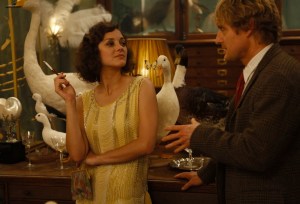
#1: Marion Cotillard – Adriana, Midnight in Paris

Marion Cotillard in "Midnight in Paris"
I had to excise the word “irresistible” from my description of Emma Stone above, lest I squander it in advance of my favorite performance of the year. Marion Cotillard plays Adriana, and without being too specific, let’s just say she has an active social life, chock full of fascinating suitors. Cotillard could have played this character simply as an object of desire, but her charm and vivaciousness are merely the initial layer of a delightfully rich characterization. While this allure nearly puts her out of the league of Owen Wilson’s “Aw shucks” demeanor, as the film goes on, the two characters complement each other nicely, and Adriana’s various interests play well into the film’s exploration of the dangers of nostalgia. While the film itself is a love letter to Paris, Cotillard’s performance seems to encapsulate all of the romance and intrigue that the city itself has to offer. And both the city and the lady are irresistible.

Honorable Mentions:

  • Anne Heche as Joan Ostrowski-Fox in Cedar Rapids
  • Maya Rudolph as Lillian in Bridesmaids
  • Carey Mulligan as Irene in Drive
  • Evan Rachel Wood as Molly Stearns in The Ides of March
  • Anna Kendrick as Katherine in 50/50


2011 Glennies, Part 1: Best Picture (Top 10 Films of 2011)
2011 Glennies, Part 2: Best Supporting Actor/Actress
2011 Glennies, Part 3: Best Actor/Actress

2011 Glennies, Part 1: Best Picture (Top 10 Films of 2011)

#11: The Big, Dumb, Occasionally Smart Action Movie
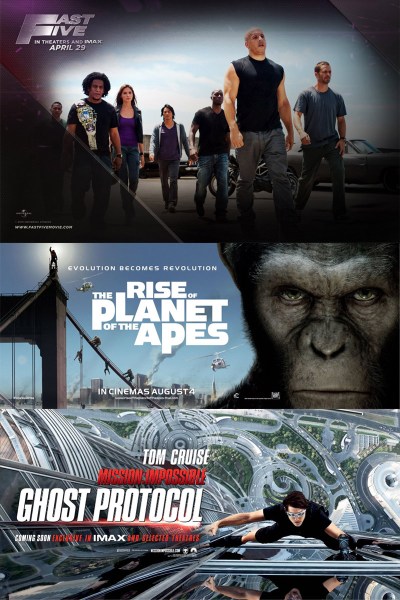

I know I’m cheating a bit here, but I must say – this was a solid year for the action blockbuster. Fast Five, Rise of the Planet of the Apes, and Mission Impossible: Ghost Protocol were all impressive contenders (the latter just barely missing out on this list). Even after Michael Bay descended into robotic madness, directors Justin Lin, Rupert Wyatt, and illustrious Pixar veteran Brad Bird have come along to challenge his throne as actioneer-in-chief. While these are very different films (with highly variable calibers of acting and character work), what they have in common is a sense of pace and coherence that was unmatched in action cinema this year, and deserves to be recognized for the talented filmmaking that it represents.

#10: X-Men: First Class


Directed by Matthew Vaughn, screenplay by Ashley Miller, Zack Stentz, Jane Goldman, and Matthew Vaughn, story by Bryan Singer and Sheldon Turner

Rewatching this film in the past week, I was reminded of a few things. First, Henry Jackman‘s musical score is distractingly bad at times, and bothered me even more on repeat viewing. When the X-Men swept over the final naval showdown in their supersonic jet, and the guitars, choir, and drums swelled to an absurdly bombastic theme, I felt more like I was watching a 80s laser rock opera than a 60s Cold War reimagining. But I didn’t mention that in my original review, because there was just so much else to love about this film. Michael Fassbender‘s performance and physicality as Erik Lehnsherr (“Magneto”) is nothing short of magnificent, and James McAvoy gives a fascinating rendition of the sage and reliable Charles Xavier as a young man. Indeed, nearly every one of the myriad of characters in this film feels well cast and written, with each of the young mutants getting their own small piece of the story to carry. Lucas Till (“Havok”) and Edi Gathegi (“Darwin”) both have particularly effective screen presence in their small roles.

But the biggest triumph of this film is how much every piece of the action is motivated by plot and character. Every major development in this film, from the villain’s inevitable undoing to the final epic showdown, has multiple, fascinating dimensions affected by the complex relationships between Xavier, Erik, Raven (“Mystique”), Sebastian Shaw, and others. While the finale didn’t feel completely earned, it did so many things well that it is still one of the finest scenes of the year.

#9: Hot Coffee
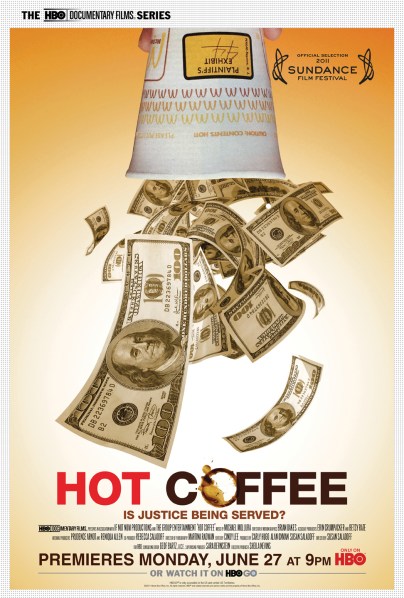

Directed by Susan Saladoff

Susan Saladoff is a trial lawyer-turned-filmmaker, and Hot Coffee is a documentary that not only argues against “tort reform”, but questions the very definition of the phrase. I’ll admit, the mere premise of this film both intrigued me and put me on guard. I already knew that the infamous “McDonald’s Hot Coffee” case (of an elderly woman who spilled coffee on her lap and received millions in damages) is more complex than the majority of the public believes, despite its continuing status as the poster child for frivolous litigation. The most important details – that the coffee was served at a temperature that would cause instant second-degree burns if consumed immediately, as well as the fact that Mrs. Liebeck suffered third-degree burns to her pelvic region (resulting in skin grafts and multiple surgeries) – are equally obscure pieces of trivia.

I expected all of this to be brought forth in this film. What I did not expect was to see a graphic photo of Liebeck’s injuries. This is a film whose opening salvo is strong, and it continues unrelentingly on a single premise: the state of American civil litigation is broken, and many tort reform measures, both current and proposed, exist solely to prevent American consumers from seeing justice when they are wronged by corporations. The film examines a variety of these tactics, including caps on damages, campaigning for business-friendly judges, as well as some of the less than savory tactics used to end opposing judiciary careers. In the last act, the film examines the increasing prevalence of binding arbitration clauses (if you have a cell phone contract, you’ve agreed to one!), by way of a woman who was forced to arbitrate her case against KBR/Halliburton using binding arbitration – a case that included charges of gangrape and unlawful imprisonment.

Needless to say, this is complex, emotionally-charged material, the effectiveness of which will depend a great deal on your individual politics. I remained guarded throughout, as these felt like the tactics of a Michael Moore film, albeit much less emotionally manipulative and fast and easy with the facts. This film has a provocative perspective to offer, but gives you plenty of room to decide how much you agree with it. It is a rare film that comes along and upends your worldview in a lasting way, but Hot Coffee might be one such film.

#8: Attack the Block
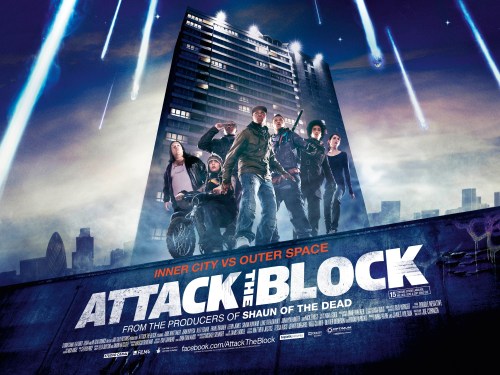

Written and directed by Joe Cornish

This film, which depicted an alien invasion fended off by a gang of thuggish London street kids, was an unrelenting delight with an immaculate sense of pace. From the opening scene, in which the gang robs an innocent woman at knife-point, these kids, as well as their leader Moses (John Boyega) are far from sympathetic, but go through an impressive and believable transformation over the course of the film. These kids may be the products of apathetic parenting, ineffectual law enforcement, and urban decay – but the movie makes it clear that they’re exactly the ones you’d want in your corner during an alien invasion. And despite the self-indulgent and anti-social behavior they exhibit at the beginning of the film, the overwhelming theme is this: actions have consequences. And what’s more, that message felt completely earned by the film’s end.

Head for Boyega’s IMDb page, and you will see just a single TV credit preceding this film. But damned if I wasn’t utterly riveted by his every line of dialogue. Even if he weren’t a newcomer, Boyega would be the standout performance in this film. He brings the brooding action screen presence of a much older and more seasoned actor, lending additional weight to all the action and chaos that ensues. This is an absolutely starmaking performance, and I look forward to whatever he does next (even if it’s an HBO boxing drama).

#7: Contagion
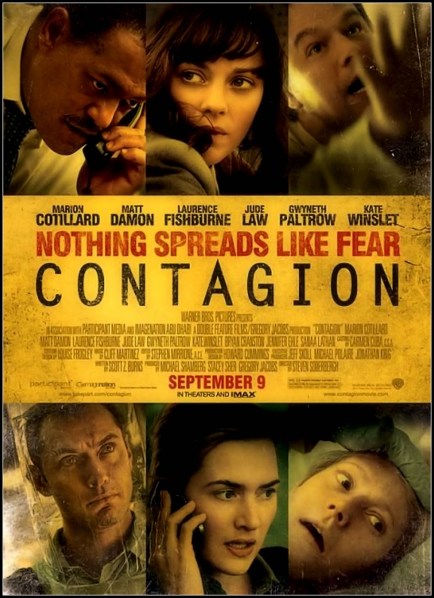

Directed by Steven Soderbergh, screenplay by Scott Z. Burns

First, a rare shout-out to the marketing department… This was one of the most riveting and effective trailers I saw this year (the cheesy tagline notwithstanding). Soderbergh delivered a sprawling epic with a global scale that seems disturbingly plausible as you watch it. The all-star cast seems to have been chosen in order to facilitate an audience connection despite the relatively short screentimes of each character (“You like Gwyneth Paltrow, right? Well you won’t believe what happens to her face in the first act!”), but a few of them (Kate Winslet and Laurence Fishburne in particular) present fascinating characters in their own right.

But this film wasn’t really about a single character or storyline. It was about the viral spread of information and fear at a pace that dwarfed that of the actual infection. Jude Law‘s role as a sensationalist blogger, easily the film’s sloppiest character choice, was nonetheless a fascinating (and mostly credible) peek into the kind of hysteria that would ensue with such a deadly pandemic. When I saw this film, I saw our very own world and civilization pushed to the brink of self-destruction, and I found it far more frightening than succumbing to a deadly illness. This is a film that sticks with you, even when you go right back to touching doorknobs and bar pretzels the next day.

#6: Drive
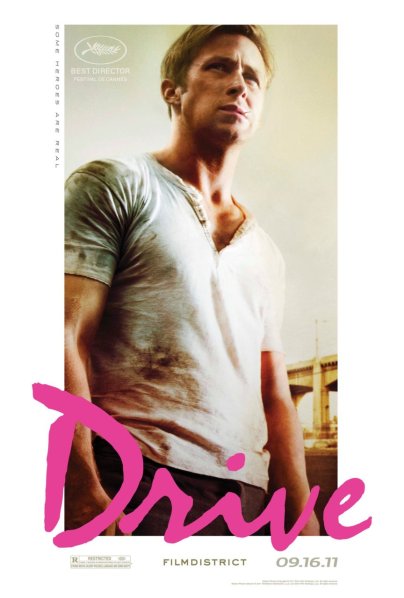

Directed by Nicolas Winding Refn, screenplay by Hossein Amini, novel by James Sallist

Ryan Gosling may have only a couple dozen lines of dialogue in this film, but it’s still one of his finest lead performances. He plays the unnamed “Driver”, a movie stunt performer who moonlights as a criminal for hire driving getaway vehicles. This is The Transporter as a brooding drama, prone to a surprising amount of emotional heft and some unexpectedly graphic violence. This film is a slow burn, and it’s not for everyone, but I was completely enthralled by it. It boasts one of the strongest casts I saw this year, featuring deft supporting work from Carey Mulligan, Oscar Isaacs, and Bryan Cranston, as well as an outstanding dramatic performance comic mainstay Albert Brooks as an utterly vicious villain.

Drive is one beautifully constructed sequence after another, from its initial 10-minute vehicular chess match with the LAPD, to an elevator scene featuring one of the most operatic and bizarre romantic moments ever put to screen.

#5: The Artist
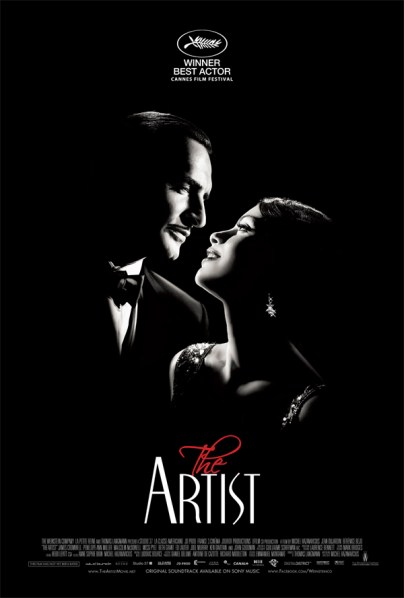


Direction, scenario, and dialogue by Michel Hazanavicius

The Weinsteins have spoken… This is 2011’s big awards contender. But screw it, I am completely on board with this silent, black-and-white film made this year in Hollywood. Michel Hazanavicius‘ silent storytelling works not only because it demonstrates the effectiveness and charm of the medium, but because it tells a story that seemingly could only have been told this way – the demise of silent film. We – the audience – know that the career of dashing silent performer George Valentin (Jean Dujardin) is doomed, and yet his struggle to stay true to his art seems both foolish and noble in equal measure.

From my review

The Artist crafts a complex character’s journey without overly relying on title cards, and conveying a great deal of story via background set design – a technique that has remained effective to this day. In the present day, we have no choice but to regard silent film as an anachronistic technical limitation. But in its day, it was the engine that propelled innovative storytelling, and Hazanavicius clearly understands how it succeeded. This film could have been a baseless technical exercise, but with this execution, it’s nothing short of a modern classic.

#4: Littlerock
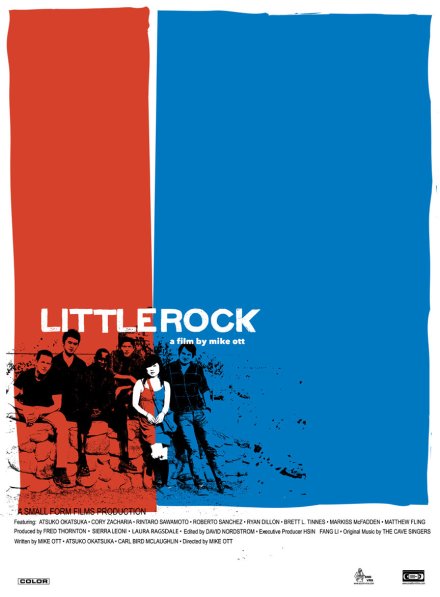

Written/directed by Mike Ott

This film offers a groundbreaking depiction of cultural interaction, by way of a pair of Japanese adult siblings stranded in a rural California town. The sister, Atsuko (Atsuko Okatsuka) speaks no English, and the brother, Rintaro (Rintaro Sawamoto) speaks a little bit – but whenever they’re split apart, we don’t get a single subtitle for their lines of Japanese dialogue. But this is not an inaccessible piece of indie cinema – it’s an uproarious comedy about how people interact at the most basic level, even when they don’t share the same language. It also features one of the most fascinating self-deluded characters of the year, Cory Lawler (Cory Zacharia), whose interactions with Atsuko make up the bulk of the film. The dialogue and interactions felt completely naturalistic, and demonstrated a great deal of talent on the part of the Japanese actors – fluent English speakers in real life – who were quite convincing in their inability to understand the specifics of what the Americans were saying to them.

Zacharia also gives an outstanding performance, although I have to mention – one of the actors present at the Q&A said that Zacharia is very much like his fictitious counterpart in real life, much like Jason Mewes in the films of Kevin Smith. Zacharia’s characterization is actually quite similar to that of Mewes, but his naïveté definitely sets him apart.

Listen to me, Daniel, and my fiancée Megan (who is fluent in Japanese!) discuss the film in depth:
FilmWonk Podcast – Episode #11: “Littlerock” (SIFF review)

As an aside:
This film stands quite well on its own (or it wouldn’t have made my Top 10), but Cory Lawler is nonetheless a character I wouldn’t mind revisiting. And now it appears I’ll get my chance… In a recent episode of The Tobolowsky Files, storyteller and character actor Stephen Tobolowsky confirmed that Mike Ott is shooting a sequel/spinoff to this film, in which (according to the film’s IMDb page) Tobolowsky seems to play Cory’s father. Both Cory and Atsuko reappear, although one dubious note, which I’ll try not to read too much into, is that “Atsuko” is now “Anna”.

#3: Young Adult
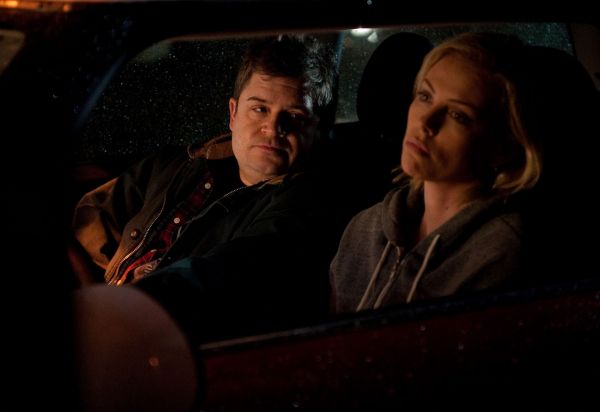

Directed by Jason Reitman, screenplay by Diablo Cody

Mavis Gary (Charlize Theron) and Matt Freehauf (Patton Oswalt), former high school classmates who reunite when Gary returns to her tiny, franchise-laden Minnesota town determined to break up the happy marriage of her ex-boyfriend, are as bizarre and unlikely a pairing as I’ve ever seen this year. Former popular kids who couldn’t get on with their lives are amusing narrative punching bags, but they seldom transcend their status as stock characters. Mavis Gary is certainly the most richly layered version of this character I’ve seen, equal parts alcoholic and Diet Coke fiend, determined to keep reliving the glory days, even via her profession – ghostwriter of trashy teen fiction. Theron’s performance is brave and effective, keeping the character utterly unsympathetic for most of the film’s runtime, and yet inspiring sympathy when she has to. Oswalt’s performance is remarkable – every bit the awkward former nerd (who paid a serious price for his lack of popularity), but much more self-aware, hiding behind a fortress of adept sarcasm and other tidbits of verbal sparring. To watch these two thoroughly damaged people butt up against each other (to their own mutually increasing frustration) is remarkable and hilarious. And what’s more (in typical Jason Reitman vein), this is not a story about damaged people growing and changing and getting on with their lives – quite the opposite, in fact. Several late scenes are immaculately constructed – equal parts devastating and hilarious (and one featuring an outstanding supporting turn from Collette Wolfe).

Diablo Cody has certainly matured as a screenwriter since Juno, and this latest collaboration with Reitman is another fascinating dark comedy character piece. These characters still have a bit of the quirk and banter we’ve come to expect from her screenwriting, but they feel much more grounded in reality. Dark, hilarious reality.

Listen to me and Daniel discuss the film in-depth:
FilmWonk Podcast – Episode #15: “The Girl With the Dragon Tattoo”, “Young Adult”

#2: 50/50


Directed by Jonathan Levine, screenplay by Will Reiser

There’s nothing funny about a young man getting cancer. But screenwriter Will Reiser‘s semi-autobiographical tale of getting cancer at a young age not only tackles this serious material with an incredible degree of levity, but feels authentic and intensely personal in the process.

Shortly after Adam (Joseph Gordon-Levitt) has received his diagnosis, a random coworker gives him an emphatic hug at a party, tearfully announcing, “I’m gonna miss you!” At his friend Kyle (Seth Rogen)’s insistence, he walks up to a girl at a bar and attempts to pick her up by announcing that he has cancer, shortly after shaving his head with Kyle’s electric “body-groomer”.

So many of the scenes in this film felt as if they could only have been taken from real life, not only because fiction wouldn’t dare tread on such ground, but because fiction rarely has the slightest idea of what dying is actually like. As I write this, I’m a healthy young man (my penchant for whiskey and kielbasa notwithstanding), so I can’t say whether this superlative film got it right. But I can say this… I saw myself in Adam, and his plight feels genuine and heartbreaking. Gordon-Levitt gives a remarkable performance here, and his chemistry with Rogen is pitch-perfect. I found myself laughing throughout this film, and tearful at several points – and I never once felt like the film had manipulated me into either reaction.

Take some notes, Patch Adams. This is how it’s done.

Listen to me and Daniel discuss the film in depth:
FilmWonk Podcast – Episode #13: Jonathan Levine’s “50/50″

#1: Hugo
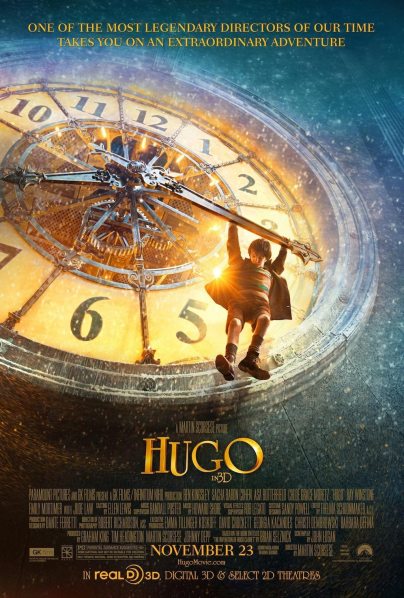

Directed by Martin Scorsese, screenplay by John Logan, book by Brian Selznick

This has definitely been a year of fascination with the techniques of prototypical filmmaking, between this film, The Artist, and My Week With Marilyn. And yet, this film stands apart not just as a celebration of the magic of cinema, but as an argument for the preservation of any creative endeavor. This film is gorgeous and utterly immersive, rich with memorable characters to bring you along for the ride.

From my review:

Hugo strives to be both a children’s adventure film and a poignant drama about the burden of a forgotten artist, and it largely succeeds as both. What’s more, for any auteurists out there, it certainly feels like a personal project for Martin Scorsese, whose marvelous body of work is fortunate enough to exist in a century with both the technology and inclination to preserve it. No one quite knows how their creative efforts might be remembered in future generations, but this film deftly argues that such efforts ought to be remembered and cherished. What truly makes this is a great family film is not just the zany and inoffensive hijinks that it shares with so many other blockbusters, but also this message, subtly woven throughout a story that is quite worth telling.

Honorable Mentions:

  • War Horse (directed by Steven Spielberg, screenplay by Lee Hall and Richard Curtis, book by Michael Morpurgo)
  • Bridesmaids (directed by Paul Fieg, screenplay by Kristen Wiig and Annie Mumolo)
  • Mission Impossible: Ghost Protocol (directed by Brad Bird, screenplay by Josh Appelbaum and André Nemec, TV series by Bruce Geller)
  • Shame (directed by Steve McQueen, screenplay by Steve McQueen and Abi Morgan)
  • Beginners (written and directed by Mike Mills)
  • I Saw the Devil (directed by Jee-woon Kim, written by Hoon-jung Park)
  • The Girl With the Dragon Tattoo (directed by David Fincher, screenplay by Steven Zaillian, novel by Stieg Larsson)
  • Midnight in Paris (written and directed by Woody Allen)
  • Kosmos (written and directed by Reha Erdem)
  • Jane Eyre (directed by Cary Fukunaga, screenplay by Moira Buffini, novel by Charlotte Brontë)
  • Double-honorable mention: Certified Copy (written and directed by Abbas Kiarostami – just saw it last night, too late to be eligible for this list!)
2011 Glennies, Part 1: Best Picture (Top 10 Films of 2011)
2011 Glennies, Part 2: Best Supporting Actor/Actress
2011 Glennies, Part 3: Best Actor/Actress

FilmWonk Podcast – Episode #15: “The Girl With the Dragon Tattoo”, “Young Adult”

Poster for "The Girl With the Dragon Tattoo"

This week, we took a cue from the movie studios and decided to cram one too many films into the same day. First, we delve into the dark and depraved world of David Fincher’s fresh adaptation of The Girl With the Dragon Tattoo. Then, we’ll examine the maturation of Diablo Cody in her new collaboration with director Jason Reitman, Young Adult. (44:42)

Still from "Young Adult"

Please note that per usual, this podcast may contain NSFW language. Additionally, due to the subject matter of The Girl With the Dragon Tattoo, our review contains some rather frank discussion of rape and associated social issues. We understand these matters are delicate, and we recommend that any sensitive listeners skip past the spoiler section of this review (see the show notes for timing).

FilmWonk rating (The Girl With the Dragon Tattoo): 7/10
FilmWonk rating (Young Adult): 8.5/10

Show notes:

  • (0:00) Review: The Girl With the Dragon Tattoo
  • (11:55) Spoilers: The Girl With the Dragon Tattoo (warning: disturbing content)
  • (24:07) Review: Young Adult
  • (36:21) Spoilers: Young Adult
  • Minor spoiler: Near the end of the Dragon Tattoo review, we allude to a certain character stealing a substantial amount of money. From the book, the actual amount was around $260 million USD, which was worth about 2.5 billion Swedish kronor when the book was written. In the film (according to Wikipedia), the amount is 32 billion Euros (~$41 billion USD).
  • We mention the actor who plays Lisbeth Salander’s guardian. This actor is Yorick van Wageningen, whom we may have recognized from his small part as “The Guv” in The Chronicles of Riddick.
  • For the record, there is no Mercury, MN.
  • Music for tonight’s episode is Trent Reznor and Atticus Ross’ version of “Immigrant Song” (performed by Karen O from the Yeah Yeah Yeahs), from the soundtrack to The Girl With the Dragon Tattoo.

Listen above, or download: The Girl With the Dragon Tattoo, Young Adult (right-click, save as).