Atom Egoyan’s “Chloe” – An odd bit of erotica

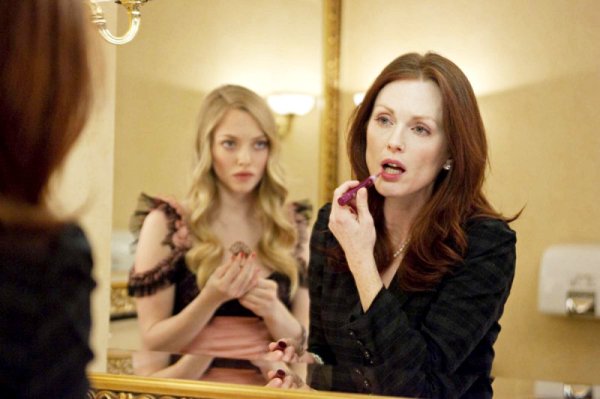
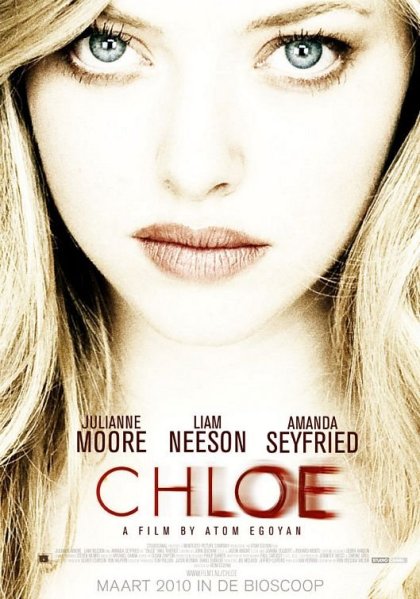
Two seconds. That’s how long it takes for Amanda Seyfried’s breasts to appear in this film, and as she begins a wistful voiceover about what it means to be a prostitute, it is with this first artfully lit shot that Atom Egoyan’s Chloe (a remake of a 2003 French film) presents itself with decidedly European sensibilities. But while the Europeans might decry my American puritanical sexualization of the female breast, I must confess that this shot (and many similar ones that followed) put me somewhat on guard. There are few things that take me out of a film faster than the feeling that I’m being manipulated by the screen. If this were a film about gargantuan fighting robots, I could certainly ignore the feeling, but Chloe strives for a good deal more. As it went on, I was forced to decide whether I was watching a thoughtful and emotionally complex exploration of sexual obsession and jealousy or being titillated just for the sake of it.

The premise is certainly a provocative one. The Stewarts are a pair of well-off professionals whose marriage is gradually drifting apart – David (Liam Neeson), a college professor, is friendly and semi-flirtatious with every woman he meets, and his wife Catherine (Julianne Moore), a doctor, is becoming increasingly insecure and jealous. From the outset, we are as much in the dark as Catherine about her husband, as she becomes more and more suspicious that he’s cheating on her. She finds a friend and confidante in an escort named Chloe (Amanda Seyfried), whom she hires to try and seduce David.

“I usually meet the client directly,” starts Chloe.

“I’M the client” declares Catherine.

And indeed, nearly all we see from this point on is through the interactions between these two women. As Chloe recounts her various encounters with David, Catherine insists she spare no detail. These graphic recollections are nothing new in cinema (they reminded me a great deal of Mike Nichols’ 2004 film Closer), but they still rang true for me. They spoke to the secret shame shared by private detectives and their cuckholded clients alike – when you’ve been betrayed by someone you love, you want to know every last disgusting detail.

It is this obsession that the film and its actors convey so effectively. The plot takes a number of rather predictable twists, but I really can’t fault it for this. As Catherine watches the destruction of her marriage, she gradually realizes that it may be her own mistrust and jealousy that precipitated its end. By the final act, the film only seems predictable in the sense of people being reliably self-destructive, and Julianne Moore proves to be the tragic heart of this film, turning in a performance that is both fearless and believable.

But what an enigma is Amanda Seyfried… This is an actress whose work I’ve nearly always enjoyed, who often elevates lesser films with her performances. But for the first half of this film, her line delivery is nearly as flat and devoid of character as porn star Sasha Grey in Soderbergh’s The Girlfriend Experience. As she recounted the vagaries of life as a high-class call-girl, I just didn’t buy it. And while her performance certainly improves in the second half, it’s balanced out by some rather preposterous character twists (for which I place equal blame on the screenwriter).

This is certainly an ambitious film, and its successes manage to stay a bit more interesting than its failures. The film looks great, featuring some gorgeous cinematography from DP Paul Sarossy. It delivers a fantastic performance from Moore and solid supporting work from Neeson. And perhaps most importantly, despite the absurd lengths the film goes to in order to destroy its characters, it delivers a few remarkable relationship insights. I have to think that if only something had elevated the character of Chloe, I wouldn’t have been left to ponder whether this film is exploitative or gratuitous. The film strives for something like Closer but becomes something more akin to Heartbreakers. The result is something worse than one, but better than the other, and fascinating nonetheless.

FilmWonk rating: 6 out of 10

Breck Eisner’s “The Crazies” – Another horror remake? And it’s GOOD?!

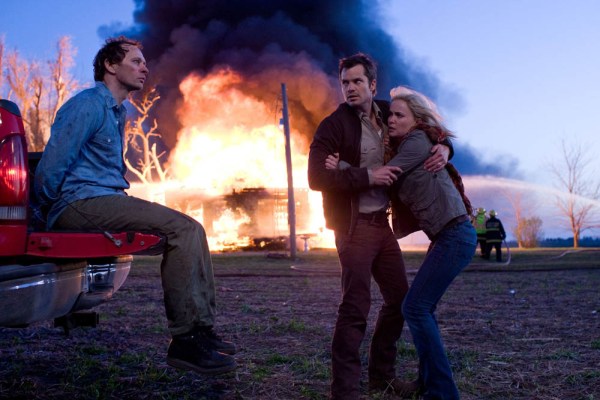
Breck Eisner’s The Crazies is the tale of Ogden Marsh, an idyllic Iowa farming community exposed to a biological agent that turns the townspeople turn uncontrollably violent. And I won’t bury the lead on this… It’s one hell of a ride. A deliberate pace, ratcheting sense of doom, and awesome use of setpieces make this an extremely effective horror film. In fact, the last time I had this much fun with a horror remake was with Zack Snyder’s Dawn of the Dead, and from the outset, this film has some stark similarities. It’s another remake of a 70s Romero film featuring another dark Johnny Cash song (in an amusing nod to Dr. Strangelove), and two of the main characters are a cop and a doctor. We get the briefest glimpse at their normal lives, and then all hell breaks loose.

The formula is familiar, but The Crazies does plenty to distinguish itself. Unlike typical zombies, these creatures retain varying degrees of their human intelligence, running the gamut from free-running, flesh-eating monsters to what can only be described as “super-rednecks”. While this makes them only marginally more interesting as characters, it’s still impressive to see zombies put to more substantial use than the nihilistic slaughter fantasy they usually amount to. What’s more, the film takes just enough time to establish an authentic setting and some sympathetic characters with very real stakes. From the outset, Ogden Marsh feels every bit like a real small town, with everyone on a first-name basis with town sheriff David (Timothy Olyphant), his deputy Russell (Joe Anderson), and his wife Judy (Radha Mitchell) – also the town’s doctor. When the military moves in to quell the infection, the plot becomes more like 1995’s Outbreak, but told from the perspective of the townspeople. From the moment the hubristic mayor dismisses the impending threat from what might be the only cornfield swimming pool in Iowa, the film barrels forward and never lets up. The result is a very well-paced chase thriller, told through the eyes of these characters by way of some brilliant but simple setpieces (there’s a sequence in the third act involving a drive-through carwash that I can only describe as pure joy).

As I think back, the tone of this film seems remarkably well balanced. There are many genuinely terrifying moments, and it adequately conveys the senseless human tragedy of it all while never shying away from a healthy dose of pitch-black humor. As it went on, I found myself genuinely afraid for the lives of the remaining characters, but could still chuckle as Timothy Olyphant took a sprawling tumble onto the floor of a funeral home and narrowly escaped getting his scrotum sliced open by a runaway electric bone saw. Indeed, Eisner’s direction makes a number of admirable choices, seemingly utilizing jump scares for the sole purpose of screwing with the audience, and then jarring them out of their seats as they slowly realize there’s an out-of-focus super-zombie still and salivating in the corner of the room.

The performances are quite adept, establishing a tense and believable dynamic between the three characters. Olyphant has long since proven that he can do no wrong as a small-town sheriff, and he and Mitchell make a convincing married couple, their performances helped along by many effective little moments of dialogue (“Don’t ask me why I can’t leave without my wife, and I won’t ask you why you can leave without yours”). Additionally, the shifting relationship between sheriff and deputy is one of the most fascinating aspects to the film. Between Anderson’s adept performance and the character’s well-written arc, the deputy’s plot stirs a sense of imminent danger and infection paranoia unparalleled since John Carpenter’s The Thing.

As soon as the credits rolled, I typed a single line for this review, demanding that Breck Eisner come down to my theater immediately and pry me loose from the edge of my seat. When I wrote up the film’s balls-out-audacious trailer back in October, I expected this film to be a good bit of cheese – a solid, shlocky B-horror film. What I finally saw was that and much more. Eisner’s direction balances the tone of the film perfectly, injecting just the right mix of horror, comedy, and drama. The allegorical elements are none-too-subtle, from the concentration camps to the good soldier who “didn’t sign up for this,” but they still imbue the film with some welcome depth. The Crazies takes the relatively straightforward premise of “zombies that can think” and turns it into a menacing and memorable piece of horror.

FilmWonk rating: 7.5 out of 10

Kevin Smith’s “Cop Out” – Painful and forgettable.

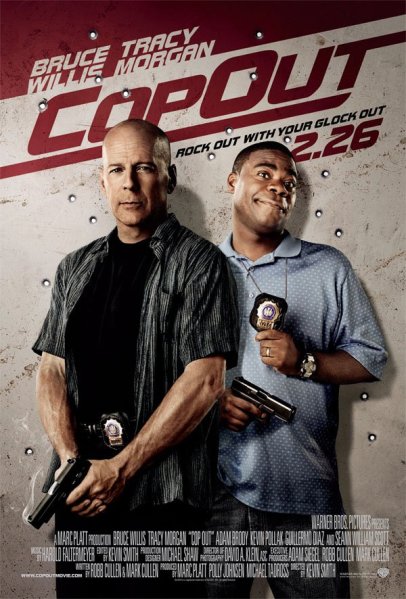
Poster for "Cop Out"

I have an abiding respect for Kevin Smith. Between college Q&As, prolific tweeting, and a hilarious podcast with his longtime producer and friend Scott Mosier, here is a man who wears his entire life on his sleeve. A man as likely to talk about his first sexual experience as the time he accidentally pooped in the shower. A man who constantly admits the breadth of his ignorance, never stops calling himself a fat bastard, and freely admits that his writing is terrible and that he has no directorial style. But despite his posturing, he has proven himself a reliably effective screenwriter and an occasionally brilliant director. He’s carved out a well-fitting niche of self-promotion through self-deprecation, and on those rare occasions when he isn’t funny, he’s nearly always endearing.

And then he goes and does something like this.

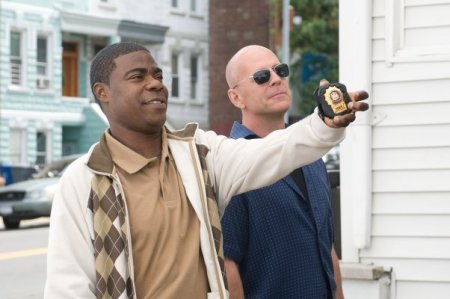
Cop Out (originally called A Couple of Dicks) is the story of Jimmy (Bruce Willis) and Paul (Tracy Morgan), a pair of no-nonsense cops who play by their own rules. Naturally, “their own rules” amount to a level of brutality and incompetence seldom seen outside of airport security, and they’re immediately suspended. And do they have to give up their badges and guns? Of course. And is Tracy Morgan still dressed up like a giant foam-rubber cell phone as the captain bawls them out? You betcha.

After their suspension, they keep right on acting as cops, trying to retrieve a priceless stolen baseball card from a ruthless drug kingpin, Poh Boy (Guillermo Diaz), who wants to take over the entire east coast drug trade by way of a magical USB thumbdrive. They join forces with Dave (Seann William Scott), an incompetent parkouring thief who spends nearly every moment verbally abusing them. Or repeating whatever they say. Oh, and there’s a kidnapped drug moll…or possibly a nun (Ana de la Reguera), whose sole language is “fuckin’ Spanish”. Nearly every one of her lines will call you out for the hijo de puta you are, and she serves almost no purpose in the film except as a comely MacGuffin.

Still from "Cop Out"

The first act is frankly painful to sit through… At several points, the characters stop just short of winking at the camera as they announce that all of their tactics and dialogue are stolen from better movies (“It’s called an homage!”). But even as Tracy Morgan gradually started to amuse me, Bruce Willis seemed completely unsure of what movie he was in. And before too long, his confusion spread to the audience, as the plot took one bizarre turn after another. Seann William Scott is amusing, but this character is nothing new for him, and it’s never entirely clear why these two cops would involve themselves with him. Guillermo Diaz is almost completely wasted in this film, losing most of the charm and dark humor he showed on Weeds in favor of playing a generic, humorless dick. And the less said about Rashida Jones’ vacuous subplot, the better.

I don’t want to spend much more time on the plot of this film because frankly, it doesn’t seem like writers Robb and Mark Cullen did either. The film strives to be a buddy cop flick in the tradition of Beverly Hills Cop, but ends up being something more akin to Showtime or Hollywood Homicide. And I can’t elaborate on that comparison any further, because like those films, Cop Out is almost completely forgettable.

It is only because I’ve liked Smith’s other films that I even feel like talking about this one. He didn’t write it himself, opting instead to work with the pair that wrote an abyssmal Showtime pilot called Manchild for Smith and several others (his subplot is just about the only funny part of it). The action direction is definitely something new for the filmmaker, but it’s nothing terribly complex, given the limited demands of this genre. Dave Klein’s cinematography is striking at times (this is the guy who shot Clerks?!), but the look of the film is wildly uneven, with some scenes seemingly taken out of completely different films.

The film inexplicably gets fun at around the second hour, but I certainly can’t call it good… At the end of the day, Cop Out seems little more than a bewildering evolution for its filmmaker. And like the Neanderthal before it, I can’t help but hope it will wander off into some corner of Eastern Europe to die.

Sorry, Kev. I hope you get writing again soon. If your next film really is as good as Chasing Amy, I’ll happily give this one a pass.

FilmWonk rating: 3 out of 10

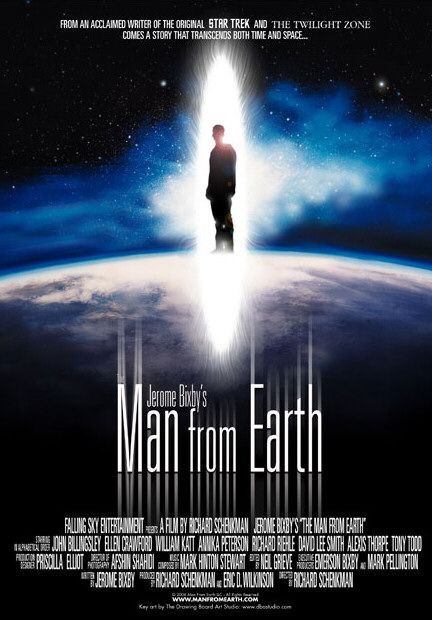
Jerome Bixby’s “The Man From Earth” – A brilliant and audacious journey

Poster for "The Man From Earth"

Produced in 2007 from a screenplay finished on the writer’s deathbed, Jerome Bixby’s sci-fi opus The Man From Earth feels more like a play than a film. Professor John Oldman (David Lee Smith) announces to his colleagues and friends that he’ll be moving on, but makes a surprise confession – he is immortal, and has lived for the past 14,000 years. The rest of the film takes place almost entirely in a single room, following the threads of the group’s conversation. And in a very theatrical touch, the assembled group of academics are perfectly suited to test his story. There’s Harry – a biologist (John Billingsley), Dan – an anthropologist (Tony Todd), Sandy – a historian (Annika Peterson), Art – an archaeologist (William Katt), and Edith (Ellen Crawford), a devout Christian with an unnamed specialty. As John’s story goes on, they are joined (quite expectedly) by Dr. Will Gruber (Richard Riehle), a psychologist.

I mention the character names, but these aren’t really characters anyway. They’re just filters through which the audience can analyze this man’s fantastical tale. There is even a student (Alexis Thorpe) present to ask a few simplistic questions so the professors can explain details that the group would already know. And even when the story strives for more dramatic and theatrical character moments (a confession of love, a surprise death threat, and so on), the situation never quite feels plausible, as these moments only serve to provoke new dimensions to John’s story.

But as I mention these character and narrative shortcomings, I must also say this – not a single one of them detracts from the film. David Lee Smith gives a remarkably subdued performance as John Oldman (one of many pun names he claims to have chosen over the years), the wise, humble, and pragmatic old soul. He reminded me somewhat of Doctor Who, but he feels far more authentic and human, because the film so excels at depicting the limitations of his purportedly vast knowledge and experience.

As they quiz him for every detail of the last 14,000 years, he points out that he doesn’t remember every detail any more than we can remember every moment of our childhoods. As he produces details of history, anthropology, and social and scientific advancement, they rightfully point out that he could have gleaned any of them from a textbook. But as one professor admits, it is no more possible for John to prove his story than it is for any of them to disprove it. And so the conversation goes on. He talks of love, friendship, life, and death – the one subject of which he has no more knowledge than anyone else. The film goes on to raise some startling religious themes, to the chagrin of Edith, the devout Christian… The ensuing theological discussion is easily the most provocative aspect of this film, and is quite well realized.

I don’t have much to say about the other performances, since there weren’t any other particularly strong characters. But even as a collection of variable filters for John’s conversation, the acting was solid overall. Todd, Crawford, and Riehle were superb, and Billingsley was enjoyable, albeit playing to familiar quirky territory. Annika Peterson does the best she can with some of the more contrived character moments, although her unlikely conversation with John about the nature of love is a surprisingly effective addition to the film. Katt and Thorpe don’t contribute much as skeptic and simpleton respectively, but I don’t really fault their performances, as they aren’t given much to do in the film (except make the audience wonder why a fifty-something doppelganger of James Cameron is permitted to date one of his students).

Jerome Bixby was a writer for the original “Star Trek” series, and it definitely shows here. The film’s end features Tony Todd announcing he’ll go home and “watch some ‘Star Trek’ for a little sanity”, and while it was a mildly self-indulgent reference, it does bring to mind a key difference between the two works. “Star Trek”, with its niche audience, was quite free to explore the big sci-fi ideas via alien allegory, since no one was too worried about offending the delicate sensibilities of the Tholian Empire. The Man From Earth takes on a far more daunting task – to deconstruct human history, values, and beliefs in a manner as shocking as it is insightful, and keep the audience adequately engaged to stop them squirming in their seats and fleeing the room. And it completely succeeds.

FilmWonk rating: 8 out of 10

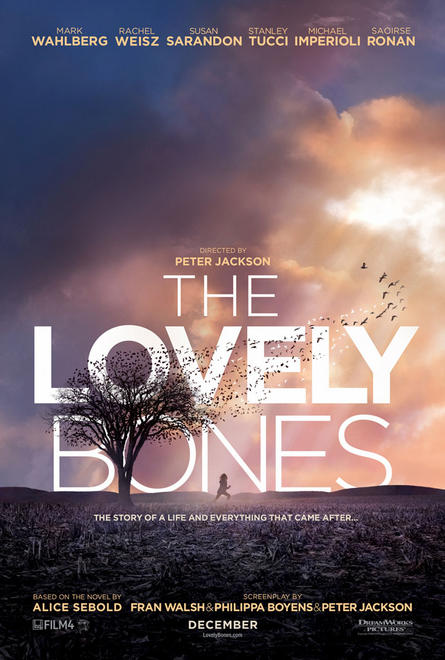
Peter Jackson’s “The Lovely Bones” – There’s really no upside to child murder

“In this man’s fantasy, she reacts to his sexual advances the way a consenting adult woman would, rather than the reality, which is a terrified little girl who wants no part of him. She’s crying, in pain, wants to go home. Quickly, he’s lost control of the situation…”

-John Douglas, FBI (ret.), Journey Into Darkness

David Slade’s 2005 film Hard Candy told the story of a 14-year-old girl (played by Ellen Page) turning the tables on her would-be sexual predator – drugging, restraining, and psychologically torturing him for the next 90 minutes. The film was a fascinating and disturbing cat-and-mouse thriller, but stopped far short of suspending disbelief. As I watched this adolescent girl exhibit all the sensibilities and ruthlessness of a jaded adult, a single line of thought kept ringing.

This has never happened. This could never happen.

Peter Jackson’s The Lovely Bones takes a different tack. When Susie Salmon (Saoirse Ronan), a lively and innocent 14-year-old girl, is lured into the dungeon of middle-aged serial killer George Harvey (Stanley Tucci), it ends exactly as it would in real life. The film doesn’t bury the lead er…delay…revealing this point, as it happens in the first twenty minutes of the film. After hours of waiting for their daughter to come home, Susie’s parents call the police – her mother Abigail (Rachel Weisz) waits at home as her father Jack (Mark Wahlberg) runs around town showing a picture to anyone who’ll look at it. Days later, they both listen in horror as a police detective informs them that they’ve found a piece of their daughter’s clothing.

“We also found blood. A substantial amount of blood.”

I’m belaboring this point a bit, but the sequence plays like every parent’s worst nightmare. I can’t overstate how horrifically the film depicts the preying upon and murder of a child, as well as its utterly destructive effect on the girl’s family. We don’t see the actual killing, but we see every moment leading up to it. When the crime occurs, Tucci and Ronan play the scene with startling realism, but I would stop short of calling their performances “good”. “Unsettling” is more like it. The scene is difficult to watch, and I’m still unsure whether it was prudent to include it. From that point on, the story follows two separate threads, depicting Susie finding her way through the In-Between (an arbitrary blend of Heaven and Purgatory) and her family’s struggle with grief following her death.

But while Susie’s story (in life) may end realistically, I was still reminded of Hard Candy – because like that film, the rest of The Lovely Bones plays very much like a fantasy. But this is not a fantasy of revenge, but rather of consolation for a grieving family – a literal rendition of “she went on to a better place.”

And is the In-Between a better place? It’s yet another elaborate CG world from Weta Digital, but I think a collection of pristinely rendered desktop backgrounds just isn’t enough to impress me anymore. We have the technology, and we’ve had it for a while now. This is certainly not the best we’ve seen from Weta, and while an oversaturated green valley or an endless icy plane with giant crystal bells may look pretty, none of it is going to blow me away at this point unless it also works thematically. And from a storytelling standpoint, the In-Between is almost a total failure.

When Susie arrives, she is greeted by another young girl named Holly (Nikki SooHoo), who seems to exist solely as the Exposition Fairy. She has all the personality and staying power of a Walmart greeter, and as she matter-of-factly lays out the rules of the In-Between – basically, a place to let go of your earthly life so you can move on to Heaven – it’s not entirely clear how her continued presence doesn’t violate these rules. Regardless, Susie spends most of her time playing around in the In-Between with Holly, and it occasionally takes a dark turn. Her experience there seems to depend on two things – how well she’s coping with being dead, and how well the people behind are getting along without her. Ronan gives a solid performance, but for most of the film, she is written as just another rendition of the “ghost with unfinished business“. Nonetheless, these worlds do occasionally collide in some interesting way.

In an early scene, Jack Salmon (Wahlberg) shows Susie how to make a ship in a bottle, placing it on a shelf in a room full of them. The dozens of ships suffer exactly the fate you’d expect, as Jack shows up shortly after his daughter’s death and proceeds to smash every single one of them. Back in the In-Between, as Susie walks along a rocky ocean beach, the waves pick up, and she looks on in horror as huge, lifesize versions of these ships sail in from the choppy ocean and shatter on the rocks. While the real-world scene is just a predictable bit of melodrama, its visual rendition in the In-Between is at least somewhat memorable.

The real-world story is about as close as the film comes to a passable narrative. It spans a couple of years, as Jack, Abigail, and the rest of the Salmon family deal with their daughter’s death, each in their own way. Lynn, Susie’s grandmother, comes and stays with the family, and is played quite ably by Susan Sarandon. Jack begins a half-cocked investigation, bombarding a well-meaning police detective (Michael Imperioli) with accusations against anyone and everyone around town for the most slight and arbitrary of reasons. This subplot could well have succeeded as a Columbo-style “howcatchem” detective story, but Jack is no detective, and his investigation is really just a series of random, baseless accusations. The tragic irony is that when he meets George Harvey, his daughter’s actual murderer, he accuses him of the crime based on evidence just as flimsy as with any of the others, and nearly gets himself arrested in the process.


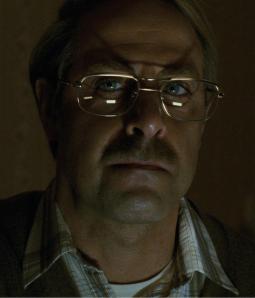
Stanley Tucci is almost unrecognizable as Harvey (I’ll admit – I didn’t even realize it was him until I began this review), but for how cartoonishly the character is written, he might as well have been wearing a rubber mask. Tucci is a great actor who does the best he can, but he is utterly wasted here. And while the character’s fate is rather unexpected (and certainly only possible in an age before modern forensics), it’s tonally bizarre. What message can we extract from his final scene? What goes around…kinda comes around? There’s nothing sadder than a pedophile past his prime?

As I spoke with others about this film (reminding them that the protagonist is a raped and murdered 14-year-old girl), the most frequent question I received was this: “Do they catch the killer in the end?”

I must admit, this question never occurred to me. For my part, catching the killer may be satisfying and cathartic when the victim is an adult, but there’s really no upside to the death of a child. And whether or not this fictitious killer is caught doesn’t matter nearly as much to me as what message the film is promoting about the world at large. The most provocative thing about George Harvey is that he seems perfectly normal when he’s not murdering children. I sometimes wonder how many more films we’ll have to see that depict “seeming normal” as a sinister warning sign. While most people aren’t secret pedophiles or murderers, it’s remarkable how many parents will make the opposite assumption if they see a 40-year-old man with the audacity to speak to a child.

Regardless of its message, The Lovely Bones plays more like an ill-conceived therapeutic exercise than a film. The family’s story is tonally all over the place, but this erratic emotional curve mostly rang true for a family dealing with the death of a child (owing heavily to the performances of Wahlberg, Weisz, and Sarandon). But while I may have found their struggle realistic, I certainly took no pleasure in watching it.

FilmWonk rating: 3 out of 10

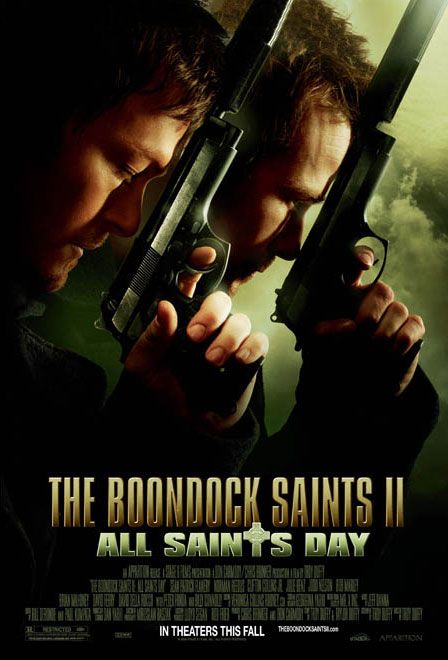
Troy Duffy’s “The Boondock Saints II” – I’m strangely uncomfortable with it

And Shepherds we shall be, for Thee, my Lord, for Thee.
Power hath descended forth from Thy hand,
that our feet may swiftly carry out Thy command.
So we shall flow a river forth to Thee,
and teeming with souls shall it ever be.
In Nomine Patris, et Filii, et Spiritus Sancti.

Spoiler warning: This review will contain spoilers for the original Boondock Saints film.

Troy Duffy’s 1999 film The Boondock Saints got a meager theatrical release, mostly owing to its proximity and minor resemblance to the Columbine High School shootings, but found quite a cult following on DVD. And my friends and I absolutely ate it up. Along with Richard Kelly’s Donnie Darko, this was my indie darling in high school. And oh, to be 15 again. To live in a cinematic world where heaven is a slow-motion shootout of dual silenced pistols, exploding cats, and gratuitous silicone tits, and where the best thing that can happen to a good movie is a sequel with an increased budget.

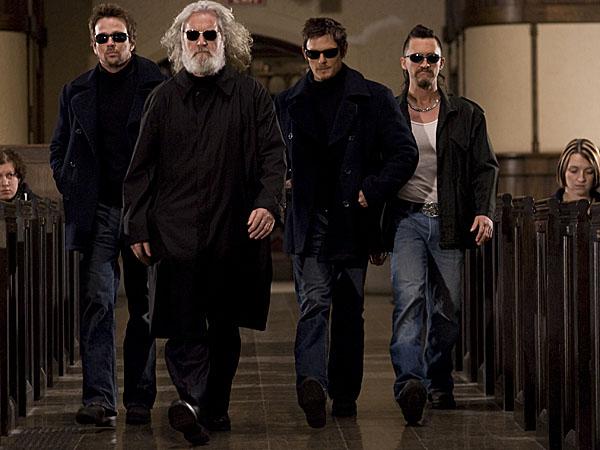
The Boondock Saints 2: All Saints’ Day, whose subtitle makes about as much sense as that of Die Hard 2, has more or less the same plot as the first film. Mobsters are bad, Jesus is good (kinda), and the McManus brothers – Connor (Sean Patrick Flanery) and Murphy (Norman Reedus), along with their father, Il Duce (Billy Connolly), and brand new Mexican sidekick, Romeo (Clifton Collins, Jr.), are anointed by God and cinema to wax as many evildoers as possible. With the mob, the Boston PD, and the FBI hot on their trail (after a very public mobster killing at the end of the first film), the boys must survive using only their wits, their guns, and their uncanny ability to avoid all return fire while sitting immobile on their haunches flailing their gun-arms wildly.

In the first film, Willem Dafoe had quite a memorable role as FBI Agent Paul Smecker, and while his investigation of the boys’ carefully delivered crime scenes didn’t make even the slightest bit of pop-forensic sense, it produced some of the most fun scenes in that film. Blaring opera music through his portable CD player, he cavorted omnisciently around each set piece reconstructing the crime in his mind, during which we saw flashbacks of that very crime in progress (since we only knew as much as he did by then). It was a silly, but effective storytelling device in that film.

After ten years, Willem Dafoe has gone on to bigger and…erm…better…things, and Paul Smecker has been replaced by Special Agent Eunice Bloom (Dexter‘s Julie Benz). She does the same superficial dance as Dafoe around the crime-scene, sporting earplugs instead of headphones (seemingly to block out the Boston PD’s endless cavalcade of incompetence and sexual harassment), and can miraculously reconstruct a perfect timeline of grisly events. But while Benz looks gorgeous as a redhead and is clearly having a great deal of fun in this role, her fake southern drawl is downright repellent, and she just comes off as a ham-fisted (and mostly unsuccessful) attempt to recapture the fun of Dafoe’s character.

In much the same way, Clifton Collins, Jr., one of the most talented and prolific character actors in Hollywood, has joined the party as the Saints’ new bumbling non-Irish sidekick, Romeo. The boys refer to Romeo as “[their] Mexican”, Collins’ mulleted, mustachioed, tattooed madman is utterly cartoonish, and yet an absolute pleasure to behold. His initial meeting with the Saints on the boat-ride from Ireland provokes the kind of instant acceptance seldom seen outside of a Dungeons and Dragons match (“You seem trustworthy!”). This character is ridiculous, but immensely fun.

But Romeo is really just a replacement sidekick for the Saints, following the departure (from this mortal coil) of their old buddy David Della Rocco (David Della Rocco). But don’t you worry, fans, Rocco may be dead, but he’s not gone. In the middle of the film…practically in the middle of a shootout, in fact, it suddenly and inexplicably cuts away to the boys sitting in an Irish pub, with Rocco behind the bar pouring them shots. The scene jumps wildly around from the bar to a downtown Boston [read: Toronto] rooftop, and finally to a hockey rink, as Rocco gives a blaringly incoherent, Denis Learyesque rant about what it means to be a man, and what a man should do (“things” is apparently the answer). The scene makes absolutely no sense, interrupts the flow of an already overlong film, and may be the worst example of pandering fan-service ever seen put to screen.

As for the Saints themselves, what can I really say? They’re back and doing their thing, and it’s basically the same as before, except they just look a bit more tired and deliver their awesome killing prayer (above) a lot more robotically. And while it seems Flanery and Reedus have aged about 15 years in the ensuing 10, Billy Connolly looks like he may have actually gotten younger, and the film tries to expand upon his character by giving Il Duce, the scourge of the Boston mob, his very own origin story. We can tell it’s a flashback because of the desaturated color (a trope I truly never get tired of), and Il Duce’s backstory is at least marginally interesting. Some mobsters killed his boss, he goes to kill mobsters, he realizes he likes killing mobsters, his buddy betrays him and then comes back for revenge (Yes, you read that correctly), and so on. There was a time when I might have found this story more compelling, but a decade and four seasons of Dexter later, all it inspired was a tepid yawn. His back story amounts to a fairly simplistic (and yet strangely incoherent) revenge and serial killer tale, and just comes off as padding a shallow film with needless exposition.

As a continuing fan of the first film who can admit that it’s actually not that good, I can’t see much here that justifies the sequel’s existence. It just feels like a ten-year reunion of callbacks to the first film, as reenacted by a high school drama department. The thoroughly engrossing soundtrack of grand, over-epic requiems and Celtic jigs has been abandoned in favor of abrasive and extremely generic rock music. In one scene, the music blares over Connor McManus sprouting a notable gun-boner over a pair of monstrous black pistols, with the lyrics inviting me to go “BALLS DEEP, MOTHERFUCKER!!!”. Sound advice.

As you might’ve guessed, even as a shadow of its predecessor, there is a meager amount to enjoy in The Boondock Saints II, as long as you’ve not strayed past a certain threshold of emotional maturity. This film definitely has all the ingredients of a high schooler’s “cult classic”, but I can only hope that if Troy Duffy returns after another decade-long hiatus to make The Boondock Saints III-D, a few of them might see the error of their ways.

FilmWonk rating: 3 out of 10
(mercifully, this was also the price of my ticket)

James Cameron’s “Avatar” – A savage and gorgeous Eden

Spoiler Warning: This review will include plot details revealed in the theatrical trailer.

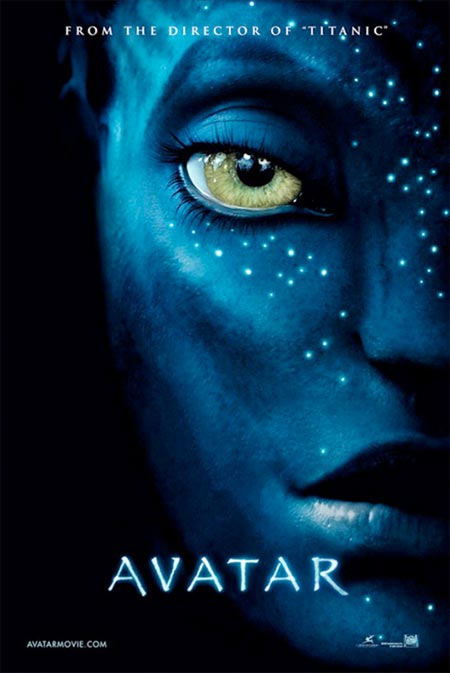
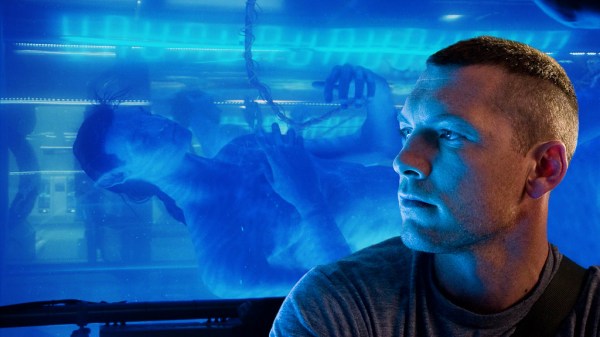
Five years and $300 million in the making, James Cameron’s Avatar has finally arrived. The film takes place in 2154, when a completely industrialized Earth has sent a massive and militarized mining party to a lush forest moon called Pandora. The moon is rich with native flora and fauna, but it is also rich with unobtainium – a term originally developed as a humorous stand-in for a valuable and impossible compound, but which is used quite literally here. Unfortunately, there is also a massive indigenous population of intelligent, tree-dwelling, ten-foot-tall humanoids called the Na’vi, a tribe of which lives directly on top of the richest deposit of the precious material.

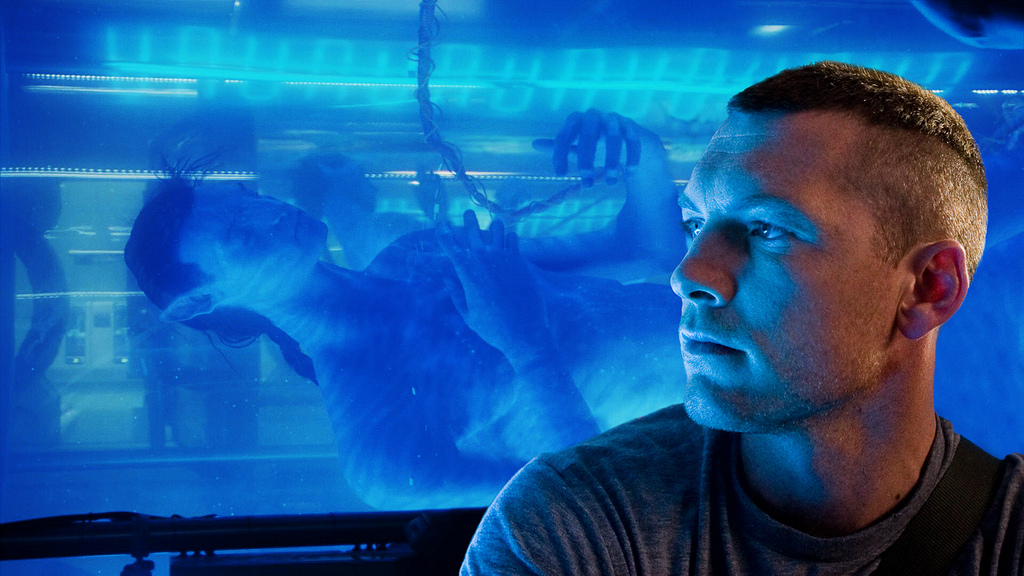
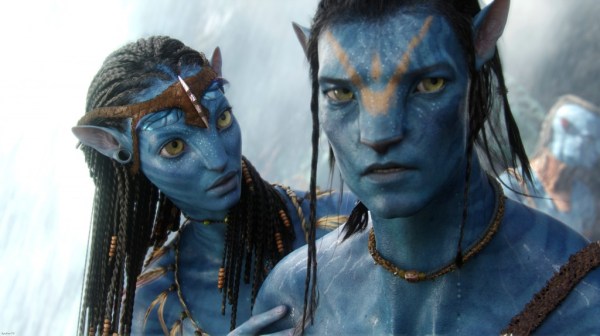
So naturally, we need them to move. Jake Sully (Sam Worthington) is a Marine who is tapped to join the Avatar program, the brainchild of Dr. Grace Augustine (Sigourney Weaver). The avatars are Na’vi bodies grown and designed to be piloted by humans via a neural link. Col. Miles Quaritch (Stephen Lang), the abominable head of security, and Parker Selfridge (Giovanni Ribisi), the shrewd mining administrator, order Sully to infiltrate the Na’vi village and gain their trust, and find a way to convince or force them off their land. In the course of doing so, he meets Neytiri (Zoë Saldaña), a Na’vi princess who agrees to show him the ways of her people.

And that’s where I’ll stop with the plot description… If you’ve seen the theatrical trailer for this film, you already knew all that and more. In fact, there was very little mystery going into this film. Even the technology developed for it was subject to significant hype. A new and proprietary 3D camera system developed by James Cameron and Vince Pace, motion capture like Zemeckis’ Polar Express and Beowulf (minus the creepiness and dead eyes), and an impressive array of creature design.
So did it live up to the hype? By many of my usual standards, no. The plot was indeed quite familiar – “Fern Gully meets Dances With Wolves” is the popular phrase, although I’d include a few shades of Independence Day (we’re the hostile aliens; the White House is a huge freaking tree). Most of the characters are pretty one-dimensional, and the storytelling bumbles along with some atrociously scripted exposition scenes, in which Sully alternates between voiceover and speaking directly into the camera (under the auspices of recording “video logs”). The nobility of the Na’vi, the superiority of their way of life, the ineffectuality of trying to convince them to move from their home – every plot point of this film is vomited forth in flowery, excruciating detail. Mercifully, these scenes don’t last very long, and they are balanced with some adept performances.

Zoë Saldaña is the standout, giving an absolutely sublime performance as the Na’vi princess Neytiri. Sam Worthington is enjoyable when he’s not delivering plodding exposition, and Sigourney Weaver is fantastic as the inexplicably chain-smoking scientist. Stephen Lang delivers a fun, scenery-chewing performance of the absurdly one-dimensional Colonel, who supervises an invasion between sips of his hot, steaming mug of eeeeeeevil, and Giovanni Ribisi portrays the administrator with such a comical level of callousness that he absolutely steals every scene he’s in.

So only one question remains… Was the visual spectacle of this film enough to make up for its shortcomings? Absolutely, unequivocally, yes. In addition to the technical achievements above (on which I could spend several more paragraphs), I could not take my eyes off a single frame of this film, and I spent most of my first viewing completely awestruck with my mouth hanging halfway open. James Horner blankets this film with a fantastic score – easily the most rich and majestic I’ve heard since John Williams did Jurassic Park. And the world is simply stunning. It’s as if Cameron saw the BBC’s Planet Earth and thought to himself… I can do better than that. He clearly adores bioluminescence, as it is featured beautifully (and pervasively) in this film. With Pandora, Cameron has created an absolute Eden – a rich and savage world with a complex ecosystem.

What’s more, he has crafted a fascinating (and literal) representation of Gaia – the notion of an entire planet as a single, complex organism. The Na’vi are a fantastical, idealized version of humanity, acting as symbiotic shepherds rather than masters of their environment. They sport a long braid of hair which conceals a hidden strand of nerves that can spring forth and attach to other life forms. This has allowed them to make use of a variety of creatures, including land-based and flying mounts, which they can control telepathically through the link. Even the trees of Pandora form a vast network of neurons and synapses – even more than exist in the human brain. The Na’vi refer to this network as Eywa, their goddess, and can use their neural links to speak to the planet directly.

And this may be the most fascinating thing about the Na’vi. They worship a god whose existence is absolutely certain – to both human science and Na’vi faith. Even an afterlife is assured, as they can use their neural links to upload their memories to Eywa when they die. And what’s more, the Na’vi are extremely resilient. They can move fast, jump high, and survive every peril this world can offer. And their every need – food, water, a safe place to sleep – is largely tended to by their ecosystem. Disease is conspicuously absent, even in a world of rampant, unprotected, telepathic hanky-panky. The Na’vi exist in an absolute Eden. They want for nothing and have no fear of death.

So what can humanity offer them? We try all the usual trappings of human progress – roads, schools, hospitals… But according to Sully, the Na’vi have no use for these things.

Humanity’s definition of progress has always been a bit muddy, but it seems to entail both exploration and mastery of its domain. To extend its reach – even to the stars – and to increase its population and lifespan. The Na’vi are often casually referred to as savages in this film, and I would argue that this is an apt term for them. They are wild and untamed, and we would probably call them a stagnant society. But in such a pristine environment – with no significant threats to the species or struggles within its society – our definition of progress completely falls apart. This is Avatar’s most fascinating theme, and yet simultaneously its least explored. We must take the film’s word on the superiority of Na’vi culture, since we are not privy to its stability in the long-term. And what’s more, we only gain the slightest idea of what state humanity is in.

But we can infer a great deal. It is implied that Earth is completely industrialized, and humanity is clearly still in the business of invasion, forced relocation, and wanton slaughter. In fact, this may be the most pessimistic sci-fi treatment of mankind ever put to screen. We aren’t wiped out by aliens, robots, nuclear war, or climate change. We live on, and apparently learn nothing.
Spoiler Warning: The following paragraph contains details about the film’s ending.

Colonel Quaritch does have one thing right – Sully does betray humanity in favor of the Na’vi – and yes, “betray” is the correct word. He even abandons his crippled human body in favor of a more powerful (and undamaged) Na’vi body. In the end, he purges every trace of humanity from himself, referring to his former race as “aliens” and supervising their eviction from Pandora to return to their “dying planet”. I’ll grant that with this branch of mankind acting as usurpers and destroyers, it’s hard to argue with Sully’s decision. But in the end, this film relies upon some disturbing implications of the intrinsic cultural supremacy of the Na’vi. And given their blatant allegorical resemblance to Native Americans, this comes dangerously close to relegating the film to the ineffectual, self-hating bin of white guilt.

While Avatar‘s societal allegory has a few problems, it nonetheless boasts some provocative and effective environmental themes. And on a technical and creative level, James Cameron has brought a marvelous vision to life with this film, and it will surely impact cinema for years to come. If it is successful enough that Cameron can finish his planned trilogy, I would certainly hope to see some of the above concerns addressed with additional storytelling. Avatar is an impressive spectacle, but it has merely teased us with the potential of its rich, engrossing world. It could eventually be the stuff of great science fiction.

FilmWonk rating: 7.5 out of 10

Additional reading:
Clint Eastwood’s “Invictus” – Wish I could have been there, instead of seeing this.

Poster for Clint Eastwood's "Invictus"

Spoiler Warning: This film is based on true events, and as such, this review will contain more spoilers than usual.

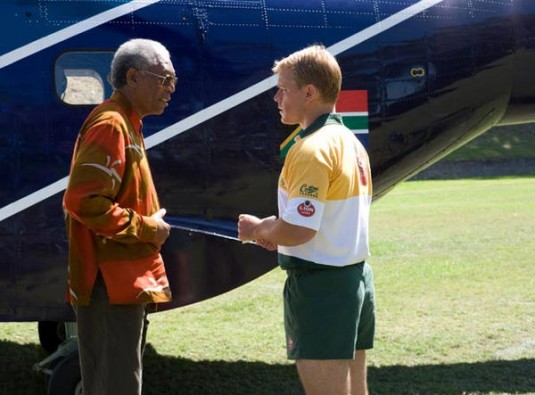
Oh, what can I really say about this film? Clint Eastwood has spun me the inspiring and true story of Nelson Mandela (Morgan Freeman) and his leadership of the newly post-apartheid South Africa. How he asked the leader of the national rugby team, Francois Pienaar (Matt Damon), to lead his team to victory in the Rugby World Cup in order to unite the nation. How Pienaar and his team rose to the great leader’s challenge, and went on to an underdog victory against the highly rated New Zealand All Blacks. He has shown me all of this, and yet he has also shown me how saccharine, overlong, and utterly unsubstantial a film can be made of it.

While Eastwood has continued to show his prowess as a filmmaker in recent years, he has never been one for subtlety (as shown by his last treatment of racial issues, Gran Torino). But while Invictus is at least a pleasant-looking and well-composed film, there’s really not much else to it. And because of its grand scope and drawn-out runtime, the film just plays out like an endless cavalcade of missed opportunities.

It could have been a film about rugby, but it wasn’t. Apart from some convincing physicality and camaraderie by Damon and company, the players don’t do much to differentiate themselves, and we really don’t learn anything about their strategy or gameplay. Likewise, it could have been a film about South African politics, but to hear this movie tell it, the only two issues facing the country are race and rugby (the latter being the solution to the former). A dark and unintentionally funny moment ensues when Mandela assures his adviser that if they sort out rugby, then they will be free to sort out “the rest” (e.g. the failing economy). Riiiight…

But rather than focus on sports or politics, Invictus tries to be a film about both, and still fails to evoke any interest. Mandela’s support for the team is largely a political maneuver, and his advisers challenge him several times on this point. But even this mildly interesting aspect of the story proves fruitless for two reasons. First, Mandela’s political shenanigans are completely pure-hearted. And second, his strategy for ensuring the rugby team a win appears to consist of interrupting every one of their practices to shake their hands and tell them how much their country is counting on them. On the eve of the quarter final match, as the team feverishly practices, another hilarious moment ensues when Mandela swoops over them with a helicopter, landing in the middle of the pitch, then assuring them that he doesn’t want to interrupt their practice. But hey, they gave him a team hat. So it’s all good.

Still from Clint Eastwood's "Invictus"

I’m going to interrupt my rant here and say… I really wanted to like this film, and there are a few things to like in it. Morgan Freeman absolutely looks and sounds the part, and let’s be honest…he could play this part in his sleep, and of course he does a fantastic job. Matt Damon clearly bulked up and trained like a madman for this role, and continues to prove himself one of the finest and hardest working actors in Hollywood. In addition, Tony Kgoroge gives a fine performance as one of Mandela’s bodyguards (who ultimately gets a more interesting arc than Damon’s character). And how can I argue with the events? This was a great and inspiring moment in both sporting and South African history, and I wish I could have been fortunate enough to see it in person.

But instead, what I’m presented with is an expensive imitation, and it plays more like a parody of inspiring films than a genuinely inspiring one. At the game’s end, we see a montage of celebrations, as blacks and whites the country over embrace each other in the newfound (and instantaneous) harmony of the Rainbow Nation. One particularly incredible sequence involved a pair of white police officers and a small black boy who hangs out near their car in order to listen to the game on their radio… While he is understandably wary of getting billy clubbed early on, the cops eventually let him stick around. But at the end of the game, the scene just goes too far. The officers hug him (okay!), hoist him into the air (less likely, but okay!), and finally put a police hat on his head (sorry, but I just don’t buy it).

Most of the later scenes play in this way, and as a member of the audience, I just felt manipulated. In another semi-plausible sequence, the rugby team visits Robben Island and is awed by the site where their president was wrongfully imprisoned for 27 years. But once again, the film takes it too far. Pienaar locks himself in Mandela’s former cell, and several apparitions of Morgan Freeman fade variably into view… Sitting in the cell…lying in the cell…reading poetry…Chopping rocks outside… Chopping rocks…in another part of outside…

And again, I have to concede that if I were really on Robben Island, I might well have a similar reaction. But this film attempts to convince us of an intensely personal moment for Pienaar, based on a relationship between him and Mandela that is not particularly well fleshed out.

For a historical tale to be inspiring, we need a little distance from it. We need perspective. We need some sense that the inspiring effect has lasted. Fictional films like Remember the Titans work precisely because of their confined scale and believable effect. At the end of that film, I can really believe that a small town’s racial tensions could be resolved by the intense interracial brotherhood that develops amongst a high school football team.

But stories like this work in fiction precisely because we have to take the filmmaker’s word on the story’s end. I would do South Africa a disservice to discount the impact of this great man and glorious moment for their nation, but as I watch South African politics a decade and a half later – the crime, the violence, the economic strife…the corruption and leadership struggles between Thabo Mbeki – Mandela’s successor – and Jacob Zuma – another former political prisoner of Robben Island… I’m reminded that history encompasses much more than just great moments and great men.

The story goes on. And a simple and languidly paced freeze-frame of a single shining moment of that story just doesn’t inspire me.

FilmWonk rating: 4 out of 10

Jason Reitman’s “Up in the Air” – A brilliant and timely character piece

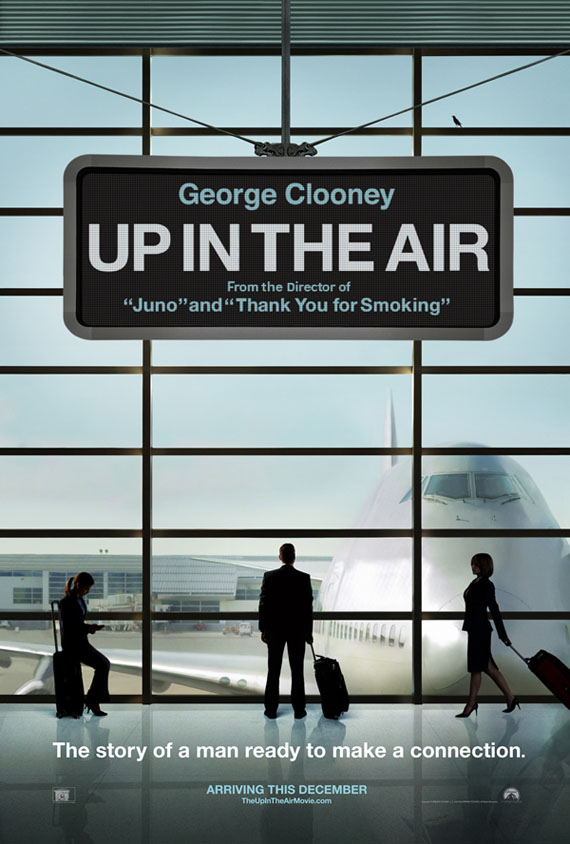
Jason Reitman’s Up in the Air is the story of Ryan Bingham (George Clooney), a corporate road warrior who spends over 300 days a year flying around the country firing people for a living. He spends his life in airports and hotels, brandishing an impressive collection of Executive Gold Club Cards as he bounces from one bastion of transient hospitality to the next.

“When I swipe my card”, Ryan informs us in the opening voiceover, “the system prompts her to say…”
“Pleasure to see you again, Mr. Bingham!” the clerk cheerfully announces.

Ryan is clearly in love with the road, in spite of (or perhaps because of) all the temporary trappings that come with it. The film’s treatment of air travel falls somewhere between Catch Me If You Can and Fight Club, and Ryan meets no shortage of single-serving friends along the way. One of these is Alex (Vera Farmiga), an enigmatic career gal who is on the road as often as Ryan. They bond after a brief hotel fling, and resolve to meet up the next chance they get.

And yet, those chances may soon come to an end, as Natalie Keener (Anna Kendrick), a brash, young coworker, proposes to slash the company’s travel budget and switch to firing people via videoconferencing. Facing the end of his life on the road, Ryan reluctantly agrees to take her along to show her the reality of his business. And that reality is a dubious one.

“Anyone who ever built an empire or changed the world has sat where you’re sitting,” intones Ryan as he fires a man named Steve (Zach Galifianakis, in a great cameo), “And it’s because they sat there that they were able to do it.”

This is a line we hear several times, and Clooney’s brilliant, tongue-in-cheek delivery leaves the audience constantly wondering whether or not he believes his own rhetoric. Indeed, his true motivation is one of the film’s central questions…

When Ryan isn’t passing out pinkslips, he makes appearances as a motivational speaker, advising people how to avoid connections in their lives. His message is clear – “moving is living”. He has a silver tongue, and would clearly say anything to convince Natalie why he should stay on the road. And yet as the film goes on, his firing scenes are peppered with what seem to be moments of genuine humanity. During one such scene, in which he fires a white-collar fifty-something named Bob (J.K. Simmons), Ryan gives a touching speech about what Bob needs to do in order to be admired by his kids.

And this may be the most provocative thing about Ryan. Whether or not he believes in his rhetoric, it has exactly the intended effect. Ryan has his own reasons for wanting to stay on the road (including a coveted number of frequent flier miles), but he constantly tries to impress upon Natalie how important and personal the moment of firing is. To hear him describe it, it sounds almost noble. They are the priests, administering the last rites to the doomed before they pass into oblivion, all the while assuring them that there is something bright and beautiful on the other side. “We are here to make limbo tolerable”, declares Ryan, and he is soundly mocked for it by Natalie.

The film constantly tries to have it both ways with Ryan. It is implied that he has had a multitude of one-night stands, and yet the very first one we see – Alex – is the one that might just turn serious. The film grants him semi-omniscient voiceovers that are equal parts self-aware and self-deprecating, but shies away from taking a position on whether he truly believes in what he’s doing. But somehow, Clooney’s performance just makes it all work. He plays with this ambiguity so well that the character is incredibly effective, especially in the interplay with his young colleague.

Still from Jason Reitman's "Up in the Air"

Natalie is a fascinating character – the consummate young career gal, ruthless and cynical, but with a very human side, full of all the self-imposed deadlines and anxiety about her future that all twenty-somethings tend to have. Anna Kendrick, who I’d only seen previously in a small and ineffectual role in the Twilight films, gives a masterful performance as Natalie, and is surely one of the actresses I’ll be watching for in the future.

It is only with the character of Alex that the film comes dangerously close to contrivance. She comes right out and tells Ryan to just think of her as “[himself], but with a vagina”, and assures him that she’s not a girl he needs to worry about. The character seems a bit facile at the beginning, but Vera Farmiga gives a fantastic performance. And as her relationship with Ryan develops, the character seems more and more plausible. And while it’s fairly easy to see where the story is going with this character, she does treat us to one of the film’s best scenes, in which Ryan and Alex share their views on love and marriage.

The script for Up in the Air, adapted by Jason Reitman and Sheldon Turner from a novel by Walter Kirn, contains some of the richest dialogue and most effective scenes I’ve had the pleasure of seeing this year. The performances are also something to see. In addition to the three strong leads, Jason Bateman gives a impressive turn as Bingham’s boss – he’s a ruthless company shark with just a bit of a humorous streak to him, seemingly channeling Stephen Root in No Country for Old Men. It’s like nothing I’ve ever seen from Bateman, and I was quite impressed.

We also see dozens of people being fired in this film, and most of them were quite convincingly played by real people who’ve lost their jobs during the recession. The film even includes an end-credits song that was seemingly performed on spec on the director’s answering machine. This could easily have come off as pandering to an audience in economic turmoil, but it just lends so well to the relevance and immediacy of this film.

While Up in the Air bears a few similarities to Reitman’s last bit of corporate satire, Thank You For Smoking, it has a much more somber tone. It retains the same darkly comedic style (and presents another fantastic soundtrack) while covering a lot more ground. It takes a great number of risks, but stops just short of spreading its characters too thin. And it is one of the finest films I’ve seen this year.

FilmWonk rating: 9 out of 10

Chris Weitz’ “New Moon” – Mostly harmless, mercifully forgettable.

Poster for Chris Weitz' "New Moon".

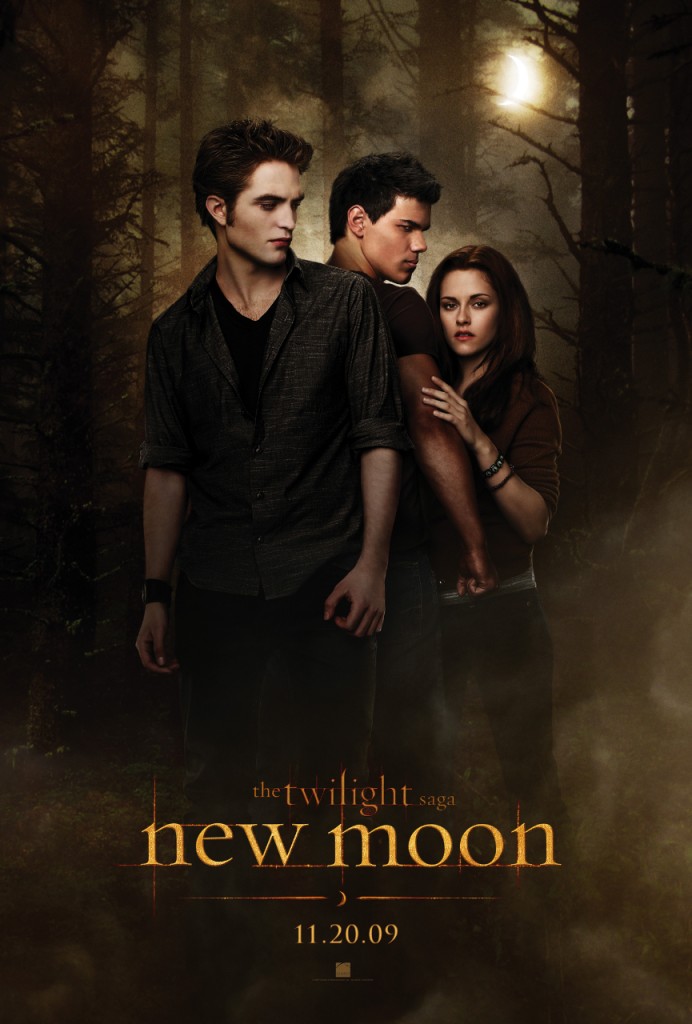
Kristen Stewart returns to the screen as Bella Swan, a teenage girl passionately in love with the vampire Edward Cullen (Robert Pattinson). Ordinarily, I would begin with a more in-depth plot description, but that’s really all you need to know. In fact, that’s basically all that happened in the first Twilight film, minus a brief diversion of vampire baseball.

In point of fact, I would love to start this review with an impassioned screed against Stephanie Meyer’s puerile prose and hackneyed attempts at supernatural mythology… How she wouldn’t know a vampire if he strutted his hot, sparkling body up and bit her… How she’s taken the framework of an innocuous teenage love story and turned it into a ham-fisted allegory for Mormon sexual abstinence… How her quixotic creation, Edward Cullen, the overbearing and overprotective centenarian in the body of a 17-year-old has been inexplicably and irresponsibly cast as the ideal boyfriend for millions of impressionable teenage girls – as well as masturbatory fodder for their bored, cradle-robbing mothers…

I would love to say all of this. But I can’t, for two reasons. The first is that most of it is overreaching, hyperbolic nonsense. Teenagers aren’t well-known for their adherence to heavy-handed abstinence allegories, and their penchant for worrisome role models is only surpassed by their speedy disinterest in yesterday’s cheesy fad (which might explain how quickly Summit is cranking these films out). As for supernatural mythology, I don’t care any more about Meyer’s version of a vampire than I do about Tolkien’s version of an elf. She is certainly not the first offender when it comes to flouting the traditional rules. While I’m happy to criticize her vampires for their inconsistency and sparkling skin, I do so because these things are stupid, not apocryphal.

But the main reason I can’t go off on New Moon for any of the above points is that it didn’t really provoke such a reaction from me. It didn’t inspire much of any reaction, in fact. It was just a bland diversion, peppered with gratuitously half-naked adolescent boys.

On the surface, it is noticeably superior to the first Twilight film. For a start, there’s some semblance of a plot. Bella and Edward start off by talking at length in English lit class about the various ways in which they resemble Romeo and Juliet, and how they would go about killing themselves if they were ever separated. This seems rather irresponsible in a film marketed to brooding teens, but I’ll go with it. For you see, the vampires of this world are so strong, they’re incapable of even killing themselves. This rule is a bit too much like God creating a rock so big that He is incapable of lifting it for my taste, but I can also accept this, since it only leaves one [thoroughly entertaining] method of suicide at Edward’s disposal – being literally ripped limb from limb by three other vampires.

The superficial nods to Romeo and Juliet continue, as Edward is banishèd from the film a few minutes later. When Bella gets a blood-drawing paper cut at her birthday party and is nearly attacked by one of Edward’s vamp brothers, he resolves to move away and never return. Following the loss of her undead lover, Bella goes variably between a spat of faux-self-destructive teenage angst and a bit of shameless, “I like you as a friend” pursuit of her werewolf buddy Jacob Black (Taylor Lautner). True to form, Bella spends nearly half of the film failing to realize her friend’s furry little secret…
But when a bit of well-deserved werewolf jealousy and a series of nonsensical miscommunications lead Edward to believe that Bella has died, he does the prudent thing, and heads to Italy to provoke the vampire royalty into executing him. Given that Robert Pattinson’s acting hasn’t improved much from his abysmal turn in the first film, I was rather hoping Edward would succeed in this endeavor, but alas, it wasn’t meant to be.

Director Chris Weitz has previously proven his visual chops in his terribly adapted but pretty-looking 2007 film, The Golden Compass, and he has brought some much-improved filmmaking to this series. Unfortunately, any effective visual storytelling in New Moon is constantly undermined by the characters themselves. The opening scene is a gorgeous dream sequence in which Bella sees an elderly woman walking through an alpine meadow. Edward, the perpetual teen, strolls across and lovingly greets the woman, and Bella quickly realizes that she’s looking at her future self. This was one of several impressively shot sequences in the film, and brilliantly introduced Bella’s anxiety about aging past her boyfriend’s perpetual youth. But like every other theme in this film, it goes on to be explicitly spelled out about a dozen more times, which ultimately undermines it. Even as Bella pretends to make the choice of becoming a vampire so she can stay young with Edward forever, it is constantly being made for her by various characters as the film goes on.

In spite of the dubious character work, there is a bit of decent acting on display. Kristen Stewart can scarcely do wrong in my eyes after her wonderful performance in Adventureland earlier this year, and she brings back most of her charisma for this film. However, there are several moments in which she reads her lines so woodenly it sounds like she can hardly believe what she’s saying. I couldn’t help but chuckle when Bella breathily suggested that the group go see a movie (with the hilarious title of “Face Punch”), because it contains, “Action, adrenaline…woo! That’s supposed to be my thing now…”

It’s okay, Kristen. I didn’t believe it either.

Still from Chris Weitz' "New Moon".

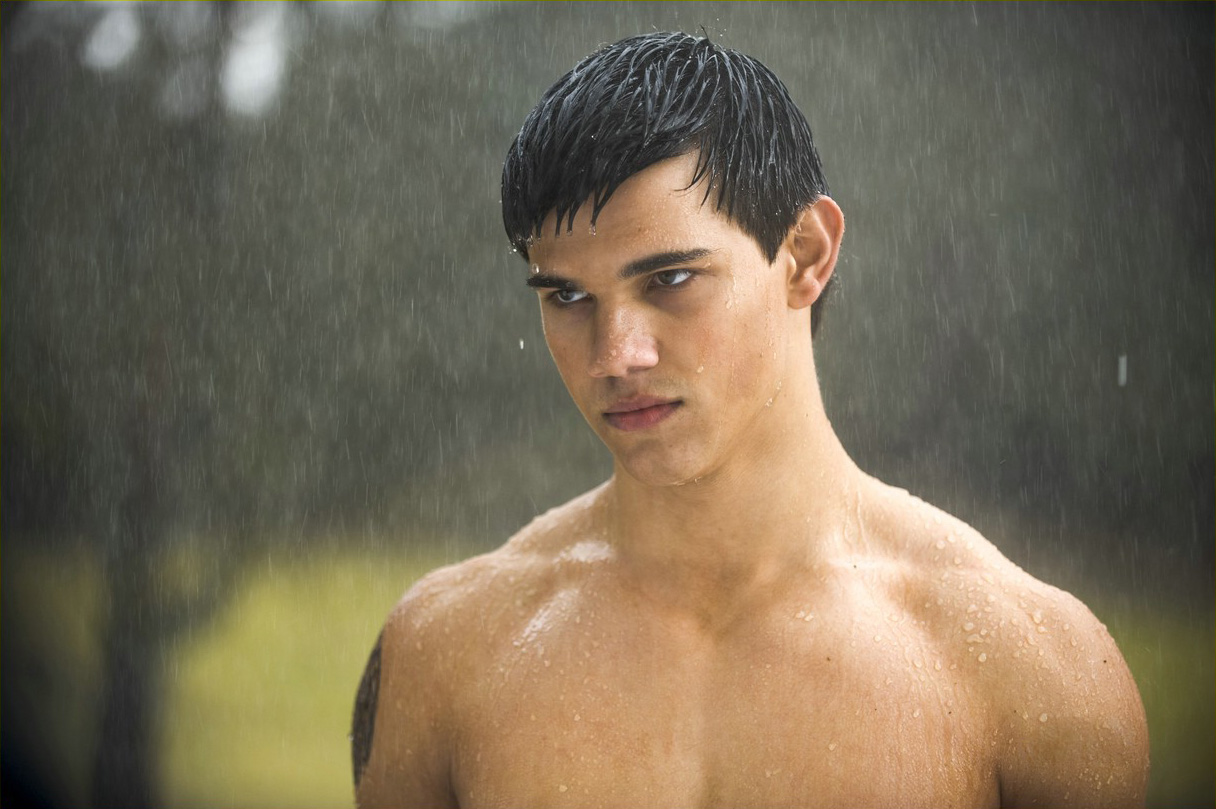
Taylor Lautner, on the other hand, did a fantastic job. Call me crazy (or a pederast), but I have to say I’m on “Team Jacob”, at least when it comes to acting talent. Lautner is helped along somewhat by Meyer’s genuinely interesting take on werewolves – they’re basically pack-hunter versions of The Incredible Hulk – but I have to hand it to this kid. He spends most of his screentime showing off his chiseled abs and ‘roided biceps, and that’s basically all he needed to do for the target audience. Nonetheless, he delivers every one of his ridiculous lines with the gravitas intended on the page. I’d say he was hamming it up, but he just comes off as completely earnest.

I’m not sure how to conclude this review, since I don’t really have any strong opinions about this film. If I were to take it remotely seriously, it would be offensive on a number of levels, but it’s mostly just mindless pap for the teenage masses. Every interesting or provocative plot point either gets reversed by the end of the film or hammered into the ground. There’s a love triangle, but not really… Bella becomes an adrenaline junkie, but not really… The star-crossed lovers are separated forever… But not really. A girl is forced to make a serious, life-altering choice… But not really. If nothing else, the story demonstrates Stephanie Meyer’s tenuous relationship with tragedy – her characters constantly embrace it, but shy away from any real consequences, and the storytelling is happy to let them get away with it.

The Twilight saga may have broken me. I might have to forgo the next film and wait for David Cronenberg’s gory exploitation version of Breaking Dawn (*fingers crossed*) (contains NSFW language).

FilmWonk rating: 4 out of 10