FilmWonk Podcast – Episode #19: “Titanic” (dir. James Cameron), Avatar, and the State of 3D Cinema

Poster for "Titanic"

This week on the podcast, Glenn and Daniel never let go of James Cameron’s 1997 romantic sea epic, Titanic. Can a romance founded on chemistry, infidelity, and bad dialogue possibly stand the test of time? Find out below! Additionally, you’ll hear our windswept heroes expound on Avatar and the lamentable state of 3D cinema (50:19).

May contain NSFW language.

FilmWonk rating: 8/10 (Glenn), 9/10 (Daniel)

Show notes:

  • Music for this episode comes from James Horner’s soundtrack sequel Back to Titanic, including the tracks “Titanic Suite” and I Salonisti’s arrangement of “Nearer My God to Thee”, which they play in the film.
  • Daniel called it – the old couple below decks that we see holding each other in bed as the water rises around them are indeed Isidor and Ida Straus (the co-owner of Macy’s Department Stores and his wife). There was a deleted scene in which Ida refuses to board the lifeboat without her husband.
  • Per Daniel’s recommendation, check out Encyclopedia Titanica, a fantastic trove of knowledge for all things Titanic.

Listen above, or download: Titanic (right-click, save as).

FilmWonk Podcast – Episode #18: “A Separation” (dir. Asghar Farhadi)

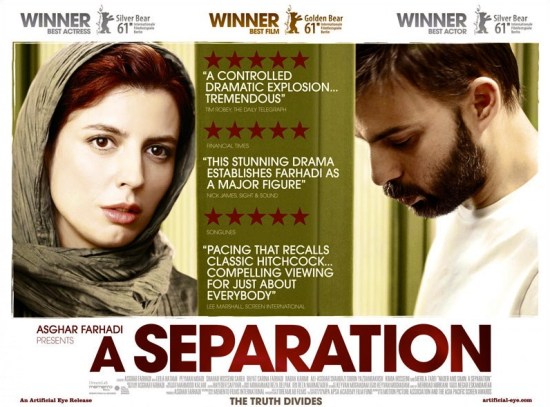
Poster for "A Separation"

This week on the podcast, Glenn and Daniel review last year’s Academy Award winner for Best Foreign Film (and nominee for Best Original Screenplay), A Separation. This complex and riveting film is one part legal thriller, two parts family drama, and three parts tense moral ambiguity – listen to us try to unpack its various dimensions below (while also trying feebly to remember the name of Iran’s currency!) (40:34).

May contain NSFW language.

FilmWonk rating: 9/10

Show notes:

  • Music for this episode comes from Sattar Oraki’s original score for the film.
  • This episode contains vague spoilers for the 2003 film Confidence.
  • Sarina Farhadi, who plays Termeh, is indeed the daughter of writer/director Asghar Farhadi.
  • In case our profound (and admitted) ignorance didn’t make this clear, the Iranian unit of currency is neither the ducat (which is European) nor the shekel (which is…Hebrew, whoops) – it’s the rial, named for a currency that originated in Portugal.

Listen above, or download: A Separation (right-click, save as).

FilmWonk Podcast – Episode #17: “Act of Valor” (dir. Mike McCoy, Scott Waugh)

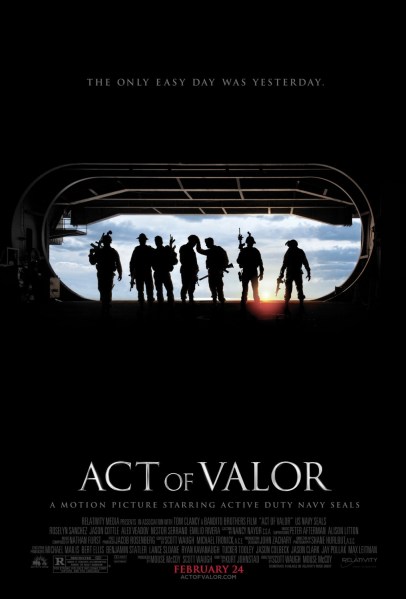
Poster for "Act of Valor"

This week on the podcast, Glenn and Daniel dial down the cynicism just a bit and ruminate on the nature of patriotism, warrior culture, and propaganda as a neutral descriptor in their discussion of Act of Valor, a new action film featuring real-life US Navy SEALs. (32:33)

May contain NSFW language. Act of Valor will be in theaters this Friday, February 24th.

FilmWonk rating: 7/10

Show notes:

  • “Sing your death song and die like a hero going home.”
    We mention this rather poignant quote/poem by Tecumseh, which makes a truncated appearance in the film’s voiceover. It can be read in its entirety here.
  • I briefly (and halfheartedly) tried to source some music from Nathan Furst’s original score for the film, but much like the score itself, I lost interest in my search rather quickly. As such, this week’s music comes from Hans Zimmer’s original score for The Rock, which seems apropos for this film.
  • We refer to an interrogation scene that takes place halfway through the film, and due to the secrecy surrounding the SEAL cast of this film, we were unsure about the cast and scripting of this scene. The answers, according to The Washington Post: Yep, he’s a real SEAL, and the scene was entirely improvised. Bravo, sir.

Listen above, or download: Act of Valor (right-click, save as).

FilmWonk Podcast – Episode #16: “The Grey” (dir. Joe Carnahan)

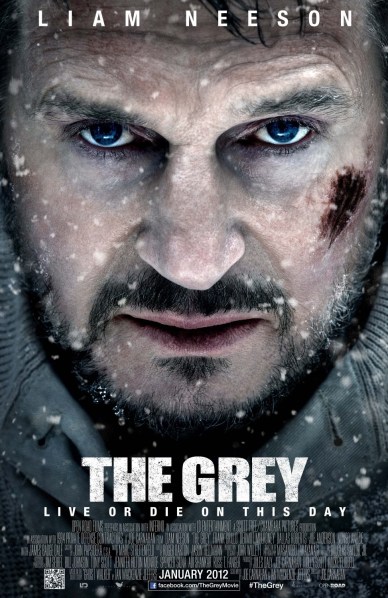
This week on the podcast, Glenn and Daniel venture into the Alaskan wilderness into a harrowing (and possibly overrated) tale of survival and wolf-punching. If the film’s trailer is any indication, that is. Which it isn’t. (25:35)

May contain NSFW language.

FilmWonk rating: 4/10 (Glenn), 3/10 (Daniel)

Show notes:

  • We refer to the famous line, “Once more unto the breach, dear friends”, which is indeed from Henry V.
  • It’s Ottway, not Ottman. Get it right, dudes.
  • With apologies to Bob Ducca, stick around at the end for a list of movie title mashups.

Listen above, or download: The Grey (right-click, save as).

FilmWonk Podcast – Episode #15: “The Girl With the Dragon Tattoo”, “Young Adult”

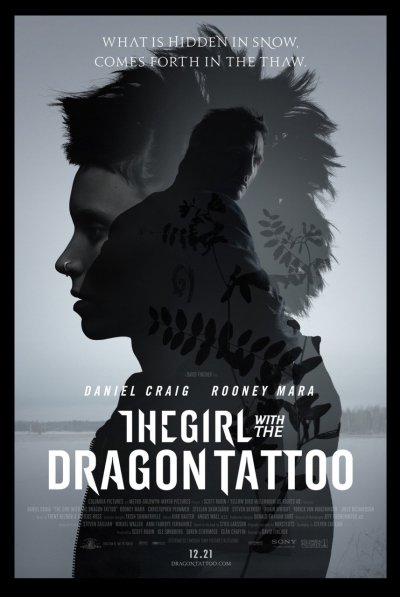
Poster for "The Girl With the Dragon Tattoo"

This week, we took a cue from the movie studios and decided to cram one too many films into the same day. First, we delve into the dark and depraved world of David Fincher’s fresh adaptation of The Girl With the Dragon Tattoo. Then, we’ll examine the maturation of Diablo Cody in her new collaboration with director Jason Reitman, Young Adult. (44:42)

Still from "Young Adult"

Please note that per usual, this podcast may contain NSFW language. Additionally, due to the subject matter of The Girl With the Dragon Tattoo, our review contains some rather frank discussion of rape and associated social issues. We understand these matters are delicate, and we recommend that any sensitive listeners skip past the spoiler section of this review (see the show notes for timing).

FilmWonk rating (The Girl With the Dragon Tattoo): 7/10
FilmWonk rating (Young Adult): 8.5/10

Show notes:

  • (0:00) Review: The Girl With the Dragon Tattoo
  • (11:55) Spoilers: The Girl With the Dragon Tattoo (warning: disturbing content)
  • (24:07) Review: Young Adult
  • (36:21) Spoilers: Young Adult
  • Minor spoiler: Near the end of the Dragon Tattoo review, we allude to a certain character stealing a substantial amount of money. From the book, the actual amount was around $260 million USD, which was worth about 2.5 billion Swedish kronor when the book was written. In the film (according to Wikipedia), the amount is 32 billion Euros (~$41 billion USD).
  • We mention the actor who plays Lisbeth Salander’s guardian. This actor is Yorick van Wageningen, whom we may have recognized from his small part as “The Guv” in The Chronicles of Riddick.
  • For the record, there is no Mercury, MN.
  • Music for tonight’s episode is Trent Reznor and Atticus Ross’ version of “Immigrant Song” (performed by Karen O from the Yeah Yeah Yeahs), from the soundtrack to The Girl With the Dragon Tattoo.

Listen above, or download: The Girl With the Dragon Tattoo, Young Adult (right-click, save as).

Steven Spielberg’s “War Horse” – Beasts, battle, and the perplexing notion of nobility

The relationship between man and horse has always been a complicated one. It’s simple to find inspiration in a story of humans and pets, since pets are generally treated well and have little expected but love in return. Horses, like all other beasts of burden, are the subject of greater expectations, and highly variable levels of respect. Cards on the table: I don’t find horse-racing films inspiring in the slightest. On the surface, it’s basically the same as watching NASCAR – full of souped-up, highly disposal means of transportation, barely deserving of the moniker of “sport”. The only noticeable difference is that these speedy conveyances are capable of feeling pain, making the activity that much more appalling. But beasts of burden have their place, to be sure, and there may be inspiration to be found in their stories, provided they’re enriching our lives in some meaningful way (gamblers, alcoholics, and gluemakers notwithstanding).

War is an equally mixed bag for storytelling, particularly World War I. It was known ever so briefly as “the war to end all wars”, and was a study in contradictions – an absurd mix of both ancient and groundbreaking mechanisms of battle. This war featured swords, cannons, trench and chemical warfare, tanks, metallic armor, and yes – even horses. War Horse effectively broaches the question of whether a horse is capable of demonstrating valor or loyalty, and regardless of the answer to this question, we do see a great many horses lying broken and discarded on the battlefield. This exploration of the First World War is certainly the most interesting part of this film, and simultaneously the most muddled.

This film plays like a fairy tale, with a soft glow blanketing the characters’ initial idyllic existence. Albert (Jeremy Irvine) is a farmboy in Devon, England, whose father wrecklessly splurges on a thoroughbred horse to plow his field. The horse, Joey, may well be a gorgeous specimen, but he’s not big, ugly, or strong enough for the farm work to be set before him. As Albert desperately tries to train Joey to work the plow, his landlord (David Thewlis) twirls his mustache and delivers an absurd (but well-spoken) monologue about Albert’s almost certain failure. This tale of boy and horse is entertaining, to be sure, and demonstrates the horse’s personality to an impressive degree. Even as we learn that these two will soon be torn from each other by the impending war, this sequence masterfully sets up their affection for one another, with Spielberg somehow wrangling as convincing a performance from the animal as from Irvine himself.

But from this point on, the film is basically just a series of vignettes, and actually becomes rather confusing. A staggering number of minor characters are introduced, each with a slightly different flavor of randomly accented English-language dialogue. Unless you happen to be an expert in WWI military insignia, it’s difficult to tell where Joey is, where he’s going, or how likely Albert is to find him. While this certainly causes the film to lose momentum, it somehow makes Joey’s story even more tragic, placing the audience in the same confused position he’s in. Horses may well be capable of loyalty, but this horse has very little choice in where he goes or what he does. While horses aren’t capable of understanding the full scope and consequence of their actions in warfare, this film certainly demonstrates their capacity to be swept up as either victims or reluctant participants.

Most of the human cast – whom I would struggle to call anything more than supporting players – are effective. As Joey strikes out on his journey, the film intently focuses on each of the lives he touches along the way. Benedict Cumberbatch and Tom Hiddleston both give strong turns as military officers. Newcomer Celine Buckens gives perhaps the worst accent performance in the film as a young [French?] farm girl who briefly and affectionately takes possession of Joey when he wanders onto her family farm. The story of the girl and her father had the potential to be quite poignant, but it is undercut by Buckens’ uneven performance and some rather irritating dialogue.

The film’s climactic scene, which I won’t spoil here, continues Spielberg’s tradition (begun in Saving Private Ryan) of depicting both sides of a historical war as potentially sympathetic. In their own way, each side recognizes Joey’s innocence and unwilling participation in this conflict, and seem determined to spare him any further harm. Over the course of this film, we see war horses treated as brutally as any other materiel, but it is in this final moment that the film hammers home the point that they’re a category unto themselves. I’m not sure if “inspiring” would be the right word for this message – the contribution of Joey and warhorses like him was meaningful, but it came on the eve of their obsolescence as a tool of human warfare. If Joey had been born a mere decade later, he could have lived out his life happily in peace. Then again, the same could be said for Albert and the young men who fight and die beside him. Like all war films, War Horse is a tragic tale at heart – but the friendship, valor, and loyalty demonstrated here is no less meaningful for it. War may well be a natural human condition, and as such it affects those beasts we hold most dear just as surely as it affects us all. To turn a historical eye to their contributions and sacrifices, whether or not they can truly be considered noble, does not go amiss.

FilmWonk rating: 6 out of 10

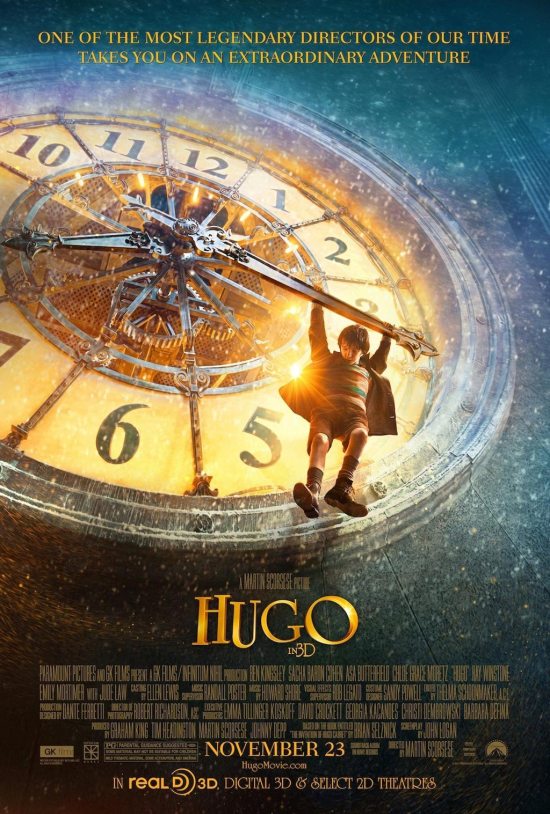
Martin Scorsese’s “Hugo” – A masterpiece of bipolar cinema

Martin Scorsese’s Hugo is a delightful family film and an outright visual treat, but it is definitely trying to be two distinct types of film. The antagonism between the orphaned, precocious tinkerer Hugo Cabret (Asa Butterfield) and the unforgiving (and unnamed) 1930s Paris train station inspector (Sacha Baron Cohen) is surely the zaniest plotline in the film – and yet, like every interaction here, it is checkered with a surprising depth of emotion. Nearly everyone in this film has a bit of a tortured past, but some of their harrowing backstories are downplayed to such a degree as to be unintentionally hilarious. When Hugo’s erstwhile father (Jude Law) is incinerated in an unmotivated blaze of CG fire, there was audible laughter in my audience… And when the station inspector’s leg-brace (a source of his ample bitterness) gets caught on the outside door of a departing train, I assumed he would meet a similarly horrific offscreen fate, but it was not to be.

The film begins with a masterful sequence of silent-cinema world-building (easily the strongest since WALL-E), then jumps right into this rather jarring combination of tones. But despite my initial qualms, I quickly found myself entranced by it. The film’s strongest relationship, which it establishes with remarkable speed, is between Hugo and Isabelle (Chloë Grace Moretz). Isabelle is bookish and adventurous, and fits right into that Hermione Granger zone of “probably should be annoying, but isn’t.” Moretz’ performance is nothing short of brilliant, lighting up the screen with enthusiasm everytime she makes an appearance. Asa Butterfield, a relative newcomer, is adept as Hugo Cabret, but the character himself is not nearly as fascinating as those surrounding him, and his relationship with Isabelle owes far more to Moretz’ performance than anything else. This young actress is just starting to demonstrate her versatility (starting with such films as Kick-Ass and Let Me In), and is certainly a talent to watch out for in the next few years.

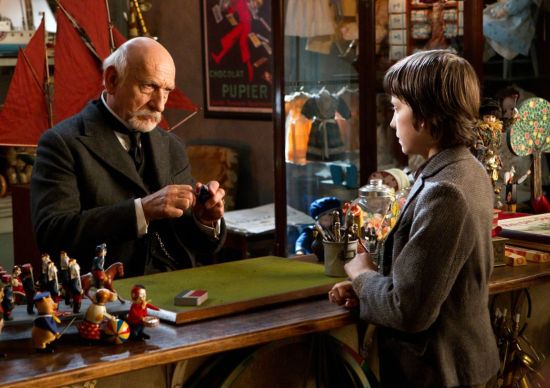
The film’s locale – a 1930s Paris train station – is also a rich character, particularly with the film’s luxurious 3D visuals to support it. Hugo lives on the fringes, climbing through the walls, rafters, and numerous clocks of the station, stealing what he can to support (and feed) himself. He also strives to repair a mysterious clockwork man (“automaton”) – a museum castoff that his father acquired before he died, and promised his son he would repair. When enigmatic toy vendor Papa Georges (Ben Kingsley) simultaneously catches Hugo thieving and discovers his secret mechanical project, he turns immediately hostile, vowing to burn Hugo’s notebook and have him arrested if he sees him again. It is at this point that Hugo and Isabelle embark on their adventure – to find out why Georges (Isabelle’s godfather) is so miserable in his old age. Kingsley’s performance is marvelous, delivering just the right blend of sadness and intrigue. This is a bitter and ancient soul, but his bitterness is richly layered enough to suggest that it is the product of having lived too much rather than too little. This is a man who had everything and lost it; not a man who regrets what he failed to achieve.

Much of the second half relies on flashbacks, and without getting into too many specifics, Hugo is the latest of several films (along with The Artist and My Week With Marilyn) to turn a nostalgic eye toward filmmaking techniques of old. Of those films, this one certainly goes back the furthest, presenting some truly innovative in-camera stop motion and lighting effects. With this sequence, Scorsese affectionately showcases the earliest days of film production, when a film studio was a glass warehouse full of sets and costumes blanketed in natural light. Along with the train station’s many clocks and gears and levers – which are strongly evocative of silent films such as Modern Times, this entire production feels like Martin Scorsese’s love letter to prototypical filmmaking.

Hugo’s conception of the world is as a wondrous machine full of mutually dependent and wholly necessary components- human and otherwise. For this conception to have survived even as he is relegated to the fringes of society is a fascinating theme, even if it gets stated aloud a few too many times during the film. Even as Hugo and Isabelle learn the dangers involved in dredging up the past, they seem as much in pursuit of their own purpose in life, and it’s all profoundly affecting. Even if not every moment rings perfectly true, the performances more than make up for it (a scene in which Papa Georges appears as the children examine an artifact from his past felt a little too pat, but Kingsley’s performance and ensuing monologue completely sold the moment). The supporting cast is strong, from Helen McCrory and Christopher Lee right down to Sacha Baren Cohen, who succeeds despite his rather thankless role.

Hugo strives to be both a children’s adventure film and a poignant drama about the burden of a forgotten artist, and it largely succeeds as both. What’s more, for any auteurists out there, it certainly feels like a personal project for Martin Scorsese, whose marvelous body of work is fortunate enough to exist in a century with both the technology and inclination to preserve it. No one quite knows how their creative efforts might be remembered in future generations, but this film deftly argues that such efforts ought to be remembered and cherished. What truly makes this is a great family film is not just the zany and inoffensive hijinks that it shares with so many other blockbusters, but also this message, subtly woven throughout a story that is quite worth telling.

FilmWonk rating: 8.5 out of 10

A note on 3D: The film boasts some stunning visual design, although I must say, seeing it in Dolby 3D (high-tech stereoscopic, basically) gave me a bit of a headache, and had far too many on-screen artifacts and reflections to avoid being a distraction. But this is certainly not the fault of the film, whose 3D is easily the best I’ve seen this year. As much as I hate to be a brand partisan, you’d do well to catch it in RealD 3D screening if you can.

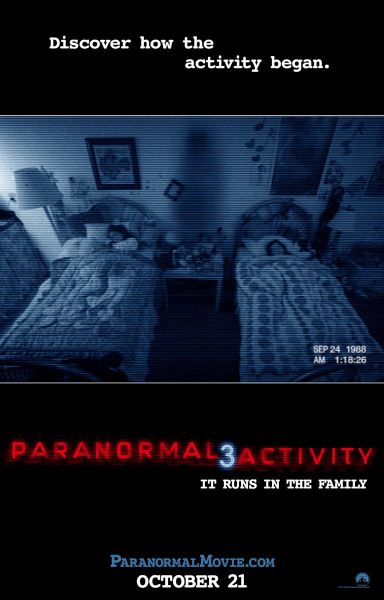
FilmWonk Podcast – Episode #14: Henry Joost and Ariel Schulman’s “Paranormal Activity 3”

Glenn and Daniel stare at the screen for 90 minutes waiting for something to move, reviewing “Paranormal Activity 3”. Will invisible demons and makeshift camera pans strike a memorable horror chord? Tune in and find out (30:11).

May contain NSFW language.

FilmWonk ratings: 5/10 (Glenn), 6/10 (Daniel)

Show notes:

  • Correction: we erroneously state that this film made $80 million in its opening weekend. Its actual opening gross was $52 million.
  • Today’s show music consists of the themes from Psycho (Bernard Herrmann, 1960) and Halloween (John Carpenter, 1978).

  • Why? Well…let’s just say found footage films aren’t known for their innovative scores.
  • Happy Halloween!

Listen above, or download: Paranormal Activity 3 (right-click, save as).

Michel Hazanavicius’ “The Artist” – Everything old is new again

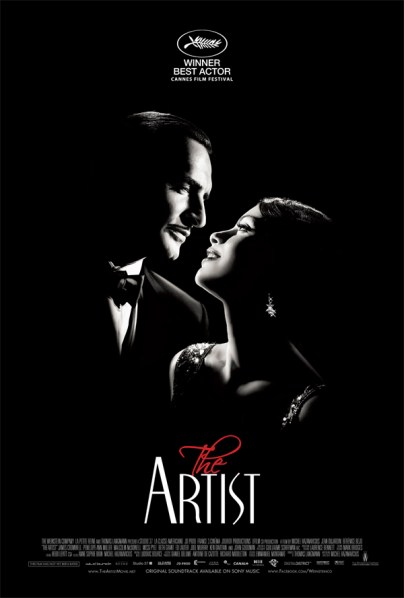
Poster for "The Artist"

There’s a curious trend in modern cinema to slavishly replicate film techniques from years gone by. In some cases, the decision seems purely stylistic – in David O. Russell’s The Fighter, for instance, contemporaneous TV cameras were used to recreate the period look and feel of HBO boxing matches. This deliberate reduction in visual quality seems meant to provoke nostalgia, as well as ground the film in some kind of documentary-style reality as a recent period piece. But never before have I see such deliberate eschewing of modern cinematic technology – in a way that works entirely in favor of style – as in Michel Hazanavicius’ The Artist, which is a genuine black-and-white, silent film, made this year in Hollywood. Given that the film depicts the transition from silent to talking pictures, this format not only feels appropriate for the subject matter, but is seemingly the only format in which this story could have been told.

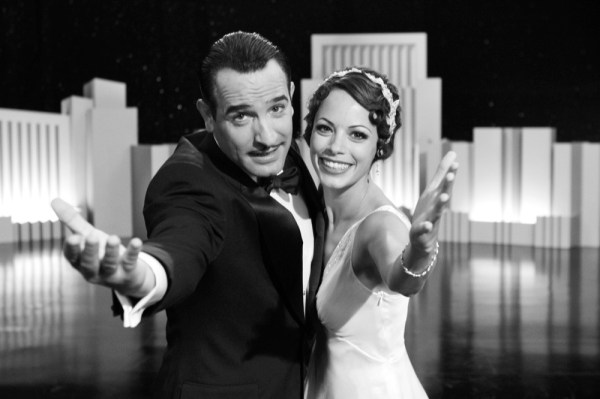
George Valentin (Jean Dujardin) is a popular silent film star who has just been told rather tactlessly by his studio head (John Goodman) that the future of cinema is in talking pictures. If this is the future, [a title card informs us he says], “They can have it!” Valentin’s career immediately begins to fade into silent obscurity, even as he inadvertently launches the career of rising star Peppy Miller (Bérénice Bejo), whose voice (we’re told) is exquisite enough to attract patrons of the new cinema.

This film is a bit paradoxical, since it could be construed just as easily as a love letter to silent film or a self-aware satire of its constraints. We are “told” a number of silent film’s shortcomings, and “hear” all about old actors mugging for the camera instead of giving fully realized performances. Valentin is a curmudgeonly figure, and a great deal of the character’s sympathy lies in the outside knowledge that his career was doomed from the outset of the film. There’s the obvious point that talking pictures were indeed the future of cinema. The film’s audience knows it, even if the characters do not. There’s also some “Inside Baseball” type context: the rise of talking pictures also marked the beginnings of the studio system, in which actors were contractually beholden to the powerful studios that had discovered them. They owned the actors, as well as every level of production and distribution. Given that Valentin is unwilling to play ball with the new method of film production, his career is unquestionably at an end. Back then, they could say “you’ll never work in this town again”, and it actually meant something.

Still from "The Artist"

Jean Dujardin is forced to convey a great deal of emotional nuance through Valentin’s slightest glance or gesture, and the film resorts to techniques and shots that, in any other film, would have seemed incredibly manipulative. There’s a scene late in the film when Valentin confronts a room full of his old belongings, covered in sheets. As the music swells, he dramatically rips down every sheet, revealing the vestiges of his former success, finally staring heartbroken at a prized full-body portrait of himself in a tuxedo. His tears come forth, and Ludovic Bource’s score swells to overpowering heights, just as it does in many other scenes. But somehow, the tense crescendos of music that punctuate this film manage to craft a believable emotional arc of their own, even lacking the additional tones of a wailing, tormented man’s voice. The score supplements the visible emotion and physicality of Dujardin’s performance. These scenes worked, and in this medium, they seemed entirely appropriate.

This is not to say the film was entirely believable – the romance was a hard sell, despite the impressive standalone performances of the two leads – it’s hard to buy them as anything but old friends as the film goes on. The first half was a bit too slow, getting bogged down with history instead of advancing the story. Even so, the tone of the film feels more like a fairy-tale than an accurate depiction of the demise of silent film. But at this point, I must admit – my knowledge of silent film is rather limited. At the time of this writing, I could recall seeing exactly one other silent film – Charlie Chaplin’s Modern Times. While I can’t comment on the parallels (if any) between the fictitious George Valentin and any real-life silent film stars, I do know that all art should stand on its own, and George Valentin is indeed an artist. His obstinate refusal to conform to a new method of artistry could be seen as either noble or foolish, depending on your perspective – but the parallels to modern franchise films and 3D are readily apparent. The future of cinema may or may not lie under the cape of the most popular superhero of the present year, but there are plenty of beloved and respected actors who have made the transition into big-budget comic-book cinema. And while I won’t presume to know the minds of Sirs Patrick Stewart, Ian McKellan, Ben Kingsley, and others – I imagine they would have a great deal to say about the nobility of eschewing one’s own pride in favor of elevating a new form of cinema. Or perhaps they just did it for the money. Who knows.

It is not for us to judge Valentin too harshly, but the film certainly sells the nobility of his struggle. The Artist crafts a complex character’s journey without overly relying on title cards, and conveying a great deal of story via background set design – a technique that has remained effective to this day (Children of Men is a recent example). In the present day, we have no choice but to regard silent film as an anachronistic technical limitation. But in its day, it was the engine that propelled innovative storytelling, and Hazanavicius clearly understands how it succeeded. This film could have been a baseless technical exercise, but with this execution, it’s nothing short of a modern classic.

FilmWonk rating: 8 out of 10

FilmWonk Podcast – Episode #13: Jonathan Levine’s “50/50”

This week, Glenn stumbles forth from a weekend of short film madness to join Daniel and review 50/50, a new comedic drama from director Jonathan Levine and screenwriter Will Reiser, loosely based on Reiser’s own experiences getting cancer at a young age. Can such dour subject matter succeed as a comedy? Tune in and find out (28:54).

[may contain some NSFW language]

FilmWonk rating: 8/10

Show notes:

  • 50/50 is out in theaters this Friday, September 30th.
  • Music for this episode is “Carries On“, from Edward Sharpe and the Magnetic Zeros, which appears in the film’s trailer.
  • In the podcast, we refer to Adam’s two “chemo buddies”, who are played by Philip Baker Hall and another actor we weren’t familiar with. The other actor was Matt Frewer.
  • Stick around for a blooper if you’re game.

Listen above, or download: 50/50 (right-click, save as).