2010 Glennies, Part 2: Best Supporting Actor

#5: Jonah Hill – Cyrus, Cyrus
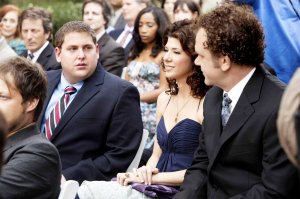
In this film from Jay and Mark DuPlass, most of the film’s dialogue was improvised by the actors, and I can only imagine what kind of direction the brothers gave to Jonah Hill as the title character. Creepier… Wider eyes… Like you’re boring into my soul with a searing fireplace poker… This film presents an utterly bizarre, almost marriage-like relationship between Cyrus and his mother (Marisa Tomei), and an instant antagonism for her budding romantic interest, played surprisingly straight by John C. Reilly. All three actors boast a fantastic chemistry, but it’s Jonah Hill’s performance that is easily the most memorable and comedically disturbing.

#4: Armie Hammer – Tyler and Cameron Winklevoss, The Social Network

I don’t generally give credit to an actor simply because of the likely-difficult circumstances of production (I’m sure Sam Worthington’s Avatar shoot was no picnic), but Armie Hammer managed to navigate the movie-magic vagaries of playing composited crew-rowing twins while simultaneously imbuing each of them with a distinct and memorable personality. The level of sympathy for these characters will likely depend on your feelings on the Facebook/Harvard Connection litigation (ongoing as of this writing), but Hammer’s take on the brothers Winklevi never waivers from portraying them as consummate and forthright “gentlemen of Harvard”. Even as they seem determined to bring down the ostensible antihero of the tale, they never quite seem like true villains – they are honest, self-conscious, and perhaps a little naive. Hammer manages to convey all of the dimensionality and noticeably distinct personalities amid Sorkin’s signature rapid-fire dialogue, turning in two of the most memorable performances in an equally impressive cast.

#3: Andrew Garfield – Eduardo Saverin, The Social Network

Minor spoilers for the film, and to a lesser extent, real life, will follow.
The effectiveness of The Social Network hinged on a great many things, but easily the most important aspect of the film is the erstwhile friendship of Mark Zuckerberg (Jesse Eisenberg) and Eduardo Saverin. Without Zuckerberg, there’s no Facebook. Without the relationship with Saverin, there’s no movie. Garfield and Eisenberg had a great comedic chemistry (a scene in which Saverin explains to Zuckerberg his treatment of a pet chicken is easily one of the funniest in the film), but Garfield also played the character with such earnestness and emotionality that this relationship and its inevitable dissolution were utterly captivating to behold. What happens to Saverin is business, to be sure, but the film manages to also sell it as a significant personal betrayal. While this owes a great deal to Sorkin’s writing, it is Garfield’s heartbreaking final scenes that make it succeed so masterfully.

While Garfield is receiving this award for The Social Network, I was also impressed by his turn in Mark Romanek’s Never Let Me Go. I can’t imagine what sort of Spider-Man he’ll be, but I’m a lot more interested in finding out after such a remarkable year of introductory performances.

#2: John Hawkes – Teardrop, Winter’s Bone
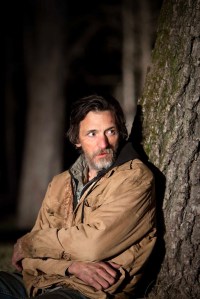
While Jacki Weaver may have played my favorite villain this year, it is John Hawkes who beats her out for the most terrifying screen presence. Given his unassuming and light comedic performance in 2005’s Me and You and Everyone We Know, and his thoroughly likeable run on HBO’s Deadwood, I was completely blown away by Hawkes’ transformation into the heroine’s wiry meth-addict uncle. From my original review:

His physique was more or less unchanged (except for a slightly graying beard), but his demeanor was something new and thoroughly intimidating. Every word Teardrop says seems to carry a simmering threat of violence, and although the character actually perpetrates very little, Hawkes brings a fiery intensity that makes him downright terrifying to watch.

He and Jennifer Lawrence match each other’s grit quite nicely, and their unlikely alliance was crucial to the film’s effectiveness.

#1: Christian Bale – Dicky Eklund, The Fighter

As I noted in the podcast review, Christian Bale has mostly approached his last few years’ worth of roles in a gruff and humorless fashion, and the resulting performances have not been too impressive. The moment Dicky Eklund steps into frame in the film’s opening street scene, I forgot all of that. This character is such a firecracker. As Eklund saunters down the streets of Lowell, Mass. greeting every inhabitant he comes across, Bale utterly oozes with charisma. His physical and verbal commitment to this character is unparalleled in this cast or any other film this year.

This is the self-destructive crackhead you’d love to be friends with. At the outset, he’s wiry, twitchy and completely high in every scene, but just a load of fun to be around. He plays the most dysfunctional member of a severely dysfunctional family, and yet every one of his early scenes is an absolute pleasure. Minor spoiler, revealed in the trailer: When the character detoxes in the second half of the film, Bale manages to make the personality change believable, and yet still keeps the character completely engaging even without hopping uncontrollably as he did in the first half. This is the best Bale performance in several years, and easily boasted enough screentime to rightfully be considered for Best Actor. But the Academy has spoken

Honorable Mentions:

  • Justin Timberlake as Sean Parker in The Social Network
  • Ewan McGregor as Phillip Morris in I Love You, Phillip Morris
  • Jeremy Renner as James Coughlin in The Town
  • Matt Damon as LaBoeuf in True Grit
  • Mark Ruffalo as Paul in The Kids Are All Right
Click here to see the rest of the 2010 Glennies.

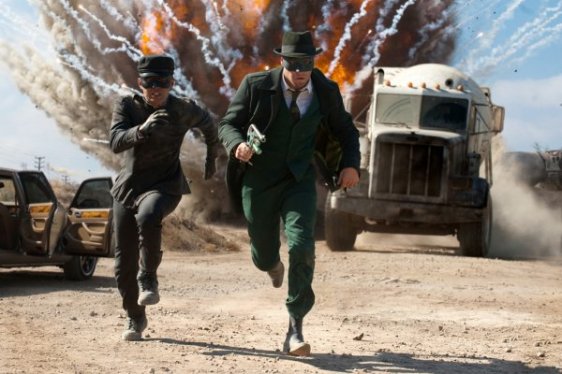
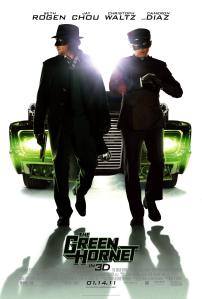
Michel Gondry’s “The Green Hornet” – The hero L.A. deserves?

Seth Rogen might just have found his niche playing detestable heroes. He gave a thoroughly entertaining performance as a psychopathic mall cop in Jody Hill’s pitch-black 2008 comedy Observe and Report, and indeed, his performance in Michel Gondry’s The Green Hornet bears some similarity. Both would-be heroes are infantile, petty, helpless around women, and prone to occasional bouts of alarmingly skillful violence. But while Observe was an unapologetic celebration of terrible people doing terrible things, The Green Hornet is ostensibly a light-hearted comic tale about a self-styled hero that’s meant to be worthy of our admiration.

Tonally, the film falls somewhere between Kick-Ass and Iron Man. Like the former, Britt Reid (Rogen) is delusional and borderline incompetent, but like the latter, he has all the physics-defying gadgetry he needs to keep himself alive for longer than 30 seconds. In the place of a mellifluous holographic A.I. to build his gadgets, Reid has a Q-ish tech wizard, kung-fu master, and expert barista named Kato (Jay Chou). Kato’s relationship with Reid fluctuates wildly between buddy comedy and guardian for a special needs child – a scene in which Kato explains to Reid why he might need a gas-slinging sidearm is one of the most painfully funny in the film. The audience is left wondering why Kato puts up with his boss’ constant abuse and mockery, but it might have something to do with his seemingly unlimited budget for high-tech toys. In any case, this is not a film for believable (or even comprehensible) relationships.

If The Green Hornet is about anything, it’s narcissistic image-obsession. Over and over again, the characters speak at length about how they look, how they are perceived by others in the story, and what the characters in a violent comic farce should do. Nearly all of the scenes featuring the villainous Chudnofsky (Christoph Waltz) play like cringe-inducing, metafictional peeks into the writers’ room. “Do I look scary? Is my gun scary? What do you think of my costume? Do you know how many different suits I’ve tried?” Chudnofsky may come with Waltz’s adeptly intimidating presence, but he has no real identity of his own, and feels almost like he is trying to conceive one in front of the cameras. But he’s not half as self-conscious and directionless as our heroes. In a line seemingly tailor-made for the film’s trailer, Reid explains to Kato, “Here’s what will make us different!”

Their grand plan is essentially to start a gang war and kill every criminal in the city. Brilliant in its simplicity, I suppose. But while Black Beauty, the tank-like super car, may allow the Hornet and Kato to viciously slaughter any evildoers with all the subtlety of Depression-era gangsters, it basically just feels like an old-timey and borderline magical version of the Batmobile. What’s more, their grand plan seems as likely to ensnare police and innocent bystanders as rival gangsters. This is Iron Man without a conscience. And strangely, that’s where the film started to appeal to me.

If there is one attribute that has defined nearly all modern superhero films, it’s self-importance. Even in the most schlocky and unwatchable incarnations of the genre (I’m looking at you, Fantastic Four), there are always ponderous questions about what it means to be a hero and how much is at stake if the hero fails. The Green Hornet has no such lofty ambitions, and I was surprised to find its sadistic playfulness and dark humor to be a refreshing change of pace. Nearly every scene in this film is simultaneously exhilarating and painful to watch on some level, from its farcical attempts at romance (for which I give a great deal of credit to Cameron Diaz) to its utterly balls-out action sequences, which are at least impressive on a technical level. They don’t all land perfectly, but I’m happy to see that director Michel Gondry (Eternal Sunshine of the Spotless Mind) remains as skillful as ever, even with a blockbuster budget. What’s more, he even managed to shoehorn in a dream sequence chock full of practical effects and camera trickery – a skillful display which felt mostly out of place, but by the time it appeared, I was past caring about the film’s lack of consistency.

The Green Hornet is an oddity, to be sure. I didn’t emerge from it without a laundry list of complaints, but I still found the sum of the experience enjoyable. Seth Rogen and Evan Goldberg’s script feels like it’s trying to be the buddy-comedy spiritual successor to Superbad, and it at least partially succeeds. The writing is very jokey and surprisingly dark, but exhibits a clear understanding of comic book tropes. In a genre that’s gradually starting to wear out its welcome, this bizarre spectacle of a film feels far more like a labor of love than a cynical cashgrab, and that might just be what makes it watchable.

FilmWonk rating: 5.5 out of 10

2010 Glennies, Part 1: Best Supporting Actress

#5: Keira Knightley – Ruth, Never Let Me Go

Still from "Never Let Me Go"
Spoiler warning: In order to discuss this performance, I must reveal the premise of this film, which some might consider a spoiler.
Mark Romanek’s Never Let Me Go was an absolutely haunting experience. The alternate-world tale of three friends who grow up to be harvested for their organs, this film doesn’t feel overtly like science fiction, but instead relies on a triumvirate of strong performances to convey the somber and limited lives these three must experience. Keira Knightley gives easily her strongest performance in years, conveying every bit of the jealousy, longing, and regret that this tragic character demanded. While the film’s love triangle was one of its weakest aspects, Ruth’s relationship with Kathy (Carey Mulligan) worked masterfully, and owes just much to Knightley’s supporting turn as to Mulligan’s strong lead.

#4: Delphine Chanéac – Dren, Splice

Still from "Splice"

Dren, the human-animal hybrid from Splice, certainly owes some of its effectiveness to makeup and visual effects, but I must nonetheless applaud this utterly fearless portrayal from French model/actress Delphine Chanéac. This creature must convey a huge range of emotions and instincts through expressions, tics, and growls, often during some pretty harrowing and horrific sequences. Like the residents of the uncanny valley, Dren seems irrevocably human, and yet even when her animal parts aren’t visible, she just seems…wrong. Chanéac lends just the right amount of humanity and intelligence while never failing to remind the audience, whether through a jerk of the head or a high-pitched whine, that this character is not and cannot be human. As a bioethical thought experiment, this film’s ideas are effective. With this performance, the film approaches disturbing near-realism.

#3: Chloë Grace Moretz – Mindy Macready/Hit-Girl, Kick-Ass

Still from "Kick-Ass"

As I said in the second FilmWonk podcast, I found Chloe Moretz’s performance as the psychopathic superheroine Hit-Girl to be downright unsettling. Not when she was hopping down a hallway dispatching gangsters with the same eerie speed and dexterity as Prequel Yoda, but when she was having sweet father-daughter moments with an utterly ridiculous Nicolas Cage. Through no fault or will of her own, Hit-Girl has been saddled with an upbringing not unlike that of a Rwandan child soldier, and the cringe-inducing warmth of these family scenes lends nicely to the film’s pitch-black satirical tone. Hopefully, Moretz won’t get saddled with the child-actor typecasting curse, as this is the second film in which she’s played a wildly unrealistic child prodigy. Physically and emotionally, this performance is nothing short of mind-boggling in its scope and commitment to the role, and firmly cements her as one of the finest young actresses working today.

#2: Amy Adams – Charlene Fleming, The Fighter

Still from "The Fighter"

Oh, what to say about Amy Adams? This is a fantastic performance in a mostly impressive filmography, made even more so by what a radical departure it is from her usual “sweet girl” persona. Charlene is, and I mean this with the utmost respect, a tough bitch. Her strong, confident demeanor proved a fascinating counterpoint to Mark Wahlberg’s understated performance of an overshadowed character, and the chemistry between the two was undeniable. But even outside the romance, Charlene is a fascinating character, and Adams gives just the right balance of confidence and vulnerability to what could have been a very one-note love interest.

#1: Jacki Weaver – Janine Cody, Animal Kingdom

Still from "Animal Kingdom"

Not since Heath Ledger’s Joker have I seen such an delightfully creepy villain as this. Jacki Weaver’s appearance as the Aussie gangster matriarch Janine Cody quite deliberately evokes a lioness dutifully guarding her cubs, but at the same time, Weaver’s intensity muddles the metaphor a bit as she seems poised to devour any family member that gets in her way. This performance is utterly magnificent, from her every little interaction with her sons and grandson to her dismissive taunts to law enforcement (“but I’m not afraid of you, sweetie!”). As I said in the podcast, this film is a slow burn, but it’s Weaver, the standout in a cast of strong performances, that makes this film such a compelling watch.

Honorable Mentions:

  • Dale Dickey as Merab in Winter’s Bone
  • Rebecca Hall as Claire Keesey in The Town
  • Michelle Williams as Dolores in Shutter Island
  • Mia Wasikowska as Joni in The Kids Are All Right
  • Rooney Mara as Erica Albright in The Social Network

Click here to see the rest of the 2010 Glennies.

2010 Glennies Roundup

It’s that time again… 2010 is over, and it was a surprisingly great year for cinema, especially given the rocky start and franchise-laden middle. I’ve seen movies great and terrible this past year, as well as some fantastic performances.

A note on exclusions… As I round up the films I’ve seen this year, there are always a few I meant to see, but didn’t get around to it. As of this writing, I have not had a chance to see the following films. I don’t know (and in some cases, doubt) if they would have made the top 10, but naturally they are ineligible:

  • The King’s Speech – An award-fodder period drama featuring Colin Firth’s usual awesomeness and a surprisingly chipper Helena Bonham Carter (watched since)
  • Four Lions – a terrorist comedic satire, perhaps this year’s True Lies or In The Loop? (watched since)
  • A Prophet – an epic crime drama
  • The Greatest – a somber romance
  • Micmacs – Jean-Pierre Jeunet’s whimsical take on Lord of War
  • The Lottery – a documentary on charter schools (watched since)
  • Valhalla Rising – Nicolas Winding Refn’s viking romp
  • Centurion – the latest from horror director Neil Marshall, who made a turn for the sword-and-sandals (watched since)
  • Dogtooth – A disturbing Greek drama (watched since)
  • The Tillman Story – A look back at the life and representations of famed American soldier, Pat Tillman
  • Let Me In – An unnecessary, but nonetheless good-looking remake of 2008 fave, Let the Right One In from Cloverfield director Matt Reeves.
  • Nice Guy Johnny – A straight-to-iTunes release from actor/director Ed Burns.
  • Blue Valentine – A strangely controversy-fueled romantic drama.
  • The Illusionist – An French animated film from a 55-year-old Jacques Tati script? I’m intrigued.
  • Monsters – First-time director and visual effects artist Gareth Edwards takes low-budget filmmaking ambition to shocking heights. By all accounts, this film was at least gorgeous-looking, despite not being this year’s District 9.

Also, Trash Humpers.

In the ensuing year, I sought to find a new symbol for the Glennies, but the blue Egyptian hippo began invoking ancient curses, so I’ll just have to leave him be. His name is Roger, and he is the official statuette of the 2010 Glennies. Enjoy!

2010 Glennie Awards


Egyptian Blue Hippo


Best Supporting Actress
Best Supporting Actor
Best Actor
Best Actress
Top 10 Films of 2010

FilmWonk Podcast – Episode #7: David O. Russell’s “The Fighter”

Poster for "The Fighter"

This week, Glenn and Daniel dive in face-first with flailing fists to review David O. Russell’s boxing biopic-cum-family drama, The Fighter, starring Mark Wahlberg, Christian Bale, Amy Adams, and Melissa Leo.(19:12)

[may contain some NSFW language]

FilmWonk rating: 8.5 out of 10

    Show notes:
  • Music for this episode is The Heavy’s “How You Like Me Now?”, from the film’s soundtrack.
  • With apologies to Tom Hooper, David Seidler, Colin Firth, and Geoffrey Rush, stick around at the end for a blooper!
  • As penance for our shameful blooper, check out the next episode, in which we review Tom Hooper’s The King’s Speech.

Listen above, or download: The Fighter (right-click, save as).

FilmWonk Podcast – Episode #6: Tony Scott’s “Unstoppable”

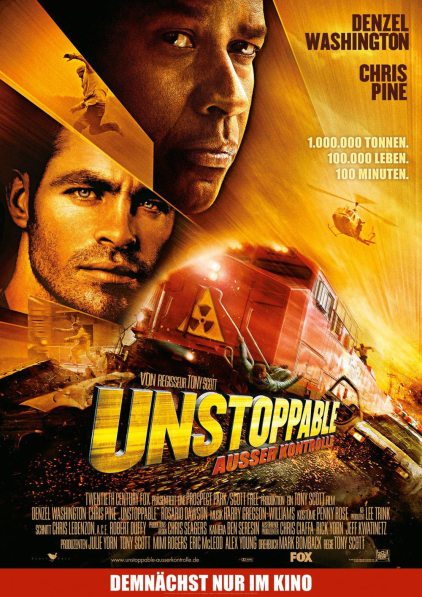
Tony Scott is back on the train with Unstoppable, a “railyard thriller” starring Denzel Washington, Chris Pine, and Rosario Dawson. Will our heroes escape yet another Tony Scott film with their sanity intact? Find out on this week’s episode of the FilmWonk podcast (17:12)

[may contain some NSFW language]

FilmWonk rating: 7 out of 10

    Show notes:
  • Spoiler warning: This film is tough to spoil, since the ending is kind of a foregone conclusion, but we don’t exactly skimp on the details.
  • Music for this episode is Kat DeLuna’s “Unstoppable”, from the 2009 film Confessions of a Shopaholic.
  • Rosario Dawson’s character was named “Connie”, not “Coolidge”, and yep, I’m laughing at myself.
  • The international poster (above) perfectly conveys the tone of this film.

Listen above, or download: Unstoppable (right-click, save as)

FilmWonk Podcast – Episode #5: Adam Green’s “Frozen”

Poster for "Frozen"

First we met the Devil, then we got Buried, and now, in the latest installment of this inadvertent “One-Word, One-Room” marathon, Glenn and Daniel pull on their ski boots and review Frozen, a horror film new on DVD and Blu-ray from writer/director Adam Green, starring Shawn Ashmore, Emma Bell, and Kevin Zegers. (19:59)

[may contain some NSFW language]

FilmWonk rating: 6.5 out of 10

    Show notes:
  • Music for this episode is a little cheeky.
  • Shawn Ashmore, who plays Joe Lynch, also played Bobby “Iceman” Drake in the X-Men films. There’s an awful joke in there somewhere, but it must’ve slipped our minds…
  • Stick around at the end for a blooper!

Listen above, or download: Frozen (right-click, save as)

Rodrigo Cortés’ “Buried” – Masterfully uncomfortable

Poster for "Buried"

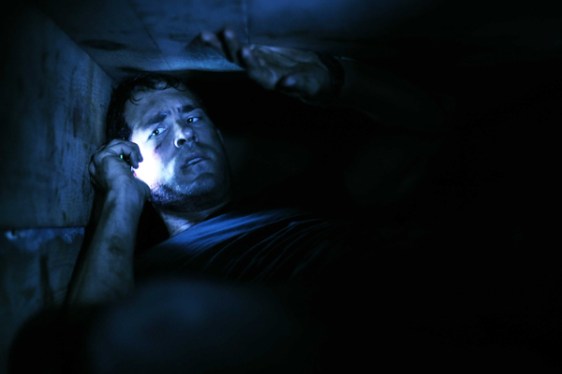
Buried is viscerally unnerving from the very first frame. After a lavishly-scored, Hitchcockesque title sequence, we begin the film in complete darkness, hearing the confused and muffled grunts of Paul Conroy (Ryan Reynolds), an American civilian contractor in Iraq who has been kidnapped and buried alive in a coffin. His hands are tied, his mouth is gagged (for some reason), and his only immediate light source is a Zippo lighter from his pocket (surely not the best item to be using with a limited air supply!).

The film’s premise seems to be a real-world expansion on a brief sequence in Kill Bill: Volume 2 – a character is buried alive, and we live the entire experience from his perspective. I’m not particularly claustrophobic, but even I was getting physically uncomfortable by the end of the film. However, it is to the film’s credit that I wasn’t feeling it even sooner. The film lasts 100 minutes, nearly all of which is spent in the coffin. But by way of a borrowed cell phone and some masterful sound design, Buried feels almost like an old-time radio play, crafting the illusion of a much larger world. For a locked-room thriller with an even more confined scope than Phone Booth, this film’s expansive feeling is an impressive achievement.

Speaking of achievements, this may be the most electrifying performance yet from Ryan Reynolds. Like Tom Hanks in Cast Away before him, Reynolds has crafted a masterful one-man show, and he never lets up on the stakes. Paul is dying alone, and Reynolds deftly conveys his ratcheting hopelessness and frustration.

“WHAT ARE YOU DOING, RIGHT NOW, TO GET ME OUT OF HERE?!”, Paul screams into the phone at Dan Brenner (voice of Robert Paterson), head of the coalition military’s Hostage Working Group. Brenner is easily Paul’s closest ally, working tirelessly to find his captors before it’s too late, but he ends up working a surprising amount of hostage negotiator voodoo on Paul himself. Brenner has to try and calm Paul down and preserve his air supply, which includes trying to protect him as much as possible from the true horror of the situation. The tense dialogue between these two is some of the most effective in the film, and Paterson’s vocal performance certainly helps carry it. He casts Brenner as a caring but pragmatic ally – like the proverbial starfish-thrower, he’ll save as many hostages as he can, despite knowing that he won’t be able to save most of them.

Still from "Buried"

There was also a shining performance from veteran character actor Stephen Tobolowsky as the voice of Alan Davenport, the company’s head of personnel. His scene very nearly took me out of this film with its utter hopelessness, and yet the whole thing seemed depressingly plausible, owing a great deal to both the screenwriting and Tobolowsky’s eerily calm demeanor. The indifference of the outside world was a resounding theme throughout the film, and this scene made for a shocking bookend to that theme. Rather than being taken out of Paul’s plight, I was very nearly weeping for him.

With scenes like this in mind, the tone of the film is a bit hard to pinpoint. The direction is very reminiscent of Hitchcock – Cortés and cinematographer Eduard Grau were able to compose a remarkable variety of shots in such a cramped space and dismal lighting, occasionally cheating the outside of the coffin and moving the camera outward to further showcase Paul’s isolation. Many of the phone calls were punctuated with axial cuts (in which the camera jumps closer and closer to his face with each statement), along with sharp, jarring musical cues… Indeed, the direction and score kept the film’s feeling very light, even as Paul’s situation deteriorates. There is a sequence in the second half in which Paul has to deal with [an unexpected spoilerific difficulty – but trust me, you’ll know what I mean]. This scene and its resolution were utterly ridiculous, but very well designed and shot. If I were watching a more cartoonish thriller, this moment of levity would certainly not have bothered me, but it just seemed completely out of place in light of the more dour scenes that follow.

But perhaps a mixed tone is exactly what this film needed… In many ways, Buried came out at just the right time. Imagine this film seven years ago… At the onset of war amid an economic boom, shortly after the “Mission Accomplished” banner, we all heard about the lavish, six-figure civilian contractor jobs available for reconstruction in Iraq. Every war has its profiteers, and whether or not these contractors qualify, I could certainly see people both here and in Iraq regarding them with (at the bare minimum) complete indifference. You takes the job; you takes your chances, and that includes the possibility that criminals will kidnap and murder you. This mentality is rarely so black-and-white in the real world, but the film’s presentation of it feels authentic. Now that the war and economy have both wound down a bit, it’s much easier to see Paul as a sympathetic everyman, just trying to do right by his family. He knew this was a possibility, but he didn’t ask for it, and he certainly didn’t deserve it.

FilmWonk rating: 7.5 out of 10

FilmWonk Podcast – Michael Winterbottom’s “The Killer Inside Me”

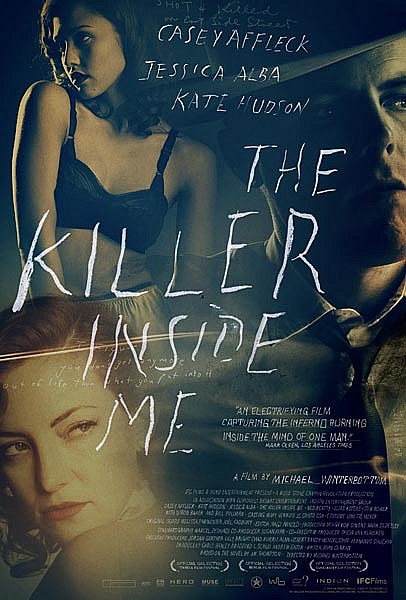
Poster for "The Killer Inside Me"

In this episode of the FilmWonk podcast, Glenn and Daniel kick back some whisk(e)y and review Michael Winterbottom’s The Killer Inside Me, starring Casey Affleck, Jessica Alba, Kate Hudson, Ned Beatty, and Elias Koteas. (20:00)

[may contain some NSFW language]

FilmWonk rating: 4 out of 10

    Show notes:
  • Music for this episode is Little Willie John’s 1956 version of the rhythm and blues classic, “Fever”, which plays over the film’s opening credits.

  • I mistakenly refer to John Wayne Gacy as a serial killer with mommy issues; I was actually thinking of Ed Kemper, who murdered his mother with a claw hammer.

  • I also refer to the death of Harry Houdini, which was widely speculated to have involved a few blows to the stomach. However, the blows exacerbated his actual cause of death – peritonitis, secondary to a ruptured appendix. Rest in peace, magic man.

  • I compare this film’s reception to Lars Von Trier’s Antichrist; I didn’t even realize that both films’ posters have the same creepy handwritten chalkboard style lettering. Bizarre.

Listen above, or download: The Killer Inside Me (right-click, save as)

Seattle’s One-Reel Film Festival 2010 – Saturday Roundup

The One-Reel Film Festival is part of Seattle’s renowned Bumbershoot music and arts festival, which wraps up today. I attended on Saturday, and had the opportunity to see short films from all over the world, ranging from very good to extremely bizarre, some of which can be viewed online (I’ve included links below where applicable). Unfortunately, due to unforeseen will call delays this year, I missed the first two film blocks. I was still able to see the four remaining categories, which I’ve arranged in presentation order below. Bold text means I enjoyed the film, and an asterisk (*) means it was my favorite film of the category. Skip to the bottom for a list of all the films that can be viewed online.


Around the World in 50 Minutes:

  1. Miracle Fish (Director: Luke Doolan, Australia, 17 minutes) –
    A slow and rather offensive horror (?) film that is nonetheless effectively creepy. Sound mix seemed occasionally off- managed to make children’s laughter sound extremely grating. Effectively captured the mindset of a lonely child in a scenario that felt almost borrowed from a “Twilight Zone” episode.
    Watch it here.

  2. Superhero (Director: Hanneke Schutte, South Africa, 15 minutes) –
    A man wakes up in the desert dressed as a superhero. What ensues is a sweet little tale of admiration and forgiveness. Beautiful South African desert scenery, slightly hammy acting.
    More info here.

  3. Televisnu* (Director: Prithi Gowda, India, 15 minutes) –
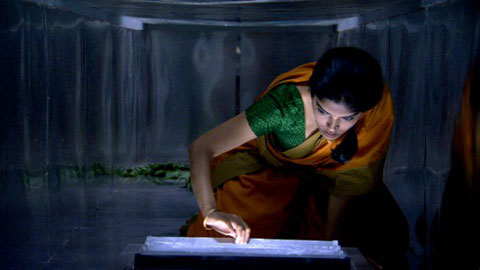
    A bizarre, stream-of-consciousness journey through the life of a young Indian girl who is promised into an arranged marriage. Following the introduction at her workplace (a tech support call center), scenes unfold like flipping TV channels with only the slightest connection from one to the next, but there is a fascinating narrative and character arc that runs through it all. The filmmaking reminded me favorably of Michel Gondry, capturing a grand sense of tumbling down the rabbit hole on what was clearly a modest budget. During the outdoor sequences, the Bangalore scenery was gorgeous (miles of rocky hillsides covered in palm trees). The director, Prithi Gowda, was in attendance, and slightly endangered my opinion of the film by veering in a “Lost” direction with her explanation (“I was just trying to make a film with a lot of mysterious elements!”), but did clarify a number of points – namely, that the film is rooted in the myth that the Hindu deity Viṣṇu is dreaming our existence. Televisnu is delightfully bizarre, and was easily my favorite of the category. More info and trailer here.


The Animated Life


  1. Cat’s Cradle (Director: Ray Rea, USA, 4 minutes) –
    I swear, there’s one of these every year. This was an uncontrolled vomiting of black and white Rorschach blots, photographs, and transparency layers set to some trippy music. Felt about twice as long as it actually was. Not quite as offensive to the senses as That Idiot Stinks from last year, but very nearly. Info here.

  2. Dust Kid (Director: Jung Yumi, South Korea, 10 minutes) –
    A cleaning woman keeps finding dust in the form of a shy little naked girl, and deals with her mercilessly. The animation is done in a very minimalist hand-drawn b&w style. While the motion was a little jerky at times (when characters walked, I thought I was watching South Park) each frame of this film was artfully composed, and the story was delightful. Trailer here.

  3. Humpty Dumpty is Scrambled (Director: Yuriy Sivers, Canada, 3 minutes) –
    A bizarre and slightly incomprehensible music video manifesto. The lyrics may be incoherent, but the anti-war message is clear, and the protagonist is a freaking atom bomb. Worth it for the strange and morbid animation style, which reminded me at times of Pearl Jam’s “Do the Evolution” video – but the music is a upbeat jazz number. Watch it here.

  4. The Incident at Tower 37* (Director: Chris Perry, USA, 11 minutes) –
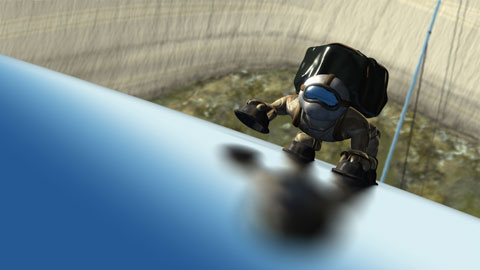
    The film’s noticeably low-budget CG doesn’t reduce its effectiveness in the least – this is a gripping and poignant environmental allegory with an absolutely beautiful score (from composer Evan Viera). The film’s earnest message is about as over-the-top as “Captain Planet”, but it doesn’t resort to cheap manipulation to showcase it. More info and trailer here (film will eventually be online).

  5. Pivot (Directors: André Bergs, Arno de Grijs, Kevin Megens, Floris Vos; Netherlands, 5 minutes) –
    A fun and adept little chase thriller with a bizarrely polygonal CG aesthetic. Watch it here.

  6. Santa, the Fascist Years (Director: Bill Plympton, USA, 4 minutes) –
    Perhaps the most concise and accurate titular high concept since Snakes on a Plane. This is one extremely simple joke told well and for just long enough. More info and clip here.

  7. Super Baozi vs. Sushi Man (Director: Haipeng Sun, China, 2 minutes) –
    See “Santa, the Fascist Years”, as I could say all of the same things about this film. Cute (and bizarre) little tribute to Bruce Lee in which a meat bun fights a sushi roll. Watch it here. If you liked that, check out Food Fight (D: Stefan Nadelman, USA, 6 minutes), a history of 20th century American warfare as reenacted by pieces of food.

  8. Vive la rose (Director: Bruce Alcock, Canada, 6 minutes) –
    A fascinating mixed media project based on a song by a Newfoundland musician. Features an impressive opening shot which combines full-motion time lapse and stop motion, then delves into an watercolor-animated music video framed artfully with physical media (dirt, rocks, shells, and sticks). More info and clips here.


Best of SIFF 2010 Jury Award Winners


  1. Little Accidents (Director: Sara Colangelo, USA, 18 minutes) –
    One word: classy. I missed the first few minutes of of this, so I don’t have too much to say… This is an odd rehash of Forrest Gump – a sweet simpleton is recruited by his extremely white-trashy girlfriend to steal a pregnancy test for her. And oh yes, there are choc-o-lates. Impressive acting, especially from the female lead (possibly Amanda Fulks). More info here.

  2. White Lines and the Fever: The Death of DJ Junebug* (Director: Travis Senger, USA, 27 minutes) –
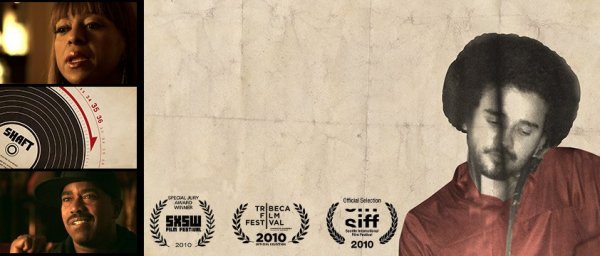
    This slickly edited documentary was a surprise favorite for me. It drew me in immediately despite covering a subject I cared almost nothing about – the 1980s Bronx origins of hip-hop, and a talented up-and-coming DJ therein. The film clearly has a great deal of affection for Junebug, but doesn’t let him off the hook for a moment for his largely self-inflicted downfall. In the end, it’s a compelling character piece and a tragic cautionary tale – an impressive achievement that could likely be stretched into an effective feature. More info here.

  3. The Wonder Hospital (Director: Beomsik Shimbe Shim, USA, 12 minutes) –
    Simply put, there is an absolute abundance of weird shit in this movie – an inflatable doctor and a human centipede, among other things… The visual style is an odd blend of CG (easily the highest quality I saw all day), stereoscopic 3D, and stop motion with some slick handheld-style camera flourishes. Reminded me a bit of Henry Selick’s Coraline, but managed to construct an even stranger world. Definitely worth a look. More info and trailer here.


Love and Marriage and More…


  1. Dear Roommate (Director: Myron Kerstein, USA, 11 minutes) –
    This film started off so promising! We see the story of two roommates (male and female) through a series of passive-aggressive and increasingly hostile notes read as voiceover narration. Their antics become a bit cartoonish, but remain entertaining until the film descends into rom-com silliness at the halfway point. The entire second half of this film could’ve been left on the cutting room floor and the film would’ve been a lot better. Well…perhaps with the final scene included, sans pillow fight. More info here.

  2. Fancy (Director: Chris Olsen, USA, 3 minutes) –
    A short dance number on a minimalist set. Fun for what it is. More info here.

  3. The Fortune Writer* (Director: Eric Gross, USA, 9 minutes) –
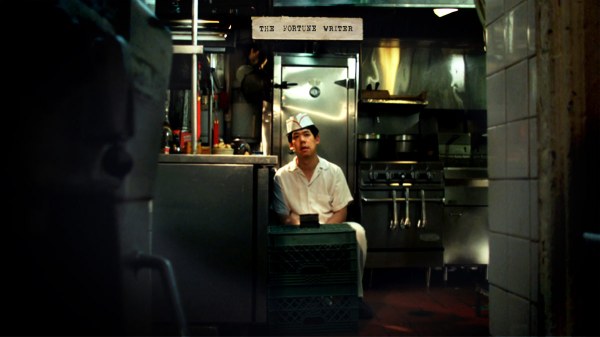
    A note to up-and-coming short film directors: a shot of sizzling cabbage is an excellent hook. This film takes place in a Chinese restaurant, where a man sits in the kitchen at a diminutive typewriter typing up the little slips of paper for fortune cookies. As he peers out into the restaurant at the various diners, he tailors each fortune to their respective situations. In a curious narrative choice, we only see one of these fortunes in its entirety. The rest, we have merely to guess based on their effects on the various diners. I went back and forth on whether or not this struck me as lazy writing, but I ultimately sided with the film. For such a brief period to get to know them, each of the diners felt like real people (a testament to their performances), and the exact wording of the fortunes ultimately felt less important than their effects on each diner. And the last diner is no exception, thoroughly justifying this film’s placement in the “Love and Marriage” block. More info, Watch it here!.

  4. Non-Love Song (Director: Erik Gernand, USA, 8 minutes) –
    Two male friends share an extremely awkward goodbye at the end of summer. The result is gay, didactic, and gaily didactic. More info here.

  5. Bedfellows (Director: Pierre Stefanos, USA, 16 minutes) –
    “The course of love never did run smooth… A phrase made all the more true when the lovers in question both have a penis,” intones a sardonic British narrator, as we learn the tale of Bobby and Jonathan, who indulge in a fairly unsentimental one-night stand, then decide to spend the night together. What ensues would be best described as a fairy tale, as Bobby imagines what their future might be like together. What starts out as utter cheese becomes one of the most ambitious short films I’ve ever seen… If shorts attracted nearly the audience of mainstream cinema, I could easily see the headlines this film would provoke… “Propaganda for the Homosexual Agenda!”. While I tend to not have a very high opinion of any flavor of propaganda, it’s to this film’s credit that there were really only one or two lines during this extremely over-the-top sequence that felt particularly soapboxy. All in all, it seems like the film is selling a simple notion of love and imperfect romance, and nearly every moment feels completely honest and heartfelt (including a pretty devastating narrative twist halfway through). The resulting sequence is equal parts 25th Hour and Little Shop of Horrors (think “Suddenly Seymour”) – an earnest and memorable fantasy that doesn’t take itself too seriously. More info and trailer here.


Quick List: All of the films that are available online: