Peter Jackson’s “The Lovely Bones” – There’s really no upside to child murder

“In this man’s fantasy, she reacts to his sexual advances the way a consenting adult woman would, rather than the reality, which is a terrified little girl who wants no part of him. She’s crying, in pain, wants to go home. Quickly, he’s lost control of the situation…”

-John Douglas, FBI (ret.), Journey Into Darkness

David Slade’s 2005 film Hard Candy told the story of a 14-year-old girl (played by Ellen Page) turning the tables on her would-be sexual predator – drugging, restraining, and psychologically torturing him for the next 90 minutes. The film was a fascinating and disturbing cat-and-mouse thriller, but stopped far short of suspending disbelief. As I watched this adolescent girl exhibit all the sensibilities and ruthlessness of a jaded adult, a single line of thought kept ringing.

This has never happened. This could never happen.

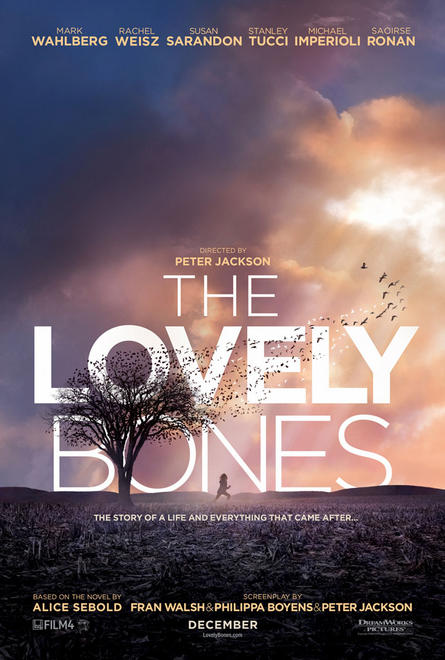
Peter Jackson’s The Lovely Bones takes a different tack. When Susie Salmon (Saoirse Ronan), a lively and innocent 14-year-old girl, is lured into the dungeon of middle-aged serial killer George Harvey (Stanley Tucci), it ends exactly as it would in real life. The film doesn’t bury the lead er…delay…revealing this point, as it happens in the first twenty minutes of the film. After hours of waiting for their daughter to come home, Susie’s parents call the police – her mother Abigail (Rachel Weisz) waits at home as her father Jack (Mark Wahlberg) runs around town showing a picture to anyone who’ll look at it. Days later, they both listen in horror as a police detective informs them that they’ve found a piece of their daughter’s clothing.

“We also found blood. A substantial amount of blood.”

I’m belaboring this point a bit, but the sequence plays like every parent’s worst nightmare. I can’t overstate how horrifically the film depicts the preying upon and murder of a child, as well as its utterly destructive effect on the girl’s family. We don’t see the actual killing, but we see every moment leading up to it. When the crime occurs, Tucci and Ronan play the scene with startling realism, but I would stop short of calling their performances “good”. “Unsettling” is more like it. The scene is difficult to watch, and I’m still unsure whether it was prudent to include it. From that point on, the story follows two separate threads, depicting Susie finding her way through the In-Between (an arbitrary blend of Heaven and Purgatory) and her family’s struggle with grief following her death.

But while Susie’s story (in life) may end realistically, I was still reminded of Hard Candy – because like that film, the rest of The Lovely Bones plays very much like a fantasy. But this is not a fantasy of revenge, but rather of consolation for a grieving family – a literal rendition of “she went on to a better place.”

And is the In-Between a better place? It’s yet another elaborate CG world from Weta Digital, but I think a collection of pristinely rendered desktop backgrounds just isn’t enough to impress me anymore. We have the technology, and we’ve had it for a while now. This is certainly not the best we’ve seen from Weta, and while an oversaturated green valley or an endless icy plane with giant crystal bells may look pretty, none of it is going to blow me away at this point unless it also works thematically. And from a storytelling standpoint, the In-Between is almost a total failure.

When Susie arrives, she is greeted by another young girl named Holly (Nikki SooHoo), who seems to exist solely as the Exposition Fairy. She has all the personality and staying power of a Walmart greeter, and as she matter-of-factly lays out the rules of the In-Between – basically, a place to let go of your earthly life so you can move on to Heaven – it’s not entirely clear how her continued presence doesn’t violate these rules. Regardless, Susie spends most of her time playing around in the In-Between with Holly, and it occasionally takes a dark turn. Her experience there seems to depend on two things – how well she’s coping with being dead, and how well the people behind are getting along without her. Ronan gives a solid performance, but for most of the film, she is written as just another rendition of the “ghost with unfinished business“. Nonetheless, these worlds do occasionally collide in some interesting way.

In an early scene, Jack Salmon (Wahlberg) shows Susie how to make a ship in a bottle, placing it on a shelf in a room full of them. The dozens of ships suffer exactly the fate you’d expect, as Jack shows up shortly after his daughter’s death and proceeds to smash every single one of them. Back in the In-Between, as Susie walks along a rocky ocean beach, the waves pick up, and she looks on in horror as huge, lifesize versions of these ships sail in from the choppy ocean and shatter on the rocks. While the real-world scene is just a predictable bit of melodrama, its visual rendition in the In-Between is at least somewhat memorable.

The real-world story is about as close as the film comes to a passable narrative. It spans a couple of years, as Jack, Abigail, and the rest of the Salmon family deal with their daughter’s death, each in their own way. Lynn, Susie’s grandmother, comes and stays with the family, and is played quite ably by Susan Sarandon. Jack begins a half-cocked investigation, bombarding a well-meaning police detective (Michael Imperioli) with accusations against anyone and everyone around town for the most slight and arbitrary of reasons. This subplot could well have succeeded as a Columbo-style “howcatchem” detective story, but Jack is no detective, and his investigation is really just a series of random, baseless accusations. The tragic irony is that when he meets George Harvey, his daughter’s actual murderer, he accuses him of the crime based on evidence just as flimsy as with any of the others, and nearly gets himself arrested in the process.
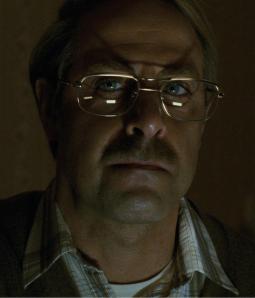

Stanley Tucci is almost unrecognizable as Harvey (I’ll admit – I didn’t even realize it was him until I began this review), but for how cartoonishly the character is written, he might as well have been wearing a rubber mask. Tucci is a great actor who does the best he can, but he is utterly wasted here. And while the character’s fate is rather unexpected (and certainly only possible in an age before modern forensics), it’s tonally bizarre. What message can we extract from his final scene? What goes around…kinda comes around? There’s nothing sadder than a pedophile past his prime?

As I spoke with others about this film (reminding them that the protagonist is a raped and murdered 14-year-old girl), the most frequent question I received was this: “Do they catch the killer in the end?”

I must admit, this question never occurred to me. For my part, catching the killer may be satisfying and cathartic when the victim is an adult, but there’s really no upside to the death of a child. And whether or not this fictitious killer is caught doesn’t matter nearly as much to me as what message the film is promoting about the world at large. The most provocative thing about George Harvey is that he seems perfectly normal when he’s not murdering children. I sometimes wonder how many more films we’ll have to see that depict “seeming normal” as a sinister warning sign. While most people aren’t secret pedophiles or murderers, it’s remarkable how many parents will make the opposite assumption if they see a 40-year-old man with the audacity to speak to a child.

Regardless of its message, The Lovely Bones plays more like an ill-conceived therapeutic exercise than a film. The family’s story is tonally all over the place, but this erratic emotional curve mostly rang true for a family dealing with the death of a child (owing heavily to the performances of Wahlberg, Weisz, and Sarandon). But while I may have found their struggle realistic, I certainly took no pleasure in watching it.

FilmWonk rating: 3 out of 10

2009 Glennies Roundup

It’s that time again… 2009 is over, and it was a great year for cinema (if a bit less so for the box office). I’ve seen movies great and terrible this year, as well as some fantastic performances. A note on exclusions… As of this writing, I have not had a chance to see the following films. I don’t know if they would have made the top 10, but naturally they are ineligible:

  • Where the Wild Things Are (watched since)
  • An Education (watched since)
  • The Fantastic Mr. Fox (watched since)
  • Precious
  • The Road
  • The Box (watched since)
  • A Serious Man (watched since)

Oh, and Hannah Montana: The Movie, of course.

I don’t have a statuette at the moment, so the symbol of the 2009 Glennies will be a blue Egyptian hippo.

2009 Glennie Awards


Egyptian Blue Hippo


Best Supporting Actor
Best Supporting Actress
Best Actress
Best Actor
Top 10 Films of 2009

2009 Glennies, Part 5: Best Picture (Top 10 Films of 2009)

#11: Avatar


(written/directed by James Cameron)

Last year, I cheated my Top 10 list a bit because a numbering error in Word caused me to accidentally type an extra description. This year, I’ve opted to include James Cameron’s Avatar for a wholly different reason. You can read my full review of the film, in which I fully acknowledge a number of serious plot, character, and storytelling problems with this film. By any of these measures, Avatar was not worthy of my Top 10. And yet, I am compelled to include it, because I had an absolutely marvelous time with this film. My first viewing was on a miniscule screen, from a seat crammed into the right front section of the auditorium, but I still couldn’t take my eyes off a single frame. This film is a grand and wondrous spectacle. Even as piracy, obnoxious advertising, and a constant barrage of texting diminish and devalue the theatrical film experience, James Cameron has given us a new reason to adore it. And beyond that, the film has proven provocative enough to spawn some of the most in-depth and fascinating film writing I’ve ever seen in print or online. Avatar absolutely piles on its message, but whether you love it or hate it, you will certainly have something to talk about afterward.

#10: The Boys Are Back


(directed by Scott Hicks, screenplay by Allan Cubitt, novel by Simon Carr)

Scott Hicks’ The Boys Are Back accomplished something remarkable… It managed to take a rather somber premise – a husband and father dealing with his wife’s untimely death – and turn it into a downright cheerful film. The film is shot in Hicks’ native Adelaide, Australia, and Greig Fraser’s cinematography (complimented by Hal Lindes’ delightful score) give this film an absolutely gorgeous backdrop. The film excels in its tone and pacing. It deals with some weighty issues, but the story moves right along when it needs to, and never veers too far into somber territory without coming back to show us something genuinely delightful. This variable emotional curve could easily have come off as jarring, bipolar, and seemingly not serious enough for the film’s subject matter, but it manages to avoid these problems. The result is a joyous portrait of family and fatherhood, featuring a trio of strong performances from Clive Owen and his cinematic sons.

#9: Harry Potter and the Half-Blood Prince


(directed by David Yates, screenplay by Steve Kloves, novel by J.K. Rowling)

When I first read J.K. Rowling’s sixth Harry Potter book, I thought it was a fascinating middle chapter, but easily the least cinematic in the franchise. I held a similar view of the fifth book, so imagine my surprise in 2007 when director David Yates and screenwriter Michael Goldenberg turned it into one of the best films in the franchise. And with the sixth film, Yates and returning HP screenwriter Steve Kloves have done it again.

I will throw in a caveat… This is definitely not a film for newcomers to the franchise. It’s crammed with back story and setup for the final chapters. It relies on an existing interest in and affection for the characters, their relationships, and a rich and elaborate world that deftly raise the stakes for this entry. And yet, this is one of the film’s most persistent strengths. We’ve watched these kids grow up in the joyous halls of Hogwarts, but this time around, the school feels strangely empty and somber. DP Bruno Delbonnel’s cinematography makes the grounds look absolutely gorgeous, and provide a brilliant “underwater” look for the film’s many flashback sequences (I was quite pleased to see the Academy take notice). Nicholas Hooper’s score is hauntingly beautiful at times, but keeps the same cheery flourishes that I so enjoyed from the fifth film (particularly the Weasley twins’ theme).

I already singled out Jim Broadbent’s fantastic supporting role, but there were too many strong performances in this film to even mention. The character work and storytelling were effective, and the adaptation showed remarkable restraint in omitting an entire battle sequence from the end of the film. In print, this sequence always played like a lighter version of the next book’s final battle (minor spoiler – there’s a final battle), and cutting it out of the film was definitely the right choice.

#8: Up


(written/directed by Pete Docter and Bob Peterson)

The latest Disney/Pixar film from Pete Docter (Monsters, Inc) definitely fell prey to what I would call “WALL-E syndrome” – the first half hour is absolutely the best part of the film. It tells the poignant love story of childhood sweethearts Carl and Ellie Fredricksen in a matter of minutes, and is one of the most beautiful and heartbreaking montages I’ve ever seen put to film. It is also a taut piece of visual storytelling, effectively conveying such weighty adult issues as infertility and broken dreams with only the briefest of glimpses and zero dialogue. By the time we meet Ed Asner’s cantankerous old man, he is thoroughly endearing, and finds an excellent partner in crime in Russell (Jordan Nagai), a Wilderness Explorer who is just the right blend of cute and annoying. The ensuing adventure film is immensely fun, and features the hilarious motif of a talking dog with the intelligence and personality of…a dog (with a great voice performance by co-writer/director Bob Peterson). Up certainly takes place in a heightened reality, but it tells a very down-to-earth and touching story.

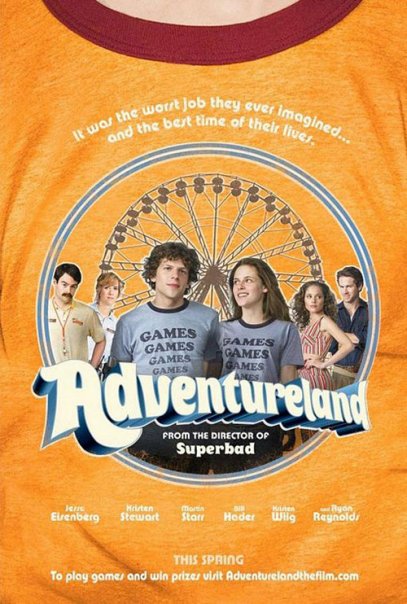
#7: Adventureland


(written/directed by Greg Mottola)

As I said in my original review, Greg Mottola’s Adventureland defied my expectations on every level. I went in expecting a comedy akin to Superbad – and the film’s marketing certainly encouraged this image of the film. Instead, I was presented with a mature, poignant drama that presented a brilliant portrait of the twentysomething post-college experience, and the sudden, reluctant thrust into adulthood.

The film boasts some brilliant performances… Jesse Eisenberg plays a great everyman, and was just shy of my Top 5 for Best Actor. Ryan Reynolds and Kristen Stewart were both surprisingly effective (each of them having lowered my expectations at some point), and Martin Starr – whom I’ve adored since “Freaks and Geeks” – continues to show his prowess here.

Adventureland is both an effective coming-of-age tale and a touching romance, whose conciliatory message (“You can’t just avoid all the people you’ve screwed up with!”) will likely resonate as much with this generation as it did in the 1980s, when a young Greg Mottola was working at the real Adventureland. Whether this indicates the film’s timelessness or simply Mottola’s understanding of modern twentysomethings, the result is well worth seeing.

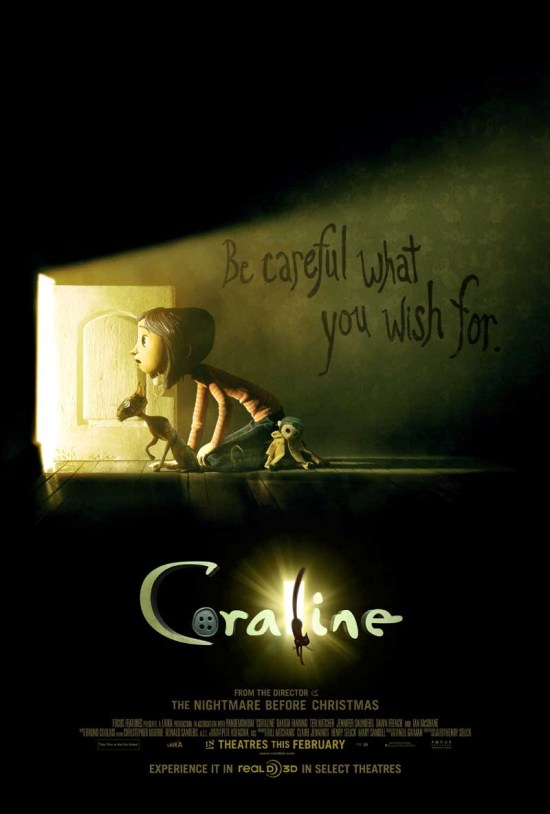
#6: Coraline


(written for the screen and directed by Henry Selick, novel by Neil Gaiman)

The best use of 3D animation I’ve seen this year was not in James Cameron’s Avatar, but in Henry Selick’s stop-motion adaptation of Coraline, a children’s novel by Neil Gaiman. Equal parts Nightmare Before Christmas and Alice in Wonderland, this film is a fantastically creepy exploration of a child’s desire to escape boredom. The voice cast is enjoyable, with effective performances by Dakota Fanning and Teri Hatcher, and a fantastic use of Keith David as a talking cat. The plot does get a bit too much like a video game in the third act (use your special scope, go here, retrieve one item from each location, BOSS FIGHT!), but it balances this with an absolutely stunning mixture of stop motion and CG animation as the fantasy world starts to crumble – and I’d be hard pressed to tell you where one stops and the other begins. Everyone has a film from their childhood that is as beloved as it is nightmare-inducing. Coraline absolutely deserves the title for today’s kids.

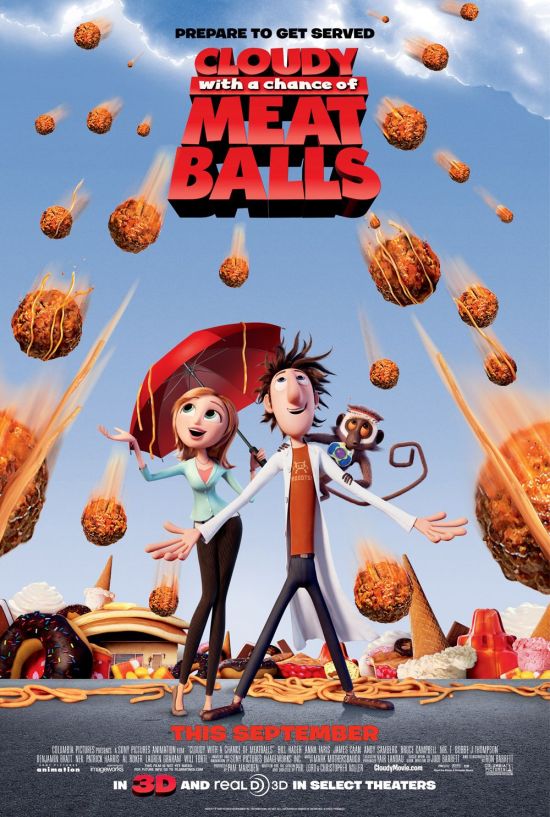
#5: Cloudy With a Chance of Meatballs


(written for the screen and directed by Phil Lord and Chris Miller, novel by Judi and Ron Barrett)

Sony Pictures Animation has only made a few films, they got off to a fantastic start with Gil Kenan’s 2006 film Monster House. Phil Lord and Chris Miller’s Cloudy With a Chance of Meatballs had an atrocious marketing campaign, and hardly looked like it would be a worthy followup. Imagine my surprise when it turned out to be the best comedy of the year.

Flint Lockwood (Bill Hader) is a crackpot inventor whose latest invention is a machine that can turn water into food. The science in this film is very much in the Calvin and Hobbes aesthetic – immensely fun and borderline magical. The character design is deliberately cartoonish, in stark contrast to the rest of the animation, which looks gorgeous and practically photorealistic. The film’s North Atlantic island locale feels every bit like a real place, from its initial shroud of gloomy gray mist to its eventual golden glow amid a shower of falling cheeseburgers. The weather and atmospheric effects are incredible, and the food looks delicious.

This is a screwball comedy driven by a non-stop barrage of surprisingly thoughtful gags. The casting is fantastic, with great performances by Hader, Anna Faris, Andy Samberg, James Caan, and even Mr. freaking T (whose character actually sports an inverse mohawk). This supports some very believable relationships and effective character work. The film even tackles the implications and consequences of a society steeped in overconsumption, but keeps this to a very basic level. It’s one of many ways the film shows respect for its audience, kids and adults alike. The running gags all pay off fantastically, lending the film extremely well to repeat viewings.

This is about as preachy as I’ll get during my top 10… This is a film for everyone. It’s the best character-driven animation since The Incredibles, and one of my all-time favorite comedies. See this movie!

#4: Moon


(directed by Duncan Jones, written by Nathan Parker, story by Duncan Jones)

I’ll keep this one brief, since I’ve already raved about Sam Rockwell’s performance, and this is basically his one-man show (you can check out my full review here). Duncan Jones’ Moon does a lot with very little, creating a compelling moon base environment on a downright meager budget. It’s helped along by an absolutely beautiful score (I have yet to hear a Mansell score I haven’t loved). It’s a fantastic character piece, and a welcome return to true sci-fi. Check it out if you love big ideas.

#3: The Hurt Locker


(directed by Kathryn Bigelow, written by Mark Boal)

Kathryn Bigelow’sThe Hurt Locker doesn’t exactly have a conventional plot, but feels rather like a series of carefully constructed action set-pieces. Nonetheless, it is an incredibly effective thriller, owing largely to the action direction – that sense of spatial relationships that is that is absent from so many action films today. From my original review:

Every scene in this film is well established, and the audience always has an excellent sense of what’s going on. Staff Sergeant William James (Jeremy Renner) dons his protective suit (a relative misnomer) and marches through the blazing sun toward his objective. Civilians watch from every surrounding building, and bustle through the adjacent streets and alleys. The soldiers behind him take cover behind a Humvee and survey the crowd. Anyone with a cell phone could be trying to detonate the bomb. And all the while, the audience understands exactly where everything is in relation to everything else. And when all hell breaks loose, they can still understand what’s going on.

The rest of the film’s effectiveness is due to the three leads. Renner, Mackie, and Geraghty are just fantastic, and present a fascinating psychological profile of these characters, even as the film’s plot and dialogue exhibit utter contempt for anyone trying to analyze them. The film’s greatest strength is in crafting a palpable sense of urgency and danger – when it’s over, you’ll have to forcibly pry yourself loose from the edge of your seat.

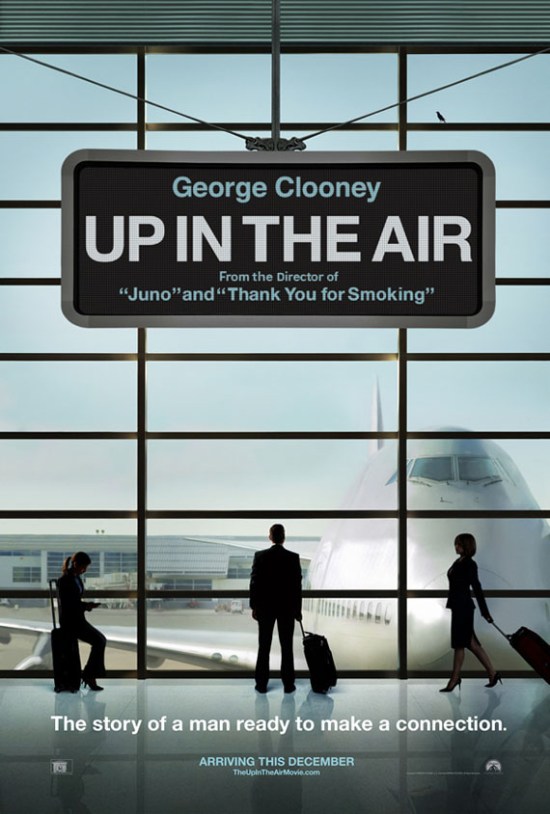
#2: Up in the Air


(directed by Jason Reitman, screenplay by Jason Reitman and Sheldon Turner, novel by Walter Kirn)

Jason Reitman’s Up in the Air bears a few similarities to Reitman’s last bit of corporate satire, Thank You For Smoking (including another great soundtrack), but has a much more somber tone. In my original review, I called it a brilliant and timely character piece, and I can’t stress this point enough. Ryan Bingham (George Clooney) is a doubly fascinating character, between his constant air travel and his job as a professional hatchet-man. This may be the best performance of Clooney’s career, amid a trio of fantastic acting. The film takes a great number of risks, but stops just short of spreading its characters too thin. What’s more, it contains some of the richest dialogue and most effective scenes I’ve had the pleasure of seeing this year. And while it may be timely, this does nothing to diminish its rewatch value (three times and counting for me).

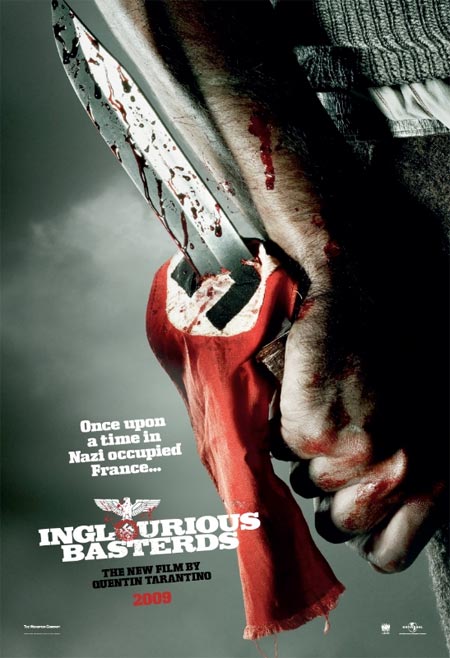
#1: Inglourious Basterds


(written/directed by Quentin Tarantino)

This film’s brilliantly deceptive trailer made it look like the Basterds (and their commander’s awful and hilarious scenery-chewing) would be the stars of the show. While I actually ended up liking Brad Pitt’s performance in the end, the Basterds feel more like a backdrop for the main revenge plot, which featured powerhouse performances from costars Christoph Waltz, Mélanie Laurent, and Diane Kruger.

In my original review, I noted some minor similarities to Bryan Singer’s 2008 World War II film, Valkyrie. In that film’s insistence upon historical accuracy, it demanded a great deal of its audience – namely, to root for a plot whose failure was a matter of historical record. With Inglourious Basterds, Quentin Tarantino makes no such demands on the audience. He doesn’t strain or even test your historical knowledge. He simply asks you to live in his world for a while.

And what a world it is. A world of fantastic performances and increasingly tense 15-minute dialogue scenes. These scenes stop just short of being self-indulgent, and ultimately, Tarantino earns every moment in this film. It feels like a teaser for a much larger story, and yet we are still privy to enough brilliantly crafted character moments that it simultaneously feels complete.

Honorable Mentions:

  • Anvil! The Story of Anvil (fantastic documentary by Sacha Gervasi – omitted because I only just saw it)
  • In the Loop (directed by Armando Ianucci, written by Jesse Armstrong)
  • Drag Me To Hell (directed by Sam Raimi, written by Sam Raimi and Ivan Raimi)
  • The House of the Devil (written/directed by Ti West)
  • The Brothers Bloom (written/directed by Rian Johnson)
  • Trick ‘r Treat (written/directed by Michael Dougherty)
  • District 9 (directed by Neill Blomkamp, written by Neill Blomkamp and Terri Tatchell)
  • (500) Days of Summer (directed by Marc Webb, written by Scott Neustadter and Michael H. Weber)
  • Observe and Report (written/directed by Jody Hill)
  • Star Trek (directed by J.J. Abrams, written by Alex Kurtzman and Roberto Orci)

Click here to see the rest of the 2009 Glennies.

2009 Glennies, Part 4: Best Actor

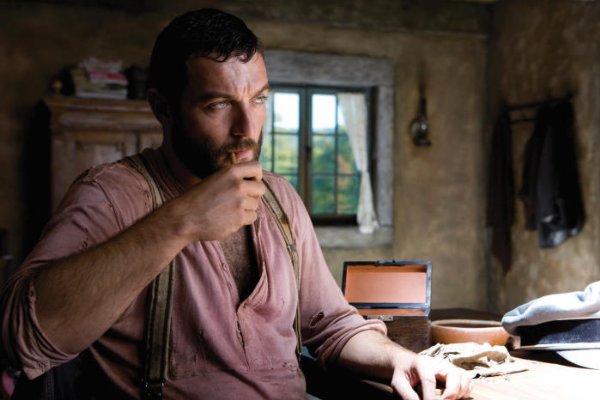
#5: Sharlto Copley – Wikus Van De Merwe, District 9


Sharlto Copley in "District 9"

I can’t remember the last time I saw a film with such a thoroughly despicable protagonist as Wikus Van De Merwe. He is vicious, self-serving, inept, and almost a complete coward. But newcomer Sharlto Copley (a producer and personal friend of director Neill Blomkamp) completely brought this character to life. Wikus begins the film as the consummate corporate stooge, showing obvious enjoyment and aptitude at his middle management job, even as he perpetrates some incredible acts of callousness and destruction in the alien ghetto known as District 9. Copley’s performance in some of these moments is downright giddy, with a thoroughly believable grin on his face as he supervises the abortion – via flamethrower – of an alien breeding shack (“It’s like popcorn!”). Copley’s character and plotline reminded me a great deal of Leonardo DiCaprio in Blood Diamond, and as with that film, if the character had remained the terrible person he was at the start of the film, there would have been little for the audience to connect with. But even as District 9 loses some of its more provocative social themes and becomes more of a big, fun action film, Copley’s emotional transformation becomes as real as Wikus’ physical one. And this is especially remarkable considering that every line of Wikus’ dialogue is improvised! (source). Copley gives a masterful performance that absolutely makes this movie work, and I’m simultaneously eager and a little frightened to see what he does next.

#4: Joseph Gordon-Levitt – Tom Hansen, (500) Days of Summer


In my original review, I noticed that Joseph Gordon-Levitt had once again proven his two central characteristics… He’s one of the finest young actors working today, and he hasn’t aged a day since “Third Rock from the Sun”. He was utterly charming in this film, proving as capable at reckless, romantic zeal as sullen, intractable brooding (as the story’s unconventional breakup narrative demanded). His chemistry with Zooey Deschanel was fantastic, and made this one of the most memorable romances (if not love stories) of the year.

#3: Jeremy Renner – SSgt. William James,
Anthony Mackie – Sgt. JT Sanborn,
Brian Geraghty – Spc. Owen Eldridge, The Hurt Locker


Jeremy Renner and Anthony Mackie in "The Hurt Locker"
Brian Geraghty in "The Hurt Locker"

I’ll admit, this is a total cheat, but as I noted in my original review, I can’t single out any of these performances in Kathryn Bigelow’s fantastic Iraq War action film, The Hurt Locker, as the superlative one. As an ensemble, however, these three work immensely well. Renner’s performance is appropriately intense (and only slightly clichéd, as the new, loose-cannon commander of the squad), but Mackie and Geraghty are just fantastic, and make for ample balance among the three. The film features Bigelow’s typically strong portrayal of male friendship in intense circumstances, when the characters aren’t sure if they want to embrace or murder each other… But thanks to these three performances, the dialogue feels authentic, and the characterization is solid. These men may be considered heroes, but as far as they’re concerned, they’re just doing what they have to do. They’re here, and they’re going to keep doing the job until they go home or get killed.

#2: George Clooney – Ryan Bingham, Up in the Air


George Clooney in "Up in the Air"

Jason Reitman’s Up in the Air is the story of Ryan Bingham (Clooney), a corporate road warrior who spends over 300 days a year flying around the country firing people for a living. Ryan is already a fascinating enough character just from that description, and Clooney’s performance delivers on every bit of promise the character demands. He has remarkable chemistry with both of his co-stars, and his relationships with each of them are completely what make this film work. As I noted in my original review, the film constantly tries to have it both ways with Ryan, granting him semi-omniscient voiceovers that are equal parts self-aware and self-deprecating, but shying away from taking a position on whether he truly believes in what he’s doing. But somehow, Clooney’s performance just makes it all work. He plays with this ambiguity in a way that keeps Ryan’s rhetoric as one of the film’s most important themes, but stops it from becoming didactic. And later on in the film, as the character’s transformation becomes apparent, he completely conveys (but doesn’t overplay) how emotionally shaken Ryan has been by the film’s events. This is surely one of Clooney’s finest performances, and one of the best I’ve seen this year.

#1: Sam Rockwell – Sam Bell/Sam Bell, Moon


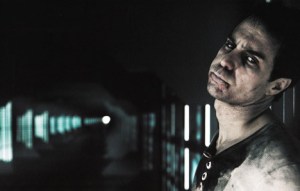
In my original review of Duncan Jones’ Moon, I called it a film for people who love big ideas. The film’s “big reveal” comes in the first 15 minutes, as Sam Bell (Rockwell), the solitary worker of a lunar mining base, wanders outside to investigate a crashed lunar rover, and finds an unconscious clone of himself behind the wheel. As the film begins to explore its deeper sci-fi themes, Rockwell imbues each of the Sam Bells with a distinct, but related personality. They both play to familiar territory for Rockwell – unshaven and slightly unhinged, but even as the film skips over the expected tropes of its genre (at no point does one clone chase the other around with a knife), Rockwell’s performance creates a compelling dynamic between the two. The only other character in the film is GERTY, the artificially intelligent base computer, which can only communicate its emotions via on-screen emoticons and the mellifluous voice of Kevin Spacey. But while the relationship between Sam and the computer is one of the most fascinating aspects of Moon, it is Rockwell that carries the weight of the film. Like Tom Hanks in Cast Away before him, this is Rockwell’s one-man show, and he acquits himself masterfully in the role.

Honorable Mentions:

  • Seth Rogen as Ronnie Barnhardt in Observe and Report
  • Mark Ruffalo and Adrian Brody as Stephen and Bloom in The Brothers Bloom
  • Clive Owen as Joe Warr in The Boys Are Back
  • Jesse Eisenberg as James Brennan in Adventureland
  • Robin Williams as Lance Clayton in World’s Greatest Dad

Click here to see the rest of the 2009 Glennies.

2009 Glennies, Part 3: Best Actress

#5: Mélanie Laurent – Shosanna Dreyfus, Inglourious Basterds

Mélanie Laurent in "Inglourious Basterds"

Mélanie Laurent’s character were scarcely even mentioned in the American marketing for this film, so I was quite surprised when her subplot became the most compelling one in the film. Following the deaths of her family at the hands of the SS, Shosanna bides her time incognito as the owner of a Parisian cinema, and plots revenge. As I mentioned in my original review, Shosanna is a familiar character, seemingly drawn from the same well as The Bride from Kill Bill, but Laurent ably makes this character her own, combining a quietly sorrowful demeanor with an unflinching vendetta.

Shosanna is also part of an entirely one-sided “romantic” subplot with a German soldier (Daniel Bruhl)… While his advances aren’t terribly entertaining, her constant rebuffing is occasionally comedic, but mostly downright chilling (“I suggest you try Vichy”). There is also a remarkable scene between Laurent and Christoph Waltz, in which they sit in a Parisian restaurant and eat strudel. As Shosanna faces the SS Colonel, she manages to rein in her terror until he steps out, at which point she immediately starts hyperventilating. Laurent’s performance is ruthless – like so many others in this film – but also quite vulnerable. She brings just the right balance to keep Shosanna sympathetic, even as she commits atrocities on par with the very people she wants to kill. It is a fantastic performance to round out an almost entirely strong cast (I’m lookin at you, Eli Roth), and is certainly one of the most memorable this year.

#4: Zoë Saldaña – Neytiri, Avatar


Zoë Saldaña performance capture in "Avatar"

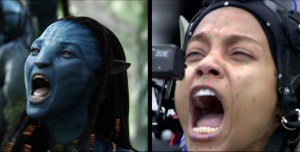
Zoë Saldaña in "Avatar"This is a performance I really have to take James Cameron’s word on. The various forays into CG characters over the past decade have definitely started to blur the line between animation and live-action, but they were still mostly in the realm of bodily motion capture, with complex facial expressions significantly enhanced in post-production by teams of skilled animators. But while Andy Serkis’ performances as Gollum in Lord of the Rings were not eligible for an acting Oscar, they were a leap forward from the likes of Jar Jar Binks, and Avatar is certainly the next such leap. According to Cameron, the characters in this film were created using performance capture techniques that recorded every nuance of the actor’s performance. Every tic of a facial muscle…every movement of the eyes… They were all made by the real actors. If this is really the case, it is entirely possible that future performances in this vein will be eligible for acting awards. And I would certainly hand one out to Zoë Saldaña.

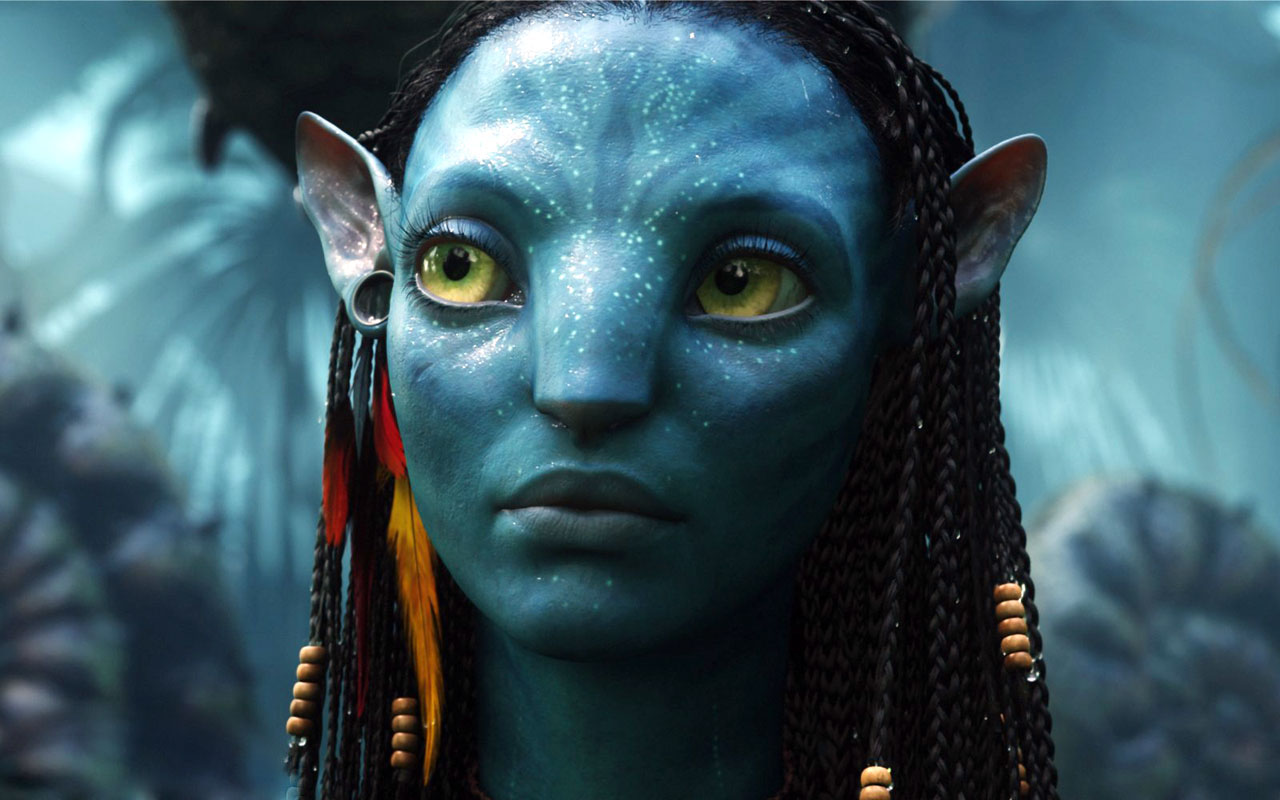
Neytiri, the Na’vi princess, is just about the only sympathetic (or fully realized) character in this film, and Saldaña plays her with an some surprisingly animalistic ferocity (even baring her teeth and hissing a few times). While the visual spectacle of this film was enough to ensure that I was rapt with attention, it was with Saldaña’s character that I made the greatest emotional connection. She is almost certainly responsible for how well the romance played on-screen, and in light of the complex production process, achieving any believable chemistry could not have been an easy feat.

#3: Anna Kendrick – Natalie Keener, Up in the Air

Anna Kendrick in "Up in the Air"

From my original review:

Natalie is a fascinating character – the consummate young career gal, ruthless and cynical, but with a very human side, full of all the self-imposed deadlines and anxiety about her future that all twenty-somethings tend to have. Anna Kendrick, who I’d only seen previously in a small and ineffectual role in the Twilight films, gives a masterful performance as Natalie, and is surely one of the actresses I’ll be watching for in the future.

This is a performance that grew on me each time I saw the film. The interplay between Natalie and her colleague Ryan Bingham (George Clooney) is simply fantastic. Kendrick plays the character with both a fierce determination and a striking vulnerability, utterly immune to Ryan’s charms (and soundly mocking him for his rhetoric). As their road trip of job terminations goes on, it all becomes more and more personal for Natalie, and Kendrick’s performance completely brings this transformation to life.

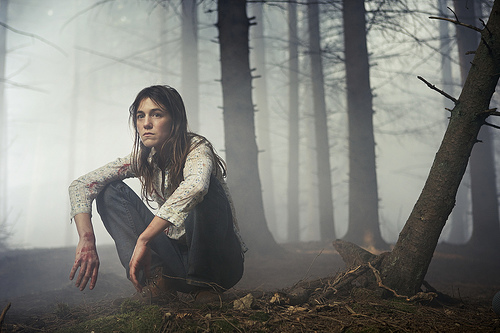
#2: Charlotte Gainsbourg – She, Antichrist

Still for Lars von Trier's "Antichrist".

This is a haunting performance in a strange and thoroughly disturbing film. Charlotte Gainsbourg plays the unnamed wife of a couple grieving alone in the woods. Through this unsettling and bewildering performance, Gainsbourg effectively conveys how broken and terrified this character has become. The interplay with her husband (Willem Dafoe) effectively illustrates the disjointed and counterproductive state of their present relationship. Gainsbourg’s performance is utterly fearless, and she maintains it even as her character becomes a paragon of the film’s unrelenting misogyny (“A woman crying is a woman scheming…”). Frankly, I would have a hard time recommending this film to anyone, but if I did, it would be solely because of this performance, which is one of the most effective and frightening I’ve ever seen.

#1: Zooey Deschanel – Summer Finn, (500) Days of Summer

Zooey Deschanel in "500 Days of Summer"

From my original review:

Zooey Deschanel…steals this film. To put it bluntly, this is a character that the audience could easily have ended up despising. And while the character of Summer is mostly well-written, the characterization and non-linear progression of the story demand a great deal from Deschanel. And it is her performance that just manages to make the character sympathetic.

As Tom reflects on his relationship, many of his scenes with Summer are cast in a different light through subsequent flashbacks. On the second run through, the film’s editing calls attention to the slightest glance of the eyes, or twinge of the cheek muscles, or the most minor apathetic tone of voice… In each of these microexpressions, Deschanel’s performance is masterfully subtle. And throughout the film, she brings all the mystery, likeability, and sensuality that the character demands, but couples it with a subtle undertone of cold, mature pragmatism. She manages to force the audience through nearly the same process as Tom, despite our advantages of an outside perspective and sardonic narrator to keep us objective..

Honorable Mentions:

  • Ellen Page as Bliss Cavender in Whip It
  • Rachel Weisz as Penelope in The Brothers Bloom
  • Isabelle Fuhrman as Esther in Orphan
  • Emma Watson as Hermione Granger in Harry Potter and the Half-Blood Prince

Click here to see the rest of the 2009 Glennies.

2009 Glennies, Part 2: Best Supporting Actress

#5: Marcia Gay Harden – Brooke Cavendar, Whip It

Marcia Gay Harden in "Whip It"

Drew Barrymore’s directorial debut, Whip It (review), was an adept entry in the sporting genre (in this case, roller derby), made even more effective by some impressive casting and rich characters. The great Marcia Gay Harden plays Brooke Cavendar, an overbearing mother who puts constant pressure on her daughter, Bliss (Ellen Page), to stay pretty and compete in events that are equal parts beauty pageant and debutante ball. Bliss, meanwhile, would rather throw elbows and knock out teeth on the derby track. Brooke is an apt parallel to overeager football dads, but Harden’s performance is far more layered than such a stock character would normally require. Even as she steadfastly refuses to consider her Bliss’ wish to continue with roller derby, her concern for her daughter’s wellbeing shines through. She is stubborn, imperfect, but utterly well-meaning, and Harden’s strong performance contributes to making this one of the most engaging relationships in the film.

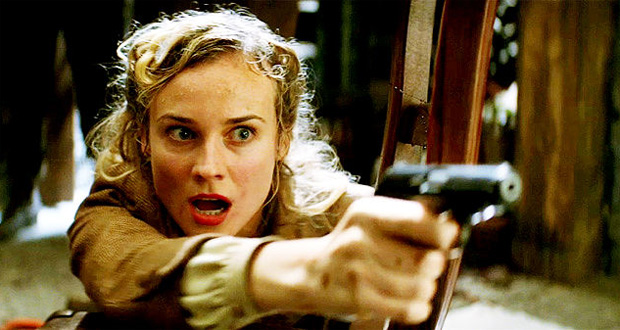
#4: Diane Kruger – Bridget von Hammersmark, Inglourious Basterds

Diane Kruger in "Inglourious Basterds"

As I said in my review, I’m seldom disappointed by actresses playing actresses, and German actress Diane Kruger was no exception. As she knocks back champagne and disarms an entire tavern of soldiers with a single laugh or smile, she harkens back to a time in which celebrity meant something altogether different for an actress from what it means today. And as her true role becomes apparent, she portrays her fictitious vintage film-starlet-cum-saboteur with exactly the right blend of elegance and ruthlessness.

#3: Rinko Kikuchi – Bang Bang, The Brothers Bloom

Rinko Kikuchi in "The Brothers Bloom"

Japanese actress Rinko Kikuchi first came onto my radar with her fantastic performance as a deaf student (and nearly the only interesting character) in Alejandro González Iñárritu’s 2006 film Babel. She returns in Rian Johnson’s The Brothers Bloom as another less-than-verbose character… We are told that the brothers’ sidekick and demolitions expert, Bang Bang, speaks about three words of English, and indeed, this is about all we hear from her during the film. Nonetheless, Kikuchi’s brilliance at physical comedy and remarkable range of facial expressions make her one of the most memorable and hilarious characters in the film. If there’s one thing Javier Bardem showed in No Country for Old Men, it’s that a character with very little dialogue can still be quite compelling. With her performance in this film, Kikuchi has proven this true once again, and further proven that such a character doesn’t have to be a daunting psychopath.

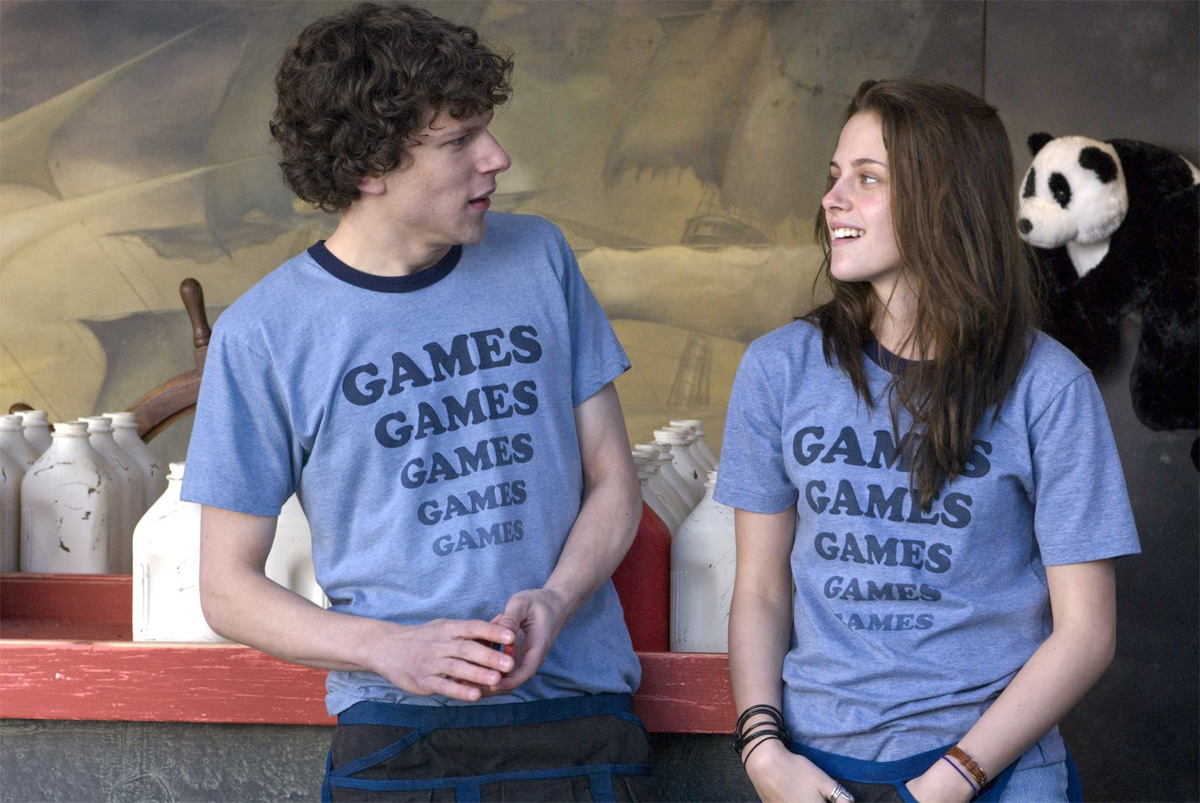
#2: Kristen Stewart – Em Lewin, Adventureland

Kristen Stewart in "Adventureland"

Kristen Stewart is either a brilliant actress or a one-time fluke. Here’s what I had to say about her eight months ago when I first saw Adventureland:

As much as it pains me following my experience with the abominable Twilight film, the moment has finally come when I must admit… Kristen Stewart is a damn fine actress. I can only speak to my reaction, but during every moment of Emily’s screen time, I was on the edge of my seat with anticipation. Stewart, in an incredibly nuanced and visual performance, managed to convey such a compelling sense of desperation and longing in every scene (both with and without [Jesse] Eisenberg) that I spent the entire film simultaneously rooting for and pitying her.

As Dave Chen from /Film points out, there is a “massive gulf between her on-screen charisma, and her off-screen persona”. Since Adventureland, all I’ve really seen from Stewart is a considerable foray into celebrity, and an understandable, if unremarkable return to her principal moneymaker. At this point, I must reserve judgment on whether she’ll prove a strong actress after she has left the Twilight franchise behind… Nonetheless, this is one of the most brilliant performances I’ve seen this year, and I have absolutely no qualms about praising it.

#1: Vera Farmiga – Alex Goran, Up in the Air

Vera Farmiga in "Up in the Air"

“Just think of me as yourself, but with a vagina,” says Alex to Ryan (George Clooney), with whom she has just shared a casual hotel fling. In my original review, I said that it is only with the character of Alex that the film comes dangerously close to contrivance. She is almost a total mystery – we know that she lives a similar life to Ryan, spending much of her time flying around the country, but we don’t really know much else. And yet, Farmiga’s performance and chemistry with Clooney completely make this romance work. While we don’t learn much about her profession, we do learn a great deal about her as a person. This character is somewhat of a mirror, acting as both a female version of Ryan and an older version of his colleague Natalie (Anna Kendrick). But in her interactions with the two, she offers some remarkable insights. One of my favorite scenes in the film involves Alex and Natalie swapping their respective versions of the ideal man. Farmiga’s monologue in this scene is just fantastic. Even as she is saying some pretty provocative things (e.g. “Please, let him earn more money than I do”), her delivery includes all the hesitation and reflection that comes with such a deeply personal question as one’s ideal match. On the surface, this scene simply highlights the difference in perspective between women in their 20s and 30s, but it also provides a mountain of subtext for the film’s central romance between Alex and Ryan that gives the film immeasurable rewatch value.

Honorable Mentions:

  • Alia Shawkat as Pash in Whip It
  • Kristen Wiig as Maggie Mayhem in Whip It
  • Lorna Raver as Sylvia Ganush in Drag Me to Hell
  • Marion Cotillard as Billie Frechette in Public Enemies

Click here to see the rest of the 2009 Glennies.

2009 Glennies, Part 1: Best Supporting Actor

#5: Ryan Reynolds – Mike Connell, Adventureland

Ryan Reynolds in "Adventureland"

From my original review:
I must also give praise to Ryan Reynolds. Here is an actor whose work is consistently entertaining, but offers the same one-note, sociopathic, likeable douchebag performance in every film he’s in…

Reynolds returns in this film as that character, aged 10 years, saddled with a dead-end job and an unhappy marriage. And yet he manages to convey the truly pitiable nature of such a character. His antics and doubletalk no longer seem charming here. His underhanded and lecherous conduct comes off as sad, creepy, and immature for a man of his age. Reynolds does a fine job of portraying all the ugliness and truth of this character without any of the signature likeability that he brings to his other roles.

#4: Jackie Earle Haley – Walter Kovacs/Rorschach, Watchmen

Jackie Earle Haley in "Watchmen"

I am quite fascinated by geekdom and alternate history, but I must admit, I was not too excited by this film. Zack Snyder delivered a long, grueling, mixed bag of a film that seemed to split even the most die-hard fans of the graphic novel (and I do not count myself among them) right down the middle. But if there’s one thing it effectively conveyed, it’s that the only people who would voluntarily become superheroes are those with severe social or mental issues.

And so we meet Rorschach, the unrepentant, masked psychopath played to absolute perfection by Jackie Earle Haley. Like I said last year, there’s just something great about a well-played psychopath. Haley took what could have been a one-note, gruff-talking slasher and imbued him with some fascinating personality, giving the finest comic performance I’ve seen since Heath Ledger’s Joker.

#3: Denis Menochet – Perrier LaPadite, Inglourious Basterds

Denis Menochet in "Inglourious Basterds"

Denis Menochet only appears in one scene of this film, but it was a doozy (see Viola Davis from last year). He plays the French dairy farmer Perrier LaPadite, who is suspected by the SS of harboring a Jewish family. What ensues is a masterful interrogation scene between LaPadite and the SS Colonel Hans Landa (Christoph Waltz). As with many other scenes in this film, the tension gradually increases as the scene goes on. LaPadite is a physically imposing man, but he has everything to lose, and Menochet lays all of his vulnerability bare as Landa closes in on the truth. Menochet deserves every bit as much credit as Waltz for how well this scene played, and it is certainly one of the most memorable in the film.

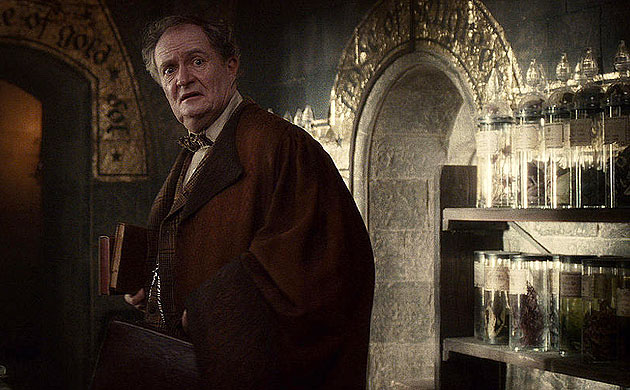
#2: Jim Broadbent – Prof. Horace Slughorn, Harry Potter and the Half-Blood Prince

Jim Broadbent in "Harry Potter and the Half-Blood Prince"

David Yates brings another strong entry to J.K. Rowling’s Harry Potter franchise, and Jim Broadbent is the finest example yet of the franchise’s reliably strong casting. Like so many of Rowling’s characters, Horace Slughorn is a well-written blend of familiar tropes – a grand old wizard, a collector of the ambitious and famous, a well-meaning man with a terrible secret – but also greater than the sum of his parts. Broadbent’s performance is absolutely delightful in many scenes, and downright somber in others. When his secret is inevitably revealed (as cinematic secrets must be), we are treated to a heartbreaking soliloquy in which Slughorn reminisces about Harry Potter’s dead mother, who was one of his favorite students. This scene features some of the best acting in the film by both Broadbent and Daniel Radcliffe, and is almost certainly the film’s emotional climax.

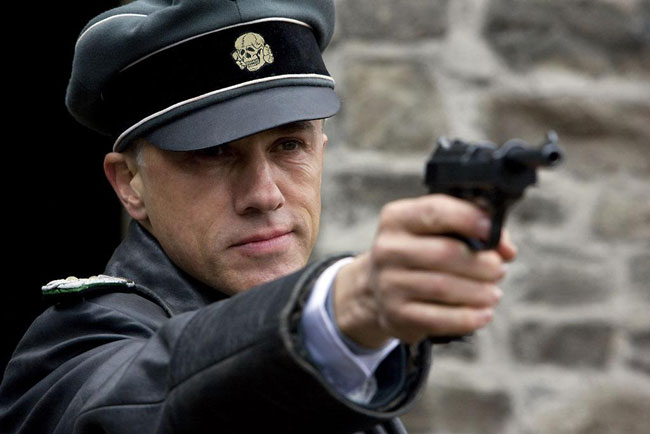
#1: Christoph Waltz – SS Col. Hans Landa, Inglourious Basterds

Christoph Waltz in "Inglourious Basterds"

From my original review:

The finest acting in the film is that of Christoph Waltz as SS Colonel Landa. He somehow manages to combine an outwardly cheerful demeanor with such simmering, underlying menace that each of his scenes will have you on the edge of your seat. [Quentin] Tarantino’s strength has always been in crafting lengthy scenes of gradually increasing tension amid seemingly innocuous dialogue, in which the question is not whether the scene will end badly; the question is “how badly” and “for whom?”. Waltz’s performance works masterfully within this framework; whether interrogating a dairy farmer under suspicion for harboring Jews, or conversing over Parisian strudel with a potential enemy, Waltz’ every facial tic gradually reveals his true intentions, as he leads the conversation exactly where he wants it to go. He is one of Tarantino’s most complex and well-crafted characters, and Waltz plays the part immaculately.

In addition to a fantastic performance of a complex character, Waltz seemlessly flitted back and forth between onscreen languages. We’ve seen plenty of cinematic polyglots before, but what separates Waltz from, say, Jennifer Garner, is that he sounds as much at home in one language as another. Without him, this film could not have been the same… Indeed, it might not have even been made. Tarantino has praised Waltz publicly for making this film possible, and he will quite deservedly be remembered for playing one of the finest villains of all time.

Honorable Mentions:

  • Martin Starr as Joel in Adventureland
  • Sam Worthington as Marcus Wright in Terminator Salvation
  • Michael Fassbender as Lt. Archie Hicox in Inglourious Basterds
  • Matt Damon as Francois Pienaar in Invictus

Click here to see the rest of the 2009 Glennies.

Troy Duffy’s “The Boondock Saints II” – I’m strangely uncomfortable with it

And Shepherds we shall be, for Thee, my Lord, for Thee.
Power hath descended forth from Thy hand,
that our feet may swiftly carry out Thy command.
So we shall flow a river forth to Thee,
and teeming with souls shall it ever be.
In Nomine Patris, et Filii, et Spiritus Sancti.

Spoiler warning: This review will contain spoilers for the original Boondock Saints film.

Troy Duffy’s 1999 film The Boondock Saints got a meager theatrical release, mostly owing to its proximity and minor resemblance to the Columbine High School shootings, but found quite a cult following on DVD. And my friends and I absolutely ate it up. Along with Richard Kelly’s Donnie Darko, this was my indie darling in high school. And oh, to be 15 again. To live in a cinematic world where heaven is a slow-motion shootout of dual silenced pistols, exploding cats, and gratuitous silicone tits, and where the best thing that can happen to a good movie is a sequel with an increased budget.

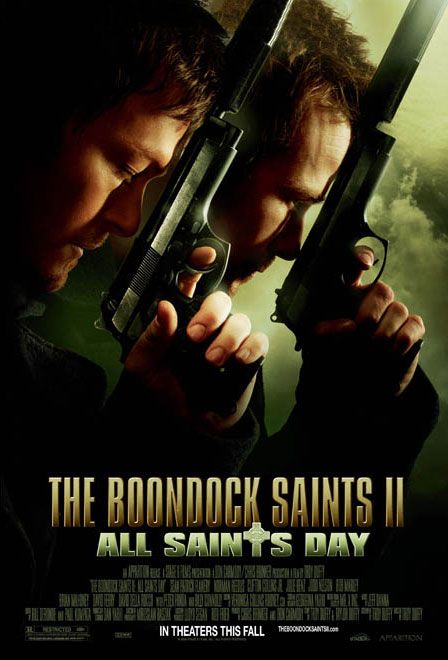
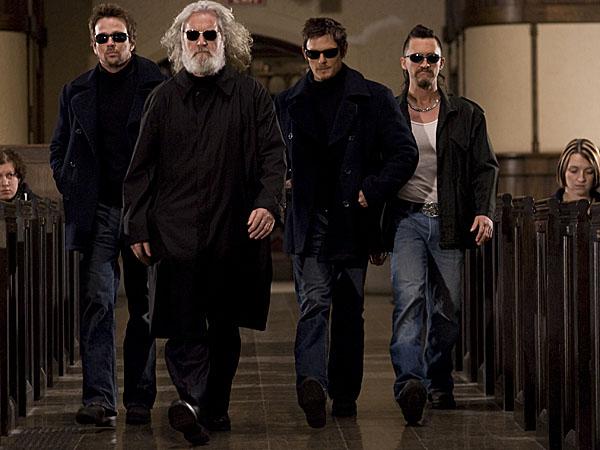
The Boondock Saints 2: All Saints’ Day, whose subtitle makes about as much sense as that of Die Hard 2, has more or less the same plot as the first film. Mobsters are bad, Jesus is good (kinda), and the McManus brothers – Connor (Sean Patrick Flanery) and Murphy (Norman Reedus), along with their father, Il Duce (Billy Connolly), and brand new Mexican sidekick, Romeo (Clifton Collins, Jr.), are anointed by God and cinema to wax as many evildoers as possible. With the mob, the Boston PD, and the FBI hot on their trail (after a very public mobster killing at the end of the first film), the boys must survive using only their wits, their guns, and their uncanny ability to avoid all return fire while sitting immobile on their haunches flailing their gun-arms wildly.

In the first film, Willem Dafoe had quite a memorable role as FBI Agent Paul Smecker, and while his investigation of the boys’ carefully delivered crime scenes didn’t make even the slightest bit of pop-forensic sense, it produced some of the most fun scenes in that film. Blaring opera music through his portable CD player, he cavorted omnisciently around each set piece reconstructing the crime in his mind, during which we saw flashbacks of that very crime in progress (since we only knew as much as he did by then). It was a silly, but effective storytelling device in that film.

After ten years, Willem Dafoe has gone on to bigger and…erm…better…things, and Paul Smecker has been replaced by Special Agent Eunice Bloom (Dexter‘s Julie Benz). She does the same superficial dance as Dafoe around the crime-scene, sporting earplugs instead of headphones (seemingly to block out the Boston PD’s endless cavalcade of incompetence and sexual harassment), and can miraculously reconstruct a perfect timeline of grisly events. But while Benz looks gorgeous as a redhead and is clearly having a great deal of fun in this role, her fake southern drawl is downright repellent, and she just comes off as a ham-fisted (and mostly unsuccessful) attempt to recapture the fun of Dafoe’s character.

In much the same way, Clifton Collins, Jr., one of the most talented and prolific character actors in Hollywood, has joined the party as the Saints’ new bumbling non-Irish sidekick, Romeo. The boys refer to Romeo as “[their] Mexican”, Collins’ mulleted, mustachioed, tattooed madman is utterly cartoonish, and yet an absolute pleasure to behold. His initial meeting with the Saints on the boat-ride from Ireland provokes the kind of instant acceptance seldom seen outside of a Dungeons and Dragons match (“You seem trustworthy!”). This character is ridiculous, but immensely fun.

But Romeo is really just a replacement sidekick for the Saints, following the departure (from this mortal coil) of their old buddy David Della Rocco (David Della Rocco). But don’t you worry, fans, Rocco may be dead, but he’s not gone. In the middle of the film…practically in the middle of a shootout, in fact, it suddenly and inexplicably cuts away to the boys sitting in an Irish pub, with Rocco behind the bar pouring them shots. The scene jumps wildly around from the bar to a downtown Boston [read: Toronto] rooftop, and finally to a hockey rink, as Rocco gives a blaringly incoherent, Denis Learyesque rant about what it means to be a man, and what a man should do (“things” is apparently the answer). The scene makes absolutely no sense, interrupts the flow of an already overlong film, and may be the worst example of pandering fan-service ever seen put to screen.

As for the Saints themselves, what can I really say? They’re back and doing their thing, and it’s basically the same as before, except they just look a bit more tired and deliver their awesome killing prayer (above) a lot more robotically. And while it seems Flanery and Reedus have aged about 15 years in the ensuing 10, Billy Connolly looks like he may have actually gotten younger, and the film tries to expand upon his character by giving Il Duce, the scourge of the Boston mob, his very own origin story. We can tell it’s a flashback because of the desaturated color (a trope I truly never get tired of), and Il Duce’s backstory is at least marginally interesting. Some mobsters killed his boss, he goes to kill mobsters, he realizes he likes killing mobsters, his buddy betrays him and then comes back for revenge (Yes, you read that correctly), and so on. There was a time when I might have found this story more compelling, but a decade and four seasons of Dexter later, all it inspired was a tepid yawn. His back story amounts to a fairly simplistic (and yet strangely incoherent) revenge and serial killer tale, and just comes off as padding a shallow film with needless exposition.

As a continuing fan of the first film who can admit that it’s actually not that good, I can’t see much here that justifies the sequel’s existence. It just feels like a ten-year reunion of callbacks to the first film, as reenacted by a high school drama department. The thoroughly engrossing soundtrack of grand, over-epic requiems and Celtic jigs has been abandoned in favor of abrasive and extremely generic rock music. In one scene, the music blares over Connor McManus sprouting a notable gun-boner over a pair of monstrous black pistols, with the lyrics inviting me to go “BALLS DEEP, MOTHERFUCKER!!!”. Sound advice.

As you might’ve guessed, even as a shadow of its predecessor, there is a meager amount to enjoy in The Boondock Saints II, as long as you’ve not strayed past a certain threshold of emotional maturity. This film definitely has all the ingredients of a high schooler’s “cult classic”, but I can only hope that if Troy Duffy returns after another decade-long hiatus to make The Boondock Saints III-D, a few of them might see the error of their ways.

FilmWonk rating: 3 out of 10
(mercifully, this was also the price of my ticket)

James Cameron’s “Avatar” – A savage and gorgeous Eden

Spoiler Warning: This review will include plot details revealed in the theatrical trailer.

Five years and $300 million in the making, James Cameron’s Avatar has finally arrived. The film takes place in 2154, when a completely industrialized Earth has sent a massive and militarized mining party to a lush forest moon called Pandora. The moon is rich with native flora and fauna, but it is also rich with unobtainium – a term originally developed as a humorous stand-in for a valuable and impossible compound, but which is used quite literally here. Unfortunately, there is also a massive indigenous population of intelligent, tree-dwelling, ten-foot-tall humanoids called the Na’vi, a tribe of which lives directly on top of the richest deposit of the precious material.

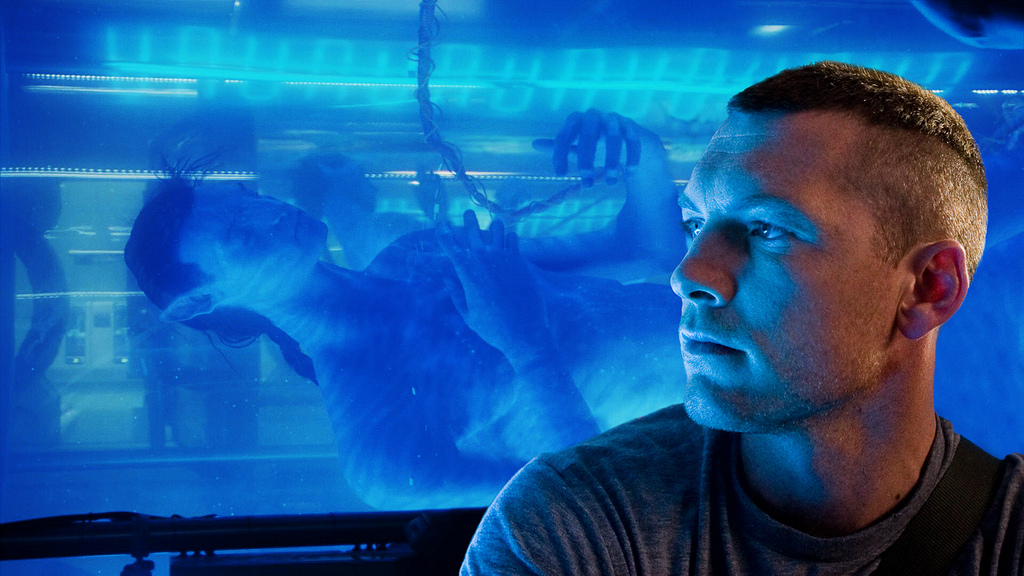
So naturally, we need them to move. Jake Sully (Sam Worthington) is a Marine who is tapped to join the Avatar program, the brainchild of Dr. Grace Augustine (Sigourney Weaver). The avatars are Na’vi bodies grown and designed to be piloted by humans via a neural link. Col. Miles Quaritch (Stephen Lang), the abominable head of security, and Parker Selfridge (Giovanni Ribisi), the shrewd mining administrator, order Sully to infiltrate the Na’vi village and gain their trust, and find a way to convince or force them off their land. In the course of doing so, he meets Neytiri (Zoë Saldaña), a Na’vi princess who agrees to show him the ways of her people.

And that’s where I’ll stop with the plot description… If you’ve seen the theatrical trailer for this film, you already knew all that and more. In fact, there was very little mystery going into this film. Even the technology developed for it was subject to significant hype. A new and proprietary 3D camera system developed by James Cameron and Vince Pace, motion capture like Zemeckis’ Polar Express and Beowulf (minus the creepiness and dead eyes), and an impressive array of creature design.

So did it live up to the hype? By many of my usual standards, no. The plot was indeed quite familiar – “Fern Gully meets Dances With Wolves” is the popular phrase, although I’d include a few shades of Independence Day (we’re the hostile aliens; the White House is a huge freaking tree). Most of the characters are pretty one-dimensional, and the storytelling bumbles along with some atrociously scripted exposition scenes, in which Sully alternates between voiceover and speaking directly into the camera (under the auspices of recording “video logs”). The nobility of the Na’vi, the superiority of their way of life, the ineffectuality of trying to convince them to move from their home – every plot point of this film is vomited forth in flowery, excruciating detail. Mercifully, these scenes don’t last very long, and they are balanced with some adept performances.

Zoë Saldaña is the standout, giving an absolutely sublime performance as the Na’vi princess Neytiri. Sam Worthington is enjoyable when he’s not delivering plodding exposition, and Sigourney Weaver is fantastic as the inexplicably chain-smoking scientist. Stephen Lang delivers a fun, scenery-chewing performance of the absurdly one-dimensional Colonel, who supervises an invasion between sips of his hot, steaming mug of eeeeeeevil, and Giovanni Ribisi portrays the administrator with such a comical level of callousness that he absolutely steals every scene he’s in.

So only one question remains… Was the visual spectacle of this film enough to make up for its shortcomings? Absolutely, unequivocally, yes. In addition to the technical achievements above (on which I could spend several more paragraphs), I could not take my eyes off a single frame of this film, and I spent most of my first viewing completely awestruck with my mouth hanging halfway open. James Horner blankets this film with a fantastic score – easily the most rich and majestic I’ve heard since John Williams did Jurassic Park. And the world is simply stunning. It’s as if Cameron saw the BBC’s Planet Earth and thought to himself… I can do better than that. He clearly adores bioluminescence, as it is featured beautifully (and pervasively) in this film. With Pandora, Cameron has created an absolute Eden – a rich and savage world with a complex ecosystem.

What’s more, he has crafted a fascinating (and literal) representation of Gaia – the notion of an entire planet as a single, complex organism. The Na’vi are a fantastical, idealized version of humanity, acting as symbiotic shepherds rather than masters of their environment. They sport a long braid of hair which conceals a hidden strand of nerves that can spring forth and attach to other life forms. This has allowed them to make use of a variety of creatures, including land-based and flying mounts, which they can control telepathically through the link. Even the trees of Pandora form a vast network of neurons and synapses – even more than exist in the human brain. The Na’vi refer to this network as Eywa, their goddess, and can use their neural links to speak to the planet directly.

And this may be the most fascinating thing about the Na’vi. They worship a god whose existence is absolutely certain – to both human science and Na’vi faith. Even an afterlife is assured, as they can use their neural links to upload their memories to Eywa when they die. And what’s more, the Na’vi are extremely resilient. They can move fast, jump high, and survive every peril this world can offer. And their every need – food, water, a safe place to sleep – is largely tended to by their ecosystem. Disease is conspicuously absent, even in a world of rampant, unprotected, telepathic hanky-panky. The Na’vi exist in an absolute Eden. They want for nothing and have no fear of death.

So what can humanity offer them? We try all the usual trappings of human progress – roads, schools, hospitals… But according to Sully, the Na’vi have no use for these things.

Humanity’s definition of progress has always been a bit muddy, but it seems to entail both exploration and mastery of its domain. To extend its reach – even to the stars – and to increase its population and lifespan. The Na’vi are often casually referred to as savages in this film, and I would argue that this is an apt term for them. They are wild and untamed, and we would probably call them a stagnant society. But in such a pristine environment – with no significant threats to the species or struggles within its society – our definition of progress completely falls apart. This is Avatar’s most fascinating theme, and yet simultaneously its least explored. We must take the film’s word on the superiority of Na’vi culture, since we are not privy to its stability in the long-term. And what’s more, we only gain the slightest idea of what state humanity is in.

But we can infer a great deal. It is implied that Earth is completely industrialized, and humanity is clearly still in the business of invasion, forced relocation, and wanton slaughter. In fact, this may be the most pessimistic sci-fi treatment of mankind ever put to screen. We aren’t wiped out by aliens, robots, nuclear war, or climate change. We live on, and apparently learn nothing.

Spoiler Warning: The following paragraph contains details about the film’s ending.

Colonel Quaritch does have one thing right – Sully does betray humanity in favor of the Na’vi – and yes, “betray” is the correct word. He even abandons his crippled human body in favor of a more powerful (and undamaged) Na’vi body. In the end, he purges every trace of humanity from himself, referring to his former race as “aliens” and supervising their eviction from Pandora to return to their “dying planet”. I’ll grant that with this branch of mankind acting as usurpers and destroyers, it’s hard to argue with Sully’s decision. But in the end, this film relies upon some disturbing implications of the intrinsic cultural supremacy of the Na’vi. And given their blatant allegorical resemblance to Native Americans, this comes dangerously close to relegating the film to the ineffectual, self-hating bin of white guilt.

While Avatar‘s societal allegory has a few problems, it nonetheless boasts some provocative and effective environmental themes. And on a technical and creative level, James Cameron has brought a marvelous vision to life with this film, and it will surely impact cinema for years to come. If it is successful enough that Cameron can finish his planned trilogy, I would certainly hope to see some of the above concerns addressed with additional storytelling. Avatar is an impressive spectacle, but it has merely teased us with the potential of its rich, engrossing world. It could eventually be the stuff of great science fiction.

FilmWonk rating: 7.5 out of 10
Additional reading:

Clint Eastwood’s “Invictus” – Wish I could have been there, instead of seeing this.

Poster for Clint Eastwood's "Invictus"

Spoiler Warning: This film is based on true events, and as such, this review will contain more spoilers than usual.

Oh, what can I really say about this film? Clint Eastwood has spun me the inspiring and true story of Nelson Mandela (Morgan Freeman) and his leadership of the newly post-apartheid South Africa. How he asked the leader of the national rugby team, Francois Pienaar (Matt Damon), to lead his team to victory in the Rugby World Cup in order to unite the nation. How Pienaar and his team rose to the great leader’s challenge, and went on to an underdog victory against the highly rated New Zealand All Blacks. He has shown me all of this, and yet he has also shown me how saccharine, overlong, and utterly unsubstantial a film can be made of it.

While Eastwood has continued to show his prowess as a filmmaker in recent years, he has never been one for subtlety (as shown by his last treatment of racial issues, Gran Torino). But while Invictus is at least a pleasant-looking and well-composed film, there’s really not much else to it. And because of its grand scope and drawn-out runtime, the film just plays out like an endless cavalcade of missed opportunities.

It could have been a film about rugby, but it wasn’t. Apart from some convincing physicality and camaraderie by Damon and company, the players don’t do much to differentiate themselves, and we really don’t learn anything about their strategy or gameplay. Likewise, it could have been a film about South African politics, but to hear this movie tell it, the only two issues facing the country are race and rugby (the latter being the solution to the former). A dark and unintentionally funny moment ensues when Mandela assures his adviser that if they sort out rugby, then they will be free to sort out “the rest” (e.g. the failing economy). Riiiight…

But rather than focus on sports or politics, Invictus tries to be a film about both, and still fails to evoke any interest. Mandela’s support for the team is largely a political maneuver, and his advisers challenge him several times on this point. But even this mildly interesting aspect of the story proves fruitless for two reasons. First, Mandela’s political shenanigans are completely pure-hearted. And second, his strategy for ensuring the rugby team a win appears to consist of interrupting every one of their practices to shake their hands and tell them how much their country is counting on them. On the eve of the quarter final match, as the team feverishly practices, another hilarious moment ensues when Mandela swoops over them with a helicopter, landing in the middle of the pitch, then assuring them that he doesn’t want to interrupt their practice. But hey, they gave him a team hat. So it’s all good.

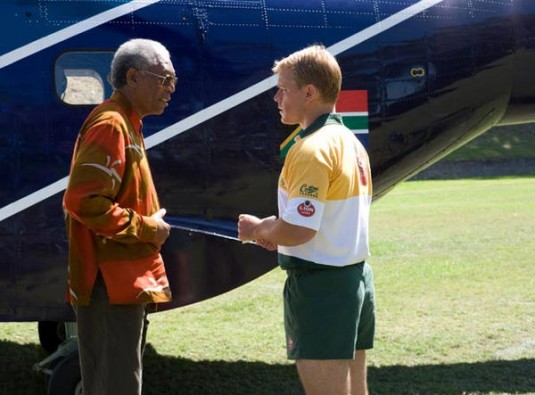
Still from Clint Eastwood's "Invictus"

I’m going to interrupt my rant here and say… I really wanted to like this film, and there are a few things to like in it. Morgan Freeman absolutely looks and sounds the part, and let’s be honest…he could play this part in his sleep, and of course he does a fantastic job. Matt Damon clearly bulked up and trained like a madman for this role, and continues to prove himself one of the finest and hardest working actors in Hollywood. In addition, Tony Kgoroge gives a fine performance as one of Mandela’s bodyguards (who ultimately gets a more interesting arc than Damon’s character). And how can I argue with the events? This was a great and inspiring moment in both sporting and South African history, and I wish I could have been fortunate enough to see it in person.

But instead, what I’m presented with is an expensive imitation, and it plays more like a parody of inspiring films than a genuinely inspiring one. At the game’s end, we see a montage of celebrations, as blacks and whites the country over embrace each other in the newfound (and instantaneous) harmony of the Rainbow Nation. One particularly incredible sequence involved a pair of white police officers and a small black boy who hangs out near their car in order to listen to the game on their radio… While he is understandably wary of getting billy clubbed early on, the cops eventually let him stick around. But at the end of the game, the scene just goes too far. The officers hug him (okay!), hoist him into the air (less likely, but okay!), and finally put a police hat on his head (sorry, but I just don’t buy it).

Most of the later scenes play in this way, and as a member of the audience, I just felt manipulated. In another semi-plausible sequence, the rugby team visits Robben Island and is awed by the site where their president was wrongfully imprisoned for 27 years. But once again, the film takes it too far. Pienaar locks himself in Mandela’s former cell, and several apparitions of Morgan Freeman fade variably into view… Sitting in the cell…lying in the cell…reading poetry…Chopping rocks outside… Chopping rocks…in another part of outside…

And again, I have to concede that if I were really on Robben Island, I might well have a similar reaction. But this film attempts to convince us of an intensely personal moment for Pienaar, based on a relationship between him and Mandela that is not particularly well fleshed out.

For a historical tale to be inspiring, we need a little distance from it. We need perspective. We need some sense that the inspiring effect has lasted. Fictional films like Remember the Titans work precisely because of their confined scale and believable effect. At the end of that film, I can really believe that a small town’s racial tensions could be resolved by the intense interracial brotherhood that develops amongst a high school football team.

But stories like this work in fiction precisely because we have to take the filmmaker’s word on the story’s end. I would do South Africa a disservice to discount the impact of this great man and glorious moment for their nation, but as I watch South African politics a decade and a half later – the crime, the violence, the economic strife…the corruption and leadership struggles between Thabo Mbeki – Mandela’s successor – and Jacob Zuma – another former political prisoner of Robben Island… I’m reminded that history encompasses much more than just great moments and great men.

The story goes on. And a simple and languidly paced freeze-frame of a single shining moment of that story just doesn’t inspire me.

FilmWonk rating: 4 out of 10