FilmWonk Podcast – Episode #112 – “Valerian” (dir. Luc Besson), “City of Ghosts” (dir. Matthew Heineman)

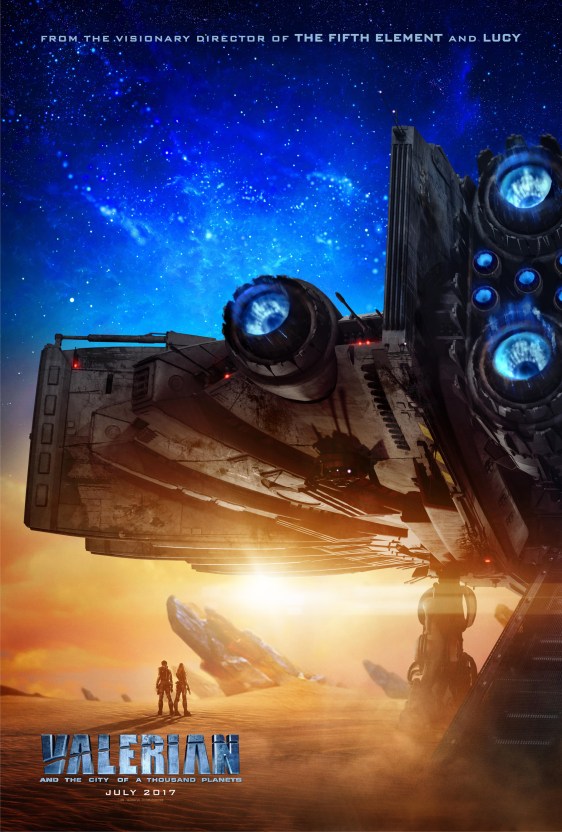
Poster for "Valerian"

In this week’s podcast, Glenn and Daniel address an age-old question – is Fifth Element and Lucy director Luc Besson still a master of sci-fi, and can strong worldbuilding (and one surprising gem of a performance) make up for dubious screenwriting. Come along and find out, but first, check out an important documentary about the worst excesses of ISIS in Syria, and the brave men and women who risk their lives to reveal them to the world (56:31).

May contain NSFW language.

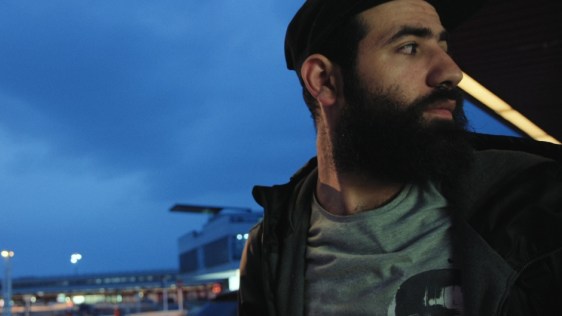
Still from "City of Ghosts" (2017 documentary film)

FilmWonk rating (City of Ghosts): 7 out of 10
FilmWonk rating (Valerian): 6.5/10 (Glenn), 7/10 (Daniel)

Show notes:

  • [01:52] Review: City of Ghosts
  • [23:06] Review: Valerian
  • [37:41] Spoilers: Valerian
  • Music for this episode is the track, “Space Oddity” by David Bowie, from the Valerian soundtrack.
  • Full disclosure, the “back of the envelope” calculation of Alpha’s escape velocity from Earth was done with some assistance from computational knowledge engine Wolfram Alpha, which revealed – assuming a consistent velocity over 600 years (for the sake of simplicity) – that the station was going too slow (relative to the Earth) by a factor of 187.8 to escape Earth’s gravity. And yes, this was just me being nerdy. Not an actual complaint.

Listen above, or download: Valerian, City of Ghosts (right-click, save as, or click/tap to play on a non-flash browser)

Matt Reeves’ “War for the Planet of the Apes” – An uneven, but fitting end

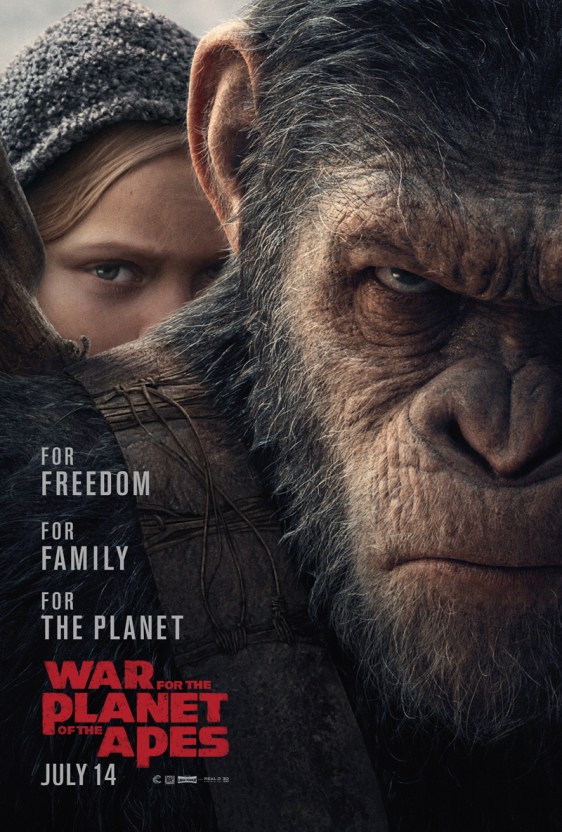
Poster for "War for the Planet of the Apes"

Caesar (Andy Serkis, voice and mo-cap) really is an epic, tragic hero, and his odyssey over the course of the Planet of the Apes reboot trilogy is a grand spectacle to behold. It owes much of this to Weta Digital’s stunning visual effects and creature work on Caesar and his ape companions (Maurice the Orangutan is a particular masterpiece, and looked as good in 2011 as now). At the time, I said of director Rupert Wyatt‘s series reboot that “it’s easy to overlook just how smart and well-executed this film is, given that Rise of the Planet of the Apes nearly drowns in its rush to saturate itself with big-budget blockbuster stupidity”. The sequels from director Matt Reeves have only heightened these competing impulses – toward deeper and grander themes of the nature of war amid the collapse and clash of a pair of sapient civilizations, and increasingly ridiculous levels of well-rendered, low-stakes blockbuster twaddle. In this way, War for the Planet of the Apes is a fitting end to this trilogy, because not only does it deliver a satisfying ending to the film’s only continuous group of characters – apes all – but because it doubles down on many of the series’ most facile impulses. Its homages to classic cinema perform a tenuous and inconsistent tonal dance as the film tries to have its cake and eat it too – delivering a sincere, satisfying, and at times, devastating emotional journey for Serkis and his team to digitally render before us, but also allowing his marvelous creature to become an over-the-top action hero who is repeatedly bailed out of serious trouble by happenstance, antagonist stupidity, and script-demanded good fortune.

I’m being harder on this film than I expected, but I actually had a great deal of fun watching it. After Rise showcased the accidental fall of mankind, Dawn delivered an astonishing allegory on the fragility of peace, showing how bad actors on either side can topple the equilibrium with far greater ease than those who are trying desperately to preserve it. The second film had a clear-eyed message: it didn’t have to be this way. If humanity’s remnants had simply listened to the better angels of their nature – and if its intelligent ape children had done the same – then they might have found a way to coexist on a planet that would be forever changed. It was a real achievement that the series ever made this peace seem possible (even knowing that a blockbuster’s second chapter seldom ends happily), and as this film returns years later into full-fledged conflict, that fleeting memory makes it that much harder to bear. Human soldiers creep through the jungle, ambushing apes and getting ambushed in return, with dozens dead on either side. The film revels in that tragedy, but it never feels exploitative. And it comes as no surprise when the ruthless human Colonel McCullough (Woody Harrelson) is first introduced as a staticky voice on a radio, first telling a lone surviving grunt that he is now in command, and then – when his imminent death becomes clear – ferociously ordering him to “kill as many of them as you can”.

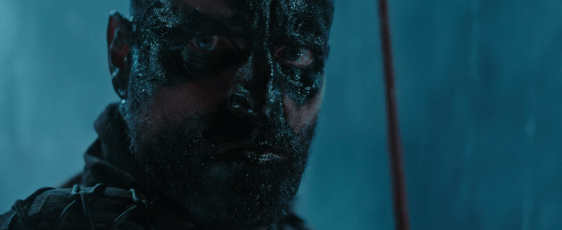
Woody Harrelson in "War for the Planet of the Apes"

The most obvious of the film’s influences is Apocalypse Now (an ape-pun version of this is literally spray-painted on a tunnel wall), but the strongest component of that homage is certainly Harrelson, who delivers a solid performance on fairly limited dialogue and screen presence. The Colonel is introduced as a sort of nightmare-creature – a nemesis who spits on your attempts at peace or compromise, and sneaks up in the dead of night to butcher you in your bed. And when his truer nature is revealed later as something a bit more banal in the fanatical fog of war, the distinction hardly matters. The film’s handling of the Colonel is masterful, because we first meet him from the apes’ perspective as a figure whose existence is so loathsome that it will rip Caesar away from his beleaguered tribe of apes on a suicidal vendetta. Strong, stoic Caesar, whom we’ve witnessed learning about the goodness and ills of human and apekind alike, is shattered by the basest of human desires – to vanquish one’s enemy at any cost. And what a grand journey it becomes. It is perhaps somewhere in Weta Digital’s contract that every one of their films must include a LOTR-esque epic journey, and this film certainly delivers it, as Caesar and his team of besties tear off on horseback. You know these beats already. Caesar doesn’t want them to come, but Maurice (Karin Konoval), Rocket (Terry Notary), and a strange newcomer known as Bad Ape (Steve Zahn) simply can’t let him undertake this journey alone. Composer Michael Giacchino has grown since his Lost days, with the film’s boisterous themes trumpeting forth like a classic adventure film – Howard Shore meets Sergio Leone. The lush, cavernous cinematography as the troupe distantly (but not too distantly) trails the Colonel’s army will make you gawk at the glory of this cinematic war odyssey, but also ponder why no one in the baggage train bothered to glance back with a clean pair of binoculars. And the less said about the film’s haphazard use of floodlights, the better. War is a gorgeous and eminently watchable film that lets its characters get away with any reckless, ill-conceived action until the moment the script decrees that it’s time for the next conflict – and even then, the sheer lucky spectacle of it all makes those bad choices seem almost correct.

In a sense, the film is predictable, insofar as its genre influences are clear. If there’s an enemy camp, it will be invaded. If there are prisoners, they will escape. All of this will end in blood and fire and death, perhaps right where the giant fuel tanks are discourteously stored. But from a broader perspective, the film manages to maintain a foreboding sense of mystery about the overall tides of the war, as well as the state of the larger world and either species. The series is called Planet of the Apes, and yet it feels suspiciously like the death spiral of all life on Earth, and that is an unyielding source of tension as the series goes on. In much the same way as Game of Thrones, I found myself screaming silently at these characters: Stop this. Stop it now, while some of you are still alive. But that’s perhaps where the film maintains a sheen of optimism, because its most persistent and surprising message is about the tenacity of our nobler instincts. I say “our”, but I’m including the apes in this assessment. The film repeatedly argues, in a manner that is true to these characters, that the overriding impulse of any intelligent being is toward acts of grace, mercy, and compassion. The film hammers this sanguine point repeatedly through character beats, then drives the entire thing off a cliff for a final action sequence that, if I’m being honest, I had quite a bit of fun watching, but found rather narratively unsatisfying. The clashing CGI armies look as good as ever, and yet feel far more anonymous and inconsequential than ever before. War for the Planet of the Apes freely depicts the brutal and unfair horror of death in warfare, but is also happy to showcase death as an admirable, peaceful thing that happens on a mountaintop before sunset.

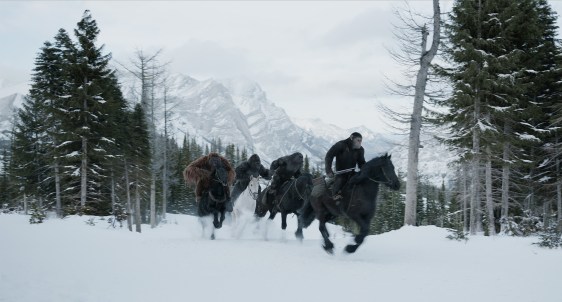
Still from "War for the Planet of the Apes"

The result is a mixed bag. Caesar makes some atrocious choices in War for the Planet of the Apes, and the film, in a sense, lets him off the hook by presenting a third act that felt utterly devoid of conventional stakes and still allowed him to be a triumphant hero. And yet, I can’t call the film a failure for it, because it still feels like as deep and consequential an exploration of warfare as this series has ever delivered. Perhaps the best avatar for this film is Zahn’s character of “Bad Ape”. He is almost a circus clown version of Koba, the scarred, bitter ape who gleefully started this war in the second film. Bad Ape was mistreated by humans in his former life, but retains the name they used to shout at him, as well as his status as a bitter, lonely, broken-down coward. He is nominally a comic-relief character, and yet I never once stopped feeling compassion for him. And that compassion felt vindicated through his actions by the film’s end. Bad Ape – in addition to being one of the finest CGI creations since Maurice – embodies a deep, abiding sadness. That’s what I felt at the end of this film. That might’ve been exactly what it wanted.

FilmWonk rating: 7 out of 10

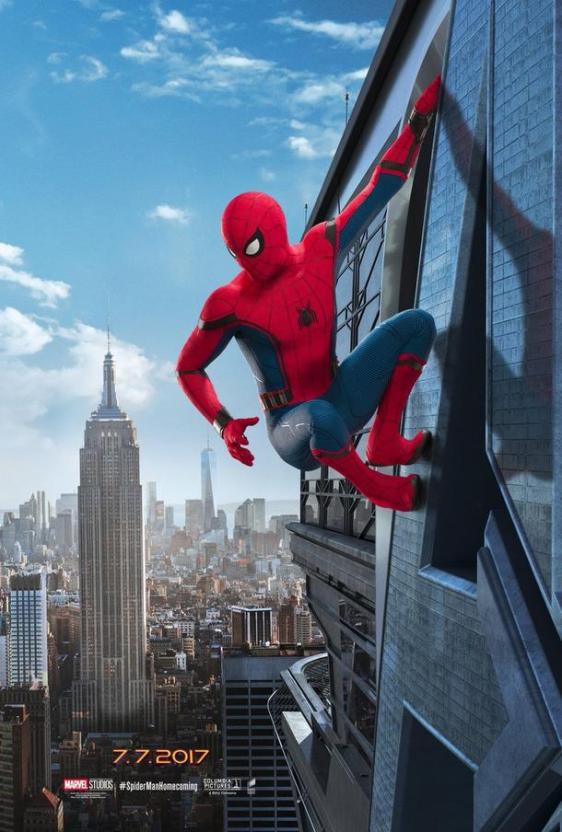
FilmWonk Podcast – Episode #111 – “Spider-Man: Homecoming” (dir. Jon Watts)

In this week’s podcast, Glenn and Daniel get reacquainted with their friendly neighborhood Spider-Man, and their friendly Keatonesque Bird-Man, and are rather pleased about it (45:16).

May contain NSFW language.

FilmWonk rating: 8 out of 10

Show notes:

  • Music for this episode comes from a pair of Spider-Man TV series theme songs. The first is the classic 1967 animated series theme, with lyrics by Paul Francis Webster and music by Bob Harris. The second is a slick reimagining of the same from composer Michael Giacchino, from the film’s original score.
  • Glenn also appears this week on our podcast nemesis, The Spoilers : Wayne & Daryl, to discuss Spider-Man, comedians as villains, the oeuvre of Kevin Smith, and anything else that strikes our fancy. Consider yourselves spoiler-warned.

Listen above, or download: Spider-Man: Homecoming (right-click, save as, or click/tap to play on a non-flash browser)

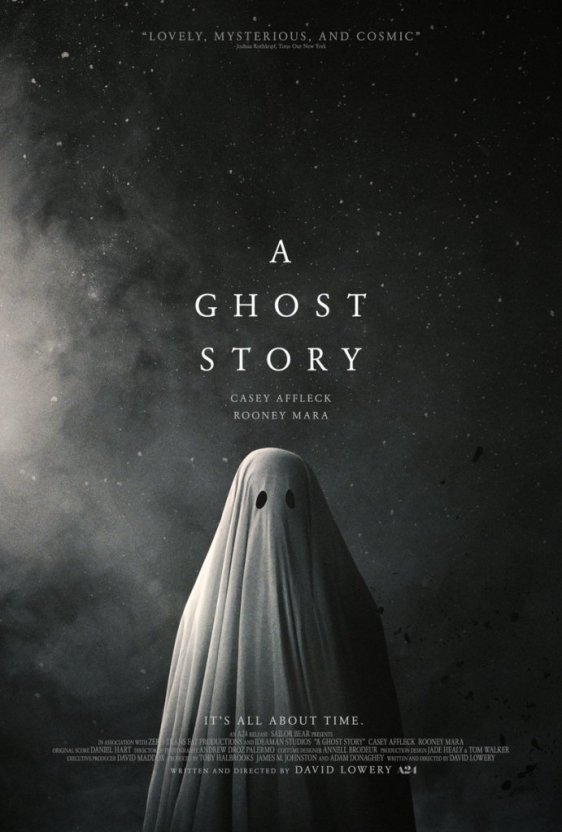
FilmWonk Podcast – Episode #110 – “A Ghost Story” (dir. David Lowery), “I, Daniel Blake” (dir. Ken Loach)

In this week’s podcast, Glenn and Daniel check out a rallying cry for the British working class with Ken Loach‘s new film, I, Daniel Blake, then check out a shriek of impending doom from David Lowery, A Ghost Story, a film in which a goofy game of supernatural dress-up is just the thin veil covering intense trepidation about the whole of human existence. Three points if you guess which film caused an actual panic attack (56:50).

May contain NSFW language.

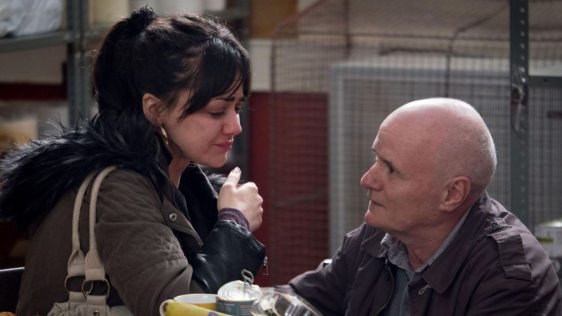
Still from "I, Daniel Blake"

FilmWonk rating (I, Daniel Blake): 7 out of 10
FilmWonk rating (A Ghost Story): 9.5 out of 10

Show notes:

  • [01:54] Review: I, Daniel Blake
  • [21:21] Spoilers: I, Daniel Blake
  • [34:27] Review: A Ghost Story
  • [41:58] Spoilers: A Ghost Story
  • Music for this episode is the track, “I Get Overwhelmed” by Dark Rooms from the soundtrack/trailer to A Ghost Story.
  • In assessing the labyrinthine bureaucracy depicted in I, Daniel Blake, we referred to the game, “Papers, Please“, from indie developer Lucas Pope – highly recommended.

Listen above, or download: I,
Daniel Blake; A Ghost Story
(right-click, save as, or click/tap to play on a non-flash browser)

FilmWonk Podcast – Episode #109 – “Baby Driver” (dir. Edgar Wright)

Poster for "Baby Driver"

In this week’s podcast, Glenn and Daniel return to the stylish world of writer/director Edgar Wright, and find it strangely exhausting this time around. Can an array of fun gangster performances overcome an oppressive soundtrack and wasted, one-dimensional female leads? We’ll struggle to find out (27:52).

May contain NSFW language.

FilmWonk rating: 5 out of 10

Show notes:

  • Music for this episode is the tracks “B-A-B-Y” by Carla Thomas, and “Bellbottoms” by The Jon Spencer Blues Explosion, from the film’s soundtrack.

Listen above, or download: Baby Driver (right-click, save as, or click/tap to play on a non-flash browser)

FilmWonk Podcast – Episode #108 – “Keep Quiet” (dir. Joseph Martin, Sam Blair) (#SJFF2017)

Poster for "Keep Quiet"

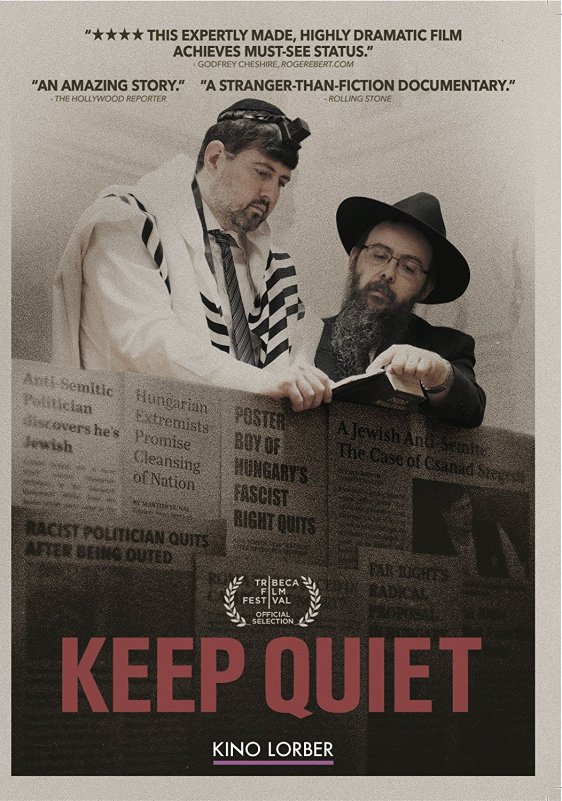
In this week’s podcast, Glenn and Daniel jump back to their final selection from the Seattle Jewish Film Festival, Keep Quiet, a documentary about Csanád Szegedi, a former far-right, antisemitic political party leader in Hungary who discovers that he has a (still living) Jewish grandmother, which causes a sea change in his political and religious beliefs. Or…does it? If this film had been a great big pat on the back for tolerance and pluralism, we expect it would’ve been pretty tedious. But like The Imposter before it, this film’s definite strength is its ambiguity. Dive with us into an exploration of this fascinating figure and the skepticism that he (deservedly) faces from both his old community of nationalists and neo-Nazis, and his new community of Orthodox Jews. We’re joined once again by friend of the show, local author Erika Spoden (32:11).

May contain NSFW language.

Keep Quiet is available on Amazon Video, and we highly recommend checking it out. As this film deals in ambiguity, there will not be a separate spoilers section in our discussion. Please consider this both a recommendation and spoiler warning for the entire film.

FilmWonk rating: 9/10 (Glenn/Daniel), 10/10 (Erika)

Show notes:

  • Music for this episode is the track “Train of Thought“, from the film’s score by Phillip Sheppard.
  • Special thanks to Erika for joining us this week – her memoir is titled Strawberries for 50 People, and it is available on Amazon Kindle.
  • Thanks as well to the Seattle Jewish Film Festival and Smarthouse Creative for helping us cover so much of the festival (for the first time) this year – we’ll definitely be back!

Listen above, or download: Keep Quiet (right-click, save as, or click/tap to play on a non-flash browser)

Alex Kurtzman’s “The Mummy” – A Movie About a Mummy and Some Other Stuff

Poster for "The Mummy" (2017)

Ladies and gentlemen, your Dark Universe. The Invisible Man (Johnny Depp), Frankenstein’s monster (Javier Bardem), Dr. Jekyll (Russell Crowe), and saving the best for first, The Mummy (Sofia Boutella). Don’t be perplexed, dear reader, by the fact that every single other monster is played by an A-List dude. Don’t spend too much time pondering Dr. Jekyll, this film’s Nick Furian monster-hunting super-spy, who runs Prodigium, this film’s S.H.I.E.L.D.. Don’t gaze long at the poster, which exclusively features the name of Tom Cruise above the title, despite his role as a soldier of fortune whose only distinguishing characteristic is a punny surname that means “Deadguy”. And think not upon the trailer which literally shows him dying in an almost vertical plane crash and resurrecting in a single piece. Whatever conclusion you may be drawing about Cruise’s prospects of replacing Boutella as a Mummy-themed Avenger by the end of the film is almost certainly not worth the time it took to type it out. Because The Mummy is not just a bad, boring film, devoid of original thought or a moment of suspense. It’s a film by committee, made in front of a corkboard replete with flash cards of ideas from other, better films. The Mummy is a thief, a liar, and a cannibal.

I shouldn’t rag too hard on Crowe, because he is given the thankless job of setting up a framing device for Universal Studios’ hamfisted attempt to create a megafranchise based on their stable of mostly public-domain, but strictly trademark-controlled movie monsters. And despite his dubious motivations, wildly ambiguous plan (see if you can figure out whether being stabbed with a ruby-hilted dagger is a good or bad thing during the last act, the answer may surprise you) and dialogue composed exclusively of self-important trailer narration, Crowe’s performance certainly provided the film’s only moments of levity. His Dr. Henry Jekyll is an amusing pastiche of Willy Wonka and Albus Dumbledore (with a good deal less narrative focus or skill), and his Edward Hyde is a cockney horrorshow. Crowe at least seems to be having some fun, which is a rare thing in this film. Granted, the creature design of Mr. Hyde makes me genuinely worry that Universal’s only look and feel for these monsters will be “shambling, lightly CGI’d corpse”. If you want poorly zombified actors, this film’s got em, and the quality (for a scant $125 million) is easily put to shame by premium cable these days. Hopefully we’ll get a half-decent Wolf Man or Creature from the Black Lagoon out of this Universe before it collapses.

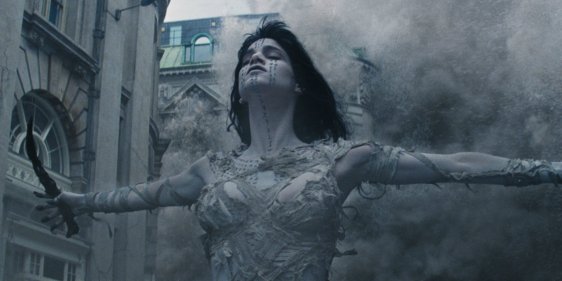
The Mummy herself, on the other hand, with her ashen skin punctuated with black and blue hieroglyphic tattoos, and her strange double-pupiled eyeballs (the second pupil apparently represents eeeeeevil), is at least interesting to look at, even if her plan doesn’t make much sense. Revisiting Stephen Sommers‘ 1999 version of The Mummy last night, I was struck by just how much energy was put into the design and look of Ancient Egypt. Significant modeling (or late-90s CGI) was put into crafting Ancient Thebes, and that Mummy’s evil plan at least started with a mildly sympathetic motivation – forbidden romance between High Priest Imhotep and Pharaoh’s wife, punishable by death or worse. 2017’s Mummy, Princess Ahmanet, not only lives in a staggeringly low-rent version of Egyptian antiquity, consisting almost entirely of translucent curtains, off-screen stabbings, and standing on undeveloped sand dunes looking at distant pyramids, but her plan is incredibly basic and unsympathetic. She was heiress to the throne of Egypt, but then her Pharaoh father had a baby brother who jumped to the head of the line, so she made a pact with Set, the god of death, to allow her to rule the world in exchange for murdering everyone. This plan has some serious problems. Notably, it is incredibly vague what Set adds to this plan, since Ahmanet seemed quite capable of slaughtering her family without divine intervention, and this didn’t elevate her to the throne. Subsequent to this, she was immediately caught, killed, spirited away to Mesopotamia (present-day Iraq and Syria), and buried in a cursed tomb. In the end, all Set adds to her plan is a proxy – she needs a mortal to embody his spirit, and that mortal will obviously be played by Tom Cruise. But it’s unclear what her role will be after the death god’s avatar takes over.

Still from "The Mummy" (2017) with Sofia Boutella

Back in the present day, we get a depressingly forced action opener featuring soldiers Nick Morton (Cruise) and Chris Vail (Jake Johnson). Of these two, I’ll simply say that I never bought them as friends or adventurers, despite some strong work by Johnson later in the film (when he’s done dropping audience-friendly gems like, Iraq is a whole different country that’s a thousand miles from Egypt). But there’s really no better way to sap all tension from an action sequence than to give your heroes the ability to call in an instant airstrike, and announce that ability several minutes before it actually happens. But no matter. The Hellfire missile drops, the unspecified insurgents flee, the cursed tomb is unearthed, and their surly superior (Courtney B. Vance) arrives to tell them that the Mayor’s going to have his ass for this, but also assure them that they will face no consequences whatsoever, and a woman named Jenny (Annabelle Wallis) shows up, seemingly by magic, to explore the tomb for a moment or two. Jenny and Nick, you see, had a one-night stand in Baghdad, he stole her map, she impugns his sexual prowess, and that’s the entire basis of what this film laughably calls a romance between these two. They lack any chemistry or even a plausible motivation to care about each other’s survival. And this is a major problem for the film, because the third act – and Nick’s dire decision of whether or not to vaguely embrace evil – entirely relies on buying these two as romantic partners. The Mummy so thoroughly botched its romance that it actually makes me look back even more fondly on Wonder Woman, which shares a number of adventure and romantic plot beats in common with this film, but executed them with a great deal more skill.

I like Tom Cruise. I like him even when he’s playing cocky or unlikable characters, which is more often than not these days. But this character is an utter failure. His “infection by evil” carries no real weight or tension, because The Mummy‘s inept storytelling telegraphs the ending repeatedly from the opening voiceover. The result is a mirthless slog that I struggled to even make it through without repeatedly checking my watch. And I really have to hand it to this film. It takes a lot of work to not only make me not care if any of the characters live or die, but to also make it objectively not matter.
This has easily outclassed The Amazing Spider-Man 2 as the saddest (hopefully abortive) attempt to start a megafranchise to date.

FilmWonk rating: 2 out of 10

FilmWonk Podcast – Episode #107 – “Wonder Woman” (dir. Patty Jenkins), “Glory” (dir. Kristina Grozeva, Petar Valchanov) (#SIFF2017)

Poster for

In this week’s podcast, Glenn and Daniel are back at the Seattle International Film Festival to check out a lovely Bulgarian political satire. Then Diana (Gal Gadot) shows up to wreck the place by hand and sword, and we can’t complain, because it turns out she’s pretty awesome when not saddled with a lame mystery B-plot (48:06).

May contain NSFW language.

Still from

FilmWonk rating (Glory): 8 out of 10
FilmWonk rating (Wonder Woman): 7.5/10 (Glenn), 7/10 (Daniel)

Show notes:

  • [00:24] Review: Glory
  • [17:25] Review: Wonder Woman
  • [35:49] Spoilers: Wonder Woman
  • Music for this episode is the track, “Dance for Tomorrow” by Stop the Schizo from the soundtrack to Glory, and the track, “Angel On the Wing” from the Wonder Woman score by Rupert Gregson-Williams.
  • Correction: Spread the word on this one – we (and many others) have been mispronouncing Gadot’s last name. It’s not French-style, with a silent T – it’s Israeli-style, with a solid T. The actress previously made a video to address the issue (thanks to Dan A. for pointing this out).
  • Correction: Dr. Maru (“Dr. Poison”) was actually played by Spanish actress Elena Anaya. The actress from Force Majeure, Lisa Loven Kongsli, played Menalippe, one of the Amazons, and she’s actually Norwegian, not Swedish.
  • Correction: To complete the trifecta, we made a casual reference to a character played by “Kat Denning” in Thor. The actress’ name is Kat Dennings.

Listen above, or download: Wonder Woman, Glory (right-click, save as, or click/tap to play on a non-flash browser)

FilmWonk Podcast – Episode #106 – “Pirates of the Caribbean: Dead Men Tell No Tales” (dir. Joachim Rønning, Espen Sandberg)

Poster for "Pirates of the Caribbean: Dead Men Tell No Tales"

In this week’s podcast, Glenn and Daniel take a break from SIFF to return to the swashbuckling world of diminishing returns that is Pirates of the Caribbean, pondering the series’ future, and considering whether if Jack Sparrow (Johnny Depp) will ever slip his earthly bonds and meet the Fast and Furious crew in space (37:44).

May contain NSFW language.

FilmWonk rating: 5 out of 10

Show notes:

  • Music for this episode is the track “Cruel Mistress” by Flogging Molly, and the track “He’s a Pirate“, from the soundtrack to the first Pirates film by Klaus Badelt, because the series’ various derivative versions of this track have yet to match the original in quality.

Listen above, or download: Pirates of the Caribbean: Dead Men Tell No Tales (right-click, save as, or click/tap to play on a non-flash browser)

‘Silicon Valley’ Showdown: “The Big Sick”, “Entanglement” (#SIFF2017)

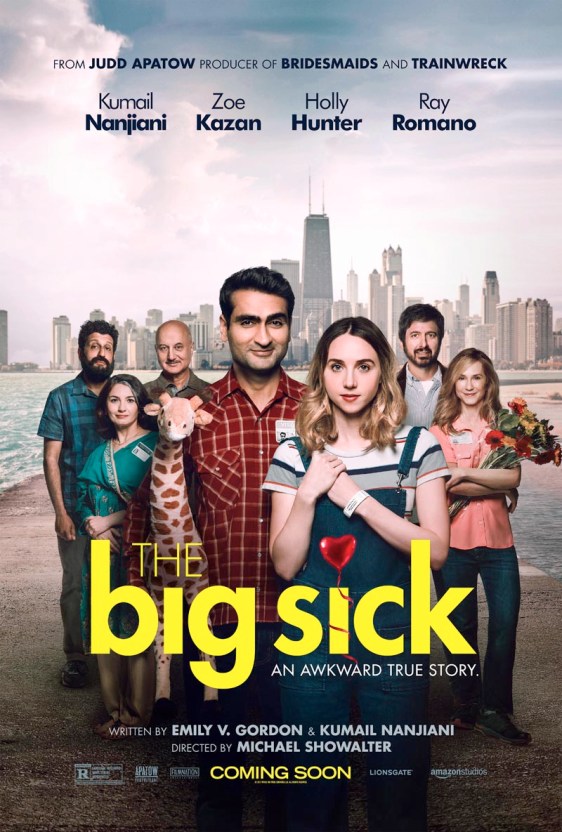
What I knew going into this film is what everyone will know – that comedian Kumail Nanjiani is finally playing a lead role in a deeply personal story that he co-wrote, about his courtship with his wife Emily (Zoe Kazan). That they would explore the pitfalls and difficulties of cross-cultural romance between a first-generation immigrant whose parents wish him to have an arranged marriage, and an American therapist from North Carolina. What I didn’t know is that following a single act of naturalistic romance (and a bit of that “comedians playing themselves” stuff you see on FX shows and Judd Apatow films), Emily would exit the film into a serious health crisis, and the next courtship would begin – between Kumail and his future wife’s parents, Beth (Holly Hunter) and Terry (Ray Romano). The Big Sick never ceased to be a comedy, even as it was becoming a harrowing family medical drama. There were multiple jokes that caused me to guffaw for so long that I missed the next two or three lines of dialogue, in between revelations about Emily’s continuing decline and mysterious ailment. This is a story like nothing I’ve ever seen, except perhaps Jonathan Levine‘s 50/50 put through a filter of ‘How I Met Your Mother‘. Every moment of this film felt completely human to me, and that’s what made it work so well. Not the jokes – which were hilarious – nor any uncertainty over the film’s ultimate outcome. The tension of The Big Sick comes from the notion that these are real people dealing with some real shit. 

They meet ordinarily enough. Kumail is performing on-stage, Emily woos him (“WOO!”) when he asks if anyone here is from Pakistan, and he finds her afterward to give her some flirtatious chiding for heckling during his set. She flirts right back, they end up back at his place for a hookup. After, she gets dressed under a sheet, and the banter continues over the absurdity of her getting dressed under cover after they’ve just had sex. I mention this moment in particular because not only does the dialogue never cease to be completely comfortable and naturalistic, but the relationship (which we see in vignette and montage form over the course of the first act) is replete with details like this, that seem too oddly specific or embarrassing to not be true. I do wonder how I might’ve felt about these moments if I didn’t know that these two end up as the married screenwriters of this film, but I’m not sure how many people will have that experience. Many of these moments felt, perhaps, a bit heightened, but all of them felt real. 

And then it gets very ugly very quickly. I won’t spoil the complete chain of events, but Kumail’s family expectations that he’ll marry a Pakistani girl (that they choose for him) butt up against their relationship, the latter takes a dive, and then she gets sick. That plot description usually portends an aggressive turn to the dramatic, but I must emphasize that this never stopped being a comedy. Emily’s friends call Kumail because he has just been her boyfriend, she’s in serious medical trouble, and they’re unable to stay any longer because of jobs, academics, life… He realizes how much he cares, when he is suddenly thrust into responsibility for her so early into the relationship, in the form of a doctor asking him one question after another before Emily is dropped into a medically-induced coma, with his authorization, as her…husband. 

Her parents arrive and are outright hostile toward him, because they know that (as they see it) he broke their daughter’s heart. And yet, they bond. This is some messy, human nonsense right here. There are no clean lines or definitions to these relationships. It is completely unclear to the people involved whether Kumail and Emily will be together at the end of this, or whether these three will have any reason to ever speak again. But still they bond. Because the one thing they all have in common is that they’re all in the trenches on Emily’s team. The parents are a fine portrait of unfathomable worry, but Holly Hunter is particularly masterful. The three make a reluctant foray to a comedy club where Kumail’s show goes awry (and both parents get shockingly profane for the first time), and then they find themselves getting hammered at Emily’s apartment. Kumail and Beth decide to drink whiskey and “stress-eat” after Terry passes out on the couch, and they try to talk about anything but Emily’s impending surgery. Later on, Terry sleeps at Kumail’s place and they chat awkwardly in the dark about the struggles in Terry’s marriage. All of this works. These scenes have time to breathe, and ring constantly true. These people grab onto each other –  not without hesitation – in an impossible situation, and they remain raucously funny as they handle it.

Kazan ultimately plays a side character, and does a fine job with it in the first and last acts. But this is not a choice I would’ve understood coming from screenwriter Emily V. Gordon if not for the specific turns of this story. Ultimately, Gordon’s greatest contribution to the film (apart, presumably, from an insight into how her fictionalized parents should act), is respect for movie-Emily’s agency at the film’s end. This is merely a chapter in the couple’s love story, it’s not one in which she plays a prominent role, and that’s fine. It’s not a fairy tale, and she doesn’t wake up feeling any differently about the issues that drove her and movie-Kumail apart in the first place. This works for the same reason that the relationship between Kumail, Beth, and Terry works- it’s honest and uncompromising, and showcases the best of each of them. 

FilmWonk rating: 8.5 out of 10
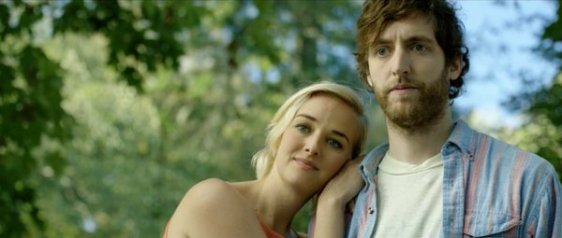
I kinda want to drop by Thomas Middleditch‘s house and ask if he’s okay. His character, Ben Larsen, begins the movie Entanglement with an elaborate suicide attempt, and then we flash to him brooding (and alive) six months later. I last saw him play lead in Joshy, a film in which his fiancee commits suicide, and then we flash to him brooding (and alive) six months later. This is an actor and comedian that I quite enjoy – his awkward straight-man Richard on Silicon Valley is a classic character who has to deliver some surprising emotional range through the ungainliness of a nerdy developer, and his repeated appearances on the Comedy Bang Bang podcast have shown him to be a talented improv comic as well. Jess Weixler cut her teeth as the lead in…er…Teeth, a horror film with a single, repeated joke/scare that she was a uniquely essential component for, and she has made occasional TV appearances since. Like Anna Camp before her, she is generally a delightful, underused presence. Keep these compliments in mind, because Entanglement is flat-out terrible, and I have a difficult time blaming these actors for it.

When Hanna (Weixler) meets Ben at a drugstore while shoplifting, I realized I may have lost all tolerance for invasive meet-cutes. Perhaps it was Bad Santa 2, in which multiple women seduce Billy Bob Thornton while he is blind-drunk and covered in a urine-soaked Santa suit, that pushed me over the edge, but I just have a hard time buying that so many of these brooding sad sacks are beating women off with a stick. Yes, the scenes are usually fun, and actors are cast for their mutual chemistry (Bad Santa 2 being a notable exception on both counts). But that does not mean that meeting in a random drugstore is still a thing that strangers do in 2017, and the film’s forced whimsy and shallow female characters don’t end there. Ben’s neighbor Tabby (Diana Bang) drops in while he’s out and cleans his apartment, apparently not for the first time. It bugs him, he says he needs to ask for his key back, but she keeps doing it. This irritating pattern only continues as the film goes on. He’s getting therapy from a friend who’s a child psychologist. She points out how weird this is. He’s seemingly only there to banter insultingly with her child patients, one of whom gives him a child’s fairytale book that helps him seduce…I’m getting ahead of myself. Ben’s father has a heart attack, and reveals, on his near-deathbed (which Ben doesn’t seem overly concerned about) that Ben’s parents very nearly adopted a baby girl, right before his mother found out she was pregnant with him, and so they gave her back. This seemingly innocuous factoid throws Ben for a loop for some reason. He could’ve had a sister this whole time! He returns to the serial-killer yarn board in his apartment (where he maps out all of the different events in his life in an effort to see where it all went wrong), and determines that his nearly-sister is the key to his future happiness.

I would’ve been fine with accepting this odd motivation on its own terms, but I can’t overstate how poorly Ben values his hypothetical sister as a human being. Each time he discusses what she might mean to him, it’s always in terms of what she can offer him – she might’ve taught him how to dance, or talk to girls. She might have reminded him to call their mom on Mother’s Day. Somebody buy the kid a smartphone – Siri can do most of that these days. And of course (of course) it turns out to be Hanna. And of course they have a weird romance. And of course it gets whimsical really fast, with the manic pixie dream girl tropes plastered across the camera like paintballs even when they’re not visually enhanced by actual CGI weirdness – underwater jellyfish, faux-stop-animated deer, floating planets on a wall…

Let it never be said that I can’t cherish whimsy – even the sad, brooding sort. Amélie and Eternal Sunshine are my jam. Swiss Army Man, which featured a bromance between Paul Dano and a farting corpse, was in my Top 10 for last year. And I’m sure some will say that this film’s shallow plot twist justifies its excess. Let me be clear: it does not. Entanglement is aggressively bothersome, and no narrative trickery – even the type that attempts to recontextualize the film as a psychological drama – can make that right. Its musical score is a ceaseless, invasive loop of callow piano punctuated seemingly at random by 1950s Americana deep cuts, and its dialogue is a torrent of superfluous, rapid-fire banter intercut with strained, half-understood physics or textile metaphors. And more to the point, there is not a single authentic moment or human interaction in this entire film. Even without such a strong counterpoint as The Big Sick to compare it to, Entanglement falls flat, smashes through, and plunges into a bottomless hole in space-time.

FilmWonk rating: 1 out of 10