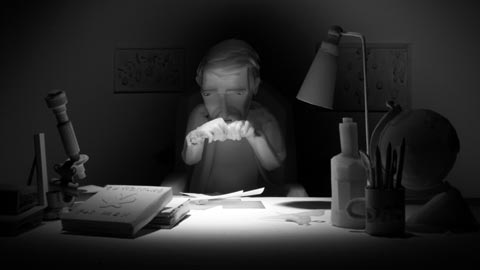
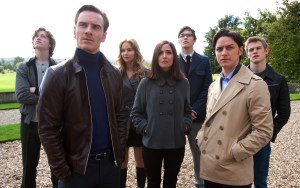
Steven Spielberg’s “War Horse” – Beasts, battle, and the perplexing notion of nobility

The relationship between man and horse has always been a complicated one. It’s simple to find inspiration in a story of humans and pets, since pets are generally treated well and have little expected but love in return. Horses, like all other beasts of burden, are the subject of greater expectations, and highly variable levels of respect. Cards on the table: I don’t find horse-racing films inspiring in the slightest. On the surface, it’s basically the same as watching NASCAR – full of souped-up, highly disposal means of transportation, barely deserving of the moniker of “sport”. The only noticeable difference is that these speedy conveyances are capable of feeling pain, making the activity that much more appalling. But beasts of burden have their place, to be sure, and there may be inspiration to be found in their stories, provided they’re enriching our lives in some meaningful way (gamblers, alcoholics, and gluemakers notwithstanding).

War is an equally mixed bag for storytelling, particularly World War I. It was known ever so briefly as “the war to end all wars”, and was a study in contradictions – an absurd mix of both ancient and groundbreaking mechanisms of battle. This war featured swords, cannons, trench and chemical warfare, tanks, metallic armor, and yes – even horses. War Horse effectively broaches the question of whether a horse is capable of demonstrating valor or loyalty, and regardless of the answer to this question, we do see a great many horses lying broken and discarded on the battlefield. This exploration of the First World War is certainly the most interesting part of this film, and simultaneously the most muddled.

This film plays like a fairy tale, with a soft glow blanketing the characters’ initial idyllic existence. Albert (Jeremy Irvine) is a farmboy in Devon, England, whose father wrecklessly splurges on a thoroughbred horse to plow his field. The horse, Joey, may well be a gorgeous specimen, but he’s not big, ugly, or strong enough for the farm work to be set before him. As Albert desperately tries to train Joey to work the plow, his landlord (David Thewlis) twirls his mustache and delivers an absurd (but well-spoken) monologue about Albert’s almost certain failure. This tale of boy and horse is entertaining, to be sure, and demonstrates the horse’s personality to an impressive degree. Even as we learn that these two will soon be torn from each other by the impending war, this sequence masterfully sets up their affection for one another, with Spielberg somehow wrangling as convincing a performance from the animal as from Irvine himself.

But from this point on, the film is basically just a series of vignettes, and actually becomes rather confusing. A staggering number of minor characters are introduced, each with a slightly different flavor of randomly accented English-language dialogue. Unless you happen to be an expert in WWI military insignia, it’s difficult to tell where Joey is, where he’s going, or how likely Albert is to find him. While this certainly causes the film to lose momentum, it somehow makes Joey’s story even more tragic, placing the audience in the same confused position he’s in. Horses may well be capable of loyalty, but this horse has very little choice in where he goes or what he does. While horses aren’t capable of understanding the full scope and consequence of their actions in warfare, this film certainly demonstrates their capacity to be swept up as either victims or reluctant participants.

Most of the human cast – whom I would struggle to call anything more than supporting players – are effective. As Joey strikes out on his journey, the film intently focuses on each of the lives he touches along the way. Benedict Cumberbatch and Tom Hiddleston both give strong turns as military officers. Newcomer Celine Buckens gives perhaps the worst accent performance in the film as a young [French?] farm girl who briefly and affectionately takes possession of Joey when he wanders onto her family farm. The story of the girl and her father had the potential to be quite poignant, but it is undercut by Buckens’ uneven performance and some rather irritating dialogue.

The film’s climactic scene, which I won’t spoil here, continues Spielberg’s tradition (begun in Saving Private Ryan) of depicting both sides of a historical war as potentially sympathetic. In their own way, each side recognizes Joey’s innocence and unwilling participation in this conflict, and seem determined to spare him any further harm. Over the course of this film, we see war horses treated as brutally as any other materiel, but it is in this final moment that the film hammers home the point that they’re a category unto themselves. I’m not sure if “inspiring” would be the right word for this message – the contribution of Joey and warhorses like him was meaningful, but it came on the eve of their obsolescence as a tool of human warfare. If Joey had been born a mere decade later, he could have lived out his life happily in peace. Then again, the same could be said for Albert and the young men who fight and die beside him. Like all war films, War Horse is a tragic tale at heart – but the friendship, valor, and loyalty demonstrated here is no less meaningful for it. War may well be a natural human condition, and as such it affects those beasts we hold most dear just as surely as it affects us all. To turn a historical eye to their contributions and sacrifices, whether or not they can truly be considered noble, does not go amiss.

FilmWonk rating: 6 out of 10
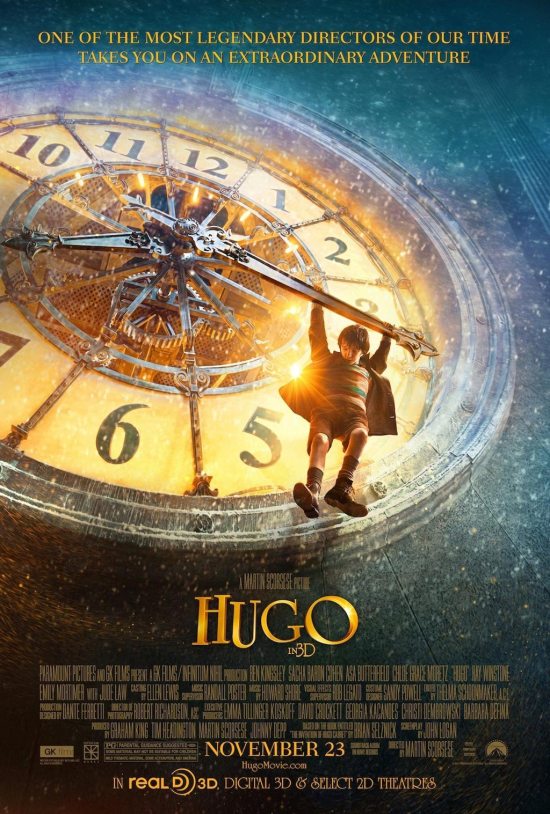
Martin Scorsese’s “Hugo” – A masterpiece of bipolar cinema

Martin Scorsese’s Hugo is a delightful family film and an outright visual treat, but it is definitely trying to be two distinct types of film. The antagonism between the orphaned, precocious tinkerer Hugo Cabret (Asa Butterfield) and the unforgiving (and unnamed) 1930s Paris train station inspector (Sacha Baron Cohen) is surely the zaniest plotline in the film – and yet, like every interaction here, it is checkered with a surprising depth of emotion. Nearly everyone in this film has a bit of a tortured past, but some of their harrowing backstories are downplayed to such a degree as to be unintentionally hilarious. When Hugo’s erstwhile father (Jude Law) is incinerated in an unmotivated blaze of CG fire, there was audible laughter in my audience… And when the station inspector’s leg-brace (a source of his ample bitterness) gets caught on the outside door of a departing train, I assumed he would meet a similarly horrific offscreen fate, but it was not to be.

The film begins with a masterful sequence of silent-cinema world-building (easily the strongest since WALL-E), then jumps right into this rather jarring combination of tones. But despite my initial qualms, I quickly found myself entranced by it. The film’s strongest relationship, which it establishes with remarkable speed, is between Hugo and Isabelle (Chloë Grace Moretz). Isabelle is bookish and adventurous, and fits right into that Hermione Granger zone of “probably should be annoying, but isn’t.” Moretz’ performance is nothing short of brilliant, lighting up the screen with enthusiasm everytime she makes an appearance. Asa Butterfield, a relative newcomer, is adept as Hugo Cabret, but the character himself is not nearly as fascinating as those surrounding him, and his relationship with Isabelle owes far more to Moretz’ performance than anything else. This young actress is just starting to demonstrate her versatility (starting with such films as Kick-Ass and Let Me In), and is certainly a talent to watch out for in the next few years.

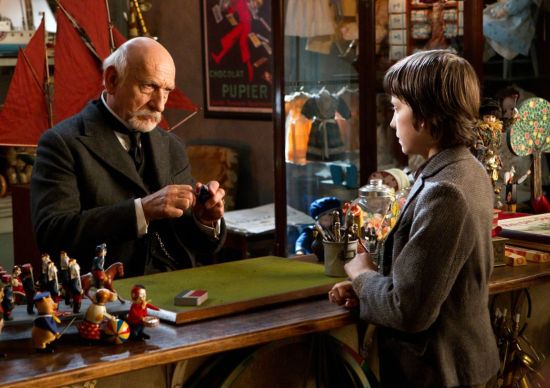
The film’s locale – a 1930s Paris train station – is also a rich character, particularly with the film’s luxurious 3D visuals to support it. Hugo lives on the fringes, climbing through the walls, rafters, and numerous clocks of the station, stealing what he can to support (and feed) himself. He also strives to repair a mysterious clockwork man (“automaton”) – a museum castoff that his father acquired before he died, and promised his son he would repair. When enigmatic toy vendor Papa Georges (Ben Kingsley) simultaneously catches Hugo thieving and discovers his secret mechanical project, he turns immediately hostile, vowing to burn Hugo’s notebook and have him arrested if he sees him again. It is at this point that Hugo and Isabelle embark on their adventure – to find out why Georges (Isabelle’s godfather) is so miserable in his old age. Kingsley’s performance is marvelous, delivering just the right blend of sadness and intrigue. This is a bitter and ancient soul, but his bitterness is richly layered enough to suggest that it is the product of having lived too much rather than too little. This is a man who had everything and lost it; not a man who regrets what he failed to achieve.

Much of the second half relies on flashbacks, and without getting into too many specifics, Hugo is the latest of several films (along with The Artist and My Week With Marilyn) to turn a nostalgic eye toward filmmaking techniques of old. Of those films, this one certainly goes back the furthest, presenting some truly innovative in-camera stop motion and lighting effects. With this sequence, Scorsese affectionately showcases the earliest days of film production, when a film studio was a glass warehouse full of sets and costumes blanketed in natural light. Along with the train station’s many clocks and gears and levers – which are strongly evocative of silent films such as Modern Times, this entire production feels like Martin Scorsese’s love letter to prototypical filmmaking.

Hugo’s conception of the world is as a wondrous machine full of mutually dependent and wholly necessary components- human and otherwise. For this conception to have survived even as he is relegated to the fringes of society is a fascinating theme, even if it gets stated aloud a few too many times during the film. Even as Hugo and Isabelle learn the dangers involved in dredging up the past, they seem as much in pursuit of their own purpose in life, and it’s all profoundly affecting. Even if not every moment rings perfectly true, the performances more than make up for it (a scene in which Papa Georges appears as the children examine an artifact from his past felt a little too pat, but Kingsley’s performance and ensuing monologue completely sold the moment). The supporting cast is strong, from Helen McCrory and Christopher Lee right down to Sacha Baren Cohen, who succeeds despite his rather thankless role.

Hugo strives to be both a children’s adventure film and a poignant drama about the burden of a forgotten artist, and it largely succeeds as both. What’s more, for any auteurists out there, it certainly feels like a personal project for Martin Scorsese, whose marvelous body of work is fortunate enough to exist in a century with both the technology and inclination to preserve it. No one quite knows how their creative efforts might be remembered in future generations, but this film deftly argues that such efforts ought to be remembered and cherished. What truly makes this is a great family film is not just the zany and inoffensive hijinks that it shares with so many other blockbusters, but also this message, subtly woven throughout a story that is quite worth telling.

FilmWonk rating: 8.5 out of 10

A note on 3D: The film boasts some stunning visual design, although I must say, seeing it in Dolby 3D (high-tech stereoscopic, basically) gave me a bit of a headache, and had far too many on-screen artifacts and reflections to avoid being a distraction. But this is certainly not the fault of the film, whose 3D is easily the best I’ve seen this year. As much as I hate to be a brand partisan, you’d do well to catch it in RealD 3D screening if you can.

FilmWonk Podcast – Episode #14: Henry Joost and Ariel Schulman’s “Paranormal Activity 3”

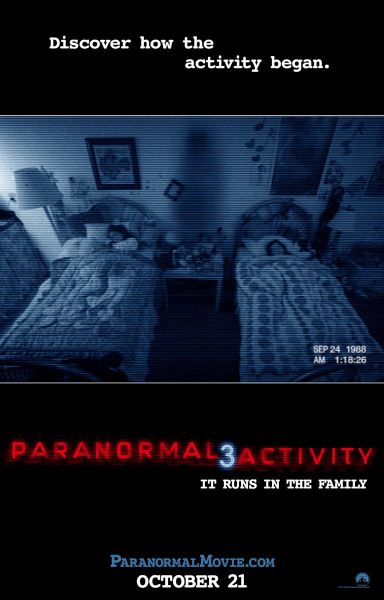
Glenn and Daniel stare at the screen for 90 minutes waiting for something to move, reviewing “Paranormal Activity 3”. Will invisible demons and makeshift camera pans strike a memorable horror chord? Tune in and find out (30:11).

May contain NSFW language.

FilmWonk ratings: 5/10 (Glenn), 6/10 (Daniel)

Show notes:

  • Correction: we erroneously state that this film made $80 million in its opening weekend. Its actual opening gross was $52 million.
  • Today’s show music consists of the themes from Psycho (Bernard Herrmann, 1960) and Halloween (John Carpenter, 1978).

  • Why? Well…let’s just say found footage films aren’t known for their innovative scores.
  • Happy Halloween!

Listen above, or download: Paranormal Activity 3 (right-click, save as).

Get Involved: Season finale of “The City of Films Show” [updated]

Our friends over at City of Films will be closing out their podcast season this Tuesday, October 18th. Head on over to find out how you can get involved in their final episode! Not only is there an easter egg hidden throughout the first five episodes, but also…

From City of Films:

Also, on the last show we will have a feature called “Guess Who’s Coming To Dinner?” and you can be involved!

So you’re throwing a dinner party and inviting 5 guests of your choosing (living, dead, real or fictional) , who are you inviting? I will toss one of my potential invites out to you so you get an idea…Homer Simpson. I can imagine the laughs and lack of leftovers already.

For details and contact info, check out the post at City of Films.

Update:

The episode has posted, and you can find it right here!

FilmWonk Podcast – Episode #13: Jonathan Levine’s “50/50”

This week, Glenn stumbles forth from a weekend of short film madness to join Daniel and review 50/50, a new comedic drama from director Jonathan Levine and screenwriter Will Reiser, loosely based on Reiser’s own experiences getting cancer at a young age. Can such dour subject matter succeed as a comedy? Tune in and find out (28:54).

[may contain some NSFW language]

FilmWonk rating: 8/10

Show notes:

  • 50/50 is out in theaters this Friday, September 30th.
  • Music for this episode is “Carries On“, from Edward Sharpe and the Magnetic Zeros, which appears in the film’s trailer.
  • In the podcast, we refer to Adam’s two “chemo buddies”, who are played by Philip Baker Hall and another actor we weren’t familiar with. The other actor was Matt Frewer.
  • Stick around for a blooper if you’re game.

Listen above, or download: 50/50 (right-click, save as).

Seattle’s One-Reel Film Festival 2011 – Sunday Roundup

The One-Reel Film Festival is part of Seattle’s renowned Bumbershoot music and arts festival. I attended on Saturday and Sunday (this time with press credentials, so no will call delays like last year!), and had the opportunity to see short films from all over the world, ranging from brilliant to bizarre, some of which can be viewed online (I’ve included links below where applicable). The films were arranged into blocks of around an hour apiece, which I’ve arranged in presentation order below. Bold text means I enjoyed the film, and an asterisk (*) means it was my favorite film of that block. Skip to the bottom for a list of all the films that can be viewed online.

A note on NSFW… Suffice to say, I saw a lot of films this weekend. The ones that I specifically remember containing adult content, I’ve marked as Not Safe For Work, but I can’t guarantee that the others will be entirely appropriate. Viewer discretion is advised.

Click here for Saturday’s films


Cupid Attack

  1. Connect (Director: Samuel Abrahams, UK, 5 minutes)

    A brief peek inside the head of a romantic young lady on a bus. Her various imaginative scenarios for the other passengers range from amusing (an upbeat dance number) to fairly dark (a man shooting an old lady in the head for her seat). Finally, she tries to grasp a complete stranger’s hand – a scenario that might be just the teensiest bit creepy, if not for the fact that everyone involved is so young and attractive. But it’s all very sweet. More info and trailer here.

  2. Want to spend the rest of my life with you (Director: Manuela Moreno, Spain, 3 minutes)

    This is an even quicker imaginative jaunt, very much in the same vein as Connect, and with an even darker twist. Fun stuff. Watch it here.

  3. Sign Language (Director: Oscar Sharp, UK, 5 minutes)

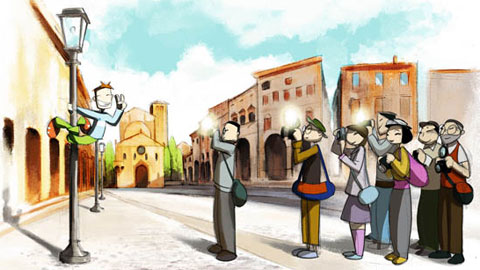
    This chipper mockumentary about an advertising signholder on a street corner is utterly enjoyable. Ben (Jethro Skinner) loves the job, the ambiance, the office politics, and the historical street nearly as much as he likes the non-union flyer girl on the corner. This absurd premise and quaintly implausible world works because Skinner plays it completely straight, even as the audience is unsure whether his enthusiasm borders on delusion. Given that this is a quickie romance, it’s pretty obvious which way the ending will go, but the film revels in its premise nonetheless. Watch it in HD here.

  4. Love & Other Unstable States of Matter* (Director: David Marmor, USA, 24 minutes)

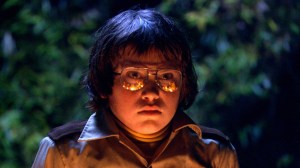
    A tinkerer has an amicable breakup with his girlfriend, then accidentally creates a world-ending black hole in his parents’ garage. The family dynamics are hilarious, and seem to come from the Hogwarts School of heightened reality- they talk about universe-bending forces and the end of the world like it ain’t no thang. As for the titular love, the main couple and their breakup are convincing, and their chemistry nicely telegraphs their continuing feelings for each other. I almost got a Shaun of the Dead vibe as they approached their imminent apocalypse together… “You don’t want to die single, do you?”

    Also – did I see the xkcd webcomic’s faux-Unix-terminal at the beginning? [Update: Yep, the director confirmed this] In fact, the film’s tone and treatment of romance felt rather similar to xkcd – science and romance were interspersed and discussed with equal matter-of-factness, with a vein of credible sentiment running underneath it all. This film was a dark comic delight, and the absolute gem of the segment. More info here.

  5. Blog Off (Director: Matthew Butler, USA, 5 minutes)

    An online love story for our sad, cynical age. It depicts two Londoners videoblogging before their blind date. They Facebook-stalk each other, and given that they have at least one mutual friend (who set them up), it seems likely that they’ll end up seeing each other’s respective cynical, self-hating rants… But of course, in the end, they ooze matching lovestruck grins as they record a final blog entry after actually meeting each other. And of course, it’s meant to feel satisfying. But as a portrait of online dating, it’s still just a bit depressing. More info here.

  6. Super. Full. (Director: Niam Itani, Qatar, 13 minutes)

    A poor newlywed couple in Qatar struggles financially as the husband promises to take the wife to a fancy restaurant on her birthday. There seem to be some deliberate nods to Ladri di Bicyclette here, but the film’s message seems limited to, “Man, it sucks to be poor.” The couple is also deaf, so a lot must be conveyed through their facial expressions as they communicate through sign language – and that may just be where this movie shines a bit, despite being a bit meandering and overlong. More info here.


Tasveer Presents (tasveer.org)


  1. Chaukaith (Threshold) (Director: Deepak Rauniyar, India/Nepal, 18 minutes)

    One of the most difficult tasks for any foreign film is to establish a context for outsiders who might have zero familiarity with the culture. This film, set in a Nepalese village, takes that ambition a step further, and tries to establish two distinct cultural contexts – what’s “normal” for women of this culture, and how “normal” it might be considered by members of a different class or subset of the same. We get this cultural back-and-forth by way of a shut-in (and, it seems, religious-conservative) housewife who gets visited by a pair of government census-takers (a man and a woman). The man quickly leaves, noting that the women in this village seem reluctant to speak to men when their husbands are away at work. The film’s feminist dialogue is quite resonant, since absent any religious or cultural factors, this is basically the same perceived dichotomy between family and career that women face in Western culture, played out in the form of an extended dialogue scene. The housewife initially seems content with her existence and lifestyle, and despite the husband’s slightly domineering and patriarchal manner when he gets home, he still appears to be doing everything out of love for his wife and children (bringing them special foods they like, hugging and laughing with his kids, etc).

    This ambiguity plays out visually in a brilliant camera shot of both the smiling husband and the disapproving census-taker watching the housewife help the children with their food, with their subdued facial expressions nicely conveying their contrasting views on the situation. When the census-taker leaves immediately after, I thought the film might end with a satisfying stroke of moral ambiguity. Then, in the final scene, the husband becomes a predatory, emotionally abusive monster. I’m not sure what to make of this ending, except that it definitely had an axe to grind, and the earlier, subtler material made this point a bit less abruptly. This is undeniably an effective film, but its ending, while viscerally satisfying, had the potential to be a lot more interesting.

    Sidenote: I know this might be difficult for an independent film out of Nepal, but I would have liked some more thorough subtitles. It’s hard to say for sure without knowing the language, but many lines in the film seemed to be shortened or even omitted entirely. Watch it here.

  2. Theke Pe Kya Karte Ho? (What business here?) (Director: Spandan Banerjee, India, 6 minutes)

    A documentary about some adorable kids selling their beer-bottle-opening services in front of a New Delhi liquor store. Business is good, even if the production values are significantly less so. A cute little slice of life, but not much else. Watch it here.

  3. Little Miss Eyeflap (Director: Iram Haq, Pakistan/Norway, 9 minutes)

    A hilariously over-the-top cross-cultural rendition of the Little Red Riding Hood story, by way of an Pakistani girl in Norway whose parents are trying to stop her from integrating into Norwegian culture. The big bad wolf drives a taxi that says “Respekt” on the side, trying to steer Miss Eyeflap away from a gallant young hunter named Normann Norsk, who literally burns a bridge behind them as he galavants off with his “exotic” new girlfriend. Suffice to say, the imagery in this film is not subtle in the least. But that’s fine. The fairytale visuals strive for a Van Helsing or Alice in Wonderland (2009) level of absurdity, and achieve it masterfully. Yes, I just compared this to two fairly crappy millenial blockbusters. And yes, I mean that as a compliment. Deal with it. Watch it here (non-English site, but video has English subtitles).

  4. Manoj* (Director: Zia Mohajerjasbi, India, 14 minutes)

    Manoj Krishnamurthy is a funny dude. His standup comedy and on-camera banter are hilarious. But when he kept getting interrupted by a bunch of useless “Behind the Music”-style interstitial talking heads, I expected to get bored with this film. But was I ever wrong… Manoj gradually shows its hand as a mockumentary, and watching various college-educated, totally-not-racist white people fumble over themselves while talking about Manoj’s comedy is nearly as hilarious as Manoj himself. Also amusing is the film’s screenwriter, Hari Kondabolu, who makes an excellent foil as he facetiously complains about being unable to tell “serious jokes” about immigration or genocide, or being mistaken for Manoj himself (who is different from him by exactly one huge beard). The tone reminded me of Louis C.K.’s biting FX series, “Louie” – dark and extremely witty. Watch it here.

    PS: You know those totally-not-racist white people making asses of themselves talking about Manoj? I’m officially one of them, since, this being my 40th film of the weekend, I managed to completely miss that Manoj is actually a fictional character played by Hari Kondabolu himself. Well done, Mr. Kondabolu – that is one hypnotic beard you had. And this yesteryear (and in retrospect, pretty damned obvious) revelation only makes me like the film more.


Best of SIFF 2011 Audience Award Winners

  1. North Atlantic* (Director: Bernardo Nascimento, Portugal, 15 minutes)

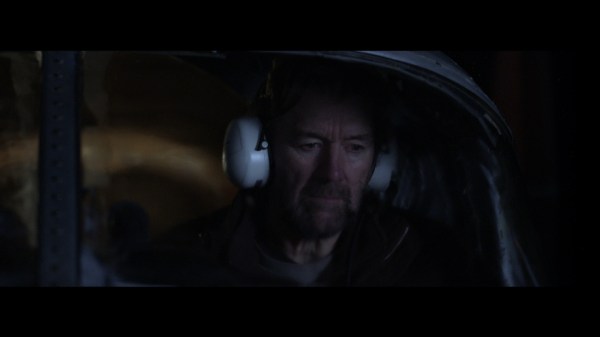
    A sad, quiet conversation between the doomed pilot of a fuel-starved Beech 18 over the North Atlantic and a night-shift control tower operator in the Azores. Well-acted and rather haunting, with some brilliantly atmospheric sound design. The night feels bleak and hopeless, but these two total strangers reach out through the darkness to provide some comfort to one another. Simple and effective. More info and trailer here.

    Update: Watch it in full here.

  2. The Fantastic Flying Books of Mr. Morris Lessmore (Director: William Joyce & Brandon Oldenburg, USA, 16 minutes)

    Butterfly in the sky… I can go twice as high… This film carries on an unabashed love affair with reading, books, authors, and the pursuit of knowledge. It equates them with a rich and full life, and there’s nothing wrong with that. The animation is delightful, and has one particularly clever piece of character design, in the form of a Humpty Dumpty book that flips his pages to change his illustrated facial expression from moment to moment. The film is actually available as an interactive storybook app on the iPad, which seems appropriate. More info, trailer, and iTunes link here.

  3. Amazonia (Director: Sam Chen, USA, 5 minutes)

    The bubbly, Nickelodeon-style animation belies just how delightfully mean-spirited and terrifying this film is. The protagonist is a scrawny tree frog who’s learning all the tough lessons that the jungle has to offer. Don’t you hate it when your prey tries to stop you from eating it? Just attack while it’s asleep! Or mating! Also, your mentor will steal your food, and everything else in the jungle is trying to eat you. Good luck, little guy! This film plays completely like a labor of love (and indeed, Sam Chen holds nearly every one of the film’s credits himself) – everything about it, from the physical movements of the characters to their precise facial expressions, feels meticulously crafted. More info and trailer/excerpt here.

    Update: Buy it on iTunes here.

  4. Cataplexy (Director: John Salcido, USA, 8 minutes)

    Stop me if you’ve heard this one before… A prostitute walks into her john’s house, only to realize the pair of them are old high school friends. Awkward!

    The main character’s titular condition – instant paralysis if he ever experiences the feeling of love – feels as much like a silly conceit as it feels like an excuse for the main character to remain sympathetic whilst routinely summoning hookers to his door. Independent, sober, adult-aged, English-speaking, non-human-trafficked prostitutes don’t typically need such protective narrative framing (all Richard Gere needed in Pretty Woman was loneliness!), but the point isn’t belabored here in any case. The sheer novelty of reconnecting with your high school sweetheart when she randomly shows up as your high-class hooker is comedy gold, and very well executed. More info and trailer here.

    Update: Buy it on iTunes here.

  5. New Digs (Director: Martin Sen, South Africa, 2 minutes)

    Hamster wants a new cage. [spoilers follow] Hamster gets a new cage.

    Simple and forcibly cute, but rather insubstantial. Official site here.


Astonishing Tales

  1. Interview (Director: Sebastian Marka, Germany, 20 minutes)

    The titular interview is between a journalist and a wanted serial killer… And frankly, I wonder what I would have thought of this film if I hadn’t spent 90% of its runtime thinking it was a complete ripoff of Se7en (mystery box and all). In the end… It is most definitely a ripoff of Se7en, but it plays on the audience’s expectations quite nicely, throwing several unexpected twists on the concept. More info here.

  2. The Legend of Beaver Dam* (Director: Jerome Sable, Canada, 12 minutes)

    An ultraviolent campfire ghost story. That’s also a jaunty musical. Fuck. Yes. The closest analogue that comes to mind is Trey Parker and Matt Stone’s Cannibal: The Musical, but unlike that college project, this feels nothing like an amateur production. The music and lyrics are brilliant and dark, the editing is tight, and the practical effects are thoroughly convincing. Beg or borrow, steal or donate, but see this movie. More info/awesome trailer here.

  3. Waiting for Gorgo (Director: Ben Craig, UK, 10 minutes)

    A British government department is created to battle Godzilla (er…excuse me, Gorgo), and remains open for several decades until a nice, young auditor shows up to find out why it exists. The department consists of two old men (Geoffrey Davies and Nicolas Amer) with some brilliant chemistry and comedic timing between the two – and while the whole thing has a Monty Python meets Brazil level of absurdity, it all seems eerily plausible. It ends rather abruptly, letting the final punchline hang in the air, and leaving the audience to ponder the confluence of faith and self-propagating bureaucracy they’ve just beheld. Not bad. More info/trailer here.

    Update: Watch it in full here.

  4. All Flowers in Time (Director: Jonathan Caouette, Canada (Québec), 14 minutes)

    This is an abstract, barely-narrative mess about frightening faces and red-eyed photos, which I found more tedious than horrifying. This film doesn’t seem to understand the concept that when your effects budget (or expertise) is limited, less is more. And the reverse is also true- the more you show a cheesy visual effect, the less it evokes the intended response. This film was genuinely unsettling, but a combination of bizarre graphics and cacophonous sound design will do that – I took away very little from this experience. More info/trailers here.

  5. Car Jack (Director: Jeremiah Jones, USA, 16 minutes)

    Ostensibly, this is the tale of a businessman carjacked in a seedy part of San Francisco. The true nature of the film, as well as the true meaning of the title, becomes apparent only in the final moments, and it’s a thoroughly satisfying reveal. This is an undeniably effective thriller that thoroughly understands its genre, and the acting is solid throughout (particularly Mo McRae as Charlie the carjacker). More info and featurettes here.

    Update: Watch it in full here.


  6. The Burning Wigs of Sedition (Director: Anna Fitch, USA, 10 minutes)

    This film has everything, and that’s not a turn of phrase I use lightly. Fire-dancing. A stormy pirate ship at sea. A slave revolt. A massive brass band. A randy rooster. A multitude of muscular, gender-bending ass shots. And lots and lots of swordplay. Basically, it’s an extended Gunther video on steroids (perhaps by way of Moulin Rouge), with some fantastic costume design. As the Libertine might say- it’s a fine way to cap off the evening. Click here for a live performance by the brass band, which very much illustrates the flavor of this film. More info here.


Quick List: All of the films that are available online:


A note on “NSFW”… Suffice to say, I saw a lot of films this weekend. The ones that I specifically remember containing adult content, I’ve marked as Not Safe For Work, but I can’t guarantee that the others will be entirely appropriate. Viewer discretion is advised.

Seattle’s One-Reel Film Festival 2011 – Saturday Roundup

The One-Reel Film Festival is part of Seattle’s renowned Bumbershoot music and arts festival. I attended on Saturday and Sunday (this time with press credentials, so no will call delays like last year!), and had the opportunity to see short films from all over the world, ranging from brilliant to bafflingly terrible, some of which can be viewed online (I’ve included links below where applicable). The films were arranged into blocks of around an hour apiece, which I’ve arranged in presentation order below. Bold text means I enjoyed the film, and an asterisk (*) means it was my favorite film of that block. Skip to the bottom for a list of all the films that can be viewed online.

A note on NSFW… Suffice to say, I saw a lot of films this weekend. The ones that I specifically remember containing adult content, I’ve marked as Not Safe For Work. However, outside of the “Films4Families” block, I can’t guarantee that the others will be entirely appropriate. Viewer discretion is advised.

Click here for Sunday’s films


Films4Families: The International Family Passport

  1. Temple Rider (Director: Miles Cheng & Joe Kwun, Hong Kong, 12 minutes)

    A fascinating mix of 3D animation and watercolor/pencil textures. A lonely, bullied girl rides her bike through the park before getting spirited away into a labyrinth of madness. It reminded me of several films (some of which I obliquely referenced in the last sentence), but strongly evokes Henry Selick’s Coraline (albeit with a completely different visual style) as the girl descends into a nightmarish monkey circus ruled over by a horrifying and chaotically pencil-drawn baboon. The ensuing chase takes us through several impressive action setpieces, retaining the gorgeous handpainted textures even as the simplistic 3D animation becomes more elaborate. A clever and imaginative journey. Watch it in HD here.

  2. Trevor (Director: Matthieu Saghezchi, France, 4 minutes)

    Bright and colorful existential crisis of a boy trying to fall asleep at night amid a strange, echoing adult voiceover. Explores some interesting ideas, but they ultimately seem more like the concerns of a grownup than a child (does a kid really worry about CCTV cameras?). Forcibly quirky, kinda boring. Rent it here ($2) or watch the trailer (free).

  3. Walkin’ On Snow Grass (Director: Makiko Sukikara, Japan, 7 minutes)

    A squirrel dormouse wakes up from hibernation and heads warily out into the winter snow. The main character is as adorable as he is seizure-inducing, with his constantly oscillating watercolor texture. It’s unfortunate, because the twinkling stars and sparkling snow create utterly gorgeous backdrops that feel like illustrations in a children’s book. Combined with some slightly improved sound design – the slightest wind and echo, perhaps – these environments could have been truly immersive and inviting, but we never quite see them as anything beyond pretty paintings. Watch it here.

  4. Loser Leg* (Director: Francesco Filippi, Italy, 9 minutes)

    A well-executed high concept about a boy born with no bones in his legs who is constantly getting them tied to things (by bullies). The animation is simple and/or low-budget, but effective nonetheless. Its low frame rate (which sometimes drops to still images) is balanced nicely by the narration, staying as hilarious and engaging as a well-drawn comic strip. More info and trailer here.

  5. Mobile (Director: Verena Fels, Germany, 7 minutes)

    A manic cartoon-physics puzzle involving adorable cloth barnyard animals hanging from either side of a mobile. They slide back and forth as a lonely cow tries desperately to get to the mouse hanging on the other side- his only friend in the world. The character design is top notch, and this film has a manic energy worthy of “Looney Tunes”. Watch it here.

  6. Precise Peter (Director: Martin Schmidt, Germany, 6 minutes)

    An amusing 2.5D rough polygon-y animation about a family sitting down to dinner in utter lockstep with the precise beat set by their patriarch, Peter. His metronome of audible grunts controls every one of their actions, right down to cutting and eating each bite of their fish in unison. All except for the youngest child, that is. The more he tries to conform, the more everything goes wrong, and the angrier Papa Peter gets. If this weren’t so amusing, it might be horrifying and abusive – but suffice to say, the moral of the story doesn’t end well for Peter. Watch it here, and play an awesome interactive game by the same director here.


Why Aren’t These People Famous?

  1. Kevin (Director: Jay Duplass, USA, 35 minutes)

    A very personal musical biopic by Jay Duplass (of the Duplass brothers) about Kevin Gant, a singer/songwriter who enjoyed modest LA success in the early 90s with his unique blend of Spanish guitar and imaginative, New-Agey lyrics delivered in a very talky (almost Bob Dylan) style. In 1995, he disappeared from the music scene. Fast forward to 2009, when filmmaker Jay Duplass tracks Gant down working for UPS in Dallas, and asks him why he stopped playing. The answer, like Gant himself, is complicated (and long-winded). Much of this film is Gant monologuing as he drives through Dallas, so it understandably lives or dies based on how well Gant can perform, whether musically or vocally. Luckily, Gant is quite the character, and his wide-eyed enthusiasm and quixotic imagination doesn’t seem to have abated in the ensuing decade. To hear him talk about his creative process, it’s clear that he has an impressive visual mind and a flare for poetic lyrics. This film takes him on a bit of a journey, owing a great deal to Jay Duplass, who freely admits that he overstepped his bounds as a journalist and documentarian in his involvement in Gant’s potential comeback. But despite this ethical quandry, the film might have seemed a bit of a waste if it had ended with Gant finishing his sad recollection and staying put in Dallas with his delivery job. In the end, this is a triumphant tale, and feels like it deserves to be. More info and featurette here.

  2. Who is Duffy Bishop? And Why is She Not World Famous?* (Director: Bryan Johnston, USA, 28 minutes)

    “I’ll take a voice rich with character over a perfect voice, every time.”

    So says and embodies Duffy Bishop, a little-known Seattle blues singer with an intensely powerful voice and a brilliant eye for performing. My shameful admission is this: I preferred this film to Kevin simply because I enjoyed the musician’s performances far more. The director, Brian Johnston, informed us at the screening that this film was made for $150, via equipment and students borrowed from Ballard High School. But even absent this information, the film is still fairly impressive on a technical level. It relies heavily on a smattering of archival concert footage, and despite the highly variable quality of the image, the sound came through remarkably well, and conveyed all the richness and power of Duffy’s performances that could possibly shine through without seeing and hearing them in person. It’s not only clear that Duffy has a towering vocal presence, but she is also an enthusiastic stage performer, shimmying through the audience with a wireless mic and unabashed enthusiasm. The rest of the film is an exploration of the elusive nature of widespread fame, via interviews and phone calls to record stores around the world to see if they have any Duffy Bishop CDs in stock (this venture doesn’t go well). The editing between the interviews and concert footage is tight, overlapping the performance soundtracks nicely whenever appropriate, without letting them wear out their welcome.

    If there’s one criticism I can raise about this film, it’s that it feels like a relic of the pre-MySpace era. While phoning record stores around the world is an amusing stunt, it doesn’t feel nearly as effective when I consider that I haven’t purchased an album in a record store in ages. I would have liked to see this film address the questions of digital distribution. If a 27-year-old pulp vampire romance writer can make millions on the Kindle Marketplace, surely the parameters of fame have shifted a bit. A quick perusal of Amazon shows five Duffy albums for sale and in stock, with 4/5 available as MP3 downloads. Duffy’s own website lists them for sale as well.

    But you know what? My first inclination leaving this film was to run right out and buy a Duffy album – so if the true message of this film is “Duffy Bishop is an amazing musician”, then it conveyed it quite nicely. More info and featurette.


48 Hour Film Project


The 48 Hour Film Project has a simple premise – write, shoot, edit, and score a movie in two days. To ensure that filmmakers are complying with the timeframe, they are given certain common elements to include in their films. For this year’s Seattle 48HFP, the elements were a paint can, a character (a wedding planner named Stephen/Stephanie), and a line of dialogue (“When are you gonna get it together?”), as well as a genre (different for each film).

  1. Painted Love (Director: John Polnick, USA, 8 minutes)

    A love story between a paint can and a paintbrush, torn apart when a cheap old man buys the paintbrush and a different can from the store. Shot with brilliant color and a nice, bright atmosphere, mostly with shallow depth of field. Great musical score. More info, including how to watch it online for free here.

  2. Battle: Seattle (Director: Aaron Sutherland, USA, 5 minutes)

    A fun little alien invasion romp that riffs as much on Seattleite iPhone users as aliens. As these three gents stand within view of flying saucers demolishing downtown Seattle, but prefer to watch the footage on “Yootoob” and make sarcastic quips, it was more of a crackup than I expected. Goofy as all getup, but fun for a few minutes. Watch it here.

  3. Humpty (Director: Dmitriy Levanchuk, USA, 5 minutes)

    An argument between a drunken, paint-huffing, anthropomorphic egg on a wall and a poorly acted strumpet/wedding planner below. But really, I was sold on just the egg. He’s got the self-hating pre-wedding jitters something fierce, and he conveys it quite nicely as a human face overlaid (Steve Oedekerk style) on an egg held in a hand. He bitches most elegantly. Watch it here.

  4. Mein Cupcake* (Director: Deirdre Timmons, USA, 7 minutes)

    Easily the most polished of the 48-hour films. A little girl is denied cupcakes by her fascist, S&M-loving parents, and heads to the attic to play out this violent feud with her dolls. As we descend into her fantasy world, twisted versions of her mother and father appear with a vengeance, all determined to deny her that sweet, frosty goodness. The costume design is impeccable, and this film has both the best fight choreography and largest number of Hitlers of any film I saw today. Watch it here (NSFW).

  5. So Many Options (Director: Jeremy Cavner, USA, 6 minutes)

    This film owes a great deal to actor Steven Gerard, as well as the writing of his gleeful serial killer. This character is so vocally and physically pitch-perfect, it makes this film a dark comedy delight. Also, given the short timeframe, the cinematography and lighting are top-notch. Watch it here.

  6. Séance Anything (Director: David Jolosky, USA, 5 minutes)

    The bearded, slurpee-sucking séance artist was entertaining… The rest fell prey to a decent sketch concept played out by actors who really didn’t play to any sort of reality. Whether you’re happy or sad that your fiancée is dead on the eve of your wedding, at least make me believe it matters to you on some level. Watch it here.


Nerds Unite!


  1. The Dungeon Master (Director: Rider Strong & Shiloh Strong, USA, 14 minutes)

    A group of skeptical hipsters play D&D for the first time in years. One of them makes a rookie mistake of pointlessly murdering an innocent goblin, then transforms into a ridiculous villain in real life, chastising their thoroughly capable dungeon master for his commitment to his [thoroughly nerdy] craft. The film’s tone (and indeed, its attitude about role-playing games) is a bit inconsistent, but the Evil Hipster is certainly meant to be the bad guy. And the film takes a bit of a magical turn at the end with some unexpectedly strong production values. And hey, it’s co-directed by this guy. More info, trailer, and featurette here.

  2. Monster Flu (Director: Brian Wiebe, USA, 7 minutes)

    A germaphobe shut-in (Vincent) and his best friend, an unlicensed Muppet named Toby, are forced to venture outside the apartment for the first time in 4 years. This film is strange, but semi-enjoyable – although it cuts off before making much of a point about either character. But at least we get to see Vincent masturbate with rubber gloves. So there’s that. More info here.

  3. A Comic Author X-Ray (Director: Marcos Nine, Spain, 20 minutes)

    David Rubin is no good in front of the camera. Or with people. As a camera-shy comic book artist, he seems a risky choice for a documentary film subject. The film ultimately becomes a mix of live camera footage in which Rubin comes off as a bit of a self-important douche, and comic book cells (drawn by Rubin) in which he freely admits as much, and comments on the film being made. Like Adaptation before it, this film becomes an elegant, making-of-itself documentary. It goes on a bit too long, and there’s far too much overwrought meta-text literally written across the screen, but I came away more fascinated by Rubin than I thought I would be. And whether or not I liked the documentary, there’s no denying that Rubin is a talented artist. Watch the trailer.

  4. King Chicken* (Director: Nicolas Bolduc, Canada/Québec, 7 minutes)

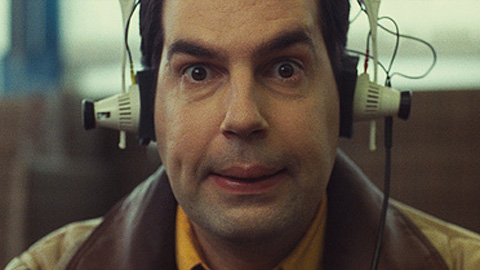
    King Chicken is a socially awkward man who walks around with headphones on, introduces himself with a business card (that says King Chicken), and gets romantic advice from a language-learning tape that schools him in real-time how to win the girl of his dreams, who’s sitting directly behind him. This was a delightful film with a rousing soundtrack, and Patrice Beauchesne gives a hilarious physical performance as the title character. Trailer here.


Best of SIFF 2011 Jury Winners


  1. The Eagleman Stag* (Director: Mikey Please, UK, 9 minutes)

    The visual style of this BAFTA-award-winning film is colorless stop-motion animation, using materials made of paper, plaster, and/or styrofoam – like nothing I’ve ever seen before. Our narrator begins as a fetus in the womb, and proceeds to walk us through his entire life, family, and career as a naturalist, as well as his evolving perceptions of time. If time is perceived as a fraction of your total lifespan, he explains, that’s why a moment seems much longer when you’re a child than when you’re an adult. This film spells out its high-minded point by way of a sardonic voiceover narration- something that could have seemed didactic and annoying – but it did so with a brilliant, sharp wit. Trailer and official site here.

  2. Library of Dust (Director: Robert James/Ondi Timoner, USA, 15 minutes)

    From director Ondi Timoner (We Live In Public) comes a documentary about unclaimed “cremains” (cremated ashes) of deceased patients from Oregon State Hospital (formerly Oregon State Insane Asylum). This film attempts to raise some points regarding the conditions of the mentally ill, but really only succeeds in saying that things used to be pretty bad. The only present-day patients we see are in clean, vibrant, brightly-lit surroundings, and are the fresh recipients of a brand new $500 million facility, courtesy of the State Legislature.

    The film spends far too much time talking about the “terrible” conditions of these ash canisters. These carefully catalogued and differentiated canisters. These canisters which were sealed and stored using the best methods available at the time. These canisters which were only damaged when the area was hit with a natural disaster. Frankly, given the number of unmarked and mass graves that have existed throughout history, I’d say these unclaimed ashes were in remarkably good condition. The film attempts to attribute metallurgical decay to spiritual turbulence [read: angry ghosts] rather than time and unintended moisture, but the only real “villain” it manages to latch onto is the families who haven’t claimed these ashes – the families who almost certainly don’t know they exist.

    I’m not entirely sure why this film was made. It definitely has a point to make, but I found it utterly self-deluding and unconvincing. Yes, it’s sad to be forgotten. But it’s the fate that awaits us all. Rather than obsess about our own mortality and legacy, it’s better to make the world a nicer place for the ones who are still here. And by the time this film was made, this had already occurred for the mentally ill of Oregon. More info and trailer here.

  3. Deeper Than Yesterday (Director: Ariel Kleiman, Australia, 20 minutes)

    A harrowing tale of men left to their own devices aboard a Russian submarine for 3 months. I don’t envy the parents of the little girl to the front left of me who will have to explain to her what interest these sailors might have in a waterlogged female corpse. And this is not the only untoward tendency we see indulged during this film. These men are lonely, angry, and on the brink of losing their humanity. This film makes its point well, albeit disturbingly. More info and trailer here.

  4. Time Freak (Director: Andrew Bowler, USA, 11 minutes)

    An amusing twist on a Groundhog Day-like concept, wherein the inventor of a time machine goes back in time one day to correct every little mistake he made…on that day. Forget Ancient Rome; he hasn’t even made it to the afternoon yet. Despite the presence of Primer-like timeline charts and equations, this film isn’t striving for a mind-bending time travel story, but rather a simple buddy comedy in an elegant sci-fi wrapper. Very well executed. More info and trailer here.


Animation for Adults

  1. Loom (Director: Jan Bitzer/Ilija Brunck/Csaba Letay, Germany, 7 minutes)

    Astonishing macro view of a moth caught in a spider’s web, attacked, and devoured. The scene then slows way down and zooms to the molecular level, as we see venom and silk forming within the spider’s body. This is an utterly terrifying film – depicting a spider as a perfect, mechanized killing machine. Watch it in HD here.

  2. Vicenta (Director: Samuel Orti Marti, Spain, 23 minutes)

    This is a very, very adult claymation film, and that appears to be all it set out to be. It’s chock full of explicit language, sex, violence, no less than three Matrix references, and an abundance of juvenile humor. I can now remove “doggy-style sex” from my dwindling list of things I’ve never seen stop-motion animated. That said, what starts as a man mistreating his wife takes a turn for the macabre halfway through, as he dies before revealing the whereabouts of his lottery winnings. It’s all a bit lurid, but undeniably fun. And the subtitles are hilariously, inexcusably bad. Surely there are enough Spanish/English translators available that something like this should never see the light of day, but it only adds to the film’s pulp appeal. More info, trailer.

  3. flesh color (Director: Masahiko Adachi, Japan, 5 minutes)

    Combination of Japanese animated koi (and other pond imagery) swimming turbulently around the skin of still or stop animated nude models. An elegant piece of mixed media. Watch it here (NSFW).

  4. Paths of Hate* (Director: Damian Nenow, Poland, 10 minutes)

    Two prop planes dogfight through a gorgeous skyscape of monstrous clouds and towering mountains. They are the well-sketched comic-book face of rage – determined at any cost to do each other harm. This is glorious and kinetic violence, appropriately jarring to behold. More info and trailer here.

  5. Stanley Pickle* (Director: Vicky Mather, UK, 12 minutes)

    I love, love, love stop motion that makes use of real live humans. It’s not just the jerky, unsettling motion that sells it- it’s the visual tricks and flourishes that would be impossible in any other medium. Among the multitude of brilliant shots is a girl seemingly ice-skating around a forest floor, and the title character’s parents recreated as malfunctioning windup toys. The time-lapse nature of these shots is apparent at times, as we see Stanley watching the girl dance through a meadow from his window, as clouds and trees alike show that hours are actually passing as these shots are culled. It’s all terribly gorgeous, and its simple theme – about life, death, and letting go – is conveyed nicely. More info and trailer here. (UPDATE: Watch it online here)

  6. Visitation (Director: Suzan Pitt, USA, 9 minutes)

    There has been at least one world of grotesque, non-narrative madness in every festival, and this year is no exception. I suppose it was just a matter of time before one came along that I enjoyed. The imagery in this film is disturbing, but well-conceived – evoking the Platonic “Allegory of the Cave” among other things. I can’t say it was a pleasant experience, but it was a fascinating one. More info here.

  7. Eye of the Storm (Director: Christopher Alender, USA, 6 minutes)

    This would seem to be a music video from the Zack Snyder school of heightened reality. The animation of this lone airship pilot drifting through an endless sky is utterly gorgeous and nearly photorealistic (in that video-gamey, HDR sorta way). That said, I think Zack Snyder did this film a disservice, since I’ve seen animation this true-to-life before, which, by itself, is no longer sufficient to impress. The film has no dialogue and almost no narrative, and the only thing I remember distinctly about it is an oddly simplistic-looking dragon (which flew in the face of every other piece of animation). For a purely technical exercise, 6 minutes was a bit too long, but perhaps fans of the band would disagree. Watch it here.

  8. Rosa (Director: Jesús Orellana, Spain, 9 minutes)

    I felt at several points like I was going to vomit while watching this. As a cyborg girl awakens and runs for her life, a series of violent clashes ensue, each more horrific and pointless than the last. The entire thing felt like an unadulterated mashup of every video game cutscene I’ve ever been unable to skip through. The girls all look like buxom, pouty-lipped dominatrixes, the blood-splatter is worthy of a bukkake film, and the dingy, grey-brown world is vomited forth in a sickening soft glow and jarring, schizophrenic cuts. As if this world wasn’t unpleasant enough, we also get a relentless series of interstitial POV shots of the girl’s blurry, green-hued cyborg-vision. None of this is to say the film looked cheap (with the exception of some dubious motion whenever the characters jumped through the air and landed). On the contrary, a great deal of money, artistry, and animation man-hours were clearly spent on this derivative monstrosity. What a waste. More info and trailer here.


Quick List: All of the films that are available online


A note on “NSFW”… Suffice to say, I saw a lot of films this weekend. The ones that I specifically remember containing adult content, I’ve marked as Not Safe For Work. However, outside of the “Films4Families” block (the first three below), I can’t guarantee that the others will be entirely appropriate. Viewer discretion is advised.

FilmWonk Podcast – Episode #12: Michael Bay’s “Transformers: Dark of the Moon”

Poster for "Transformers: Dark of the Moon"

This week, Glenn and Daniel short-circuit their brains to review Transformers: Dark of the Moon (32:21).

[may contain some NSFW language]

FilmWonk rating: 5/10

Show notes:

  • Music for this episode is from Steve Jablonsky’s original score for the film (track: “Dark Side of the Moon”).

Listen above, or download: Transformers: Dark of the Moon (right-click, save as).

Matthew Vaughn’s “X-Men: First Class” – Sprawling, epic, and thoughtful

X-Men: First Class had a tall order to fill. We’ve already had two solid films examining the fantastic mutant powers, conflicting ideologies, and disillusioned friendship of Charles Xavier (“Professor X”) and Erik Lehnsherr (“Magneto”). To return to that friendship at its inception could have seemed little more than a cynical cash-grab – a storytelling dead-end whose fan-service ending was a foregone conclusion. Instead, Matthew Vaughn has delivered a film that proves he is as adept at delivering an earnest, character-driven superhero film as he was at superhero parody. This film may or may not be the best in the franchise, but it certainly belongs in the same conversation as X2, and perhaps even The Dark Knight, if not quite ascending to the standalone appeal of those films.

The highest praise I can give to James McAvoy’s take on Charles Xavier is that at no point did I doubt that this man grows up to Patrick Stewart’s version of the character. Tackling a role that has been so completely defined by another actor is a difficult undertaking, and the result is no mere imitation of Stewart’s Xavier, but neither is it a complete reimagining (à la Chris Pine in Star Trek). This Xavier is reserved and wise, but hardly unafraid to use his powers in the reckless milieu of a younger man. In fact, this Xavier is downright arrogant, using his powers to convincingly sweet-talk coeds and other mutants alike, all while playing fast and easy with the most intimate details of their minds and memories. This Xavier might make a fair psychologist, but his approach to friendship is downright invasive. His banter with Erik (Michael Fassbender) ends up striking a note somewhere between therapist and Yoda, trying simultaneously to make the other man come to terms with his most painful experiences and unlock the full potential of his mutant powers. It’s a fascinating interaction, to be sure, and it certainly drives the second half of this film despite being established through a rather hasty montage. I wasn’t sure how much I would buy this friendship, but it cascaded into a brilliant finale. More on this later.

First, I must touch on the villainous Sebastian Shaw (Kevin Bacon), which is certainly one of the reasons this film belongs in the same conversation as The Dark Knight. Not only is Shaw a thoroughly memorable and well-written nemesis, but he also represents an achievement that few films have managed to accomplish in recent years – an utterly terrifying villain (or set of villains, in this case). Shaw expresses his affinity for Nazi tactics early in the film, and the reason quickly becomes evident. Scene: A tornado spontaneously erupts outside a building, and a guard vanishes in a puff of crimson smoke. He reappears 100 feet in the air, instantly falling to his death. The attrition continues as buildings rip to shreds and it literally starts raining men (hallelujah!).

This is just a snippet of one of the many brilliant action set-pieces, but it demonstrates two of the great strengths of this film. First, it makes full and clever use of the array of mutant powers at its disposal (from heroes and villains alike). And second, Shaw and his associates carry out their malicious plans with such brutal and relentless efficiency that it’s simultaneously horrifying and captivating to behold.

Also terrifying is the man-who-would-be-villain, Magneto. After narrowly escaping the Holocaust (and the brutal experimentation of Shaw), Erik passes a brief stint as a Nazi hunter, ruthlessly pursuing the worst offenders who have fled to Argentina. This plays almost like a sequence from Fassbender’s other best known film, Inglourious Basterds – and the parallels seem fairly deliberate. Fassbender speaks several languages and visits unflinching brutality upon his malefactors. Given that Xavier’s central conflict with Erik is the extent to which they should wage war upon humanity, this makes for a compelling backdrop for their burgeoning friendship later in the film. Xavier’s other relationship – a childhood friendship with Raven, AKA “Mystique” (Jennifer Lawrence), is quite fascinating at the beginning of the film, but gets short shrift as soon as Magneto enters the picture. Given Raven’s character arc, this seems somewhat deliberate on the filmmakers’ part, but it is unfortunate, given that these early scenes are the best opportunity for Lawrence to show off her acting prowess. Her later interactions with Hank “Beast” McCoy (Nicholas Hoult) are less interesting, even though Beast’s Jekyll-and-Hyde story turns out to be a compelling subplot (or at least a showcase for a brilliant bit of first-person camerawork).

Still from "X-Men: First Class"

There is a host of other characters in this film, which may leave prospective audience members questioning the extent to which this film is just for the fans – suffering from character and villain overload like so many other late entries to a superhero franchise. To that, I would simply say that this film is an achievement in both casting and storytelling. It brings a great many disparate characters together and manages to tell us a little something about each one without leaving the film feeling bloated. And in the end, the mutants – heroes and villains alike – do their dance as the humans look on in terrified awe. The American and Russian observers are then forced to act in a way that doesn’t feel entirely believable, but nonetheless forces Erik Lehnsherr to become the villain that he needs to be. In the blink of an eye, he is Magneto.

And indeed, this is the problem with origin stories. If you’re explaining the origins of something simple, like radioactive spider powers, your explanation can be equally rudimentary. To explain something as complex and multifaceted as Magneto’s decades-long disillusionment with mankind is a bit more difficult. But while such a protracted explanation may have been slightly more believable, I’ll grant that it’s not particularly cinematic. And all of these elements, along with McAvoy and Fassbender’s performances, brought together an action-packed and thematically pitch-perfect finale that felt almost completely earned.

FilmWonk rating: 7.5 out of 10

FilmWonk Podcast – Episode #11: “Littlerock” (SIFF review)

Poster for "Littlerock"

This week on the podcast, Glenn and Daniel head for the Seattle International Film Festival to review Littlerock, the story of a pair of Japanese siblings finding their way through a desert town in California. Glenn’s lovely fiancee Megan jumps in to expound on the nature of a “nice guy” and offer her unique perspective as a fluent Japanese speaker. Click below to listen to our discussion of this surprise cross-cultural gem [may contain some NSFW language] (19:09).

FilmWonk ratings: 8.5/10 (Glenn), 9/10 (Megan), 8.5/10 (Daniel)

Show notes:

  • The actor in attendance at the screening was Ryan Dillon, who plays Brody in the film.
  • Music for this episode is the track “Bramble“, by The Cave Singers, from the film’s original soundtrack.

Listen above, or download: Littlerock (right-click, save as).