FilmWonk Podcast – Episode #23 – “Liberal Arts” (dir. Josh Radnor) (SIFF)

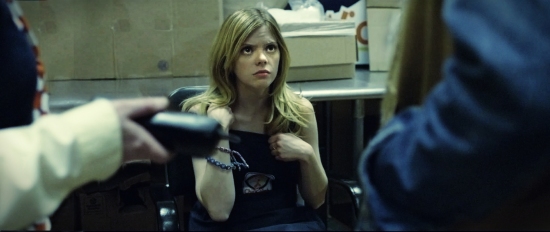
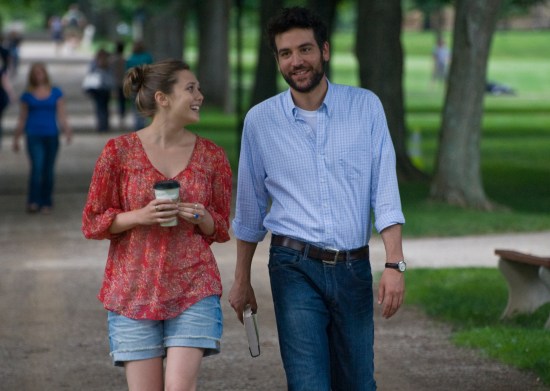
Still from "Liberal Arts"

Back at SIFF and back to school! Glenn and Daniel hit the books with college nostalgia as they review Liberal Arts, the latest film from How I Met Your Mother star Josh Radnor. Take in their worthless intellectual blather while you can! They’ve both got work in the morning that is utterly unrelated to their majors.

May contain some NSFW language.

FilmWonk rating: 6.5/10

Show notes:

  • Music for this episode is a pair of classical pieces that appear in the film. The first is Beethoven‘s Symphony No. 6 Pastorale as performed by Istanbul’s National Conservatory Orchestra (free download in link). The second is Soave sia il vento, from Mozart‘s opera Così fan tutte, which I’ve included in its entirety at the end of the podcast. Listen to it while walking down the street and watch as everyone becomes more attractive.
  • Regarding the age question that both we and the movie raise – Elizabeth Olsen was around 22 when this film was shot. Josh Radnor was 37, and Allison Janney was 52.
  • The book shop owner is played by Elizabeth Reaser of Twilight fame. And it all comes full circle.

Listen above, or download: Liberal Arts (right-click, save as, or click/tap to play on a non-flash browser).

SIFF Roundup: “Extraterrestrial”, “John Dies at the End”

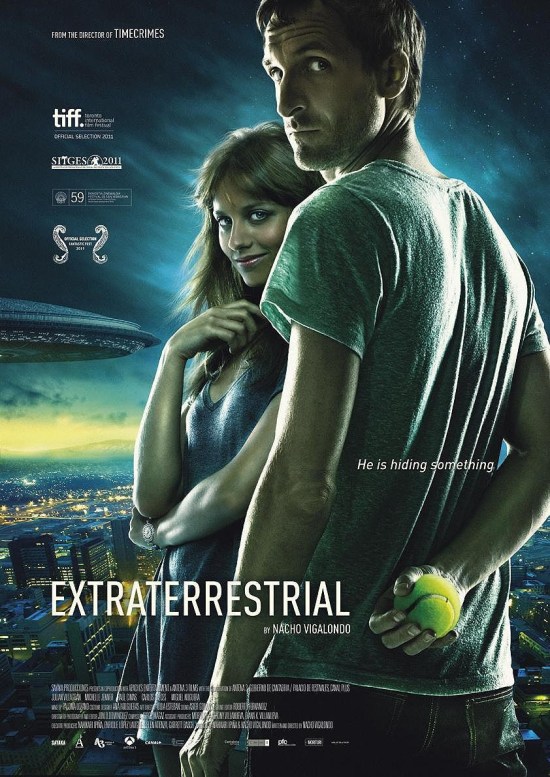
Poster for "Extraterrestrial"
It appears I can cross “alien invasion sex comedy” off my dwindling list of unseen genre mashups. This is the latest small-budget feature from Nacho Vigalondo, the Spanish writer/director behind the tense and violent 2007 sci-fi thriller Timecrimes – another brilliant film that otherwise has so little in common with the director’s sophomore effort that the connection seems scarcely worth mentioning. While Los Cronocrimenes was driven by a taut and carefully scripted sci-fi plotline, Extraterrestre merely uses the backdrop of an alien invasion to frame a sexy rom-com.

Julio (Julián Villagrán) wakes up in the apartment and bed of Julia (Michelle Jenner), following an awkward one-night stand only made more so by the fact that neither of the two can remember anything about the night before – including, indeed, whether or not they even had sex. This question becomes a bit more important when a pair of interested parties arrive – Ángel (Carlos Areces), a nosy neighbor with a serious crush on Julia, and Carlos (Raúl Cimas), her long-distance boyfriend. With the streets of Madrid empty and the downtown core beneath a mile-wide alien spaceship, this essentially becomes a locked-room romantic comedy. Julio and Julia explore their newfound, philandering chemistry, Ángel deftly demonstrates why he can’t get the girl, and Carlos, a steadfast survivalist, obliviously plans the group’s next move.

Don’t get me wrong, these characters sound a bit cookie-cutter, but the entire first act of this film is brilliantly written. The film fits right into that nice Zombieland niche in which ordinary characters are tossed together amusingly amid extraordinary circumstances. Sure, the world might be coming to an end, but can’t we still engage in petty bickering over who f’d whom? All of the cuckolding drama is a bit celebratory of bad behavior, but the plot maintains just the right tone of naughty fun to avoid feeling too mean-spirited. Even with a merciless love-quadrangle, the film has an impressive amount of heart, and makes you genuinely care about each of the four characters at least some of the time.

The problem is, these characters get kicked out of the film one by one. We definitely needed time for the core romance – if that is what it is – to grow, but at least one of the rival characters had to get short shrift, and it really wasn’t the one I expected. One of them veers just a bit too much off the rails in the third act, and it isn’t the guy with the tennis ball launcher. While this bit of screwball comedy was still entertaining, it does feel just a bit like the film is turning on its characters as they begin to strain likeability even further.

Fortunately, Extraterrestrial manages to stick the landing. The ending is sweet and seems tonally appropriate, concluding with a gorgeous sunset shot that just about perfectly sums up the film. Save the interstellar warfare for the Americans…we’re just here to hang out in Madrid.

FilmWonk rating: 7.5/10
Extraterrestrial will be playing a couple more times at SIFF, and staying for at least a weeklong Seattle run at SIFF Cinema when the festival concludes. If you’re interested in seeing the film in your town, you can also “demand it” by visiting this link.
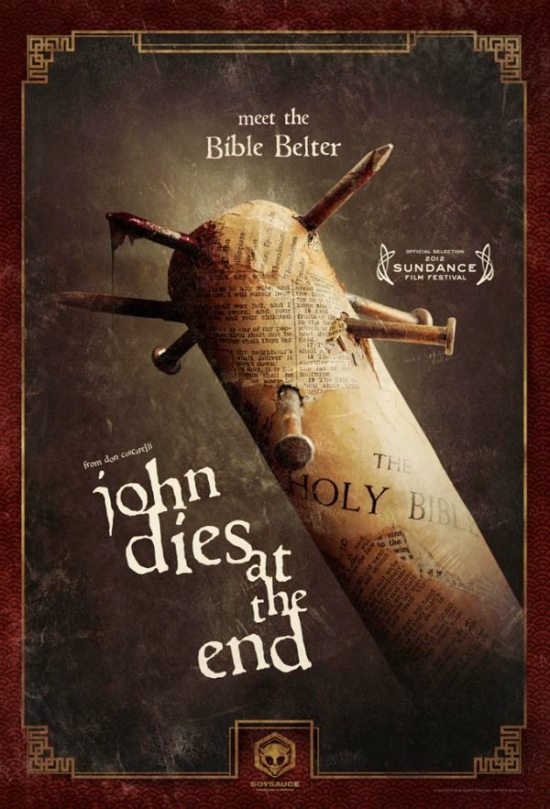
Poster for "John Dies At the End"

John Dies at the End is pure, unadulterated insanity. I saw it at midnight under the influence of 9 hours of road-trip driving, a shot of Jägermeister, a glass of hefeweizen, and a 12-oz can of Red Bull (in that order), which might just comprise an ideal viewing experience. The film features the bizarre, drug-fueled, stream-of-consciousness journey of David Wong (Chase Williamson) and John Cheese (Rob Mayes), a pair of bros who dabble in paranormal investigation. Their recent discovery is a drug called “soy sauce”, which, when injected, enables the user to see into other places, times, dimensions, etc.

The drug is basically whatever the plot needs it to be from moment to moment, operating variably as a means of clairvoyance, precognition, telekinesis, and so on. But really, that’s fine. The drug is no different in principle than demonic possession, alien invasion, or any number of other paranormal plot devices. What keeps this movie stampeding along is not plot convention but an immense sense of kinetic fun and a commitment to remain at least semi-coherent. Don Coscarelli‘s strong low-budget visuals (which he previously demonstrated in Bubba Ho-Tep) are out in full force here. Even the most ridiculous practical effects and creatures manage to strike a nice balance between laughable and menacing. The film felt almost like an R-rated take on Ghostbusters, with the main duo seemingly quite knowledgeable about all things paranormal, despite the insane, bumbling adventure on which they must embark.

The film utilizes a number of clever devices, including phone calls displaced in time, demons who appear as different people depending on who’s looking, and even a clever reference to the Grandfather’s Axe paradox. There was seemingly a great deal of care and intelligence that went into this psychotic romp. It feels like a meticulously constructed doll, woven by a maniac into a tattered conglomeration of twigs and human hair, which he brushes lovingly every night before he goes to bed. Perhaps he calls it Sheila. Or Brutus. And then one night, he decides to use it as a quill with which to pen his manifesto on the padded walls of his suburban living room, using an ink composed principly of his own urine.

I’m pretty sure that’s an accurate summation.

FilmWonk rating: 7-ish out of 10
FilmWonk Podcast – Episode #21 – “Compliance” (dir. Craig Zobel) (SIFF)

Still from "Compliance"

As the Seattle International Film Festival continues, Glenn and Daniel give a quick review of a harrowing drama from the co-founder of…Homestar Runner? Okay! A warning for the spoiler-averse… As this is based on true events (and sticks largely to the real-life story), we aren’t shy about spoilers, but we do give a warning before revealing the film’s ending.

Contains NSFW language and some disturbing content.

FilmWonk rating: 7/10 (Glenn), 8/10 (Daniel)

Show notes:

  • Once again – due to to the quick turnaround for SIFF content, this podcast was recorded without our usual setup – but the audio quality is solid! I have it on good authority that a modern automobile makes an excellent recording booth.
  • More info on Stanley Milgram’s experiment.

Listen above, or download: Compliance (right-click, save as).

FilmWonk Podcast – Episode #19: “Titanic” (dir. James Cameron), Avatar, and the State of 3D Cinema

Poster for "Titanic"

This week on the podcast, Glenn and Daniel never let go of James Cameron’s 1997 romantic sea epic, Titanic. Can a romance founded on chemistry, infidelity, and bad dialogue possibly stand the test of time? Find out below! Additionally, you’ll hear our windswept heroes expound on Avatar and the lamentable state of 3D cinema (50:19).

May contain NSFW language.

FilmWonk rating: 8/10 (Glenn), 9/10 (Daniel)

Show notes:

  • Music for this episode comes from James Horner’s soundtrack sequel Back to Titanic, including the tracks “Titanic Suite” and I Salonisti’s arrangement of “Nearer My God to Thee”, which they play in the film.
  • Daniel called it – the old couple below decks that we see holding each other in bed as the water rises around them are indeed Isidor and Ida Straus (the co-owner of Macy’s Department Stores and his wife). There was a deleted scene in which Ida refuses to board the lifeboat without her husband.
  • Per Daniel’s recommendation, check out Encyclopedia Titanica, a fantastic trove of knowledge for all things Titanic.

Listen above, or download: Titanic (right-click, save as).

FilmWonk Podcast – Episode #18: “A Separation” (dir. Asghar Farhadi)

Poster for "A Separation"

This week on the podcast, Glenn and Daniel review last year’s Academy Award winner for Best Foreign Film (and nominee for Best Original Screenplay), A Separation. This complex and riveting film is one part legal thriller, two parts family drama, and three parts tense moral ambiguity – listen to us try to unpack its various dimensions below (while also trying feebly to remember the name of Iran’s currency!) (40:34).

May contain NSFW language.

FilmWonk rating: 9/10

Show notes:

  • Music for this episode comes from Sattar Oraki’s original score for the film.
  • This episode contains vague spoilers for the 2003 film Confidence.
  • Sarina Farhadi, who plays Termeh, is indeed the daughter of writer/director Asghar Farhadi.
  • In case our profound (and admitted) ignorance didn’t make this clear, the Iranian unit of currency is neither the ducat (which is European) nor the shekel (which is…Hebrew, whoops) – it’s the rial, named for a currency that originated in Portugal.

Listen above, or download: A Separation (right-click, save as).

FilmWonk Podcast – Episode #17: “Act of Valor” (dir. Mike McCoy, Scott Waugh)

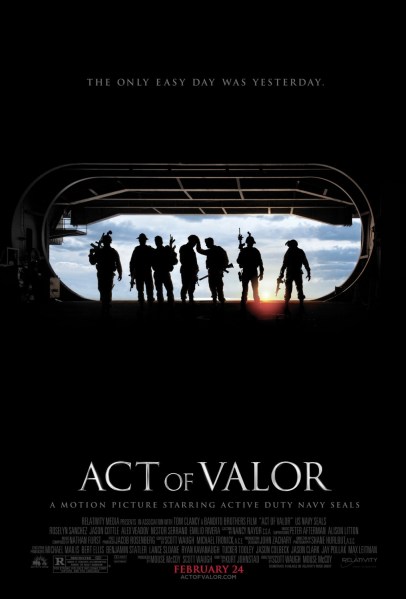
Poster for "Act of Valor"

This week on the podcast, Glenn and Daniel dial down the cynicism just a bit and ruminate on the nature of patriotism, warrior culture, and propaganda as a neutral descriptor in their discussion of Act of Valor, a new action film featuring real-life US Navy SEALs. (32:33)

May contain NSFW language. Act of Valor will be in theaters this Friday, February 24th.

FilmWonk rating: 7/10

Show notes:

  • “Sing your death song and die like a hero going home.”
    We mention this rather poignant quote/poem by Tecumseh, which makes a truncated appearance in the film’s voiceover. It can be read in its entirety here.
  • I briefly (and halfheartedly) tried to source some music from Nathan Furst’s original score for the film, but much like the score itself, I lost interest in my search rather quickly. As such, this week’s music comes from Hans Zimmer’s original score for The Rock, which seems apropos for this film.
  • We refer to an interrogation scene that takes place halfway through the film, and due to the secrecy surrounding the SEAL cast of this film, we were unsure about the cast and scripting of this scene. The answers, according to The Washington Post: Yep, he’s a real SEAL, and the scene was entirely improvised. Bravo, sir.

Listen above, or download: Act of Valor (right-click, save as).

FilmWonk Podcast – Episode #16: “The Grey” (dir. Joe Carnahan)

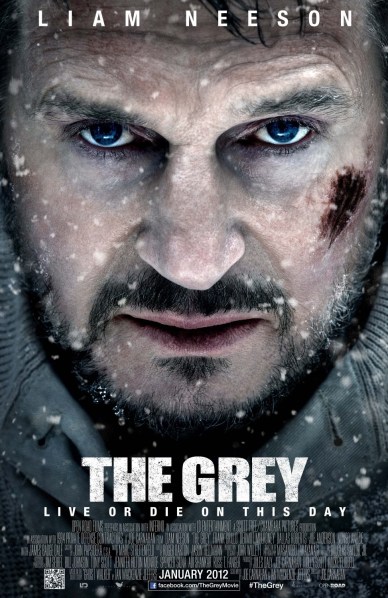
This week on the podcast, Glenn and Daniel venture into the Alaskan wilderness into a harrowing (and possibly overrated) tale of survival and wolf-punching. If the film’s trailer is any indication, that is. Which it isn’t. (25:35)

May contain NSFW language.

FilmWonk rating: 4/10 (Glenn), 3/10 (Daniel)

Show notes:

  • We refer to the famous line, “Once more unto the breach, dear friends”, which is indeed from Henry V.
  • It’s Ottway, not Ottman. Get it right, dudes.
  • With apologies to Bob Ducca, stick around at the end for a list of movie title mashups.

Listen above, or download: The Grey (right-click, save as).

FilmWonk Podcast – Episode #15: “The Girl With the Dragon Tattoo”, “Young Adult”

Poster for "The Girl With the Dragon Tattoo"

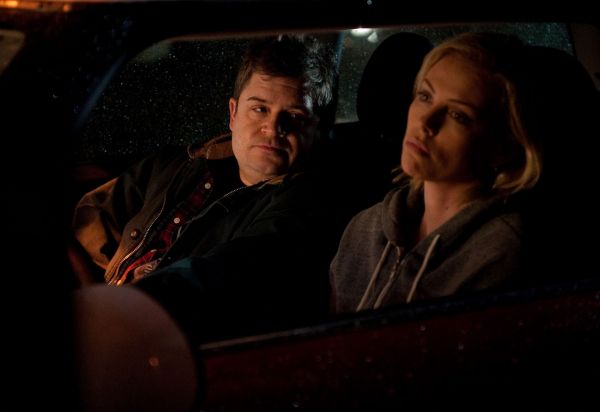
This week, we took a cue from the movie studios and decided to cram one too many films into the same day. First, we delve into the dark and depraved world of David Fincher’s fresh adaptation of The Girl With the Dragon Tattoo. Then, we’ll examine the maturation of Diablo Cody in her new collaboration with director Jason Reitman, Young Adult. (44:42)

Still from "Young Adult"

Please note that per usual, this podcast may contain NSFW language. Additionally, due to the subject matter of The Girl With the Dragon Tattoo, our review contains some rather frank discussion of rape and associated social issues. We understand these matters are delicate, and we recommend that any sensitive listeners skip past the spoiler section of this review (see the show notes for timing).

FilmWonk rating (The Girl With the Dragon Tattoo): 7/10
FilmWonk rating (Young Adult): 8.5/10

Show notes:

  • (0:00) Review: The Girl With the Dragon Tattoo
  • (11:55) Spoilers: The Girl With the Dragon Tattoo (warning: disturbing content)
  • (24:07) Review: Young Adult
  • (36:21) Spoilers: Young Adult
  • Minor spoiler: Near the end of the Dragon Tattoo review, we allude to a certain character stealing a substantial amount of money. From the book, the actual amount was around $260 million USD, which was worth about 2.5 billion Swedish kronor when the book was written. In the film (according to Wikipedia), the amount is 32 billion Euros (~$41 billion USD).
  • We mention the actor who plays Lisbeth Salander’s guardian. This actor is Yorick van Wageningen, whom we may have recognized from his small part as “The Guv” in The Chronicles of Riddick.
  • For the record, there is no Mercury, MN.
  • Music for tonight’s episode is Trent Reznor and Atticus Ross’ version of “Immigrant Song” (performed by Karen O from the Yeah Yeah Yeahs), from the soundtrack to The Girl With the Dragon Tattoo.

Listen above, or download: The Girl With the Dragon Tattoo, Young Adult (right-click, save as).

Steven Spielberg’s “War Horse” – Beasts, battle, and the perplexing notion of nobility

The relationship between man and horse has always been a complicated one. It’s simple to find inspiration in a story of humans and pets, since pets are generally treated well and have little expected but love in return. Horses, like all other beasts of burden, are the subject of greater expectations, and highly variable levels of respect. Cards on the table: I don’t find horse-racing films inspiring in the slightest. On the surface, it’s basically the same as watching NASCAR – full of souped-up, highly disposal means of transportation, barely deserving of the moniker of “sport”. The only noticeable difference is that these speedy conveyances are capable of feeling pain, making the activity that much more appalling. But beasts of burden have their place, to be sure, and there may be inspiration to be found in their stories, provided they’re enriching our lives in some meaningful way (gamblers, alcoholics, and gluemakers notwithstanding).

War is an equally mixed bag for storytelling, particularly World War I. It was known ever so briefly as “the war to end all wars”, and was a study in contradictions – an absurd mix of both ancient and groundbreaking mechanisms of battle. This war featured swords, cannons, trench and chemical warfare, tanks, metallic armor, and yes – even horses. War Horse effectively broaches the question of whether a horse is capable of demonstrating valor or loyalty, and regardless of the answer to this question, we do see a great many horses lying broken and discarded on the battlefield. This exploration of the First World War is certainly the most interesting part of this film, and simultaneously the most muddled.

This film plays like a fairy tale, with a soft glow blanketing the characters’ initial idyllic existence. Albert (Jeremy Irvine) is a farmboy in Devon, England, whose father wrecklessly splurges on a thoroughbred horse to plow his field. The horse, Joey, may well be a gorgeous specimen, but he’s not big, ugly, or strong enough for the farm work to be set before him. As Albert desperately tries to train Joey to work the plow, his landlord (David Thewlis) twirls his mustache and delivers an absurd (but well-spoken) monologue about Albert’s almost certain failure. This tale of boy and horse is entertaining, to be sure, and demonstrates the horse’s personality to an impressive degree. Even as we learn that these two will soon be torn from each other by the impending war, this sequence masterfully sets up their affection for one another, with Spielberg somehow wrangling as convincing a performance from the animal as from Irvine himself.

But from this point on, the film is basically just a series of vignettes, and actually becomes rather confusing. A staggering number of minor characters are introduced, each with a slightly different flavor of randomly accented English-language dialogue. Unless you happen to be an expert in WWI military insignia, it’s difficult to tell where Joey is, where he’s going, or how likely Albert is to find him. While this certainly causes the film to lose momentum, it somehow makes Joey’s story even more tragic, placing the audience in the same confused position he’s in. Horses may well be capable of loyalty, but this horse has very little choice in where he goes or what he does. While horses aren’t capable of understanding the full scope and consequence of their actions in warfare, this film certainly demonstrates their capacity to be swept up as either victims or reluctant participants.

Most of the human cast – whom I would struggle to call anything more than supporting players – are effective. As Joey strikes out on his journey, the film intently focuses on each of the lives he touches along the way. Benedict Cumberbatch and Tom Hiddleston both give strong turns as military officers. Newcomer Celine Buckens gives perhaps the worst accent performance in the film as a young [French?] farm girl who briefly and affectionately takes possession of Joey when he wanders onto her family farm. The story of the girl and her father had the potential to be quite poignant, but it is undercut by Buckens’ uneven performance and some rather irritating dialogue.

The film’s climactic scene, which I won’t spoil here, continues Spielberg’s tradition (begun in Saving Private Ryan) of depicting both sides of a historical war as potentially sympathetic. In their own way, each side recognizes Joey’s innocence and unwilling participation in this conflict, and seem determined to spare him any further harm. Over the course of this film, we see war horses treated as brutally as any other materiel, but it is in this final moment that the film hammers home the point that they’re a category unto themselves. I’m not sure if “inspiring” would be the right word for this message – the contribution of Joey and warhorses like him was meaningful, but it came on the eve of their obsolescence as a tool of human warfare. If Joey had been born a mere decade later, he could have lived out his life happily in peace. Then again, the same could be said for Albert and the young men who fight and die beside him. Like all war films, War Horse is a tragic tale at heart – but the friendship, valor, and loyalty demonstrated here is no less meaningful for it. War may well be a natural human condition, and as such it affects those beasts we hold most dear just as surely as it affects us all. To turn a historical eye to their contributions and sacrifices, whether or not they can truly be considered noble, does not go amiss.

FilmWonk rating: 6 out of 10

Martin Scorsese’s “Hugo” – A masterpiece of bipolar cinema

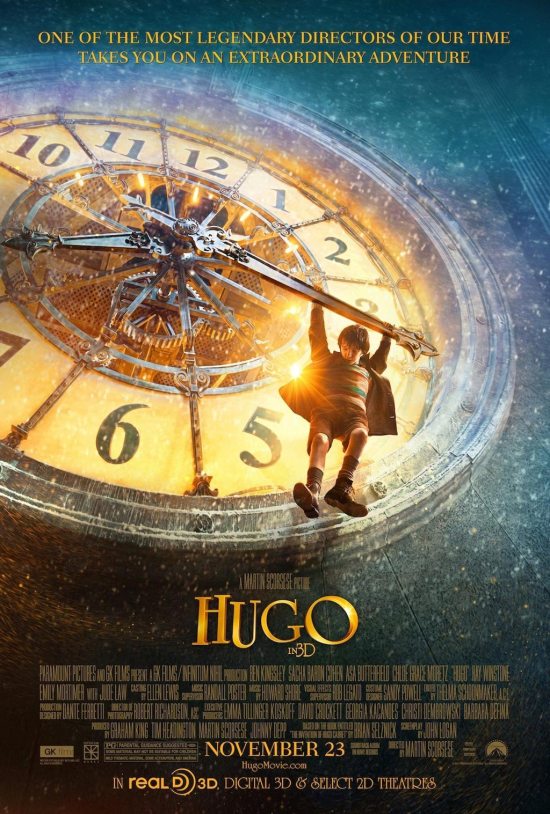
Martin Scorsese’s Hugo is a delightful family film and an outright visual treat, but it is definitely trying to be two distinct types of film. The antagonism between the orphaned, precocious tinkerer Hugo Cabret (Asa Butterfield) and the unforgiving (and unnamed) 1930s Paris train station inspector (Sacha Baron Cohen) is surely the zaniest plotline in the film – and yet, like every interaction here, it is checkered with a surprising depth of emotion. Nearly everyone in this film has a bit of a tortured past, but some of their harrowing backstories are downplayed to such a degree as to be unintentionally hilarious. When Hugo’s erstwhile father (Jude Law) is incinerated in an unmotivated blaze of CG fire, there was audible laughter in my audience… And when the station inspector’s leg-brace (a source of his ample bitterness) gets caught on the outside door of a departing train, I assumed he would meet a similarly horrific offscreen fate, but it was not to be.

The film begins with a masterful sequence of silent-cinema world-building (easily the strongest since WALL-E), then jumps right into this rather jarring combination of tones. But despite my initial qualms, I quickly found myself entranced by it. The film’s strongest relationship, which it establishes with remarkable speed, is between Hugo and Isabelle (Chloë Grace Moretz). Isabelle is bookish and adventurous, and fits right into that Hermione Granger zone of “probably should be annoying, but isn’t.” Moretz’ performance is nothing short of brilliant, lighting up the screen with enthusiasm everytime she makes an appearance. Asa Butterfield, a relative newcomer, is adept as Hugo Cabret, but the character himself is not nearly as fascinating as those surrounding him, and his relationship with Isabelle owes far more to Moretz’ performance than anything else. This young actress is just starting to demonstrate her versatility (starting with such films as Kick-Ass and Let Me In), and is certainly a talent to watch out for in the next few years.

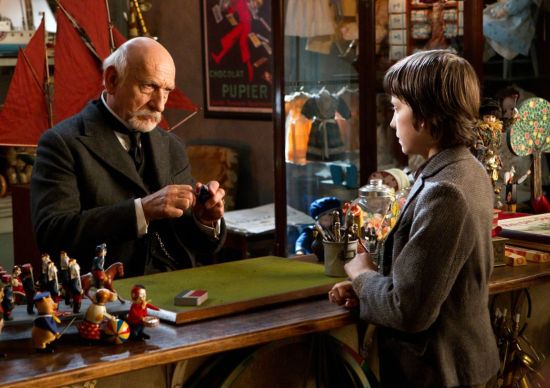
The film’s locale – a 1930s Paris train station – is also a rich character, particularly with the film’s luxurious 3D visuals to support it. Hugo lives on the fringes, climbing through the walls, rafters, and numerous clocks of the station, stealing what he can to support (and feed) himself. He also strives to repair a mysterious clockwork man (“automaton”) – a museum castoff that his father acquired before he died, and promised his son he would repair. When enigmatic toy vendor Papa Georges (Ben Kingsley) simultaneously catches Hugo thieving and discovers his secret mechanical project, he turns immediately hostile, vowing to burn Hugo’s notebook and have him arrested if he sees him again. It is at this point that Hugo and Isabelle embark on their adventure – to find out why Georges (Isabelle’s godfather) is so miserable in his old age. Kingsley’s performance is marvelous, delivering just the right blend of sadness and intrigue. This is a bitter and ancient soul, but his bitterness is richly layered enough to suggest that it is the product of having lived too much rather than too little. This is a man who had everything and lost it; not a man who regrets what he failed to achieve.

Much of the second half relies on flashbacks, and without getting into too many specifics, Hugo is the latest of several films (along with The Artist and My Week With Marilyn) to turn a nostalgic eye toward filmmaking techniques of old. Of those films, this one certainly goes back the furthest, presenting some truly innovative in-camera stop motion and lighting effects. With this sequence, Scorsese affectionately showcases the earliest days of film production, when a film studio was a glass warehouse full of sets and costumes blanketed in natural light. Along with the train station’s many clocks and gears and levers – which are strongly evocative of silent films such as Modern Times, this entire production feels like Martin Scorsese’s love letter to prototypical filmmaking.

Hugo’s conception of the world is as a wondrous machine full of mutually dependent and wholly necessary components- human and otherwise. For this conception to have survived even as he is relegated to the fringes of society is a fascinating theme, even if it gets stated aloud a few too many times during the film. Even as Hugo and Isabelle learn the dangers involved in dredging up the past, they seem as much in pursuit of their own purpose in life, and it’s all profoundly affecting. Even if not every moment rings perfectly true, the performances more than make up for it (a scene in which Papa Georges appears as the children examine an artifact from his past felt a little too pat, but Kingsley’s performance and ensuing monologue completely sold the moment). The supporting cast is strong, from Helen McCrory and Christopher Lee right down to Sacha Baren Cohen, who succeeds despite his rather thankless role.

Hugo strives to be both a children’s adventure film and a poignant drama about the burden of a forgotten artist, and it largely succeeds as both. What’s more, for any auteurists out there, it certainly feels like a personal project for Martin Scorsese, whose marvelous body of work is fortunate enough to exist in a century with both the technology and inclination to preserve it. No one quite knows how their creative efforts might be remembered in future generations, but this film deftly argues that such efforts ought to be remembered and cherished. What truly makes this is a great family film is not just the zany and inoffensive hijinks that it shares with so many other blockbusters, but also this message, subtly woven throughout a story that is quite worth telling.

FilmWonk rating: 8.5 out of 10

A note on 3D: The film boasts some stunning visual design, although I must say, seeing it in Dolby 3D (high-tech stereoscopic, basically) gave me a bit of a headache, and had far too many on-screen artifacts and reflections to avoid being a distraction. But this is certainly not the fault of the film, whose 3D is easily the best I’ve seen this year. As much as I hate to be a brand partisan, you’d do well to catch it in RealD 3D screening if you can.