Mike Cahill’s “I Origins” (2014) (presented by 10 Years Ago: Films in Retrospective)

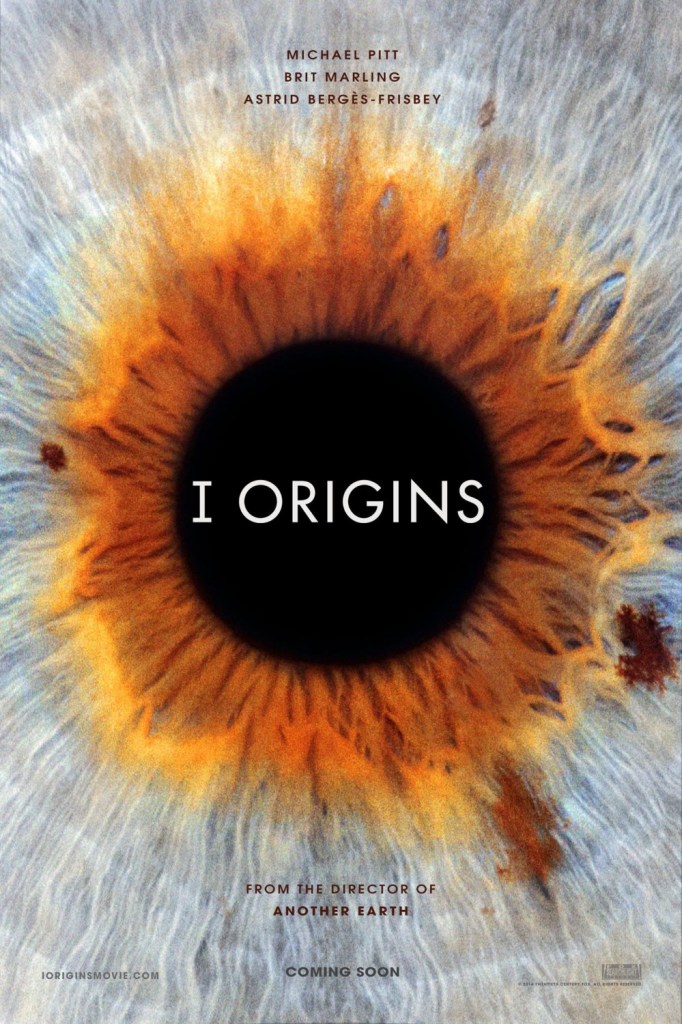
Poster for "I Origins"

This review originally appeared as a guest post on 10 Years Ago: Films in Retrospective, a film site in which editor Marcus Gorman and various contributors revisit a movie on the week of its tenth anniversary. This retro review will be a bit more free-form, recappy, and profanity-laden than usual.

“If I drop this phone a thousand times, a million times…and one time, it doesn’t fall. Just once…it hovers in the air. That is an error that’s worth looking at.”
-“You’re so fucking stubborn.”

I’ll be honest; I’m not sure my eye has evolved enough in ten years to give me anything new to see in I Origins. You can consult my 2014 review or our spoiler-filled podcast discussion, as I did after rewatching the film this weekend, found that my opinion about the film itself has not substantially changed.

“I worry that some people will come away from I Origins believing that it has abandoned its post in the apocalyptic battle between science and religion – that after spending easily half the film with atheistic scientist Dr. Ian Gray (Michael Pitt) fastidiously attempting to model each of the evolutionary steps in the development of the human eye, the film veers off into more conventional territory. That by delving into the supernatural, the film strips away its ambitions and becomes yet another Hollywood-kumbaya tale of how we should probably all just get along and believe what we want. But based on the evidence presented in the film, this couldn’t be further from the truth.”

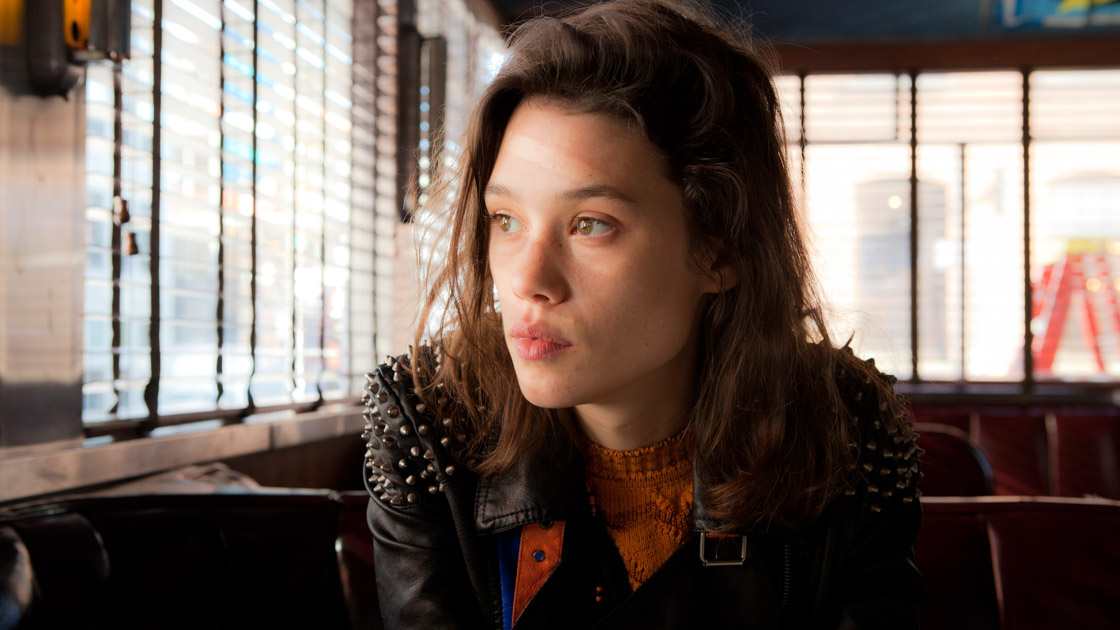
By and large, I still felt this way when the film was over. The battle rages on, but this film takes a nuanced position on it. The first act of I Origins is a whirlwind romance between Ian and Sofi (Àstrid Bergès-Frisbey), a vaguely defined spiritualist and model, which begins with an impromptu and nearly silent party hookup, continues with an oddly mystical Cinderella search in which Ian follows a string of coincidences and numbers (and eventually Sofi’s eyes on a billboard makeup ad) to the woman herself. Their relationship remains firmly in the honeymoon phase, presented in montage form, before reaching an abrupt end as Sofi gets suddenly and brutally bisected in an accident involving a malfunctioning metal box in her apartment building. This follows a fight in which the pair seems on the verge of breaking up, and Ian doesn’t come off particularly likable, and in a way, that’s what made the scene so effective? Freak accidents aren’t tidy or narratively satisfying – a terrible thing happens so fast you barely realize it, and then you realize it, and then you scream. Despite a heartfelt performance from Bergès-Frisbey and impressive, if perfunctory, chemistry with Pitt as her ontologically mismatched boyfriend, Sofi fits a dismissive mold that I still use all the time: “more concept than character”. I was critical of Sofi’s short shrift and fridging when I saw the film originally, but as Cahill’s next film Bliss would illustrate 7 years later, this is a filmmaker whose slightly muddy sci-fi ideas often land better with me than his storytelling and characterization.
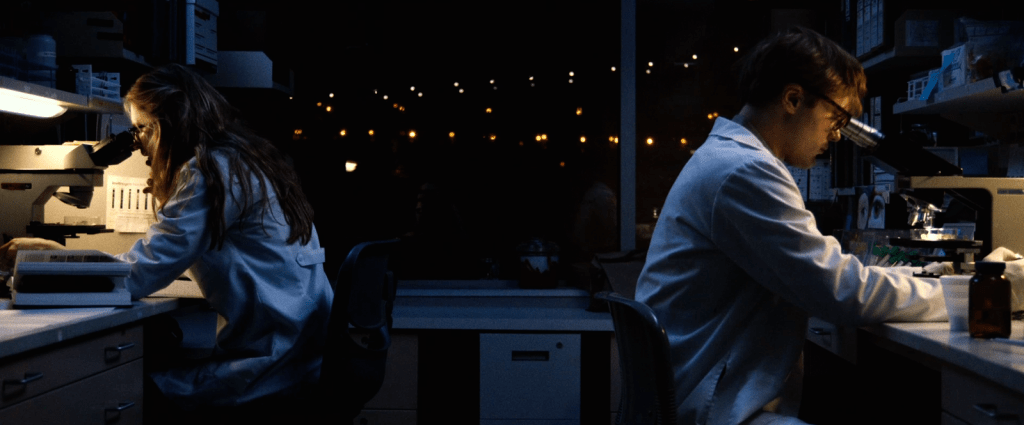
Still from "I Origins"

In I Origins, these ideas are initially voiced by smug atheist Ian, who literally pauses his search for Sofi to read Richard Dawkins at a bar (as if trying to give her a head start on not fucking him again). In his molecular biology lab, Ian seeks to understand the evolution of the human eye in order to provide a scientific rebuttal to the creationist notion of irreducible complexity, which posits that certain biological systems (like the eye) are so complicated that they simply couldn’t have evolved on their own without the guiding hand of God to make them do so. “Why are you working so hard to disprove God?” asks Sofi, and Ian clarifies that he has no interest in God – he’s just trying to fill in a gap in human understanding. Like every component of “intelligent design”, irreducible complexity is unpersuasive pseudoscience whose sole purpose is to give young-Earth creationist dogma a patina of intellectual rigor in order to be able to argue falsely in acquiescent Republican-stacked federal courtrooms that it is not a violation of the separation of church and state to force every teacher to tell every child that yes, Virginia, there is a Santa Claus. But more on that in a moment.

First, my priors. I was raised Christian. I spent many years in the church, and even went on missions to persuade others to forge a personal relationship with Jesus Christ. The beginning of the end of my religious years was like something out of a Pureflix script, as poorly explained by Kevin Sorbo: I went to college and attended a meeting of Campus Crusade, and I chatted with the other Christian boys about the origins of *gestures around* all of this. I asked how they squared the evidence for evolution and the age of the Earth with the existence of the God we both believe in, and I meant every word of it. I was trying to keep my religion, not continue losing it. We treated each other well. The conversation was kind, cheerful, and civil. We met each other as we were – ignorant young adults – and I heard arguments presented with love and sincerity ranging from “God made the universe and can use whatever tools He wants to make it run” to “yes, the Bible says it all happened in seven days, but who knows how long a day is in Heaven, God exists outside of time”, etc. This was a nice moment in my life in which imperfect humans came together with good intentions to explore ideas together. And I found the Christians’ answers so unsatisfying that it was the beginning of the end of my belief in God – or at least, my belief in any specific deity as a necessary or productive component for humanity’s ability to know and describe the Universe. I read books on biology and anthropology and geology and cosmology and astronomy and became an atheist so gradually that I hardly even realized I’d lost touch with the man upstairs. Fundamentally, I still believe in humanity’s capacity to be persuaded to change its ideas, because it happened to me and I’ve seen it happen to others. I know that one of my faults entering middle age has been the temptation to view myself in a static sort of way – I bask in a cozy feeling that because I’m comfortable in my own skin now, I always have been. I’m an imperfect rationalist! I look for the truth even if it’s difficult or complicated. I have my biases, and I can absolutely be wrong. And it’s been a hard ten years watching the world go insane.
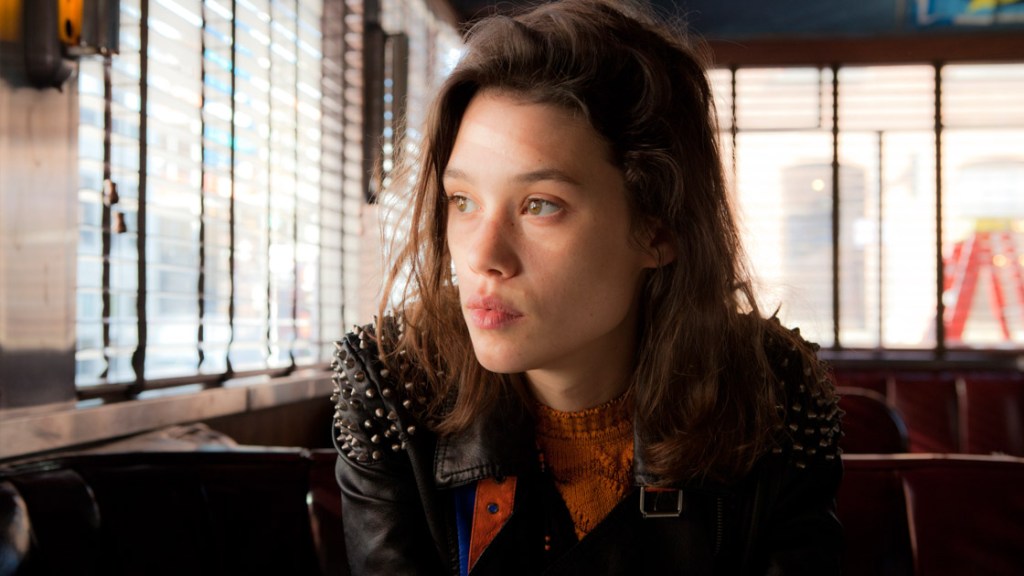
Still from "I Origins"

After watching the unchecked march of the religious right in my country (including their baffling choice of Messiah, Donald Trump – who worships no god but himself) – I come back to I Origins and think to myself, “Alright, solidifying the evolution of the eye is an interesting argument. But who is it for?” Christian supremacists have shown that they have little use for evidence or ideological coherence as they consolidate their power. Dobbs, Burwell, and other court decisions have made it clear the degree to which the federal judiciary has become a Calvinball venue for rubber-stamping right-wing policy that they can’t achieve via other means, culminating in Trump v. United States, an ably named case in which the Supreme Court unconditionally surrendered on behalf of the country. To borrow a phrase from the angel Loki (Matt Damon) in Dogma, Christian fascists only need one argument: “Do it or I’ll fuckin’ spank you.” This loud and deplorable faction’s assault on institutions of knowledge and science has culminated in a know-nothing certainty that the loudest, richest assholes in the room know what’s really going on, blaming those people you already hate for every problem, including many that don’t exist, and eliding past the ones caused and exacerbated as a matter of policy by their own elected selves. And it has gotten worse. The GOP was smugly denying climate change for decades before they gained the power to literally make it illegal to mention climate change in Florida law and policy. They were trying to foist religion back into schools for decades before Louisiana passed a law requiring the Ten Commandments to be displayed in every classroom. And from coast to coast in this country, right-wing politicians spent the duration of a deadly viral pandemic watching millions of Americans die as they formed a deliberate, strategic alliance with the virus itself, and while some of them were punished for it electorally, it seems to have collectively exited the American psyche as we barrel toward reelecting the man who offered to cure what ailed us with bleach and sunshine up our collective asses. The storm rages on, and King Donald scribbles it away with a Sharpie. I’ve run afield of the film a bit, but I guess I’m just tired. In 2014, I regarded I Origins as Cahill’s full-throated allegorical endorsement of the scientific method as well as humanity’s capacity for reasoned discourse, and I loved the film for that. But that faith has become harder to maintain in the face of evidence that knowledge doesn’t matter nearly as much as power.

After a seven-year time jump, Ian goes on a book tour chronicling his successful work replicating the evolution of the human eye in a lab using genetically engineered worms, and when I first saw the film, I was fresh off watching all 3 hours of the debate between creationist Ken Ham and science communicator Bill Nye. There’s a moment near the end of this debate in which the men are asked what it would take to change their minds, and while the Ken Hams of the world are happy to tell you that they need no facts whatsoever to believe that the Earth was created 6,000 years ago by Almighty God, the Bill Nyes will still volunteer that all it would take to change their beliefs is one single piece of evidence. This same sentiment appears in the text of this film, placed in the mouth of both Ian and the Dalai Lama, and then it goes a step further: It presents Ian with evidence for persistence of memory and reincarnation after death – evidence he could simply choose to ignore, because the idea of his dead girlfriend’s soul finding a new corporeal home is preposterous, disturbing, and sad to him. But instead, he does the right thing: He pursues the truth even if it doesn’t agree with his prior assumptions. In a parable featuring a single fact which upends Ian’s understanding of science, he and his team choose to react in an admirable way: Let’s do more science! I maintained this rosy view of the film’s third act even as the science turned out to be poorly designed and yielded mixed results. Pro tip for anyone testing paranormal activity: keep your methods consistent and don’t call out “correct/incorrect” unless you wish to be branded a poor scientist. But at least they tried! And in performing their messy and imperfect science, they not only made the ending feel grounded in reality, but they unlocked a whole new branch of research which a mid-credits scene all but confirms reflects reality in the film’s world.
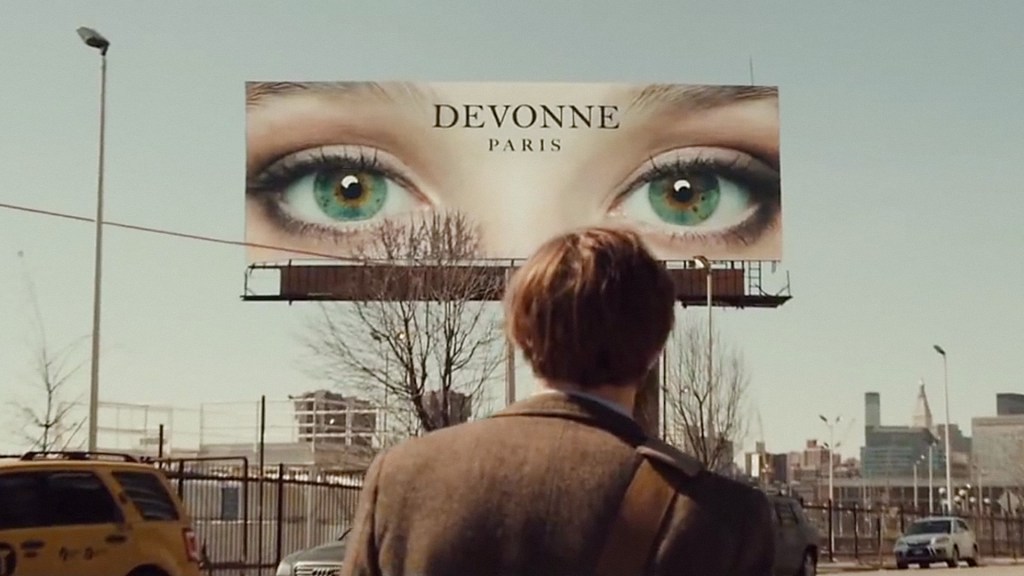
Conversely, it’s fair to say that reality in our world has soured I Origins for me a bit. The film’s world can remain rosy because it doesn’t need to persuade me of what might change as a result of this discovery – it merely needs to maintain internal consistency. Ian’s proof (or rather, well-designed experimental model) of the evolution of the human eye would probably attract little notice in real life. And in the event it were noticed and perceived as a threat, I know there is an entire propaganda ecosystem which could be deployed to pillory, dox, threaten, and swat this man until he stops talking about it, just as it has been used against every other enemy of the religious right, from pediatricians to beer spokesmodels to climate scientists to IRS agents. I’m even further removed from the church that raised me than I was in 2014, but I still remember what I saw there: A few weirdos, a few kooks, a few fanatics… but mostly just…people. Ordinary people forming community with their neighbors, living their lives, and doing their best with what they had. I don’t really think all or even most religious people are fascists, dogmatic, or unreasonable – and I would regard it as a personal failure if I ever came to believe this, even as our government continues to operate lopsidedly in favor of that fringe minority, and a reliable percentage of Christians turn out to vote Republican no matter how violent or depraved the resulting governance turns out to be. I really hope I’m right to maintain my faith in people. I hope the ones who love the Lord Their God with all their hearts, souls, and minds will try to remember to engage those faculties – as should the rest of us, for whatever value they hold as metaphors for what makes us human. I hope history will swing back in a direction where facts and science matter more than holding up a Bible you haven’t read and cutting rich people’s taxes. Perhaps when that happens, I can have fun with a rip-roarin’ science vs. religion debate again.
2014 Glennies: Best Picture (Top 10 Films of 2014)

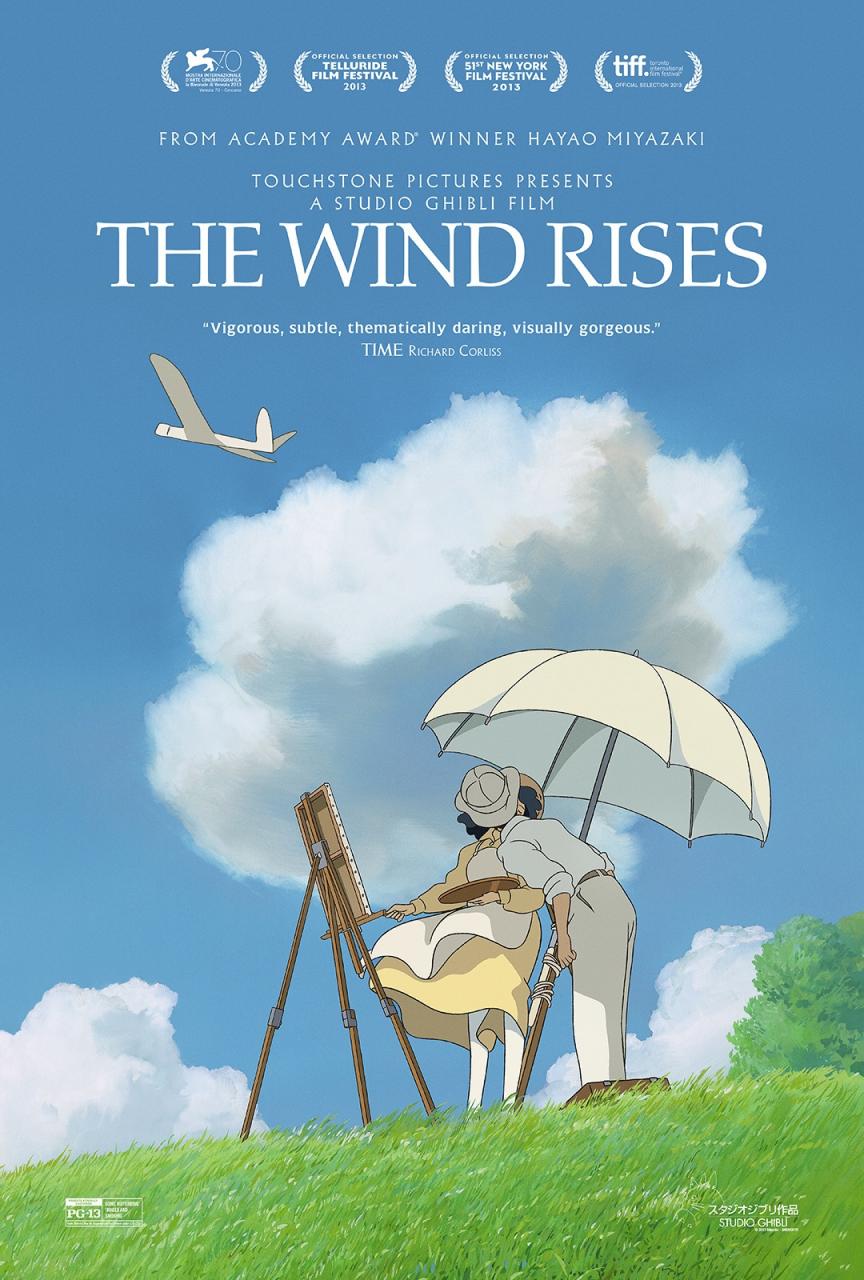
#11: The Wind Rises

Poster for "The Wind Rises"

Directed by Hiyao Miyazaki, written by Miyazaki based on his comic book, English adaptation by Mike Jones

As always, #11 goes to a film that must be seen, but that I’m reluctant to include in my Top 10. The Wind Rises is a powerful and provocative film, since it comes from a Japanese man arguing that the 20th century progress in aviation was worth the wars that were largely responsible for it. Which is an overtly horrifying position, even if the evidence of war-induced technological progress is undeniable. But the film broaches this theme with depth and beauty that I wouldn’t have thought possible, and interlaces it with a touching and tragic romance. If the film has a technological thesis, it is that invention is morally neutral at worst, and glorious at best, regardless of its eventual purpose – and given that this is allegedly Miyazaki’s last film, it feels like a classical apology of his own career.

Check out my full review here:
Hiyao Miyazaki’s “The Wind Rises” – Dream, invention, and responsibility

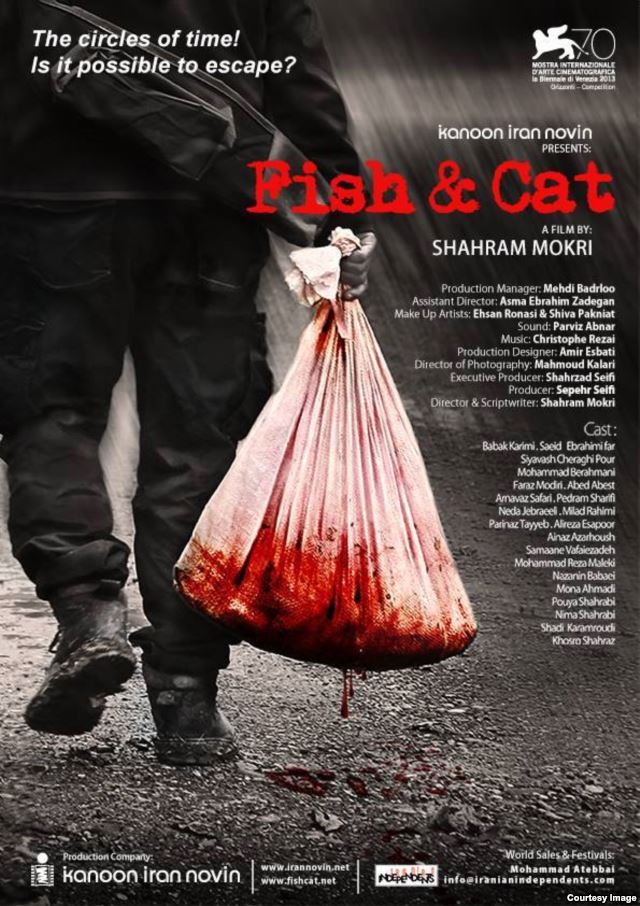
#10: Fish & Cat

Poster for "Fish & Cat"

Written and directed by Shahram Mokri

This Iranian film is one of two on this list that are apparently shot in a single continuous shot, but this is the more tantalizingly ambiguous of the two. Fish & Cat is a drama that takes place at a lakeside kite festival outside of Tehran. Several dozen college students camp along the lake or in the nearby woods, and are intermittently visited by the creepy dudes who run a nearby restaurant, which may or may not serve human meat. This film is fascinating on several levels. First, it takes a totally free hand at manipulating its own timeline, showing the same scene multiple times, each time following a different character while the remainder of the scene plays out in the background. This allows much of the film’s subtext to reveal itself very gradually as we’re getting to know the ensemble, even as we’re not sure of the precise nature of the threat they face. Second, because this film was shot and takes place in the Islamic Republic of Iran, this American had no way of knowing what sort of content would be permitted in the film. Which makes the film’s insistence on its place in the horror genre that much more interesting. The US had the Hays code, and Iran has its own regime of censorship, and I don’t know if it specifically prohibits this sort of content or not. But the fact remains, this is a horror film that doesn’t show any actual violence, and in the absence of such content, it uses many clever workarounds to evoke a persistent sense of dread that lurks just off camera.

Check out our podcast discussion here:
FilmWonk Podcast – Episode #49 – “Age of Uprising”, “Fish & Cat”, ” Remote Control” (#SIFF2014).

#9: The One I Love

Poster for "The One I Love"
Directed by Charlie McDowell, written by Justin Lader

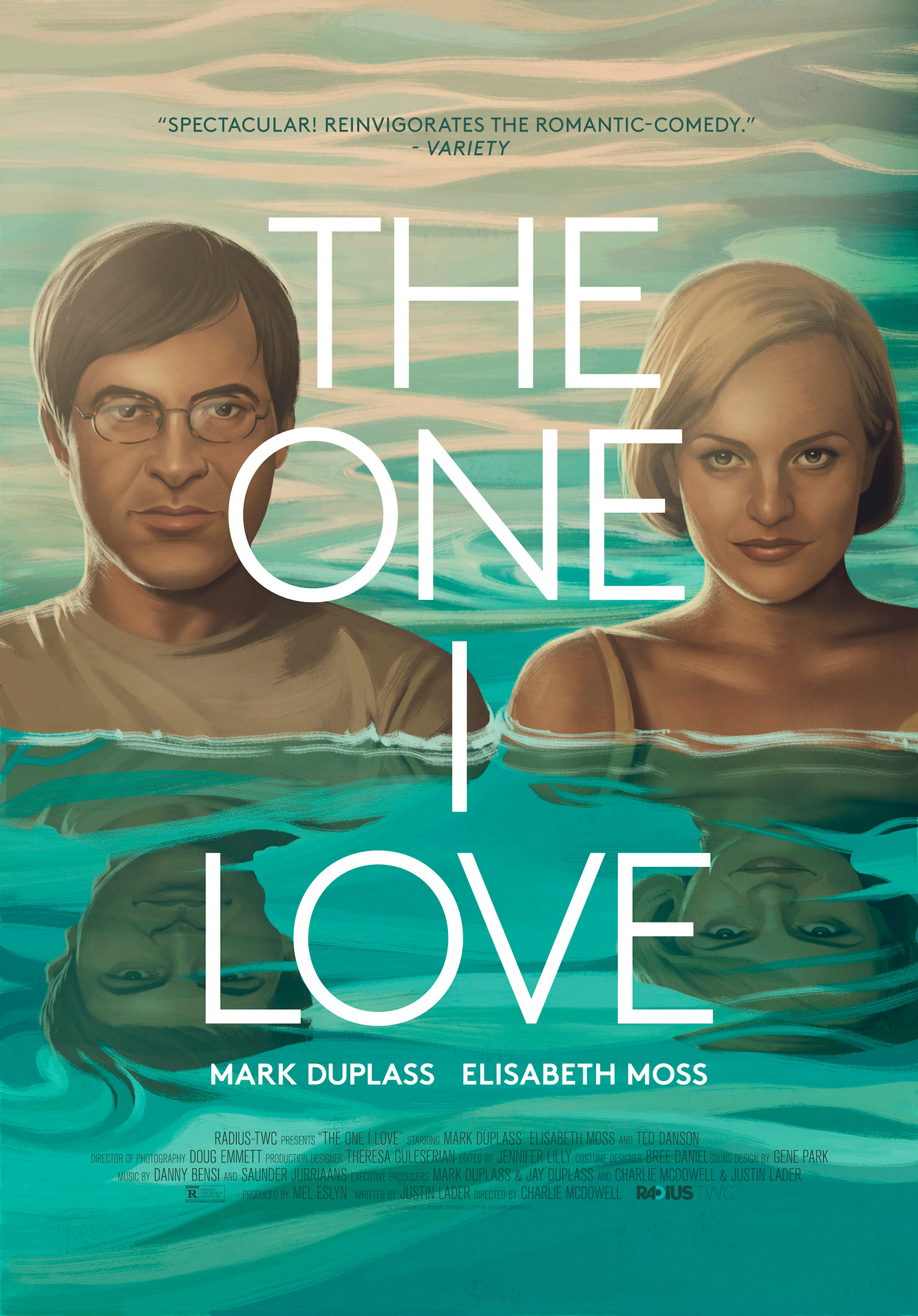
There’s generally at least one film on this list whose exact premise I can’t discuss in detail, and this is one of them. Suffice to say, Mark Duplass and Elisabeth Moss star in an engrossing exploration of the nature of marriage and romance through a clever sci-fi/fantasy filter that remains riveting throughout the film. One of the best things about The One I Love is that these two characters have the conversation that no two characters ever have in a genre film once the Big Weird Thing starts happening. One says to the other, “Hey, a Big Weird Thing just happened to me. I think a Big Weird Thing might be happening to you too. Let’s discuss the Big Weird Thing.” Once the [married] pair teams up to figure out what’s going on (which is quite early in the film), it really gets interesting, as they each gain their own fresh understanding of their relationship through their respective explorations. If this ambiguous description isn’t selling you on the film, I’d urge you to check out the trailer, which doesn’t give away its premise.

#8: Top Five

Poster for "Top Five"
Written and directed by Chris Rock

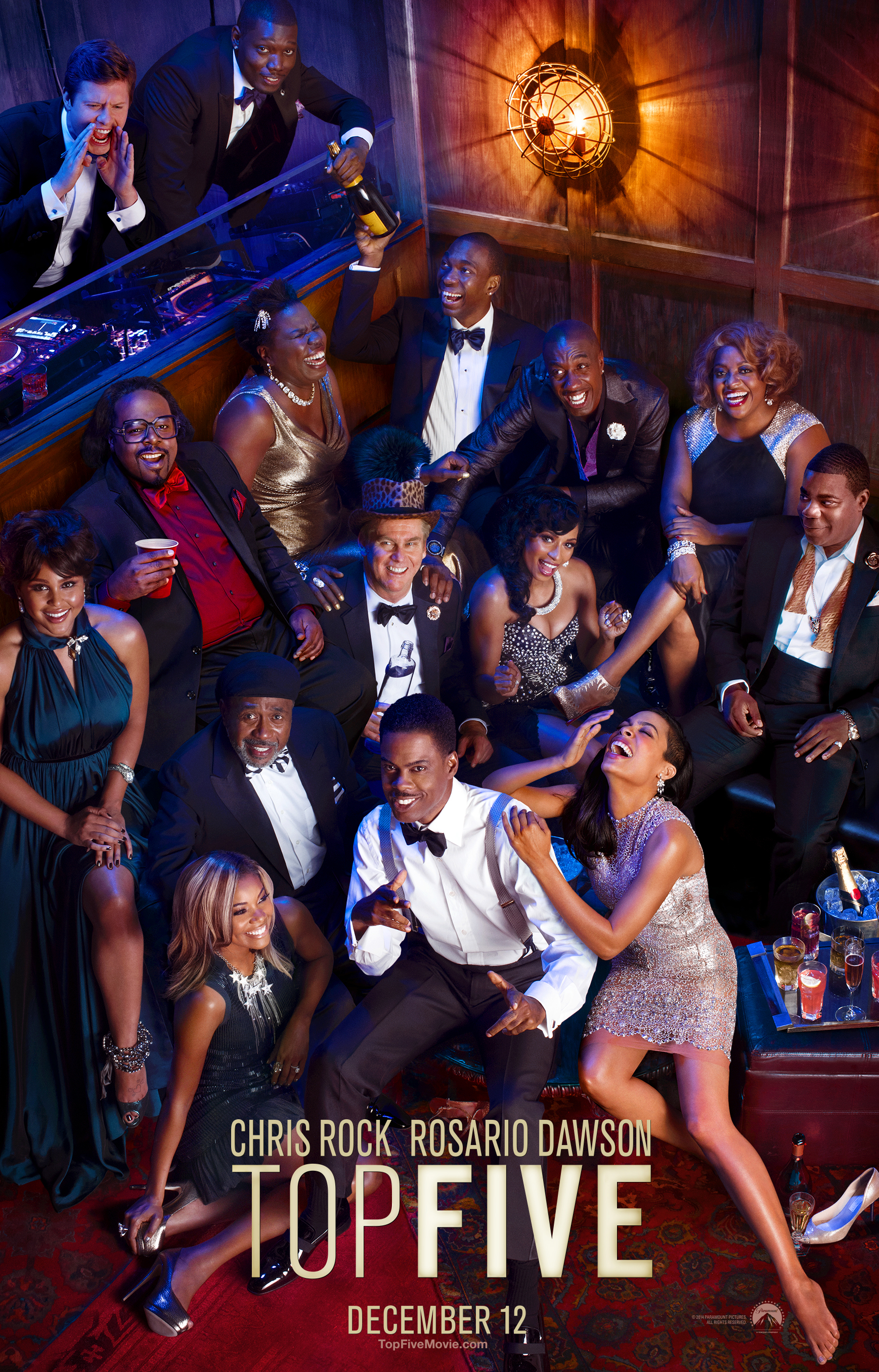
I really hoped Top Five would be in my top 5, but alas, it didn’t work out. But Chris Rock‘s quite successful revival of the romantic comedy genre does have one odd bit of synchronicity – it has a staggering number of plot similarities with another film on this list, Birdman. It’s almost certainly coincidental, but both of these films deal with stars playing fictionalized versions of themselves, who previously starred in a trio of costumed hero movies, and who now wish to be taken seriously by way of an ill-advised dramatic vanity project. In New York City. Oh, and both films feature a complex relationship with a NY Times critic. But this is where their (vast!) similarities end – in Top Five, Andre Allen (Chris Rock)’s project is little more than a backdrop for a stirring romance with film-writer Chelsea Brown (Rosario Dawson). Not only is the dialogue in this film beautifully naturalistic and authentic, but it’s also one of the most reliably funny comedies of the year. As director and star, Rock shows a deft hand managing the tone of this movie, jumping seemlessly between brief moments of gross-out comedy and genuine sentimentality without ever dwelling too long on either one. At its best, Top Five is clearly influenced by Louie CK‘s Louie, even finding its way to the Comedy Cellar for an impromptu set late in the film.

#7: The Grand Budapest Hotel

Poster for "The Grand Budapest Hotel"

Written and directed by Wes Anderson

Wes Anderson is on a roll. Moonrise Kingdom was a delightful coming-of-age tale, but this film has reached full maturity. It utilizes every cinematic trick Anderson has picked up, including some impressive use of models and stop-motion animation for the film’s high-stakes mountainside action around the titular hotel. Veteran Ralph Fiennes and newcomer Tony Revolori carry the film marvelously through comedy, drama, and some surprisingly dark and violent material (“This is the first death squad I’ve personally encountered!”). The film’s fictitious pre-fascist European country is a compelling backdrop, even if it feels at times like little more than a Tarantinoesque historical playground, or perhaps a setting that merely serves salacious and nostalgic interest above all else (e.g. Southern Gothic). But for all its tricks, The Grand Budapest Hotel never once feels slight or trifling. It is a deeply affecting comedic film about an era that was bygone even when the film takes place (hence the nested flashbacks). And it is thoroughly entertaining.

Check out our podcast discussion here:
FilmWonk Podcast – Episode #43 – “The Grand Budapest Hotel” (dir. Wes Anderson)”

#6: Edge of Tomorrow

Still from "Edge of Tomorrow"
Directed by Doug Liman, written by Christopher McQuarrie, Jez Butterworth, and John-Henry Butterworth, based on the novel by Hiroshi Sakurazaka

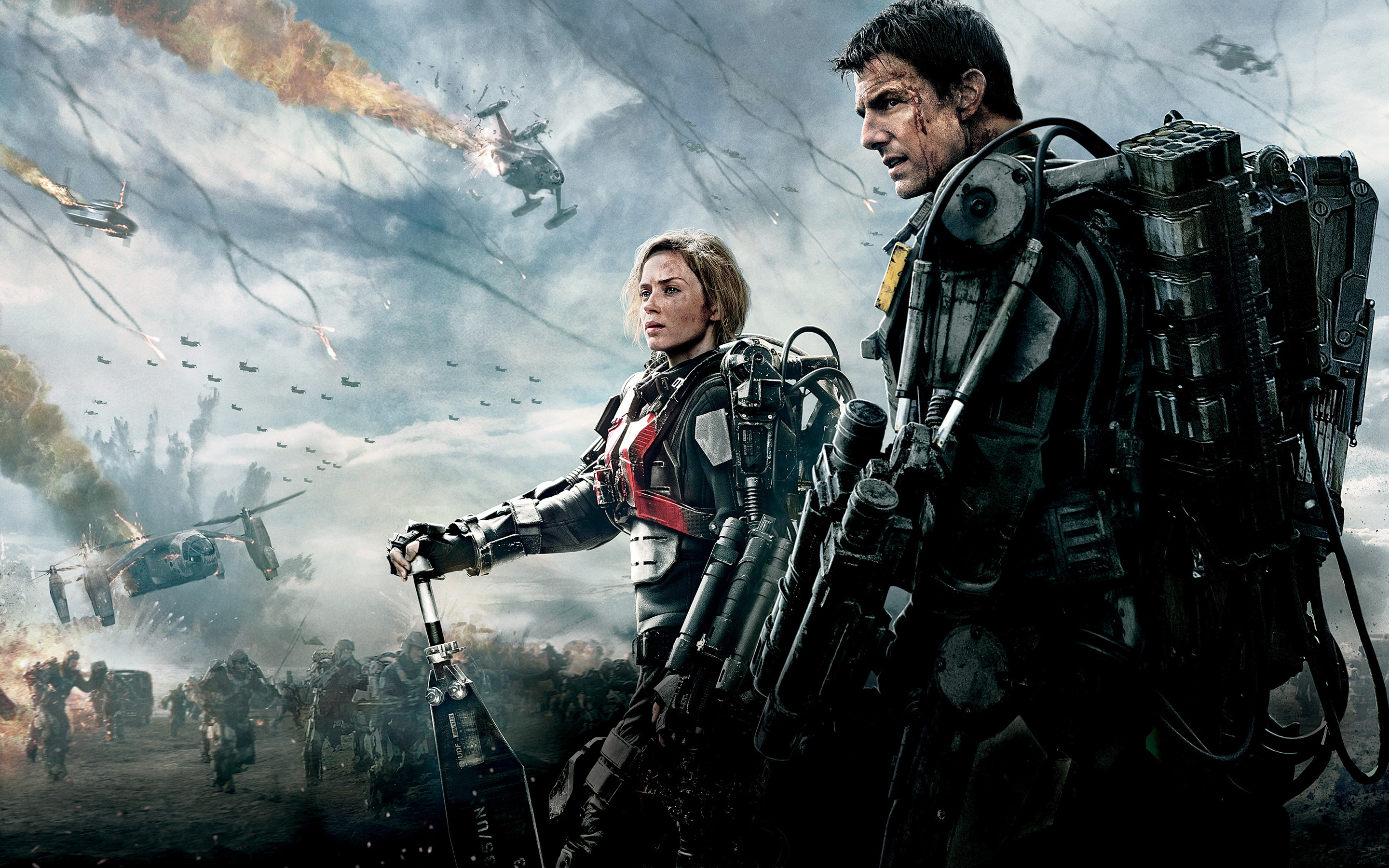
I’ll lead off with the line I said to everyone else about this film – Edge of Tomorrow* is an instant-classic action film on par with Paul Verhoeven‘s cult classic, Starship Troopers. The aliens are top-notch and terrifying, and the film’s use of practical effects to reinforce its battle scenes made mechanized combat look cooler than Elysium or Oblivion ever could. Everything about this film works, whether the clever sci-fi rehash of Groundhog Day, the gradual arc of Tom Cruise going from executive PR flack to seasoned and capable soldier (in his 50s no less – bravo!), or the instantly capable action-presence of Emily Blunt, who spends nearly the entire film as a ruthless alien-killing badass with a Final Fantasy-tinged buster sword. Seriously, if you’re not watching this movie right now, get on it. Also – this film’s end credits introduced me to the powerhouse vocal stylings of British singer-songwriter John Newman, which was just the icing on the cake.

*Now stylized as Live, Die Repeat: Edge of Tomorrow

Check out our podcast discussion here:
FilmWonk Podcast – Episode #50 – “22 Jump Street”, “Edge of Tomorrow”

#5: I Origins

Poster for "I Origins"

Written and directed by Mike Cahill

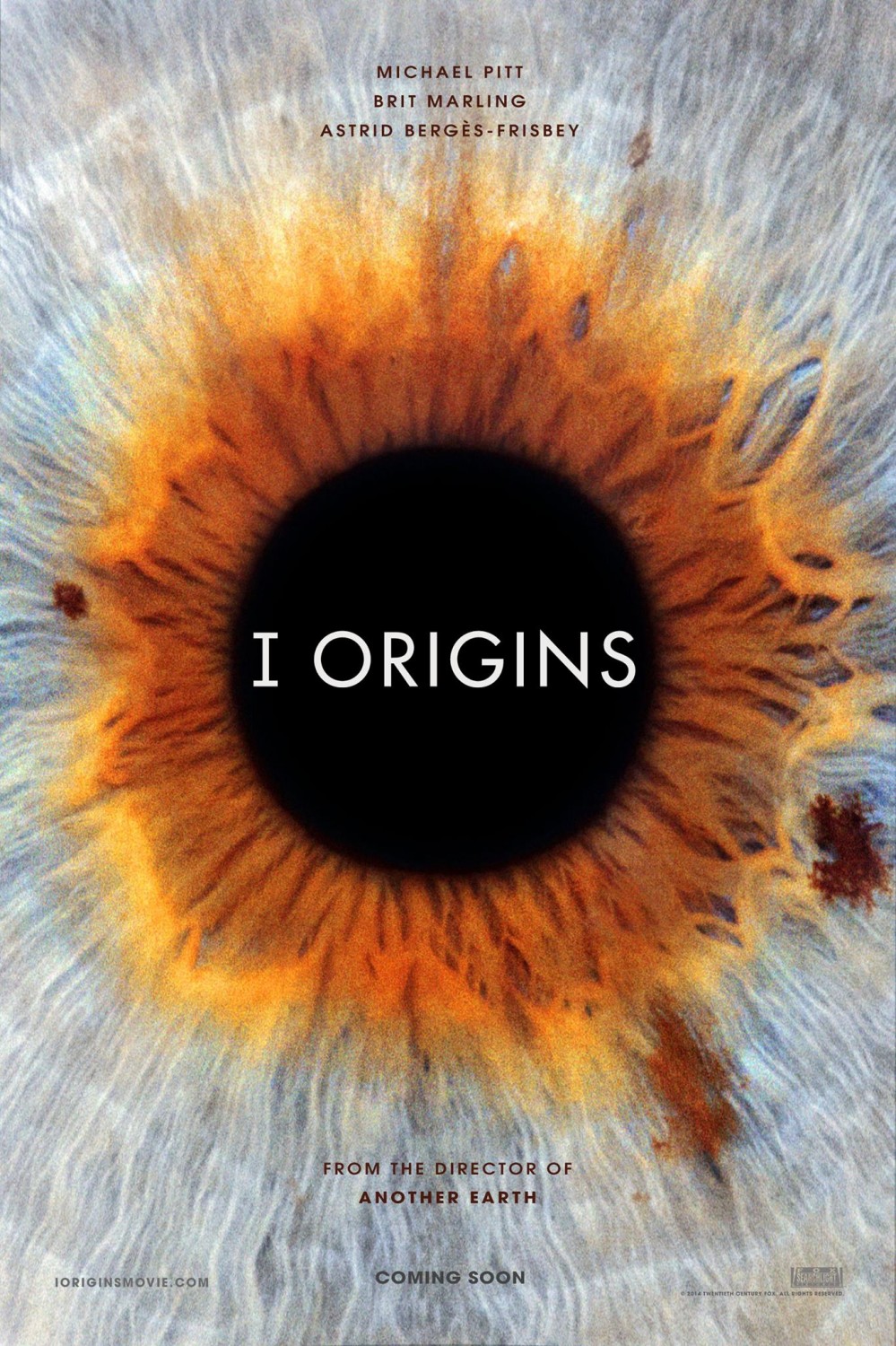
Mike Cahill‘s latest sci-fi collaboration with actress Brit Marling was controversial on the FilmWonk Podcast, with Daniel dismissing the film as the same sort of superficial treatment of science vs. religion that I specifically thought this film transcended. Love it or hate it, you will walk out of this film with a strong opinion.

From my review:

That’s the scientific process in a nutshell – we find a piece of evidence that contradicts prior theories, so we test on and develop new ones. I Origins sets itself apart from other half-hearted Hollywood dalliances in science and religion by presenting scientists who really act like scientists. In the face of an anomaly that challenges their prior understanding, their reaction is…let’s do more science. This is a superlative point made in a subtle enough manner that I’m genuinely concerned about the audience taking the wrong idea away from the film.

A warning, if this premise intrigues you: Do not watch the trailer for this film – it spoils virtually every plot detail in advance. If you’re interested in further plot details, check out my [spoiler-free] review below.

Review:
Mike Cahill’s “I Origins” – A faithful rendition of the scientific method
As well as our podcast discussion:
FilmWonk Podcast – Episode #54 – “Lucy”, “I Origins”

#4: The Case Against 8

Poster for "The Case Against 8"

Directed by Ben Cotner and Ryan White

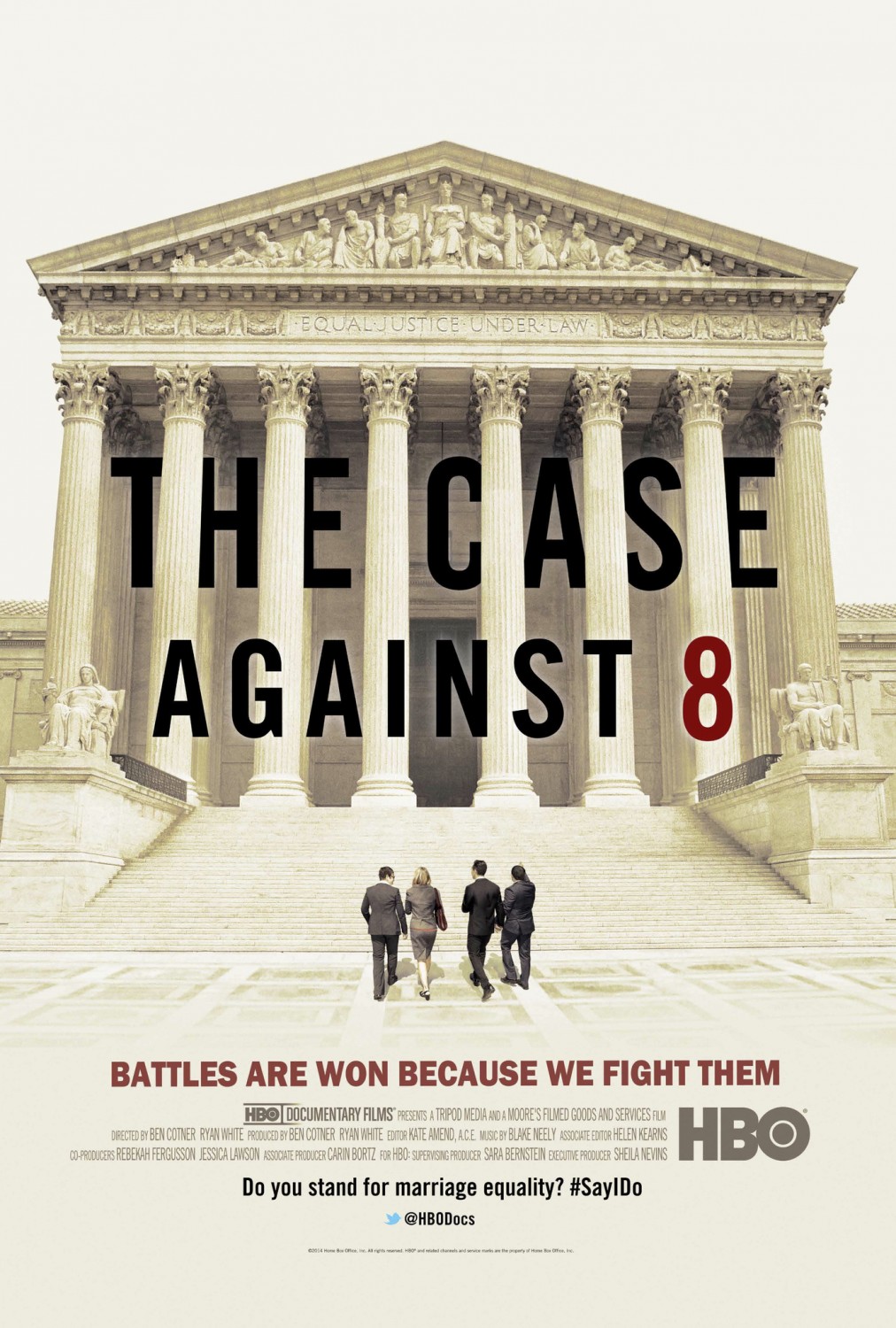
The Case Against 8 is a stunningly executed legal and political procedural, and this is just the beginning of its appeal. It features behind-the-scenes footage from the case preparation of the legal team that fought to overturn California’s Prop-8 ban on same-sex marriage – footage that reveals so much detail about their trial strategy that it had to remain locked in a safe deposit box until the case was disposed in the Supreme Court in 2013. You already know the outcome of this case (and indeed, the possible outcome of this issue in 2015!), but what’s so fascinating here is all the personal details that went into making this case happen. The two couples who became plaintiffs in the lawsuit against California were carefully vetted, treated essentially like political candidates. The two attorneys behind the case, David Boies and Ted Olsen, were previously on opposite sides in Bush v. Gore (2000) – one a liberal, the other a conservative, united in friendship and determination to cast same-sex marriage as a non-partisan Constitutional issue. The result is both a thoroughly engrossing and emotional drama – both familial and political – and an utterly fascinating treatise on how things really get done in American politics.

Check out my review here:
SIFF Roundup: “The Case Against 8”, “Desert Cathedral”, “In Order of Disappearance”

#3: Gone Girl

Poster for "Gone Girl"

Directed by David Fincher, written for the screen by Gillian Flynn, based on her novel

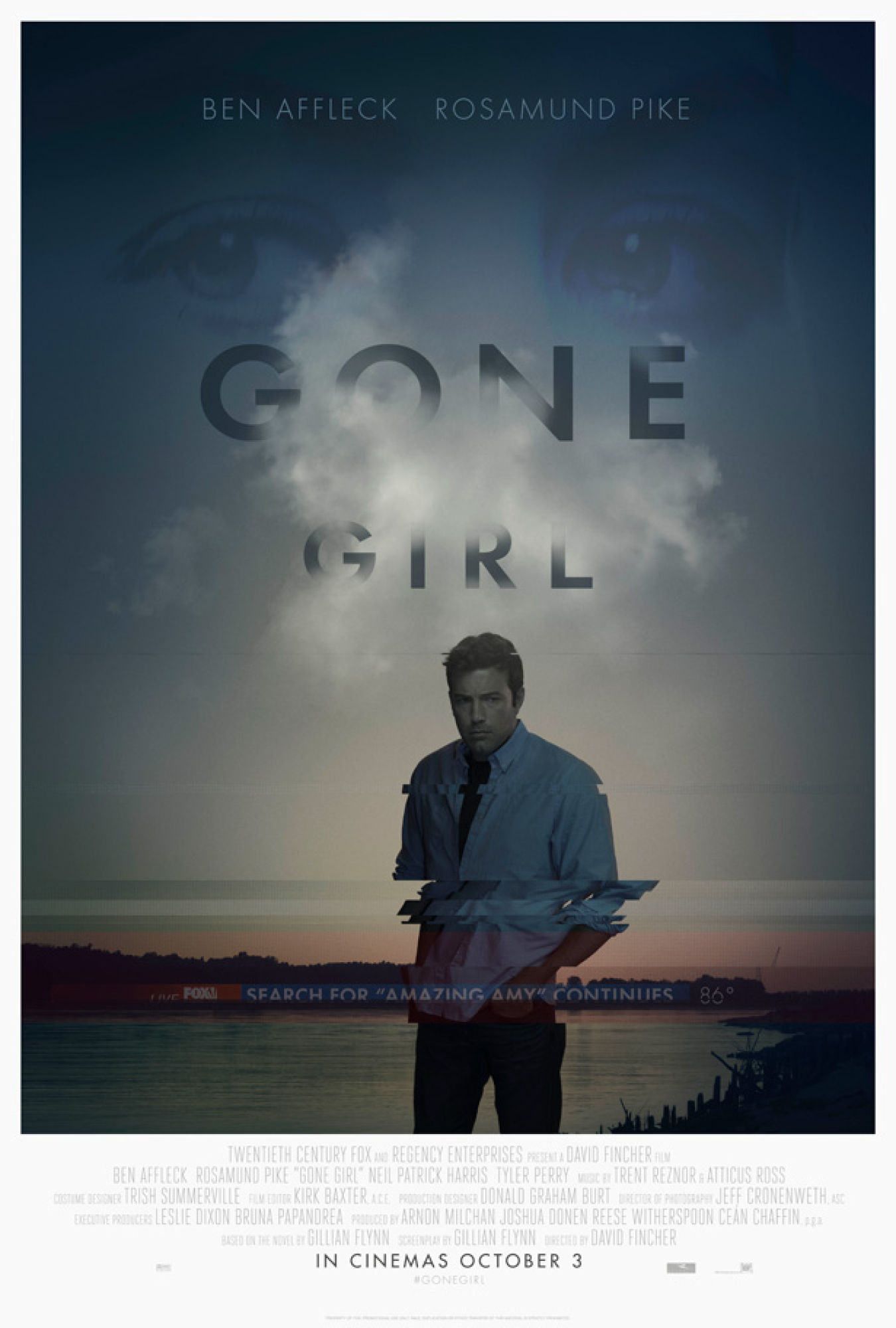
I can think of no greater advertisement for Gone Girl than to link to author and screenwriter Gillian Flynn‘s passage on “cool girls“, which appears in a slight variation in the film. Give that passage a read, and you’ll start to have an idea of just what’s going on with the missing character of Amazing Amy Dunne (Rosamund Pike), even if the bulk of the film’s focus is on her husband Nick (Ben Affleck), a tabloid archetype who is doomed to be blamed for his wife’s disappearance and possible murder regardless of what he does next (even if he does plenty to sabotage himself). Affleck so thoroughly embodies this role that I can scarcely imagine anyone else filling it. Carrie Coon, Kim Dickens, and a hilarious, high-powered attorney in the form of Tyler Perry give one strong contribution after another to the film’s cast – and Neil Patrick Harris feels like the inevitable extreme of Barney Stinson. This is a gripping film – and if you’ve somehow managed to avoid the big spoiler, one that will certainly keep you guessing.

Check out our podcast discussion here:
FilmWonk Podcast – Episode #57 – “Gone Girl” (dir. David Fincher)

#2: Foxcatcher

Poster for "Foxcatcher"

Directed by Bennett Miller, screenplay by E. Max Frye and Dan Futterman

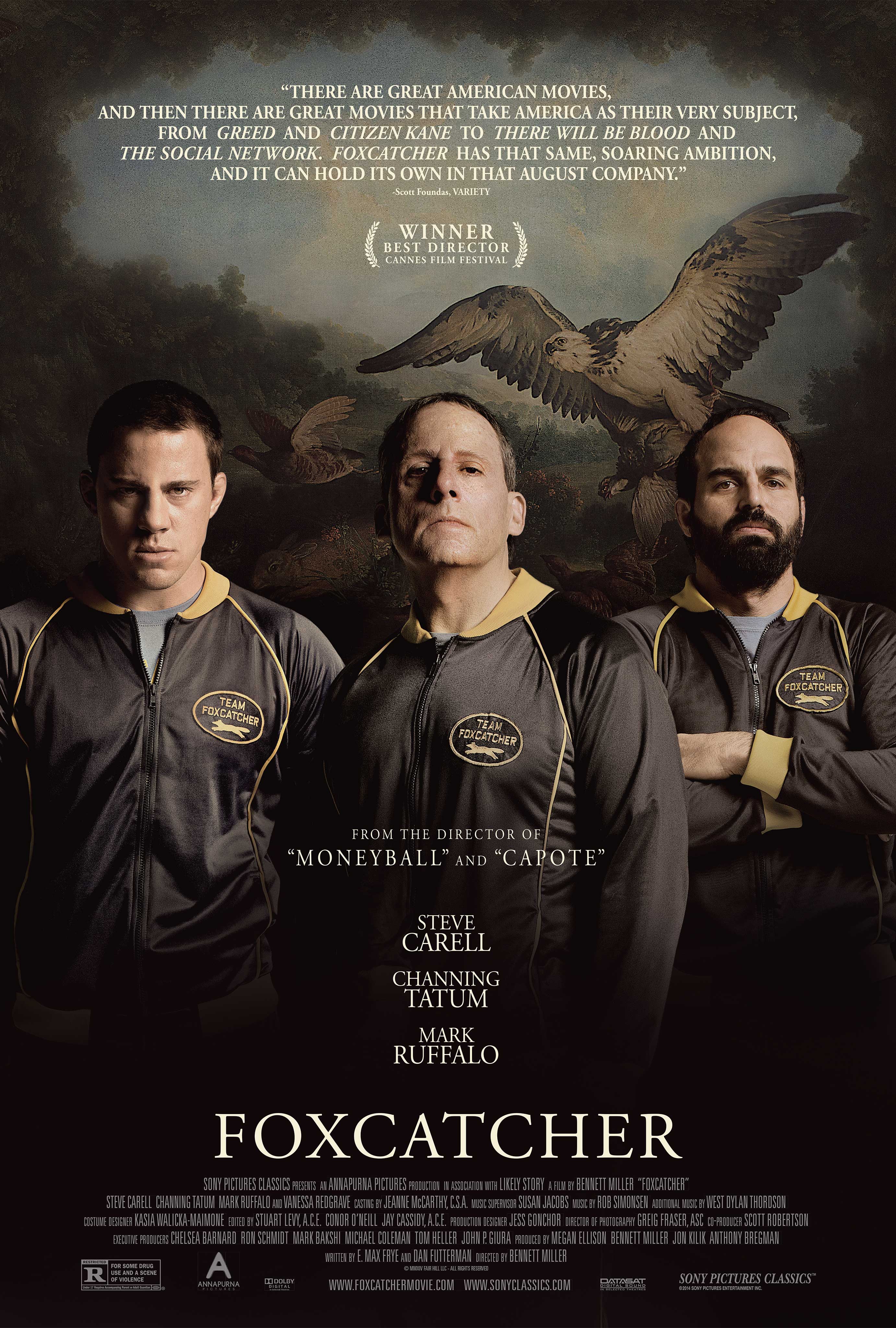
There is no levity in this film, and that’s probably the only reason why it ended up as my #2 – like 12 Years a Slave, it’s certainly the finest film I saw in its year, and I would likely never watch it again. The film depicts Olympian wrestler Mark Schultz (Channing Tatum) being taken under the wing of billionaire heir John E. Du Pont (Steve Carell), who wishes to set up a world-class wrestling facility on Foxcatcher (his rural Pennsylvania farm). The film is based on a true story – and a story whose outcome, involving Mark’s brother Dave (Mark Ruffalo) – also an Olympic wrestler – I knew in advance. This didn’t really color my enjoyment of the film, as the complex, slow-burn, paranoid relationship that develops between Mark and John is the primary focus of the film. Mark willingly becomes a kept man, and John clearly has strong expectations for him. Tatum and Carell each offer a fascinating and transformative performance, with Tatum looking slumped, dejected, and walking like a caveman with a persistent scowl for the entire film. Tatum has described this film as his greatest acting challenge, and while his characterization took some getting used to, it is certainly a success. Steve Carell, on the other hand, gives nothing short of the performance of a lifetime. His face is disfigured not only with prosthetics, but also with a persistently awkward and menacing demeanor. This is a wondrous and terrifying performance, on par with Anthony Hopkins in Silence of the Lambs. This is a strange man who doesn’t enjoy life (despite his vast opportunities to do so), and whose expectations and promise willfully engulf as many lives as he is willing to take under his control. The film also features a brief and chilling turn by Vanessa Redgrave, whom I was pleased to see on-screen once again, even if she’s apparently been keeping busy out of my sight.

Check out the film’s trailer, which gives an excellent idea of the film’s appeal and ambiance without giving away too much.

Check out our podcast discussion here:
FilmWonk Podcast – Episode #62 – “Unbroken” (dir. Angelina Jolie), “Foxcatcher” (dir. Bennett Miller)

#1: Birdman

Poster for "Birdman"

Directed by Alejandro González Iñárritu, written by Iñárritu, Nicolás Giacobone, Alexander Dinelaris, and Armando Bo

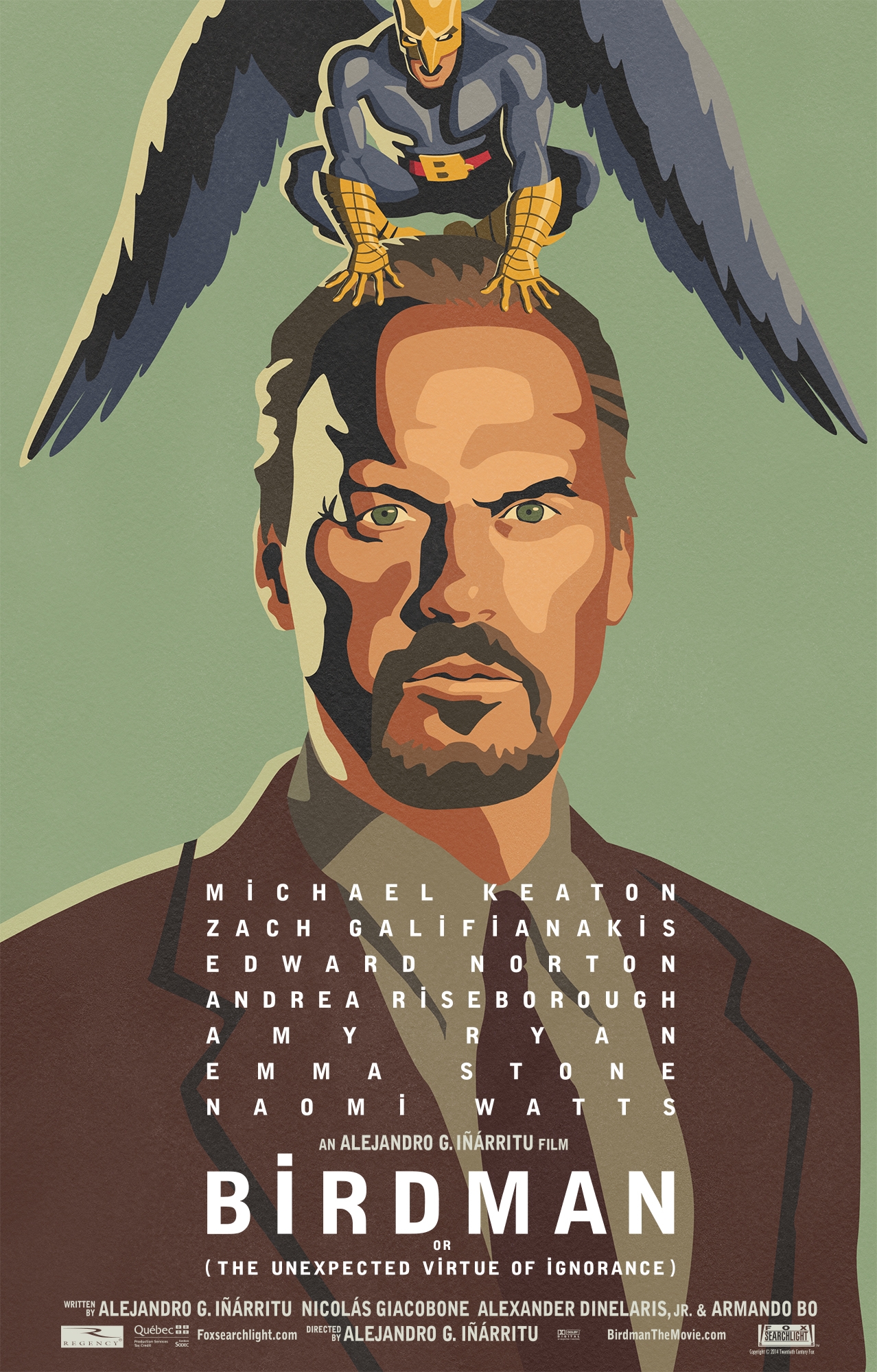
Here it is – the film that I saw multiple times in theaters without hesitation, whose wonderful Mark Woolen trailer I watched over and over again, and which I haven’t stopped thinking about since. By the usual standards of Iñárritu, Birdman is a downright chipper film, featuring the backstage relationship between Broadway actors (Edward Norton, Andrea Riseborough, and Naomi Watts), as well as the “Hollywood clown in a Lycra bird-suit” who wishes to take his place in their midst, Riggan Thomson (Michael Keaton). The film is shot in a self-identified “hyper-realistic” fashion, seemingly taking place in a single, continuous shot. And as Mike Ryan at ScreenCrush deftly points out, Keaton is not a perfect match for this character’s career, but he’s certainly close enough to inspire the comparison, and Keaton’s performance feels incredibly personal either way (when his gruff Birdman persona informs him in voiceover that “60 is the new 30”, for instance). Thomson’s costar, Broadway diva Mike Shiner (Norton) makes superlative use of the charm and (alleged real-life) tendency to creatively take over whatever production he’s on. Emma Stone is marvelously and deliberately unlikable as Thomson’s acerbic, recovering-addict daughter, Sam, and Zach Galifianakis proves once again that his best comic acting involves being a crying straight-man. In the tradition of Ratatouille (and Cloud Atlas, kinda), this film directly puts its critics in the crosshairs, in the form of NY Times theatre snob Tabitha (Lindsay Duncan).

Tabitha is, in many ways, an appallingly unprofessional critic, but what the film gets right is that criticism, at its worst, is just tossing out meaningless adjectives (or in my case, adverbs), and at its best, is merely an appeal to authority. And what can I say? The film’s not wrong, and you should see it because I’m telling you to do so. Criticism is a competing force to fanaticism, despite their mutually incestuous relationship with acts of creativity. But an act of creativity is not necessarily an intrinsic good, and Birdman is happy to confront that dour reality in the most entertaining way possible.

Check out our podcast discussion here:
FilmWonk Podcast – Episode #58 – “Birdman” (dir. Alejandro González Iñárritu)

Honorable Mentions:

  • Dawn of the Planet of the Apes (directed by Matt Reeves)
  • The Imitation Game (directed by Morten Tyldum)
  • Boyhood (written/directed by Richard Linklater)
  • Force Majeure (written/directed by Ruben Östlund)
  • The Babadook (written/directed by Jennifer Kent)
  • Night Moves (directed by Kelly Reichardt)
  • Interstellar (directed by Christopher Nolan)
  • White Bird in a Blizzard (directed by Gregg Araki)
  • Guardians of the Galaxy (directed by James Gunn)
  • Captain America: The Winter Soldier (directed by the Russo Brothers)
  • The Lego Movie (directed by Phil Lord and Christopher Miller)

Biggest Disappointments:

High expectations, low results.

  • The Interview (directed by Seth Rogen and Evan Goldberg)
    You know why. In every conceivable way, including factors unrelated to the film itself, this was a massive letdown.
  • Citizenfour (written/directed by Laura Poitras)
    This film’s subject matter is compelling – global surveillance and information security are perhaps the most important subjects in the world right now. But when it comes down to it, this just isn’t a very well-made documentary. This film couldn’t decide whether its audience was cutting-edge tech espionage nerds who already knew every detail and technical term of this story from their own reading (including Poitras’ own articles), or the uninformed masses whose eyes will almost certainly glaze over as one ugly intelligence or encryption-based term or initialism after another is revealed. And it’s downright boring for much of its runtime.
  • 22 Jump Street (directed by Phil Lord and Christopher Miller)
    Lord and Miller have made quite a career out of making good movies out of seemingly terrible ideas. But their bar was rather high with this R-rated comedy sequel. I adored 21 Jump Street, and while I should have known that it was impossible to strike gold in this particular mine twice, the most frustrating part of this film is that it contains some of my favorite comedy scenes of the year (a late scene between Jonah Hill and Jillian Bell certainly counts). If it hadn’t spent so much time trying to make me hate its self-awareness, I might have enjoyed it more.
  • The Amazing Spider-Man 2
    At the time, I referred to this as a “tedious, aggressively stupid piece of disposable, commercial tripe”. I stand by it. I’m cheating a bit here, since my expectations were rather low from the “first” film, but this sequel actually managed to plumb new depths of pointlessness. At least Sony appears to be considering handing the Spidey-reins back to Marvel, since they clearly don’t know what to do with them.

Pleasant Surprises:

Low expectations, high results.

  • The Fault in Our Stars (directed by Josh Boone)
    Despite the Neustadter/Weber script, my expectations for this film were roughly at “teen romantic melodrama” levels, but it ended up hitting me on many comparable emotional notes to Jonathan Levine’s 50/50. Trust me when I say – that’s high praise. And the leads are so charming.
  • The Hunger Games: Mockingjay – Part 1 (directed by Francis Lawrence)
    As a grown-up, I understand that the reason this film exists is because $2 billion is cooler than $1 billion. But while the first needlessly split Harry Potter film was a resounding thud, Mockingjay – Part 1 gives itself plenty of raison d’être. Despite the occasional contrived action beat, this film really brought home the realities of warfare in a world with a substantially reduced human population and grievous inequality in its population. At its best, the film brought Julianne Moore and Philip Seymour Hoffman (RIP) into a bunker under aerial bombardment by the Capitol, and reminded me favorably of the Battlestar Galactica reboot. What that gobbledygook should tell you is that everything old and adapted can be made fresh and new again, as well as the fact that an economic property can also be artful. That point may seem obvious, but without the occasional reminder, we might just have to stop watching studio films. And this song is nothing if not artful. This is a film that telegraphs its every artful[ly constructed] moment [of propaganda], then delivers fully on each promise.
  • X-Men: Days of Future Past (directed by Bryan Singer)
    I’m not thrilled about the insane jumble of IP rights surrounding Marvel properties, but this film is proof positive that a comic book movie can try doing something completely different from The Avengers, and mostly succeed. Sony learned the exact inverse of this lesson with one of my disappointments above.
  • Neighbors (directed by Nicholas Stoller)
    Another slight cheat here, since Stoller has pretty much never disappointed me with his comedies, but this one looked rather dubious going in. What it delivered was the right kind of comic warfare – one in which both sides have legitimate grievances, and they each take turns going too far with it. And I stand by my bizarre statement that this is the Game of Thrones of R-rated college comedies.
  • John Wick (directed by Chad Stahelski and David Leitch)
    Turns out I missed Keanu Reeves performing awesome stunts and killing bad guys. Who knew?

Daniel’s Top 10 Films of 2014

Everything above represents Glenn’s top (and bottom) picks for the year – but FilmWonk Podcast co-host Daniel also saw a lot of films this year, and we often disagreed! Here are Daniel’s Top 10 films of 2014.

  1. Guardians of the Galaxy
  2. The Imitation Game
  3. The Grand Budapest Hotel
  4. The Theory of Everything
  5. Edge of Tomorrow
  6. Gone Girl
  7. Force Majeure
  8. Fish & Cat
  9. Birdman
  10. Foxcatcher

Honorable Mentions:

  • Lucy
  • The Lego Movie
  • Interstellar

FilmWonk Podcast – Episode #54 – “Lucy”, “I Origins”

Poster for "Lucy"

This week on the podcast, Glenn and Daniel use roughly 20% of their cerebral capacity to review the new action thriller from Luc Besson, Lucy, starring Scarlett Johansson – then have a severe disagreement on the latest from Another Earth-director Mike Cahill, I Origins (58:06).

Editor’s note: Check out Glenn’s written review of I Origins here.

May contain NSFW language.

Still from "I Origins"

FilmWonk rating (Lucy): 7 out of 10
FilmWonk rating (I Origins): 6/10 (Daniel), 8.5/10 (Glenn)

Show notes:

  • (01:41): Lucy
  • (12:24): Spoilers for Lucy
  • (19:56): I Origins
  • (33:39): Spoilers for I Origins
  • Music for tonight’s episode is the track “Rebirth“, by Joseph Bauer/Hi-Finesse, from the theatrical trailer for Lucy, as well as the track “Dust It Off” by The Dø, from the I Origins soundtrack.
  • Trailer spoiler warning: Do yourself a favor and don’t watch the trailer for I Origins. Not only does it reveal major events in the film; it also presents an interpretation of the film that is at odds with at least one of our opinions.
  • Here’s a good roundup of the 10% brain myth from Dr. Steven Novella at the Neurologica Blog. Also, check out a history of the 10% brain myth from Andrew Tarantola at Gizmodo.
  • The hominid fossil Lucy was indeed an Australopithecus afarensis, but we had its location wrong – it was discovered in the Awash Valley in Ethiopia. It’s possible we were thinking of Chauvet Cave in France, where some of the oldest Paleolithic cave paintings in the world were found.
  • According to a December 2013 Harris Interactive poll, 74% of US adults believe in God, and 64% believe in an afterlife.
  • Daniel was correct about India’s biometric database – there are 600 million Indians enrolled as of May 2014.
  • A brief (albeit slightly out-of-date) rundown of Higgs Boson experimentation on Wikipedia, as some increasing confidence levels in 2014: NBCNews (23 June 2014), IFLScience (17 July 2014).
  • Glenn mentioned that Michael Pitt in I Origins looks a bit like Johnny Depp in Secret Window, an obscure and poorly received Stephen King adaptation from 2004 – have a look and decide for yourself!

Listen above, or download: Lucy, I Origins (right-click, save as, or click/tap to play on a non-flash browser)

Mike Cahill’s “I Origins” – A faithful rendition of the scientific method

Poster for

Editor’s note: You can also check out our in-depth discussion of I Origins on the FilmWonk Podcast.

I worry that some people will come away from I Origins believing that it has abandoned its post in the apocalyptic battle between science and religion – that after spending easily half the film with atheistic scientist Dr. Ian Gray (Michael Pitt) fastidiously attempting to model each of the evolutionary steps in the development of the human eye, the film veers off into more conventional territory. That by delving into the supernatural, the film strips away its ambitions and becomes yet another Hollywood-kumbaya tale of how we should probably all just get along and believe what we want. But based on the evidence presented in the film, this couldn’t be further from the truth.

In the film’s opening scene, Ian meets Sofi (Àstrid Bergès-Frisbey), a model with whom he strikes up an immediate connection (i.e. they have sex in a house-party bathroom 30 seconds after meeting each other). To the film’s audience, they merely have chemistry. But to Sofi, they are driven by destiny. She believes that they knew each other in a past life, and that their improbable meet-cute is proof-positive of their supernatural connection. Like all manic pixies, she swoops away before Ian can get her name, and when they subsequently meet for real and strike up a whirlwind romance, one thing is clear – these two are deliciously, recklessly in love with one another, almost to the point of absurdity, given Ian’s care and attention to detail when it comes to his scientific pursuits.

His study is molecular biology, with a focus on the evolution of the human eye. His lab assistant Karen (Brit Marling) and fellow researcher Kenny (Steven Yeun) seek to fill in the gaps in scientific understanding of the evolution of the human eye, in order to silence one of the most prominent rallying cries of intelligent design – the notion of irreducible complexity. As the idea goes, certain structures, such as the human eye, are so biologically complex that they could not have evolved on their own from simpler structures without the guiding hand of an intelligent designer. There’s plenty more to read on this subject, but the film offers a fascinating treatment of the issue. Karen proffers that the human eye clearly did evolve, so the gaps are irrelevant – why waste time trying to fill them in? Ian counters by explaining that the gaps matter precisely because they’re being used to shoot scientifically inaccurate holes in evolution. The film distills the essence of scientific understanding into this simple back-and-forth. Why do we need to fill in the gaps? Because they’re there, and because we think we can.

Karen takes this ball and runs with it, trying to find an extant animal species that does not possess the ability or organs for the sense of sight, but possesses a particular gene that indicates that it could develop the trait. With 400,000+ sightless species to choose from, this is truly a needle-in-haystack pursuit, but Karen and Ian believe that if this species exists, they could genetically engineer an eye from scratch by forcing each of the incremental mutations to happen one at a time. Force the animal first to sense the presence of light, then its intensity, then its direction, and so on – until you have something like an earthworm with a human eye. These are the two competing forces that drive the first half of the film – there’s Ian’s romance with Sofi, driven by love (and, in Sofi’s case, by faith as well). And then there’s his drive to explain some of the deepest mysteries of the origins of life.

Still from

“Why do you work so hard to disprove God?” asks Sofi. “Disprove him?” replies Ian, “Who said that anyone has proven him?” Sofi’s perspective is underdeveloped and underplayed, and I’d say this is easily the film’s biggest weakness. It became evident as the film went on that this was likely a deliberate choice on Cahill’s part (Karen gets a bit marginalized as well) but I still found myself wishing for more. The film’s second half leans more heavily on Ian’s cataloguing of individual iris patterns. That is to say, he compulsively photographs people’s eyes whenever he meets them – it’s just a thing he does. And this is when the film begins to dip more heavily into the raging inferno of science vs. faith. I can’t speak at length on this subject without spoiling the film’s brilliant and mostly unpredictable second half, so I’ll just say two things.

First, Brit Marling, even for her medium-sized part in this film, continues to offer one of the most compelling screen presences I’ve seen.  I’ve enjoyed her performances in both films I’ve liked and disliked (including Mike Cahill’s last, Another Earth). Karen is actively driving the team’s research for much of the film, which is interesting, but many of Marling’s best moments come later in the film. There’s a difficult and awkward scene between Ian and Karen late in the film that was absolutely pitch-perfect. Both characters put their humanity on display in a manner that was completely unexpected. This scene was raw, real, and I can’t imagine any other pair of actors pulling it off so well.

Still from

Second, this film directly addresses a point raised in the recent Ken Ham/Bill Nye debate on creationism. Just like most of Hollywood’s attempts to mingle science and faith, I personally found this debate to be a waste of time – a protracted exercise in feckless back-patting for either side. But there were two very telling answers to a question from the audience. The question, in broad strokes, was this: “What, if anything, could change your position on this issue?” You can view their answers in full in this video, but here’s an approximation. For Creationist Ken Ham, the answer was essentially “Nothing could change my mind. I’m a Christian.” For Science Guy Bill Nye, the answer was… “A single piece of evidence.”

That’s the scientific process in a nutshell – we find a piece of evidence that contradicts prior theories, so we test on and develop new ones. I Origins sets itself apart from other half-hearted Hollywood dalliances in science and religion by presenting scientists who really act like scientists. In the face of an anomaly that challenges their prior understanding, their reaction is…let’s do more science. This is a superlative point made in a subtle enough manner that I’m genuinely concerned about the audience taking the wrong idea away from the film. But all I can say is where the evidence took me personally on this film. It was a gripping, fascinating, and deeply affecting film, and it succeeded in exploring some complex and cutting-edge issues in a manner that felt consistently human and relatable. It is a stunning piece of near-future sci-fi, and easily one of the finest films of the year.

FilmWonk rating: 8.5 out of 10