Seattle’s One-Reel Film Festival 2011 – Saturday Roundup

The One-Reel Film Festival is part of Seattle’s renowned Bumbershoot music and arts festival. I attended on Saturday and Sunday (this time with press credentials, so no will call delays like last year!), and had the opportunity to see short films from all over the world, ranging from brilliant to bafflingly terrible, some of which can be viewed online (I’ve included links below where applicable). The films were arranged into blocks of around an hour apiece, which I’ve arranged in presentation order below. Bold text means I enjoyed the film, and an asterisk (*) means it was my favorite film of that block. Skip to the bottom for a list of all the films that can be viewed online.

A note on NSFW… Suffice to say, I saw a lot of films this weekend. The ones that I specifically remember containing adult content, I’ve marked as Not Safe For Work. However, outside of the “Films4Families” block, I can’t guarantee that the others will be entirely appropriate. Viewer discretion is advised.

Click here for Sunday’s films


Films4Families: The International Family Passport
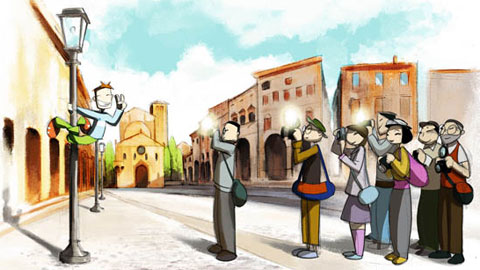
  1. Temple Rider (Director: Miles Cheng & Joe Kwun, Hong Kong, 12 minutes)

    A fascinating mix of 3D animation and watercolor/pencil textures. A lonely, bullied girl rides her bike through the park before getting spirited away into a labyrinth of madness. It reminded me of several films (some of which I obliquely referenced in the last sentence), but strongly evokes Henry Selick’s Coraline (albeit with a completely different visual style) as the girl descends into a nightmarish monkey circus ruled over by a horrifying and chaotically pencil-drawn baboon. The ensuing chase takes us through several impressive action setpieces, retaining the gorgeous handpainted textures even as the simplistic 3D animation becomes more elaborate. A clever and imaginative journey. Watch it in HD here.

  2. Trevor (Director: Matthieu Saghezchi, France, 4 minutes)

    Bright and colorful existential crisis of a boy trying to fall asleep at night amid a strange, echoing adult voiceover. Explores some interesting ideas, but they ultimately seem more like the concerns of a grownup than a child (does a kid really worry about CCTV cameras?). Forcibly quirky, kinda boring. Rent it here ($2) or watch the trailer (free).

  3. Walkin’ On Snow Grass (Director: Makiko Sukikara, Japan, 7 minutes)

    A squirrel dormouse wakes up from hibernation and heads warily out into the winter snow. The main character is as adorable as he is seizure-inducing, with his constantly oscillating watercolor texture. It’s unfortunate, because the twinkling stars and sparkling snow create utterly gorgeous backdrops that feel like illustrations in a children’s book. Combined with some slightly improved sound design – the slightest wind and echo, perhaps – these environments could have been truly immersive and inviting, but we never quite see them as anything beyond pretty paintings. Watch it here.

  4. Loser Leg* (Director: Francesco Filippi, Italy, 9 minutes)

    A well-executed high concept about a boy born with no bones in his legs who is constantly getting them tied to things (by bullies). The animation is simple and/or low-budget, but effective nonetheless. Its low frame rate (which sometimes drops to still images) is balanced nicely by the narration, staying as hilarious and engaging as a well-drawn comic strip. More info and trailer here.

  5. Mobile (Director: Verena Fels, Germany, 7 minutes)

    A manic cartoon-physics puzzle involving adorable cloth barnyard animals hanging from either side of a mobile. They slide back and forth as a lonely cow tries desperately to get to the mouse hanging on the other side- his only friend in the world. The character design is top notch, and this film has a manic energy worthy of “Looney Tunes”. Watch it here.

  6. Precise Peter (Director: Martin Schmidt, Germany, 6 minutes)

    An amusing 2.5D rough polygon-y animation about a family sitting down to dinner in utter lockstep with the precise beat set by their patriarch, Peter. His metronome of audible grunts controls every one of their actions, right down to cutting and eating each bite of their fish in unison. All except for the youngest child, that is. The more he tries to conform, the more everything goes wrong, and the angrier Papa Peter gets. If this weren’t so amusing, it might be horrifying and abusive – but suffice to say, the moral of the story doesn’t end well for Peter. Watch it here, and play an awesome interactive game by the same director here.


Why Aren’t These People Famous?

  1. Kevin (Director: Jay Duplass, USA, 35 minutes)

    A very personal musical biopic by Jay Duplass (of the Duplass brothers) about Kevin Gant, a singer/songwriter who enjoyed modest LA success in the early 90s with his unique blend of Spanish guitar and imaginative, New-Agey lyrics delivered in a very talky (almost Bob Dylan) style. In 1995, he disappeared from the music scene. Fast forward to 2009, when filmmaker Jay Duplass tracks Gant down working for UPS in Dallas, and asks him why he stopped playing. The answer, like Gant himself, is complicated (and long-winded). Much of this film is Gant monologuing as he drives through Dallas, so it understandably lives or dies based on how well Gant can perform, whether musically or vocally. Luckily, Gant is quite the character, and his wide-eyed enthusiasm and quixotic imagination doesn’t seem to have abated in the ensuing decade. To hear him talk about his creative process, it’s clear that he has an impressive visual mind and a flare for poetic lyrics. This film takes him on a bit of a journey, owing a great deal to Jay Duplass, who freely admits that he overstepped his bounds as a journalist and documentarian in his involvement in Gant’s potential comeback. But despite this ethical quandry, the film might have seemed a bit of a waste if it had ended with Gant finishing his sad recollection and staying put in Dallas with his delivery job. In the end, this is a triumphant tale, and feels like it deserves to be. More info and featurette here.

  2. Who is Duffy Bishop? And Why is She Not World Famous?* (Director: Bryan Johnston, USA, 28 minutes)

    “I’ll take a voice rich with character over a perfect voice, every time.”

    So says and embodies Duffy Bishop, a little-known Seattle blues singer with an intensely powerful voice and a brilliant eye for performing. My shameful admission is this: I preferred this film to Kevin simply because I enjoyed the musician’s performances far more. The director, Brian Johnston, informed us at the screening that this film was made for $150, via equipment and students borrowed from Ballard High School. But even absent this information, the film is still fairly impressive on a technical level. It relies heavily on a smattering of archival concert footage, and despite the highly variable quality of the image, the sound came through remarkably well, and conveyed all the richness and power of Duffy’s performances that could possibly shine through without seeing and hearing them in person. It’s not only clear that Duffy has a towering vocal presence, but she is also an enthusiastic stage performer, shimmying through the audience with a wireless mic and unabashed enthusiasm. The rest of the film is an exploration of the elusive nature of widespread fame, via interviews and phone calls to record stores around the world to see if they have any Duffy Bishop CDs in stock (this venture doesn’t go well). The editing between the interviews and concert footage is tight, overlapping the performance soundtracks nicely whenever appropriate, without letting them wear out their welcome.

    If there’s one criticism I can raise about this film, it’s that it feels like a relic of the pre-MySpace era. While phoning record stores around the world is an amusing stunt, it doesn’t feel nearly as effective when I consider that I haven’t purchased an album in a record store in ages. I would have liked to see this film address the questions of digital distribution. If a 27-year-old pulp vampire romance writer can make millions on the Kindle Marketplace, surely the parameters of fame have shifted a bit. A quick perusal of Amazon shows five Duffy albums for sale and in stock, with 4/5 available as MP3 downloads. Duffy’s own website lists them for sale as well.

    But you know what? My first inclination leaving this film was to run right out and buy a Duffy album – so if the true message of this film is “Duffy Bishop is an amazing musician”, then it conveyed it quite nicely. More info and featurette.


48 Hour Film Project


The 48 Hour Film Project has a simple premise – write, shoot, edit, and score a movie in two days. To ensure that filmmakers are complying with the timeframe, they are given certain common elements to include in their films. For this year’s Seattle 48HFP, the elements were a paint can, a character (a wedding planner named Stephen/Stephanie), and a line of dialogue (“When are you gonna get it together?”), as well as a genre (different for each film).

  1. Painted Love (Director: John Polnick, USA, 8 minutes)

    A love story between a paint can and a paintbrush, torn apart when a cheap old man buys the paintbrush and a different can from the store. Shot with brilliant color and a nice, bright atmosphere, mostly with shallow depth of field. Great musical score. More info, including how to watch it online for free here.

  2. Battle: Seattle (Director: Aaron Sutherland, USA, 5 minutes)

    A fun little alien invasion romp that riffs as much on Seattleite iPhone users as aliens. As these three gents stand within view of flying saucers demolishing downtown Seattle, but prefer to watch the footage on “Yootoob” and make sarcastic quips, it was more of a crackup than I expected. Goofy as all getup, but fun for a few minutes. Watch it here.

  3. Humpty (Director: Dmitriy Levanchuk, USA, 5 minutes)

    An argument between a drunken, paint-huffing, anthropomorphic egg on a wall and a poorly acted strumpet/wedding planner below. But really, I was sold on just the egg. He’s got the self-hating pre-wedding jitters something fierce, and he conveys it quite nicely as a human face overlaid (Steve Oedekerk style) on an egg held in a hand. He bitches most elegantly. Watch it here.

  4. Mein Cupcake* (Director: Deirdre Timmons, USA, 7 minutes)

    Easily the most polished of the 48-hour films. A little girl is denied cupcakes by her fascist, S&M-loving parents, and heads to the attic to play out this violent feud with her dolls. As we descend into her fantasy world, twisted versions of her mother and father appear with a vengeance, all determined to deny her that sweet, frosty goodness. The costume design is impeccable, and this film has both the best fight choreography and largest number of Hitlers of any film I saw today. Watch it here (NSFW).

  5. So Many Options (Director: Jeremy Cavner, USA, 6 minutes)

    This film owes a great deal to actor Steven Gerard, as well as the writing of his gleeful serial killer. This character is so vocally and physically pitch-perfect, it makes this film a dark comedy delight. Also, given the short timeframe, the cinematography and lighting are top-notch. Watch it here.

  6. Séance Anything (Director: David Jolosky, USA, 5 minutes)

    The bearded, slurpee-sucking séance artist was entertaining… The rest fell prey to a decent sketch concept played out by actors who really didn’t play to any sort of reality. Whether you’re happy or sad that your fiancée is dead on the eve of your wedding, at least make me believe it matters to you on some level. Watch it here.


Nerds Unite!

  1. The Dungeon Master (Director: Rider Strong & Shiloh Strong, USA, 14 minutes)

    A group of skeptical hipsters play D&D for the first time in years. One of them makes a rookie mistake of pointlessly murdering an innocent goblin, then transforms into a ridiculous villain in real life, chastising their thoroughly capable dungeon master for his commitment to his [thoroughly nerdy] craft. The film’s tone (and indeed, its attitude about role-playing games) is a bit inconsistent, but the Evil Hipster is certainly meant to be the bad guy. And the film takes a bit of a magical turn at the end with some unexpectedly strong production values. And hey, it’s co-directed by this guy. More info, trailer, and featurette here.

  2. Monster Flu (Director: Brian Wiebe, USA, 7 minutes)

    A germaphobe shut-in (Vincent) and his best friend, an unlicensed Muppet named Toby, are forced to venture outside the apartment for the first time in 4 years. This film is strange, but semi-enjoyable – although it cuts off before making much of a point about either character. But at least we get to see Vincent masturbate with rubber gloves. So there’s that. More info here.

  3. A Comic Author X-Ray (Director: Marcos Nine, Spain, 20 minutes)

    David Rubin is no good in front of the camera. Or with people. As a camera-shy comic book artist, he seems a risky choice for a documentary film subject. The film ultimately becomes a mix of live camera footage in which Rubin comes off as a bit of a self-important douche, and comic book cells (drawn by Rubin) in which he freely admits as much, and comments on the film being made. Like Adaptation before it, this film becomes an elegant, making-of-itself documentary. It goes on a bit too long, and there’s far too much overwrought meta-text literally written across the screen, but I came away more fascinated by Rubin than I thought I would be. And whether or not I liked the documentary, there’s no denying that Rubin is a talented artist. Watch the trailer.

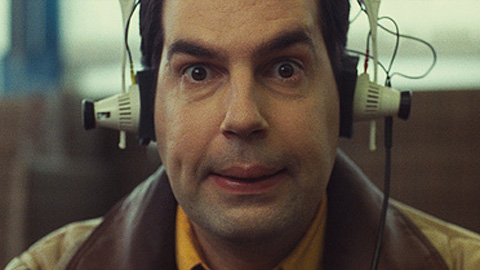
  4. King Chicken* (Director: Nicolas Bolduc, Canada/Québec, 7 minutes)

    King Chicken is a socially awkward man who walks around with headphones on, introduces himself with a business card (that says King Chicken), and gets romantic advice from a language-learning tape that schools him in real-time how to win the girl of his dreams, who’s sitting directly behind him. This was a delightful film with a rousing soundtrack, and Patrice Beauchesne gives a hilarious physical performance as the title character. Trailer here.


Best of SIFF 2011 Jury Winners
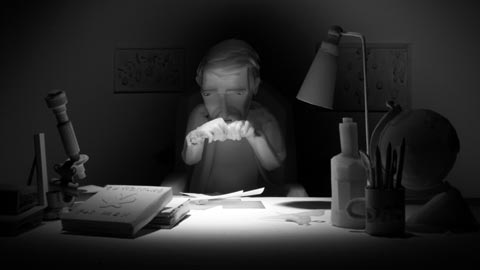


  1. The Eagleman Stag* (Director: Mikey Please, UK, 9 minutes)

    The visual style of this BAFTA-award-winning film is colorless stop-motion animation, using materials made of paper, plaster, and/or styrofoam – like nothing I’ve ever seen before. Our narrator begins as a fetus in the womb, and proceeds to walk us through his entire life, family, and career as a naturalist, as well as his evolving perceptions of time. If time is perceived as a fraction of your total lifespan, he explains, that’s why a moment seems much longer when you’re a child than when you’re an adult. This film spells out its high-minded point by way of a sardonic voiceover narration- something that could have seemed didactic and annoying – but it did so with a brilliant, sharp wit. Trailer and official site here.

  2. Library of Dust (Director: Robert James/Ondi Timoner, USA, 15 minutes)

    From director Ondi Timoner (We Live In Public) comes a documentary about unclaimed “cremains” (cremated ashes) of deceased patients from Oregon State Hospital (formerly Oregon State Insane Asylum). This film attempts to raise some points regarding the conditions of the mentally ill, but really only succeeds in saying that things used to be pretty bad. The only present-day patients we see are in clean, vibrant, brightly-lit surroundings, and are the fresh recipients of a brand new $500 million facility, courtesy of the State Legislature.

    The film spends far too much time talking about the “terrible” conditions of these ash canisters. These carefully catalogued and differentiated canisters. These canisters which were sealed and stored using the best methods available at the time. These canisters which were only damaged when the area was hit with a natural disaster. Frankly, given the number of unmarked and mass graves that have existed throughout history, I’d say these unclaimed ashes were in remarkably good condition. The film attempts to attribute metallurgical decay to spiritual turbulence [read: angry ghosts] rather than time and unintended moisture, but the only real “villain” it manages to latch onto is the families who haven’t claimed these ashes – the families who almost certainly don’t know they exist.

    I’m not entirely sure why this film was made. It definitely has a point to make, but I found it utterly self-deluding and unconvincing. Yes, it’s sad to be forgotten. But it’s the fate that awaits us all. Rather than obsess about our own mortality and legacy, it’s better to make the world a nicer place for the ones who are still here. And by the time this film was made, this had already occurred for the mentally ill of Oregon. More info and trailer here.

  3. Deeper Than Yesterday (Director: Ariel Kleiman, Australia, 20 minutes)

    A harrowing tale of men left to their own devices aboard a Russian submarine for 3 months. I don’t envy the parents of the little girl to the front left of me who will have to explain to her what interest these sailors might have in a waterlogged female corpse. And this is not the only untoward tendency we see indulged during this film. These men are lonely, angry, and on the brink of losing their humanity. This film makes its point well, albeit disturbingly. More info and trailer here.

  4. Time Freak (Director: Andrew Bowler, USA, 11 minutes)

    An amusing twist on a Groundhog Day-like concept, wherein the inventor of a time machine goes back in time one day to correct every little mistake he made…on that day. Forget Ancient Rome; he hasn’t even made it to the afternoon yet. Despite the presence of Primer-like timeline charts and equations, this film isn’t striving for a mind-bending time travel story, but rather a simple buddy comedy in an elegant sci-fi wrapper. Very well executed. More info and trailer here.


Animation for Adults

  1. Loom (Director: Jan Bitzer/Ilija Brunck/Csaba Letay, Germany, 7 minutes)

    Astonishing macro view of a moth caught in a spider’s web, attacked, and devoured. The scene then slows way down and zooms to the molecular level, as we see venom and silk forming within the spider’s body. This is an utterly terrifying film – depicting a spider as a perfect, mechanized killing machine. Watch it in HD here.

  2. Vicenta (Director: Samuel Orti Marti, Spain, 23 minutes)

    This is a very, very adult claymation film, and that appears to be all it set out to be. It’s chock full of explicit language, sex, violence, no less than three Matrix references, and an abundance of juvenile humor. I can now remove “doggy-style sex” from my dwindling list of things I’ve never seen stop-motion animated. That said, what starts as a man mistreating his wife takes a turn for the macabre halfway through, as he dies before revealing the whereabouts of his lottery winnings. It’s all a bit lurid, but undeniably fun. And the subtitles are hilariously, inexcusably bad. Surely there are enough Spanish/English translators available that something like this should never see the light of day, but it only adds to the film’s pulp appeal. More info, trailer.

  3. flesh color (Director: Masahiko Adachi, Japan, 5 minutes)

    Combination of Japanese animated koi (and other pond imagery) swimming turbulently around the skin of still or stop animated nude models. An elegant piece of mixed media. Watch it here (NSFW).

  4. Paths of Hate* (Director: Damian Nenow, Poland, 10 minutes)

    Two prop planes dogfight through a gorgeous skyscape of monstrous clouds and towering mountains. They are the well-sketched comic-book face of rage – determined at any cost to do each other harm. This is glorious and kinetic violence, appropriately jarring to behold. More info and trailer here.

  5. Stanley Pickle* (Director: Vicky Mather, UK, 12 minutes)

    I love, love, love stop motion that makes use of real live humans. It’s not just the jerky, unsettling motion that sells it- it’s the visual tricks and flourishes that would be impossible in any other medium. Among the multitude of brilliant shots is a girl seemingly ice-skating around a forest floor, and the title character’s parents recreated as malfunctioning windup toys. The time-lapse nature of these shots is apparent at times, as we see Stanley watching the girl dance through a meadow from his window, as clouds and trees alike show that hours are actually passing as these shots are culled. It’s all terribly gorgeous, and its simple theme – about life, death, and letting go – is conveyed nicely. More info and trailer here. (UPDATE: Watch it online here)

  6. Visitation (Director: Suzan Pitt, USA, 9 minutes)

    There has been at least one world of grotesque, non-narrative madness in every festival, and this year is no exception. I suppose it was just a matter of time before one came along that I enjoyed. The imagery in this film is disturbing, but well-conceived – evoking the Platonic “Allegory of the Cave” among other things. I can’t say it was a pleasant experience, but it was a fascinating one. More info here.

  7. Eye of the Storm (Director: Christopher Alender, USA, 6 minutes)

    This would seem to be a music video from the Zack Snyder school of heightened reality. The animation of this lone airship pilot drifting through an endless sky is utterly gorgeous and nearly photorealistic (in that video-gamey, HDR sorta way). That said, I think Zack Snyder did this film a disservice, since I’ve seen animation this true-to-life before, which, by itself, is no longer sufficient to impress. The film has no dialogue and almost no narrative, and the only thing I remember distinctly about it is an oddly simplistic-looking dragon (which flew in the face of every other piece of animation). For a purely technical exercise, 6 minutes was a bit too long, but perhaps fans of the band would disagree. Watch it here.

  8. Rosa (Director: Jesús Orellana, Spain, 9 minutes)

    I felt at several points like I was going to vomit while watching this. As a cyborg girl awakens and runs for her life, a series of violent clashes ensue, each more horrific and pointless than the last. The entire thing felt like an unadulterated mashup of every video game cutscene I’ve ever been unable to skip through. The girls all look like buxom, pouty-lipped dominatrixes, the blood-splatter is worthy of a bukkake film, and the dingy, grey-brown world is vomited forth in a sickening soft glow and jarring, schizophrenic cuts. As if this world wasn’t unpleasant enough, we also get a relentless series of interstitial POV shots of the girl’s blurry, green-hued cyborg-vision. None of this is to say the film looked cheap (with the exception of some dubious motion whenever the characters jumped through the air and landed). On the contrary, a great deal of money, artistry, and animation man-hours were clearly spent on this derivative monstrosity. What a waste. More info and trailer here.


Quick List: All of the films that are available online


A note on “NSFW”… Suffice to say, I saw a lot of films this weekend. The ones that I specifically remember containing adult content, I’ve marked as Not Safe For Work. However, outside of the “Films4Families” block (the first three below), I can’t guarantee that the others will be entirely appropriate. Viewer discretion is advised.
Rupert Wyatt’s “Rise of the Planet of the Apes” – A rare species of intelligent blockbuster

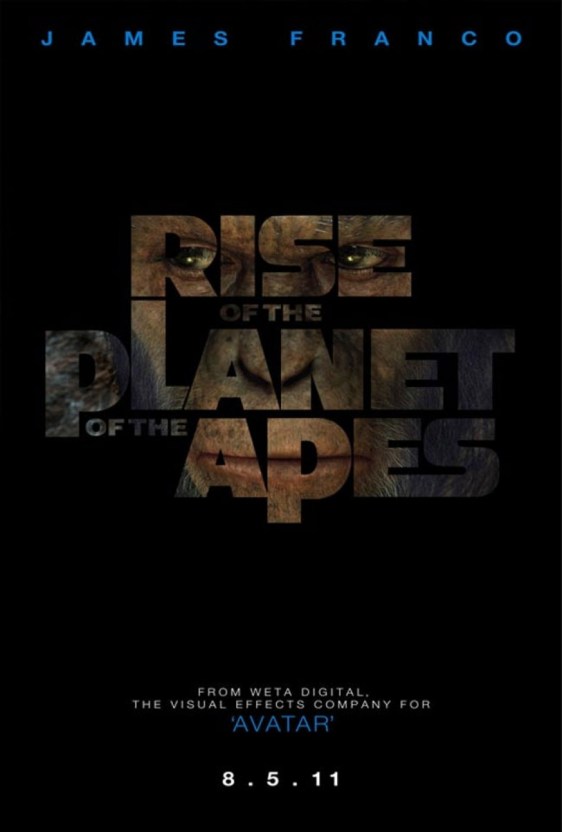
Poster for "Rise of the Planet of the Apes"

Spoiler warning: This review will reveal plot details that appear in the film’s trailer.

It’s easy to overlook just how smart and well-executed this film is, given that Rise of the Planet of the Apes nearly drowns in its rush to saturate itself with big-budget blockbuster stupidity. Ostensibly, this film is a prequel/reboot of the original Planet of the Apes, but it feels – with the exception of some slightly obnoxious callbacks – like a standalone film. The premise is rather similar to the film adaptation of I Am Legend. In his arrogant rush to cure a debilitating disease (in this case Alzheimers), [Dr?] Will Rodman (James Franco) develops a drug that triggers neurogenesis – the repair and creation of brand new neurons in the brain. When this drug is tested on our closest genetic relative, the chimpanzee, a slew of Unforeseen Consequences™ ensue.

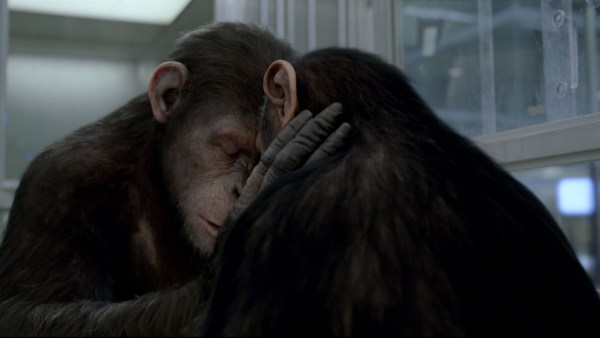
The majority of the film is told from the perspective of Caesar, another brilliant simian team-up from motion-capture dynamo Andy Serkis and Peter Jackson’s team at Weta Digital. This is the same actor and effects team behind King Kong in 2005, and Gollum in Lord of the Rings before him. If there is a measuring stick that indicates where the performance ends and the effects begin, it is certainly inconclusive here. While Zoe Saldana’s Avatar alter ego at least had some emoted lines of dialogue to work with, Serkis must work almost entirely through facial expressions and miscellaneous noises. So much of Caesar’s apparent intelligence is due to his ability to simply sit and react quietly to what goes on around him. The slightest glance – the recognition that occurs when the audience gazes into the character’s green-flecked eyes – this is how Caesar conveys his inner consciousness and unmistakeable intelligence – and it is a work of absolute visual brilliance.

In addition to the facial capture, Caesar’s motion and physicality are nothing short of fantastic. The opening shot of the second act fast-forwards a few years to an extended tracking shot of Caesar swinging through Will’s house in order to follow some children playing out in the street. The shot lasts maybe 30 seconds, but it manages to convey both Caesar’s acrobatic capabilities as well as his burgeoning intellect with absolutely no dialogue or explanation. The film definitely strains its economy of dialogue at times – some brief moments of subtitled ape sign language were perhaps a bit of a stretch. But as a means of telling a coherent story in which significant portions of the screen-time are occupied by nothing but a smattering of apes – both alone and interacting with one other, it is an effective storytelling device.

In fact, I would take it a step further – the almost silent-movie story of the apes is easily the most compelling part of this film. The more talented members of the human cast are barely utilized. Brian Cox and Tom Felton appear as John and Dodge Landon, a father-son team running a primate sanctuary. Cox barely has five minutes of screentime in which to twirl his evil mustache before Felton usurps his position as ape-hater-in-chief. While it’s believable that a sociopath like Dodge might have trouble finding outside employment, it’s never entirely clear why he agrees to work at his father’s sanctuary when he clearly detests apes and everything about their care. But…sure, why not. Every good prison flick needs a sadistic screw on the cell block, and Felton proves that he can chew the scenery just as effectively without a British accent or magic wand.

Outside of Caesar’s storyline, Franco and his supporting cast are downright tedious. John Lithgow plays Will’s senile father, Charles, and gives a frankly cartoonish depiction of advanced Alzheimer’s. Equally cartoonish was Will’s next door neighbor (David Hewlett), whom we’re meant to despise because he has a problem with vicious, man-sized apes threatening his children, or senile old men trying to steal his car. Does he have some rage issues? Sure. But is he wrong?

Speaking of generic ethical subtext, Freida Pinto is a complete non-entity as Will’s love interest, seemingly present only to pose some of the more obvious bits of rhetorical dialogue about the situation: “What about Caesar?” “How does he fit into this?” “Some things are just wrong, Will!” But in spite of its boring cadre of homo sapiens, this film manages to tackle the ethics of raising a creature with near-human intelligence about as effectively (and with less lurid sensationalism) as last year’s Splice.

The film’s last act is pretty much non-stop action as the apes rampage through San Francisco. This entire sequence is brilliantly executed, both in terms of visual effects and action staging, and its more implausible elements are balanced out by a mix of effective character moments and a taut, exhilarating pace. Sure, the apes probably shouldn’t understand the importance of smashing security cameras. Sure, the military and police could probably take down an unarmed ape rebellion with relative ease. And sure, we’d probably see a lot more blood if this weren’t rated PG-13. But between the element of surprise (no one really expects a simian army wielding fence-posts) and the apes’ relatively benign intentions, they come off as surprisingly sympathetic even as they’re smashing cars and tossing cops. The whole sequence is purposeful and utterly thrilling, and left me eager to see the next chapter in this story.

Unfortunately, the next chapter is spelled out in a brief scene and infographic after the credits have rolled for a minute or so. I’ll chalk that up to the same marketing wisdom that led to the film’s nonsensical title change from the much more fitting Rise of the Apes. This additional bit of superfluous, Avengers-esque storytelling doesn’t ruin the film, but you’re probably better off leaving your seat as soon as the names start to roll.

FilmWonk rating: 7.5 out of 10

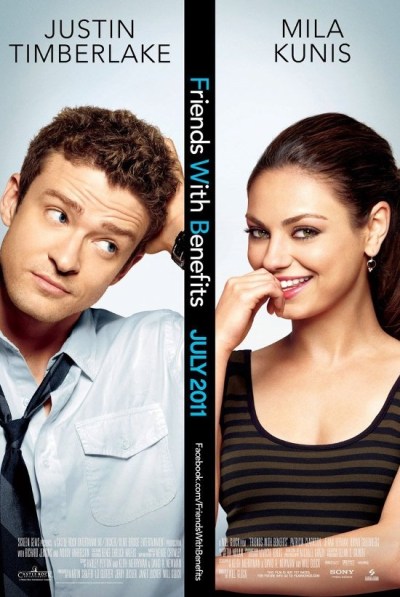
Will Gluck’s “Friends With Benefits” – A smart and capable sex-romp

Friends With Benefits is not the first R-rated comedy (this year) to try and tackle the subject of friends having casual sex, but it is certainly the most successful. Ivan Reitman’s No Strings Attached, which was surprisingly schmaltzy and un-raunchy for a film whose inception was a script called “Fuckbuddies”*, managed to fall prey to a host of rom-com clichés, and became quite tonally bizarre by its end. “I’m the guy she marries. You’re just the guy she used to fuck a few times.” Does a line like this (easily that film’s most memorable and disturbing) really belong in a comedy? But for all of that film’s romantic and tonal shortcomings, it might have still been a successful sex comedy if it hadn’t fallen prey to the double death knell of uninteresting characters having uninspiring sex.

Friends With Benefits, from Easy A director Will Gluck, seems as aware of romantic comedy clichés as it is determined to avoid them. Executive head-hunter Jamie (Mila Kunis) and magazine art director Dylan (Justin Timberlake) speak quite frankly of their views on love and relationships, but always through the filter of cinema (by way of an atrocious film-within-a-film starring Jason Segel and Rashida Jones). The strength of Friends With Benefits lies as much in the captivating chemistry between its leads as the bold choices in its screenplay. The film doesn’t tell us that Dylan and Jamie are friends, by way of some shared off-screen history or common acquaintances. It shows them becoming friends from the outset, and the two completely pull it off. Kunis and Timberlake’s delivery feels a bit theatrical in the first act, but for a pair of complete strangers who are believably hitting it off, a bit of heightened, first-date performance doesn’t go amiss. As their friendship develops, they are as believable confiding in each other emotionally as they are at giving each other a bit of good-natured shit-talking, and that’s really all this friendship needed.

Oh, and did I mention that they have a whole lot of hot, dirty sex? The first half of this film is a delightful and unrelenting sex romp, and that’s exactly what it needed to be. With the exception of some awkwardly drawn sheets and obvious body doubles, this film’s depiction of sex feels as authentic as the majority of its dialogue.

Woody Harrelson may be the glaring exception. His gay sportswriter, Tommy (who commutes from Jersey by boat, and whose first line includes the phrase “trolling for cock”) is about as cartoonish a character as there is in the film, but is saved entirely by Harrelson’s commitment and delivery. In fact, Tommy is a fine example of the tenuous relationship with reality that is at play in this film. Friends With Benefits will be trifling and silly when it feels the need to (a completely unnecessary sequence atop the Hollywood sign comes to mind) but it will always return to a place of credible emotional resonance.

Dylan and Jamie’s relationship evolves nicely as we learn more about their respective families, and this is where Jamie may have been a bit short-changed. Jamie’s mother Lorna is a nice comedic turn from Patricia Clarkson, but the character feels just a little bit slight when compared to Dylan’s family, whose storyline takes an unexpectedly serious turn (which featured some brilliant supporting work from Richard Jenkins). To see Dylan and Jamie struggle with something a bit less pleasant was both unexpected and welcome, and only served to make them more believable as friends. And what’s more, it reinforced their credibility as characters with emotional lives outside of what we see on screen.

Friends With Benefits is both a fun, sexy romp and a capable romance, but it is also surprisingly emotionally resonant. Rather than forcibly building toward some insipid romantic climax, we simply get to see these two exist as friends for a while. And as this slice of their collective life went on, I found myself rooting for the duo to work out, but not particularly caring how they managed it. While the likability of these characters demands a certain Hollywood ending, this film almost feels as if it could just as easily end with them staying friends or staying in love. But more importantly, either outcome would have felt completely earned and satisfying.

FilmWonk rating: 7 out of 10

*Thanks to Peter Sciretta from /Film for making sense of the convoluted title history of these two films.

FilmWonk Podcast – Episode #12: Michael Bay’s “Transformers: Dark of the Moon”

Poster for "Transformers: Dark of the Moon"

This week, Glenn and Daniel short-circuit their brains to review Transformers: Dark of the Moon (32:21).

[may contain some NSFW language]

FilmWonk rating: 5/10

Show notes:

  • Music for this episode is from Steve Jablonsky’s original score for the film (track: “Dark Side of the Moon”).

Listen above, or download: Transformers: Dark of the Moon (right-click, save as).

Matthew Vaughn’s “X-Men: First Class” – Sprawling, epic, and thoughtful

X-Men: First Class had a tall order to fill. We’ve already had two solid films examining the fantastic mutant powers, conflicting ideologies, and disillusioned friendship of Charles Xavier (“Professor X”) and Erik Lehnsherr (“Magneto”). To return to that friendship at its inception could have seemed little more than a cynical cash-grab – a storytelling dead-end whose fan-service ending was a foregone conclusion. Instead, Matthew Vaughn has delivered a film that proves he is as adept at delivering an earnest, character-driven superhero film as he was at superhero parody. This film may or may not be the best in the franchise, but it certainly belongs in the same conversation as X2, and perhaps even The Dark Knight, if not quite ascending to the standalone appeal of those films.

The highest praise I can give to James McAvoy’s take on Charles Xavier is that at no point did I doubt that this man grows up to Patrick Stewart’s version of the character. Tackling a role that has been so completely defined by another actor is a difficult undertaking, and the result is no mere imitation of Stewart’s Xavier, but neither is it a complete reimagining (à la Chris Pine in Star Trek). This Xavier is reserved and wise, but hardly unafraid to use his powers in the reckless milieu of a younger man. In fact, this Xavier is downright arrogant, using his powers to convincingly sweet-talk coeds and other mutants alike, all while playing fast and easy with the most intimate details of their minds and memories. This Xavier might make a fair psychologist, but his approach to friendship is downright invasive. His banter with Erik (Michael Fassbender) ends up striking a note somewhere between therapist and Yoda, trying simultaneously to make the other man come to terms with his most painful experiences and unlock the full potential of his mutant powers. It’s a fascinating interaction, to be sure, and it certainly drives the second half of this film despite being established through a rather hasty montage. I wasn’t sure how much I would buy this friendship, but it cascaded into a brilliant finale. More on this later.

First, I must touch on the villainous Sebastian Shaw (Kevin Bacon), which is certainly one of the reasons this film belongs in the same conversation as The Dark Knight. Not only is Shaw a thoroughly memorable and well-written nemesis, but he also represents an achievement that few films have managed to accomplish in recent years – an utterly terrifying villain (or set of villains, in this case). Shaw expresses his affinity for Nazi tactics early in the film, and the reason quickly becomes evident. Scene: A tornado spontaneously erupts outside a building, and a guard vanishes in a puff of crimson smoke. He reappears 100 feet in the air, instantly falling to his death. The attrition continues as buildings rip to shreds and it literally starts raining men (hallelujah!).

This is just a snippet of one of the many brilliant action set-pieces, but it demonstrates two of the great strengths of this film. First, it makes full and clever use of the array of mutant powers at its disposal (from heroes and villains alike). And second, Shaw and his associates carry out their malicious plans with such brutal and relentless efficiency that it’s simultaneously horrifying and captivating to behold.

Also terrifying is the man-who-would-be-villain, Magneto. After narrowly escaping the Holocaust (and the brutal experimentation of Shaw), Erik passes a brief stint as a Nazi hunter, ruthlessly pursuing the worst offenders who have fled to Argentina. This plays almost like a sequence from Fassbender’s other best known film, Inglourious Basterds – and the parallels seem fairly deliberate. Fassbender speaks several languages and visits unflinching brutality upon his malefactors. Given that Xavier’s central conflict with Erik is the extent to which they should wage war upon humanity, this makes for a compelling backdrop for their burgeoning friendship later in the film. Xavier’s other relationship – a childhood friendship with Raven, AKA “Mystique” (Jennifer Lawrence), is quite fascinating at the beginning of the film, but gets short shrift as soon as Magneto enters the picture. Given Raven’s character arc, this seems somewhat deliberate on the filmmakers’ part, but it is unfortunate, given that these early scenes are the best opportunity for Lawrence to show off her acting prowess. Her later interactions with Hank “Beast” McCoy (Nicholas Hoult) are less interesting, even though Beast’s Jekyll-and-Hyde story turns out to be a compelling subplot (or at least a showcase for a brilliant bit of first-person camerawork).

Still from "X-Men: First Class"

There is a host of other characters in this film, which may leave prospective audience members questioning the extent to which this film is just for the fans – suffering from character and villain overload like so many other late entries to a superhero franchise. To that, I would simply say that this film is an achievement in both casting and storytelling. It brings a great many disparate characters together and manages to tell us a little something about each one without leaving the film feeling bloated. And in the end, the mutants – heroes and villains alike – do their dance as the humans look on in terrified awe. The American and Russian observers are then forced to act in a way that doesn’t feel entirely believable, but nonetheless forces Erik Lehnsherr to become the villain that he needs to be. In the blink of an eye, he is Magneto.

And indeed, this is the problem with origin stories. If you’re explaining the origins of something simple, like radioactive spider powers, your explanation can be equally rudimentary. To explain something as complex and multifaceted as Magneto’s decades-long disillusionment with mankind is a bit more difficult. But while such a protracted explanation may have been slightly more believable, I’ll grant that it’s not particularly cinematic. And all of these elements, along with McAvoy and Fassbender’s performances, brought together an action-packed and thematically pitch-perfect finale that felt almost completely earned.

FilmWonk rating: 7.5 out of 10

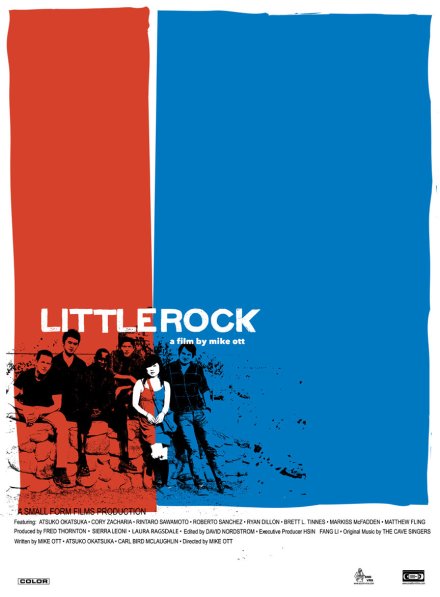
FilmWonk Podcast – Episode #11: “Littlerock” (SIFF review)

Poster for "Littlerock"

This week on the podcast, Glenn and Daniel head for the Seattle International Film Festival to review Littlerock, the story of a pair of Japanese siblings finding their way through a desert town in California. Glenn’s lovely fiancee Megan jumps in to expound on the nature of a “nice guy” and offer her unique perspective as a fluent Japanese speaker. Click below to listen to our discussion of this surprise cross-cultural gem [may contain some NSFW language] (19:09).

FilmWonk ratings: 8.5/10 (Glenn), 9/10 (Megan), 8.5/10 (Daniel)

Show notes:

  • The actor in attendance at the screening was Ryan Dillon, who plays Brody in the film.
  • Music for this episode is the track “Bramble“, by The Cave Singers, from the film’s original soundtrack.

Listen above, or download: Littlerock (right-click, save as).

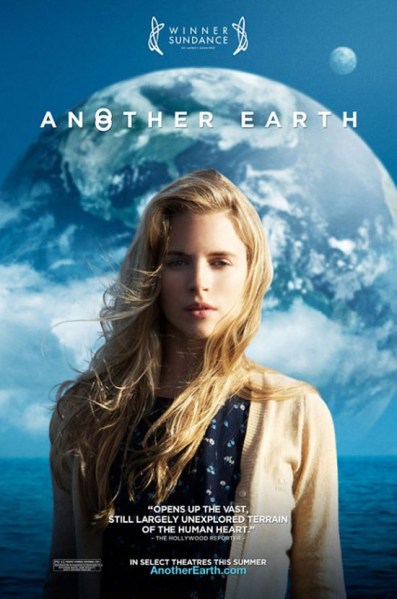
SIFF Roundup: “Another Earth”, “Kosmos”


Directed by Mike Cahill
Written by Brit Marling and Mike Cahill

Another Earth is an ambitious film, to be sure. It depicts the sudden appearance of another planet, seemingly identical to our own, in perfect view in the skies above New Haven, CT. The planet appears in nearly every outdoor shot of the film, which made me momentarily wonder if a planet that is visibly larger and closer than the moon in geostationary orbit might be catastrophic for our planet’s tides, tectonic plates, continued human existence, and so forth.

While the film doesn’t directly address these issues, it’s possible that similar worries are flowing through the head of Rhoda Williams (Brit Marling), a 17-year-old student who has recently been accepted to MIT. On the night that Earth Two appears, she is driving under the influence and gazing up at the new planet, and the distraction is sufficient to send her careening into the family station wagon of music professor John Burroughs (William Mapother from “Lost”), putting him into a coma and instantly killing his wife and son. At this point, the film skips ahead 4 years, as Rhoda emerges from prison and gets it into her head to reconnect with John (who has since awoken) to apologize, and because she was a minor at the time of the accident, her name was sealed in the court records, and he has no idea who she is. At this point, the film effectively ditches its sci-fi premise and becomes an exploration of an extremely ill-advised relationship between the two, as well as a study of grief and regret. Earth Two becomes a cipher – an ever-present reminder of what Rhoda has done that could have been replaced with virtually anything else – a photograph? A roadside memorial?

It was in that sense that the film was disappointing. As Rhoda enters a contest with a private space agency (in a nice bit of worldbuilding) for the first commercial flight to Earth Two, we’re meant to believe it’s something she desperately wants for herself, but the film never quite sells this idea. Instead, it just ends up comparing unfavorably to a film like Gattaca, in which the romance of spaceflight and the unrelenting desire to achieve it make up an ever-present and thoroughly convincing backdrop. This film gives us Rhoda’s prior interest in astronomy, as well as the occasional gaze through a telescope (in broad daylight, through a window), but we’re never sure if she really wants to go to Earth Two, or if she simply no longer wishes to live on Earth One, where she’s caused so much pain and suffering.

The film has an undeniably effective sci-fi premise (on-the-nose metaphors notwithstanding), but it never quite succeeded in portraying a world in which such a mindbending event has occurred. All the fascinating bits of hard sci-fi are relegated to momentary snippets from talking heads on radio and TV, and the few everyday people that we meet never quite seem like their lives have been altered significantly. A sudden third-act revelation about the occupants of Earth Two is also not explored in sufficient detail, particularly by those who are considering making the trip.

Nonetheless, Marling and Mapother’s performances are convincing, and effectively sell the increasing stakes of their relationship as Rhoda continues to hide her true identity. While Another Earth doesn’t succeed as a piece of science fiction, it is at least somewhat effective as an exploration of grief and regret.

FilmWonk rating: 5.5 out of 10


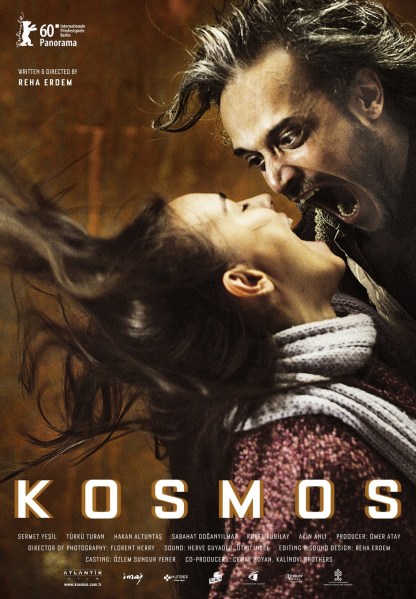
Written/directed by Reha Erdem

As a general rule, I will not seek out writer/director interviews in order to increase my understanding of a film that I intend to write about. Since this film was followed by a director Q&A, I was not expecting to write a review – but for Kosmos, I will make an exception. First, because there is enough inexplicable weirdness in this film to make David Lynch blush. And second, because the Q&A only illuminated the extent to which a shit-eating grin transcends language barriers, as Erdem’s good-natured amusement at the audience’s befuddled response (and refusal to answer any questions in detail) was apparent even via translator.

The film begins with the titular Kosmos (Sermet Yasil) appearing outside a Turkish mountain village and immediately saving the life of a boy drowning in the river. The boy is ostensibly frozen to death when Kosmos plucks him from the water, but walks away nonetheless, the first of many to be aided by Kosmos’ ability to cure all manner of ailments, both physical and mental. He also speaks in very formal, almost scriptural language, expounding in broad strokes about the nature of God, man, good and evil, and so forth. He also breaks into a cheese shop and steals money from the cash drawer. And he also courts the girl of his dreams, Neptün (Türkü Turan), via a giddy, animalistic call-and-response game, in which the two chase each other around the village while blasting high-pitched, ornithic love-screams.

While Kosmos is a bizarrely fascinating character – equal parts Doctor Who, Jesus Christ, and psychotic hobo – he is but a small component of this densely packed film. Old men in a tea shop debate a petition to open up the border to trade, even as their wary attitudes about outsiders become readily apparent. The army conducts some kind of exercise nearby, giving the town a constant rumble of distant munitions explosions. A satellite is also poised to crash, and we hear snippets of its failing radio signal throughout the film. And what’s more, the townsfolk complain about this as if it’s a common occurrence.

I don’t dare summarize any more plot (I’ve omitted a story lifted wholesale from Weekend at Bernie’s), but suffice to say, there’s a lot going on in this film, and I was completely taken in by it. Kosmos is an incredibly rich (and beautifully shot) experience that I suspect will become even richer on subsequent viewings. While its weirdness for weirdness’ sake wore on my patience a bit by the third act, I’ve still found myself pondering the lives and interactions of this small-town slice of life every day since I saw the film. From the politicos in the tea shop to the random flocks of geese, I would gladly spend more time with all of them – even Kosmos with his migraine-inducing bird calls.

FilmWonk rating: 7.5 out of 10

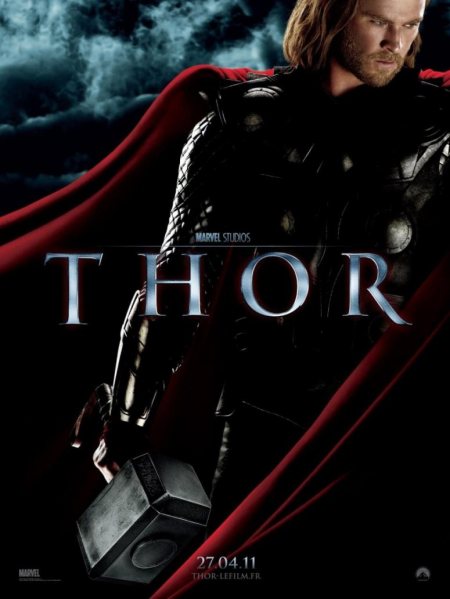
FilmWonk Podcast – Episode #10: Kenneth Branagh’s “Thor”

This week, Nick returns to throw down the gauntlet and help Glenn review Kenneth Branagh’s Thor, the latest entry in the Avengers saga. Will it be a worthy standalone film, or merely a S.H.I.E.L.D.-infused trailer for what’s to come? Listen below to find out [may will contain some NSFW language] (24:21).

(Part 1 – 10:01)
(Part 2 – 14:20)

FilmWonk ratings: 5/10 (Glenn), 4/10 (Nick)

Show notes:

  • Music for this episode is from Patrick Doyle’s original score for the film (track: “Sons of Odin”).

Listen above, or download: Thor Part 1, Part 2 (right-click, save as).

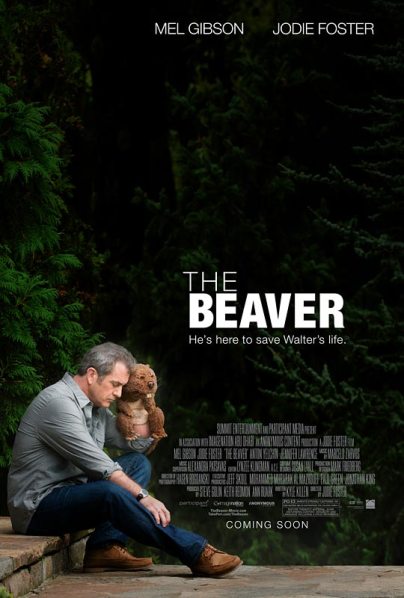
Jodie Foster’s “The Beaver” – Everyone loves a trainwreck – but there are limits

Poster for "The Beaver"

Walter Black (Mel Gibson) is a severely depressed, self-hating individual who pulls himself back from the brink of suicide and starts talking through a stuffed beaver puppet he finds in a dumpster. This performance may be hard to write about, but it was even harder to watch. The beaver persona strikes a comedic note at first, but these beats seem increasingly out of place as the film descends further and further into Walter’s insanity. Whenever Walter is forced to speak in his own voice (without the jaunty British accent), Gibson conveys such intractable discomfort and crippling hopelessness with every syllable that you wonder how Walter has managed to stave off suicide thusfar. His mere existence is a punishing chore. At the beginning of the film, I wondered if I would be able to judge this film without pondering Gibson’s real-life persona. By the end, I forgot Gibson entirely and found myself nearly weeping for the increasingly pitiful creature that is Walter Black. This performance may be unpleasant to watch, but it is certainly one of Gibson’s finest.

Did I mention Walter has a teenage son? When Porter Black (Anton Yelchin) isn’t selling term papers to his high school classmates or romancing one of his clients (Jennifer Lawrence), he spends his time writing down Post-Its of every one of his similarities to his father, no matter how minute (“Rubs eyebrows”), in staunch determination to eliminate every last one of them before he heads off to college. To this end, he is also planning a contrived roadtrip worthy of Elizabethtown, wherein he will visit locations around the country where “everything changed forever” (such as the balcony where Martin Luther King was shot), in a desperate effort to find himself.

I’ll be blunt – I hated this character. He felt like the worst sort of indie cliché, and I found every moment of his screentime excruciating. By the end of the film, we’re seemingly meant to draw parallels between Porter and his father, but they never quite landed. Apart from some apparent OCD, Porter seems a great deal more high-functioning, intelligent, and capable than Walter. While it’s certainly possible that he might slip into a depressed and self-destructive state, the film never really shakes the feeling that no matter what happens, this kid will be just fine. Yelchin’s performance is acceptable, but the character just feels sloppily and unbelievably written.

Still from "The Beaver"

In fact, suspension of disbelief is one of the hardest things about watching The Beaver – this story never quite feels like it could take place in the real world. Porter’s subplot took up nearly half of the film and felt like a complete distraction, and Walter’s story also felt unfocused. While I could accept the absurd degree to which Walter’s family and colleagues accepted his newfound puppetry, his rapid ascendence to fame over a nationwide craze of…children’s woodchopping kits (?) was just too much of a stretch, and felt completely out of place amid the dark family drama that was brewing.

Jodie Foster (also the film’s director) gives a heartbreaking performance as Walter’s wife Meredith – she and Gibson have always had impressive chemistry together, and this film tests it to destruction. In one of the film’s best scenes, the couple goes out to dinner for their 20th anniversary – without spoiling how it ends, I will say that it was physically uncomfortable to watch, and that it was an impressive showcase of both acting and direction.

Porter’s love interest, Norah (Lawrence) gives a rather unsettling speech near the end of the film, ostensibly spelling out its message – maybe everything’s not going to be okay, but at least we’ve got each other. The tone of this speech was as dark as the rest of the film, but as a moral of this somber tale, it somehow works. The Beaver is a deeply flawed, but profoundly affecting film. I can’t say I especially welcomed its effects, but it may be a fascinating character piece for those who have suffered from depression (or their loved ones) – those who know the loneliness that can engulf these individuals even when they’re surrounded by people who desperately want to help.

The Beaver may strain credulity, but its raw sentiment feels real and tragic. That said, it’s not a film I would comfortably recommend to anyone.

FilmWonk rating: 4 out of 10

FilmWonk Podcast – Episode #9: Zack Snyder’s “Sucker Punch”

This week, Glenn and Daniel get in touch with their feminine side and have their minds and eyeballs assaulted in equal measure by Zack Snyder’s Sucker Punch. YOU are in control. YOU have all the weapons you need to survive this discussion. Click Play below to find out what this level has in store for you (22:53).

[may contain some NSFW language]
(Part 1 – 13:23)

(Part 2 – 9:30)

FilmWonk ratings: 1/10 (Glenn), 6/10 (Daniel)

    Show notes:
  • Music for this episode is an cover arrangement of “White Rabbit” from the Sucker Punch soundtrack.
  • In this episode, I refer to my review of Peter Jackson’s The Lovely Bones, which I hold in slightly higher regard after seeing this film.
  • You might notice I’m out of breath at one point – we had to pause recording to deal with a noisy kitty, which involved running up and down a couple flights of stairs. Unprofessional, I know. But the cat has been fired.

Listen above, or download: Sucker Punch Part 1, Part 2 (right-click, save as).