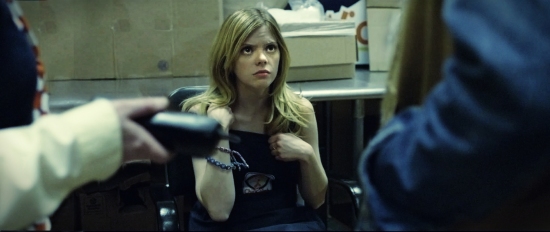
FilmWonk Podcast – Episode #21 – “Compliance” (dir. Craig Zobel) (SIFF)

Still from "Compliance"

As the Seattle International Film Festival continues, Glenn and Daniel give a quick review of a harrowing drama from the co-founder of…Homestar Runner? Okay! A warning for the spoiler-averse… As this is based on true events (and sticks largely to the real-life story), we aren’t shy about spoilers, but we do give a warning before revealing the film’s ending.

Contains NSFW language and some disturbing content.

FilmWonk rating: 7/10 (Glenn), 8/10 (Daniel)

Show notes:

  • Once again – due to to the quick turnaround for SIFF content, this podcast was recorded without our usual setup – but the audio quality is solid! I have it on good authority that a modern automobile makes an excellent recording booth.
  • More info on Stanley Milgram’s experiment.

Listen above, or download: Compliance (right-click, save as).

SIFF Roundup: “Only Yesterday”, “Fat Kid Rules The World”

Poster for "Only Yesterday"
Written and directed by Isao Takahata

Studio Ghibli’s 1991 film Only Yesterday, from writer/director Isao Takahata and producer Hiyao Miyazaki, was a theatrical hit in Japan, but has not made it to US theatrical or home release. And after seeing it, I certainly have a guess why. This quiet, reflective film about childhood is conceived through the narrative lens and perspective of an adult woman, Taeko (voiced by Miki Imai), looking back upon her years in primary school. It is not precisely a film for adults or a film for children, and as such must be incredibly difficult to market.

Like every Ghibli film, the hand-drawn animation is simply gorgeous. There is a magnificent array of emotion visible on the children’s faces – when the young Taeko (voiced by Youko Honna) gives you the stink-eye, you’ll know it. Likewise, when she’s trying desperately to affect enjoyment while eating an unripe (but expensive) pineapple, you’ll know it. The resulting “performances” would be breathtaking coming from child actors, and are masterful works of art here. There is also a clever animated framing device wherein the adult Taeko imagines her childhood self and classmates literally following her around as she heads out to the countryside for a bit of agro-tourism. This leads to a heartbreakingly beautiful moment at the film’s end in which she is forced to make an important choice.

Unfortunately, the only weak link is the adult Taeko. Apart from her recent breakup and monotonous office job, we never really get to know her beyond her obsessive navel-gazing. So her dilemma about how to continue her relatively aimless life does not resonate nearly as well as it could if we had a better idea of how this vivacious 10-year-old became the woman that we see before us.

While the Japanese countryside is rendered with staggering beauty (even the reflections in pothole puddles are gorgeous), this narrative gulf between the two versions of Taeko is enough to hold back the “present day” (1980s) material from being nearly as interesting as it is pretty. Conversely, the childhood (1960s) sequences are exciting and rife with nostalgia (watch for an appearance by the Beatles singing in Japanese*!). The soundtrack is marvelous and expansive, ranging from classical tunes (including one of my favorites, Brahms’ Hungarian Dance) to more contemporaneous selections, including a lovely Japanese rendition of Bette Midler’s “The Rose“, which is put to great use.

Despite its shortcomings, Only Yesterday is an earnest and heartfelt character piece, well worth seeing if you can find it in the US (apparently it’s available on Region 2 DVD on Amazon).

FilmWonk rating: 7 out of 10

* CORRECTION: Upon further research, I was unable to find any record of The Beatles actually performing in Japanese, (although there seem to be a fair number of Japanese Beatles cover bands!). The Beatles are mentioned by name during this montage, but the song appears to be “Omoide No Nagisa“, a 1966 song by The Wild Ones (source).
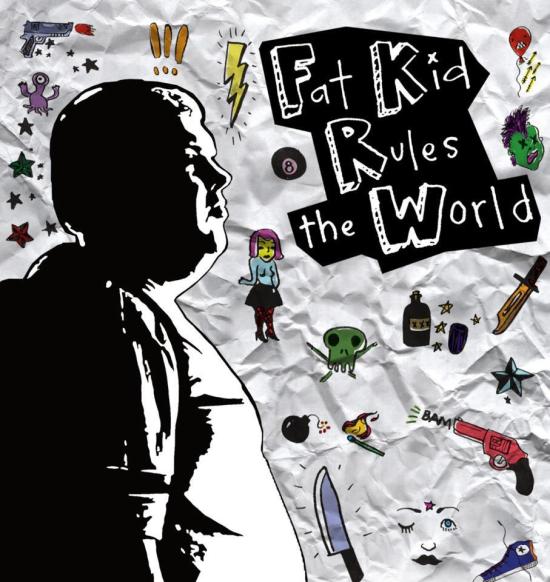
Poster for "Fat Kid Rules The World"
Directed by Matthew Lillard
Written by Michael M.B. Galvin and Peter Speakman, based on the novel by K.L. Going

I’ve rolled my eyes on multiple occasions while reading the end-of-year Top 10 lists from various NYC and Chicago critics, as they invariably include one locally shot gem that thoroughly sums up the ineffable experience of living in their precious city. I never wanted to be that guy. And yet, director Matthew Lillard has forced my hand with an adaptation that is so quintessentially Seattle in its depiction of lovable losers and their various musical hopes and dreams, it would be against my very nature to dislike it.

Troy Billings (Jacob Wysocki) is an overwei- well, a fat kid – who decides to end it all by stepping in front of a downtown bus. He gets shoved out of the way at the last second by Marcus (Matt O’Leary), a strung-out, hyperactive kid who may or may not attend Troy’s school, and who immediately demands $20 in exchange for his lifesaving act. Wysocki’s performance is nicely understated, and the character is written with a deft understanding of being an adolescent outcast. But the real scene-stealer is O’Leary, whose performance strikes just the right blend of instability, delusion, and charisma. Marcus is, to all outward appearances, a homeless, unreliable, loser drug addict. For all of his promises about upcoming shows at Neumos – a fairly prestigious real-life Seattle venue just three blocks from the theater in which I saw this film – all of his grand plans to form a punk band with Troy seem like nothing but self-serving fantasy.

And yet, despite Troy’s credible degree of self-awareness about the situation, he is still swept up in the power and dangerous allure of the music world. The film has a darkly comedic streak throughout, but I would largely call it a drama, especially due to the treatment of Troy’s father, whom we know only as Mr. Billings (Billy Campbell). Campbell (whom I’ll admit I mistook for Ray Liotta in his first scene) gives an outstanding performance as Troy’s father, an ex-Marine and widower. Mr. Billings is a complicated hardass, to put it mildly. He loves his boys and misses his wife, and he’s deeply worried about his son’s choice of friends. And yet, he seems committed to doing the right thing, even if that means potentially taking on Marcus as the undeniable burden that he will be. I can’t overstate how refreshing I find this character and performance. I’ve seen such a staggering number of boring, one-note hardass fathers on film over the years (hell, Fred Ward has made a career out of playing them!). To see such a fresh and credible take on the character strikes me as nothing short of miraculous.

Fat Kid is a marvelous study in contradictions. It exemplifies the lonely and depressing experience of being an adolescent outsider, and yet feels incredibly empowering and uplifting by the end. It celebrates the complex notion of doing right by the people in our lives, even if they seem almost certain to disappoint us. As a musical coming-of-age film, it makes a nice pairing with Almost Famous.

FilmWonk rating: 8 out of 10
FilmWonk Podcast – Episode #20 – ‘The Avengers’ (dir. Joss Whedon) (bonus spoiler episode)

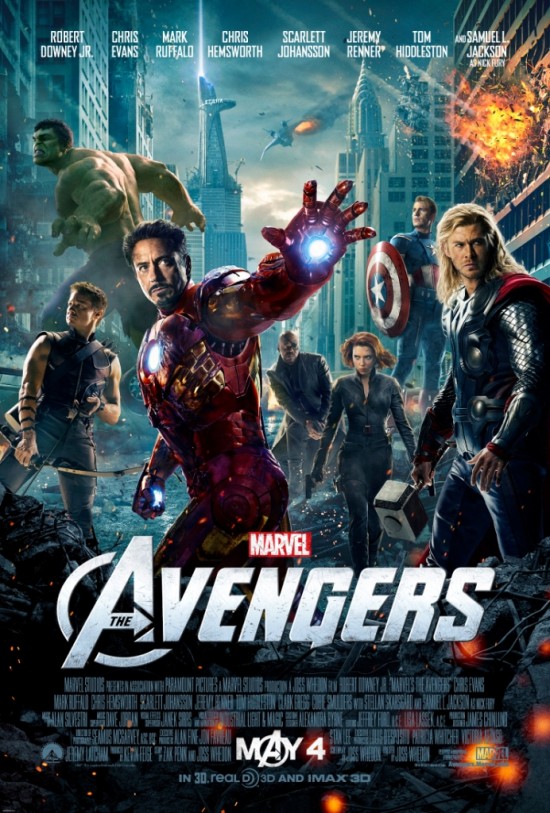
Poster for "The Avengers"

This podcast contains spoilers for The Avengers and The Dark Knight. This week on the podcast, Glenn, Daniel, and special guest Sarah get together for a spoilery second look at Marvel’s The Avengers. While Glenn still stands by his 8/10 review, Daniel has other opinions, and if there’s one thing we love at the FilmWonk Podcast, it’s sowing discord. Find out if these three heroes can unite and save the cinematic world below!

May contain NSFW language.

FilmWonk rating: 8/10 (Glenn), 5/10 (Daniel)

Show notes:

  • This episode was meant as a quick one-off, so it will unfortunately be a bit less polished than our usual episodes. Although my phone has a surprisingly good microphone!
  • Correction: A dutiful listener has pointed out that one of my supposed “continuity errors” is flat-out wrong. Stark and Banner get into the convertible, while Rogers takes off on the motorcycle. Mea culpa! Chalk it up to identical wardrobes and viewer fatigue.

Listen above, or download: The Avengers (right-click, save as).

Joss Whedon’s “The Avengers” – Big damn heroes

Note: There was dissent in the house of FilmWonk about this film! Be sure to check out our spoiler-edition podcast on The Avengers after you see the film.

As Tony Stark (Robert Downey, Jr.) addresses his fellow Avengers in the last act of this film, he makes the rather staggering leap in logic that their nemesis Loki (Tom Hiddleston) will surely go to New York City to fire the opening salvo of his war on mankind. Stark’s only evidence? NYC is where self-important people go to show off. While the non-New-Yorker in me couldn’t help but chuckle, this sloppy bit of plotting (and my instant acceptance thereof) did raise an interesting question. How much of my desire to follow these characters into whatever adventure and peril awaits them can be properly attributed to this film? This is the potential problem with any sequel – a dilemma that is compounded in a franchise like The Avengers, in which some of the characters were introduced in films that were at best mediocre, and in one case, starred a completely different actor. But while “The Avengers” might not have entirely succeeded as a franchise, Joss Whedon‘s rousing and epic take on the final film* has completely validated Marvel’s endeavor.

The gang’s all here, and both Whedon and his actors know exactly who they want them to be. There’s Thor (Chris Hemsworth), verbose and bombastic demigod who feels the weight of every moment – with a soft spot for humanity and for his villainous adoptive brother Loki. There’s Steve Rogers/Captain America (Chris Evans), steadfast and reliable soldier – first out the door into a fight, and a natural leader. There’s Nick Fury (Samuel L. Jackson), boss of the Avengers – chaotic, manipulative bastard beyond reproach, working at all times for the greater good.

And then there’s the other guy. Mark Ruffalo joins the Avengers as Bruce Banner, better known as the Incredible Hulk. If there’s one thing the last two Hulk films taught me, it’s that there’s a lot of potential goofiness involved with a character that explodes into a huge green uncontrollable rage-monster. And yet, everyone in The Avengers treats Banner with deadly seriousness, most of all Ruffalo himself. Even with his limited screentime, Ruffalo manages to deftly convey just what a self-hating, tortured soul this man is. Because the movie never treats the Hulk as anything less than an imminent, mortal threat, there is a palpable sense of danger surrounding him at all times. All of the fantastic tension in the early scenes between Banner and the Avengers is character-based – they fear the unpredictable man who stands between them and the beast. And surprisingly, it is between Banner and Stark that the film first starts to draw some fascinating parallels. Both Banner’s Hulk and Stark’s Iron Man are grappling with potentially lethal forces that threaten to tear them apart from the inside out. While Stark is far more ready to crack a joke about his situation, they feel credibly like the only two people in the world who can truly understand each other’s lot.

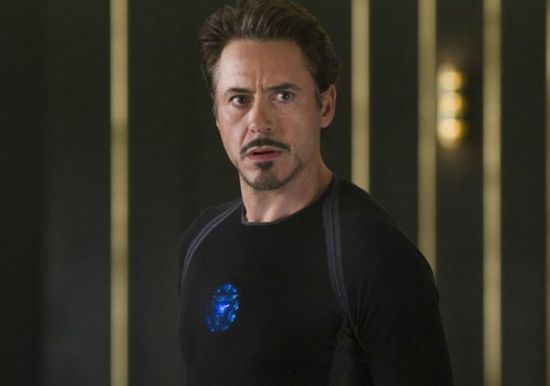
Stark has the most screen time – this is surely because both Iron Man and Robert Downey, Jr. are collectively the biggest star in the bunch, but it also marks a wise decision on Whedon’s part to use Stark as the film’s no-bullshit sounding board. Stark is a brilliant, abrasive, narcissistic billionaire, and seems exceptionally well-suited to the job of bringing subtext to the surface in a short period of time. In each of their scenes with Stark, more of each Avenger is revealed, and Downey’s performance here is as strong as it has ever been.

And what to make of the villainous Loki? He is the same whiny, entitled, beggar-king that be became in Thor, ranting constantly about his birthright and nobility and dispatching his enemies with unrelenting viciousness. Loki is less of a master of chaos than he pretends to be, but Hiddleston’s performance brought just about the right level of malevolence and false bravado to the role. Full-on villainy seems like a natural extension of his antiheroic beginnings in Thor – a film which I suspect, despite my cheap shot above, might actually be slightly better when viewed through the lens of what’s to come**.

And what’s to come is pretty obvious… All hell breaks loose in the Big Apple, per usual, but for once the city’s defenders seem immediately equal to the task at hand. This is partially because of just how powerful the Avengers are collectively, but it’s also because the invading “Chitauri” never quite feel like a world-ending threat. The army – a collection of District 9 rejects, Uruk-hai, and giant flying tortoises – wasn’t half as interesting as the heroes fighting it. But the scale, cinematography, and big, colorful superhero badassery of it all brought a huge grin to my face nonetheless. If there’s one thing I remember from Joss Whedon’s last film Serenity, it’s that the man can direct the hell out of an full-tilt battle sequence, balancing intimacy, scale, and devastation with near-perfection. A series of tracking shots take us on a breathtaking tour of the battlescape, as we see each of the Avengers brawling with their own impressive signatures. Despite the rather rote setup of the battle and its resolution, the stakes were undeniable, both for the heroes personally and for the city they protect***.

The Avengers is an unrelenting delight with a smart script and a rousing musical score (by Captain America composer Alan Silvestri). But the highest praise I can give this film is that even the most groan-worthy bits of fan-service were well-placed and served the plot in some concrete fashion. Did Thor really need to bang his hammer into Captain America’s shield? Of course not. But I’m glad I got to see it.

FilmWonk rating: 8 out of 10

* I say “final film” more in the sense of a climax, not out of any naive belief that Marvel won’t milk this franchise until it dies. After a $207 million opening weekend, there’s little doubt that there will be an Avengers 2.

** All things considered, Jane Foster is still a useless character, and I was pleased to only see Natalie Portman’s face in this film as a means of assuring us that she would not make another wasted appearance.

*** SPOILERY OBSERVATION (highlight to view):
While the nuke felt a little perfunctory, Stark’s sudden rush to self-sacrifice was profoundly affecting. Downey, Jr completely sold his transformation over the course of this film (particularly after Coulson’s death), and the film actually managed to make me forget, for a few seconds, that there’s no way that Marvel would let Joss Whedon exercise his penchant for character-slaughter on their biggest star. It was a lovely moment nonetheless, and one that this film completely earned.
END OF SPOILER

Zal Batmanglij’s “Sound of My Voice” – A subdued, but effective thriller

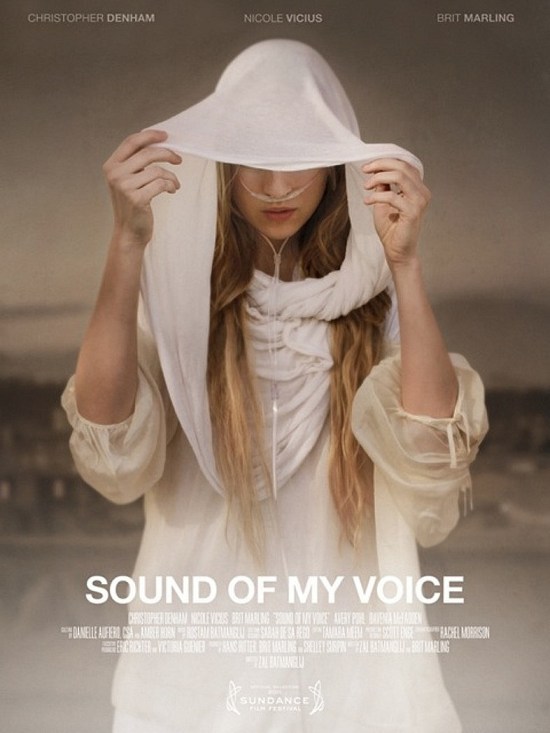
Poster for "Sound of My Voice"

Brit Marling may be one of my favorite voices in indie sci-fi, and I say that even as someone who was not a fan of her well-intentioned flop Another Earth. Marling’s performance was very nearly the saving grace of that film, and is surely one of the best reasons to see her latest outing (with director Zal Batmanglij), Sound of My Voice. Marling plays a secluded cult leader, Maggie, who claims to be a time traveler from the year 2054. Peter Aitken (Christopher Denham) and Lorna Michaelson (Nicole Vicius) are a couple working tirelessly to infiltrate the cult, hoping to use hidden cameras to capture Maggie’s persona on film, and expose her for the fraud that she surely must be.

“I’m not petty,” Maggie says in one scene, “I don’t really care if people believe me.” Marling plays the charismatic cult leader as a master manipulator – exuding vulnerability and menace in equal measure. Bits of sincere, self-aware dialogue seem perfectly crafted to reinforce her story. In fact, the film uses Maggie’s story effectively as a subtle framework to explain the cult mentality. There is a dark, secret future, she explains, and only a select few will survive it. You’re special. You must be, or you wouldn’t believe my story. You wouldn’t have passed all of our little tests. You wouldn’t be committed to our group forever. The group’s trust in Maggie’s Terminator-ish future fable acts as a kind of glue to bind them all together. Many details, such as that Maggie grows all of her own food because she’s allergic to all of the toxins in our time period, would work as effectively for a plain old vegan commune as a futurist cult – and yet they add to her credibility without requiring her to produce a shred of actual evidence. These mythological elements are bolstered further by a series of elaborate security rituals – the cult members strip naked and scrub themselves off before being transported blind to the meeting place, and are not admitted until they perform a complex “secret handshake”.

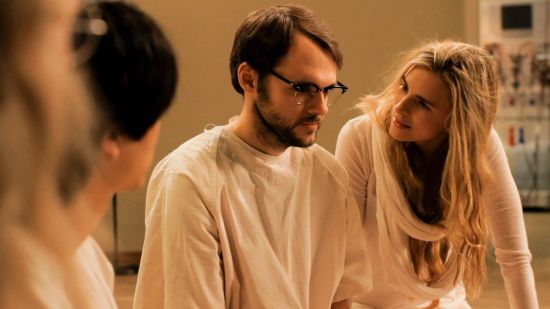
Still from "Sound of My Voice"

In addition to this well-established group dynamic, the film functions brilliantly as a paranoid thriller. Denham’s performance is impressive, increasing the tense atmosphere in the room with the slightest glance or twinge of the eye, and what’s more, Peter is a particularly well-drawn character. Many films would set up documentary filmmakers without any thought to their [presumably noble] inner lives – this film made some bold choices, and they pay off nicely as Peter is forced to blend truth and lies in order to maintain his cover. While his backstory is established by way of a rather clunky voice-over at the beginning, it still functions as convincing reasoning for why he is so desperate to expose Maggie.

The film doesn’t live or die on the veracity of Maggie’s story (which by its very nature cannot be proven conclusively), but rather on whether or not this well-intentioned couple will be exposed. And unfortunately, the weak link in that chain is Lorna. This is due in part to Nicole Vicius’ performance, which isn’t stellar – but it is also due to the writing of the character. The film reveals (using the same clunky voiceover method) that Lorna was a teen party girl, trying every kind of drug and burning out before she reached college-age. Which is a fine backstory, but it may as well have been absent, for all it matters as the film goes on. Lorna’s reason for participating in this deception is never established beyond the couple’s relationship, and while the two actors have decent romantic chemistry, it is Denham who completely carries the tense scenes in which the couple debates their next move. As the film goes on, Vicius is sidelined and forced to take on the boring role of the jealous girlfriend, competing ineffectually with Denham and Marling’s far more interesting dynamic.

Much of the film’s ending seems contingent on the various bits of weirdness that get introduced over the course of it. A creepy dude named Klaus (Richard Wharton) hangs around the whole time, and may or may not be the real power behind the group. An unidentified woman crawls around her hotel room searching for bugs. A little girl stacks black Legos in her room (while her dad does…something…with his laptop). This ending worked for me in much the same way as Richard Kelly’s 2001 film Donnie Darko, wherein all of those strange moments seemed deliberate rather than haphazard. When so many films are rightfully accused of “weirdness for weirdness’ sake”, it’s refreshing to see a film that can be weird in a way that feels bold and calculated. Even the last audible line of the film adds to the mystery.

FilmWonk rating: 7.5 out of 10

FilmWonk Podcast – Episode #19: “Titanic” (dir. James Cameron), Avatar, and the State of 3D Cinema

Poster for "Titanic"

This week on the podcast, Glenn and Daniel never let go of James Cameron’s 1997 romantic sea epic, Titanic. Can a romance founded on chemistry, infidelity, and bad dialogue possibly stand the test of time? Find out below! Additionally, you’ll hear our windswept heroes expound on Avatar and the lamentable state of 3D cinema (50:19).

May contain NSFW language.

FilmWonk rating: 8/10 (Glenn), 9/10 (Daniel)

Show notes:

  • Music for this episode comes from James Horner’s soundtrack sequel Back to Titanic, including the tracks “Titanic Suite” and I Salonisti’s arrangement of “Nearer My God to Thee”, which they play in the film.
  • Daniel called it – the old couple below decks that we see holding each other in bed as the water rises around them are indeed Isidor and Ida Straus (the co-owner of Macy’s Department Stores and his wife). There was a deleted scene in which Ida refuses to board the lifeboat without her husband.
  • Per Daniel’s recommendation, check out Encyclopedia Titanica, a fantastic trove of knowledge for all things Titanic.

Listen above, or download: Titanic (right-click, save as).

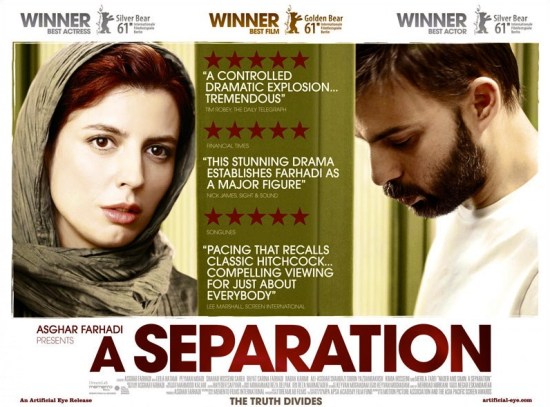
FilmWonk Podcast – Episode #18: “A Separation” (dir. Asghar Farhadi)

Poster for "A Separation"

This week on the podcast, Glenn and Daniel review last year’s Academy Award winner for Best Foreign Film (and nominee for Best Original Screenplay), A Separation. This complex and riveting film is one part legal thriller, two parts family drama, and three parts tense moral ambiguity – listen to us try to unpack its various dimensions below (while also trying feebly to remember the name of Iran’s currency!) (40:34).

May contain NSFW language.

FilmWonk rating: 9/10

Show notes:

  • Music for this episode comes from Sattar Oraki’s original score for the film.
  • This episode contains vague spoilers for the 2003 film Confidence.
  • Sarina Farhadi, who plays Termeh, is indeed the daughter of writer/director Asghar Farhadi.
  • In case our profound (and admitted) ignorance didn’t make this clear, the Iranian unit of currency is neither the ducat (which is European) nor the shekel (which is…Hebrew, whoops) – it’s the rial, named for a currency that originated in Portugal.

Listen above, or download: A Separation (right-click, save as).

2011 Glennies, Part 3: Best Actor/Actress

Best Actress

#5: Michelle Williams – Marilyn Monroe, My Week With Marilyn

Michelle Williams in "My Week With Marilyn"
Warning: This write-up will be chock full of backhanded compliments.

With a deeply flawed script and unlikable lead character, the core performances from Michelle Williams and Kenneth Branaugh are basically the only reasons to see this film – and it is a testament to the strength of these performances that the film is actually quite worth seeing. Williams brings a complex vulnerability to the titular icon that I found simultaneously appealing and fascinating, despite not having any previous knowledge of Marilyn Monroe besides her well-known (and highly sexualized) cult of personality. The film relies pretty heavily on the unspoken understanding that Marilyn Monroe is a figure of unquestionable appeal, but Williams’ performance manages to sell this appeal to a much greater extent than the film’s script and story ever does. She presents a difficult, tortured, and uncertain actress in the thrall of a surly acting teacher and under near-instantaneous hostility with her new film’s intense and egotistical director. While her relationship with Branaugh’s character is never much more affecting or complex than a sitcom clash, her romance with Colin Clark owes all of its poignancy to Williams’ performance and chemistry with co-star Eddie Redmayne, whose uneven turn might otherwise have ruined the film.

#4: Rooney Mara – Lisbeth Salander, The Girl With the Dragon Tattoo

Rooney Mara in "The Girl With the Dragon Tattoo"
As I mentioned on our “Ladies’ Night” podcast, I was wary about seeing Rooney Mara in this role, because the only other performance I knew her for was The Social Network, in which she is, for lack of a better description, nice and normal-looking. These were both red flags for ruthless cyberpunk heroine Lisbeth Salander, but Mara completely acquitted herself in this role. The highest praise I can give to this performance is that I didn’t once think of Noomi Rapace while watching it. Mara’s performance is both fearless and original, bringing a tender edge to a character that is subject to some rather horrific abuse and dubious sexualization over the course of the film.

Listen to me and Daniel discuss the film in-depth:
FilmWonk Podcast – Episode #15: “The Girl With the Dragon Tattoo”, “Young Adult”

#3: Bérénice Bejo – Peppy Miller, The Artist

Bérénice Bejo in "The Artist"
What can I say? I’m a sucker for actresses playing actresses, and Bejo is a total charmer as up-and-coming talkie actress Peppy Miller. Her chemistry with Dujardin is impressive (even with the film’s silent format to muddy the critical waters), and I found their relationship appealing even as a long-term friendship, despite the film’s half-hearted attempts to paint it as a romance. To see these two friends deal with their competing careers amid the inexorable fall of silent cinema is the heart of this film’s appeal, and is surely the most affecting element of a film that could have been slight and insubstantial otherwise. Bejo’s performance served an essential role, challenging the obstinate artist George Valentin with both the new cinematic medium and the actress’ undeniable charisma within it.

#2: Kristen Wiig – Annie Walker, Bridesmaids

Kristen Wiig in "Bridesmaids"
My description of this performance may skew toward the non-specific (I haven’t seen seen this film since theaters), but I can say this with total certainty: Kristen Wiig is a star. Cinema is dreadfully short on believable depictions of female friendship, and Wiig manages to craft several solid (and starkly contrasting) rapports with co-stars Maya Rudolph, Rose Byrne, and Melissa McCarthy. Her “anti-chemistry” with Byrne is particularly impressive, leading to some of the most striking moments of comedic tension in the film. This is a complicated mess of a character (although not quite as much so as my #1), and surely one of Wiig’s finest creations.

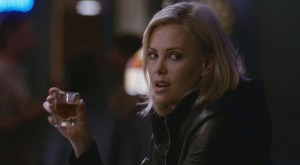
#1: Charlize Theron – Mavis Gary, Young Adult

Charlize Theron in "Young Adult"
Speaking of messes, Mavis Gary is the most fascinating trainwreck of a character I saw this year (and she had some serious competition from Mel Gibson). If there is a female equivalent of a manchild, this is surely it – Gary is nothing short of a delusional and self-destructive alcoholic, and Theron managed to bring a wickedly black sense of humor to the character. Her ruthless give-and-take banter with an equally strong and sarcastic Patton Oswalt is an absolute wonder. This is a character that should be utterly unsympathetic, and yet by the end, she completely drew me in, even as the character learns very, very little from her experience.

Listen to me and Daniel discuss the film in-depth:
FilmWonk Podcast – Episode #15: “The Girl With the Dragon Tattoo”, “Young Adult”

Honorable Mentions:

  • Rinko Kikuchi as Naoko in Norwegian Wood
  • Atsuko Okatsuka as Atsuko in Littlerock
  • Mia Wasikowska as Jane Eyre in Jane Eyre

Best Actor

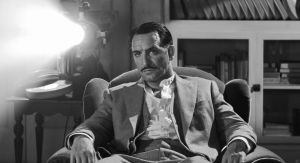
#5: Jean Dujardin – George Valentin, The Artist

Jean Dujardin in "The Artist"
From my review:

Jean Dujardin is forced to convey a great deal of emotional nuance through Valentin’s slightest glance or gesture, and the film resorts to techniques and shots that, in any other film, would have seemed incredibly manipulative. There’s a scene late in the film when Valentin confronts a room full of his old belongings, covered in sheets. As the music swells, he dramatically rips down every sheet, revealing the vestiges of his former success, finally staring heartbroken at a prized full-body portrait of himself in a tuxedo. His tears come forth, and Ludovic Bource’s score swells to overpowering heights, just as it does in many other scenes. But somehow, the tense crescendos of music that punctuate this film manage to craft a believable emotional arc of their own, even lacking the additional tones of a wailing, tormented man’s voice. The score supplements the visible emotion and physicality of Dujardin’s performance. These scenes worked, and in this medium, they seemed entirely appropriate.

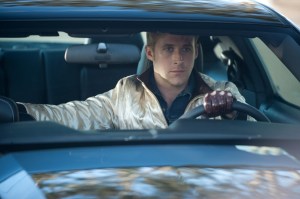
#4: Ryan Gosling – Driver, Drive

Ryan Gosling in "Drive"
It would be easy to say that Gosling is doing very little in this performance (and many people have), but this understated performance is exactly what the taciturn unnamed driver needed in this film. The driver is a vision of restrained and intense masculinity, seeing himself as equal parts valiant knight and unattached mercenary. As this veneer starts to crack over the course of the film, the stakes of the story rise palpably. This is completely Gosling’s film, and his overpowering chemistry with Carey Mulligan led to one of the most bizarre and operatic romantic beats I’ve ever seen on film.

#3: Michael Fassbender/James McAvoy – Erik Lehnsherr/Charles Xavier, X-Men: First Class

Michael Fassbender and James McAvoy in "X-Men: First Class"
Each of these performances is individually strong, with Fassbender’s intense and ruthless physicality contrasting nicely with McAvoy’s poise, charm, and control. But what makes this film work is the relationship between the two – the yin and yang that is so central to both the development of Magneto as a character and the film’s powerful climactic moment. This is an intense and complex relationship – utterly unmatched on screen this year, and it owes heavily to both actors’ performances. More on their individual performances in my review.

#2: Mel Gibson – Walter Black, The Beaver

Mel Gibson in "The Beaver"
From my review:

This performance may be hard to write about, but it was even harder to watch. The beaver persona strikes a comedic note at first, but these beats seem increasingly out of place as the film descends further and further into Walter’s insanity. Whenever Walter is forced to speak in his own voice (without the jaunty British accent), Gibson conveys such intractable discomfort and crippling hopelessness with every syllable that you wonder how Walter has managed to stave off suicide thusfar. His mere existence is a punishing chore. At the beginning of the film, I wondered if I would be able to judge this film without pondering Gibson’s real-life persona. By the end, I forgot Gibson entirely and found myself nearly weeping for the increasingly pitiful creature that is Walter Black. This performance may be unpleasant to watch, but it is certainly one of Gibson’s finest.

#1: Joseph Gordon-Levitt – Adam, 50/50

Joseph Gordon-Levitt in "50/50"
There is a precarious balance of tone at work in this film. Adam is a young man who has been struck with cancer, and a performance that hits too many hopeless notes would have easily driven audiences screaming from this film. Gordon-Levitt’s comedic performance is nothing short of remarkable, engaging in both credible friendly banter with co-star Seth Rogen and bringing a constant barrage of levity that the film sorely needed to avoid falling into crippling hopelessness. And yet, when the character is forced to confront the fragility of his present existence, Gordon-Levitt delivered once again. Adam’s confrontation with mortality is one of the most powerful and resonating aspects of this film, and Gordon-Levitt brought an intensity to the struggle that I haven’t seen since Andrew Garfield in Never Let Me Go. He is sympathetic, memorable, and hilarious, and to hit all of these beats in a single performance is an astounding achievement.

Listen to me and Daniel discuss the film in-depth:
FilmWonk Podcast – Episode #13: Jonathan Levine’s “50/50”

Honorable Mentions:

  • Super-duper-honorable mention: Michael Shannon as Curtis in Take Shelter (saw it too late to qualify)
  • Patton Oswalt as Matt Freehauf in Young Adult
  • Ed Helms as Tim Lippe in Cedar Rapids
  • Ewan McGregor as Oliver Fields in Beginners
  • Michael Fassbender as Brandon Sullivan in Shame


2011 Glennies, Part 1: Best Picture (Top 10 Films of 2011)
2011 Glennies, Part 2: Best Supporting Actor/Actress
2011 Glennies, Part 3: Best Actor/Actress

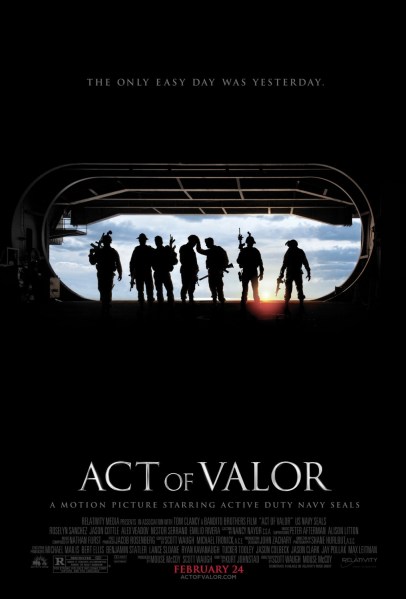
FilmWonk Podcast – Episode #17: “Act of Valor” (dir. Mike McCoy, Scott Waugh)

Poster for "Act of Valor"

This week on the podcast, Glenn and Daniel dial down the cynicism just a bit and ruminate on the nature of patriotism, warrior culture, and propaganda as a neutral descriptor in their discussion of Act of Valor, a new action film featuring real-life US Navy SEALs. (32:33)

May contain NSFW language. Act of Valor will be in theaters this Friday, February 24th.

FilmWonk rating: 7/10

Show notes:

  • “Sing your death song and die like a hero going home.”
    We mention this rather poignant quote/poem by Tecumseh, which makes a truncated appearance in the film’s voiceover. It can be read in its entirety here.
  • I briefly (and halfheartedly) tried to source some music from Nathan Furst’s original score for the film, but much like the score itself, I lost interest in my search rather quickly. As such, this week’s music comes from Hans Zimmer’s original score for The Rock, which seems apropos for this film.
  • We refer to an interrogation scene that takes place halfway through the film, and due to the secrecy surrounding the SEAL cast of this film, we were unsure about the cast and scripting of this scene. The answers, according to The Washington Post: Yep, he’s a real SEAL, and the scene was entirely improvised. Bravo, sir.

Listen above, or download: Act of Valor (right-click, save as).

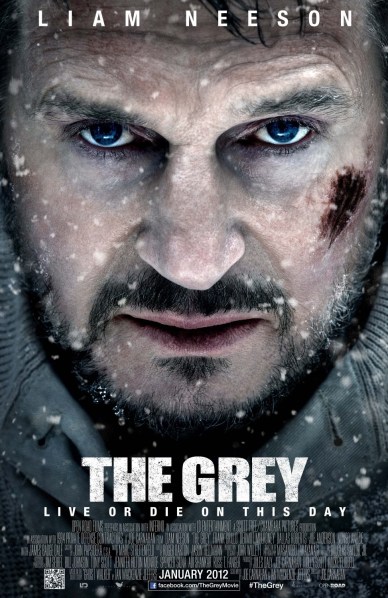
FilmWonk Podcast – Episode #16: “The Grey” (dir. Joe Carnahan)

This week on the podcast, Glenn and Daniel venture into the Alaskan wilderness into a harrowing (and possibly overrated) tale of survival and wolf-punching. If the film’s trailer is any indication, that is. Which it isn’t. (25:35)

May contain NSFW language.

FilmWonk rating: 4/10 (Glenn), 3/10 (Daniel)

Show notes:

  • We refer to the famous line, “Once more unto the breach, dear friends”, which is indeed from Henry V.
  • It’s Ottway, not Ottman. Get it right, dudes.
  • With apologies to Bob Ducca, stick around at the end for a list of movie title mashups.

Listen above, or download: The Grey (right-click, save as).