SIFF Roundup: “Blackfish”, “The Kings of Summer”

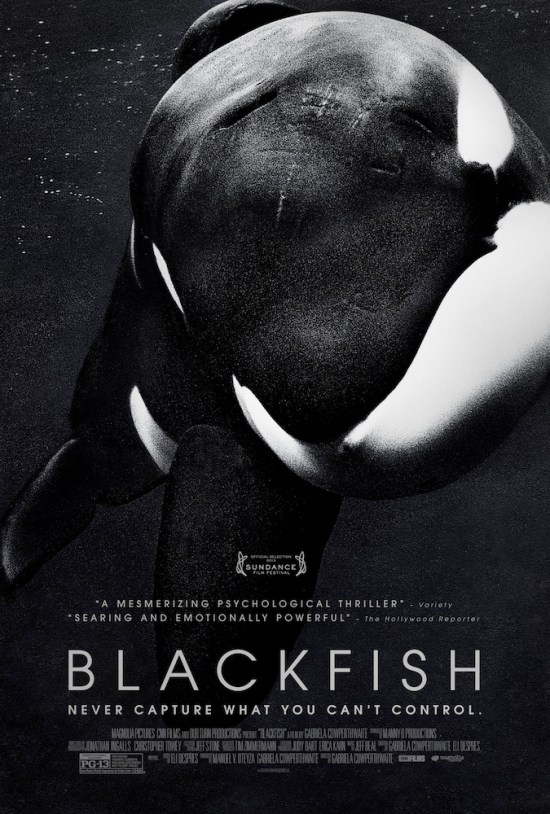
Poster for "Blackfish"

“I can’t imagine a society that values marine mammals as we do…without parks like SeaWorld.”


This quote, from an interview with a former SeaWorld trainer, appears in the latter half of Blackfish, and it is to the documentary’s credit that it doesn’t belabor or even call attention to the bitter irony that this one line so perfectly encapsulates. The film is ostensibly a hit piece on SeaWorld, centering around a captive orca named Tilikum who killed an experienced trainer named Dawn Brancheau in 2010, increasing his career body count to three. It expands upon the company’s allegedly dubious safety record when it comes to protecting those under its purview – animals and trainers alike. The film does moralize about the ethics of keeping captive intelligent animals in a glorified circus, but these moments are few and far between compared to the film’s pragmatism about keeping and interacting with orcas safely.

The film’s central argument seems to be this: If killer whales are potentially lethal, as their moniker would seem to imply, and if they are used to miles of unobstructed ocean territory in which to roam and settle their disputes, they cannot be practically held in captivity with any measure of safety. The moral implications of this point are broached throughout the film, but with an impressive level of subtlety. As a whole, the film is stridently opposed to the practice of keeping captive orcas, but it never feels like it’s making that argument directly. It simply presents the circumstances surrounding SeaWorld’s business and show-biz glamorization of their beloved Shamu(s), and leaves the audience members to reach this conclusion on their own.

The myriad former SeaWorld trainers in the film could come off quite negatively, but they really never feel like perpetrators so much as victims of their own affections and former naïveté. They readily admit that they swallowed and parroted the company line without question, sometimes quite disturbingly (such as when they told parkgoers the laughably false line that orcas live longer in captivity). By and large, the film strikes an effective balance in its tone. If writer/director Gabriela Cowperthwaite had set out to make a film that was morally opposed to keeping captive orcas, she might attract a small audience of like-minded folks who would scream their agreement and continue their previous practice of not going to SeaWorld. This was the problem with 2009’s The Cove, and one of the reasons it had little effect on the Taiji dolphin slaughter (which, as of this writing, continues every spring). It was a film for like-minded people – those who saw no reason for the wanton abuse of marine mammals they saw before them, but could see no means of halting it. While Blackfish might not be a “message film” per se, it is couched in a message of practicality, and guaranteed a wide distribution (the film will be showing on CNN later this year). What’s more, the film’s call-to-action couldn’t possibly be more simple: Don’t go to SeaWorld. Don’t spend your money. As messages go, at least it’s practical.

FilmWonk rating: 8 out of 10
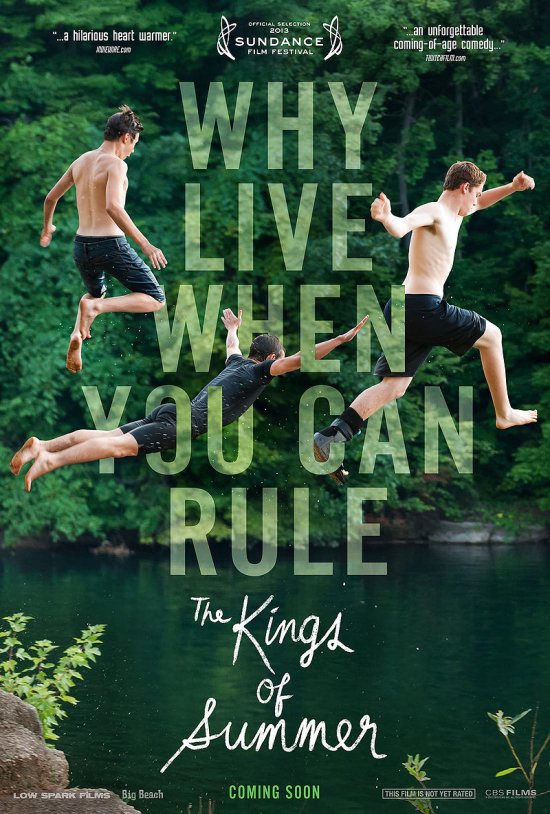
Poster for "The Kings of Summer"

If Wes Anderson‘s Moonrise Kingdom took place in the real world, and were populated with real people, it might look something like The Kings of Summer. The film focuses on a trio of boys who decide to run away and build a makeshift cabin in the woods. Joe Toy (Nick Robinson) seeks to escape the drudgery of playing Monopoly with his surly widower father (Nick Offerman), while his best friend Patrick (Gabriel Basso) just can’t stand his own parents’ (Megan Mullaly and Mark Evan Jackson) enthusiastic and merciless mockery of him- a condition that somehow results in breakouts of actual hives. Also along for the ride is an extraordinarily weird kid, Biaggio (Moises Arias), who might just be the film’s strongest comic performer even if not all of his bizarre non sequiturs land perfectly.

This film would minimally have been a satisfying comedy buffet, with a cast that includes all of the above, along with a fantastic array of supporting performers such as Alison Brie, Mary Lynn Rajskub, and Kumail Nanjiani – but it managed to be something substantially more impressive- a taut, mostly well-drawn tale of teen friendship and rebellion.

The boys indulge in the kinds of backwoods shenanigans that seem, for lack of a better word, utterly real. A boy in the woods, even when he’s playing at becoming a man, will run, jump, climb, swing, chop, pile up, push over, set aflame, and dive into every last rock, tree, or watery delight that the woods have to offer; snakes and mosquitos be damned. In one of the film’s most amusing scenes (which also plays over the opening credits) the boys come across a long drain pipeline and proceed to bang out an impressive rhythm on it with branches. And why? Not because the camera was floating majestically around them, or because the film was desperately seeking some metaphorical catharsis – but because banging on a pipe is fun. For now. And when it stops being fun, we’ll go do something else.

The film depicts some relationships quite strongly while neglecting others. Much of the father-son dynamic is left for the viewer to guess at due to the fairly limited screentime between father and son, but Offerman brings the same stolid hilarity (and occasional vulnerability) that he renders so reliably each week on Parks and Recreation. While the precise source of Robinson’s angst remains a complex mystery throughout the film (despite several proximate causes to choose from), the film manages to draw some credible parallels between father and son. To put it bluntly, they both have the capacity to be miserable, life-sucking bastards. While Offerman’s performance is strong, it is Robinson who manages to impress, proving the rare teenage (or maybe 20-something) actor who can pull off a complex, occasionally solitary lead performance.

Perhaps the film’s biggest weakness is teen love interest Kelly, who feels underwritten despite a passable performance by Erin Moriarty. While she succeeds as a source of conflict between the two friends, we glean very little of what she really wants out of the situation, and the character seems to have precious little agency of her own. Nonetheless, the conflict does feel credible, particularly in its resolution – or rather the light tapering in hostilities that feels far more true-to-life than some dramatic, emotional exchange would have been. These are teenage boys. A sentimental exchange of middle fingers is really the closest thing to a tearful hug that we can hope for.

FilmWonk rating: 7 out of 10
SIFF Roundup: “We Steal Secrets”, “Stories We Tell” (Updated)

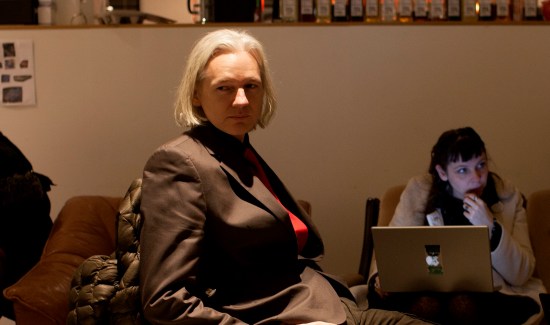
Still from "We Steal Secrets: The Story of WikiLeaks"
We Steal Secrets: The Story of WikiLeaks
Directed by Alex Gibney (documentary)

Prolific documentarian Alex Gibney (Enron: The Smartest Guys in the Room, Client 9: The Rise and Fall of Eliot Spitzer) is an adept interviewer, but he confronts a serious challenge when it comes to tackling the career and cult of personality of WikiLeaks founder Julian Assange, as well as alleged whistleblower PFC Bradley Manning. The film ends (as of March 2013, an end-credits crawl informs us) with both of its subjects locked in a room for an indeterminate length of time – Manning locked in the Marine Corps brig in Quantico, VA, and Assange in sequestered asylum at the Ecuadorian embassy in London. We Steal Secrets makes no claim of access to either of its principal subjects (although Gibney claims to have met with Assange on an estate in the English countryside, wherein he declined to appear in the film), but relies instead on the swath of publicly available material on both men.

Consequently, the film could be little more than a shallow, pop-journalistic chronicle of these events, but it succeeds in challenging much of the conventional wisdom surrounding the case. Julian Assange was indeed a thorn in the sides of several governments, as well as a crusader for free speech and free information. And yet, he is also an accused sex criminal who has declined to answer the official accusations against him. These events dovetailed into a level of paranoia that I (and Gibney, and many others) found quite alluring when they first came to light – surely the accusations were nothing more than an attempt to embarrass or discredit a man who had stepped on the wrong toes. But Gibney argues quite convincingly that that the internet hivemind’s opposition to Assange’s extradition or prosecution has little to do with the facts of the case, but rather with Assange’s cult of personality. Assange can be nothing more or less than a total guardian of free speech and information – a paragon, or nothing at all. The Internet, in all its subtlety, is unable to accept anything in-between. Nor is it willing to accept the conceptual utility of WikiLeaks as a tool for forcibly open democracy without a man like Assange – who dresses and talks like a James Bond villain – as its charismatic leader.

All of these contradictions come to a head in We Steal Secrets, whose title tells us a good deal more about ourselves as Americans and internet users than it does about WikiLeaks. Gibney focuses on the human side of whistleblowing – specifically, the chat logs between Manning and hacker Adrian Lamo. Manning comes off in a sympathetic, if not precisely admirable light. The secure dropboxing of confidential files becomes the desperate outreach of a lonely, tortured soul in the desert who just can’t come to grips with what he is experiencing – to say nothing of who he is. And for much of the film’s runtime, an uninitiated viewer would have no idea who the source of these chat logs might be, since they appear on-screen with simple, text-based flourishes and distant typing sounds. Manning’s musings become a lone voice in the darkness with no clear provenance. Editor Andy Grieve keeps the pace moving nicely (and makes one particularly haunting montage use of Lady Gaga’s “Telephone”). The film is 130 minutes long, but remains quite gripping throughout. Gibney manages to ask a great many provocative questions of several powerful individuals involved (including the thoroughly candid retired general Michael Hayden, ex-director of both the CIA and the NSA), which mixes nicely with a wealth of archive footage of Assange. Despite his lofty goals, the grudging consensus seems to be that WikiLeaks did little more than embarrass the countries involved. With this film, Gibney may have only accomplished the same for Assange himself, but this still makes an effective chronicle of a story that is very much still in progress.

FilmWonk rating: 7 out of 10
Update (2013-05-23): WikiLeaks has posted a complete transcript of the film, annotated with their own comments and rebuttals. You can read it here.


Still from "Stories We Tell"
Stories We Tell
Directed by Sarah Polley (documentary)

Actress and writer/director Sarah Polley is no stranger to putting personal stories on film – her 2011 drama Take This Waltz examines a crumbling marriage (focusing on a housewife played by Michelle Williams). While that fictitious story was undeniably put to film in the wake of Polley’s own divorce, the viewer is left to speculate about the extent to which Polley’s own experience may have informed her screenwriting. Not so with Stories We Tell. In this documentary, Polley brings an intensely personal story to life starring her entire extended family, and the narrative is structured in such a way that would practically prevent Polley from coloring it exclusively with her own perspective. This is a meta-narrative, in which we cut back and forth between Polley’s father (the captivating Michael Polley) sitting in a recording booth reading a prepared third-person account of his life experience, and being interviewed (in first-person) to react to the very same events. The contrast between these two perspectives (each from the same man with varying levels of preparation) is utterly fascinating, and becomes even more so when mixed with the other storytellers. These include Polley’s siblings, relatives, and various old friends of her now-deceased mother, whose life and children are the film’s principal subjects.

The mystery of Diane Polley (Sarah’s mother) is at the core of this film. With this woman dead and gone, all that her loved ones have left are their own memories and perspectives – and the narratives that they construct from them. The film gets at the heart of storytelling as a technique for making sense of the world, and does so in a manner that is utterly free from reproach. The Polley family never once struck me as self-obsessed or navel-gazing individuals. Not only are they a captivating bunch, but they also demonstrate a healthy measure of humility when it comes to rendering this intensely personal (and potentially humiliating) story. You really get the feeling watching the film that if this documentary were to be viewed by no one else except for the individuals involved, they would all be okay with that. This is one of the most earnest personal testaments that I’ve seen since 2008’s Dear Zachary, a film which served a much more subdued and heart-wrenching narrative than what is on display here. The saddest part of this story is that Diane is not around to answer these questions herself, and yet the stories that remain behind feel just as important and vivacious in her absence. This film is nothing short of a masterpiece – hilarious and heartfelt, and brilliantly blurring the lines between documentary and reenactment. It is an act of courage and personal conviction, delivered with an admirable measure of humility.

It’s only in the film’s final act that it shows its hand a bit, and some viewers may find the “making of itself” portion of the documentary to be a bit tedious. For a film nerd like me, it did nothing to diminish the experience, since it only served to further elucidate the precise nature and value of good storytelling. To illuminate how this documentary reluctantly came together only served to add additional weight and consequence to the story. Even as the film’s principal subjects debate who was the most fitting person to render these events into a narrative, it becomes ironically clear that this story ceased to be their exclusive property the moment they decided to tell it. The genie is out of the bottle, but the world is better off for it.

FilmWonk rating: 9 out of 10

SIFF Review: Wes Anderson’s “Moonrise Kingdom” – A triumphant, romantic caper

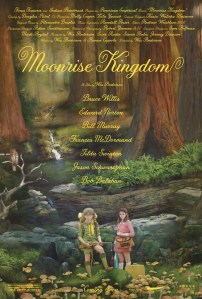
Poster for "Moonrise Kingdom"

If I were to categorize Wes Anderson, I would place him in a similar camp to Tim Burton. They both have a distinct and instantly recognizable vision for the bizarre worlds in which their films take place, and they both tend to work with an abundance of the same actors. But while Burton’s recent contributions have been marked by a nearly linear decline in quality and coherence, Anderson’s films have taken a far more regrettable route… They have become utterly forgettable. While I have seen [and modestly enjoyed] every one of Wes Anderson’s films since Rushmore, I can scarcely recall a single moment from any of them since 2001’s The Royal Tenenbaums. While Anderson’s quirk and theatricality has remained as distinctive as ever, his overall vision has somehow become completely unremarkable.

Until now.

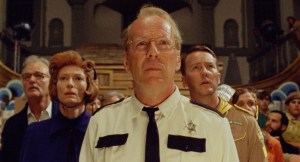
Moonrise Kingdom is a triumphant return to form for Anderson (along with co-writer Roman Coppola), meticulously crafting a rich and memorable world in the fictitious island of New Penzance off the Atlantic Coast. The story kicks right into gear as a young Khaki Scout, Sam Shakusky (Jared Gilman) leaves a hand-scrawled letter of resignation in his jamboree tent and strikes off into the wilderness in a purloined canoe. At the very same moment, his preteen sweetheart Suzy Bishop (Kara Hayward) runs away from home on the other end of the island, leaving her parents, Walt (Bill Murray) and Laura (Frances McDormand), at a loss to explain her disappearance. An immediate search begins as both the local police Captain Sharp (Bruce Willis) and Khaki Scout Master Randy Ward (Edward Norton) both rally their respective posses to search for the wayward couple.

The film takes a bit of time to find its footing, owing to the bizarrely precocious dialogue of its young, first-time leads. Their initial line readings have an almost wooden theatricality, with drawn-out banter so improbably delivered that it seems like Shakespeare in the Park as read from a teleprompter. But as their chaste and cordial romp gets into full swing, the two actors somehow find an accord. They become a fascinating romantic screen presence, even as the overall plot starts to take on a flavor none-too-dissimilar from the first Rambo film. An early “showdown” ensues between the young couple atop a hillside and some unrelenting Scouts who have happened upon them. Without grownup supervision, the Scouts are tenacious in their pursuit, armed with absurdly dangerous homemade melee weapons, an archery kit, and a lead Scout primed to charge the young lovers on his dirt bike. It’s all a great deal of fun, but the romance starts to make a bit more sense when viewed through this adversarial lens. These kids are determined to skip ahead to grownup life, bidding farewell to their erstwhile families and making a life for themselves in the wilderness. They are the embodiment of “us against the world”, even if their oppressive world is like something from the mind of Roald Dahl or J.K. Rowling.

Still from "Moonrise Kingdom"

In fact, the entire cast plays the film remarkably straight, even as the stakes continue to ramp absurdly upward. An on-screen narrator (Bob Balaban) informs us that a hurricane will strike in three days’ time. In fact, he tells us that this has already happened. By playing the entire film as a historical document, the various perils that befall the characters take on a tense fatalism. As the film goes on, any time a character steps onto a boat or seaplane feels like it might be the last time they’ll ever been seen alive. In this way, Moonrise evokes another much more adult film – Shutter Island. While Suzy will simply be returned to her parents if caught, Sam faces potentially greater peril, as it is revealed early on that he lives in a foster home that will not be welcoming him back, due to his unspecified “emotional problems”. The specter of Social Services (embodied by a hilariously dry Tilda Swinton) hangs over the proceedings at all times, along with all the potential horror of 1960s psychiatric practices. If Sam manages to survive his adventure, his life will get irrevocably worse.

Slightly less interesting are the marital problems of Suzy’s parents. Murray and McDormand are amusing together – a pair of attorneys who sleep in separate beds and speak of little else but their cases – but Murray and Willis, both rivals for the lady’s affections, are the real standouts. They each give their best comedic performances in years, engaging in a relentless duel of nonchalance and quiet resignation. Edward Norton is also brilliantly straight-laced, although the film seems to run out of practical use for him by the final act (not counting a bizarre stunt with Harvey Keitel). Given that Willis’ arc is probably the most underdeveloped in the film, it almost seems like the ending of Norton’s storyline was chopped and given to Willis instead. It was an odd choice, but it did feel just barely earned, as the film gives each character just enough setup to justify their final choices. Except, perhaps, for Jason Schwartzmann, who shows up just long enough to be awesome and underused as Cousin Ben, the obligatory helpful rogue. As an Anderson vet, Schwartzmann is so well-equipped to handle this material that I couldn’t help but want a bit more of him.

This would seem to be as far down the quirky path as Wes Anderson can delve without diminishing returns. Not everything in this film worked – as much as I was enjoying the meticulous opening cinematography of the Bishop home, I found myself rolling my eyes at its more superfluous elements, including Frances McDormand’s rather grating use of a megaphone to call for her children. But once the story got started, I was completely swept up in it. There is so much in this film that I’ll fondly recall, from the ridiculously tall treehouse to the Terabithian splendor of the titular Kingdom. This film is a sweet and nostalgic chronicle of the wondrous worlds that we create in childhood, and even manages to delve into the dire consequences of growing up, without ever losing a bit of its charm.

FilmWonk rating: 8 out of 10

SIFF Review: “Earthbound” – A schizophrenic mess of alien romance

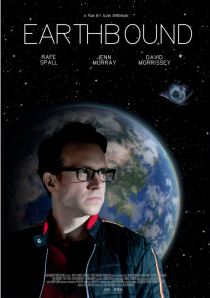
Poster for "Earthbound"

Earthbound is a mess, plain and simple, which is doubly disappointing given all the awesomely schlocky B-movie promise of the pre-credits sequence. We learn the tale of Mathius and Jace, the sole refugees of a distant planet called Zalaxon, which has been torn apart in a civil war. Mathius fled the planet with his son, who was due to be sacrificed by the enemy in order to win the war…somehow. Jace lives on as the “Last Son of Zalaxon” in exile. Presumably this is also a symbolic title, as his warring planet is still awaiting his return by way of a signal beacon visible through a wormhole that opens every few years between Zalaxon and Earth.

And you know what? All of that is just fine. This film takes an absurd space opera and spells it out via a dazzling series of colorful comic book panels, leaving the audience begging for more. But all of the delight and incoherence of this premise could have only succeeeded if this film had the slightest idea of what tone it was going for. If I’m to judge by Liam Bates’ oppressively cloying musical score, the film is trying to be a grown-up version of E.T., replacing the earnest and childlike alien relationship with that of a pair of desperately lovestruck adults. Joe, the 10-year-old boy formerly known as Jace, loses his father Bill (né Mathius) (David Morrissey) at the age of 10. Before dying [of unspecified causes], Bill lets his son in on his extraterrestrial origins, leaving behind a collection of retro-futuristic children’s toys and otherwise human-looking objects as evidence. But more on this collection later.

Fifteen years later, Joe (Rafe Spall), now working as a clerk in a comic shop, instantly falls for fellow sci-fi fan Maria (Jenn Murray) by way of an electronic wristband that instantly informs him of their 93% genetic compatibility (well past the 85% that he needs in order to knock up one of those easy Earth girls). While “you’re the only hope for my people” might have actually had some success as a pickup line, Joe wisely conceals his true identity when asking Maria out. But what we get instead are some of the most insipid attempts at romantic dialogue this side of Attack of the Clones, made even more obnoxious by the score’s various attempts to make me think I’d felt something for these star-crossed lovers. The two performances are individually decent, but weren’t remotely believable as romantic partners, with Murray’s earnest sadness and Spall’s unrelenting quirk making an incredibly poor match when sharing the screen.

Still from "Earthbound"

This film had all the elements of a successful piece of sci-fi, but no earthly idea how to fit them all together. Among Joe’s gadgets was a holographic projection of his father – a device that served virtually no purpose beyond exposition and plot contrivance. This is neither Jor-El nor Obi-Wan. While there’s a chance of poignancy in the idea of Joe conversing endlessly with an affectless husk of his dead father, the various attempted emotional beats in this “relationship” utterly fail to land. When Joe is potentially forced to give up on seeing his projected father ever again, the dilemma inspired nothing more than a tepid yawn, and was over just as quickly. If Joe doesn’t care, why should I? And his choices don’t seem to matter much anyway. Each of Joe’s mundane-looking alien devices had to stop working at just the right moment to prevent anyone from believing his story, and start working again just in time to be useful or muddy the waters further. The film tries to delve into psychological thriller territory by forcing Joe to doubt the veracity of his tale, but given the clunkiness with which his doubts are established, it doesn’t remotely succeed. Apart from a hilariously dark performance by Stephen Hogan as the world’s worst psychiatrist, there is very little to redeem this act, and it attempts so many unsuccessful twists and reversals that it all becomes downright tedious.

But the final sequence very nearly saved it. Some vague spoilers will follow. By the time we reached the third villainous monologue, in which the baddie just can’t kill the hero without first talking his ear off about how thoroughly he has been beaten, I thought perhaps the film had found its footing again. The final sequence would feel right at home in a 50s sci-fi romp, and it was this loving and old-fashioned treatment of the genre that made me lament just how much of a missed opportunity this is. Earthbound is actually quite well made, and everything – from the production design and effects to the majority of the performances – seemed just adept enough that it all should have coalesced into something just a bit more watchable. But for a film that only has enough plot to fill perhaps a single decent episode of Doctor Who, the rest just feels like the disorganized cutting-room bits of a different project.

FilmWonk rating: 4 out of 10

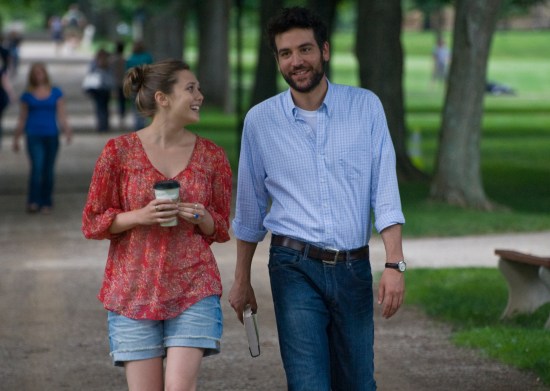
FilmWonk Podcast – Episode #23 – “Liberal Arts” (dir. Josh Radnor) (SIFF)

Still from "Liberal Arts"

Back at SIFF and back to school! Glenn and Daniel hit the books with college nostalgia as they review Liberal Arts, the latest film from How I Met Your Mother star Josh Radnor. Take in their worthless intellectual blather while you can! They’ve both got work in the morning that is utterly unrelated to their majors.

May contain some NSFW language.

FilmWonk rating: 6.5/10

Show notes:

  • Music for this episode is a pair of classical pieces that appear in the film. The first is Beethoven‘s Symphony No. 6 Pastorale as performed by Istanbul’s National Conservatory Orchestra (free download in link). The second is Soave sia il vento, from Mozart‘s opera Così fan tutte, which I’ve included in its entirety at the end of the podcast. Listen to it while walking down the street and watch as everyone becomes more attractive.
  • Regarding the age question that both we and the movie raise – Elizabeth Olsen was around 22 when this film was shot. Josh Radnor was 37, and Allison Janney was 52.
  • The book shop owner is played by Elizabeth Reaser of Twilight fame. And it all comes full circle.

Listen above, or download: Liberal Arts (right-click, save as, or click/tap to play on a non-flash browser).

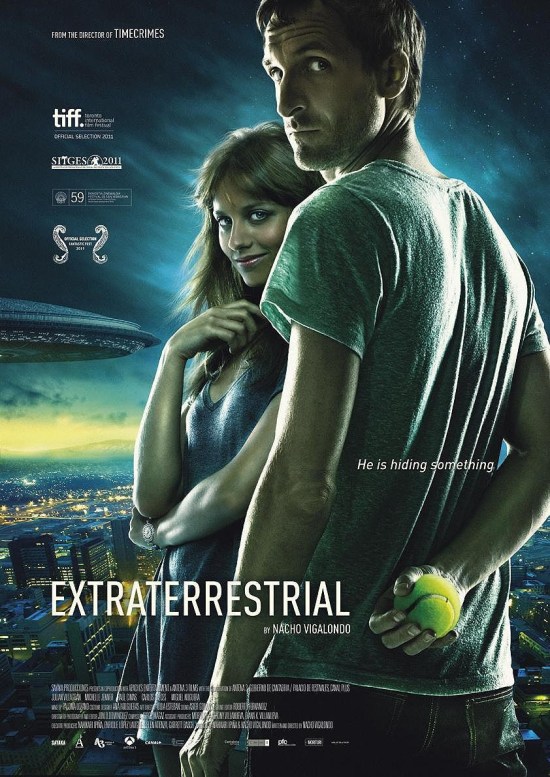
SIFF Roundup: “Extraterrestrial”, “John Dies at the End”

Poster for "Extraterrestrial"
It appears I can cross “alien invasion sex comedy” off my dwindling list of unseen genre mashups. This is the latest small-budget feature from Nacho Vigalondo, the Spanish writer/director behind the tense and violent 2007 sci-fi thriller Timecrimes – another brilliant film that otherwise has so little in common with the director’s sophomore effort that the connection seems scarcely worth mentioning. While Los Cronocrimenes was driven by a taut and carefully scripted sci-fi plotline, Extraterrestre merely uses the backdrop of an alien invasion to frame a sexy rom-com.

Julio (Julián Villagrán) wakes up in the apartment and bed of Julia (Michelle Jenner), following an awkward one-night stand only made more so by the fact that neither of the two can remember anything about the night before – including, indeed, whether or not they even had sex. This question becomes a bit more important when a pair of interested parties arrive – Ángel (Carlos Areces), a nosy neighbor with a serious crush on Julia, and Carlos (Raúl Cimas), her long-distance boyfriend. With the streets of Madrid empty and the downtown core beneath a mile-wide alien spaceship, this essentially becomes a locked-room romantic comedy. Julio and Julia explore their newfound, philandering chemistry, Ángel deftly demonstrates why he can’t get the girl, and Carlos, a steadfast survivalist, obliviously plans the group’s next move.

Don’t get me wrong, these characters sound a bit cookie-cutter, but the entire first act of this film is brilliantly written. The film fits right into that nice Zombieland niche in which ordinary characters are tossed together amusingly amid extraordinary circumstances. Sure, the world might be coming to an end, but can’t we still engage in petty bickering over who f’d whom? All of the cuckolding drama is a bit celebratory of bad behavior, but the plot maintains just the right tone of naughty fun to avoid feeling too mean-spirited. Even with a merciless love-quadrangle, the film has an impressive amount of heart, and makes you genuinely care about each of the four characters at least some of the time.

The problem is, these characters get kicked out of the film one by one. We definitely needed time for the core romance – if that is what it is – to grow, but at least one of the rival characters had to get short shrift, and it really wasn’t the one I expected. One of them veers just a bit too much off the rails in the third act, and it isn’t the guy with the tennis ball launcher. While this bit of screwball comedy was still entertaining, it does feel just a bit like the film is turning on its characters as they begin to strain likeability even further.

Fortunately, Extraterrestrial manages to stick the landing. The ending is sweet and seems tonally appropriate, concluding with a gorgeous sunset shot that just about perfectly sums up the film. Save the interstellar warfare for the Americans…we’re just here to hang out in Madrid.

FilmWonk rating: 7.5/10
Extraterrestrial will be playing a couple more times at SIFF, and staying for at least a weeklong Seattle run at SIFF Cinema when the festival concludes. If you’re interested in seeing the film in your town, you can also “demand it” by visiting this link.

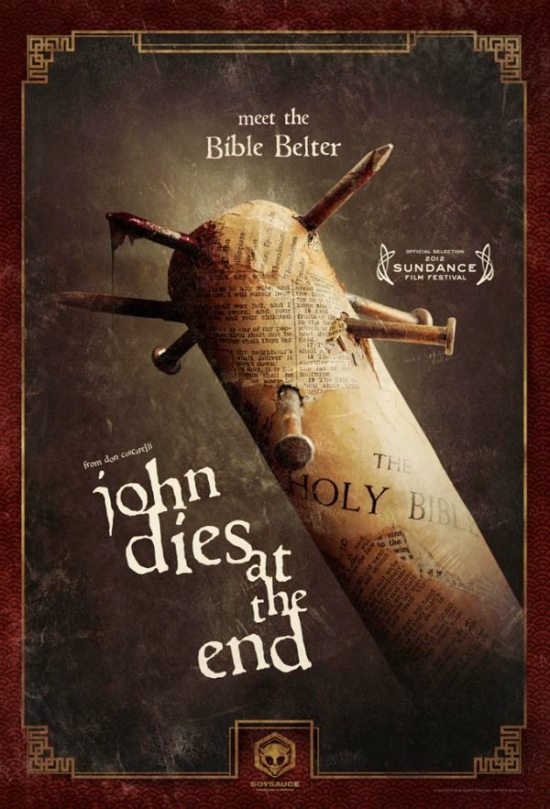
Poster for "John Dies At the End"

John Dies at the End is pure, unadulterated insanity. I saw it at midnight under the influence of 9 hours of road-trip driving, a shot of Jägermeister, a glass of hefeweizen, and a 12-oz can of Red Bull (in that order), which might just comprise an ideal viewing experience. The film features the bizarre, drug-fueled, stream-of-consciousness journey of David Wong (Chase Williamson) and John Cheese (Rob Mayes), a pair of bros who dabble in paranormal investigation. Their recent discovery is a drug called “soy sauce”, which, when injected, enables the user to see into other places, times, dimensions, etc.

The drug is basically whatever the plot needs it to be from moment to moment, operating variably as a means of clairvoyance, precognition, telekinesis, and so on. But really, that’s fine. The drug is no different in principle than demonic possession, alien invasion, or any number of other paranormal plot devices. What keeps this movie stampeding along is not plot convention but an immense sense of kinetic fun and a commitment to remain at least semi-coherent. Don Coscarelli‘s strong low-budget visuals (which he previously demonstrated in Bubba Ho-Tep) are out in full force here. Even the most ridiculous practical effects and creatures manage to strike a nice balance between laughable and menacing. The film felt almost like an R-rated take on Ghostbusters, with the main duo seemingly quite knowledgeable about all things paranormal, despite the insane, bumbling adventure on which they must embark.

The film utilizes a number of clever devices, including phone calls displaced in time, demons who appear as different people depending on who’s looking, and even a clever reference to the Grandfather’s Axe paradox. There was seemingly a great deal of care and intelligence that went into this psychotic romp. It feels like a meticulously constructed doll, woven by a maniac into a tattered conglomeration of twigs and human hair, which he brushes lovingly every night before he goes to bed. Perhaps he calls it Sheila. Or Brutus. And then one night, he decides to use it as a quill with which to pen his manifesto on the padded walls of his suburban living room, using an ink composed principly of his own urine.

I’m pretty sure that’s an accurate summation.

FilmWonk rating: 7-ish out of 10

FilmWonk Podcast – Episode #22 – “Safety Not Guaranteed” (dir. Colin Trevorrow), “The Imposter” (dir. Bart Layton) (SIFF)

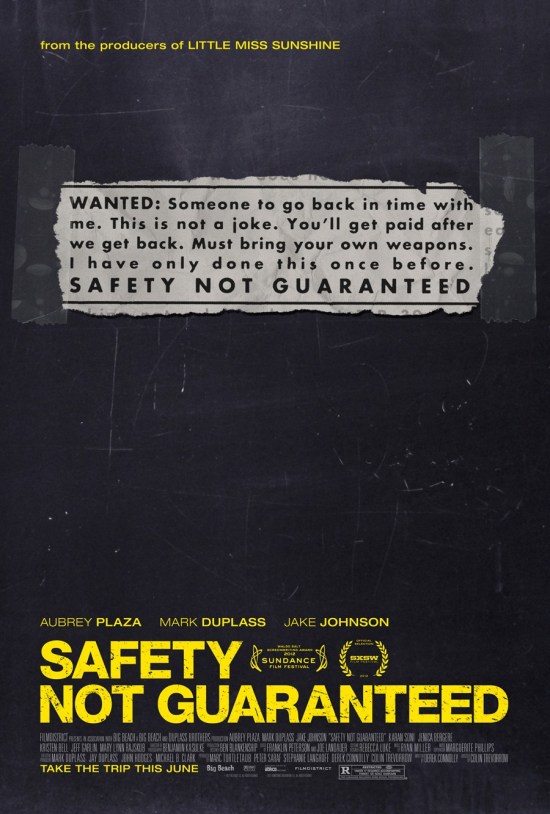
Poster for "Safety Not Guaranteed"

As SIFF continues, Glenn and Daniel check out the highly anticipated time travel comedy Safety Not Guaranteed, which comes home to Seattle along with much of its cast and crew. Then they jump out of their seats and run to the next auditorium to pose as film critics in a packed screening of Bart Layton‘s utterly fascinating documentary/thriller, The Imposter.

May contain NSFW language.

FilmWonk rating (Safety Not Guaranteed): 6/10
FilmWonk rating (The Imposter): 9/10

Show notes:

  • (00:00) Review: Safety Not Guaranteed
  • (06:45) Spoilers: Safety Not Guaranteed (although we somewhat spoil the Jake Johnson subplot starting at 05:38)
  • (13:22) Review: The Imposter
  • (19:56) Spoilers: The Imposter
  • Correction: I mistakenly refer to Colin Trevorrow as a first-time director. In fact, he has a few prior credits, including this amusing short from 2002.
  • For some reason, there’s a vague spoiler for the 7th season finale of House (at 08:12). Thanks for that, Daniel.
  • But later, Daniel redeems himself by mentioning the Ninja Kitty video, which is definitely worth watching.
  • Nerd quibble: Aragorn decapitated an Uruk-hai, not a Nazgul.
  • Unfortunately, there was no trailer available for The Imposter, so we included a brief clip from the SXSW interview with director Bart Layton, available in its entirety here.
  • We refer to the Taylor University van crash case, in which a college student named Whitney Cerak was misidentified as another student who died (even mistaken by the victim’s family).
  • I was referring to this guy in this movie. Kudos to anyone who got this utterly pointless reference.

Listen above, or download: Safety Not Guaranteed/The Imposter (right-click, save as).

FilmWonk Podcast – Episode #21 – “Compliance” (dir. Craig Zobel) (SIFF)

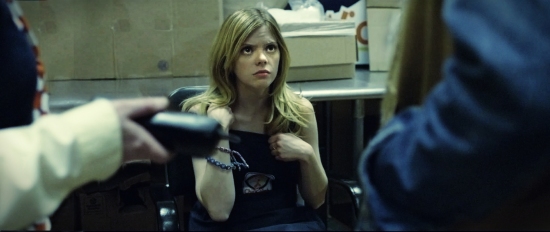
Still from "Compliance"

As the Seattle International Film Festival continues, Glenn and Daniel give a quick review of a harrowing drama from the co-founder of…Homestar Runner? Okay! A warning for the spoiler-averse… As this is based on true events (and sticks largely to the real-life story), we aren’t shy about spoilers, but we do give a warning before revealing the film’s ending.

Contains NSFW language and some disturbing content.

FilmWonk rating: 7/10 (Glenn), 8/10 (Daniel)

Show notes:

  • Once again – due to to the quick turnaround for SIFF content, this podcast was recorded without our usual setup – but the audio quality is solid! I have it on good authority that a modern automobile makes an excellent recording booth.
  • More info on Stanley Milgram’s experiment.

Listen above, or download: Compliance (right-click, save as).

SIFF Roundup: “Only Yesterday”, “Fat Kid Rules The World”

Poster for "Only Yesterday"
Written and directed by Isao Takahata

Studio Ghibli’s 1991 film Only Yesterday, from writer/director Isao Takahata and producer Hiyao Miyazaki, was a theatrical hit in Japan, but has not made it to US theatrical or home release. And after seeing it, I certainly have a guess why. This quiet, reflective film about childhood is conceived through the narrative lens and perspective of an adult woman, Taeko (voiced by Miki Imai), looking back upon her years in primary school. It is not precisely a film for adults or a film for children, and as such must be incredibly difficult to market.

Like every Ghibli film, the hand-drawn animation is simply gorgeous. There is a magnificent array of emotion visible on the children’s faces – when the young Taeko (voiced by Youko Honna) gives you the stink-eye, you’ll know it. Likewise, when she’s trying desperately to affect enjoyment while eating an unripe (but expensive) pineapple, you’ll know it. The resulting “performances” would be breathtaking coming from child actors, and are masterful works of art here. There is also a clever animated framing device wherein the adult Taeko imagines her childhood self and classmates literally following her around as she heads out to the countryside for a bit of agro-tourism. This leads to a heartbreakingly beautiful moment at the film’s end in which she is forced to make an important choice.

Unfortunately, the only weak link is the adult Taeko. Apart from her recent breakup and monotonous office job, we never really get to know her beyond her obsessive navel-gazing. So her dilemma about how to continue her relatively aimless life does not resonate nearly as well as it could if we had a better idea of how this vivacious 10-year-old became the woman that we see before us.

While the Japanese countryside is rendered with staggering beauty (even the reflections in pothole puddles are gorgeous), this narrative gulf between the two versions of Taeko is enough to hold back the “present day” (1980s) material from being nearly as interesting as it is pretty. Conversely, the childhood (1960s) sequences are exciting and rife with nostalgia (watch for an appearance by the Beatles singing in Japanese*!). The soundtrack is marvelous and expansive, ranging from classical tunes (including one of my favorites, Brahms’ Hungarian Dance) to more contemporaneous selections, including a lovely Japanese rendition of Bette Midler’s “The Rose“, which is put to great use.

Despite its shortcomings, Only Yesterday is an earnest and heartfelt character piece, well worth seeing if you can find it in the US (apparently it’s available on Region 2 DVD on Amazon).

FilmWonk rating: 7 out of 10
* CORRECTION: Upon further research, I was unable to find any record of The Beatles actually performing in Japanese, (although there seem to be a fair number of Japanese Beatles cover bands!). The Beatles are mentioned by name during this montage, but the song appears to be “Omoide No Nagisa“, a 1966 song by The Wild Ones (source).

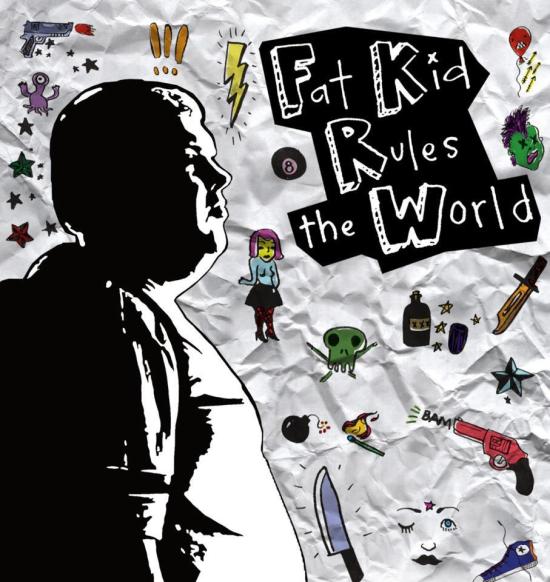
Poster for "Fat Kid Rules The World"
Directed by Matthew Lillard
Written by Michael M.B. Galvin and Peter Speakman, based on the novel by K.L. Going

I’ve rolled my eyes on multiple occasions while reading the end-of-year Top 10 lists from various NYC and Chicago critics, as they invariably include one locally shot gem that thoroughly sums up the ineffable experience of living in their precious city. I never wanted to be that guy. And yet, director Matthew Lillard has forced my hand with an adaptation that is so quintessentially Seattle in its depiction of lovable losers and their various musical hopes and dreams, it would be against my very nature to dislike it.

Troy Billings (Jacob Wysocki) is an overwei- well, a fat kid – who decides to end it all by stepping in front of a downtown bus. He gets shoved out of the way at the last second by Marcus (Matt O’Leary), a strung-out, hyperactive kid who may or may not attend Troy’s school, and who immediately demands $20 in exchange for his lifesaving act. Wysocki’s performance is nicely understated, and the character is written with a deft understanding of being an adolescent outcast. But the real scene-stealer is O’Leary, whose performance strikes just the right blend of instability, delusion, and charisma. Marcus is, to all outward appearances, a homeless, unreliable, loser drug addict. For all of his promises about upcoming shows at Neumos – a fairly prestigious real-life Seattle venue just three blocks from the theater in which I saw this film – all of his grand plans to form a punk band with Troy seem like nothing but self-serving fantasy.

And yet, despite Troy’s credible degree of self-awareness about the situation, he is still swept up in the power and dangerous allure of the music world. The film has a darkly comedic streak throughout, but I would largely call it a drama, especially due to the treatment of Troy’s father, whom we know only as Mr. Billings (Billy Campbell). Campbell (whom I’ll admit I mistook for Ray Liotta in his first scene) gives an outstanding performance as Troy’s father, an ex-Marine and widower. Mr. Billings is a complicated hardass, to put it mildly. He loves his boys and misses his wife, and he’s deeply worried about his son’s choice of friends. And yet, he seems committed to doing the right thing, even if that means potentially taking on Marcus as the undeniable burden that he will be. I can’t overstate how refreshing I find this character and performance. I’ve seen such a staggering number of boring, one-note hardass fathers on film over the years (hell, Fred Ward has made a career out of playing them!). To see such a fresh and credible take on the character strikes me as nothing short of miraculous.

Fat Kid is a marvelous study in contradictions. It exemplifies the lonely and depressing experience of being an adolescent outsider, and yet feels incredibly empowering and uplifting by the end. It celebrates the complex notion of doing right by the people in our lives, even if they seem almost certain to disappoint us. As a musical coming-of-age film, it makes a nice pairing with Almost Famous.

FilmWonk rating: 8 out of 10

Michel Hazanavicius’ “The Artist” – Everything old is new again

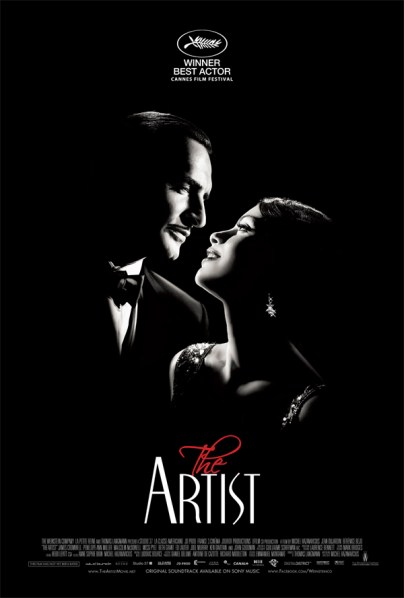
Poster for "The Artist"

There’s a curious trend in modern cinema to slavishly replicate film techniques from years gone by. In some cases, the decision seems purely stylistic – in David O. Russell’s The Fighter, for instance, contemporaneous TV cameras were used to recreate the period look and feel of HBO boxing matches. This deliberate reduction in visual quality seems meant to provoke nostalgia, as well as ground the film in some kind of documentary-style reality as a recent period piece. But never before have I see such deliberate eschewing of modern cinematic technology – in a way that works entirely in favor of style – as in Michel Hazanavicius’ The Artist, which is a genuine black-and-white, silent film, made this year in Hollywood. Given that the film depicts the transition from silent to talking pictures, this format not only feels appropriate for the subject matter, but is seemingly the only format in which this story could have been told.

George Valentin (Jean Dujardin) is a popular silent film star who has just been told rather tactlessly by his studio head (John Goodman) that the future of cinema is in talking pictures. If this is the future, [a title card informs us he says], “They can have it!” Valentin’s career immediately begins to fade into silent obscurity, even as he inadvertently launches the career of rising star Peppy Miller (Bérénice Bejo), whose voice (we’re told) is exquisite enough to attract patrons of the new cinema.

This film is a bit paradoxical, since it could be construed just as easily as a love letter to silent film or a self-aware satire of its constraints. We are “told” a number of silent film’s shortcomings, and “hear” all about old actors mugging for the camera instead of giving fully realized performances. Valentin is a curmudgeonly figure, and a great deal of the character’s sympathy lies in the outside knowledge that his career was doomed from the outset of the film. There’s the obvious point that talking pictures were indeed the future of cinema. The film’s audience knows it, even if the characters do not. There’s also some “Inside Baseball” type context: the rise of talking pictures also marked the beginnings of the studio system, in which actors were contractually beholden to the powerful studios that had discovered them. They owned the actors, as well as every level of production and distribution. Given that Valentin is unwilling to play ball with the new method of film production, his career is unquestionably at an end. Back then, they could say “you’ll never work in this town again”, and it actually meant something.

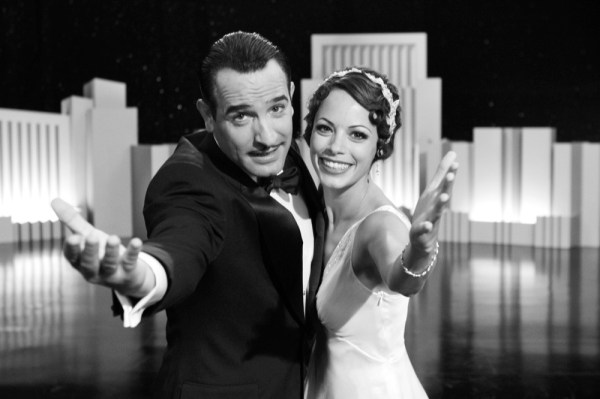
Still from "The Artist"

Jean Dujardin is forced to convey a great deal of emotional nuance through Valentin’s slightest glance or gesture, and the film resorts to techniques and shots that, in any other film, would have seemed incredibly manipulative. There’s a scene late in the film when Valentin confronts a room full of his old belongings, covered in sheets. As the music swells, he dramatically rips down every sheet, revealing the vestiges of his former success, finally staring heartbroken at a prized full-body portrait of himself in a tuxedo. His tears come forth, and Ludovic Bource’s score swells to overpowering heights, just as it does in many other scenes. But somehow, the tense crescendos of music that punctuate this film manage to craft a believable emotional arc of their own, even lacking the additional tones of a wailing, tormented man’s voice. The score supplements the visible emotion and physicality of Dujardin’s performance. These scenes worked, and in this medium, they seemed entirely appropriate.

This is not to say the film was entirely believable – the romance was a hard sell, despite the impressive standalone performances of the two leads – it’s hard to buy them as anything but old friends as the film goes on. The first half was a bit too slow, getting bogged down with history instead of advancing the story. Even so, the tone of the film feels more like a fairy-tale than an accurate depiction of the demise of silent film. But at this point, I must admit – my knowledge of silent film is rather limited. At the time of this writing, I could recall seeing exactly one other silent film – Charlie Chaplin’s Modern Times. While I can’t comment on the parallels (if any) between the fictitious George Valentin and any real-life silent film stars, I do know that all art should stand on its own, and George Valentin is indeed an artist. His obstinate refusal to conform to a new method of artistry could be seen as either noble or foolish, depending on your perspective – but the parallels to modern franchise films and 3D are readily apparent. The future of cinema may or may not lie under the cape of the most popular superhero of the present year, but there are plenty of beloved and respected actors who have made the transition into big-budget comic-book cinema. And while I won’t presume to know the minds of Sirs Patrick Stewart, Ian McKellan, Ben Kingsley, and others – I imagine they would have a great deal to say about the nobility of eschewing one’s own pride in favor of elevating a new form of cinema. Or perhaps they just did it for the money. Who knows.

It is not for us to judge Valentin too harshly, but the film certainly sells the nobility of his struggle. The Artist crafts a complex character’s journey without overly relying on title cards, and conveying a great deal of story via background set design – a technique that has remained effective to this day (Children of Men is a recent example). In the present day, we have no choice but to regard silent film as an anachronistic technical limitation. But in its day, it was the engine that propelled innovative storytelling, and Hazanavicius clearly understands how it succeeded. This film could have been a baseless technical exercise, but with this execution, it’s nothing short of a modern classic.

FilmWonk rating: 8 out of 10