FilmWonk Podcast – Episode #32 – “Warm Bodies” (dir. Jonathan Levine)

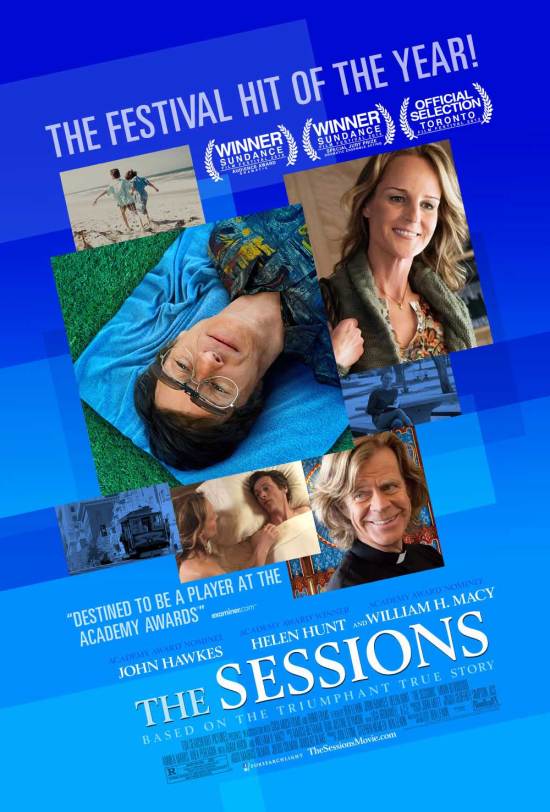
Poster for "Warm Bodies"

This week on the podcast, Glenn and Daniel check out the latest bizarre genre blend from writer/director Jonathan Levine, Warm Bodies. Can Nicholas Hoult leverage all of his acting prowess from the second series of Skins as a disaffected romantic zombie? Can Rob Corddry exhibit some alarmingly effective dramatic work with less than a dozen words of dialogue? Can a truly disgusting romantic premise wildly succeed? Find out below! (25:31)

May contain some NSFW language.

FilmWonk rating: 5 out of 10

Show notes:

  • Music for tonight’s episode comes from the Warm Bodies soundtrack, including Bob Dylan’s “Shelter From the Storm” and M83’s “Midnight City“.
  • The zombie augmented-reality running game that Daniel referred to was called Zombies, Run!.

Listen above, or download: Warm Bodies (right-click, save as, or click/tap to play on a non-flash browser)

FilmWonk Podcast – Episode #31 – “Zero Dark Thirty” (dir. Kathryn Bigelow)

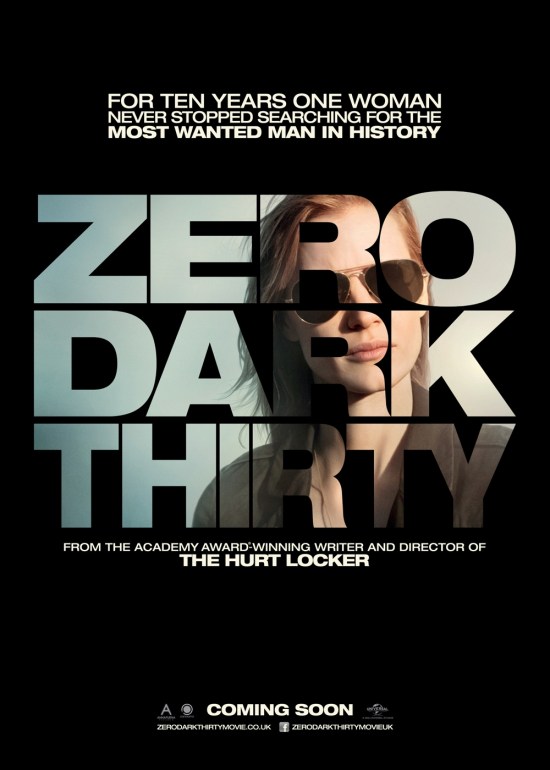
Poster for "Zero Dark Thirty"

This week on the podcast, Glenn and Daniel take an understandably spoiler-filled look at director Kathryn Bigelow and screenwriter Mark Boal‘s triumphant followup to The Hurt Locker, featuring a performance from Jessica Chastain that makes or breaks the film to an exceptional degree. (30:45)

May contain some NSFW language.

FilmWonk rating: 9 out of 10

Show notes:

  • Music for this episode is the track “Flight to Compound“, from Alexandre Desplat‘s score.
  • The European Court of Human Rights does consider sleep deprivation to be “a practice of inhuman and degrading treatment” (and thus a violation of the European Convention on Human Rights), but not precisely torture, as it does not “occasion suffering of the particular intensity and cruelty implied by the word torture”. According to memos released by the CIA, sleep deprivation is a technique that was used in post-9/11 detainee interrogations, and whether or not it constitutes torture is still controversial.
  • We refer back to our podcast of Act of Valor from last year. Check it out!
  • As promised, I did look into whether or not the audio recordings of 911 calls from September 11th were genuine or reenactments produced for the film. I have been unable to find definitive word on this (I’m sure the director’s commentary on the DVD will settle the issue eventually), but in the course of searching, I found many 9/11 recordings and transcripts that were as disturbing or more so than the ones featured at the beginning of Zero Dark Thirty. I will not link to them here, and I would encourage you not to seek them out.

Listen above, or download: Zero Dark Thirty (right-click, save as, or click/tap to play on a non-flash browser)

Peter Jackson’s “The Hobbit: An Unexpected Journey” – A bloated and beleaguered adventure

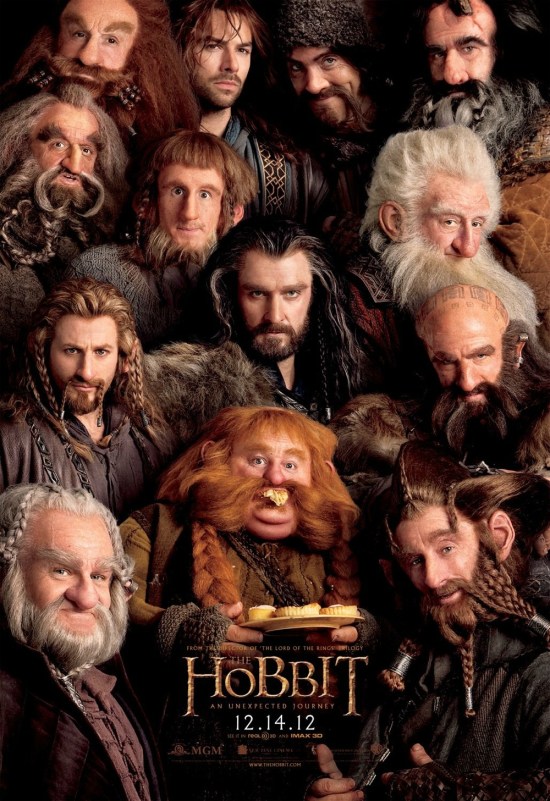
Poster for "The Hobbit: An Unexpected Journey"

Why does this film exist? As the line between art and commerce grows increasingly blurred with the unchallenged rise of franchise filmmaking, it’s certainly a fair question. Of course, on the heels of a billion-dollar franchise like Lord of the Rings, a second trip to the well was a virtual certainty. I ask this question not out of some naive sense of entitlement for artistry to emerge from the studio system, but rather as a self-contained quibble with the film itself. As I watched a nearly shot-for-shot remake of a sequence from 2001’s The Fellowship of the Ring, featuring hobbits Bilbo (Ian Holm) and Frodo Baggins (Elijah Wood) – looking 11 years older as actors, but inexplicably younger as characters – I found myself wondering what exactly was the point of this protracted exercise in nostalgia. The film is saddled in equal measure with sequences that simultaneously pad the runtime and remind the audience of the horrific fate that awaits Middle Earth in the trilogy we’ve already seen. And yet, it was only as I got to know the younger version of Bilbo (Martin Freeman) that my skepticism and apathy began to fade a bit. For it is Freeman’s light touch and sympathetic performance, as well as the film’s characterization of Bilbo, that allows it to pass as a standalone adventure story. Even as it frequently seeks to undermine itself by adhering to self-referential bits of fan-service.

To cultivate audience sympathy with a reluctant hero is a daunting task. In this very same weekend, I saw Rise of the Guardians, an unfortunate misstep from Dreamworks Animation that mingled brilliant visuals and a strong supporting cast with an utterly unsympathetic protagonist. The Hobbit was saddled with a similar burden – to allow Bilbo Baggins to initially be the most useless and reluctant member of a party of dwarven warriors who all ostensibly have personal reasons for being there. The wizard Gandalf (Ian McKellan), who seems just a bit more capable now than in his twilight years, imposes upon Bilbo’s hospitality relentlessly (in a sequence that is nearly interminable), and insists upon the hobbit’s value to the endeavor. And yet, the wizard compels him to join by appealing simultaneously to his boredom and racial guilt, rather than any specific contribution he might make. And what is their noble quest? This band is setting off to reclaim their stolen homeland, yes, but also to recover the massive bounty of gold – mined through dubious labor practices under a monarchic regime – that is cached within. They are initially no better than a band of pirates at eliciting audience sympathy, and are just as minimally characterized. And yet gradually, Bilbo comes to truly believe in their quest, and when he finally explains his motivation for sticking with this diminutive baker’s dozen, I found that my own interest level had risen similarly.

Martin Freeman in "The Hobbit: An Unexpected Journey"

Dwarf leader Thorin Oakenshield (Richard Armitage) is given a nice, meaty revenge tale to work with, and acquits himself well on-screen. But the other dwarves are given scarcely more characterization than Snow White could muster, with their attributes reduced to simple, one-word descriptions. Thinking back to how effectively Jackson’s previous trilogy managed to characterize a nine-member ensemble and myriad supporting characters, I can’t help but wonder whether nine was simply the breaking point. Apart from plump gourmand Bombur (Stephen Hunter) and ancient, genial Balin (Ken Stott), I could hardly tell you a single one of these dwarves’ unique strengths or contributions to the party. We hear that some of them are farmers, merchants, and miners, but I would task anyone to point out which is which, without the aid of Wikipedia or the IMDb. I’ll admit, my memory of the novel (which I read when I was 12) is faint, but if any such differentiation was present in the source material, it hardly makes an appearance in the film.

But speaking of appearances, I must address the film’s 48 frame-per-second 3D presentation, if only because I ended up quite unexpectedly enjoying it. Yes, every bit of rapid motion looks jerky and anomalous, but I found myself asking whether it really looked bad to my eyes, or whether it simply looked unfamiliar. After about 10 minutes of staring into what looked suspiciously like British TV, I found that my brain had adjusted completely to the illusion, and these events – and the gorgeous cinematography that captured them – were simply a window that I was gazing through. Apart from the occasional wandering audience member in the foreground, the illusion was never broken for me throughout the film, and I found that it worked hand-in-hand with the obvious advances that Jackson’s Weta Digital FX shop has made in rendering all-CGI characters in the past decade. Whether I was gazing upon an overlong cameo from Gollum (Andy Serkis) or a grotesquely blubberous Goblin King (Barry Humphries), I felt an overwhelming sense of being there, in the presence of these entirely real creations. While not all of The Hobbit‘s technical virtuosity serves to the story’s benefit (I still don’t quite understand the point of those brawling mountains), it is certainly one of its great strengths.

Bilbo asks Gandalf a simple question at the outset of the film. “Can you promise that I will come back?” The wizard answers no, and yet the audience is capable at all times of answering yes. The film is at its best when it allows Freeman to emphasize Bilbo’s personal stakes through his performance and characterization, rather than reminding us that a far greater threat – and a certain safe return – loom in the hobbit’s narrative future. Likewise, the dwarves (aided a bit by flashback) manage to eventually present their quest as a noble endeavor, worthy of story and song. And as long as they can carry it to a swift completion, they may manage to give this series of films a real raison d’être. But as it stands, the film just meanders from setpiece to meaningless setpiece with no room to breathe in-between. The quest never picks up any steam, and the party seems more like an ambling family R.V. that can’t make decent time because Dad insists on stopping off for a family photo in front of the Great Big Lawn Chair off Route 6. They may eventually reach their destination, but they might find the journey was scarcely worth it. And when Grandpa is a wizard capable of summoning air support with the slightest effort, you can’t help but wonder whether hiking across every mountaintop was really worth it.

And that, ladies and gentlemen, is what a strained metaphor looks like.

FilmWonk rating: 5 out of 10

FilmWonk Podcast – Episode #29 – “Life of Pi” (dir. Ang Lee)

Poster for "Life of Pi"

This week on the podcast, Glenn and Daniel bask in the unfilmable visual splendor and existential complexity of Life of Pi, the new film that proves that director Ang Lee is not a man to be tied down in a single genre (32:45).

May contain some NSFW language.

FilmWonk rating: 8/10

Show notes:

  • Music for this episode comes from Mychael Danna’s score for the film (track “The Second Story“).
  • We compare this film to both Avatar and Cloud Atlas – check out our word on those films as well!
  • Point of interest – Piscine Molotor is a real swimming complex…but it’s no longer open.

Listen above, or download: Life of Pi (right-click, save as, or click/tap to play on a non-flash browser).

Ben Lewin’s “The Sessions” – A frank foray into human sexuality

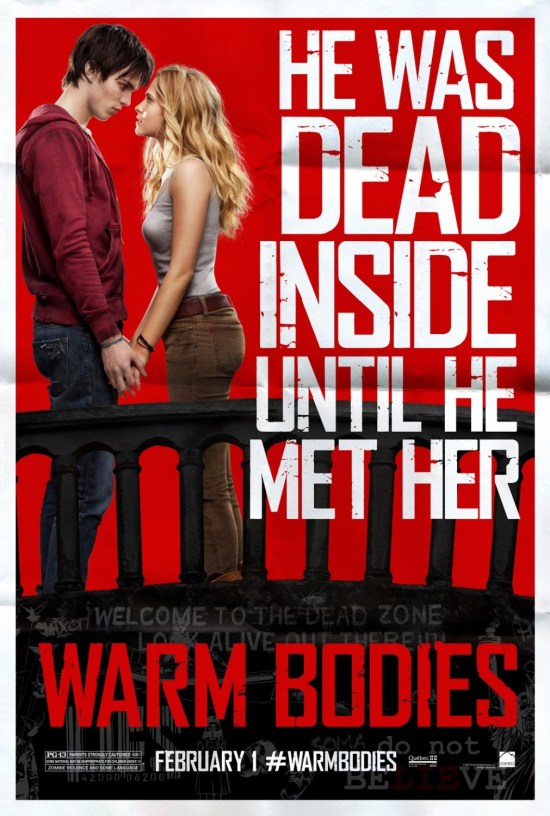
Poster for "The Sessions"

Following a bout of childhood polio, Mark O’Brien (John Hawkes) lived his life alternating between a gurney and an iron lung. Minus a brief and terrifying stint on a motorized, mirror-laden contraption, he depended on others at all times for physical movement, and yet accomplished a great deal. He earned an English degree from UC Berkeley and became a journalist, activist, and poet. And through this poetry came the rather obvious truth that even someone with such a severe disability can still live a rich emotional and intellectual life. Such is the inspiring, eloquent, and entirely likable personage that we meet at the outset of The Sessions. Which makes it ever more interesting that this film glosses over all of the above in the first five minutes and focuses instead on O’Brien’s thirtysomething quest to lose his virginity with the assistance of a sexual surrogate named Cheryl (Helen Hunt).

The real-life O’Brien (who passed away in 1999) once admonished others not to call him courageous. “Saying a disabled person is courageous,” he declared, “is like saying that a black person has natural rhythm.” This film’s treatment of O’Brien’s life and pursuit of sexuality seems to take this lesson to heart. He exhibits courage, to be sure, but also embarrassment, shame, uncertainty, and terror, often mingled with wildly varying degrees of ecstasy. The film offers an incredibly true-to-life and universal exploration of one’s initial foray into sexuality, awkwardness and all. It uses O’Brien’s disability as a lens for his particular perspective rather than a facile and patronizing metaphor for the human condition, like so many lesser films on the subject.

Hawkes’ take on the character is simply marvelous, contrasting physical vulnerability with brazen and shameless honesty. There’s definitely more telling than showing with Hawkes’ character – with a screenplay based on O’Brien’s 1990 article, the film relies heavily on voiceover. And existing in a world of MPAA ratings, it also relies on O’Brien graphically recounting his unseen sessions with Cheryl after the fact, by way of conversations with the probably-fictitious Father Brendan (William H. Macy). Despite infusing O’Brien with a convincing measure of spirituality, the film doesn’t seem particularly interested in taking an in-depth look at the complex relationship between religion and sexuality. A late scene between Cheryl and a synagogue official had far more resonance in its discussion of the nervousness of young [naked] Jewish brides-to-be than any of the scenes between O’Brien and his priest. Hawkes and Macy make believable on-screen friends, but the Father’s religious cognitive dissonance really only played out on Macy’s face and never in the script itself. As amusing as it is to hear a priest suggest that Jesus Christ will give O’Brien “a free pass” for his plan, it all feels just a bit too tongue-in-cheek and cartoonish.

At various other points in the film, we see O’Brien recounting his sessions with his understandably curious friends and caregivers (including a nice turn by Moon Bloodgood), all of whom can identify on some level with what he is doing. Each of the scenes with Father Brendan could have been replaced by an equally frank conversation with just about any of his other acquaintances (or perhaps even Macy himself in another guise) and taken very little out of the film.
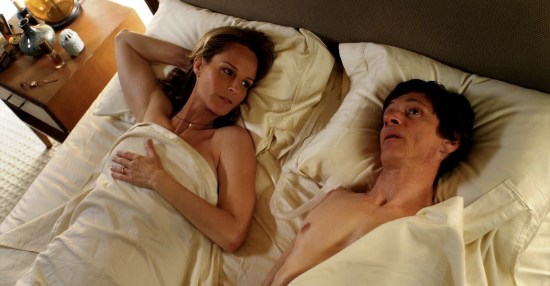
Still from "The Sessions"

Despite this significant structural problem, the film has a great number of impressive scenes between Hawkes and Hunt during the titular sessions. Cheryl, a married soccer mom in her private life, is quite a believable character. She has the air of an experienced practitioner, but has clearly never worked with such a severely disabled client. She gets visibly flustered as she starts to realize the full extent of O’Brien’s needs (after accidentally bending his fingers the wrong way!). And yet, her dictated notes reveal just how consummately professional she is, discussing O’Brien’s progress and feelings in practical and psychological terms even as her human compassion remains a factor. Her marriage is also fascinating, with a husband (Adam Arkin) who isn’t threatened by his wife having sex with her clients, but gets quite chafed when one of them mails her a heartfelt poem. Hunt’s brilliantly multifaceted performance as well as her evolving interactions with Hawkes quite effectively demonstrate all the negotiations and compromises that enter the mix with sex and emotion. By the time the two are able to converse comfortably despite being two naked near-strangers in bed, it becomes clear just how adaptable human interaction can be.

In fact, the film’s examination of sexual surrogacy offers a curious counterpoint to the debate over the legal status of prostitution. Legally speaking, Cheryl is definitely in the world’s oldest profession, and yet the film goes out of the way to point out the myriad differences between herself and a conventional lady of the evening. She isn’t interested in repeat business- in fact, a self-imposed guideline prohibits it beyond a specific number of sessions. All she is interested in is helping her clients discover their preferences, limitations, and capabilities, using her own body to guide the position, performance, and sensation of the client’s body. In this sense, she fits into a role none-too-dissimilar from a physical or speech therapist. While most people can work out these personal factors with a romantic partner (whether or not they ever try to), it does seem a bit naive to assume that everyone is capable of doing so. On the other hand, we’re certainly seeing the best possible version of sexual surrogacy in this film, and the profession as a whole seems rife for potential abuse, both of its patients and practitioners.

But the fact that the film is willing to provoke these questions is certainly its greatest strength. In a world of slutshaming, date rape, sex trafficking, death penalties for homosexuality, and ecstasy laced with Viagra, it’s easy to forget that sex is not the dark, shameful, and scandalous thing that it so often seems. It is the one thing that binds us all together. We all have attitudes and morals, preferences and predilections. We all have a relationship with sex, regardless of how that relationship is expressed. And in the case of individuals like Mark O’Brien, that relationship was only limited by what his body was physically capable of expressing. The mind – and penis – were as willing as ever. This depiction, however close or divergent it might be from real life, manages to tackle a serious subject with a great deal of levity and humanity. Per his wishes, I won’t call O’Brien courageous. But The Sessions certainly tries to be.

FilmWonk rating: 7 out of 10
Quick double review: Julia Loktev’s “The Loneliest Planet”

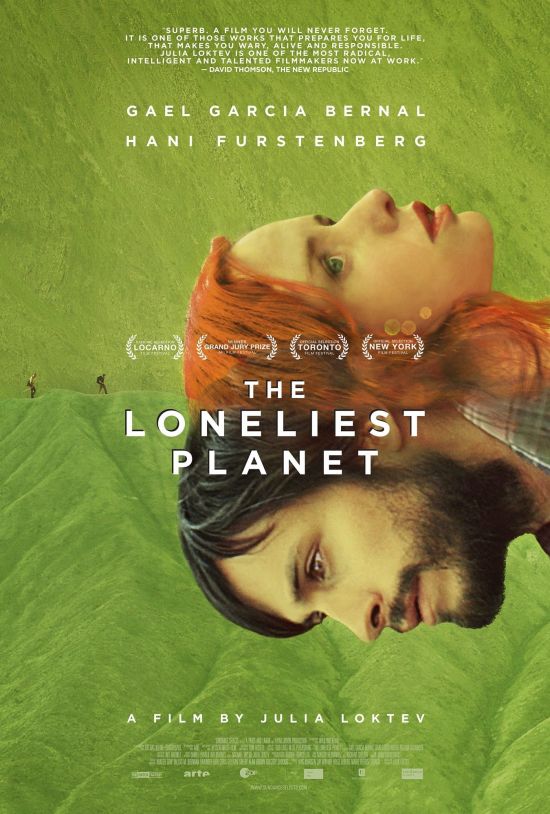
Poster for "The Loneliest Planet"

Daniel and I recently saw the new film from writer/director Julie Loktev, The Loneliest Planet. The film features an engaged couple, Alex (Gael García Bernal) and Nica (Hani Furstenberg), who are backpacking through the Caucasus Mountains, when something significant and spoilery happens, that Changes Everything™. What follows are our unfiltered thoughts on the film.

Daniel:
The Loneliest Planet is described as a thriller, which is about the biggest bunch of crap I have ever heard. This meandering, pointless tale about two uninteresting travelers is not only grating to the audience; it’s insulting. Long, directionless shots of repetitive Georgian landscapes are coupled with minimal dialogue, next to zero context, and horrendously boring characters. The big event which “changes everything ” was actually a laugh moment. Instead of exploring what this means for the couple, we get more walking (now with body language cues!) and one of the longest most irritating scenes I can remember (featuring a campfire song). Minimalism can certainly work for you, but you need some dialogue, subtitles if other languages are present (the tour guide is difficult to understand-not that it mattered), and character development to tell a story. At the end this is a 5-10 minute short that is elongated to a maddening length. Avoid.

Glenn:
My esteemed colleague detested this film only slightly more than I did. I will grant that idea of a couple’s relationship quietly breaking down thanks to a single, horrendous misstep is a fascinating one. I will even grant that depicting this encroaching gulf between them with minimal dialogue, particularly in the presence of a total stranger on vacation, also seems realistic. Anyone who has been to an uncomfortably silent dinner engagement between a pair of estranged hosts can certainly testify to this. The problem with this film is that we’re given next to no information about these characters. We don’t know who they are, how long they’ve been together, why they’re on this trip, or most importantly, what they mean to each other. They might have dated for years, or met last week in El Salvador (one of the many places Nica brags about visiting) – and knowing just a bit of this information might have provided a bit more perspective for “the big event”. While there are a few scenes that give us a modicum of backstory for these characters, they tended to be overlong in all the wrong ways. An early scene of unsubtitled dialogue with some Georgian villagers goes on for nearly a full minute past the point of telling us that A, these characters don’t speak the language, and B, they’re adventurous enough to be okay with this.

And that’s really the most frequent vice this film indulges in. It uses a rich tapestry of cinematography to show the couple (and their guide) trudging across the gorgeous mountain landscape, but each of these shots lasts longer than it needs to (even after I had finished studying every detail of the frame as I would a painting), and utilizes a score that comes off as increasingly repetitive – much like the landscape itself. In the end, the film doesn’t reveal much about relationships in general, because it reveals next to nothing about the relationship at its center. There is a skeleton of a character study here (with a decent performance from Furstenberg at the heart of it), but it is wrapped up in such a meager helping of character, dialogue, or story, that the resulting work comes off as hollow, insubstantial, and utterly boring.

FilmWonk rating: 2 out of 10

Martin McDonagh’s “Seven Psychopaths” – Cute and hilarious.

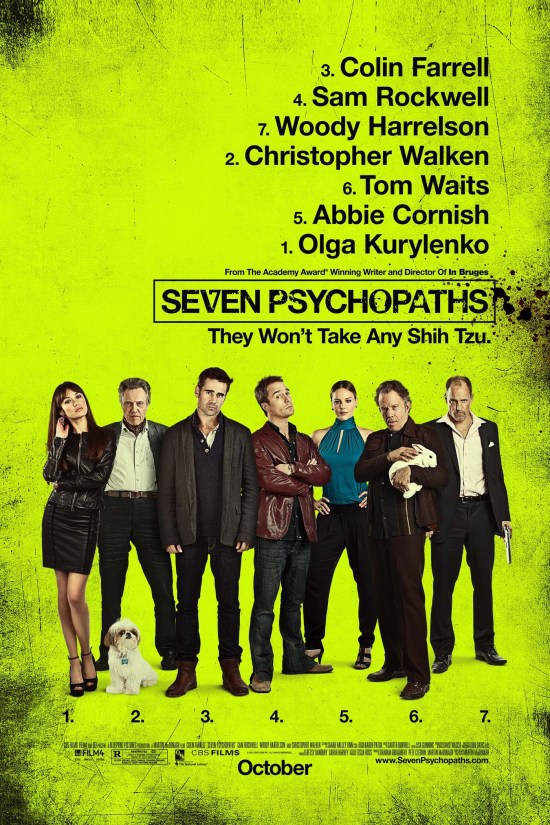
Poster for "Seven Psychopaths"

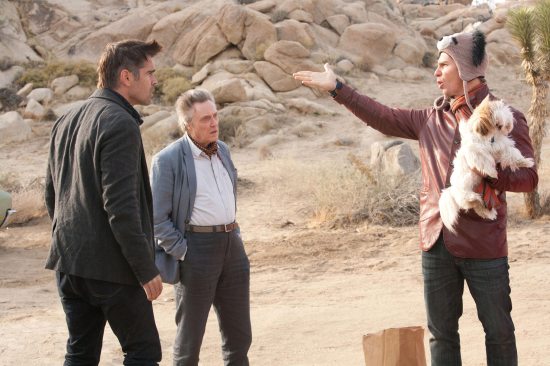
I know what you’re thinking. This film is about a culturally satisfying number of psychopaths. It’s from Martin McDonagh, the bloody-minded, utterly un-PC writer/director of In Bruges (as well as The Lieutenant of Inishmore, which is, to this day, the most disturbing thing I’ve ever seen on a stage). How can it possibly be “cute”? Well I’ll tell you, dear reader. The main character is a drunken Irish screenwriter named Martin (Colin Farrell), who is attempting to write a screenplay for a film called Seven Psychopaths. The very same film we’re presently watching, in fact. The film cuts back and forth between his beautifully imaginative psychopathic origin vignettes and the “real world”, along with occasional revelations that some of his psychopaths are in the actual story of the film we’re watching. Maybe. It’s wonderfully unclear.

Seven Psychopaths seizes on the fundamental truth of storytelling that no idea is completely original. You may think it came from a serendipitous muse that squirted it into your brain from the collective unconscious, but we are the inexorable products of our surroundings, our culture, and most importantly, our stories. Stories we’ve been told, stories we’ve forgotten, and stories we’ve subsequently retold and passed off as our own work. This is a bloody-minded Adaptation. Hugo without the whimsy. It is sickeningly self-aware, and could have felt like a lesser parody of either of those films if not for such a perfect ensemble cast.

Sam Rockwell plays Billy Bickle, professional dognapper. When Bickle’s partner, Hans (Christopher Walken), accidentally steals a Shih Tzu owned by mobster Charlie Costello (Woody Harrelson), the two are forced to scramble to stay alive as Costello ruthlessly seeks out his purloined puppy. While Walken and Harrelson are perfectly cast, the absolute standout is Sam Rockwell, who plays the rather obviously-named Bickle as a relentlessly delightful sociopath. His every interaction with Farrell is pitch-perfect, even as he interrupts each fresh outrage to question whether his screenwriting friend might have a drinking problem. The film also features a solid supporting ensemble, including Zeljko Ivanek and Kevin Corrigan, as well as an outstanding turn by Tom Waits, who manages to turn the simple act of petting a bunny into something wondrously terrifying.

You might notice I haven’t mentioned any ladies yet, and there are several in the film. Abbie Cornish, Olga Kurylenko, and Gabourey Sidibe each have small parts, and they do decent work with what little they’re given. Newcomer Linda Bright Clay is especially strong as Hans’ wife. But this is where the film’s veneer of self-awareness starts to crack a bit. Can a screenplay that’s chock full of crappy, one-note, brutally treated female characters redeem itself by having one of its myriad gentlemen point it out in the third act? My general response would be ‘no’, but Farrell’s hilariously weak defense that “it’s a tough world for women”, and Walken’s wry retort that despite that, most of the ladies he knows “can string a fucking sentence together” completely saved it.

Still from "Seven Psychopaths"

In fact, when the last act of the film drops any pretense of real-world story and has the entire ensemble vigorously debating how the movie should end, it somehow manages to hit every note perfectly. Its self-awareness becomes incredibly endearing, even as it debates precisely what kind of shootout should bookend the story. The film’s most honest moments emerge from this sequence, as Marty questions whether he even wants to write this kind of story anymore. Psychopaths might be a fun idea with which to frame a story, but they do get a bit fucking tiresome when you have to write so many of them.

But whether he wants to keep writing this kind of story or not, McDonagh still seems to be having a great deal of fun with the material. His Irish characters still border on caricature, his racist humor reaches Tarantinoan levels of superfluousness, and his odd fascination with the Vietnamese continues. His creations are born in a world of cartoonish excess, and die with as much frenetic and hilarious bloodlust as the script can muster – unless of course he changes his mind before the film ends. But in a film like Seven Psychopaths, mind-changing is an integral part of the narrative. The film conceives of a great many brilliant characters, then dispenses with any necessity to actually put them into the story. Some might regard this as a cheat, but I simply saw it as a laundry list of possibilities. When Martin McDonagh plays in his sandbox, this is the unholy ensemble that emerges. And as hilariously overdone as it might be, it still felt as fresh and effective as ever.

FilmWonk rating: 8 out of 10

FilmWonk Podcast – Episode #26 – “The Master” (dir. Paul Thomas Anderson)

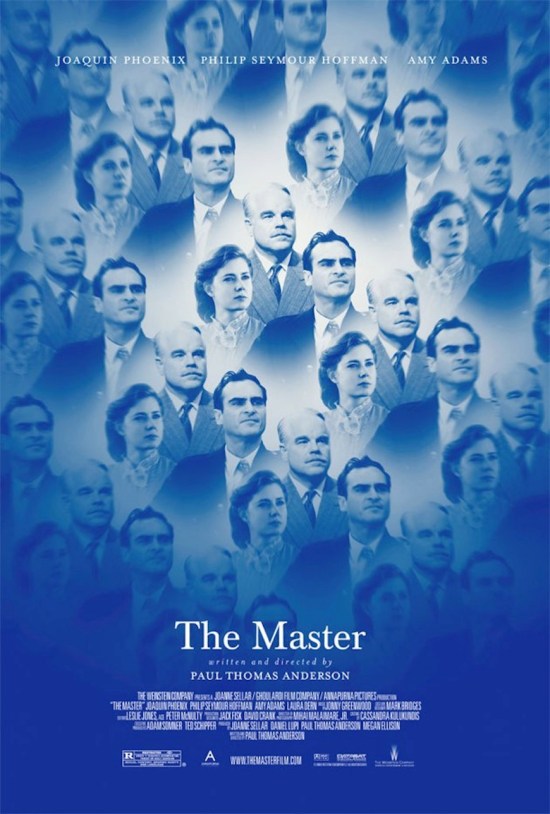
Poster for "The Master"

This week on the podcast, Glenn and Daniel purge their inner demons reviewing Paul Thomas Anderson’s new film, The Master, starring Joaquin Phoenix, Philip Seymour Hoffman, Amy Adams, and Laura Dern (25:33).

May contain some NSFW language.

FilmWonk rating: 6/10

Show notes:

  • Music for this episode is Ella Fitzgerald singing “Get Thee Behind Me Satan“, from the soundtrack to The Master.
  • Check out my review of Rian Johnson’s Looper here.

Listen above, or download: The Master (right-click, save as, or click/tap to play on a non-flash browser).

SIFF Review: “Earthbound” – A schizophrenic mess of alien romance

Poster for "Earthbound"

Earthbound is a mess, plain and simple, which is doubly disappointing given all the awesomely schlocky B-movie promise of the pre-credits sequence. We learn the tale of Mathius and Jace, the sole refugees of a distant planet called Zalaxon, which has been torn apart in a civil war. Mathius fled the planet with his son, who was due to be sacrificed by the enemy in order to win the war…somehow. Jace lives on as the “Last Son of Zalaxon” in exile. Presumably this is also a symbolic title, as his warring planet is still awaiting his return by way of a signal beacon visible through a wormhole that opens every few years between Zalaxon and Earth.

And you know what? All of that is just fine. This film takes an absurd space opera and spells it out via a dazzling series of colorful comic book panels, leaving the audience begging for more. But all of the delight and incoherence of this premise could have only succeeeded if this film had the slightest idea of what tone it was going for. If I’m to judge by Liam Bates’ oppressively cloying musical score, the film is trying to be a grown-up version of E.T., replacing the earnest and childlike alien relationship with that of a pair of desperately lovestruck adults. Joe, the 10-year-old boy formerly known as Jace, loses his father Bill (né Mathius) (David Morrissey) at the age of 10. Before dying [of unspecified causes], Bill lets his son in on his extraterrestrial origins, leaving behind a collection of retro-futuristic children’s toys and otherwise human-looking objects as evidence. But more on this collection later.

Fifteen years later, Joe (Rafe Spall), now working as a clerk in a comic shop, instantly falls for fellow sci-fi fan Maria (Jenn Murray) by way of an electronic wristband that instantly informs him of their 93% genetic compatibility (well past the 85% that he needs in order to knock up one of those easy Earth girls). While “you’re the only hope for my people” might have actually had some success as a pickup line, Joe wisely conceals his true identity when asking Maria out. But what we get instead are some of the most insipid attempts at romantic dialogue this side of Attack of the Clones, made even more obnoxious by the score’s various attempts to make me think I’d felt something for these star-crossed lovers. The two performances are individually decent, but weren’t remotely believable as romantic partners, with Murray’s earnest sadness and Spall’s unrelenting quirk making an incredibly poor match when sharing the screen.

Still from "Earthbound"

This film had all the elements of a successful piece of sci-fi, but no earthly idea how to fit them all together. Among Joe’s gadgets was a holographic projection of his father – a device that served virtually no purpose beyond exposition and plot contrivance. This is neither Jor-El nor Obi-Wan. While there’s a chance of poignancy in the idea of Joe conversing endlessly with an affectless husk of his dead father, the various attempted emotional beats in this “relationship” utterly fail to land. When Joe is potentially forced to give up on seeing his projected father ever again, the dilemma inspired nothing more than a tepid yawn, and was over just as quickly. If Joe doesn’t care, why should I? And his choices don’t seem to matter much anyway. Each of Joe’s mundane-looking alien devices had to stop working at just the right moment to prevent anyone from believing his story, and start working again just in time to be useful or muddy the waters further. The film tries to delve into psychological thriller territory by forcing Joe to doubt the veracity of his tale, but given the clunkiness with which his doubts are established, it doesn’t remotely succeed. Apart from a hilariously dark performance by Stephen Hogan as the world’s worst psychiatrist, there is very little to redeem this act, and it attempts so many unsuccessful twists and reversals that it all becomes downright tedious.

But the final sequence very nearly saved it. Some vague spoilers will follow. By the time we reached the third villainous monologue, in which the baddie just can’t kill the hero without first talking his ear off about how thoroughly he has been beaten, I thought perhaps the film had found its footing again. The final sequence would feel right at home in a 50s sci-fi romp, and it was this loving and old-fashioned treatment of the genre that made me lament just how much of a missed opportunity this is. Earthbound is actually quite well made, and everything – from the production design and effects to the majority of the performances – seemed just adept enough that it all should have coalesced into something just a bit more watchable. But for a film that only has enough plot to fill perhaps a single decent episode of Doctor Who, the rest just feels like the disorganized cutting-room bits of a different project.

FilmWonk rating: 4 out of 10

FilmWonk Podcast – Episode #23 – “Liberal Arts” (dir. Josh Radnor) (SIFF)

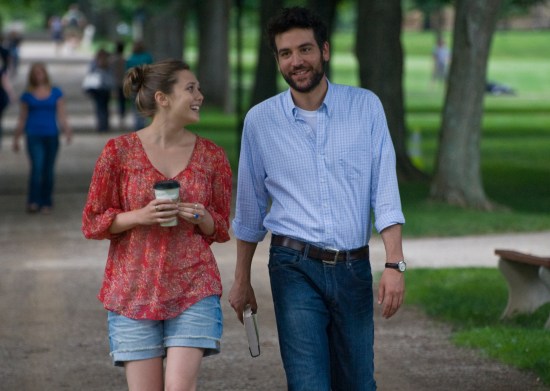
Still from "Liberal Arts"

Back at SIFF and back to school! Glenn and Daniel hit the books with college nostalgia as they review Liberal Arts, the latest film from How I Met Your Mother star Josh Radnor. Take in their worthless intellectual blather while you can! They’ve both got work in the morning that is utterly unrelated to their majors.

May contain some NSFW language.

FilmWonk rating: 6.5/10

Show notes:

  • Music for this episode is a pair of classical pieces that appear in the film. The first is Beethoven‘s Symphony No. 6 Pastorale as performed by Istanbul’s National Conservatory Orchestra (free download in link). The second is Soave sia il vento, from Mozart‘s opera Così fan tutte, which I’ve included in its entirety at the end of the podcast. Listen to it while walking down the street and watch as everyone becomes more attractive.
  • Regarding the age question that both we and the movie raise – Elizabeth Olsen was around 22 when this film was shot. Josh Radnor was 37, and Allison Janney was 52.
  • The book shop owner is played by Elizabeth Reaser of Twilight fame. And it all comes full circle.

Listen above, or download: Liberal Arts (right-click, save as, or click/tap to play on a non-flash browser).