FilmWonk Podcast – Episode #40 – “The Lego Movie” (dir. Phil Lord and Christopher Miller)

Poster for "The Lego Movie"

This week on the podcast, Glenn and Daniel tackle the latest piece of zany versatility from Phil Lord and Christopher Miller, The Lego Movie.

Check out our discussion below (22:41).

May contain some NSFW language.

FilmWonk rating: 8 out of 10

Show notes:

  • Music for tonight’s episode includes the delightfully satirical tracks “Everything is Awesome” and “Untitled Self Portrait” (Batman’s song) from the film’s soundtrack.
  • The budget for The Lego Movie is officially $60 million, notwithstanding the “Hollywood math” constraints we mentioned. For more on this, check out Edward Jay Epstein‘s book, The Hollywood Economist. For reference, “the last couple of Pixar films” had official budgets of $185 million (Brave) and $200 million (Monsters University) respectively.

Listen above, or download: The Lego Movie (right-click, save as, or click/tap to play on a non-flash browser)

FilmWonk Podcast – Episode #39 – “Labor Day” (dir. Jason Reitman)

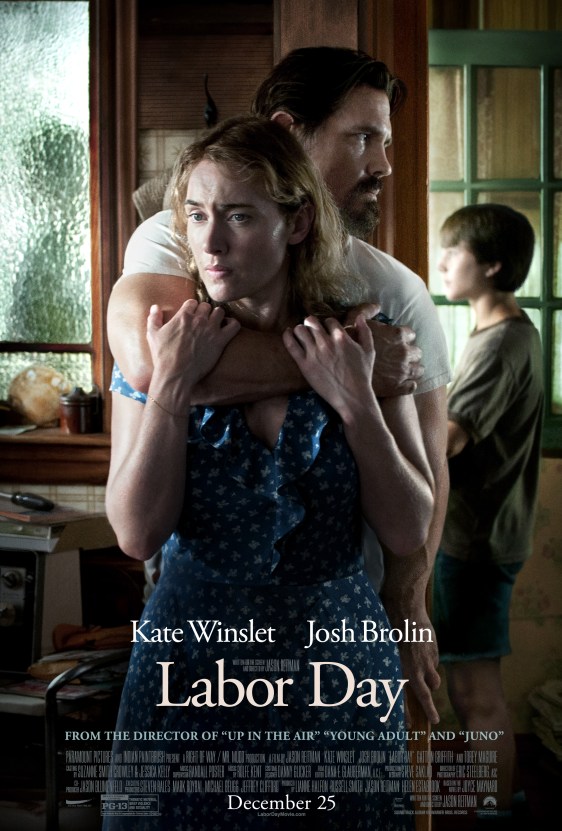
Poster for "Labor Day"

This week on the podcast, Glenn and Daniel dive into Labor Day, a surprising genre exercise from beloved director Jason Reitman, featuring Kate Winslet as a single mother who is taken hostage by – and finds herself falling for – an escaped convict named Frank Josh Brolin. Can a talented cast and filmmakers elevate a premise that seems, on the surface, to be the fodder of Nicholas Sparks novels?

We thought so – and we promise we’re not damning with faint praise. Check out our discussion below (42:32).

May contain some NSFW language.

FilmWonk rating: 7 out of 10

Show notes:

  • Music for tonight’s episode begins with “Criminal” by Britney Spears, and ends with Spanish guitarist Fernando Sor‘s “Exercises in B. Minor, Op. 35, No. 22” (as performed by Stephen Novacek) a variant of which appears on the Labor Day soundtrack. Why didn’t we use the version from the movie? Because it wasn’t available as a standalone track. Listen to the lovely guitar. And eat your vegetables. Punks.
  • Correction: Alexie Gilmore played Marjorie, Hank’s stepmother. Evelyn (the annoying neighbor) was played by Brooke Smith, best known from Grey’s Anatomy.
  • Correction: J.K. Simmons is indeed an insurance spokesman, but he represents Farmers Insurance, not Allstate (Dennis Haysbert) or State Farm (“Mayhem”/Dean Winters). As an advertising major, Daniel regrets the error.
  • Correction: It turns out 17-year-old Henry is actually played by a different actor, Dylan Minnette.

Listen above, or download: Labor Day (right-click, save as, or click/tap to play on a non-flash browser)

2013 Glennies: Best Picture (Top 10 Films of 2013)

#11: The Wolf of Wall Street

Poster for "The Wolf of Wall Street"

Directed by Martin Scorsese, written by Terence Winter, based on the book by Jordan Belfort

As always, the #11 slot goes to a film that I thoroughly enjoyed, but have reservations about including in the Top 10. As expected from Scorsese, The Wolf of Wall Street is well-made, well-acted, and a bit overlong. Following his turn in 2011’s Moneyball alongside Brad Pitt, Jonah Hill proves once again that he is capable of staggering acting quality when paired with an A-list star. The star in question is Leonardo DiCaprio, who is basically playing a drugged-out, misogynistic, and ultimately more honest version of the rich tycoon that he played earlier this year in The Great Gatsby. Like Lord of War, this is a chronicle of an unsympathetic character’s rise to power, and like Observe & Report, it is an unabashed celebration of bad people doing bad things. Make no mistake – this is a film about, by, and for – terrible people. And that’s okay. Nobody’s a single thing, and you have to be a certain amount of terrible to partake in the kind of debauchery on display here. Apart from that, this is certainly one of the best comedies of the year.

#10: Blackfish
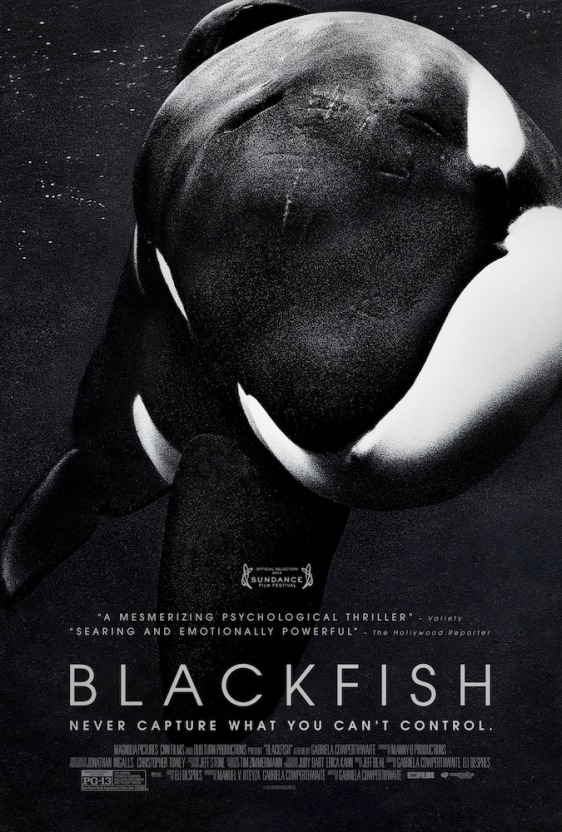
Poster for "Blackfish"

Directed by Gabriela Cowperthwaite, written by Cowperthwaite and Eli B. Despres

This documentary is best summed up by a quote from a former SeaWorld trainer that appears in an on-screen interview:

“I can’t imagine a society that values marine mammals as we do…without parks like SeaWorld.”

For a film that’s ostensibly a hit-piece on captive marine mammal shows in general, and SeaWorld specifically, Blackfish approaches an emotional subject with uncommon subtlety. It presents the issue purely in terms of practicality – there is no safe manner in which an orca can be kept safely as a private show animal, therefore it shouldn’t happen. Then it lets its subjects – who are apparently immune to irony – hang themselves with quotes such as the one above. Any moral conclusions about whether it’s “right” or “wrong” to keep orcas captive are left for the audience to draw on their own – even if it’s clear which direction the film is prodding you toward.

This is quite a harrowing and well-made documentary, and given its wide distribution, likely to be an effective one. As of this writing, the title is available on Netflix streaming.

Check out my full review here:
SIFF Roundup: “Blackfish”, “The Kings of Summer”

#9: The Bling Ring
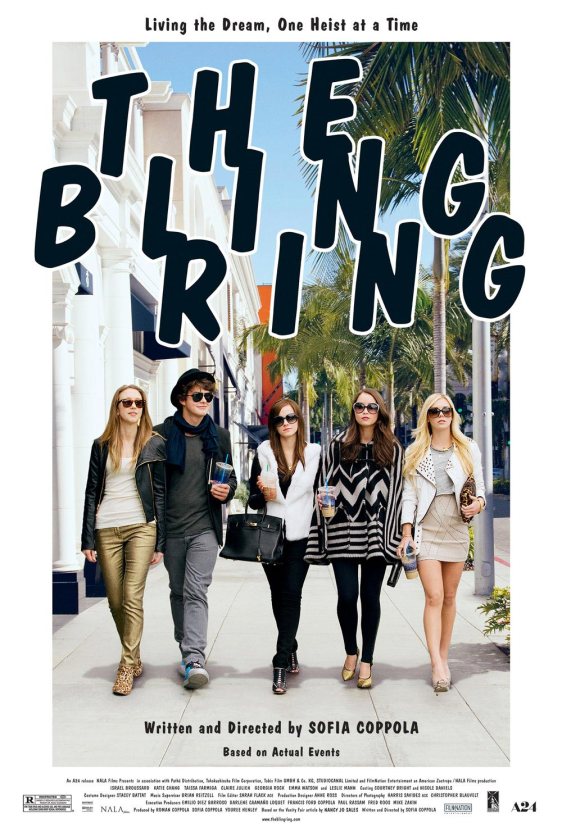
Poster for "The Bling Ring"

Written and directed by Sofia Coppola, based on a Vanity Fair article by Nancy Jo Sales

Color me dumbstruck. This was a film I hadn’t even planned on seeing (after a press screening for a much worse film went awry), and it was about a group of people that I had virtually no interest in. When a group of bored, privileged teenagers go on a burglary spree in Beverly Hills, pilfering goods from the unlocked houses of Hollywood’s TMZ-elite (including Paris Hilton, whom they robbed a half-dozen times before it was even noticed), I was expecting to be bored by their vapid pursuit of overpriced fashion. And yet, this film not only delivered some of the most fascinating characters and performances of the year, but also a thoroughly well-paced, well-edited, and entertaining peek into the lives of this wild bunch of girls (and a couple boys). Relative newcomers Katie Chang and Israel Broussard are riveting, delivering a friendship (with some chilling subtext) that manages to deftly carry the first two thirds of the film. Broussard’s naïveté and Chang’s cold calculation make for an impressive pairing – and are only made better when placed alongside Emma Watson. Watson is handed the last third of the film, as well as several of the most entertaining monologues I’ve seen this year, delivering vapid nonsense with utter sincerity to whichever members of the press will listen. This film is endlessly entertaining, and also thoroughly understands the twisted pursuit of fame and fortune that this ring is indulging in. They are essentially just a lower tier of the class of people that they are stealing from, even to the degree that in the end, their high-level transgressions don’t especially matter (a theme made clear when Watson’s character briefly shares a cell block with one of her victims, locked up for DUI).

See this film and be pleasantly surprised along with us. Listen to our discussion of the film here:
FilmWonk Podcast – Episode #35 – “The Bling Ring” (dir. Sofia Coppola)

#8: Side Effects
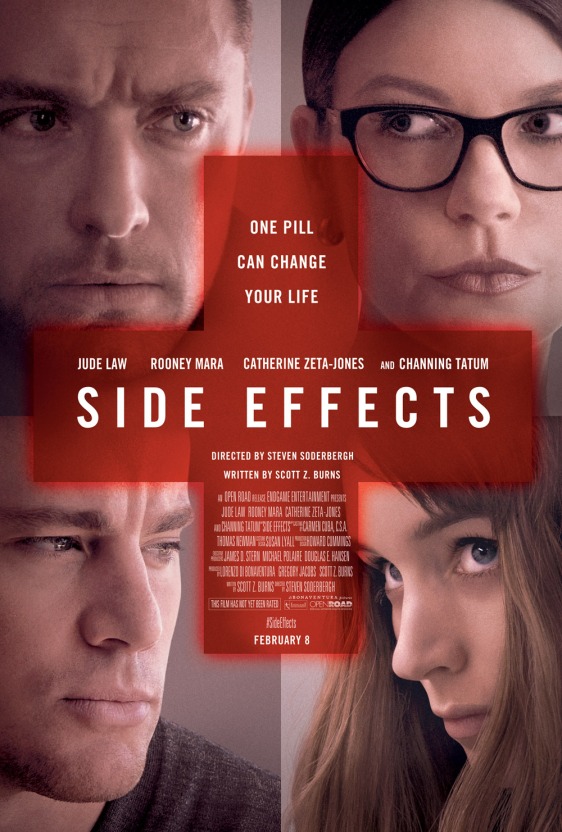
Poster for "Side Effects"

Directed by Steven Soderbergh, written by Scott Z. Burns

Following 2012’s Contagion, director Steven Soderbergh and screenwriter Scott Z. Burns team back up to deliver an impressive thriller of a different sort. Side Effects feels at home alongside the best of Alfred Hitchcock, and regrettably, I can say little else about the film without damaging its appeal, except that I rewatched it this past month, and can confirm that it holds up well to repeat viewing.

As of this writing, Side Effects is available on Netflix streaming. And like last year’s #2 pick, The Imposter (also available), you would do well to watch it without reading anything else in advance.

#7: Celestial Wives of the Meadow Mari

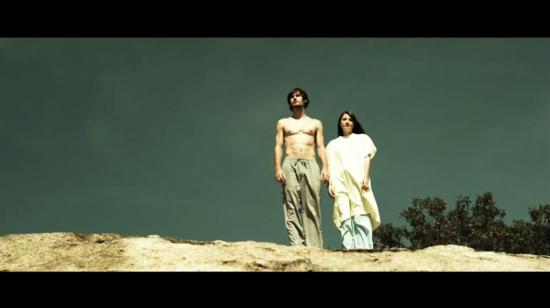
Still from "Celestial Wives of the Meadow Mari"

Directed by Aleksey Fedorchenko, written by Denis Osokin

I feel a bit bad including a film that is unlikely to find distribution in the United States, but I am compelled to include this film because it is nothing less than a master class in short-form storytelling. Taking the form of 22 vignettes about an ethnic and religious group living in a Russian republic east of Moscow, this film is not only beautifully shot, but manages to tell a series of fascinating stories that each deliver a clear beginning, middle, and end – even if you sometimes have to dive deeply into the subtext to find it. This film is alternately funny, touching, and bizarre – and at all times, it remains exhilarating.

Read my full review here:
SIFF Review: “Celestial Wives of the Meadow Mari” (dir. Aleksey Fedorchenko)

#6: Her
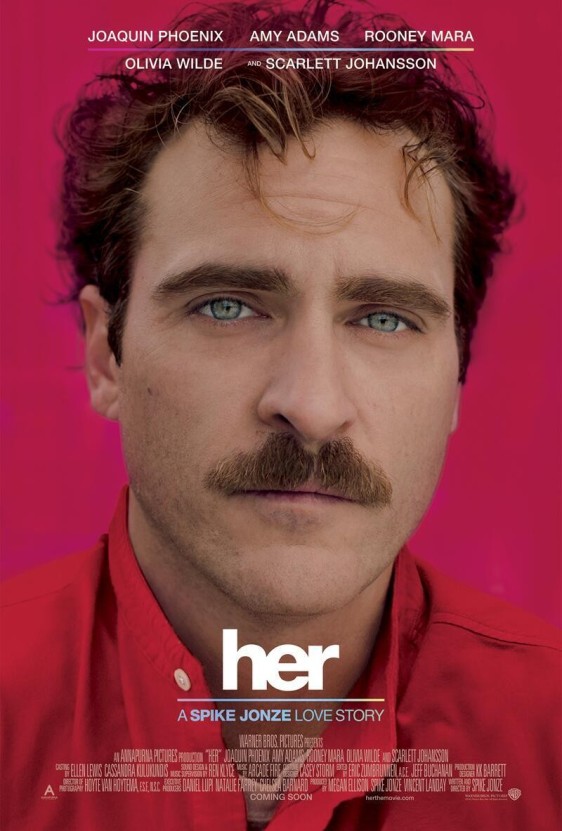
Poster for "Her"

Written and directed by Spike Jonze

Spike Jonze‘s Her features a man named Theodore (Joaquin Phoenix) falling in love with an artificially intelligent operating system named Samantha (voice of Scarlett Johannson). And I must say, when one of Samantha’s first lines is telling the film’s depressed, antisocial protagonist to “maybe try and get out of bed?”, I was quite nervous that I was about to see Manic Pixie Dream Bot: The Movie. But what the film delivers instead is an impressively mature take on romance. Like Eternal Sunshine of the Spotless Mind before it, the film explores romance through the lens of the failed relationship, between Theodore and his soon-to-be-ex-wife Catherine (Rooney Mara). But unlike that film, the relationship merely feels like a backdrop to the well-realized sci-fi love story on display here. And the sci-fi world itself is an equally impressive backdrop. The visual effects (which mostly consist of greatly increasing the number of skyscrapers in Los Angeles) are subtle and well-rendered, and what’s more, the science fiction elements left me walking out of the film asking all kinds of questions about how this world operates. And these were the good kinds of questions – the ones that are provoked by a sci-fi world that feels so lived in that I assume that each of my questions has an answer. And by the end, many of these questions are about the nature of Samantha herself, as well as her relationship with Theodore. This is an always-on girlfriend, who will immediately answer the phone and start a conversation whenever you want – and as such, it would be easy to assume that she has no inner life of her own. But as the film goes on, it becomes clear that Samantha’s inner life is far more elaborate than is immediately apparent. The film’s most impressive theme regarding artificial intelligence is that any entity that is designed to replicate human emotion will be unlikely to end up a perfect match in capability to actual human beings. When an artificial being fails to quite measure up to a human being, we refer to this disparity informally as the Uncanny Valley. But when such a being measures up to the capabilities of a human and then some, what do we call that disparity?

Apparently, we call it romance – and certainly one of the most fascinating ones of the year.

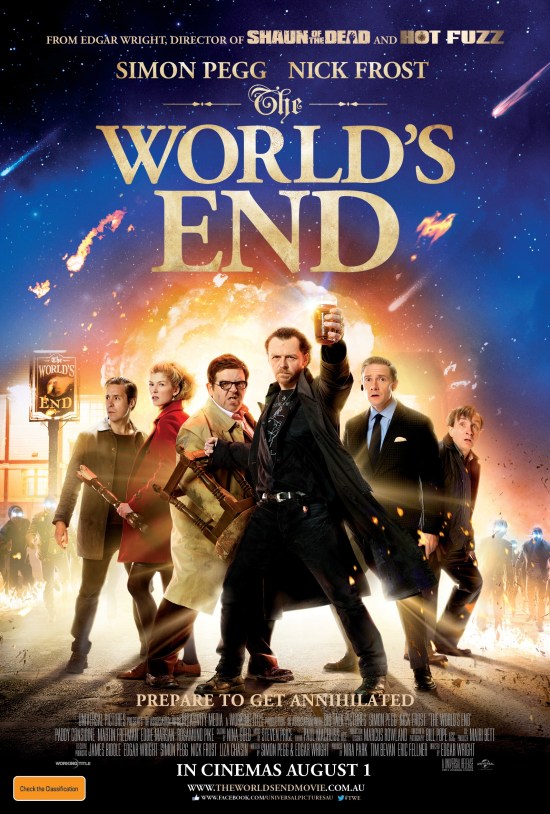
#5: The World’s End
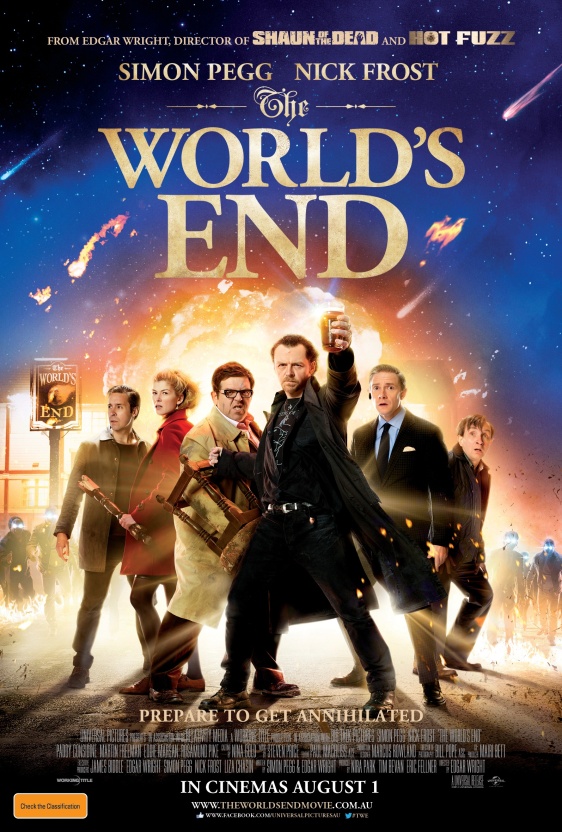
Poster for "The World's End"

Directed by Edgar Wright, written by Wright and Simon Pegg

I saw The World’s End in close proximity to Neill Blomkamp‘s Elysium, and was quite surprised when the former turned out to be the better sci-fi action film. Ostensibly, this is a film about five middle-aged men coming back together to go on a 12-pint pub crawl in their hometown, but coming as it does from the creators of Shaun of the Dead and Hot Fuzz, there are some genre trappings at work in this film that are not immediately apparent. But what makes this movie work so well is not just the well-rendered frenetic action, but the solid, character-driven comedy at the center of it. Gary King (Simon Pegg) is an immature and infectious partygoer bordering on the sort of serious self-destruction that is rarely seen in comedy (much the same as Russell Brand’s character in Get Him to the Greek), and Andy (Nick Frost) is the straight man and former childhood friend who wants absolutely nothing to do with him. This reversal of the Pegg and Frost dynamic from the rest of the Cornetto trilogy works rather well, particularly with regard to Frost, whose surly demeanor becomes more and more justified as the history between these two characters is made clear. Martin Freeman, Paddy Considine, and Eddie Marsan round out the cast, and it is one of the film’s great strengths that each of these characters (even the latter two, who are definitely the least prominent) have well-established roles, desires, and history within the group. Indeed, the history between the members of this group – particularly Pegg and Frost’s characters, weighs heavily on the proceedings at all times. In much the same way as Shaun of the Dead, this film is a farcical sci-fi comedy that manages to make its characters matter – both to each other and to the audience.

Listen to our discussion of the film here:
FilmWonk Podcast – Episode #37 – “The World’s End” (dir. Edgar Wright), “Mud” (dir. Jeff Nichols)

#4: Stories We Tell
Still from "Stories We Tell"

Written and directed by Sarah Polley, with narration by Michael Polley

Actress and writer/director Sarah Polley is no stranger to putting personal stories on film (2011’s Take This Waltz had some undeniable connections to her personal life), but this documentary definitely takes it to a new level, turning the cameras upon Polley herself, as well as her family and friends. The mystery of Diane Polley (Sarah’s deceased mother) is at the core of this film – and believe me, it’s a doozy. With this woman dead and gone, all that her loved ones have left are their own memories and perspectives – and the narratives that they construct from them. If this sounds boring and navel-gazing, the film demonstrates an impressive degree of self-awareness about that expectation. It never insists that anyone outside of the Polley family will find this personal story interesting (in fact, several members of the family explicitly question this), but the fact is – the story is interesting, as are the family members themselves. Of particular interest is Michael Polley, Sarah’s father, who is a riveting on-screen presence, and alternates between reading a prepared third-person account of his life experience, and reacting (in an on-camera interview) to the very same events as they appear on-screen through archive footage. Structurally speaking, this is one of the most complex documentaries I’ve ever seen, but it never once feels gimmicky, or fails to maintain interest. In the end, the film is all about the evolving personal narratives that we tell ourselves in order to make sense of our lives – despite our faulty memories and incomplete facts.

Since I haven’t seen this film since May, rather than trusting my memory any further, I’ll just defer to the story I told about it at the time:

This film is nothing short of a masterpiece – hilarious and heartfelt, and brilliantly blurring the lines between documentary and reenactment. It is an act of courage and personal conviction, delivered with an admirable measure of humility.

Read my full review here:
SIFF Roundup: “We Steal Secrets”, “Stories We Tell”

#3: Mud

Poster for "Mud"

Written and directed by Jeff Nichols

Jeff Nichols’ Mud is a coming-of-age adventure story featuring a pair of Arkansas boys, Ellis (Tye Sheridan) and Neckbone (Jacob Lofland), who discover a mysterious man named Mud (Matthew McConaughey) living in a fishing boat stranded on an island in the middle of the Mississippi River. Following some drama with his on-again, off-again girlfriend Juniper (Reese Witherspoon), Mud is in hiding, and the boys gradually begin to help him – both to try and make contact with his lady love, and to escape.

It’s a curious footnote that actor Michael Shannon, who plays a small part in Mud as Neckbone’s uncle and legal guardian, was only present for a few days of filming due to his commitment to play the villainous General Zod in Man of Steel. If we’re speaking purely in terms of scale, the latter film certainly has more at stake, with all of the main characters, Metropolis, and indeed, the entire planet, under threat of destruction. And yet, in Mud, wherein ostensibly only the life of the title character is at risk, the stakes feel not only higher, but ultimately more substantial.

If this were simply about saving the life of one character (and one who strains the audience’s sympathy over the course of the film), perhaps it might not seem so important. But what makes Mud feel so weighty is that it is a heartfelt and honest story about romance. What’s at stake are the future romantic notions of the film’s young lead, Ellis, who is in the process of learning a series of dubious lessons in love. Ellis still believes in true love, but if Mud and Juniper (or his divorcing parents) are the best examples of romance that he can muster, his innocence in this regard might just be ruined. Sheridan’s performance certainly carries the emotional weight of the film, even as McConaughey continues his trajectory over the past few years toward becoming one of the best working actors today. This is a stunning adventure film with a fantastic musical score (from previous Nichols collaborator David Wingo), and is chock full of solid performances – both from the actors I’ve mentioned, as well as supporting players such as Ray McKinnon, Sarah Paulson, and Sam Shepard.

Listen to our discussion of the film here:
FilmWonk Podcast – Episode #37 – “The World’s End” (dir. Edgar Wright), “Mud” (dir. Jeff Nichols)

#2: 12 Years a Slave

Poster for "12 Years a Slave"

Directed by Steve McQueen, screenplay by John Ridley, based on the memoir by Solomon Northup

This film is essential viewing, plain and simple. It offers a critical understanding of an important period in American history, and does so through the lens of a man who was kidnapped into slavery during a time when the only thing that separated a free black man from a slave was a piece of paper – and one that could be snatched away as easily as that person’s life. As is typical for director Steve McQueen, this film looks gorgeous (even in its depiction of disturbing subject matter). And Chiwetel Ejiofor and Michael Fassbender each deliver incredible, career-defining performances.

Beyond that, I’ll defer to our podcast discussion below, and admit that this would probably be swapped with my #1 selection below if not for the fact that I likely will not want to see it again nearly as much. This is essential viewing, and with the exception of a minor gripe about Hans Zimmer‘s score, I consider it an absolute masterpiece. And yet, like Schindler’s List before it, it’s not likely to be a film I’ll want to revisit too often.

Listen to our discussion of the film here:
FilmWonk Podcast – Episode #38 – “12 Years a Slave” (dir. Steve McQueen)

#1: Gravity
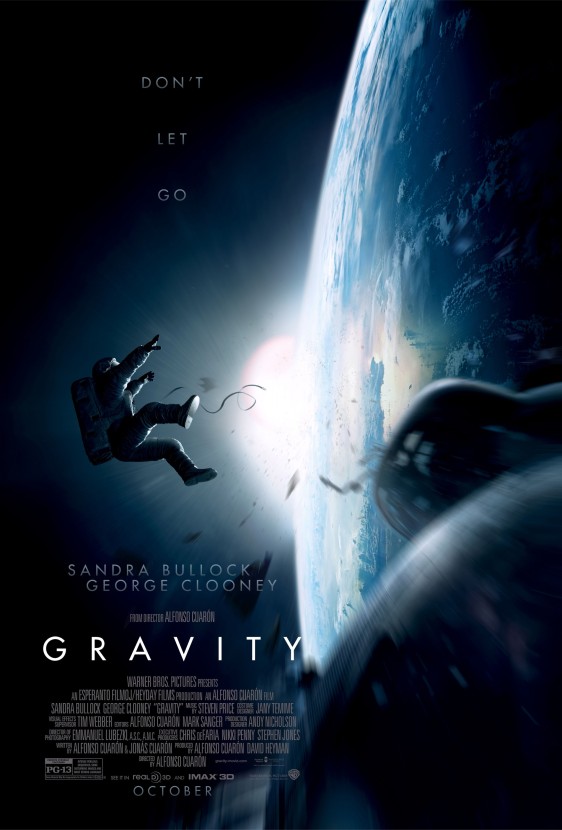
Poster for "Gravity"

Directed by Alfonso Cuarón, written by Alfonso Cuarón and Jonás Cuarón

The opening title card of Alfonso Cuarón‘s Gravity announces, in no uncertain terms, that life in space is impossible. And as hard as that is to believe in the glorious age of information and space exploration in which we live, the film does a marvelous job at conveying just how much we might be kidding ourselves with all this manned space travel nonsense. And yet this film, featuring a simple and small-scale story of astronauts Ryan Stone (Sandra Bullock) and Matt Kowalski (George Clooney) dealing with a crisis in orbit, nonetheless feels huge, significant, and ultimately optimistic. It is a modern day epic myth, full of larger-than-life figures riding chariots in the sky – and also one of the finest hard science fiction films ever made.

Read my full review here:
Alfonso Cuarón’s “Gravity” – Life in space

Honorable Mentions:

  • Captain Phillips (directed by Paul Greengrass, screenplay by Billy Ray, based on an article by Richard Phillips and Stephan Talty)
  • Blue Jasmine (written and directed by Woody Allen)
  • Don Jon (written and directed by Joseph Gordon-Levitt)
  • American Hustle (directed by David O. Russell, screenplay by David O. Russell and Eric Warren Singer)
  • Blue is the Warmest Color (directed by Abdellatif Kechiche, screenplay by Abdellatif Kechiche and Ghalia Lacroix, based on the comic book by Julie Maroh)
  • Dallas Buyers Club (directed by Jean-Marc Vallée, written by Craig Borten and Melisa Wallack)
  • The Kings of Summer (directed by Jordan Vogt-Roberts, written by Chris Galletta)
  • Iron Man 3 (directed by Shane Black, screenplay by Shane Black and Drew Pearce, based on Marvel comics by a characteristically large number of people)
  • Fast & Furious 6 (directed by Justin Lin, screenplay by Chris Morgan, based on characters by Gary Scott Thompson)
  • We Steal Secrets: The Story of WikiLeaks (written and directed by Alex Gibney)

2013 Movie Catchup: “The Way, Way Back”, “The Conjuring”, “The Hobbit 2”

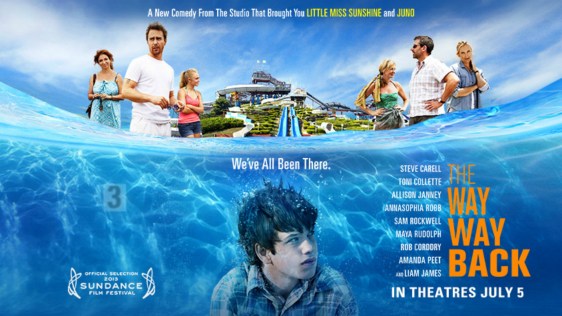
The Way, Way Back
Poster for

It’s not that The Way, Way Back is a bad film. But it really brings nothing new or interesting to the table. The film tries to succeed as a poignant coming-of-age tale, but really just feels like an exercise in dishonest nostalgia. Nearly every scene in this film is crafted in such a way as to glorify the motivations of its brooding, pure-at-heart teen protagonist, Duncan (Liam James), who I must admit is such a bland presence that I couldn’t even remember his name as I wrote this a day later. At all times, the film embraces his perspective, and while the awkwardness and pain of his dysfunctional family situation play with a modicum of plausibility, the details just seem a bit too perfect, like Duncan is the unreliable narrator spinning this particular yarn. Was his mom (Toni Collette) really this much of a doormat? Was the mom’s boyfriend Trent (Steve Carell) really this much of a monster? Was the genial water park manager Owen (Sam Rockwell) really this hilarious and likeable? Did Duncan really win the respect of some neighborhood hooligans (as well as the preposterously on-the-nose nickname “Pop’n’Lock”) in a dance contest scene right out of the 1980s?

Many of the performances above (with the exception of the lead) were quite nuanced and interesting, particularly that of Carell. But at no point does the film shake the sense that it’s just trying way, way too hard- whether to be a better coming-of-age dramedy like Adventureland, or at least a more interesting one like The Spectacular Now. And I doubt that’s the kind of nostalgia that The Way, Way Back wanted me to experience.

FilmWonk rating: 4 out of 10


The Conjuring
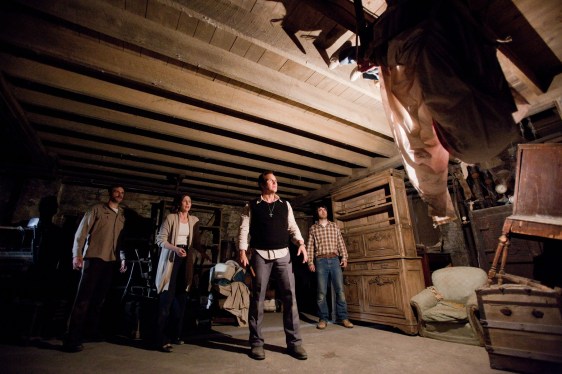
Still from

In the world of James Wan‘s The Conjuring, ghosts and demons are real, all of this was based on a true story, and Ed and Lorraine Warren (Patrick Wilson and Vera Farmiga) are a couple of well-meaning, true-believing, honest-to-God ghostbusters with actual powers to vanquish genuine supernatural phenomena. For some reason, the film’s insistence on its own historicity initially rubbed me the wrong way more than usual, perhaps because we almost immediately get a scene in which Ed and Lorraine have a discussion alone together, and we the audience learn that yes, they really do believe that they’re vanquishing demons. But the film’s lack of interest in questioning the credibility of the real-life “experts” is matched by its interest in establishing them as interesting characters.

In the end, what makes this movie work so well is not just Wan’s well-developed sense of how to construct a taut supernatural thriller, but Wilson and Farmiga’s performances and credible, long-term affinity – both for each other, and for the important work that they believe they’re performing. By the time the film ends, when Lorraine insists to Ed that God brought them together for a reason, it has earned the audience’s credence that the couple genuinely believes this. Their faith, for lack of a better word, is inspiring, even if the “true story” is bewitching, fictitious nonsense like any good haunted house story.

FilmWonk rating: 7 out of 10


The Hobbit: The Desolation of Smaug
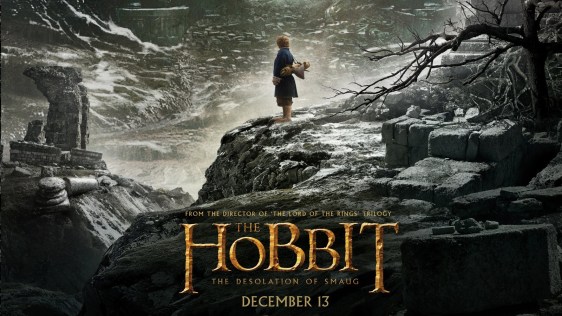
Poster for

I began my review of the thoroughly underwhelming first Hobbit film by questioning the need for its existence. But by the time the franchise’s equally lengthy second entry was near, I had not only come to terms with its existence, but I was weirdly, horribly excited for it. Whether the music, the 48fps 3D, the non-canonical addition of Legolas (Orlando Bloom) and a brand new elf-maiden named Tauriel (Evangeline Lilly), or the intense, shouty dude (Bard the Bowman, played by Fast and Furious 6 villain Luke Evans), something about this trailer got me right on board for it, and by and large, the film is a far superior entry to its predecessor.

It is still problematic in a number of ways. The dwarves – with the exceptions of Thorin (Richard Armitage), Balin (Ken Stott), Bombur (Stephen Hunter), and newly crowned heartthrob Kili (Aidan Turner) – remain interchangeable and undifferentiated as ever. The film’s insistence on sending away Gandalf (Ian McKellan) to fruitlessly poke at the mystery of the Dark Lord Sauron’s inevitable return is a complete waste of time – and when the film dispatched a septuagenarian wizard to the top of a mountain for a meeting that lasted literally two minutes, I couldn’t help but wonder if it knew exactly what the hell it was doing.

But this film did a lot of things right – by and large, it managed to make me believe it was making real progress toward telling a complete story. The action setpieces hung together much better this time. Everything surrounding the elven realm in Mirkwood – from the arachnid craziness on the way in, to the white-water rafting ride on the way out – was a ton of fun. And don’t let anyone tell you that Bowling With Bombur is any dumber than Legolas single-handedly dispatching an oliphaunt in Return of the King. Sometimes, a film just has to go a little crazy for the kids, and this sequence completely succeeded. As for the dragon Smaug (voice of Benedict Cumberbatch), I don’t have a lot to say, except that it was all very well-rendered, the scale of the sequence was impressive, and it ended with a bizarre thud. Despite an impressive performance by Evans, none of the Laketown sequence was well-established enough to make the stakes of the film’s ending (i.e. the town might soon be destroyed by a dragon) matter to me in the least. All it really made me do was lament the film’s criminal misuse of Stephen Fry, who is doing little more than a half-baked impression of Lord Denethor of Minas Tirith.

It would be easy for a non book-reader to look at the preceding paragraph as complete gibberish. And yet, this seems like a good time to point out the patent hypocrisy in many of The Hobbit films’ detractors. They criticize Peter Jackson in one breath for cynically inflating a 300-page children’s book into a meandering trilogy of films, and in the next, they can’t stand the notion of well-established characters from the existing Lord of the Rings universe stepping in to help round out the runtime and storytelling a bit. For the record, I thoroughly enjoyed the inclusion of pre-Gimli, dwarf-racist Legolas (and Evangeline Lilly feels like she was born to live in Middle Earth). But more importantly, I cannot and do not accept the notion that fidelity to half-remembered source material from one’s preadolescence is an intrinsic good. Are these bad films? Quite possibly. And feel free to blame Jackson and his team if you think so. But blame them for being poor screenwriters, not poor adapters. Because no matter how these films turn out, no one will come to your house and take away your dog-eared paperback copy of the source material. And we might just get something halfway entertaining out of this before the end.

FilmWonk rating: 6.5 out of 10

FilmWonk Podcast – Episode #38 – “12 Years a Slave” (dir. Steve McQueen)

Poster for "12 Years a Slave"

This week on the podcast, Glenn and Daniel witness the harrowing new film from director Steve McQueen, 12 Years a Slave, based on a memoir by kidnapped slave Solomon Northup (Chiwetel Ejiofor). Featuring one of the most sprawling and talented casts of the year, this film proved to be absolutely essential viewing. Check out our discussion below (53:09).

May contain some NSFW language.

FilmWonk rating: 9.5 out of 10

Show notes:

  • Music for tonight’s episode includes the tracks “Roll Jordan Roll” and “Solomon” from the soundtrack and score to the film. To hear the other Hans Zimmer track that came to mind during this film, check out “Time” from the original score to Inception.
  • The banality of evil” is a historical concept and phrase from Hannah Arendt‘s Eichmann in Jerusalem, and is not without controversy. Curiously, Northup expressed a similar idea near the end of his memoir, which can be read at the end of the NY Times article below.
  • Eric Herschthal wrote a fascinating article for the NY Times on the veracity of the memoir and real-life story: The Passion of Solomon Northup
  • The audio lecture series we referred to from The Great Courses is “The Other Side of History: Daily Life in the Ancient World,” from Colgate University history professor Robert Garland.

Listen above, or download: 12 Years a Slave (right-click, save as, or click/tap to play on a non-flash browser)

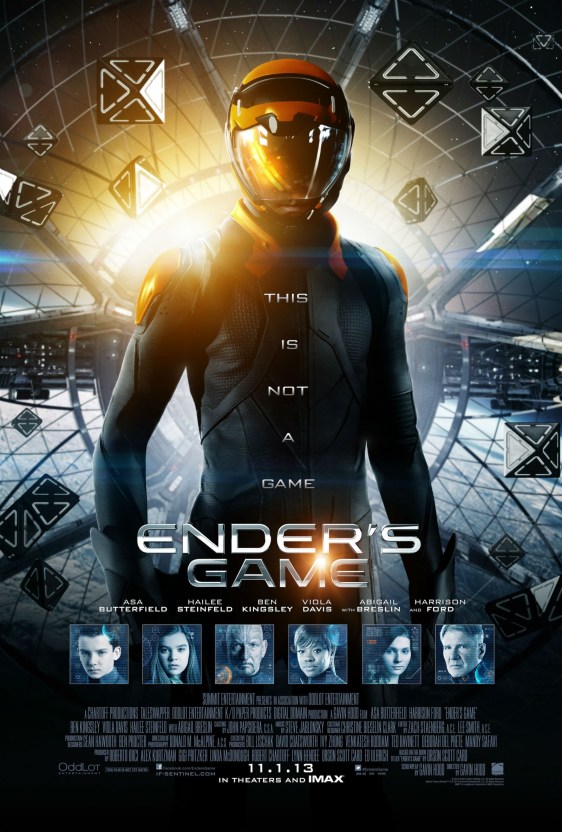
Gavin Hood’s “Ender’s Game” – Don’t be expendable

Poster for "Ender's Game"

One of the major shortcomings of the first Harry Potter film is that it asked the audience to come along on a hero’s journey with a character who has no apparent reason to be respected or taken seriously. Any of the self-awareness and nuance that might have been present in the source material is absent, and what we’re left with instead is a boy being led into a wondrous world and constantly told how special he is, while doing nothing whatsoever to justify that claim. Such are the difficulties of a franchise adaptation, wherein the hero is whoever the script says it is, and named characters are introduced and discarded seemingly on a whim, leaving newcomers wondering why they bothered to show up for the barest threads of story that might not pay off until the second or third blockbuster in the series. Gavin Hood‘s adaptation of Orson Scott Card‘s Ender’s Game surely demonstrates a few of these shortcomings with regard to cast and story structure, but impressively, none of them are present in the character of Ender Wiggin (Asa Butterfield) himself.

Fifty years after a devastating invasion by a race of fearsome alien bugs called Formics, Earth is arming for a full-scale attack on the invaders’ home planet. Fleet Colonel Graff (Harrison Ford) and Major Anderson (Viola Davis) are tasked with training a gang of child pilots to command the fleet, winnowing from their ranks a single cadet who might become the savior of the human race. The question, from the film’s outset, is never whether this fleet commander will be Ender Wiggin, but rather, why? And it is in answering this question that the film is most effective. Ender is placed in one situation after another that tests his mettle, strategic mind, and ruthlessness. Much of this is under the unseen guidance and surveillance of the military, but it often occurs through sheer dumb luck. Many of these situations are unsurprisingly softened from the source material, but all of them do an effective job of establishing Ender as a force to be reckoned with – the plausible product of a worldwide search for someone who is so willing to thoroughly vanquish his enemies.

Still from "Ender's Game"

The film is at its visual strongest during the first half, in which the cadets head for an orbital station to train in a team-based war game that bears unfortunate retrospective resemblance to Quidditch. The teams float around in a massive, zero-gravity battle room playing an elaborate three-dimensional game of laser tag. They score points by paralyzing enemy players, and can ultimately win the game regardless of the current score by slotting a single undamaged player successfully into the enemy’s open gate on the opposite end of the chamber. As an aside, I’d like to take a moment here to marvel that this film was not shot or upconverted to 3D. While it is certainly to this film’s detriment that it comes so closely after Gravity for visual comparison, these sequences are undeniably impressive, and it is frankly a marvel that the studio didn’t try to cash in on them further. The suit design and camera work makes it a simple matter to follow the progress and flow of the game, and the chamber itself – covered in windows to open space outside, and filled with floating platforms for cover and strategy – is absolutely gorgeous. If these sequences have any shortcoming, it’s that they all seem a bit rushed. Rather than full story events with a clear trajectory and consequences for multiple characters, they feel more like montages designed to propel Ender (and no one else) into the next act of the story. Ender changes rank more times in an hour than 2009’s Captain Kirk, and it would not surprise me if non-book-readers have a hard time making sense of any of it.

Vague spoilers will follow.

But then, I suppose that’s what it always comes down to with adaptations. I read Ender’s Game nearly a decade ago, and it would be easy to say that this disqualifies me from objectively judging the story’s effectiveness – particularly its final act and twist. But when it comes to an adaptation as long-awaited as this, it’s important to remember that as long as it is still available for public consumption, nothing can take away or destroy a prior work of art. No remake, adaptation, spinoff, sequel, director’s dubious past work, or author’s vociferous homophobia can ever take away the effectiveness of the original work. At best, the new version can serve as a worthy companion piece, and at worst, as an object lesson in the effectiveness of the original story and its original medium. My conclusion, based on a distant memory of the book, is that the film’s revelation is about as effective as it was in the original book. To repurpose a lovely phrase from Looper director Rian Johnson, even if a revelation is obvious, it can trade the cheap coin of surprise for the priceless one of dread. Even if you remove the sci-fi trappings, the plight of Ender Wiggin is being lived out by present-day drone pilots who become bloodless killers in an intensely video-game-like fashion. The film addresses this with a denouement that is about as baffling and unexpected as in the original work, in which the exploration of Ender’s psyche pays off in a way that feels just a bit unearned. But the film is effective enough at establishing that Ender will ruthlessly destroy his enemies and feel bad about it in more than just a token fashion, and it has the decency not to commit and portray an act of immense destruction without lending it the appropriate amount of weight. Remember in G.I. Joe: Retaliation when the entire city of London was destroyed for no reason? Neither do I.

Visually, the final space battle is a bit of a letdown – a thorough demonstration of CGI quantity over quality as one undifferentiated swarm of drone-ships meets another. After demonstrating an impressive grasp of the dimensionality of space in the first half, the film’s final battle feels oddly planar, taking place relative to “horizontal” asteroid belts or planetary rings. But despite the visual chaos on display, the film succeeds in giving us an acceptable reason for it all. There are number of repeating scenes in which the film’s grownups – Ford, Davis, and an elusive turn by Ben Kingsley – debate the consequences of what they’re doing with Ender and the enemy fleet. They speak of genocide and crimes of warfare. They speak of child soldiers and post-traumatic stress. Their interactions eventually get a bit repetitive and strain credulity (would they really compare Ender to both Julius Caesar and Napoleon Bonaparte in front of his face?), but it is these performances – along with that of Butterfield himself – that imbue the film’s dense visual annihilation with a modicum of humanity and tears. And that may ultimately be what made me take Ender’s Game seriously. These themes are hurriedly made explicit in the last five minutes, but they are teased effectively throughout the film. Ender is ultimately both the savior and damnation of mankind, and exceeds his elders’ expectations in the most horrific way possible. And for all of his reluctance and humility, the clearest lesson he presents is that if you’re anything but the best…you’re expendable. Is this the lesson the film was going for? Hard to say. But the single, gigantic space-gun wasn’t exactly a soft touch.

FilmWonk rating: 7 out of 10

Alfonso Cuarón’s “Gravity” – Life in space

Poster for "Gravity"

Astronaut Matt Kowalski (George Clooney) has the rather annoying habit of mentioning, for no reason whatsoever, that he has a bad feeling about the Earth-orbital mission at hand. That he uses the non sequitur to introduce an endearing personal anecdote is probably small consolation to Mission Specialist Dr. Ryan Stone (Sandra Bullock), a first-time astronaut who feels like she’s inside a tumble dryer. The two of them are hurtling through space (inner space, really) on a repair mission for the Hubble Space Telescope when suddenly their high-speed platform becomes a shooting gallery of orbital debris. In the space of a few minutes, Hubble is destroyed, and Dr. Stone is sent tumbling into space.

The opening title card of Alfonso Cuarón‘s Gravity announces, in no uncertain terms, that life in space is impossible. And as hard as that is to believe in the glorious age of information and space exploration in which we live, the film does a marvelous job at conveying just how much we might be kidding ourselves with all this manned space travel nonsense. Every slender thread of survival that we latch onto as a species is useless in space. Food? Water? Air? Only what you take with you. Something’s coming at you- what do you do? Smack it away? Vacate its path? Every attempt at avoidance or deflection is dependent on your ability to exert force, and that ability is non-existent without gravity. Perhaps the most emblematic and disturbing image in the film is of an unlucky astronaut killed in the initial volley, who is left with a large, frozen, awkwardly-shaped hole straight through his facemask, skull, brain, and skull again – hit by a single giant bullet that passed all the way through his head like it wasn’t even there.

Force and gravity are the central setpieces of this film, and for the most part, the physics seem to be dead-on. If you hurtle someone through space, they keep going until something stops them. If you impact a structure in space, it doesn’t explode; it shatters, and every piece keeps right on floating or speeding in the same space and trajectory until some other force acts upon it. Apart from her own despair, Dr. Stone’s only nemesis in this film is Sir Isaac Newton. Possibly my sole complaint about this film is that there is a rather significant plot moment, about halfway through the film, that appears to abandon the laws of physics in the interests of drama. What’s more, there’s basically nothing I can else I can say about it that wouldn’t spoil a rather major event in the film. Suffice to say, it bothered me a great deal in the moment, despite my scientific mind coming up with a plausible (if a bit fanwanky) explanation after the film. I was a bit surprised to see the film resort to such a cliché at the expense of its own plausibility, but it is surrounded by enough well-realized physics and plotting that it certainly didn’t ruin the film*.

Still from "Gravity"

Sandra Bullock heartily defeated my skepticism in this film. I was not sanguine about her ability to carry a solo survival thriller, but she delivers an incredibly taut and tense performance. This character is broken on multiple levels before the film even begins, which makes her pursuit of triumph and homecoming that much more poignant as the film goes on. Much of the film’s imagery, right down to its stunning final shot, relies upon Bullock’s ability to convey this tension between hopelessness and survival, and she pulls it off masterfully. If there was ever a character with the proper temperament to be the sole survivor of a disaster, it’s this one – even if the actual body count will still be luck of the draw. George Clooney makes a welcome addition to the crew as charming, cocky flyboy Kowalski. If it didn’t involve such bulky costuming and wirework, this would be a role that he could play in his sleep. Kowalski is on his last mission before retirement (never a safe character move), but always maintains his composure and professionalism when the situation becomes dire. His radio interplay with Bullock works well, even as it becomes clear that simply being able to do the best possible thing in a bad situation might not be enough.

Gravity is not only one of the finest hard science fiction films ever made; it is a stunning treatise on the limits of human exploration and survival. Unlike a film like 127 Hours, which is better regarded as a treatise on human endurance, Gravity is a film in which simply “choosing life” is not enough. When you’re in an environment that is anathema to human survival, your choice must be accompanied by expertise, equipment, and a whole lot of good old fashioned luck.

FilmWonk Rating: 9 out of 10

*My spoilery physics complaint (highlight to view): When Stone was tangled up in the Soyuz parachute attached loosely to the ISS, Kowalski should not have continued to pull away from her after she had successfully halted him. Whatever force was supposed to be acting upon Kowalski in that moment was not made clear at all. Like a continuously decompressing aircraft with a hull breach (which made an unwelcome appearance only two episodes into Agents of S.H.I.E.L.D.), this is just a lazy violation of physics to heighten tension, and it really only works if your audience isn’t hip to it. This one definitely bugged me in the moment, but it was surrounded by enough good stuff that I wasn’t inclined to mark down the film for it. And I did manage to think of a plausible, albeit fanwanky explanation after the fact – if the ISS were in an uncontrolled rotation, Kowalski could be propelled away from it in the manner depicted.

FilmWonk Podcast – Episode #37 – “The World’s End” (dir. Edgar Wright), “Mud” (dir. Jeff Nichols)

Poster for "The World's End"

This week on the podcast, Glenn and Daniel tackle the exciting conclusion to Simon Pegg and Edgar Wright‘s recently-minted Cornetto trilogy (Shaun of the Dead, Hot Fuzz), as well as a surprising new coming-of-age adventure from writer/director Jeff Nichols. Will the nostalgic and paranormal wanderings of a posse of drunken middle aged-men win our favor? Or will we prefer the naively romantic notions of an adventurous child with his very own motorboat and island? Either way, the soundtrack will be fantastic. Don’t miss either one of these films (53:41).

May contain some NSFW language.

FilmWonk rating (The World’s End): 8/10
FilmWonk rating (Mud): 7/10 (Daniel), 8.5/10 (Glenn)

Show notes:

  • (00:00) Review: The World’s End
  • (11:11) Spoilers: The World’s End
  • (23:37) Review: Mud
  • (32:48) Spoilers: Mud
  • Music for tonight’s episode is the track “Loaded” from the soundtrack to The World’s End, followed by The Beach Boys’ “Help Me Rhonda” from the end credits of Mud.
  • Seriously, if you’re on the eastside of Seattle, hit up La Fuente for some quality Mexican food. I’m as surprised as you are that this was relevant to a film podcast.
  • Check out my Elysium review here.
  • The “women are more likely to initiate divorce” statistic comes from a 2004 study by the AARP, which found that 66% of divorces were initiated by women, and gets into further detail on some of the reasons cited, which do include infidelity and abuse.
  • Stay tuned at the end of the recording to hear a bit of Daniel’s beautiful siren song.

Listen above, or download: The World’s End, Mud (right-click, save as, or click/tap to play on a non-flash browser)

Seattle’s One-Reel Film Festival 2013 – Monday (Bonus Segment)

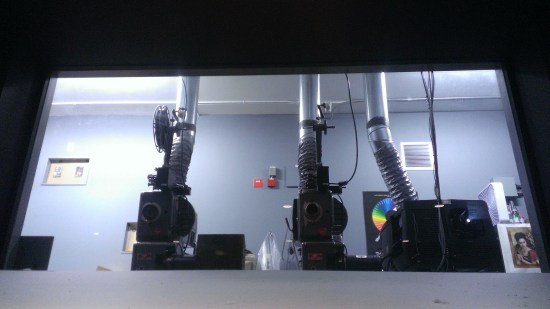
SIFF Film Center projection room

The One-Reel Film Festival is part of Seattle’s renowned Bumbershoot music and arts festival. Throughout the weekend, I’ve had the opportunity to see short films from all over the world, some of which can be viewed online (I’ve included links below where applicable). The films were arranged into blocks of around an hour apiece, which I’ve arranged in presentation order below. Bold text means I enjoyed the film, and an asterisk (*) means it was my favorite film of that block. Skip to the bottom for a list of all the films that can be viewed online.

Click here for Saturday’s films
Click here for Sunday’s films


Films4Adults: Thrill Me


  1. Birding (Director: Max Cantor, USA, 16 minutes)

    Note to Hollywood: do more “rear window” scenarios. No, I don’t mean you should transparently rip off the entire story of Hitchcock’s masterpiece, but rather – give us a story that effectively utilizes the panopticon monstrosity of a high-rise city apartment building to great narrative and cinematic effect. Birding is exactly the sort of short that I was looking for in this category. It features David (Alan Fox) and Ada (Lizzy Fraser), a newly engaged couple about to head out for the weekend to go bird-watching with Ada’s father. David becomes fascinated with a woman in an opposite apartment, and begins watching her with his newly acquired bird-watching binoculars. This incredibly simple setup works in large part because the couple’s acting and dialogue is stellar. They establish a credible relationship in a short space of time. If the film had failed at this one crucial task, it would’ve rendered the awkward final act entirely ineffectual. And this act is admittedly a bit off. The dialogue, strong up until that point, becomes awkward and uneven, as does Fox’s performance. The film seems to be building toward an obvious and excruciating ending that it mercifully avoids, and everything remains askew for just long enough to make it seem like a deliberate and effective choice.

    And that is ultimately what this short is about – choices. The mundane choices of our daily lives are far more frequent than the sort that might have far-reaching and life-changing consequences, but this film effectively shines a light on one that can seemingly erupt out of nowhere. No matter how important the choice may be, you’re still the same person you were before you had to make it, and you would do well to remember that.

    More info and trailer here.

  2. Midnight City (Director: Luis Ventura, Switzerland, 14 minutes)

    Midnight City is an incredibly goofy and trashy genre exercise that takes place in a brothel during an unspecified “old-timey gangster period”. I’ve certainly enjoyed such pulp before, but this one was almost intolerable. There was a severe gulf in acting caliber between the female lead (Lucinda Farrelle, who wasn’t half bad) and the two male supporting characters. Male #1, the john (Alex Rendall) bore an uncanny physical resemblance to Ben Affleck, but gave a performance that was almost as grating as Reindeer Games. And Male #2 (Alan Thorpe) was boring and forgettable as the club “Daddy” – although I’m not sure any actor could have redeemed such terrible dialogue. You have to be pretty bad at being a creepy pimp to make me long for the squirm-inducing talents of Oscar Isaac in Sucker Punch (a performance I loved, but never wish to see again). This wasn’t good (or stylistically consistent) enough to be Sin City, not bad enough to be The Room, nor pretentious enough to be Sucker Punch. But very nearly dumb enough for that last one.

  3. Spine* (Director: Sophie Miller, Australia, 11 minutes)

    What would happen to my culturally constructed and reinforced notions of masculinity and power if I were suddenly rendered paralyzed? How would my image of myself in a romantic relationship have to change as I suddenly must be taken care of all the time? And how would all of these tenuous notions avail me in a life-and-death situation that I was just as unlikely to face before my injury?

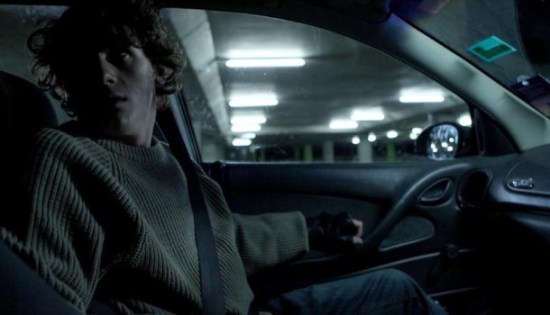
    Spine forces the audience to confront all of these questions in a matter of minutes. There were so many subtle touches that grant a view into the inner life of the quadriplegic protagonist Nick (Lucas Pittaway). There was a brief flashback to he and his girlfriend Chloe (Sara West) making out – an expression of affection that is highly physical for both parties, and has now left them both behind. In a lesser film, this sort of flashback would have lingered and hammered the point into oblivion, but here, it was just a nice, subtle moment, in a film that makes a nice, subtle point.

    West is also given some nice material to work with as she runs into an old friend working in a liquor store where she has stopped to get Nick some beer. Chloe clearly maintains a strong affection for her boyfriend, but also feels the burden of their new existence together. Even as Nick’s arc is coming together in the carpark below, each stolen moment in the liquor store reveals more about her own struggle. And it all fits together quite well.

    This experience feels authentic, even as I mercifully lack the life experience to validate its authenticity for myself. This is an unfortunate, but credible situation – and a story quite worth telling.

    More info here.

  4. Penny Dreadful (Director: Shane Atkinson, USA, 18 minutes)

    This film reminded me aggressively of both Tarantino and his acolytes – and I mean that in the best way possible. There are few things more hilarious than the kidnapping of a child gone awry (*chuckle*), and this film milks every bit of dark comedy from the situation. Both man and girl were brilliantly cast. The easy comparison for Oona Laurence‘s character here is Hit-Girl from Kick-Ass, but I actually found this character far more believable. She’s not a cartoon psychopath; just a troubled and precocious little girl with a bit of an f’d-up sense of humor. This film was an absolute delight, and I don’t dare say more.

    More info and trailer here.

    Watch it here.

  5. A Pretty Funny Story (Director: Evan Morgan, Canada, 19 minutes)

    This is a bad story for bad people to enjoy. It begins with a couple glancing through the window at their neighbor, who is indulging in a bit of goofy solo dancing. They laugh at him for a moment before they’re caught watching…and then everything goes to a bit of a dark place. This film is hilarious, awkward, mean-spirited, and unrelenting. And I loved it – I’ll direct you back to Sentence #1 for my conclusion.

    More info (and the first three minutes) here; buy it here.

  6. Voice Over (Director: Martin Rosete, Spain, 10 minutes)

    A narrator tells a series of increasingly dire life-and-death situations, all in the second-person starring you, the audience member. Each of the sequences features the main character (you) about to die in increasingly horrific ways, whether in a space suit on an alien planet, or strapped to a sinking boat underwater. Each of these sequences is rendered with absolute precision (and gorgeous visuals, particularly for the alien planet), and yet each one has a bit of a fanciful quality. The narrator keeps cursing his poor memory and correcting himself, lending each story both the urgency of imminent death and the endearing hilarity of somebody’s dad telling a poorly strung narrative. The heartwarming side of this film hits like a ton of bricks, and yet feels like it was always inevitable.

    Watch online here.


Best of the Northwest

  1. The Next Step (Director: Mel Eslyn, USA, 7 minutes)

    A couple meets a stranger (Kevin Seal) in a coffee bar to discuss their next step in the relationship. And that’s really all I’ll say. This is a 7-minute film featuring a single joke – meaning it has basically the same formula as a modern episode of South Park – but it only needs to keep the joke going for a third as long. By and large, it works. The couple is delightfully awkward, with the enthusiastic Nancy (Alycia Delmore) and the uncomfortable (and slightly henpecked) Glen (Evan Mosher) making an effective on-screen pair. The film keeps you guessing nicely, complete with a wonderfully creepy interaction between the stranger and the coffee-shop manager, as well as a so-subtle-I-may-have-imagined-it reference to Clerks. Funny stuff.

    More info here.

  2. Decimation* (Director: Wade Jackson, USA, 30 minutes)

    Like any film featuring American actors set in a foreign country, there is something slightly askew about Decimation, at least until your brain has time to adjust. Much criticism was heaped upon Bryan Singer’s Valkyrie for not even attempting German accents for its English-speaking cast of Wehrmacht soldiers. But I tend to think that affecting a foreign accent is more of a gamble than a guaranteed win. Perhaps Enemy at the Gates (which receives a nice shout-out in this film) handled it best for an American audience, opting for the generic stand-in British accent for all of its Russian characters. Decimation, a film about a group of World War II Russian solders accused of cowardice, opted for accent fakery (with bits of actual Russian sprinkled in), and I don’t think it does the film any great service. The acting quality here is quite solid all around, but the accent work is variable, and my three years of Russian language made it difficult to separate the two as the film began. But before too long, I was absorbed enough in the story and cast that this detail ceased to bother me.

    The strongest performer is certainly Roy Stanton, who plays Prisoner One, the unofficial leader of the group. The titular practice of “Decimation” refers not to the complete obliteration of a group, as it has come to mean, but rather the destruction of just one tenth of it to enforce discipline – in this case, a single soldier selected by Prisoner One for execution. He could even choose himself if he wished, but whichever man is chosen must be executed by the other members of the group. This practice featured prominently in a vignette in Max Brooks’ novel World War Z (also in Russia), and apparently there is a documented instance of it happening among Russians in World War II. But I give this film immense credit for using the practice as an effective metaphor for the unrelenting bleakness and indifference of warfare.

    If you’re lucky, you won’t be in a war. If you’re luckier, you won’t be in a war in the Soviet Red Army. And if you’re luckier still, you won’t duck or hide in the face of enemy fire while a commissar is watching your back. Enforcing both the virtue of patriotism and the shame of cowardice was deemed essential in a war in which over 20 million Russian soldiers and civilians died. We get to see this struggle of ideology vs. survival play out in the face of pure, indifferent chance. Differentiating ten characters in the space of a 30-minute short must have been a daunting task, and the film does a marvelous job. Each character, whether the suspected Cossack, the Eastern Orthodox priest, or the doggedly patriotic teenager, gets his moment to shine. Making me care about each of these characters was essential; otherwise I would have a nice, long list of unimportant extras that I’d be happy to see up against the wall in the end. There were certainly a few who received very little screentime, but not one that seemed superfluous.

    I’ve referred to a few short films from this weekend as a “solid first act”, but I think this may be the only “solid third act” that I saw. The film jumps effortlessly from one moment of character-loaded tension to the next, mostly justifying it with the acting, but never completely earning it with the setup. Even a few plot details are unclear from the start. I initially identified the prison commandant (Michael Patten) as one of the worst accent offenders (sounding more German than Russian), only to see him identified as “The German” in the end credits. How did a German come to work in a Soviet prison camp? We never know…but it must be a hell of a story. Despite this fundamental problem with putting feature-length complexity into a short film, none of these unknown details prevented me from feeling every moment of shock, sadness, and horror by the film’s end. And apart from that, the film is very well made. The score is dramatic and catchy – albeit slightly repetitive – but it never once commits the cardinal sin of pushing past the justified emotional content of the scene. The production design is budget-impeccable, featuring authentic weapons and real-looking uniforms*. In addition to the score, the sound mix features the slightly mocking twitter of birds just outside the cell, giving the constant [and false] impression that happiness and freedom are just a window-climb away. Very effective.

    Bottom line – this movie is unrelentingly bleak, features some very strong performances, and is greater than the sum of its high-concept parts. For a 30-minute war film, I couldn’t have asked for more.

    *Confession: I really don’t know if the uniforms were accurate, although they helped significantly with character differentiation. But the weapons (notably the PPSh and the Mosin-Nagant rifle) certainly looked legit. I spotted at least one German MP-40 rifle, but given that the Russians frequently had to deal with weapon and ammo shortages, I’m happy to justify that by assuming it was a captured item.

    More info and trailers here.


Quick List: All of the films that are available online:


Seattle’s One-Reel Film Festival 2013 – Sunday Roundup

SIFF Film Center projection room

The One-Reel Film Festival is part of Seattle’s renowned Bumbershoot music and arts festival. Throughout the weekend, I’ve had the opportunity to see short films from all over the world, some of which can be viewed online (I’ve included links below where applicable). The films were arranged into blocks of around an hour apiece, which I’ve arranged in presentation order below. Bold text means I enjoyed the film, and an asterisk (*) means it was my favorite film of that block. Skip to the bottom for a list of all the films that can be viewed online.

Click here for Saturday’s films
Click here for Monday’s films


Films4Families #2

  1. Snap (Director: Thomas G. Murphy, Belgium, 6 minutes)

    There’s nothing new under the sea, but this is enjoyable nonetheless. The film is equal parts Kung Fu Panda and Looney Tunes. An underwater gremlin learns to hunt in a different way with the help of…an underwater frog. It’s zany, and a bit forgettable, but fun for a moment.

    Trailer here.

  2. The Mole at the Sea (Director: Anna Kadykova, Russia, 5 minutes)

    Crowded beaches are not fun. This is the point the film ably makes, and it does so with a sea of grotesque humanity (or at least human-looking animals). The animation is unique, and quite a throwback – it falls somewhere between 1960s Charlie Brown specials and JoeCartoon. The mole is frankly adorable, and watching him “swim” around through the sand to find an enjoyable spot on the beach is most entertaining.

    Watch online here.

  3. Hedgehogs and the City* (Director: Evalds Lacis, Latvia, 10 minutes)

    This delightfully subversive stuffed animal stop-motion begins as Over the Hedge, wherein an animal habitat is taken over by human development. Then it becomes…something else entirely. According to the film’s environmental and consumerist satire, the best recourse for an eclectic collection of animals (including a drunken moose) is to rise to the top of the food chain in a new way. Great fun.

    More info and teaser here.

  4. Hannah and the Moon (Director: Kate Charter, UK, 6 minutes)

    Now that’s more like it. Like yesterday’s “The Window”, this film takes place inside the pages of a children’s book – but the pencil-drawn animation is gorgeous and elaborate, and the simple story is nonetheless deeply affecting. This is the tale of a lonely girl whose mother is too busy to talk, so she talks to the moon instead. The book’s narration is revealed one word at a time (making this almost a “Reading Rainbow” exercise for younger audience members) as Hannah navigates the world. Sometimes words follow her climbing the stairs, or fly through the air – and sometimes, they literally leap off the page.

    More info here, trailer here.

  5. The Goat Herder and His Lots and Lots and Lots of Goats (Director: Will Rose, UK, 7 minutes)

    If Nintendo’s Mario character were reimagined as a goatherder, rendered in silhouette at magic hour, it might look something like this. This beautiful 2D platformer short is very video-gamey (seemingly on purpose), and even contains a twist that will be familiar to modern gamers, wherein the player’s efforts are rendered unnecessary. Quite fun – and the goats rhythmic chomping was very catchy.

    Watch online here.

  6. Blue (Director: Asia Lancaster/Katelyn Bianchini/Rena Cheng, USA, 8 minutes)

    A bright blue balloon is terrified of being popped by humans. This film gets occasionally elaborate with the limited visual tools at its disposal, but the animation is incredibly simplistic, and its human characters look downright grotesque. Given the balloons’ quite reasonable fears during the first half of this film, this uncanny valley look makes sense, but given the emotional connection the film attempts to cultivate with a young boy by the end, I can’t help but think that it was not deliberate. The film’s end credits sequence contained a jarringly upbeat song – easily one of the most obnoxious sunshine pop ballads this side of Cloudy With a Chance of Meatballs. Not a wise choice for tonal consistency when the film’s last scene takes place in a cemetery full of mourners.

    More info here.


Dance, Dance, Dance

  1. Ballet (Director: Sajid Dilawar/Gunja Bose, India, 2 minutes)

    It’s hard to impress me with “Dance of the Sugar Plum Fairies”, if only because I’ve seen it so many different ways. But this elegant and simplistic animation managed to do so once again. The faux film-grain and sepia tones evoke a prototypical film projection, and the effect is a captivating study in movement.

    Watch online here.

  2. Still Moving: Pilobolus at Forty* (Director: Jeffrey Ruoff, USA, 38 minutes)

    A creative endeavor – particularly one that began as a collaborative project between college students – is lucky to last a few years, much less four decades. This modern dance company’s story is remarkable, and yet familiar to me personally, as the company’s history, ideology, and public classes feel very much like an improvised theatre company that I’m involved with. The medium is unique, but the message is quite similar.

    The company’s style features choreographed dance routines with human bodies initially walking in unison, but then meshing and wrapping together into unique shapes and transformations – often with limited clothing. All in all, the company’s longevity seems best attributed to its extreme adaptability. The film features a 2010 collaborative mixed media performance with a comic book artist, wherein the dancers perform in silhouette behind a rear projection screen, interacting with the changing graphics in real time. For a ragtag band of 1970s Dartmouth students, this seems a significant evolution of the company’s style.

    The only thing that gives me pause about this film is that it is functionally an advertisement for the company, as well as a memorial piece for the company’s late co-founder (who is featured in the film, and has passed away recently as of the film’s release). On the face of it, it is unlikely that this is an unbiased, “warts and all” portrayal of the company’s history. Several of the company’s founders have also left since its inception, and it was clearly in a period of transition and uncertainty when the film was made. But what I can’t argue with is the unique and valuable artistic endeavor that is on display here. Pilobolus is a thriving arts company, and on that level they have my respect. The film acknowledges that losing one of its co-founders will be the next great challenge to the organization’s survival – surely to be followed by other departures as the years go on. But like the bovine dungborne fungus for which it is named (I bullshit you not), this company seems adaptable. And messy.

    More info and trailer here.
    Watch 26 members of Pilobolus squeeze into a Mini Cooper here.


Love…In the Afternoon

  1. Side Effects* (Director: Traven Rice, USA, 20 minutes)

    This film is quite riveting, even if it’s a bit difficult to discern its intention. It functions as a dark and somewhat demented version of Eternal Sunshine of the Spotless Mind, wherein the film’s central love story may be little more than a construction in the main character’s mind. Alena (Carla Quevedo, The Secret in Their Eyes) is part of a drug trial whose side effects include a series of lucid (and narratively connected) dreams, complete with a Hot Dream Guy on the beach. Her love interest (Robert Beitzel) is a bit of a cypher, mainly because we never see him speak. Their communication in the dream is solely in the form of voiceover dialogue (some of which was made while pretending to breathe underwater, which must’ve been a bitch of an acting challenge). This doesn’t especially diminish the effectiveness of their romance, but it does make it almost entirely dependent on Quevedo’s performance.

    Alena spends the majority of the film in the Saw-like environment of a windowless hospital room as frigid medical personnel administer dose after dose of unknown medications. It’s all very unpleasant, and Quevedo does an admirable job of both conveying Alena’s inner plight and eliciting audience sympathy. I almost wish the film had not relied on Alena’s letters home to expose her inner turmoil – the actress was doing a fine job on her own, and the letters (which receive no response) do little but add to the film’s already ever-present paranoia.

    All in all, the ending is a little obvious, but it reveals just enough about the intended purpose of the drug trial without making every detail clear. This may well just be mad science at work, or it could just as easily be a deleted scene from the first act of Inception. Whatever is going on here, it brings more than enough intrigue to the table, and one bravura performance.

    More info here.

  2. Taboulé (Director: Richard Garcia, Spain, 4 minutes)

    Modern technology has done a wonderful job of creating “trust opportunities” for couples – this film tackles the conversation that ensues when a man asks his boyfriend (for no reason whatsoever) to share his mobile PIN. They hang out on a rooftop together, and debate the ever-changing definition of trust. Simple and sweet.

    Trailer here.

  3. A Little Something on the Side (Director: Stephen Tobolowsky, USA, 14 minutes)

    Stephen Tobolowsky had a triple heart bypass last year (something he has been quite open about on his storytelling podcast). I don’t know whether knowing that in advance made me enjoy this film more, but it certainly didn’t hurt. The film plays a delightful bait-and-switch with a very obvious joke, taking “this isn’t what it looks like” to absurd new heights, and having a great deal of fun with its bad behavior. Most enjoyable.

    More info here, Twitter here.

  4. Dream Girl (Director: Tulica Singh, USA, 6 minutes)

    It’s become easier for my mind to drift further away from heteronormativity the more of these tales of something-other-than-straight romance I see. On the face of it, this isn’t merely a low-budget, reasonably well produced tale of unrequited love – primarily, it just made me ponder the social engineering task that is recognizing viable romantic partners who happen to share your sexual orientation. As a straight male (recalling my single days), it was easy for me to take for granted that if a lady doesn’t respond to my advances, it was likely because she didn’t find me specifically attractive, not my entire sex. Laura, the dreamer, is forced to contend with the possibility that the girl of her dreams not only doesn’t know she exists (or at least doesn’t know her name), but that she might never be interested in her romantically. If that situation is half as difficult to parse as my gendered pronoun use in the previous sentence, I don’t envy her task.

    More info here.


Best of SIFF – Audience Award Winners

  1. Spooners (Director: Bryan Horch, USA, 14 minutes)

    This film’s thesis seems to be that progressive acceptance of same-sex marriage has reached the point where it can be hilariously grating to the actual couples. In a world where same-sex marriage (as of this writing) is still illegal in 37 states, this filmmaker still manages to find comedy in the suspiciously well-timed corporate acceptance of former social taboos. The majority of the film takes place inside a mattress store called “Drowzy’s”, featuring a “smart bed” that is just a little too happy to see its first gay couple shopping for a mattress. Corporations are amoral entities, and calling attention to their propensity for becoming socially liberal as soon as the market dictates is spot-on satire. The crowd of white liberals crowing about how they’ve heard terms like “bear” and “otter” on NPR is just the icing on the cake. That’s tolerance in a nutshell. Most people are well-meaning, nice, and just a little bit full of shit. Well done, sirs.

    Watch online here.

  2. Malaria (Director: Edson Shundl Oda, Brazil, 6 minutes)

    A well-executed gimmick requires a story that would be compelling even without it. This story, of a man hiring a mercenary to kill Death, certainly qualifies. The story is told in what I can vaguely refer to as a motion comic, but featuring human hands turning over each gorgeous pencil-drawn and shaded frame, and a knife-blade sliding in to reveal each line of dialogue. This technique is augmented with physical effects as we hear the scene play out in [Portugese] voiceover. It’s a clever premise, and the technique makes it visually captivating.

    Watch online here.

  3. Fora (Director: Ayuub Kasasa Mago, Rwanda, 7 minutes)

    A conundrum for an American film critic: How do I judge an up-and-coming third-world film production without being patronizing or mean, or tolerating mediocrity? If you have an answer, you’re a better person than me. This is the only Rwandan film I’ve ever seen, so I have no qualitative basis for comparison. But on the face of it, the story is not terribly compelling and the filmmaking technique is pretty rudimentary. But while these are not trained actors (and it shows), they are decent filmmakers with the tools at their disposal. The lighting and cinematography are solid in both the indoor (fairly dim) home, as well as the Kigali city overlooks. This is a simple tale of brotherly love and forgiveness featuring what might be an actual father and son pairing (two of them have the same last name). It’s an old, simple story, which resonates a bit. But is it good? Hell if I know.

    More info here.

  4. Good Karma $1 (Director: Jason Berger/Amy Laslett, USA, 15 minutes)

    In this documentary, a pair of ad executives attempt to find the most successful slogans for the homeless to use on cardboard panhandling signs. These guys are no Don Draper, but they are slick and chock full of wistful, vaguely inspiring, mildly pretentious ideas. The client to whom they must present their ideas is a homeless man with dreadlocks (a wonderful character unto himself) who rightfully thrashes them, saying the men have clearly never been homeless. And if this film were merely pretentious and well-meaning, it might have been grating. But it carries a sense of optimism about the spirit of generosity that is genuinely contagious. If you give a homeless man a dollar, sure- he might buy a beer with it. But you’ve still made him happy, and were you really guaranteed anything more than that once the money changed hands?

    Trailer here.

  5. Noodle Fish* (Director: Jin-man Kim, South Korea, 10 minutes)

    Noodle Fish features the fruitless existential musings of fish in the sea speculating about the air-world above the waterline. In its own rite, this would be a smart piece of existential satire- but this film takes it a step further with some of the most brilliant and unconventional stop motion animation this side of Don Hertzfeldt. The entire story is rendered in noodle flour. Depressions and sculptures, fish, seaweed, sand, and waves…made of noodle flour. The film is 10 minutes long, and it boggles the mind to think how long it must have taken to produce. The technique is absolutely flawless, and is every bit as brilliant a piece of film craftsmanship that a smart script like this deserves. And man is it funny.

    Update: Watch it in full here!


Films4Adults: Neither Here Nor There


  1. Presence Required (Director: Maria Gordillon, Spain, 12 minutes)

    A couple experiences empty nest syndrome when their household ghost Sebastian goes missing. What this film brilliantly captures is the magical realism of everyone having the same skewed sense of morality. In this world, death is not the least bit tragic, and no house is complete without a ghoul to call its own. The actors convey this warped reality brilliantly as they painstakingly interview potential replacements.

    Trailer here.

  2. No Beers for Bradley (Director: Julian Doan, USA, 10 minutes)

    Speaking of a skewed sense of morality, here’s a demented fairy tale about a drunken rampage, told as a bedtime storybook to a precocious little boy dying of ebola. This film is a mean drunk. It is definitely being offensive and gory just for the sake of it (much like one of last year’s selections), which works just fine as long as everyone is entirely committed to the bit. And everyone is – even the little nosebleeding kid.

    Trailer here.

  3. Dosa Hunt (Director: Amrit Singh, USA, 22 minutes)

    Seven friends – six Indians and one Mexican – hunt around New York City for a South Indian crepe dish called dosa, set to an enjoyable soundtrack from their various bands (they are all members of the indie music scene, including Vampire Weekend, Yeasayer, Das Racist, and others).

    I could utter some very pretentious phrases about this film. “Primer on Indian-American culture” definitely came to mind. The film does a solid job of making the point that what we call “Indian food” in the US (ditto Chinese food, Mexican food, etc.) is really from one small area of India, and there is plenty of other food from elsewhere in such a huge country that individual countrymen might have never tried. It’s a point that seems pretty obvious (how many regional dishes are there in the US?), but the film makes it well.

    Unfortunately, the other pretentious phrase that came to mind was “Meandering foodie tour”. I was mildly entertained by this (and felt like tracking down some dosa afterward), but the pacing and structure felt entirely too loose. Certain threads led nowhere – we see them shop at an Indian grocery for ingredients and a pan to make their own dosa. They buy the stuff, but they never actually go through with the cooking. The myriad detours and delays on the hunt seemed to be more entertaining to the group themselves than anyone watching. And don’t get me wrong; that sense of fun was mildly infectious. If you watch a group having fun, you can’t help but feel like you’re having fun as well. But it probably could’ve been done in half the time.

    More info and trailer here.

  4. Five Years* (Director: Durier Ryan, USA, 14 minutes)

    Pop quiz, hotshot. Is it racist for me to find it jarring to see a teenage Justin Bieber-looking kid getting out of jail on probation? Is there any combination of appearance-based adjectives that I can string together which won’t normatively imply that an attractive, white delinquent is somehow…unusual? Whatever combination of prejudices led me to this conclusion, I did not find this character intimidating in the least, and I think that might be what makes him so effective. We never find out his crime (although he does tell us it’s none of our fucking business), but we do know he is wearing an alcohol-monitoring ankle bracelet, he’s not allowed to drive, and he’s not allowed to leave Brooklyn. And naturally, the very day that he gets out of jail, every one of these constraints is challenged, and he is forced to make some very grown-up (and possibly very stupid) decisions about what’s right and wrong in his life.

    This is a solid dramatic film. Like The Wire before it, it sets up a captivating world on the streets in a short space of time, and makes you feel the weight of the characters’ histories in every interaction before you really get to know any of them. The casting of this film was spot-on, especially that of the lead.

    More info here. Some of the director’s other films here.

  5. Magma (Director: Pawel Masiona, Poland, 30 minutes)

    This film made me twitchy with anticipation, and not in a good way. It chronicles the existential dread and creeping insanity of a furniture salesman at the dawn of middle age. At least, I’m pretty sure that’s what’s going on here. From the way the sets get rearranged and the music gets extra plunky at the end, there may have been a twist ending so subtle that I completely missed it. At all times, this film seems to be building to something. The main character seems deeply tortured by his existence, and there seems to be a distinct reason why. That reason is never revealed. If conveying the neverending chore that is this man’s existence was the sole objective of this film, then I say to the filmmaker, bravo.

    More info here.


Quick List: All of the films that are available online: