FilmWonk Podcast – Episode #78 – “The Visit” (dir. M. Night Shyamalan)

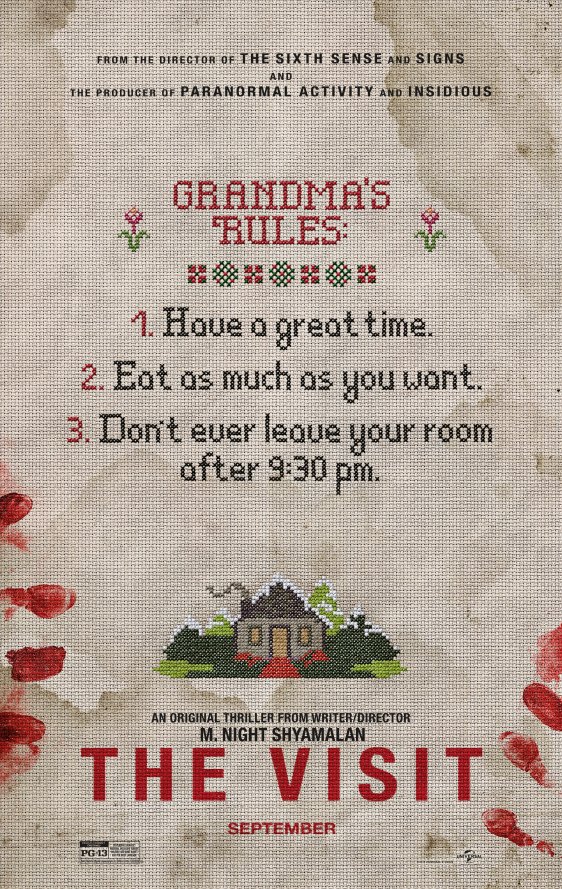
Poster for "The Visit"

This week on the podcast, Glenn and Daniel reflect on another mediocre genre thriller. That’s three times in a row I’ve used that first sentence. M. Night Shyamalan‘s The Visit may be regarded as a return to form for the director, but the “found footage” form is one that systematically works against his previous strengths. (25:16).

May contain NSFW language.

FilmWonk rating: 4 out of 10

Show notes:

  • Music for tonight’s episode is “Everyday” by Buddy Holly, a cover version of which appears in the film’s trailer.
  • Regarding The Happening, the insect-suicide inducing parasite that we referred to was actually a confusion of two different ones. The first is a fungus called Dicrocoelium dendriticum, which triggers an ant (by way of vomit from a land snail!) to crawl up to the top of a stalk of grass at night, in order for it to be eaten by a cow. The other is Schistocephalus solidus which is even more sinister – this one triggers a stickleback fish to seek out warmer waters so it will grow bigger, then become bolder and more solitary so it will be eaten by a sea-bird. io9 has a good round-up of these and ten other parasites that effectively zombify their hosts. Sweet dreams!

Listen above, or download: The Visit (right-click, save as, or click/tap to play on a non-flash browser)

Seattle’s One-Reel Film Festival 2015 – Sunday Roundup

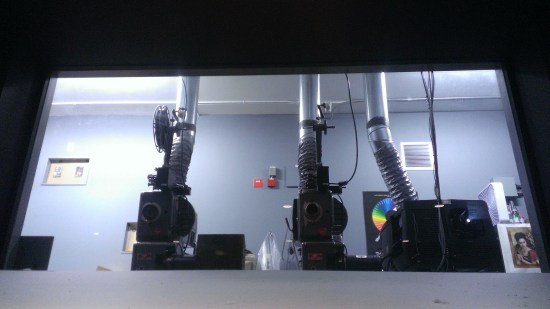
SIFF Film Center projection room

The One-Reel Film Festival is part of Seattle’s renowned Bumbershoot music and arts festival. Throughout the weekend, I’ve had the opportunity to see short films from all over the world, some of which can be viewed online (I’ve included links below where applicable). The films were arranged into blocks of around an hour apiece, which I’ve arranged in presentation order below. Bold text means I enjoyed the film, and an asterisk (*) means it was my favorite film of that block. Skip to the bottom for a list of all the films that can be viewed online.

Click here for Saturday’s films


Documentaries Hour 2

  1. Artsquatch (Director: Taylor Grigsby, USA, 22 minutes)

    Ryan Henry Ward, artist and visual arts curator for Washington’s annual Sasquatch Music Festival, says in a talking-head segment that he selects artists based on their ability to communicate effectively about their art to the public. This is one of several selection criteria he gives over the course of the film, but it certainly the most ironic, given that his interminably long interview segments are extremely rambling and repetitive. As a film, Artsquatch is visually interesting because the Sasquatch festival is visually interesting, made so by both the natural scenery of The Gorge amphitheater, as well as Ward and his fellow installation and costume artists featured here.

    But this is some sloppy filmmaking. The featured art doesn’t make the wobbly cinematography or sound mix any less awkward. If the film does anything consistently well, it’s to capture the wandering chaos of attending a music and arts festival in the middle of nowhere. But the structure is quite loose, and it encapsulates maybe 10 minutes of material in a 22-minute wrapper. Each interview could be improved by cutting the first 3-5 sentences while the subject figures out what they’re trying to say (or in at least one case, literally performs an on-camera mic-check). This looseness is evident in the editing, with random interstitial shots and a torrent of all-caps name introductions that add little, if nothing to understanding the art featured behind them.

    In the final minutes, we see footage of a man shooting footage from atop a UHaul truck (seemingly the pan of the emptying Gorge that we saw earlier in the film), followed by footage of two men on the back of a truck debating whether the joke that was just (not on camera) constitutes sufficiently “important shit” to be included in the film, followed by one last monologue from Ward explaining how great it would be to have a time-lapse of the festival setup and teardown – a time-lapse that does not appear in the film.

    There’s a fine line between free form and self-indulgence, and this amateur doc leaps across it several times. Art is perilous and bold, but the patience of its audience is not without limit. Many sacred cows needed to be butchered in the editing room to make this watchable.

    Watch it online here.

  2. Bounce, this is not a freestyle movie (Director: Guillaume Blanchet, Canada, 5 minutes)

    Where the hell is Matt?-style musical travelogue featuring a man (Blanchet) traveling around the world and shooting a few seconds at a time of himself in beautiful spots around the world. Rather than toddler-dancing, Bounce features its subject knee-bouncing a soccer ball in time with a strong musical beat, making its editing a bit trickier, as it had to both sync with the beat of the song and seamlessly transition from starting an action in one location to completing it in another.

    It’s quite fun, if a bit more inwardly focused than Matt, with which it draws inexorable comparisons*. It’s a subtle difference, but Matt Harding seemingly performed his goofball dance in order to connect with the people and places he was visiting, whereas if this film has any abiding message, it’s just… Look at all the cool places I’ve been. With few exceptions, nearly every frame of this film is devoid of any other people besides Blanchet himself. Travel is seldom as bereft of purpose and connection as depicted here, and I have to imagine that in the course of making these videos, Blanchet interacted with a great many peoples, cultures, and places along the way. We get the occasional hint of this during the actual film, then the floodgates open from a final hug into an end-credits reel that’s nearly as long as the film itself, and far and away the most entertaining segment. This is a smaller criticism than it sounds like. I enjoyed Bounce overall. But to boast so proudly in the title about what it is not, the film needs to be able to more clearly answer the question of what it is. Otherwise it’s just a stunt, however enjoyable that might be for a minute.

    Watch it online here – also, watch Globe Trot, a film with a similar concept from last year.

  3. Tomgirl* (Director: Jeremy Asher-Lynch, USA, 15 minutes)

    This doc tells a tale of a kid named Jake – born a boy, and acting like a girl. There are other terms that get mentioned – transgender, transvestite, homosexual, etc. – that may eventually describe Jake as well. But seeing a kid just be himself at the age of 7 illustrates just how useless these terms are until the kid is old enough to adopt them (or not) for himself. Kids will be kids, and this film is a well-balanced mix of both a professional explaining trans issues and gender non-conformity from a psychological standpoint, and a family that is so open and accepting of their atypical son that they hardly seem to need such help. This doc is well-paced, adeptly shot, and never lingers too long on any of the adults talking about Jake before cutting back to him doing his thing and feelin’ fine. The film ably sells the notion that kids like this are never “the problem”, until other kids or adults in their lives decide to make them such. In a world where the risk of suicide and homicide is so high among transgender people, the film’s easygoing attitude about such kids surprisingly feels like the best approach. It doesn’t elevate this to the life or death issue that it may eventually become, but it takes the situation appropriately seriously.

    More info and trailer here.


Best of the Northwest 2

  1. Chasing the Sun (Director: Jeremy Mackie, USA, 12 minutes)

    A pair of Northwest hippie siblings are on a roadtrip across Washington State to visit their long-lost even-bigger-hippie mother, who left them many years earlier. Mom is a ghost in this film, as the only real relationship on display is between brother and sister. And while not every piece of dialogue worked, their performances certainly did. Caleb (Jesse Lee Keeter) is angry at his sister Celeste (Samara Lerman) for dragging him into a reunion that he didn’t want or need in his life, but she gradually draws out his willingness to go along with her mendacious plan. The mix of frustration and familial affection between them is clear and evident on-screen – and when they reach the point of shouting back and forth at each other, it verges on melodrama, but never took me out of the film.

    Not for nothing, but I’ve driven the stretch of Thurston County interstate highway where this film was shot many times. Looks like a beautiful place for a family crisis.

    More info here.

  2. Julia’s Farm (Director: Sudeshna Sen, USA, 16 minutes)

    There’s not much to this story. It features a pair of women who embark on an ill-conceived scheme of insurance fraud together. Like the Coen Bros, it’s a morality play of greed, crime, and punishment. Unlike the Coen Bros, it’s simplistic and obviously rendered, has an awkward and implausible script, and features an overbearing afterthought of a musical score.

    More info here.

  3. Luchadora (Director: Amber Cortes, USA, 8 minutes)

    After Artsquatch, this film was a welcome guide for how to tightly edit a documentary – it’s colorful, shot well, and gets to its point quickly. The main player, a budding Northwest luchadora named La Avispa (“The Wasp”), is a compelling interview subject, speaking with eloquence and enthusiasm about ditching college in favor of “joining the circus”, in the form of a Renton, Washington training gym for lucha libre (Mexican wrestling). It helps that she delivers this entire monologue in her luchadore mask, with all the flare of American pro wrestling (something she’s apparently not a fan of herself). The film effectively introduces a little-known Northwest take on an out-of-town sport (one that I’m rather interested in seeking out now) through the lens of a budding theatrical stuntwoman who’s thoroughly entertaining to watch.

    On a personal note, I’m glad I liked this film. The director, Amber Cortes, was literally sitting next to me as I typed the first draft of these notes (in the back row, over the end credits – I’m not a monster), so it might’ve been terribly awkward otherwise.

    More info here.

  4. Signs Everywhere* (Director: Julio Ramirez, USA, 12 minutes)

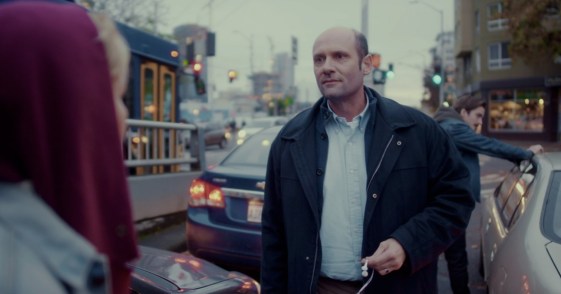
    A man wearing earbuds (Tony Doupe) wanders around Seattle. Everywhere he goes – from home to work to his commute – he sees people in pain, as rendered by simple cardboard signs held by each person, summing up their particular pain or baggage. His own family isn’t exempt – his daughter hates her body, his son is being bullied at school, and his wife longs to feel desired again. Without exception, each person that he comes across is experiencing pain and misery. After twenty or thirty of these uniformly miserable people, I couldn’t help but wonder whether this simplistic storytelling dynamic – literally the stuff of sitcoms – was striving for anything greater than blasting subtext at the screen without having to earn it in character or script.

    But there were two things that made this film work so well. First, the performances were uniformly strong. Even if the character only has a single line of text to work with, each actor or actress spells out real pathos and depth even in just a moment of screentime. The film’s emotional tapestry, spelled out in a nearly complete absence of dialogue, is thorough. But its second strength was casting reasonable doubt on the clairvoyance of the man at the center. If he is really just this adept at sensing the misery around him, he wouldn’t be much more than a facile storytelling device. But the film ends on a note of uncertainty, perhaps revealing what’s really happening with this character – that his grand insightful tableau of sadness may just be a projection of his own miserable life. There’s something gravely amiss with him, and by the end of the film, he seems just about ready to stop dealing with it alone.

    More info here.


Films4Adults

  1. Best Man Wins* (Director: Stéphane Dumonceau, USA, 20 minutes)

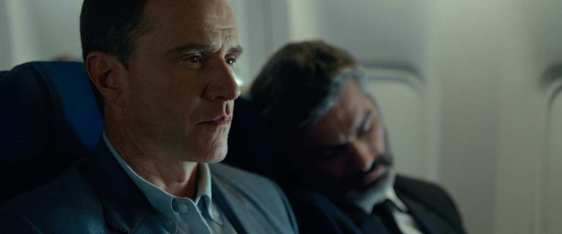
    This film features a spurned husband, master chef Edward Stiles (Tim DeKay) setting an elaborate trap for his wife’s secret lover, master vintner Jean-Louis Vachon (François Vincentelli). I don’t hesitate to reveal that setup, because this film is not shy about revealing its intentions, and it remains an absolute delight after doing so. From its initial setup, in which Stiles manufactures a “chance encounter” with Vachon on a flight from Paris to New York, every moment and line of dialogue is filled with palpable and escalating tension. The best phrase I have for this is “Tabloid Hitchcock”, with a subtle spritz of Edgar Allen Poe for good measure. Its premise is over-the-top – lifestyles of the rich and famous put through a tense filter of infidelity, friendship, and cat-and-mouse betrayal, serenaded by a grand and zany musical score from newcomer Luca Ciut. The script, co-written by Dumonceau and Frederick Waterman, is certainly one of the finest that I saw today – a feast of intrigue and tension and humor so decadent that I fear to see in a feature-length version, which would surely collapse me into a deep and diabetic slumber before the digestifs are poured. Magnifique.

    More info and trailer here.
    Buy on iTunes here.

  2. Hole (Director: Martin Edralin, Canada, 15 minutes)

    This film is utterly mystifying. Its final scene is so far on the fringes of human behavior that it’s an outstanding reveal that I dare not spoil here. The film is a successor to a film like The Sessions, presenting the unexpected experiences of a severely disabled man while somehow avoiding gawking at him. Here he is, watch how he lives. It’s not boring, and the reveal is worth it.

    More info and trailer here.

  3. The Mill at Calder’s End (Director: Kevin McTurk, USA, 14 minutes)

    This film almost feels like the product of a dare. Can puppets be used to tell genuinely terrifying gothic horror? The film features many intricate carved characters, each with a subtle look of sadness and worry on its face. And the rest of the emotional range is accomplished by a mix of talented voice-acting (mostly in the form of Jason Flemyng‘s voiceover narration as the lead, Nicholas Grimshaw) and an elaborate interplay of light and flickering shadow across the carved faces (kudos to cinematographer Kenton Drew Johnson). They don’t look alive, per se, but they nearly look animated. The result is something akin to Japanese Noh theatre, where the emotional interplay is slow and deliberate, and reflected across the faces of masks that are never removed (the director mentions bunraku puppetry as an influence). At a certain point, we do see a few of the puppets’ lips move. And while I’m still undecided whether I consider this a misstep, it is at least a jarring change in look and technique that amounted to a slight distraction.

    But did I mention that the film is terrifying? The Mill isn’t just a technical marvel – utilizing a mix of what appear to be models, live actors (shot from a distance or in shadow), and real-life skies and backgrounds – but it’s also a taut and effective piece of Gothic horror. Director Kevin McTurk, a model-maker with an impressive array of special effects credits from the Stan Winston Studio and others, builds tension marvelously through increasingly tricky camera angles in and around the mill, often looking straight up or down from impossibly close angle on a model or puppet.

    More info and trailer here.

  4. Stealth (Director: Bennett Lasseter, USA, 22 minutes)

    I recall earlier this year when a whiny filmmaker at a college festival complained that the “SJW” crowd had coopted the film festival process – that any story featuring an oppressed minority would gain traction and receive awards and accolades, while his [genuinely unwatchable schlock] would be ignored and shunned. I mention this because this is the second story I’ve seen today about transgender issues, and two is by far the most of these stories I’ve ever seen at once. One could certainly take that to mean that my objectivity in judging the film will fly out the window in the face of novelty and social pressure, but one would be profoundly arrogant to do so.

    Yes, this is all pretty new to me. And if the national media is any indication, it’s pretty new for most of us. But merely presenting something novel is not enough to make me feel something as a viewer or critic. Merely prodding my prejudices and forcing me to experience a way of living that’s different from my own is not enough. Emotional resonance doesn’t exist in a cultural void, but it’s still something that must be judged from within the text of each film. It’s what allowed me to adore Cloud Atlas and (so far) find Sense8 a bit preachy and self-indulgent. To hate myself for watching all of Entourage, but still masochistically enjoy the films of Michael Bay. Knowing that someone might be judged unfairly by smallminded bigots doesn’t make me shy away from judging them as fairly as I can.

    So when I say that these performances feel utterly real, and that this film was alternately touching, provocative, and devastating, you should know that I mean exactly that. The main character, Sammy (Kristina Hernandez), is an eleven-year-old transgender girl dealing with life at a new middle school. She has a close relationship with her mother (Liana Arauz), with whom she shares many of the film’s most tense and touching scenes. We get a hint that some serious unpleasantness befell Sammy at her old school, and while we never quite learn what it is, it hangs as a persistent threat for the rest of the film as she gets to know a pair of new girlfriends. Hernandez is affecting in the role (which is apparently a semi-fictitious version of herself). I’ll repeat what I said for Tomgirl above – these kids are never “the problem”, until somebody makes them so. This girl wants the same things as any other child – and the freedom to seek them out. And this film illuminates just how complex that process can be.

    More info here.

  5. Unleaded (Director: Luke Davies, UK, 8 minutes)
    A delightful, coincidental yarn about a gas station robbery colliding with stoner drama. Veers into the slapstick violent realm of Guy Ritchie, even if the scenario and details strain credulity a bit more than his stuff – but none of that matters while watching this. It’s still a ton of fun.

    More info here.

  6. Walls (Director: Miguel López Beraza, Spain, 10 minutes)
    A tenement building in Budapest narrates a day in the life of its two favorite residents, a pair of elderly neighbors named Mr. Istvan and Mrs. Magdi. In English, with a Spanish accent. It’s perhaps a testament to this film’s sensitive and resonant portrayal of its subjects that I was left unsure whether this is fiction or not. After the film, it identified itself as a documentary, but all I can say with any certainty is that it’s a pleasant and touching slice of life – the embodiment of a happy ending to a life well-lived. We only learn a small amount of each of them, but Mr. Istvan and Mrs. Magdi each live lives that are active, social, and surrounded by people who enjoy their company. The film uses a literal embodiment of “if these walls could talk” to add to its sense of warmth and closeness, but it never feels like a salve for the loneliness of its main characters. The building doesn’t express its love for them because no one else will – the building cares for them because it sees how many others do so as well. We should all be so fortunate.

    More info and trailer here.


Quick List: All of the films that are available online

Seattle’s One-Reel Film Festival 2015 – Saturday Roundup

SIFF Film Center projection room

The One-Reel Film Festival is part of Seattle’s renowned Bumbershoot music and arts festival. Throughout the weekend, I’ve had the opportunity to see short films from all over the world, some of which can be viewed online (I’ve included links below where applicable). The films were arranged into blocks of around an hour apiece, which I’ve arranged in presentation order below. Bold text means I enjoyed the film, and an asterisk (*) means it was my favorite film of that block. Skip to the bottom for a list of all the films that can be viewed online.

Click here for Sunday’s films


Films4Families

  1. Bear Story (Director: Gabriel Osorio, Chile, 11 minutes)

    This film tells a deep, dark story of a bear taken from his family by a dictatorial circus regime. Given the film’s Chilean origin, this seems to be a real-life tale of oppression molded into a child-friendly wrapper. I’m inclined to say the film erred by using the mechanical diorama aesthetic as a literal framing device rather than a mere visual style. The visuals of the diorama are stunning, but implausible enough as a physical streetside object to be distracting. The film could have merely adopted the style for amusement’s sake without deigning to explain it, if not for it literally being shown to a [bear] child on the side of the road. But I daresay that the reluctant satisfaction on the adult bear’s face at the end made it worth it as a framing device.

    Teaching painful history to young people in a way that doesn’t feel like medicine is a difficult task, and for this bear to have to craft his lifelong oppression into a quick, consumable format to entertain (and educate) one child at a time clearly takes a toll on him. But he’ll keep at it, if it means keeping that message alive. The film makes this subtle point rather well, even if it has to dazzle and distract a bit with its visuals before sneaking that message in.

    More info and trailer here.

  2. Bunny New Girl (Director: Natalie van den Dungen, Australia, 6 minutes)

    Never work with children or animals, so the saying goes in filmmaking. This film seemingly violates both rules, featuring a shy little girl on her first day of school wearing a paper-plate bunny mask, evoking a quick sense of schoolday dread. To her classmates, the weird kid is weird, and must be called out as such immediately. The girl’s eyes tell a story of childhood dread despite a complete lack of dialogue, and once the true meaning of this weirdness becomes clear, the story quickly takes a turn for a tale of kindness and inclusion. It’s all very sweet and funny and cute.

    More info and trailer here.

  3. Lila (Director: Carlos Lascano, Argentina, 9 minutes)

    During the first minutes of Lila, in which the title character wanders through the city rendering everyday things and people into whimsical colored pencil sketches in her magical reality-altering sketchbook (which eventually comes to life to move in a 2D plane and affect reality), I experienced two simultaneous reactions.

    First, this is all visually well-staged, and second…why is Lila in this film? She seems almost a whimsical addition herself – a projection of the filmmaker into the story, meant to hand-feed us the emotion that we’re meant to experience for each little vignette. She’s not a necessary component, and the eventual attempt to humanize her by telling a bit of her ambiguous backstory visually doesn’t do much to justify her presence. It’s no fault of the actress, who does a fine job at being a manic pixie sketch-girl, but every sketched scene would have been fine without her.

    Watch it online here.

  4. Pik Pik Pik (Director: Dmitry Vysotskiy, Russia, 4 minutes)

    A satisfying “Merry Melodies” throwback featuring a flat, bright 2D animation style and rhythmic classical underscore for its silly tale of environmental unsustainability.

    More info here.

  5. Ray’s Big Idea* (Director: Steve Harding-Hill, United Kingdom, 4 minutes)

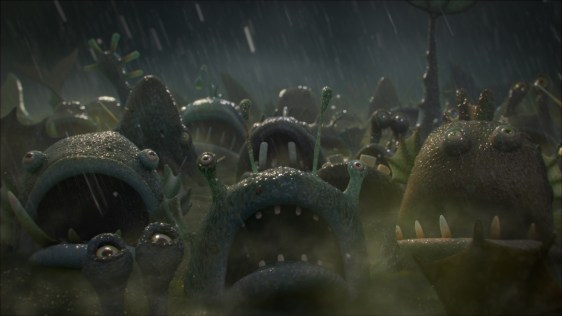
    This film’s animation is beautifully ugly. Each hideously overcrowded frame is pristinely rendered with the detail of something like ILM’s Rango, with each unique character and visual detail grandly crafted for no more than a few seconds of screentime apiece. The film’s core concept is the first prehistoric fish who thought to leave the ocean on his tiny little legs, and it renders that concept with a nice, wry sense of humor. Then it takes several hilarious (and gross-looking) turns from there.

    Watch it here.

  6. Submarine Sandwich (Director: PES, USA, 2 minutes)

    A sandwich is built through live-action stop-motion animation, turning inedible objects into slices of sports memorabilia that loosely resemble a sub sandwich. I’ve said this before; stop-motion involving live humans is a creepy aesthetic that I rather enjoy, but here’s the thing – not everyone can do this as well as Jan Svankmajer, and his creativity was creepy in the service of some sort of message or atmospheric objective. This just felt like a technical exercise by someone who was perhaps a casual fan, but didn’t quite know what to do with the look. The timing felt off, shots lingered for too long, and there were awkward shifts in zoom and framing for no discernible purpose. The result is cute, but ultimately derivative, and doesn’t do a great deal to justify its existence. Other than making an indigestible thing that kinda resembles something else.

    Addendum: It seems PES is also the filmmaker behind “Fresh Guacamole,” from 2013. I now believe even more strongly that this was little more than a technical exercise, but Guacamole was at least a better execution of the concept. Even if adding diced tomato to guac is an abomination.

    Watch it here, or if you don’t want to sleep tonight, just watch Svankmajer’s Food instead.

  7. The Trumpeteer (El Trompetista) (Director: Raúl Robin Morales, Mexico, 10 minutes)

    This film, with its dingy, grey-brown uniformed figures (seemingly the same clothing and character model), made splendid use of light and shadow and color despite its deliberate homogeneity during the opening moments. After introducing a squad of identical bandmates in a miserable prison-yard, the film erupts into a gorgeous brass symphony of color and reflected light to represent the lead trumpeter’s musical rebellion against the rigid, boring bugling prescribed to him by the bandleader. We see swirls of color and light erupt from his trumpet in a manner that is first subtle, then erupts into a full-on acid trip of fluorescent watercolor. Quite lovely.

    Watch the trailer here.


Best of SIFF 2015, Part 1

  1. Bihttoš (Director: Elle-Máijá Tailfeathers, Canada, 15 minutes)

    This unconventional, highly personal documentary about a father and daughter from an indigenous community in Canada (and another in Norway) feels like little more than a pretty solid college admissions essay. Even if the conclusions are a bit trite and not long-lasting (“And they all kinda turned out just fine!”), the visuals and storytelling are unique and thorough enough. Not bad, but not for me.

    More info here.

  2. The Chicken (Director: Una Gunjak, Croatia, 15 minutes)

    This is a rough film, illustrating both the ugly realities of meat production, as well as the dangerous ignorance of a child in a war zone trying to preserve a piece of her innocence. The film helpfully notes that no animals were harmed in its production, which is not evident while watching.

    More info and trailer here.

  3. Personal Development* (Director: Tom Sullivan, Ireland, 15 minutes)

    An absolute delight of a family dramedy about the teenage daughter of a divorced single dad who has the great misfortune to have to deal his daughter’s unexpected “woman’s troubles” during his solo weekend with her. I almost feel ill-equipped to evaluate this film, except to say that it rang true, didn’t let father or daughter off the hook for awkwardness or familial affection, and it all felt very sweet. A brief run to the shop for menstrual painkillers makes for a nice comic beat, as the pharmacist gives Dad the unexpected third degree.

    More info here.


Best of SIFF 2015, Part 2

  1. The Answers (Director: Michael Goode, USA, 8 minutes)

    Nathan, recently deceased, stares directly into the camera and asks for the objective answers to every question in his life. He quickly comes to terms with his demise, and gives way to the novelty of knowing the unknowable details of his prior existence, however alternately hilarious or distressing they might be. The infographic bits (“How many eggs did I eat?”) are quickly supplanted by greater insights, such as who was the his ideal woman. Insight gives way to a palpable sense of regret, nearing in just a few minutes what Albert Brooks accomplished in Defending Your Life – a sweet and poignant existential comedy.

    More info here, trailer here.

  2. Go Daan Go! (Director: Mari Sanders, Netherlands, 15 minutes)

    Chalk this one up to personal bias, but I found this story of simplistic family drama and sports triumph to be utterly boring. Will Daan be allowed to swim? Well, his mom has both an emotional and practical reason to not want him to do so, and his dad really wants him to, and they all love each other and they’ll all be fine regardless. But hey, at least we got to see the kid strumming on his sad guitar with a couple of broken strings while his parents fight downstairs. Total snooze.

    More info here.

  3. Listen (Director: Hamy Ramezan, Denmark, 13 minutes)

    This film is a biting piece of cultural criticism, simultaneously excoriating fundamentalist Islam, religious and sexist oppression, the role and place of insular immigrant communities, and the mainstream institutions that are ill-equipped to assist them with their problems. A battered woman sits behind a burqa, as well as barriers of language, apathy, and a near-complete lack of control over her life. Her distress is palpable, and evident in her thrice-repeated opening monologue. But there’s little that anyone can or will do about it.

    More info and trailer here.

  4. World of Tomorrow* (Director: Don Hertzfeldt, USA, 15 minutes)

    Don Hertzfeldt’s visual style remains as weirdly splendid as ever, and it is now accompanied with a pack of fascinating sci-fi ideas that emerge in rapid-fire dialogue and visual chaos as a third-generation adult clone named Emily explains the future to her original self (Emily Prime) as a toddler, with neither one quite fully understanding the other. Hertzfeldt’s sense of humor remains pitch-black as ever, and as the ideas and implications for mankind spill forth one by one, the laughs become more and more mirthless, giving way to an imminent sense of doom. Outstanding and worth a watch.

    Watch it here (free trailer, paid rental).


Quick List: All of the films that are available online

FilmWonk Podcast – Episode #77 – “The Transporter Refueled” (dir. Camille Delamarre)

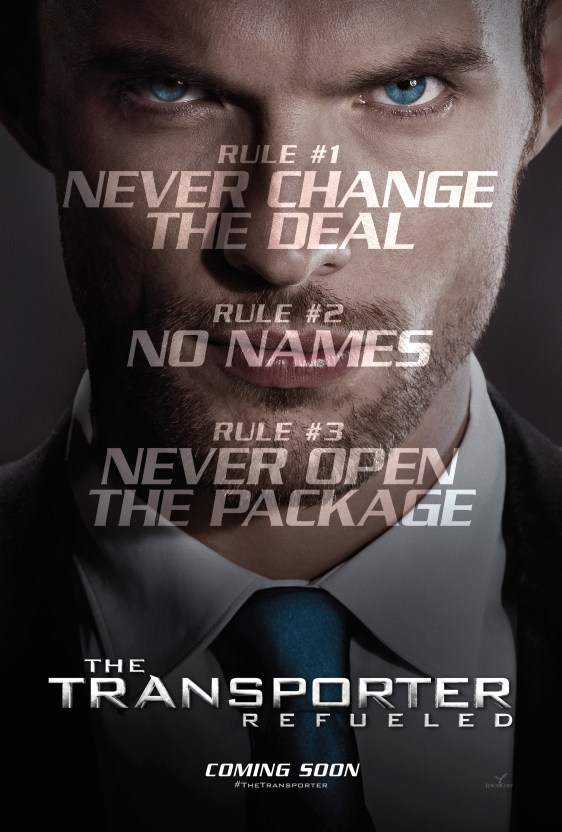
Poster for "The Transporter Refueled"

This week on the podcast, Glenn and Daniel reflect on another mediocre genre thriller. It’s pretty sad that I didn’t need to rewrite that first sentence. Ed Skrein and Ed Skrein’s Tough-Guy Voice star in an unnecessary reboot of the Transporter series. (32:42).

May contain NSFW language.

FilmWonk rating: 3 out of 10

Show notes:

  • Music for tonight’s episode is the track “How You Like Me Now?” by The Heavy, from the film’s trailer. Again.
  • As we mentioned, check out the Planet Money podcast explaining why it felt so unrealistic to us to see money transfer quickly in this movie, and why it kinda works in Europe.
  • Here’s the door-kick fight-scene we referred to in the original film The Transporter (which was from 2002, not 2007). Man that movie was fun. Here’s another one!
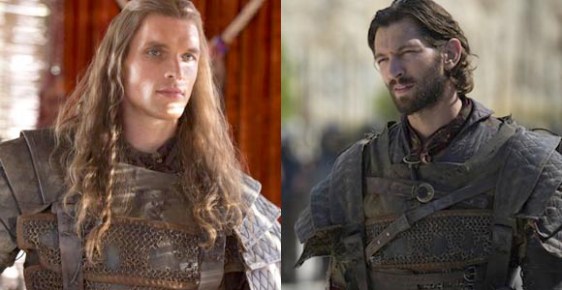
  • Ed Skrein did indeed play Daario Naharis on Game of Thrones, until he was replaced by a nearly indistinguishable actor.
    Daario Naharis Comparison

Listen above, or download: The Transporter Refueled (right-click, save as, or click/tap to play on a non-flash browser)

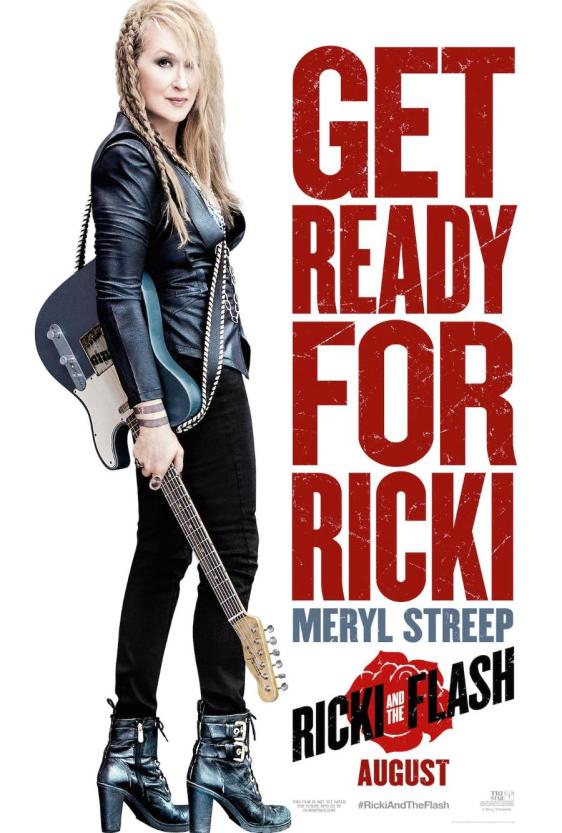
“Ricki and the Flash” (dir. Jonathan Demme) – Well-rounded musical drama

I’ve often said that there are things I will tolerate from the musical genre that I will not tolerate from any other. Sudden romances, heightened emotional beats, and character arcs that are earned in neither the performances nor the screenwriting, but reliably and effectively manipulate the audience into feeling something through the sheer, awesome, neurologically-evocative power of music. And yet, Ricki and the Flash, an original collaboration from director Jonathan Demme and screenwriter Diablo Cody, may be the first musical I’ve seen that attaches this facile enhancement to a character drama whose beats are worthy of being musically heightened in the first place.

Ricki Randazzo, née Linda (Meryl Streep), is an aging rockstar who plays with a cover band co-led by her gentleman-friend Greg, who looks and shreds suspiciously like Rick Springfield. Like any good rockstar, she’s left behind her Midwestern roots – and her family – to pursue her dream, and while her glory days (in the form of a single album) are likely behind her, she still plays a bar gig in California with all the vim and vigor of Madison Square Garden. I find that I’m being a bit mean about this character not because I disliked Streep’s performance, but because she was so effective in the first half at making the character deeply unlikable. Late in the film, when she smiles and says, of attending a family event, “If I go there, something terrible will happen,” I laughed involuntarily. Then a crack appeared in Ricki’s half-smile. And Streep reveals the true pathos behind Linda’s face as she says of her family, “You don’t know these people. They despise me.”

This has probably been said quite enough, but Meryl Streep is an absolute treasure. And her ability to project instant familiarity and comfort with every detail of this character, from her decrepit apartment to her wobbly on-stage performance and rich, dusky singing voice, is unparalleled. Cody’s script gives Streep a good deal of complexity to work with, even if the character occasionally gets drunkenly didactic about the double-standards that male rockers face with regard to their family affairs. But for the majority of the film, Cody’s writing is quite strong – indeed, this may be her most mature script to date, with all of her quirk and sharp sarcasm perhaps tempered a bit by reality. This is seemingly the next sad chapter in the life of Charlize Theron‘s character from Young Adult.

When the family interaction finally happens, it’s propped up by a series of strong performances, from dapper, bourgie ex-husband Pete (Kevin Kline) to her decidedly non-gay divorcée daughter, Julie, played by Streep’s actual daughter Mamie Gummer. Gummer is an absolute wreck here, and I mean that in the best way. She is surely the most honest character in the film, both with herself and the rest of the cast – even if that honesty takes the form of complete disinterest in personal hygiene and a recent suicide attempt. Her looming divorce is the impetus behind bringing Linda back to her long-abandoned family in the first place, and indeed, much of the film’s strongest dramatic work comes between mother and daughter. Apart from that, Streep and Kline also share a delightful scene of family marijuana-time in which the lingering romantic nostalgia between the pair is teased, established, and appropriately not dwelt upon. Her two sons (played by Sebastian Stan and Nick Westrate) are basically non-entities, imbued with a single, simple conflict apiece that contribute little to the film except a setting for the final act. They don’t drag down the film, but they certainly make it feel a bit overstuffed, especially when it manages to make such strong use of Audra McDonald with equally little screentime. McDonald plays Maureen, Pete’s “new wife” of 20+ years who did far more to raise Linda’s kids than she ever did. The script teases her arrival throughout the first half, and while McDonald and Streep ultimately only have a handful of scenes together, the tension underlying this relationship is clear and immediate. Maureen is established as an admirable woman in a great many ways, and the inevitable confrontation between the two ill-matched rivals is not only some of Cody’s sharpest dialogue; it may be the film’s best scene. It mixes emotion and exposition and a pair of stunningly executed performances and leaves the audience reeling for the start of the third act.

This is probably a good spot to mention that Ricki and the Flash is incredibly predictable, which is why I’ve been a bit looser than usual with spoilers. This is one of those vices of the musical genre that I’ll handily forgive. There was only ever one way for this film to end, with the titular band on stage playing us into the credits. But it’s in this third act that the musical elements of the film really start to shine. Scenes last for two, three minutes longer than they would in any other genre, and yet with Streep at the microphone, talented as actress and singer in equal measure, I found myself as thoroughly engrossed with the musical postscript as I had been with the dialogue preceding it.

The noticeable weak link is Springfield. His acting is not bad by any means; he’s just noticeably outmatched by Streep in every scene they share. He delivers a speech late in the film about how much he loves his kids, and his mid-Atlantic drawl and crisp, Jimmy Stewart delivery felt like an artifact of a bygone style of acting. It felt rather out of place, like he was trying much too hard in the presence of an actress who was comfortable enough not to need to. That said, Springfield is an order of magnitude better at acting than Pierce Brosnan or Russell Crowe is at singing, so if the musical genre demands crossover performers, it seems that I prefer it the Springfield way. Director Jonathan Demme impressed me here as well. This is a step outside of his prior genres (best known for The Silence of the Lambs), although the most direct spiritual predecessor to this film is his 2008 indie drama Rachel Getting Married. Like that film, Ricki and the Flash is a close-knit, dysfunctional family tale that rarely feels slight, despite its pairing with a screenwriter and genre that often risk being so.

And at this moment, I’m sad we couldn’t podcast this, because this is where Ricki and the Flash would play us out.

FilmWonk rating: 7.5 out of 10
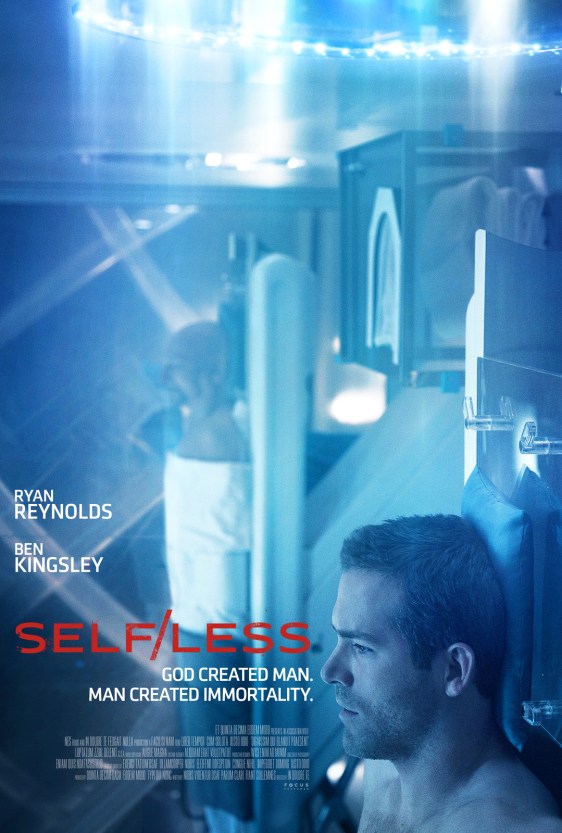
FilmWonk Podcast – Episode #76 – “Self/less” (dir. Tarsem Singh)

Poster for "Self/less"

This week on the podcast, Glenn and Daniel reflect on another mediocre genre thriller. It’s really been a rough week, for Ryan Reynolds and us alike (31:28).

May contain NSFW language.

FilmWonk rating: 2 out of 10

Show notes:

  • Music for tonight’s episode is the track “No Limit (Sencit Remix)” by Wiz Khalifa, from the film’s trailer.

Listen above, or download: Self/less (right-click, save as, or click/tap to play on a non-flash browser)

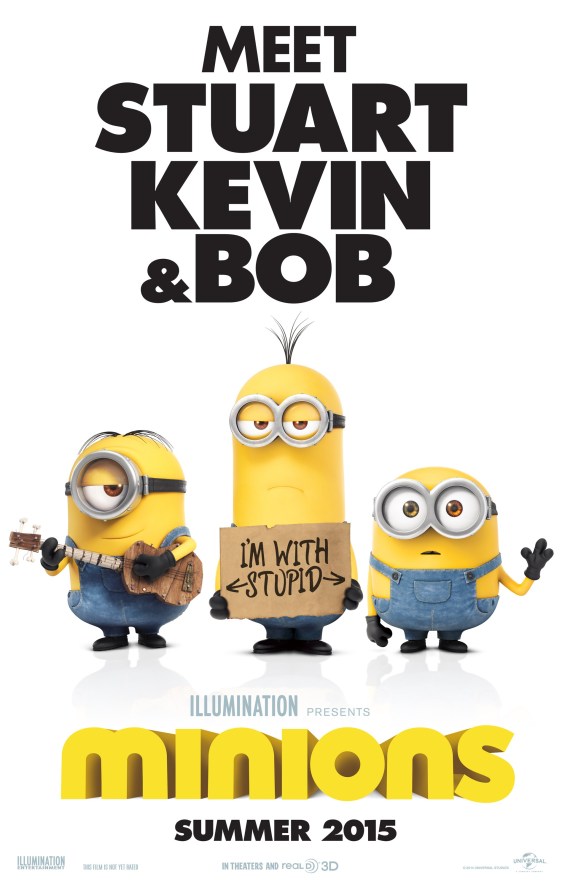
FilmWonk Podcast – Episode #75 – “Minions” (dir. Kyle Balda, Pierre Coffin)

Poster for "Minions"

This week on the podcast, Glenn and Daniel had an intense, lengthy, thematically trenchant discussion about Minions. Then some villainous hackers struck and we lost most of it. So here are some highlights! (03:03).

This show may contain NSFW language.

FilmWonk rating: N/A

Show notes:

  • Music for tonight’s episode is “My Generation” by The Who.

Listen above, or download: Minions (right-click, save as, or click/tap to play on a non-flash browser)

FilmWonk Podcast – Episode #74 – “Jurassic World”, “Sleeping With Other People” (#SIFF2015 review)

Poster for "Jurassic World"

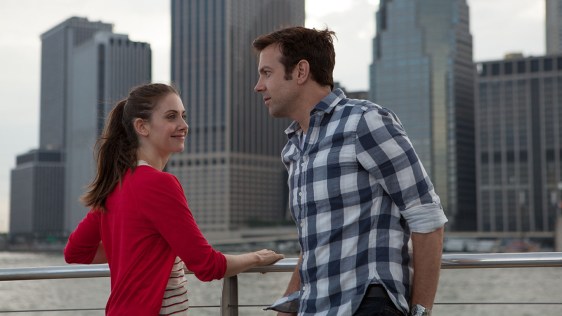
This week on the podcast, Glenn and Daniel tackle their final #SIFF2015 selection, Sleeping With Other People, the upcoming sex-comedy-cum-romantic-drama from Leslye Headland (Bachelorette), who’s reminding us more and more of early Kevin Smith. But first, we tackle director Colin Trevorrow‘s long-awaited return to the highly lucrative land of the dinosaurs with Jurassic World, a film that vastly exceeded our trailer-expectations (54:44).

This show may contain NSFW language.

Still from "Sleeping With Other People"

FilmWonk rating (Jurassic World): 8/10
FilmWonk rating (Sleeping With Other People): 7.5/10 (Glenn), 1000000/10 (Daniel)

Show notes:

  • (02:01) Review: Jurassic World
  • (19:36) Spoilers: Jurassic World
  • (37:58) Review: Sleeping With Other People
  • As of this writing, Sleeping With Other People is scheduled for release on August 21, 2015, via IFC Films (likely VOD and limited theatrical).
  • Music for tonight’s episode is John Williams’ classic track from the original score to Jurassic Park, entitled “Journey to the Island“, as well as David Bowie‘s “Modern Love“, from the soundtrack to Sleeping With Other People.

Listen above, or download: Jurassic World, Sleeping With Other People (right-click, save as, or click/tap to play on a non-flash browser)

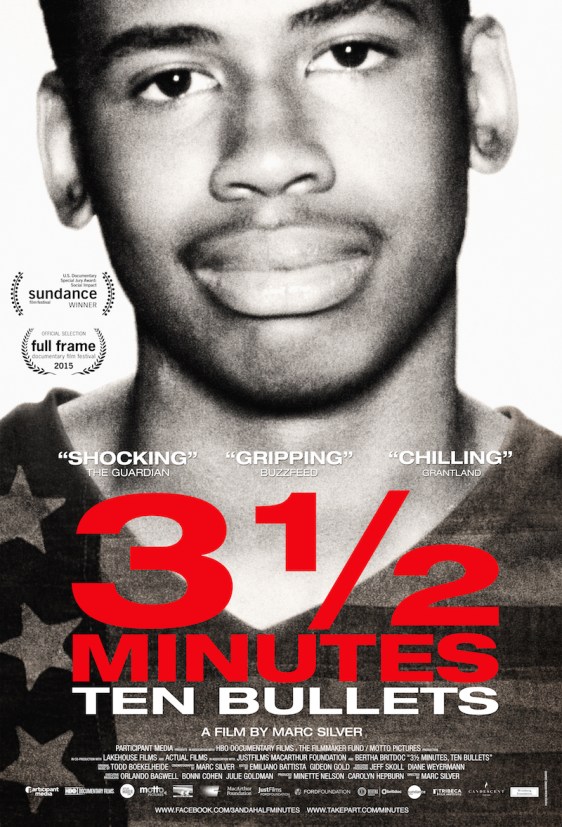
FilmWonk Podcast – Episode #73 – “The Chinese Mayor”, “3 1/2 Minutes, Ten Bullets” (#SIFF2015 review)

Poster for "3 1/2 Minutes, Ten Bullets"

This week on the podcast, Glenn and Daniel are back at SIFF to review a fascinating documentary about Chinese politics which, as of this recording, you can watch on YouTube right now. No, seriously – go watch it, then listen to our take on it. We follow that up with a documentary on the 2012 shooting death of Jordan Davis, 3 1/2 Minutes, Ten Bullets (45:53).

This show may contain NSFW language.

Post for "The Chinese Mayor"

FilmWonk rating (The Chinese Mayor): 6.5/10
FilmWonk rating (3 1/2 Minutes, Ten Bullets): 8/10

Show notes:

  • Per usual, these SIFF-centric episodes are cut and posted quickly, so expect a bit less polish than usual.

Listen above, or download: The Chinese Mayor, 3 1/2 Minutes, Ten Bullets (right-click, save as, or click/tap to play on a non-flash browser)

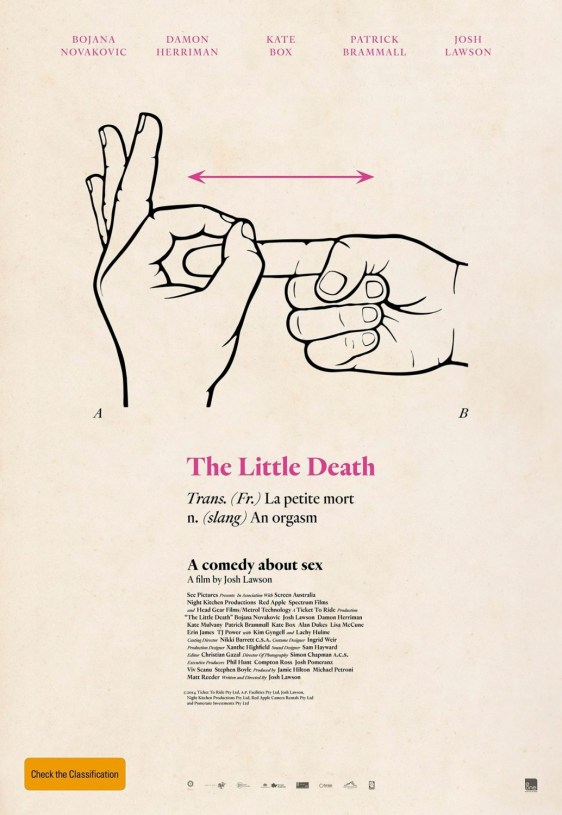
“The Little Death” (#SIFF2015 review) – A good fucking-comedy.

The Little Death – writer/director Josh Lawson‘s reference to the French euphemism for an orgasm – is a sex comedy that’s trying to be edgy. The last one of those I saw was Jake Kasdan‘s Sex Tape, which was such a colossal failure at both edginess and human relationships that it made me wonder if American cinema actually understands how people are fucking these days. But as ever, foreign cinema seems happy to pick up the slack, with everything from raunchy ensemble comedies like Young People Fucking to dark, fringe-straddling dalliances like Lars von Trier‘s Nymphomaniac. The Little Death has the most in common with the former film, as its script firmly sits in stylized, over-the-top Comedy World. But like the latter, it also has a vicious streak. While the writing and pace of the film had occasional issues, the acting is stellar, and the jagged edge and gleeful darkness of the film places it most closely in the realm of Todd Solondz.

The film focuses on several couples in a Sydney neighborhood, each with an odd paraphilia that is briefly defined on-screen as one of the partners reveals it. The film tosses out a red herring in the opening scene, which features Paul (Lawson) gingerly sucking on the toes of his girlfriend Maeve (Bojana Novakovic). This vanilla foot fetish quickly gives way for Maeve to reveal that her greatest fantasy is for Paul to…um…rape her. A recurring interruption in the film features a new neighbor, Steve (Kim Gyngell), dropping by some homemade golliwog cookies, before revealing to his often distracted neighbors that federal law requires him to notify them that he is a convicted sex offender. This gag is a solid reference for the film’s relationship with its most vulgar and offensive content – it teases it just enough to make the audience squirm, then either cuts to a new scene, or veers back into safer territory. But I mean that as a compliment – the film balances its tone remarkably well while dealing with these matters.

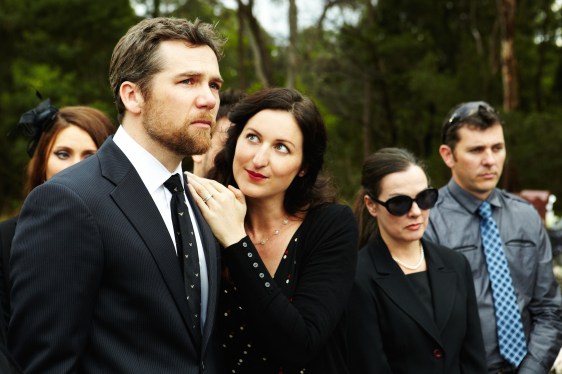
Most of the paraphilias worked nicely both narratively and as comedy routines – and each of the couples (save one) had convincing history and chemistry with one another. Kate Box is particularly strong as Rowena, the woman who discovers that she is sexually aroused by the sight of her husband (Patrick Brammal) crying – known as dacryphilia. She discovers this on the occasion of his father’s death, and spends the rest of the film trying to subtly induce him to tears again. Box is diabolical in the role, and the inner turmoil of her abusive drive toward earthquaking orgasm is spelled out on her face with each new scheme. She knows she shouldn’t be doing this, but finds justification in her previous sexual dissatisfaction. The root of comedy is often miscommunication, and for most of these couples, the miscommunication is chronic both in and out of their sex lives. The only couple speaking honestly about their innermost desires are the rape fantasists mentioned above, and even they can’t have a forthright discussion about whether or not they want to get married. This is a theme that the film visits repeatedly between the sex jokes, and in most cases, it works well.

But the most problematic story was surely that of the long-married couple of Phil and Maureen (Alan Dukes and Lisa McCune). I say problematic mainly because of how narratively uncomfortable Phil’s particular kink really was. He’s aroused by the sight of his wife soundly sleeping, which places him firmly in the same territory as Dylan Baker in Happiness, where any attempt to act on his desire would involve raping someone. But this story wasn’t problematic for making me squirm (which was surely the point), but rather because the majority of their interactions featured one of them sound asleep. So while the payoff of this sequence is suitably uncomfortable and well-acted, there wasn’t really enough credible history between these two characters to even buy them collectively as a failing marriage.

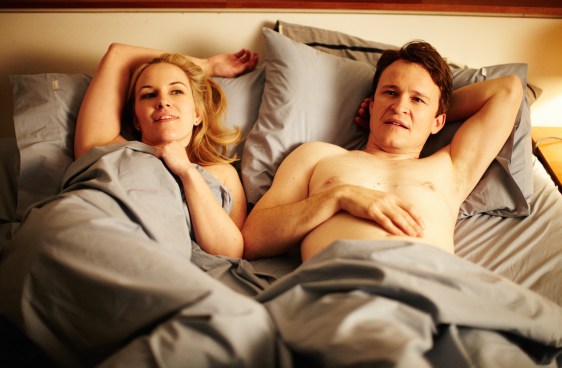
The other struggling married couple, Evie and Dan (Kate Mulvany and Damon Herriman), are an absolute delight with their over-the-top role-playing fetishism. The scenario itself starts out ridiculous and only becomes more so as the film goes on, but Mulvany and Herriman so thoroughly commit to their various roles (Doctor and Patient, Cop and Witness, etc.), as well as to their meta-roles of reluctant wife and secretly-capable-thespian husband that this scenario remains entertaining even as it strains credulity. The last couple, twenty-somethings Monica and Sam (Erin James and T.J. Power), plays out a raunchy, adorable love story that involves Skype, sign language, graphic novels, and a phone sex line. There’s nothing I can say to sell this sequence that’s not in the description above, except that both actors’ performances are outstanding (including James, who is making her acting debut in this film), and this sequence was easily the most disconnected from the rest of the film. It could’ve been lifted out as a short without affecting the other couples, all of whom seem to at least be living in the same neighborhood. But that’s a minor complaint that has more to do with the overall pacing of the film – a few of the sequences felt slightly deprived of screentime (it’s possible Phil and Maureen could’ve been punched up with a few extra minutes). But by and large, the stories work well on their own nonetheless, and Monica and Sam are surely the film at its most heartfelt and touching.

Looking back, I realize that – like a scheming birth control saboteur – I’m poking a great many holes in this film. And that’s despite enjoying nearly all of it. But a sex comedy is a rare thing, and one that features people who know how to act (and joke, and make fake whoopee) like genuine human beings is apparently even rarer. The Little Death strove for a small, proud genre that is all but dead in mainstream American cinema, even if it’s clinging to life in foreign and independent circles. And the film stands proudly on its own, even if its dick may occasionally be hanging out.

FilmWonk rating: 7.5 out of 10