Greg Mottola’s “Paul” – An overstuffed road trip

For some, Paul might provoke a sense of nostalgia. It is chock full of so many elaborate and perfectly executed pop culture references that you’ll spend far more time knowingly chuckling than actually laughing. It has all the ingredients of a solid road-trip comedy – Graeme (Simon Pegg) and Clive (Nick Frost) are a pair of unabashed nerds who take an RV across the American Southwest in search of gorgeous scenery and all things UFO. Halfway to Roswell, they run into an honest-to-goodness alien named Paul (voiced by Seth Rogen). Oh, and did I mention that Pegg and Frost, the beloved comedic duo from Shaun of the Dead and Hot Fuzz, also wrote the screenplay? And that they secured director Greg Mottola, whose last film made my Top 10 of 2009?

With all of these players involved, I am baffled as to why Paul is staggeringly unfunny for most of its runtime. The first 15 minutes, in which we get to know Graeme and Clive, are downright tedious. Pegg and Frost have their usual rapport, but their naturalistic banter is saddled with an overabundance of scatological humor and enough gay jokes to overwhelm Adam Sandler. Pegg and Frost’s relationship definitely got stronger as the film went on, but this first act was bad enough that I found myself wondering if, in a world where I hadn’t seen their prior collaborations, I would have bought them as friends at all.

Nonetheless, the film becomes truly enjoyable as soon as Rogen enters the picture. Rogen’s voice performance is hilarious and raunchy (like Rogen himself), and the repartee between Pegg, Frost, and Rogen (which allegedly contained a great deal of improv) is definitely where Paul is at its strongest. And that’s just what this film needed! Bring these giants of geek comedy together, and just let them be funny with each other. Instead, there were far too many scenes that dragged on for just a bit too long in the service of gags that aren’t nearly as funny as the movie thinks they are. When Paul brings a bird back to life with his E.T. mind-magic and then eats it, I chuckled (at least, I chuckled when I saw it in the trailer). But did it merit such an awkward pause in both story and comedic timing? Not at all. And there were a dozen other gags that felt just as expendable.

I’ve omitted some characters thusfar. Jason Bateman plays Agent Zoil, the ruthless man-in-black who is doggedly pursuing Paul. And I must say – this is one of Bateman’s finest performances. Bateman is the consummate straight man in every comedic project, and to see a straight-man who is heavily armed and committed to tracking down and killing every comedic character in the bunch is frightening and hilarious. Kristen Wiig is also in the mix as Ruth, the daughter of a Christian fundamentalist, and quasi love interest for Graeme. I don’t have much to say about this character – mocking religious nuts is pretty passé (and a bit too easy), and Ruth and her dad were perhaps the most extreme indications that this script was written by a pair of Brits who only had an eye for American caricature. The film simply felt overstuffed with both one-note characters and underused comedic talents (including Bill Hader, Joe Lo Truglio, Jeffrey Tambor, Jane Lynch, David Koechner, and one more I won’t spoil), who had very little to do with their brief screen-time except make the audience wonder why they showed up.

The most frustrating thing about Paul is that there seems to be a truly great road-trip adventure film at the center of it. Pegg, Frost, and Rogen (and eventually Wiig) are an affable group, and the wide open spaces and scenery look gorgeous (can’t go wrong with the American Southwest). Blythe Danner shows up as Tara Walton, the adult version of the little girl who first discovered Paul’s crash site, and I must say – this is a backstory that deserved more screen time. This film teases the kinds of strong relationships found in E.T. and Close Encounters, but seems too timid to actually embrace them. Every time it comes close, it wastes time on a throwaway line or shot-for-shot scene remake of one of those films instead. Comedy cannot survive on referential gags alone, and Paul‘s focus on them is entirely to its detriment.

FilmWonk rating: 4.5 out of 10

Sidenote: Kudos to the effects team that designed the alien Paul. This was a perfect fusion of reality and CG character design, on the same level of realism as District 9, but with a much more cartoonishly designed alien (which makes it even more impressive).
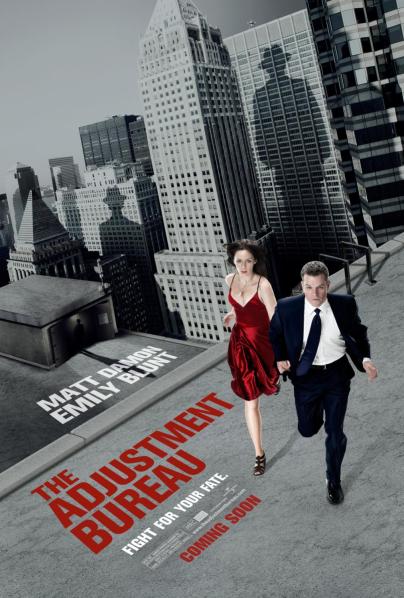
George Nolfi’s “The Adjustment Bureau” – All according to plan

When I saw the trailer for this latest Phillip K. Dick adaptation, I was intrigued, but mostly disappointed. To see the film squander its high-minded concepts of fate, free will, and strangers in suits in the service of what seemed to be just another “us against the world” romance seemed like a profound waste of time. We see Matt Damon, an able presence in any film, once again showcasing his four-minute mile, this time with an out-of-breath Emily Blunt in tow, and the film seemed like little more than a chase thriller saddled with superficial overtones of meant-to-be amour.

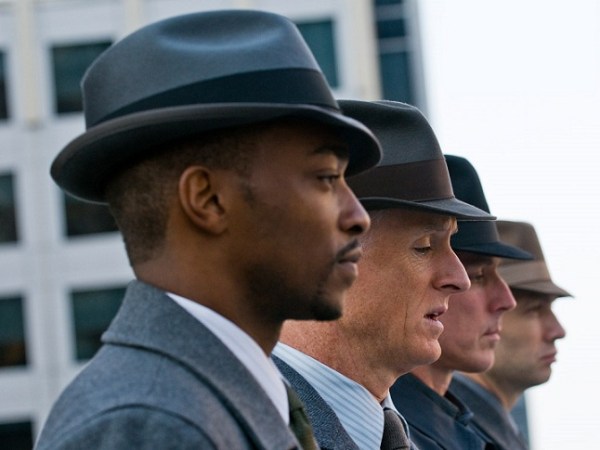
It’s the story of New York State Congressman David Morris (Damon), who meets the girl of his dreams in ballet dancer Elise (Blunt), but never gets her last name or phone number. The besuited members of the Adjustment Bureau, guardians of fate the world over, go out of their way to ensure that the two never meet again. And why? Because “the Plan” says they’re not supposed to be together. But when Adjuster Harry Mitchell (Anthony Mackie) dozes off on the job, the two star-crossed lovers meet and form an instant and irrevocable attraction, prompting higher-ups Richardson (Mad Men‘s John Slattery) and Thompson (Terence Stamp) to come in and set the world back on track.

David’s inadvertant glimpse at the Adjusters in action has cosmic consequences, leading to a multitude of lengthy deliberations about fate and free-will. These discussions are probably where Dick and Nolfi’s carefully-crafted dialogue is at its strongest, striking just the right balance between existential technobabble (“We’re seeing some shifting confluence tides!”) and adept worldbuilding. In addition to the discussions, there are plenty of foot-chases wherein the Adjusters show off their uncanny ability to flit between any two locations via doorways. This is a mechanic we’ve seen before, in both Pixar’s Monster’s, Inc, as well as The Matrix Reloaded. I regret to invoke that first Matrix sequel, but The Adjustment Bureau feels in many ways like a spiritual successor to that film. It has a similarly controlled and constructed reality (complete with its very own Agents), but unlike Reloaded, manages to philosophize without becoming overly self-indulgent. The foot-chases increased in length and complexity, and I actually found myself getting bored with them as the film went on. Its parallels to Reloaded became so striking at this point that I thought the only way the film could end was with David and Elise pleading their romantic case in front of the Architect (or “The Chairman”, as he’s known in this film).

I won’t spoil how the film ends, but I will say I found it mildly satisfying. It was a brave choice to focus on such a seemingly conventional romance (and give us not one, but three meet-cute scenes), but the undeniable chemistry between Damon and Blunt managed to justify it even as each leap forward in time made it less and less coherent. Blunt’s performance is striking, but her character exists as little more than an object of beauty and desire, her appeal explained solely as a product of her masterful skill in the art of ballet. Damon, meanwhile, is given a great deal more to work with as a would-be politician as well as a romantic. He delivers a speech that the film’s fictitious journalists rightfully refer to as “electrifying”, and has a number of fantastic scenes debating fate and free-will with the always enjoyable Terence Stamp. If the film’s romance offers one great disappointment, it’s that Elise is never given any say in the matter- indeed, she’s never even given a chance to understand what’s going on, and pays a great emotional price for it. While David knows he’s risking his life and defying his fate to be with her, Elise is simply caught in an on-again, off-again romance with an unreliable politician, and comes along for the ride simply because it feels right.

The romance aside, the film’s most fascinating character might just be Harry (Mackie), the Adjuster who’s had just about enough of manipulating people’s lives. Mackie gives an adeptly understated performance. Even as he delivers the bulk of the film’s exposition, he remains aloof and otherworldly while clearly feeling a measure of compassion for the people he’s manipulating.

In the end, The Adjustment Bureau is an adept rendition of unoriginal ideas, and that might just make it worth watching. Its grand questions about fate vs. free will are doled out at about the right pace – just as I began to wonder how the present world (or indeed, the past century) can be explained as a delicate web of clockwork predestination, the film offered what can at least be deemed a plausible excuse. In this world, God (or “The Chairman”) appears to be quite fallible, or at least willing to indulge in the kind of experimentation that inadvertently brings about the Dark Ages or the Holocaust. The film sidesteps the contradiction between omnipotence and omnibenevolence by never quite presuming either. The Adjusters aren’t all-seeing or all-knowing (despite their frequent claims to the contrary), and film’s resulting deity is neither a hands-off Deist type nor an ever-present micromanager that makes everyone’s dreams come true. The Bureau’s specific interest in David is never quite explained, but any success he might achieve will come at a significant personal cost.

FilmWonk rating: 6 out of 10

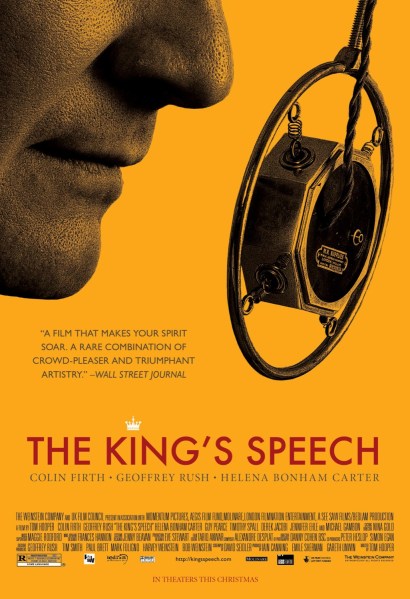
FilmWonk Podcast – Episode #8: Tom Hooper’s “The King’s Speech”

Poster for "The King's Speech"

This week, Glenn, Daniel, and guest Nick don their most dapper suits and get stoked for Oscar gold as they review The King’s Speech, starring Colin Firth, Geoffrey Rush, Helena Bonham Carter, Guy Pearce, and Michael Gambon. (20:00)

[may contain some NSFW language]

FilmWonk rating: 8 out of 10

    Show notes:
  • Music for this episode comes from Alexandre Desplat’s original score.
  • At the beginning of this episode, we refer to a blooper from our last podcast which riffed on a scene from the film’s theatrical trailer (scene begins at 1:22).
  • Special thanks to guest reviewer Nick for joining us for this review!

Listen above, or download: The King’s Speech (right-click, save as).

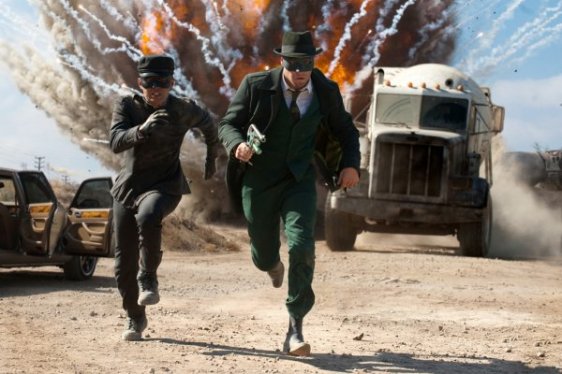
Michel Gondry’s “The Green Hornet” – The hero L.A. deserves?

Seth Rogen might just have found his niche playing detestable heroes. He gave a thoroughly entertaining performance as a psychopathic mall cop in Jody Hill’s pitch-black 2008 comedy Observe and Report, and indeed, his performance in Michel Gondry’s The Green Hornet bears some similarity. Both would-be heroes are infantile, petty, helpless around women, and prone to occasional bouts of alarmingly skillful violence. But while Observe was an unapologetic celebration of terrible people doing terrible things, The Green Hornet is ostensibly a light-hearted comic tale about a self-styled hero that’s meant to be worthy of our admiration.

Tonally, the film falls somewhere between Kick-Ass and Iron Man. Like the former, Britt Reid (Rogen) is delusional and borderline incompetent, but like the latter, he has all the physics-defying gadgetry he needs to keep himself alive for longer than 30 seconds. In the place of a mellifluous holographic A.I. to build his gadgets, Reid has a Q-ish tech wizard, kung-fu master, and expert barista named Kato (Jay Chou). Kato’s relationship with Reid fluctuates wildly between buddy comedy and guardian for a special needs child – a scene in which Kato explains to Reid why he might need a gas-slinging sidearm is one of the most painfully funny in the film. The audience is left wondering why Kato puts up with his boss’ constant abuse and mockery, but it might have something to do with his seemingly unlimited budget for high-tech toys. In any case, this is not a film for believable (or even comprehensible) relationships.

If The Green Hornet is about anything, it’s narcissistic image-obsession. Over and over again, the characters speak at length about how they look, how they are perceived by others in the story, and what the characters in a violent comic farce should do. Nearly all of the scenes featuring the villainous Chudnofsky (Christoph Waltz) play like cringe-inducing, metafictional peeks into the writers’ room. “Do I look scary? Is my gun scary? What do you think of my costume? Do you know how many different suits I’ve tried?” Chudnofsky may come with Waltz’s adeptly intimidating presence, but he has no real identity of his own, and feels almost like he is trying to conceive one in front of the cameras. But he’s not half as self-conscious and directionless as our heroes. In a line seemingly tailor-made for the film’s trailer, Reid explains to Kato, “Here’s what will make us different!”

Their grand plan is essentially to start a gang war and kill every criminal in the city. Brilliant in its simplicity, I suppose. But while Black Beauty, the tank-like super car, may allow the Hornet and Kato to viciously slaughter any evildoers with all the subtlety of Depression-era gangsters, it basically just feels like an old-timey and borderline magical version of the Batmobile. What’s more, their grand plan seems as likely to ensnare police and innocent bystanders as rival gangsters. This is Iron Man without a conscience. And strangely, that’s where the film started to appeal to me.

If there is one attribute that has defined nearly all modern superhero films, it’s self-importance. Even in the most schlocky and unwatchable incarnations of the genre (I’m looking at you, Fantastic Four), there are always ponderous questions about what it means to be a hero and how much is at stake if the hero fails. The Green Hornet has no such lofty ambitions, and I was surprised to find its sadistic playfulness and dark humor to be a refreshing change of pace. Nearly every scene in this film is simultaneously exhilarating and painful to watch on some level, from its farcical attempts at romance (for which I give a great deal of credit to Cameron Diaz) to its utterly balls-out action sequences, which are at least impressive on a technical level. They don’t all land perfectly, but I’m happy to see that director Michel Gondry (Eternal Sunshine of the Spotless Mind) remains as skillful as ever, even with a blockbuster budget. What’s more, he even managed to shoehorn in a dream sequence chock full of practical effects and camera trickery – a skillful display which felt mostly out of place, but by the time it appeared, I was past caring about the film’s lack of consistency.

The Green Hornet is an oddity, to be sure. I didn’t emerge from it without a laundry list of complaints, but I still found the sum of the experience enjoyable. Seth Rogen and Evan Goldberg’s script feels like it’s trying to be the buddy-comedy spiritual successor to Superbad, and it at least partially succeeds. The writing is very jokey and surprisingly dark, but exhibits a clear understanding of comic book tropes. In a genre that’s gradually starting to wear out its welcome, this bizarre spectacle of a film feels far more like a labor of love than a cynical cashgrab, and that might just be what makes it watchable.

FilmWonk rating: 5.5 out of 10

FilmWonk Podcast – Episode #7: David O. Russell’s “The Fighter”

Poster for "The Fighter"

This week, Glenn and Daniel dive in face-first with flailing fists to review David O. Russell’s boxing biopic-cum-family drama, The Fighter, starring Mark Wahlberg, Christian Bale, Amy Adams, and Melissa Leo.(19:12)

[may contain some NSFW language]

FilmWonk rating: 8.5 out of 10

    Show notes:
  • Music for this episode is The Heavy’s “How You Like Me Now?”, from the film’s soundtrack.
  • With apologies to Tom Hooper, David Seidler, Colin Firth, and Geoffrey Rush, stick around at the end for a blooper!
  • As penance for our shameful blooper, check out the next episode, in which we review Tom Hooper’s The King’s Speech.

Listen above, or download: The Fighter (right-click, save as).

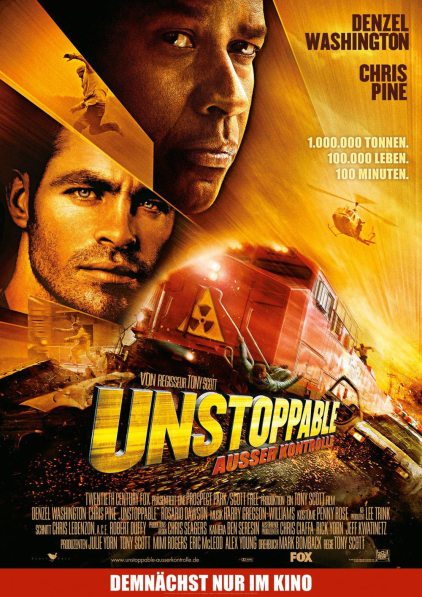
FilmWonk Podcast – Episode #6: Tony Scott’s “Unstoppable”

Tony Scott is back on the train with Unstoppable, a “railyard thriller” starring Denzel Washington, Chris Pine, and Rosario Dawson. Will our heroes escape yet another Tony Scott film with their sanity intact? Find out on this week’s episode of the FilmWonk podcast (17:12)

[may contain some NSFW language]

FilmWonk rating: 7 out of 10

    Show notes:
  • Spoiler warning: This film is tough to spoil, since the ending is kind of a foregone conclusion, but we don’t exactly skimp on the details.
  • Music for this episode is Kat DeLuna’s “Unstoppable”, from the 2009 film Confessions of a Shopaholic.
  • Rosario Dawson’s character was named “Connie”, not “Coolidge”, and yep, I’m laughing at myself.
  • The international poster (above) perfectly conveys the tone of this film.

Listen above, or download: Unstoppable (right-click, save as)

FilmWonk Podcast – Episode #5: Adam Green’s “Frozen”

Poster for "Frozen"

First we met the Devil, then we got Buried, and now, in the latest installment of this inadvertent “One-Word, One-Room” marathon, Glenn and Daniel pull on their ski boots and review Frozen, a horror film new on DVD and Blu-ray from writer/director Adam Green, starring Shawn Ashmore, Emma Bell, and Kevin Zegers. (19:59)

[may contain some NSFW language]

FilmWonk rating: 6.5 out of 10

    Show notes:
  • Music for this episode is a little cheeky.
  • Shawn Ashmore, who plays Joe Lynch, also played Bobby “Iceman” Drake in the X-Men films. There’s an awful joke in there somewhere, but it must’ve slipped our minds…
  • Stick around at the end for a blooper!

Listen above, or download: Frozen (right-click, save as)

Rodrigo Cortés’ “Buried” – Masterfully uncomfortable

Poster for "Buried"

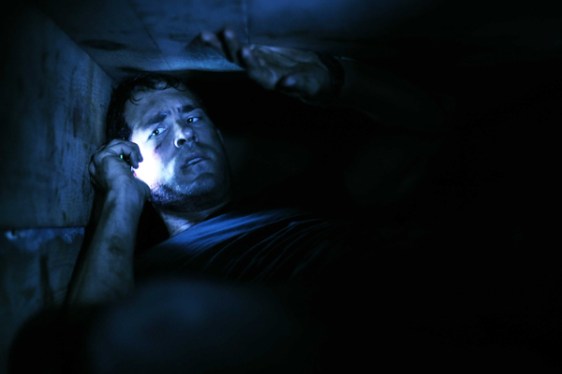
Buried is viscerally unnerving from the very first frame. After a lavishly-scored, Hitchcockesque title sequence, we begin the film in complete darkness, hearing the confused and muffled grunts of Paul Conroy (Ryan Reynolds), an American civilian contractor in Iraq who has been kidnapped and buried alive in a coffin. His hands are tied, his mouth is gagged (for some reason), and his only immediate light source is a Zippo lighter from his pocket (surely not the best item to be using with a limited air supply!).

The film’s premise seems to be a real-world expansion on a brief sequence in Kill Bill: Volume 2 – a character is buried alive, and we live the entire experience from his perspective. I’m not particularly claustrophobic, but even I was getting physically uncomfortable by the end of the film. However, it is to the film’s credit that I wasn’t feeling it even sooner. The film lasts 100 minutes, nearly all of which is spent in the coffin. But by way of a borrowed cell phone and some masterful sound design, Buried feels almost like an old-time radio play, crafting the illusion of a much larger world. For a locked-room thriller with an even more confined scope than Phone Booth, this film’s expansive feeling is an impressive achievement.

Speaking of achievements, this may be the most electrifying performance yet from Ryan Reynolds. Like Tom Hanks in Cast Away before him, Reynolds has crafted a masterful one-man show, and he never lets up on the stakes. Paul is dying alone, and Reynolds deftly conveys his ratcheting hopelessness and frustration.

“WHAT ARE YOU DOING, RIGHT NOW, TO GET ME OUT OF HERE?!”, Paul screams into the phone at Dan Brenner (voice of Robert Paterson), head of the coalition military’s Hostage Working Group. Brenner is easily Paul’s closest ally, working tirelessly to find his captors before it’s too late, but he ends up working a surprising amount of hostage negotiator voodoo on Paul himself. Brenner has to try and calm Paul down and preserve his air supply, which includes trying to protect him as much as possible from the true horror of the situation. The tense dialogue between these two is some of the most effective in the film, and Paterson’s vocal performance certainly helps carry it. He casts Brenner as a caring but pragmatic ally – like the proverbial starfish-thrower, he’ll save as many hostages as he can, despite knowing that he won’t be able to save most of them.

Still from "Buried"

There was also a shining performance from veteran character actor Stephen Tobolowsky as the voice of Alan Davenport, the company’s head of personnel. His scene very nearly took me out of this film with its utter hopelessness, and yet the whole thing seemed depressingly plausible, owing a great deal to both the screenwriting and Tobolowsky’s eerily calm demeanor. The indifference of the outside world was a resounding theme throughout the film, and this scene made for a shocking bookend to that theme. Rather than being taken out of Paul’s plight, I was very nearly weeping for him.

With scenes like this in mind, the tone of the film is a bit hard to pinpoint. The direction is very reminiscent of Hitchcock – Cortés and cinematographer Eduard Grau were able to compose a remarkable variety of shots in such a cramped space and dismal lighting, occasionally cheating the outside of the coffin and moving the camera outward to further showcase Paul’s isolation. Many of the phone calls were punctuated with axial cuts (in which the camera jumps closer and closer to his face with each statement), along with sharp, jarring musical cues… Indeed, the direction and score kept the film’s feeling very light, even as Paul’s situation deteriorates. There is a sequence in the second half in which Paul has to deal with [an unexpected spoilerific difficulty – but trust me, you’ll know what I mean]. This scene and its resolution were utterly ridiculous, but very well designed and shot. If I were watching a more cartoonish thriller, this moment of levity would certainly not have bothered me, but it just seemed completely out of place in light of the more dour scenes that follow.

But perhaps a mixed tone is exactly what this film needed… In many ways, Buried came out at just the right time. Imagine this film seven years ago… At the onset of war amid an economic boom, shortly after the “Mission Accomplished” banner, we all heard about the lavish, six-figure civilian contractor jobs available for reconstruction in Iraq. Every war has its profiteers, and whether or not these contractors qualify, I could certainly see people both here and in Iraq regarding them with (at the bare minimum) complete indifference. You takes the job; you takes your chances, and that includes the possibility that criminals will kidnap and murder you. This mentality is rarely so black-and-white in the real world, but the film’s presentation of it feels authentic. Now that the war and economy have both wound down a bit, it’s much easier to see Paul as a sympathetic everyman, just trying to do right by his family. He knew this was a possibility, but he didn’t ask for it, and he certainly didn’t deserve it.

FilmWonk rating: 7.5 out of 10

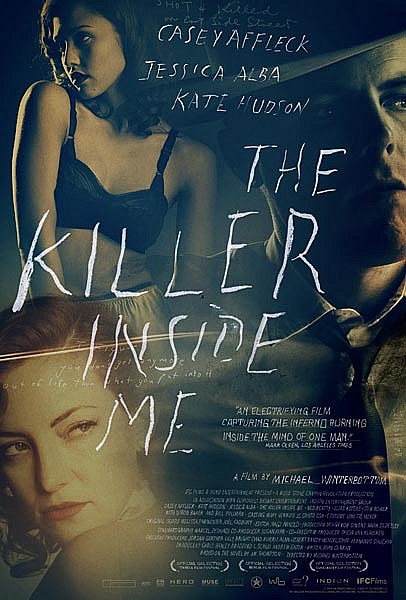
FilmWonk Podcast – Michael Winterbottom’s “The Killer Inside Me”

Poster for "The Killer Inside Me"

In this episode of the FilmWonk podcast, Glenn and Daniel kick back some whisk(e)y and review Michael Winterbottom’s The Killer Inside Me, starring Casey Affleck, Jessica Alba, Kate Hudson, Ned Beatty, and Elias Koteas. (20:00)

[may contain some NSFW language]

FilmWonk rating: 4 out of 10

    Show notes:
  • Music for this episode is Little Willie John’s 1956 version of the rhythm and blues classic, “Fever”, which plays over the film’s opening credits.

  • I mistakenly refer to John Wayne Gacy as a serial killer with mommy issues; I was actually thinking of Ed Kemper, who murdered his mother with a claw hammer.

  • I also refer to the death of Harry Houdini, which was widely speculated to have involved a few blows to the stomach. However, the blows exacerbated his actual cause of death – peritonitis, secondary to a ruptured appendix. Rest in peace, magic man.

  • I compare this film’s reception to Lars Von Trier’s Antichrist; I didn’t even realize that both films’ posters have the same creepy handwritten chalkboard style lettering. Bizarre.

Listen above, or download: The Killer Inside Me (right-click, save as)

Ben Affleck’s “The Town” – One last job, done right

I’ve never entirely understood why, but Ben Affleck has always been a bit of a divisive figure. While I can certainly take issue with some of his role choices over the years, he’s always struck me on the balance as a talented performer, whose earnestness and commitment have often managed to elevate even the hammiest of roles (Armageddon?). He became a talent to watch out for behind the camera with his 2007 directorial debut (Gone Baby Gone), and with The Town, he has crafted a supremely ambitious followup.

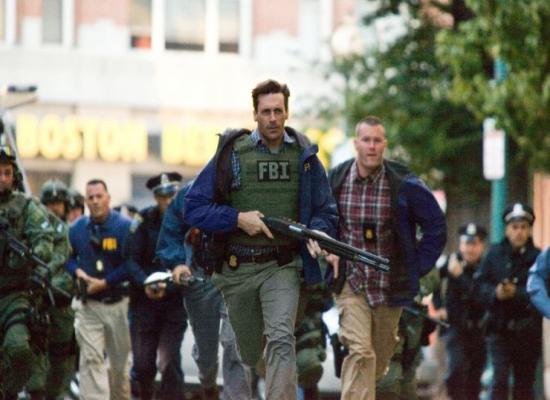
The film, adapted from Chuck Hogan’s novel “Prince of Thieves”, stars Affleck as Doug MacRay, a career criminal in the seedy Boston neighborhood of Charlestown. Claire (Rebecca Hall) is a bank manager who is briefly taken hostage by MacRay’s crew after they rob her bank. At the behest of his partner, Jem (Jeremy Renner), MacRay begins surveilling Claire, and they ultimately strike up a relationship (with Jem and Claire each none the wiser). Beyond this classic rom-com premise, Mad Men‘s Jon Hamm stars as FBI Special Agent Adam Frawley, who is charged with investigating the string of bank robberies.

We see a number of heist sequences in this film, and it is in these scenes that the direction absolutely shines. Each of them is slickly designed and executed, and cinematographer Robert Elswit (of many P.T. Anderson films) shoots them with a masterful sense of space and action. The editing (from Dylan Tichenor, another P.T.A. alum) also remains nice and taut even as the action ratchets up in the second half. The opening robbery sequence reminded me favorably of The Dark Knight, only a bit less cartoonish, with all the brutality intact – I cringed far more when the bank’s assistant manager was rifle-butted in the face (in a masochistic cameo by Victor Garber) than with any of the Joker’s bloodless shotgun blasts.

Much of this brutality is inflicted by Jem, and I must say, I found myself rather disappointed with his first several minutes of screen time. I had no beef with Renner’s performance, but the idea that his strong turn in last year’s The Hurt Locker would be followed up by playing that same unstable psychopath from a dozen other heist films (including Renner’s own character in S.W.A.T.) – was downright depressing. But I was wrong. This film puts an unmatched, revelatory spin on a familiar character – rather than relying on him as a firebrand to ratchet up the tension and advance the plot with poor judgment and random violence, Jem is a fully realized character with a believable backstory and connection with MacRay. In a number of splendid scenes, the dynamic between these two very nearly upstages Claire and MacRay’s romance as the film’s most fascinating relationship. It’s all the familiarity of a buddy comedy with an absolutely sinister twinge – a brutality and familial closeness that somehow feels right at home in the film’s [probably very fictitious] depiction of Boston. Affleck and Renner’s deft performances certainly back this up, but I must give credit to the screenwriting.

MacRay is plausibly depicted as a master criminal, and FBI S.A. Rawley (Hamm) is a mostly worthy adversary. When a crime drama endeavors to show both sides of an investigation, it’s always a pleasant surprise when they seem an equal match in intellect and skill. Hamm’s performance didn’t entirely work for me at the beginning of this film, but I gradually warmed to it – as the film went on, Hamm’s intensity is showcased in increasingly effective ways. In an interrogation scene, there’s a moment [also in the trailer] when he stares straight through MacRay and icily tells him he’s going to die in federal prison. The line was absolutely chilling in the trailer, but the surrounding scene had me fidgeting in my seat even more than I expected. Rawley is not a particularly well fleshed-out character, but Hamm’s performance serves him up as an effective nemesis.

While the police procedural aspect of this film was not too elaborate or detailed, it rang completely true for me. It reminded me favorably of HBO’s “The Wire” – a police drama in which the cops rely less on forensic techno-babble and more on the personal connections between criminals. Rawley and his agents know exactly who the bad guys are and what they’ve done; they just need a way to prove it. While a feature-length police procedural is a lot more limited in its complexity than five seasons of television, this film realistically sold its investigation, as well as the notion that a criminal is far more likely to fall prey to a personal connection than an errant hair follicle.

It is these personal connections in an environment of unforgiving criminality that the film effectively explores. Nearly every relationship, from the film’s central romance (featuring a capable performance by Hall) to the brotherhood and friendship amongst the gang feels carefully realized. While the other gang members (besides MacRay and Jem) are fairly one-note, there’s really only one character that rings false – and it is unfortunately attached to an impressive turn by Pete Postlethwaite. I swear, when the mobster known as “Fergie the Florist” first appeared on screen, I thought I’d sleepwalked into a Guy Ritchie film. Everything about this character – his appearance, accent, and demeanor – was completely jarring and more than a little cartoonish. He ultimately serves little purpose but to prod the plot along by adding an additional [unnecessary] threat to the third act. On the balance, it does more harm than good to MacRay as a character… Wouldn’t it be nice if just once, our hero goes along with one last job just because he wants to? At least the scenes with Postlethwaite aren’t a complete waste – his demeanor was effectively intimidating, and his backstory with MacRay is nearly worth the time spent on him.

While The Town doesn’t completely avoid feeling like a rehash of other works*, it is nonetheless a complex, thoughtful, and well-made heist drama. Like Affleck himself, it deserves to be judged on what it has brought to the table anew, and it does not disappoint.

FilmWonk rating: 7.5 out of 10

*Including a sequence which managed to quite jarringly rip off both The Shawshank Redemption and the musical score of Band of Brothers.