Shane Acker’s “9” – A Big, Beautiful Disaster

Poster for "9".

Shane Acker’s 9 is best viewed as a lesson in the perils of great expectations. For my part, I first saw the thoroughly engrossing trailer back in February alongside Henry Selick’s Coraline (a film I’ll certainly have to review if I keep calling back to it), and got a vibe not unlike that of Kevin Munroe’s 2007 take on Teenage Mutant Ninja Turtles – a highly stylized and potentially entertaining (if slightly generic) piece of animation.

And what happened next? I saw it again. And again. And the anticipation built, and the questions flowed. What is their mission? Who is 9, and how will he protect the future? How do you fight a robot with a pair of scissors? What’s more, I became increasingly enamored of its score, courtesy of Coheed and Cambria, and came to see it as a possibility for something magnificent at the end of the summer movie season – an elaborate and magical new world to explore, and possibly the next great animated film of the year.

The film tells the tale of a post-apocalyptic world in which all of humanity has been wiped out by machines, and the sole survivors are…well, basically machines. What begins as what Ben Croshaw might refer to as “science so soft you could spread it on a croissant” slowly reveals itself as more or less a work of fantasy. The nine “stitchpunk” dolls are equal parts mechanical and spiritual, imbued with clockwork hearts and “the spark of life”. They are hunted by other machines, each more grotesque and animalistic than the last, for no clear purpose.

And I had no problem accepting any of that. The film’s problems are not of setup, but of coherence. 1 (Christopher Plummer) is the stitchpunks’ oldest member and self-appointed leader, who insists that they stay hidden and wait for the machines to sleep. 9 (Elijah Wood), on the other hand, insists on getting into the fight. This ideological split is central to the film’s plot, with stitchpunks on either side. The film’s overall intent seems to be to extol the virtues of bravery and selflessness, but through the course of 9’s antics, it inadvertently makes the opposite point.

Still from "9".

When 2 (Martin Landau) is dragged away into the “emptiness” by one of the machines, 9 insists on going after him (over 1’s objections). He tracks him to a factory and inadvertently awakens a terrible machine intent on destroying them all. However, this machine suffers the notable disadvantage of being tethered to a wall and only capable of manufacturing killbots from whatever scraps are lying on the factory floor, but despite the relative insignificance of this setback, 9 manages to make it worse at every turn. In the end, nearly all of the misfortune that befalls the stitchpunks is due to 9’s continuing recklessness (and his subsequent attempts to rectify his mistakes). By the end, I was left wondering if they would have been better off if listening to 1 and staying hidden, or indeed, if 9 had simply been dragged off by the machines in the first place.

In the end, this is a film that just tries to do too much, and skimps in all the wrong places. It forges a team of diegetically archetypal characters and barely fleshes any of them out. It creates a rich and breathtaking world of terrifying machines and neuters them with illogic and incoherence. It takes a number of beautifully choreographed action sequences and attempts to weave them into an utterly nonsensical story. And (minor spoiler) all it succeeds in creating is yet another morality tale about the perils of filling your evil lair from floor to ceiling with explosives.

By the end, neither the audience, nor the stitchpunks themselves seem entirely sure what they’ve accomplished (apart from getting several of their number killed), but they’re sure of one thing, as indicated by the film’s horrendous final exchange:

“What happens now?”
“This world is ours now. It’s what we make of it.”

After all its missteps, 9‘s final moment is imbued with far more bitter irony than the film would like… Instead of an inspiring message of hope amid adversity, it feels more like the gleeful nihilism of the final scene in Burn After Reading*:

“What’d we learn, Palmer?”
“I don’t know, sir.”
“I guess we learned not to do it again.”
“Yes, sir.”
“F*cked if I know what we did…”

FilmWonk rating: 2.5 out of 10

*Clip here (NSFW, and major spoilers for Burn After Reading).
Week in Brief: “G.I. Joe”, “Gamer”

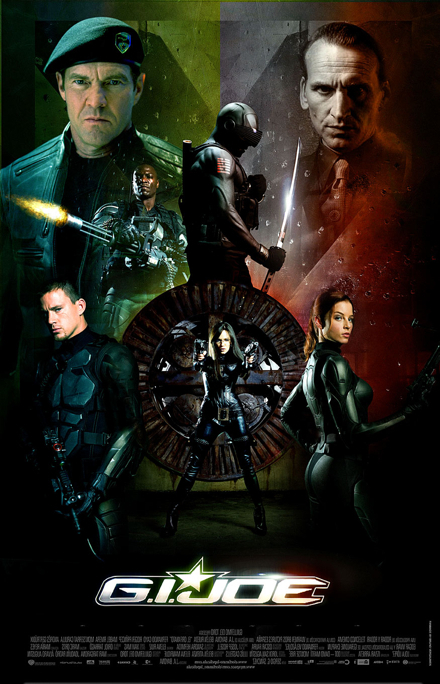
Poster for "G.I. Joe".
Check out the trailer here.

This film almost made me reconsider my love for Team America: World Police. There are no lengthy musical numbers to speak of, nor are there any wooden puppets (with the exception of Dennis Quaid), but the premises feel very much the same. IN THE VERY NEAR FUTURE, an uber-patriotic team of American heroes (well, they’re actually a multi-national NATO force based under the sands of the Sahara, but who’s counting) utilize high-tech weapons and a complete disregard for national sovereignty to fight the forces of evil. In this case, the forces of evil include a rogue weapons manufacturer with a plot to “steal” some high-tech nanobot warheads – which he also manufactured – and use them to destroy three major cities, which will allow him to take over the world. Somehow.

Why he can’t skip the pretense of stealing the warheads is unclear, since he does have an underwater base and an entire army of fearless, mind-controlled super-soldiers at his disposal – a base which, according to the Joes, is “the perfect location – difficult to locate, and easily defensible”, and yet becomes the perfect deathtrap as soon as someone cracks one of the windows. What it becomes is a climactic set-piece for an underwater version of a Star Wars battle, and the result is cheesy, but satisfying.

Conversely, the Joes’ base was one of the worst setpieces in the film. At no point does the base feel like it could be a real place on this planet. It makes Team America flying out of Mt. Rushmore seem plausible. The CG design of this place was laughable, and indeed, a lot of complaints have been made about the “bad CG” in this film.

But I must speak to one sequence of “bad CG”, in which the two lead Joes (played with great gusto by Channing Tatum and Marlon Wayans) don “Delta-6 Accelerator Suits,” which allow them to run and jump at superhuman strength and speed through the streets of Paris. The movement of these entirely CG characters does indeed look cheesy and artificial, but I must question whether any such CG could ever truly look realistic. Even the best uses of CG involving humans will inevitably break the illusion as soon as the characters engage in impossible stunts. And while this particular sequence could certainly have looked better, I don’t think it could possibly have looked real.

They’re chasing a Humvee with a spiked snowplow on its front – a vehicle with the uncanny ability to hurtle skyward any car that it smashes through. It’s as if Stephen Sommers’ saw the legendary car-tossing sequence from Bad Boys 2, and thought to himself, “Needs more cars.” The sequence is absurd, plays freely with the laws of physics, but is nonetheless quite fun. The only drawback was the complete lack of tension over whether or not the Eiffel Tower would be destroyed, thanks to the film’s trailer. The only real surprise is the sheer amount of collateral damage inflicted upon the population of Paris by both sides in the process.

I won’t speak too much about the acting, since the only actor that seems to be straining his craft is Channing Tatum… Dennis Quaid swaggers maniacally as General Hawk, with a voice somewhere between John Wayne and George C. Scott. Adewale Akinnuoye-Agbaje (“Lost”, “Oz”) reverts to his native, but nonetheless uncharacteristic British accent, and Jonathan Pryce dons a half-assed American accent as the completely useless American President. I was pleased to see the return of Brandon Soo Hoo (Tropic Thunder) for one of the film’s many brazen flashback sequences (in a scene that was shockingly brutal and effective for one involving child actors).

I’ll say very little about Joseph Gordon-Levitt’s character, except that I thoroughly enjoyed his performance, and his comical (and digitally-enhanced) voice reminded me a great deal of gay porn star Brandon St. Randy* (Justin Long) from Kevin Smith’s Zack and Miri Make a Porno (clip is likely NSFW, due to language and brief Seth Rogen ass):

*An observation I first heard from IFC.com’s Matt Singer on a recent episode of the /Filmcast, but the resemblance of the voices was uncanny nonetheless.

Laremy Legel of Film.com, in a recent article, makes a pretty convincing case against lowering one’s expectations for any film. The point applies quite broadly, but really didn’t apply to this film for me. G.I. Joe: The Rise of Cobra delivered on most of my expectations, and to say that I lowered them would be an oversimplification.

I’ve had a great affection for director Stephen Sommers ever since the Mummy films. He’s an earnest Michael Bay – a purveyor of CG diarrhea who seems to genuinely believe that he’s creating artful cinema, and the results are generally pretty satisfying. And despite my nitpicks about this film (of which there were many more than I included in this review), I actually had a very good time with it.

FilmWonk rating: 6.5 out of 10

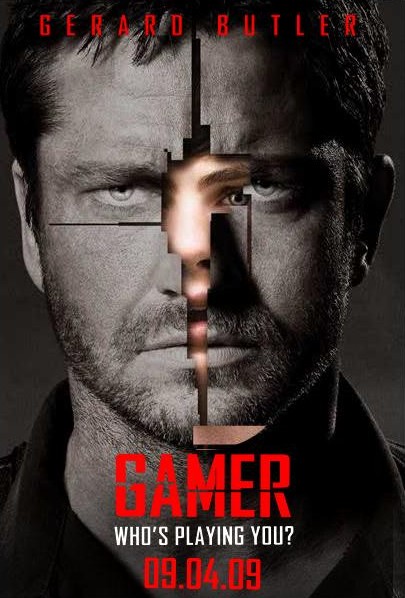
Poster for "Gamer".
Check out the trailer here.

IN THE VERY NEAR FUTURE, the top spectator sport in the country is “Slayers”, a first-person shooter in which gamers take mental control of a real human being in full-scale combat. The top competitor in this game is Kable (Gerard Butler), who is controlled by Simon (Logan Lerman), an overprivileged teenager. From the trailer, this film looked like a second-rate knockoff of a third-rate remake, Paul W.S. Anderson’s Death Race, and indeed, the backdrops are very similar. In both films, the participants are ostensibly volunteers – death row inmates (of which there seems to be an ample supply) playing in exchange for a slim chance of freedom. And in both films, society revels in the violence inflicted by the inmates upon each other.

Unlike in Death Race, the viewers aren’t just casual observers of a gladiator-like spectacle; they’re active participants. In addition to “Slayers”, there is a game called “Society”, an X-rated mind-control version of “The Sims”, in which blubbery leviathans take control of attractive people and force them to engage in every kind of debauchery. While the gamers who play “Slayers” use full-body controls and appear to be in good shape, we are shown a typical “Society” player who is depicted, to put it mildly, as a fat, self-deluding, sexually deviant waste of life.

I probably wouldn’t have bothered with this film, if not for the fact that it is written and directed by Mark Neveldine and Brian Taylor, the same team of manic guerilla filmmakers behind the thoroughly entertaining Crank series. Neveldine and Taylor bring their usual frantic handheld style to this film, along with their particular flavor of over-the-top action.

But unlike in the Crank series, this film starts out taking itself completely seriously. And the result is a rather boring first half. The gaming sequences, which make up the majority of the first hour, exist in the same generic grey/brown ruined city and shaky-cam style that all boilerplate first-person shooters include at some point. These sequences are jarring, frenetic, and subject to constant interruption by fake static and video cutting out, which made them almost impossible to comprehend.

Nonetheless, there’s still some pretty compelling imagery in the first act. The prison where these men are held (when they’re not playing) appears to be set down inside a canyon, and is shot in such a way that the desaturated blue sky feels huge and all-encompassing. The resulting setpiece feels bizarre and otherworldly – an almost Limbo-like place for these men to await their doom.

The film really hits its stride in the third act, when we’re subjected to the most hilarious scenery-chewing from the Southern dulcet tones of Michael C. Hall (“Dexter”) as Ken Castle, the inventor of “Slayers” and “Society”. Castle is basically Dr. Evil – a parody of a James Bond villain, and Hall is immensely fun to watch in this role.

This film’s most significant improvement over Death Race is that it effectively depicts just how backward, complacent, and violent a society would have to be in order to support this kind of system. And this may also be its most significant disadvantage. Gerard Butler plays his part completely straight, given that Kable has real stakes (wife and child), but the film just doesn’t make enough sense to be taken seriously. And while the ending is immensely satisfying, I can scarcely say the journey was worth it.

FilmWonk rating: 5 out of 10

Seattle’s One-Reel Film Festival – Saturday Roundup

The One-Reel Film Festival is part of Seattle’s renowned Bumbershoot music and arts festival, which wraps up today. I attended on Saturday, and had the opportunity to see films from all over the world, ranging from very good to extremely bizarre, some of which can be viewed online (I’ve included links below where applicable). The films were presented categorically, and I’ve arranged them in presentation order below. Bold text means I enjoyed the film, and an asterisk (*) means it was my favorite film of the category.
____________________________________________

Best of Seattle International Film Festival (SIFF) jury award winners:

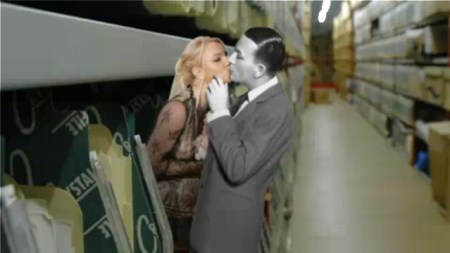
  1. Photograph of Jesus* (Director: Laurie Hill, United Kingdom, 7 minutes) –
    A brilliant, stop-animated retrospective on strange requests to the Getty photo archive. Well worth a look.
    Watch it here!

  2. Next Floor (Director: Denis Villeuneuve, Canada, 12 minutes) –
    A group of voracious upper-crust diners sit around a table eating at a grueling pace. The food looks normal, and yet thoroughly disturbing. This film is an effective visual allegory on a society that threatens to consume itself.
    Watch the trailer.

  3. Lowland Fell (Director: Michael Kinirons, Ireland, 21 minutes) –
    A woman meets two brothers and finds a dead body. Then they all have sex. It’s bizarre, overlong, and really not worth it.

  4. The Herd (Director: Ken Wardrop, Ireland, 4 minutes) –
    A herd of cattle adopt a wayward fawn. Very cute. Watch it here!

____________________________________________

Hej! (Swedish shorts)


  1. Tile M for Murder* (Director: Magnus Holmgren, Sweden, 8 minutes) –
    A man plots to murder his wife over a game of Scrabble. Based on the short story “Death by Scrabble” by Charlie Fish. Darkly funny and well acted. Apparently, there are a bunch of different amateur versions of this film, most with notably bad cinematography and almost certainly unauthorized. However, I must applaud these filmmakers both for doing a competent adaptation of the story and for effectively translating the concept into another language, since so much of the story depends on the words played in the game. More info here.

  2. Dreams from the Woods (Director: Johannes Nyholm, Sweden, 9 minutes) –
    Stop-motion two-dimensional shadow puppetry. The film’s backlit, shadowy animation style is very surreal and…well, dreamlike, complete with some breahtaking renditions of water, fire, and weather effects. I can certainly recommend this if you want some unique animation, but see Coraline first. More info here.

  3. Stig (Director: Henrik Gyllensklöld, Sweden, 18 minutes) –
    A bald, naked, middle-aged man attempts to go down a metal slide. Some pretty gay hilarity ensues. And that’s just the first act. More info here.

  4. Let’s Dance (Director: Erick Love Luncqvist, Sweden, 12 minutes) –
    A homeless man loves to dance and sleeps on a bench outside a hospital. A brother and sister, mentally handicapped and heart-diseased respectively, show up. This film is redundant, predictable, and borderline offensive. It has an extremely overbearing score, and no respect for its audience.

____________________________________________

The Animated Life


  1. Mite (Director: Karl Tebbe, Germany, 6 minutes) –
    An old lady with giant mites that threaten to destroy her home…and then the world. Shot in 35mm using a combination of stop-motion and real actors. Awesome score. More info here.

  2. I Am So Proud of You* (Director: Don Hertzfeldt, USA 22 minutes) –
    Don Hertzfeldt, probably best known for his Academy Award-nominated animated short, Rejected, presents this film, the second chapter of his “Everything will be OK” series. This film is a mix of Hertzfeldt’s usual minimalist hand-drawn paper animation and some other stylistic touches, such as the use of real-life footage, either with a low framerate or stop animated. Like Hertzfeldt’s other films, the humor is extremely dark, joined this time with an amoral and dispassionate narrator. Amid the jet-black comedy, there are some genuinely touching and sad moments. Hertzfeldt’s films just keep getting better. More info here.

  3. Otis v. Monster (Director: Patrick Neary, USA 4 minutes) –
    Stylish little claymation piece with a fun score and a good sense of humor. Watch it here!

  4. The Mouse that Soared (Director: Kyle Bell, USA, 6 minutes) –
    This CG-animated short is about a pair of birds that attempt to teach a mouse to fly. The film is loaded with references to other works, including (according to the filmmakers) music from The Third Man, the same opening shot of a No Trespassing sign from Citizen Kane, among others. For me, the most prominent reference was to Wile E. Coyote, when the birds, out of desperation, strap the mouse into a giant makeshift slingshot. This film would feel very much at home opening for a Pixar film; the animation quality is easily on the same level. And there’s never a dull moment. More info and trailer here.

  5. That Idiot Stinks (Director: Helder K. Sun, USA 2 minutes) –
    Like the Don Hertzfeldt film above, this film utilizes a minimalist, hand-drawn style. Unlike the DH film, however, this film is absolutely grating. The music is a cacophony of bangs, smashes, and wails of the damned, and the animation looks like a bad acid trip after being struck color-blind. If this film could find a way to be offensive to more than just two senses in its two-minute runtime, it would. Avoid this film at all costs.

____________________________________________

Love and Marriage


  1. This Is Her (Director: Katie Wolfe, New Zealand, 12 minutes)
    An omniscient narrator, the future self of a woman about to give birth, walks us through the characters of the present day, including the little girl who will grow up to steal her husband twenty years later. This film was a bit of a surprise for me. The narrator’s bias is apparent from the start, but the film nonetheless becomes an artful showcase of how people can change in unexpected ways as the years go on. At first, it seems bitter in the extreme, but somehow ends up being uplifting. More info here.

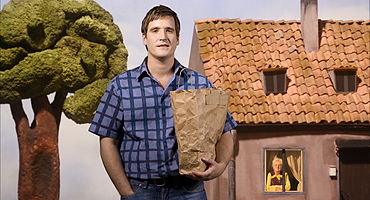
  2. The Little Blue Man (Director: Hélène Guétary, France, 10 minutes)
    A “sadness repairman” wanders the park sprinkling his magical happiness powder on anyone who needs it. Ten minutes is the perfect length for a film of this premise. Any longer, and we would need a healthy dose of brooding moral ambiguity, and the grander implications of a “magic powder that can make people happy”. What we end up with is a simple delight, with a hilarious and well-acted scene involving a breakup that suddenly takes a turn for giddy honesty. More info here.

  3. True Beauty This Night* (Director: Peter Besson, USA, 11 minutes)-
    A delightfully bizarre tale of forbidden love at first sight, and I should really leave it at that. See this film if you can. More info here, trailer here.

  4. Flat Love (Director: Andrés Sanz, Spain, 15 minutes)-
    A boy starts to disbelieve in the third dimension, and falls in love with a picture in the museum. Shot in New York City, told like a children’s picture book, and narrated to great effect by Isabella Rosselini. More info here, trailer here.

____________________________________________

Crime and Punishment

  1. Kidnapping Caitlynn (Director: Katherine Cunningham-Eves, USA, 10 minutes)
    Jason Biggs and Jenny Mollen star in this film about a girl who brings a date to break into her ex-boyfriend’s house. If nothing else, this comedic film is quite effective at showing the gradually escalating nature of criminal activity as it ventures into increasing levels of absurdity. More info here. This film was released online as a FunnyOrDie short, but is unfortunately no longer available. Instead, check out Hostage: A Love Story starring Zachary Quinto (“Heroes”, Star Trek).

  2. Because There Are Things You Never Forget* (Director: Lucas Figueroa, Spain, 13 minutes)
    Black comedy about a group of kids playing soccer who plot revenge on a mean old lady. This was a surprise favorite for me. It has some exceptional cinematography, with several lengthy, well-composed tracking and transition shots. It showcases some brilliant visual storytelling and very effective child actors. More info here. If you can’t find a way to see this film, check out the trailer, which gives away more or less the entire plot.

  3. Thorns (Director: Nitzan Rotschild, Czech Republic, 7 minutes) –
    A bizarre silent film. Starts out as a romance, but becomes…something else. More info here.

  4. Dockweiler (Director: Nick Palmer, USA, 15 minutes) –
    Ex-cons supervise the court-ordered cleanup of Los Angeles beaches. This film dabbles in some serious themes, such as how the justice system never completely lets you go, and some punishments never end. Unfortunately, it does very little to earn the character development it claims, despite a solid performance from Tony Todd as “The Duke”. The film tries to tell a feature-length story in 15 minutes, and the result is mostly disappointing.

____________________________________________

Nightmare Factory

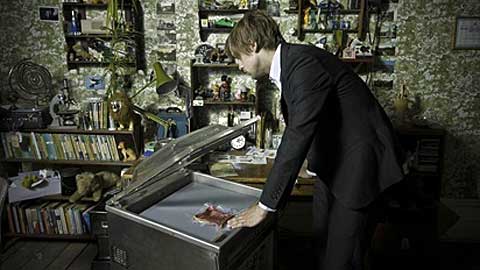
  1. The Archivist* (Director: James Lees, United Kingdom, 8 minutes)
    Finlay Robertson (Doctor Who – “Blink”) stars as a man who vacu-seals and labels a series of increasingly creepy souvenirs from important moments in his former relationship. Watch it here!

  2. Alexandria (Director: Eric Elofson, Singapore, 9 minutes) –
    Three men are trapped in a rapidly flooding bookstore. This film does a lot with very little. It made me believe I was in a flooding building, and has an effective undertone of apocalyptic doom. It showcases some very effective character moments, despite dialogue that occasionally strains credulity. More info here.

  3. Tara (Director: Laurence Walsh, USA, 17 minutes)
    Men are clueless, and women have secrets. The “horror” of this film is simple, mundane, and rather cryptic. What’s even more surprising is that I mean that as a compliment. This film will probably leave you wondering what the hell just happened, but it is nonetheless beautifully shot (in some gorgeous vistas) and well acted. More info here.

  4. Psycho Hillbilly Cabin Massacre! (Director: Robert Cosnahan, USA, 18 minutes)
    There will probably come a time when I grow weary of grindhouse tribute films, but it hasn’t happened yet. Ignore the hacky attempts at political allegory (“We need to take preemptive action against these hillbillies!”), and see this film for the gore, intentionally bad acting, and mud wrestling. More info here. And while you’re at it, check out Treevenge, from the makers of Hobo with a Shotgun.

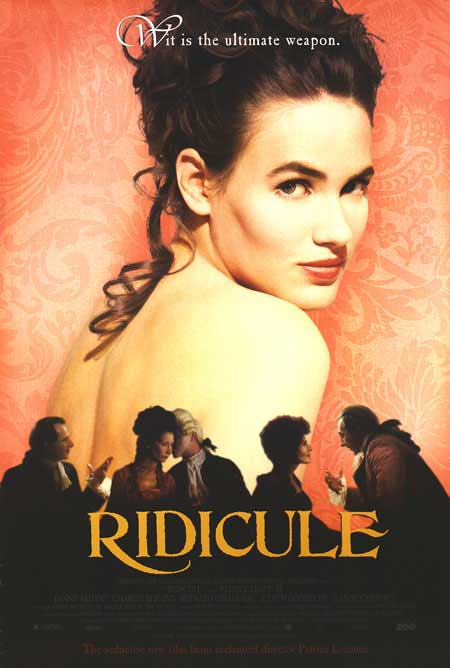
Patrice Leconte’s “Ridicule” – Presque perdu dans la traduction*

ridicule_poster
*Almost lost in translation.

Films about pre-revolutionary France tend to share a kind of sadistic fatalism. They present a picture of boorish aristocrats too consumed in their own petty affairs to see the opposition and hatred fomenting beneath them. They’re tragic characters, but in some sense, they deserve whatever they get.

Patrice Leconte’s Academy Award nominated 1996 film Ridicule is no exception.

In the court of Louis XVI, wealth and status rule the day, but the real king is belle esprit – literally, “beautiful mind”. Belle esprit is what the aristocrats call a sharp, biting wit. They craft a perfectly brutal and entirely zero-sum situation in which the only way to advance one’s status in the court is to publicly and brilliantly humiliate another (and avoid being ridiculed oneself).

Entering the fray is Grégoire Ponceludon de Malavoy (Charles Berling), a small-time nobleman from the Dombes province who seeks the support of the king to rid his country of the horrible swamps that kill the majority of his peasants via mosquito-borne illnesses. He meets the Marquis de Bellegarde (Jean Rochefort), an aged aristocrat whose wits are no longer sharp enough to compete in court. The Marquis takes Malavoy under his wing, teaching him the use of repartée, word games, rhyming epigrams, and other clever bits of malevolent wordplay that will bring him ever-closer to an audience with the king.

But never puns, warns the Marquis. Puns are the “death of wit”. And never laugh at your own jokes.

Malavoy takes to these rules famously, despite conflicting strategic and romantic interests in the gorgeous and cunning courtesan widow, Madame de Blayac (Fanny Ardant), and the Marquis de Bellegarde’s breathtaking and scientifically-minded daughter Mathilde (Judith Godrèche). He also faces opposition by Madame de Blayac’s current companion, the Abbot de Vilecourt (Bernard Giraudeau). While the film’s hollowly-crafted love triangle is made a good deal more convincing by marvelous performances on the part of the three leads, this film’s effectiveness is made entirely by the brilliantly crafted court dialogue.

Rémi Waterhouse’s script shines in these scenes. If Aaron Sorkin wrote about old-world aristocratic politics, this is almost certainly what it would sound like. However, the film strikes a somewhat bizarre tone. It revels in the cruelty of these scenes in a fashion that is almost darkly comedic, but also feels the need to impress upon us how deeply misguided and out-of-touch these people are.

The court scenes also contain such precise and esoteric language that they raise an unfortunate and seemingly unavoidable issue that comes when bringing a film to a new language – inaccurate translation. At times, the English subtitles accurately conveyed the language, and at times they were adjusted as the scene required, such as a scene in which the characters are rhyming. However, the language would occasionally be oversimplified in a way that seemingly contributed nothing to the scene, and in some cases, completely changed the meaning of the original line.

A few examples…

French line English subtitle Actual translation
Votre place n’est pas ici. We don’t belong here. Your place is not here.
Il est moins bête qu’il semble. He’s smarter than he looks He is less dumb than he seems.
Nous sommes de la même espèce. You and I are alike. We’re of the same species.
Il ne faut pas sacrifier tout à nos destins. Our plans come first. Do not sacrifice all for our destinies.
On voyait un diable devant la croix? Have you seen a ghost? Did you see a devil before the cross?

There was an outcry back in March of this year when Magnolia Pictures mangled the subtitles of Tomas Alfredson’s brilliant Swedish vampire coming-of-age film, Let the Right One In. Having seen (and loved) the theatrical version, I promptly returned my copy of this film to Amazon when I heard the news about the faulty subtitles. It’s always a tough balancing act when deciding how to watch a film in a language you don’t know (or even a language I do know, in the case of Ridicule). If you choose the dubbed version, you get a caliber of acting typically reserved for cereal commercials, but at least you don’t have to read any subtitles. If you choose the original version, the acting is better, but you still have to contend with lazy translation. Some films, such as those of popular animators like Hiyao Miyazaki, receive solid translations and dubs with real actors. Just have to take what you can get, I suppose.

But I digress.

Ridicule is a solid film, competently shot, and feels visually authentic (with the period backdrops and costumes). It’s probably more enjoyable if you know a bit of French, but the acerbic wit and incisive jabs are delivered well enough to transcend the language barrier.

Details about Ridicule‘s ending will follow.

7218_Ridicule-01

Like the court scenes, the film’s ending is tonally bizarre. It introduces a duel with a character that had not appeared in any prior scene, and seems to serve only to give Malavoy some minor triumph, or at least demonstrate his hypocritically selective pride. The love story is ended in a more satisfying manner, owing largely to Mathilde’s quite believable transformation (and Judith Godrèche’s brilliant performance), but the central conflict between Malavoy and Vilecourt is not resolved in any conventional sense. Vilecourt’s antagonism is compelling, but Malavoy only ever wins a few minor skirmishes. Vilecourt’s largely self-inflicted downfall seems to suggest that in such foul and petty company, it is quite possible to be too clever for one’s own good. Or perhaps, even more simply, the longer you spend in this court, the more likely you are to pass out of favor like last year’s fashions.

Ultimately, the characters’ machinations count for very little. And given the proximity of the film’s timeframe to the Reign of Terror, it’s probably better for Malavoy that he finds himself digging through the muck alongside his peasants in the end. Any success at court would’ve gained him, at best, a half-dug canal, and at worst, a guillotine blade to the back of the neck.

But at least he met a nice young lady for his troubles.

FilmWonk rating: 7.5 out of 10

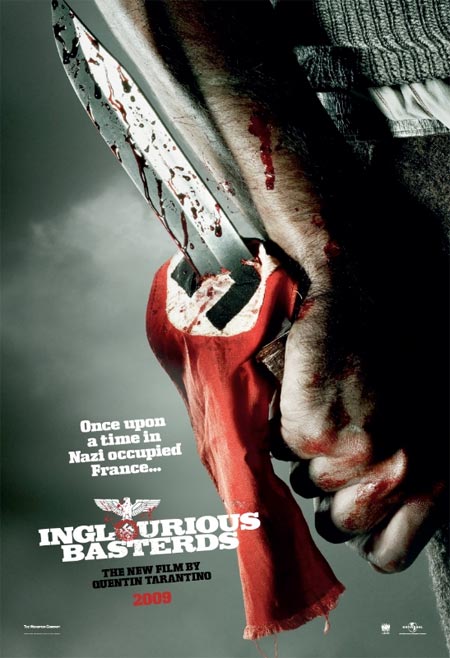
Tarantino’s World – “Inglourious Basterds”

inglourious-basterds-poster
Click to check out the trailer.

Bryan Singer’s 2008 World War II film Valkyrie demanded a great deal from its audience. It told the tale of a group of plotters who were willing to risk their lives and commit treason against their fatherland to bring about the end of an unrepentantly evil regime. It told their story in the guise of a thriller, despite the film’s ending being a matter of historical record. And it asked us to root for this company of heroes even knowing that their plot would fail.

Quentin Tarantino’s latest outing, Inglourious Basterds, makes no such demands on the audience. He doesn’t strain or even test your historical knowledge. He simply asks you to live in his world for a while. And apart from the uniforms, World War II iconography, and an encyclopedic knowledge of 30s and 40s cinema, this film takes place largely in a fantasy world.

Lt. Aldo Raine (Brad Pitt) is the leader of the Basterds, a group of Jewish-American soldiers who will sneak behind enemy lines to kill (and scalp) as many Nazis as they can. The title and trailer would have us believe this is what the film is about, but this is not an origin story. The Basterds are merely a backdrop to a broader tale of revenge. As the Basterds plot to destroy the Nazi leadership, Shosanna (Mélanie Laurent), a French Jewish girl, bides her time incognito as the owner of a Parisian cinema, and plots revenge for the murder of her family at the hands of the SS. Also in the mix is Bridget von Hammersmark (Diane Kruger), a beautiful turncoat German film starlet, Fredrick Zoller (Daniel Brühl), a German sniper and war hero-cum-actor, and SS Colonel Hans Landa (Christoph Waltz), known colloquially as “The Jew Hunter”.

This is easily Tarantino’s most ambitious film. More than half of the dialogue is in subtitled French or German, and the labyrinthine plot is scarcely contained in the film’s 2 1/2 hour runtime. The film feels like a teaser for a much larger story, and yet we are still privy to enough brilliantly crafted character moments that it feels complete.

The finest acting in the film is that of Christoph Waltz as SS Colonel Landa. He somehow manages to combine an outwardly cheerful demeanor with such simmering, underlying menace that each of his scenes will have you on the edge of your seat. Tarantino’s strength has always been in crafting lengthy scenes of gradually increasing tension amid seemingly innocuous dialogue, in which the question is not whether the scene will end badly; the question is “how badly” and “for whom?”. Waltz’s performance works masterfully within this framework; whether interrogating a dairy farmer under suspicion for harboring Jews, or conversing over Parisian strudel with a potential enemy, Waltz’ every facial tic gradually reveals his true intentions, as he leads the conversation exactly where he wants it to go. He is one of Tarantino’s most complex and well-crafted characters, and Waltz plays the part immaculately.

Also noteworthy is Mélanie Laurent. Shosanna is a familiar character, seemingly drawn from the same well as The Bride from Kill Bill. Nonetheless, Laurent ably combines a quietly sorrowful demeanor with an unflinching desire for revenge. Denis Menochet gives a strong performance in an early interrogation scene, and Diane Kruger does a fine job as the fictitious German film starlet. If there’s one thing Cate Blanchett taught me as Katharine Hepburn in The Aviator , it’s that I’m seldom disappointed by actresses playing actresses.

Which brings me…to Brad Pitt. When I first saw the trailer for this film, I thought that Pitt could ruin this film for me. He seemed woefully miscast as the Dirty Dozen-esque leader of the Basterds. And if Lt. Raine and the Basterds had more screen-time, that may well have been the case. But somehow, Pitt pulls it off.

He plays the character so brazenly over-the-top that it quickly becomes evident that this is not a character that is looking for anyone’s approval. Lt. Raine has come here to chew bubblegum and kick ass have fun and kill Nazis, and maybe speak some unapologetically bad Italian along the way. He is essentially a cartoon character. He has a scar across his neck from having his throat slit at some point in the past, which is never explained, but one can assume he has Chuck Norris-like longevity.

Many of the other Basterds are similarly cartoonish, although I don’t have much to say about their performances, given that they have so little screentime. Tarantino brings in such unassuming young actors as B.J. Novak (“The Office”) and Samm Levine (“Freaks and Geeks”) and invites us to watch as they graphically scalp dead Germans.

inglourious_basterds_eli_roth_mHe also brings in Eli Roth, and I must confess, I’m having a hard time figuring out why Roth is in this film. He plays Sgt. Donny Donowitz, known to the Germans as “The Bear Jew”, owing presumably to his appeal to a very specific subset of the gay community, and his propensity for beating Nazis to death with a baseball bat. The part was originally conceived for Adam Sandler, but rather than lament what might have been, I’ll simply speak to Roth’s performance. His delivery of dialogue, most of which he simply screams at the camera, is easily the worst in the film. He might well have ruined his scenes if not for the fact that he so looks the part of the Bear Jew. Roth may not be a strong actor, but he certainly can pull off a terrifying “bloodlust face”. And what’s more, he looks like he could kill me even without the bat. So with that in mind, I’ll simply say that Roth is a talented horror director, and he should probably stick to that from now on.

Inglourious Basterds is, like many of Tarantino’s films, an unrelenting depiction of brutality. Both the Basterds’ and Shosanna are unforgiving in their determination to wipe out the Nazis (“a Nat-see ain’t got no humanity!” barks Lt. Raine), and the parallels to the Nazis’ own brutality are almost certainly deliberate. The film does not seek to pardon anyone, but it does seem determined to simultaneously reveal both the humanity and brutality of all participants in war – and how the desire for revenge can lead people to commit previously unconscionable atrocities. And how in the end, no matter which side you’re on, all you want to do is go home, take off your uniform, and try to forget it ever happened.

“But that doesn’t sit well with me”, says Lt. Raine, as he gleefully carves a swastika into a German soldier’s forehead. “You know,” he says, turning to Private Utivich, who has just finished scalping yet another Nazi, “This might just be my masterpiece.”

FilmWonk rating: 9 out of 10

__________________________________________________________________________________________

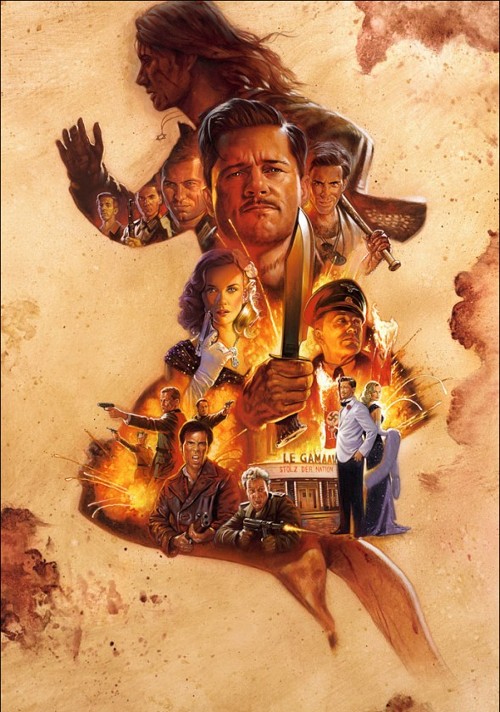
unused-basterds-poster
(unused poster for the film – click to read more about it)

Week in Brief: “World’s Greatest Dad”, “A Perfect Getaway”

“Is that not the perfect visual image of life and death? A fish flapping on the carpet, and a fish not flapping on the carpet.”
-David Carradine, Kill Bill

Bobcat Goldthwait is not exactly known for conventional comedy. His last film, Sleeping Dogs Lie, told the tail tale of a girl whose subsequent relationships are ruined when she reveals that she once had a minor indiscretion with engaged in an inappropriate relationship with blew her dog.

While that film explored the nature of truth and honesty by way of dark comedy, World’s Greatest Dad is even more ambitious. It explores the nature and rise of celebrity, the nonsensical side of public grief, and the ways in which fathers view their children, and it does so in a way that is almost certain to offend everyone who sees it.

The film tells the story of Lance Clayton (Robin Williams), a struggling [read: failed] writer who works as a high school poetry teacher. The story centers around Lance, in his struggles as a writer, father, and boyfriend. His sociopathically ribald son Kyle (Daryl Sabara, of Spy Kids fame) also attends the school, which complicates their already-strained relationship.

I can’t say much more without revealing major spoilers, but suffice to say, certain events occur that complicate Lance’s experience as a father, and cause his writing career to take an unexpectedly positive turn.

Robin Williams gives a noteworthy performance, and really hits his stride in the second act as he starts to see the direction his writing career is going. The image of Williams standing at a newsstand on a Seattle street corner and openly weeping into the adult magazines is certainly one for the ages, and this will unquestionably be remembered as one of his best performances. Daryl Sabara performs ably as the son, although in truth, he’s not fleshed out too much as a character. The same goes for most of the secondary characters, who degenerate a bit as the film goes on.

But this film accomplishes something remarkable. It takes some of the darkest material ever put to screen and manages to present it in a sympathetic way. This is a jet-black comedy, and I can’t count on both hands the number of times I twisted uncomfortably in my chair while watching it. But it has heart. And while it veers off the rails a bit in the third act, particularly with regard to the secondary characters, this is definitely a film worth checking out for those with flexible standards of decency.

But this is not a film for everyone. World’s Greatest Dad is out in limited release now, and be prepared to walk out horrified, whether at the end of the film or somewhere in the middle.

FilmWonk rating: 7.5 out of 10

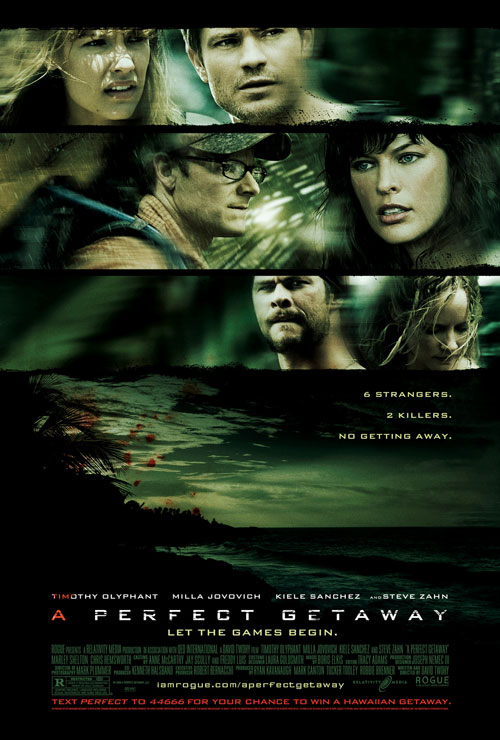
a_perfect_getaway_poster

Click to check out the trailer.

A Perfect Getaway was not a film I was terribly interested in seeing. Despite the presence of my perennial guilty pleasure, the lovely Milla Jovovich, this looked like a generic thriller with some impressive scenery.

The film is set on the island of Kauai, along the gorgeous Kalalau Trail, a strenuous 11-mile hike past Hanakāpīʻai Beach, one of the most beautiful and treacherous beaches in the world. While normally, the danger of this beach is due to the high surf and strong rip tides, in this film, there’s the added complication of a pair of murderers who’ve just escaped capture after butchering a pair of newlyweds in Honolulu. Are they here? Who could they be? What are they up to? These are the film’s central questions, and the end result is a very competent thriller. Steve Zahn and Timothy Olyphant clearly had a wonderful time chewing the scenery, and they give easily the most entertaining performances. Milla Jovovich also does a fine job, although I must admit I almost didn’t recognize her with the goth haircut and Valley Girl accent. Nonetheless, she does plenty to justify her presence before the film’s end.

The mere presence of the above actors would not have been sufficient to rope me into this film; it was ultimately the presence of writer/director David Twohy that made me curious. Twohy had previously impressed me with the Chronicles of Riddick films, which proved his expert hand at thoroughly cheesy sci-fi with a darkly comedic twinge. I saw this film in the hopes that he would prove as adept with a more conventional thriller, and by and large, I was not disappointed. There are far worse ways to spend an evening, and you would do well to catch this film before it disappears from theaters (as it likely will very soon).

FilmWonk rating: 6.5 out of 10

Glenn’s Indie Movie-Wank – Part 3: Marc Webb’s “(500) Days of Summer”

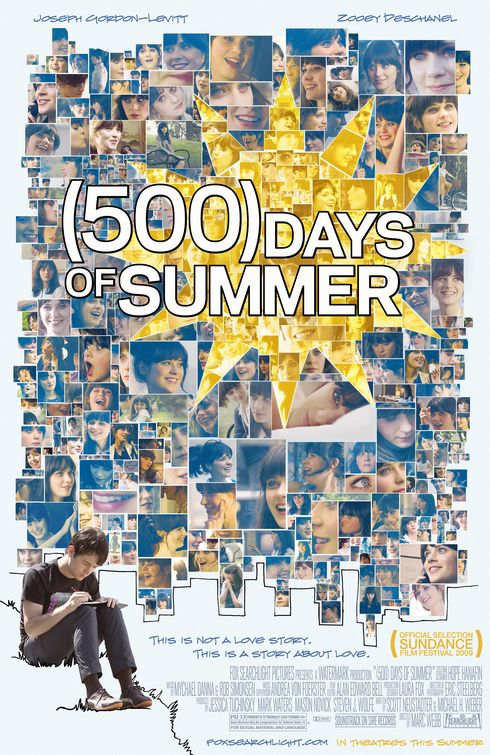
five_hundred_days_of_summer

This is a story of boy meets girl, a stern, wry narrator informs us before the credits of Marc Webb’s self-styled “anti-romantic comedy”, (500) Days of Summer. The narrator goes on to warn us (not in so may words) that if we’re expecting a love story, we’ll be sobbing as hard as Tom Hansen (Joseph Gordon-Levitt) after he gets dumped by Summer Finn (Zooey Deschanel). This film doesn’t bury the lead; after a brief sequence on day 1 (when the two first meet), we jump forward to more than a year later (somewhere in the 380s), as Summer declares her love for pancakes and the relationship’s imminent demise. It makes sense in the scene.

This film revels in quirk and hipster sensibility almost as much as Juno (albeit less annoyingly so), and spins its relationship tale with as disjointed a timeline as Eternal Sunshine of the Spotless Mind. 500 Days makes a suitable companion piece to the latter film; both come from music video directors bringing some of their usual stylistic flourishes, and both use unconventional storytelling and a nonlinear timeline to offer their perspectives on love via exploration of a failed relationship.

But that’s where the similarities end… For a film in which the male romantic lead spends the majority of the time brooding and sobbing, 500 Days is remarkably uplifting and funny. The film takes place largely from Tom’s perspective, and at times, inside his head. It is a film about expectations. Summer, whose parents split up when she was a child, doesn’t expect anything from a relationship, and doesn’t really even want one. Tom, having internalized the lessons of a childhood of romantic songs and movies (and a total misread of the ending of The Graduate), doesn’t think he’ll be truly happy until he finds “the one”. Unfortunately, he only has the vaguest idea of what “the one” will be.

In the opening sequence of Eternal Sunshine, Joel Barish (Jim Carrey) ponders why he falls in love with any woman who shows him the slightest bit of attention (in that case, the enigmatic Clementine, played by Kate Winslet). Tom is a character that could easily end up in the same boat as Joel, even after the emotional smackdown that he experiences in 500 Days. While neither Kate Winslet nor Zooey Deschanel are true examples of a Manic Pixie Dream Girl in their respective films, their men seem bent on regarding them as such. They are each warned to manage their expectations as they begin the relationship, and they each pay a steep emotional price for failing to do so.

500_days_of_summer_movie_image_joeseph_gordon_levit_and_zooey_deschanel

The performances are quite adept. Joseph Gordon-Levitt once again proves his two central characteristics… He’s one of the finest young actors working today, and he hasn’t aged a day since “3rd Rock from the Sun”.

But even as Gordon-Levitt continues to prove as capable at reckless, romantic zeal as sullen, intractable brooding, it is Zooey Deschanel that steals this film. To put it bluntly, this is a character that the audience could easily have ended up despising. And while the character of Summer is mostly well-written, the characterization and non-linear progression of the story demand a great deal from Deschanel. And it is her performance that just manages to make the character sympathetic.

As Tom reflects on his relationship, many of his scenes with Summer are cast in a different light through subsequent flashbacks. On the second run through, the film’s editing calls attention to the slightest glance of the eyes, or twinge of the cheek muscles, or the most minor apathetic tone of voice… In each of these microexpressions, Deschanel’s performance is masterfully subtle. And throughout the film, she brings all the mystery, likeability, and sensuality that the character demands, but couples it with a subtle undertone of cold, mature pragmatism. She manages to force the audience through nearly the same process as Tom, despite our advantages of an outside perspective and sardonic narrator to keep us objective.

It is a lot easier to hate Chloe Moretz, a 12-year-old actress who may inadvertantly end up typecasting herself. In Matthew Vaughn’s upcoming adaptation of the graphic novel “Kick-Ass”, Moretz will play Hit Girl, a precocious, sword-wielding assassin. Here, she plays an equally unrealistic youngster in the form of Tom’s sister Rachel, who spends the entire film feeding him uncannily adept relationship advice in-between soccer matches. Despite Moretz’s solid performance, this character is the film’s biggest misfire. She could easily have been written out of the film without losing anything but doddering exposition. Perhaps I could have tolerated either an unrealistically savvy child or prolific movie trailer narration, but the inclusion of both nearly causes the film to collapse under the weight of its own cleverness.

And indeed, all of the characters occasionally feel overwritten. Summer intones with uncanny frequency how much she “loves” a particular band or food or [anything but Tom], and Tom’s job as a greeting card writer often seems like merely a clever setpiece for unrealistic emotional dialogue (consult your local Hallmark dealer for further examples). But somehow, the result is immensely enjoyable. This film is equal parts fable and reality, but it has a lot of insight to offer about love and relationships. (500) Days of Summer has earned its place alongside Eternal Sunshine and Forgetting Sarah Marshall in the “broken hearts” section of my pantheon of cinematic romances.

If you see this film, it will almost certainly speak to you on some level. If you don’t see yourself in one of these characters, then you might just see someone you know.

Or knew.

Or loved.

Glenn’s Indie Movie-Wank – Part 2: Kathryn Bigelow’s “The Hurt Locker”

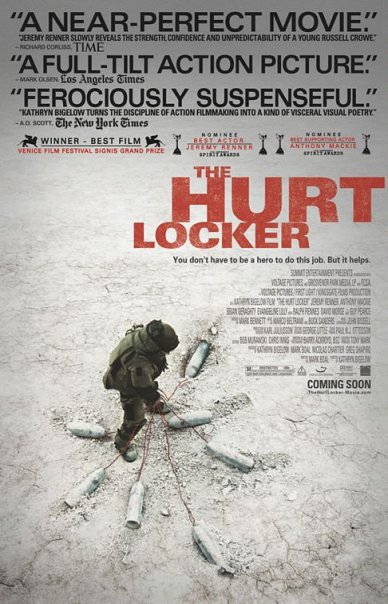
hurtlocker

I would say that Kathryn Bigelow’s The Hurt Locker is the best film yet about the Iraq war, but it’s not as if it’s had much competition.The closest thing yet to a “good” Iraq war film was Paul Haggis’ small 2007 offering, In the Valley of Elah, which combined a heady realism and some strong performances with Haggis’ typically heavy-handed political message. The Hurt Locker has been described as “forcibly apolitical”. I’m not sure if I buy this sentiment, but more on this later.

The Hurt Locker tells the story of three members of an Explosive Ordnance Disposal (EOD) team – the army’s bomb squad. When soldiers discover one of the many IEDs hidden in trashpiles and animal carcasses around the streets, EOD is the team they bring in to disarm it. The film is ostensibly about adrenaline addiction (a pre-credits title screen informs us that war is, indeed, a drug), coupled with a portrayal of intense (and only slightly homoerotic) male friendship that Bigelow has previously depicted so effectively (Point Break), amidst a backdrop of intense action and violence.

The bomb diffusion sequences in this film are immensely entertaining and suspenseful, but it’s really the action where Bigelow distinguishes herself as a director. Ever since Paul Greengrass decided to start using shaky-cam in close-quarters (the Bourne series), it has been a problem endemic to modern action films that much of the action is incomprehensible. The physical environment, the characters, and where they are in relation to each other ends up being at least partially unclear. This has happened in good films (The Dark Knight), bad films (Transformers 2), and middling, mediocre films (Quantum of Solace), and I think it’s fair to say that Bigelow’s direction leaves many modern action films in its dust.

Every scene in this film is well established, and the audience always has an excellent sense of what’s going on. Staff Sergeant William James (Jeremy Renner) dons his protective suit (a relative misnomer) and marches through the blazing sun toward his objective. Civilians watch from every surrounding building, and bustle through the adjacent streets and alleys. The soldiers behind him take cover behind a Humvee and survey the crowd. Anyone with a cell phone could be trying to detonate the bomb. And all the while, the audience understands exactly where everything is in relation to everything else. And when all hell breaks loose, they can still understand what’s going on.

This commitment to well-directed and comprehensible action is one of the film’s persistent strengths, and it works immensely well against the backdrop of the Iraq War (in particular during a pitch-perfect long-distance sniper battle midway through the film).

Joining an appropriately intense performance by Jeremy Renner (28 Weeks Later, ABC’s “The Unusuals”) are strong supporters Anthony Mackie (We Are Marshall, 8 Mile) and Brian Geraghty (The Guardian, Jarhead). I can’t single out any of these performances as the superlative one; but as an ensemble, these three work immensely well. The film has Bigelow’s typically strong portrayal of male friendship in intense circumstances, when the characters aren’t sure if they want to embrace or murder each other. The dialogue feels authentic, and the characterization is solid. These men may be considered heroes, but as far as they’re concerned, they’re just doing what they have to do. They’re here, and they’re going to keep doing the job until they go home or get killed.

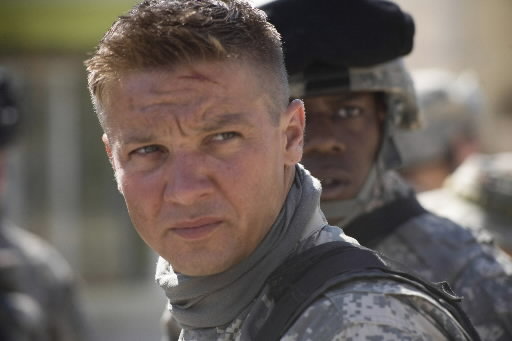
hurtlocker2

Shortly after diffusing a car bomb at a UN building, Sergeant James is approached by a colonel (David Morse, in a completely wasted cameo). “You’re a wild man”, the colonel says several times, practically giddy with excitement. Ralph Fiennes and Guy Pearce also appear in minor, if slightly meatier roles. With all the celebrities joining the party, I half-wondered if there was some thinly veiled anti-war message I wasn’t picking up on. The film is only anti-war inasmuch as a hyper-realistic war film inexorably conveys the notion that hey, perhaps it’s not such a fun place to be. But while the film may set out to be apolitical, it simultaneously exhibits unapologetic contempt toward any attempt to analyze or understand these men. The audience’s perspective is best exhibited by a well-meaning armchair psychologist colonel (Christian Camargo), whose story is easily the most overwritten and predictable part of an otherwise solid and suspenseful film.

That’s about as close as the film comes to a political message. You’re not there. You don’t know. Now go home, and enjoy the streets that aren’t filled with potentially explosive trashpiles. But this message is merely the subtle underpinning of one of the best action films this year, and it is well worth seeing. It is absolutely gorgeous to behold, and if you can catch it before it leaves theaters (it’s out in limited release), see it on the largest screen you can.

Glenn’s Indie Movie-Wank – Part 1: Duncan Jones’ “Moon”

moon-movie-poster

If nothing else, Duncan Jones’ Moon is a film you’ll have to talk about afterward.

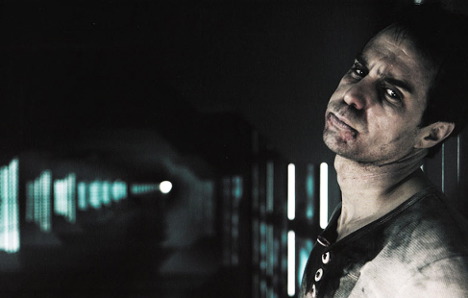
Sam Bell (Sam Rockwell) is the sole employee at a lunar mining facility, just a few weeks shy of finishing his three-year stint. He’s playing to familiar territory… bearded and slightly unhinged. His only company for the past three years has been GERTY, a super-intelligent computer, voiced by an eerily calm Kevin Spacey. Sam heads out in the rover one day to investigate a problem with one of the mining machines, and discovers he has company… Another man in a company-issue spacesuit. A man that looks and sounds exactly like him.

This “big spoiler” for the film is revealed in the first 15 minutes, but even as you’re patting yourself on the back and mouthing “CLOOOOOOOOONE” to anyone you came with (if you’re as obnoxious as me, at least), Moon just steps right on and continues to explore fresh and insightful territory. This film has two persistent strengths. The first is that it does a lot with very little. It flawlessly renders the surface of the moon and the base, despite an extremely modest budget. Clint Mansell’s (Requiem for a Dream, The Wrestler) haunting and beautiful score spends a great deal of time on solo piano, a style that compliments the story masterfully.

But the second strength is simply the film’s respect for its audience. So much of modern sci-fi is merely elaborate, CG-infused setup with no payoff. Behold! A world in which robots are everywhere! And spaceships! And aliens! Now, let’s throw em all together and watch them beat the shit out of Will Smith or Shia LaBoeuf (or both)! Annnd…roll credits!

This film does what few sci-fi films have managed in recent years. It sets up its world, but then respects its audience enough to subtly raise the myriad of profound ethical and existential questions that naturally follow. The clone “twist” happens early, and the rest of the film is spent exploring the idea. How would you feel, as either the clone or clonee? How would the two of you interact? And oh, as long as you’re here, what does it mean to be human?

It is this last question that pervades the ending of this film, and in that grain, it owes a great deal to such works as Blade Runner or the re-imagined Battlestar Galactica. And all the while, as we explore Sam’s relationship with GERTY, we see the trappings of 2001 as we wonder when the computer will go all HAL-homicidal. But that is the triumph of this film’s storytelling. It is aware of the works that have come before, and pays them the requisite service while simultaneously passing a dozen points when it could easily veer into an obvious and overwrought cliche. It plays with the audience’s expectations, but delivers some remarkable originality.

moon_Sam_Rockwell_pic

Sam Rockwell’s performance may be the finest I’ve seen this year, imbuing each of the Sam Bells with a distinct, but related personality. One of them is strong, but struggles to make sense of what he is, as the other becomes increasingly erratic. Kevin Spacey gives a fine voice performance, although I suspect the intrigue of GERTY is as much due to his performance as it is to an clever visual that the computer uses to express its “emotions”. In an age when we’re used to communicating in the emotionally stifling media of texting and instant messaging, seeing a computer make use of the same cutesy little emoticons in the place of body language and empathy is surprisingly effective.

The relationship between Sam and the computer ends up being almost as fascinating as the one between Sam and his clone, and its exact meaning is one of the many things you’ll continue to think about after you leave this film.

Moon‘s dialogue is rich and concise, conveying exactly what it needs to and not a bit more. The film explores all of the questions I mentioned above (to name a few), but does so in a subtle way, and relies on its audience to answer them on their own time. Even the very last line of the film, a half-garbled radio transmission that plays as the credits begin to roll, conveys a fascinating idea. And that’s what you’ll get with this film. It’s for people who love big ideas. It is a welcome return to true sci-fi, and showcases one of the best performances of the year.